

What are brand mentions?
Brand mentions (also known as brand mentions or brand mentions) are references to a company, product, service, campaign, or people associated with a company. They can appear anywhere online: on social networks, web forums, blogs, news, videos, podcasts, discussion communities, comments, or comparison sites.
A brand mention can be explicit, containing hashtags or specific social media tags (the company’s name or social media handle), or implicit, discussing a product or service without directly naming the company.
Why are brand mentions important?
Brand mentions provide information about customer awareness, experience, reputation, market knowledge, and opportunities. A mention can imply an intention to buy, a need for technical support, a thank you for a service, or an opinion about a company, product, or service.
Mentions also reflect customer awareness of a company. People often research products based on the experiences of others, which are reflected in online mentions. Thus, mentions are influential and should be considered an important source of information for organizational decision-making.
Why Businesses Should Respond Faster to Brand Mentions
On the Internet, information spreads quickly, so a negative comment or review needs a fast response to prevent it from going viral. At the same time, some mentions require a slower reaction with detailed information. Regardless of response time, companies need to collect enough information about the situation to respond appropriately and resolve the issue positively.
Speed is key, but companies need to balance speed and accuracy. An automated system that collects information from across the internet allows employees to spend more time solving problems rather than researching them.
Some mentions should be addressed immediately, while others can wait. Companies should respond to negative mentions faster than positive or neutral ones. Most mentions do not contain problems or require a response, so positive mentions and those needing no action do not have priority.
1. Collect as much information about mentions as possible
Customers interact with companies through social media, reviews, customer support, official websites, and more. Different departments may receive the same feedback, but specialists often have information in fragments.
A unified customer experience platform allows companies to collect structured and unstructured data, including social media data, feedback, reviews, calls, and chats. This creates a complete picture of what customers are saying. For example, if customers complain about the same problem on Facebook, Google Reviews, and customer support, an integrated CX system can track the issue in real-time.
2. Mention monitoring in real-time
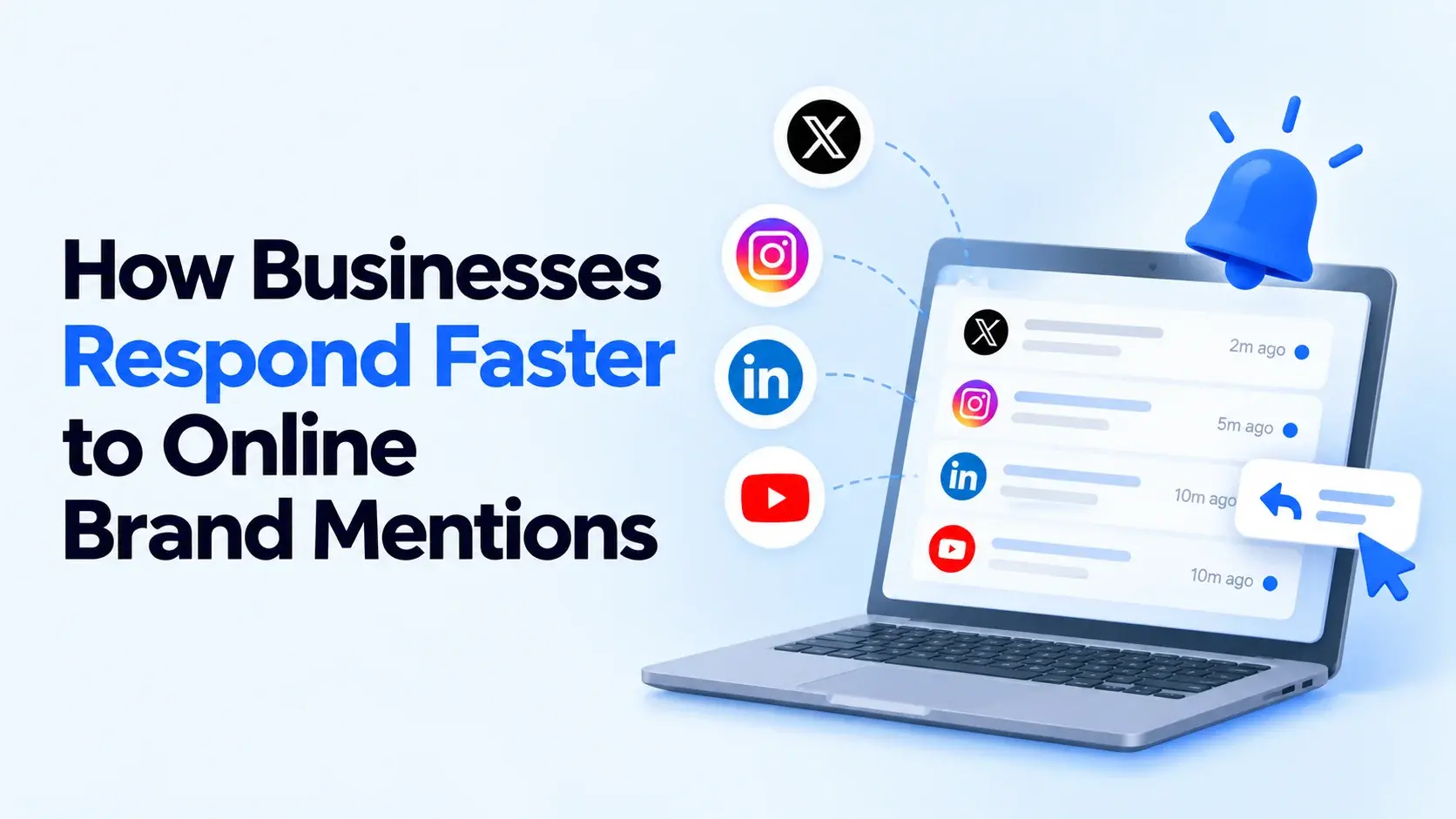
Real-time social media monitoring allows companies to react to mentions quickly and detect anomalies, such as a sudden surge in mentions or negative sentiment. It also helps track key customers, influencers, high-engagement mentions, and emerging crises.
Many companies set up too many notification systems and fail to react to mentions that need attention. Monitoring should trigger alerts based on criteria such as sentiment, reach, engagement, keywords, topics, and audience.
3. Assign priority to mentions and resolve them according to their type
Not all mentions are the same; some need immediate attention, while others can wait. Mentions should be prioritized based on:
• Sentiment
• Reach
• Engagement
• Value of the customer
• Influence of the author
• Topics
• Risk
• Urgency
• Impact
Thus, a problem expressed by a popular social media influencer may receive higher priority than a similar private message from an ordinary customer.
4. Use artificial intelligence and predictive analytics
AI helps companies analyze large amounts of data and work with mentions more efficiently. Predictive analytics uses past data to identify trends and predict future mentions. For example, if hotel check-in complaints increase seasonally, companies can take preventive measures and improve operations in advance.
Artificial intelligence works best alongside human expertise. It is especially useful for automating repetitive tasks and analyzing mentions to determine topics and sentiment, allowing humans to make informed decisions.
5. Set up alerts and escalations
Mention monitoring systems should notify the right people in the company. Product mentions can go to product support, technical issues to IT, media mentions to the press team, and fraud or safety issues to the legal department. Escalation rules can forward critical mentions to senior leaders or the CEO.
Alerts can be automated when mentions meet specific criteria, such as sentiment, topics, engagement rates, account influence, or keywords. Escalation rules can also consider the number of mentions and how often the conversation occurs.
6. Respond publicly to mentions
When people express opinions publicly, they expect a public response, especially when the opinion is negative. Companies should acknowledge the issue publicly and invite the author to continue the conversation privately.
This demonstrates a commitment to resolving problems and openness to criticism while protecting personal information and allowing detailed discussions to happen privately.
7. Monitor competitors, markets, industries, and products
Monitoring competitor mentions helps companies understand what competitors are doing and what customers expect. Companies can track keywords related to industries, products, services, and other topics using specialized tools.
Such information helps companies understand market trends and customer needs. If customers repeatedly request something that competitors offer but the company does not, this can signal an opportunity to improve products or services. Competitor mentions can therefore provide valuable insights for business growth.
Conclusion
Online brand mentions are an essential source of information for companies. As e-commerce and internet use continue to grow, customers increasingly rely on online conversations when deciding what to buy, how to use products, and which companies to trust. Companies need to respond quickly and effectively to avoid negative publicity, protect their reputation, and retain customers.
Companies should invest in tools and methods for monitoring and analyzing mentions in real-time, using artificial intelligence and predictive analytics. Data collection and analysis should also be integrated across departments so the right teams can respond promptly and fix problems before they become major issues.
However, speed is not the only factor in resolving mentions. Companies should collect enough information about each situation and respond with detail and care. By using these methods and prioritizing mentions correctly, companies can manage their reputation and provide a better customer experience.
Finally, brand mention management is an ongoing process. Companies should continuously track mentions, analyze trends, and respond in a timely manner to achieve the best results.

.webp)