

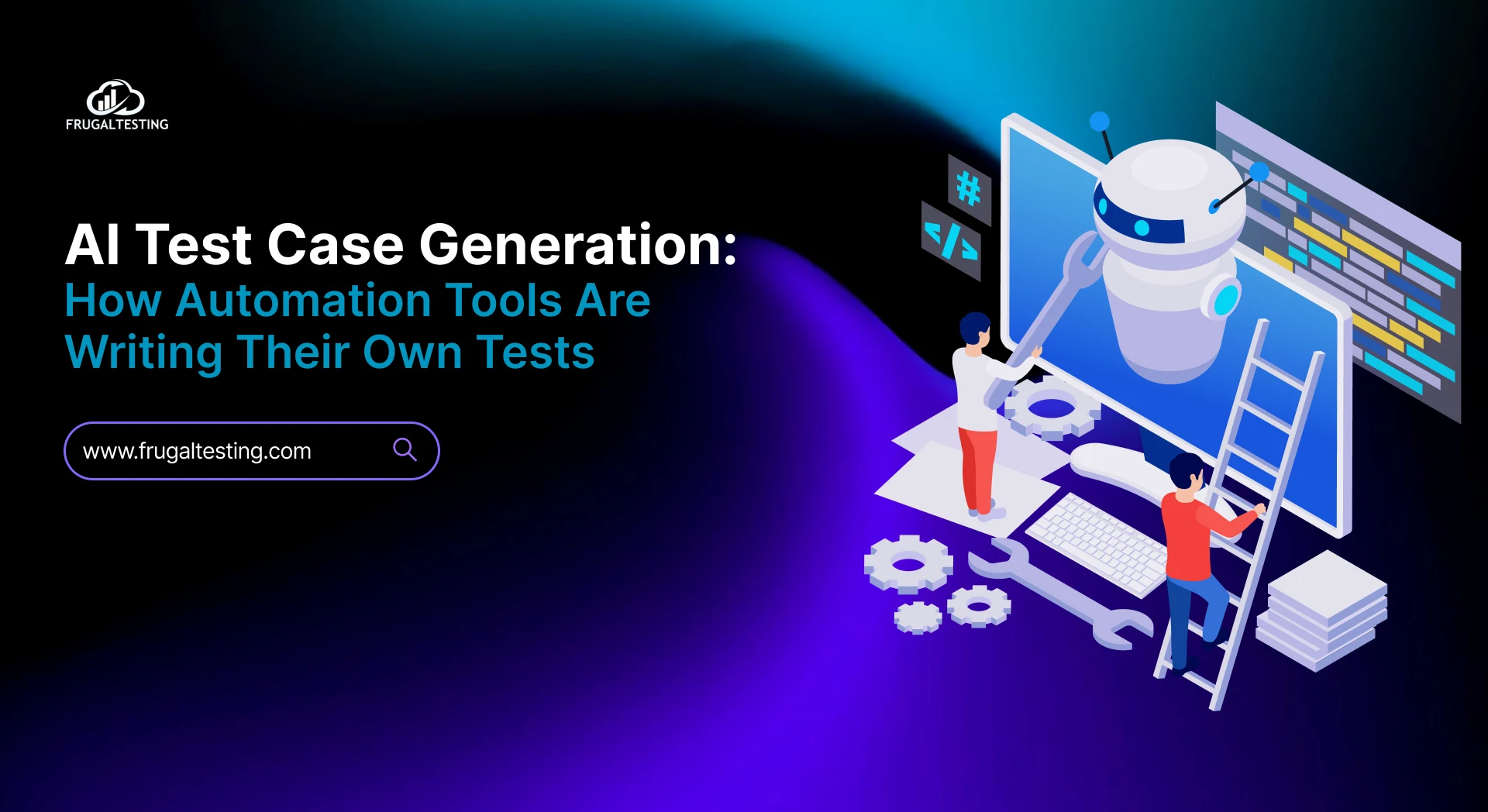
The current CI/CD pipelines require fast performance but their quality assurance processes create the main workflow obstruction. Teams now use automated testing methods because they want to test faster than their current manual testing methods which produce multiple mistakes.
By leveraging advanced genAI capabilities, a modern AI generator can now instantly parse a complex requirement document to synthesize comprehensive, executable Test Scenarios while supporting automated content creation across AI workflows.
In this comprehensive guide, we will cover:
- The Evolution of QA: Why the industry is shifting from brittle, legacy automation scripts to dynamic, machine-learning-driven testing.
- Autonomous Test Generation: How modern platforms ingest raw requirements to generate executable scripts concurrently with development.
- Intelligent Self-Healing: The mechanics behind scriptless testing and how AI automatically patches broken locators in dynamic UI environments.
- The Future of CI/CD Integration: Strategies for deploying AI quality gates that manage complex transaction testing and dramatically reduce maintenance ROI.
- The Human Element in AI QA: Addressing the "Human vs. AI" debate and how autonomous tools empower QA professionals to focus on high-value exploratory testing and subjective user experiences.
The Evolution of QA Automation and Testing Tools
Moving Beyond Traditional Automated Testing Scripts
Legacy frameworks rely on brittle, hard-coded locators and rigid scripts. The use of extensive code libraries may assist with initial test creation but results in multiple problems.
- Massive maintenance overhead: Simple UI tweaks frequently break established Test Scenarios, trapping engineers in constant script triage.
- Fragmented pipelines: Traditional tools often silo functional validation away from critical checks like performance and security, making it hard to scale with modern complexity.
The Shift Toward AI Driven Testing and Machine Learning Testing
The industry is pivoting away from these static assertions. By integrating genAI and machine learning, modern QA platforms observe application behavior dynamically. Instead of blindly following a path, these intelligent systems adapt to structural changes in real-time.
This shift transforms testing into a resilient practice by:
- The AI system possesses self-healing capabilities which enable automatic system adjustments in response to changes in the user interface.
- Holistic validation assures that the logical functionality, security protocol, and performance benchmarks are continuously validated without a human being.
Deep Dive into Automated Test Generation
From Manual Test Creation to AI Test Generation
The true power of genAI lies in the autonomous creation phase. Instead of manually scripting assertions, modern AI engines actively parse complex API payloads, crawl live DOM trees, and analyze user interaction data to synthesize coverage.
Advanced platforms like TestModeller and TestCompass take this a step further. They can ingest a raw requirement document and automatically convert its semantic logic into executable Test Scenarios. This intelligent mapping process often involves:
- Translating complex business rules into clear, visual flowcharts.
- Utilizing rendering tools like Graphviz to map out every possible path and boundary condition.
- Leveraging conversational interfaces powered by ChatGPT, allowing testers to simply prompt the system for specific edge cases using natural language.
Accelerating Delivery with Automated Script Generation
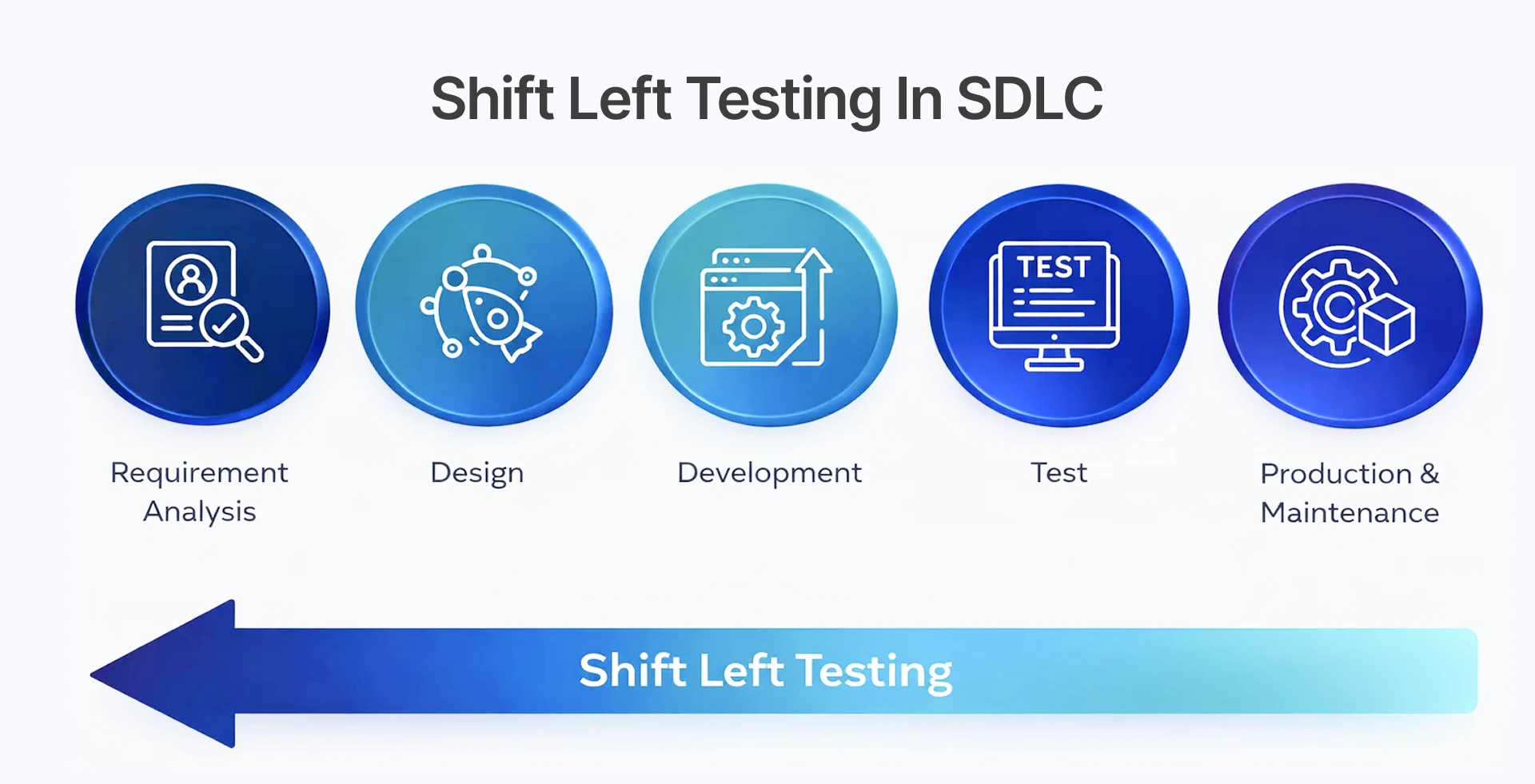
This autonomous approach is the ultimate catalyst for the "Shift Left" methodology. Because the AI relies on early-stage schemas and flowcharts instead of waiting for a finished user interface, it generates scripts concurrently with the actual software development.
By integrating these capabilities directly into a centralized test management tool like AIO Tests, engineering teams can establish continuous quality gates from day one. When developers commit code, genAI instantly triggers the relevant Test Scenarios. This ensures robust validation happens right alongside feature creation, effectively wiping out the traditional pre-release QA bottleneck.
Optimizing Stability with Intelligent Test Automation
Implementing Smart QA via Scriptless and Codeless Testing
Natural Language Processing (NLP) technology enables organizations to conduct quality assurance testing without needing specialized programming skills. Team members who are not developers, including product managers and business analysts, can now create validation logic through scriptless interfaces using plain English.
The underlying NLP engine takes simple instructions, such as "verify the checkout total," and converts them directly into executable backend commands. This shift allows cross-functional teams to:
- Author and maintain comprehensive Test Scenarios without specialized coding skills.
- Ensure technical execution perfectly mirrors the intended business logic.
- Save significant engineering bandwidth for more complex development tasks.
The Mechanics of Self Healing in Dynamic Environments
When a UI update changes a DOM structure, traditional scripts break instantly. AI resolves this fragility through dynamic element weighting and fallback algorithms.
During the first run, the engine records a unique "signature" for every UI component, capturing:
- Precise XPaths and CSS attributes.
- Spatial coordinates on the screen.
- Relative DOM neighbors.
If a developer alters a primary locator, a probabilistic fallback sequence is triggered. The AI scans the new DOM, scores visible elements against the original signature, and interacts with the highest-probability match. The execution continues without interruption, and the script is autonomously patched with the updated data. This effectively eliminates the false negatives and blocked pipelines usually caused by UI volatility.
The Future Frontier: Achieving Full Autonomous Testing
Managing Complex AI Test Scripts for Maximum Coverage
Test automation has faced its most difficult challenge through multi-step stateful transaction testing. The process requires multiple testing scenarios because its workflow includes three specific elements: branching logic, asynchronous database updates and cross-domain context shifts that occur during e-commerce checkout with third-party payments.
Modern AI agents solve this by preserving contextual state across execution steps. Instead of following linear paths, the AI dynamically evaluates the application’s evolving state by:
- Analyzing API responses and DOM mutations in real-time.
- Determining the optimal path forward based on current context.
- Validating deep, interconnected business logic without hard-coded wait states or conditional branches.
Solving the Costly Bottleneck of Test Maintenance
The financial impact of traditional test maintenance is staggering. Organizations often spend up to 30% of their QA budget just updating brittle locators and investigating flaky tests. By implementing self-healing AI algorithms, the ROI shifts dramatically.
For instance, while a manual testing cycle might cost $10,000 per run, AI automation eliminates the hours wasted on script triage. By reducing execution time from hours to minutes through intelligent parallelization, companies routinely see an ROI exceeding 150% within the first year. AI transforms testing from a perpetual cost center into a continuous value driver.
Seamlessly Integrating AI QA into CI/CD Pipelines
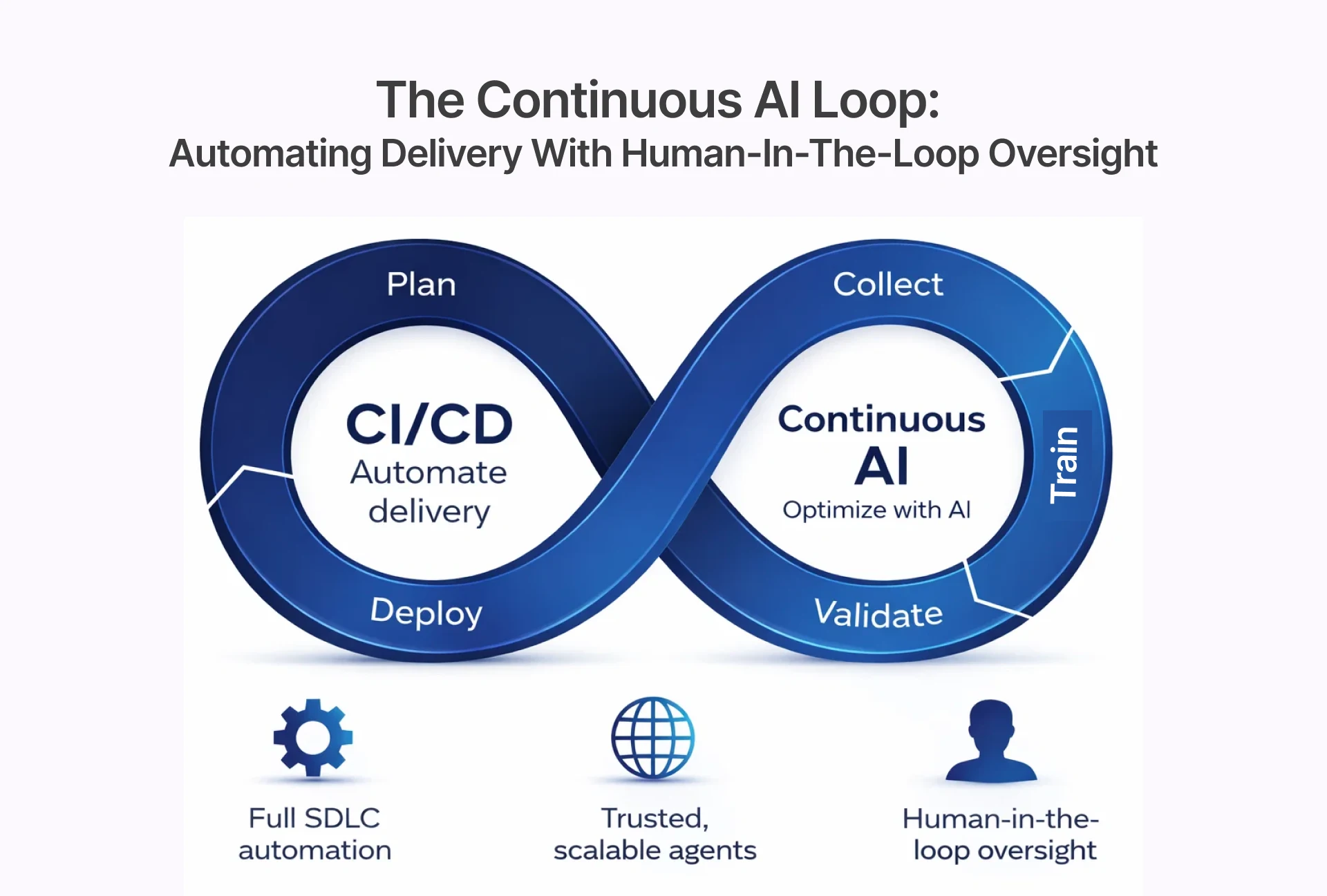
The ultimate frontier of autonomous testing is its native integration into CI/CD pipelines as dynamic quality gates. When code is committed, AI-driven orchestrators don't just run a static suite they intelligently analyze the "blast radius" of structural changes to select the exact subset of tests required.
If the system detects an anomaly, it:
- Blocks the deployment automatically to protect the production environment.
- Provides immediate root-cause analysis for the developers.
- Sustains rapid release velocity without compromising software integrity.
Partnering for the Future of Autonomous QA
Addressing the "Human vs. AI QA" Debate in Software Testing
The debate about AI taking over the work of QA engineers fails to show understanding of its actual implications. The machine learning system functions as a strong enhancement tool which maintains its original purpose. The use of algorithms to handle repetitive testing processes allows engineers to stop doing unnecessary script work.
This strategic reallocation of resources allows QA professionals to focus on what they do best:
- Deep exploratory testing.
- Complex usability heuristics.
- Assessing subjective user experiences.
These are the critical areas where human intuition remains absolutely irreplaceable.
Achieving Autonomous QA: The Synergy of Frugal Testing and BuildNexTech
Reaching true autonomous quality takes more than just smart algorithms it demands a mature operational foundation. The partnership between Frugal Testing and BuildNexTech delivers exactly this critical architecture.
Here is how this synergy works:
- Frugal Testing brings comprehensive quality methodologies and robust execution frameworks to the table.
- BuildNexTech engineers the scalable cloud infrastructure required to run these AI models natively.
Together, they equip organizations with a turnkey solution to embed autonomous validation directly into their deployment pipelines, guaranteeing resilient, high-velocity software delivery.
Summary: The New Standard in Autonomous QA
The implementation of AI-powered QA systems provides engineering teams with a significant advantage over their competitors. The following summary presents the main points we discussed during the meeting.
- No More Bottlenecks: AI replaces brittle scripts with dynamic, adaptable testing.
- True "Shift Left": Generate executable tests directly from requirements before the UI is even built.
- Zero Maintenance: Self-healing algorithms automatically patch broken locators in real-time.
- Smarter CI/CD: AI acts as a dynamic quality gate, analyzing structural changes to run only the necessary tests for rapid deployment.
- Empowered Teams: QA engineers are freed from script maintenance to focus on high-value exploratory testing.
Modernize Your Testing Strategy
If your team is spending more time on script maintenance than feature development, it's time for a change. Connect with Frugal Testing to explore how autonomous QA can accelerate your release cycles.
People Also Ask (FAQs)
Q1.What is AI test case generation and how does it work?
Ans: The process of AI test generation uses machine learning for reading requirements and interfaces which it transforms into test steps that can run without needing human intervention.
Q2.Can AI automatically create test cases from requirements or code?
Ans: AI parses text requirements through Jira to construct UI and API test cases while it analyzes source code to generate automatic test cases together with complete unit tests.
Q3.How accurate are AI-generated test cases compared to manual testing?
Ans: Test cases generated using AI methods have very high accuracy rates for regression testing and edge cases, yet human validation through manual testing will still be required in cases of complex business logic or subjective UX.
Q4.Do AI testing tools replace QA engineers or help them work faster?
Ans: The new process allows QA engineers to perform their jobs much more effectively by dramatically increasing the speed in which they complete tasks due to the ability of the AI testing tool to handle the repetitive maintenance aspects of testing scripts.
Q5.What are the main benefits of using AI for automated test generation?
Ans: The core benefits of AI for automated test generation include:
- Faster time-to-market
- Lower maintenance costs via self-healing
- Increased test coverage
- Quicker CI/CD feedback loops