



Software updates are a constant in the world of Software as a Service (SaaS). New features, performance improvements, and security fixes are released frequently to keep businesses competitive and users satisfied. While this continuous innovation helps SaaS companies deliver better experiences, it also introduces new challenges in maintaining software stability.
Every update, no matter how small, carries the risk of unintentionally breaking existing functionality. In complex SaaS environments especially multi-tenant system where multiple modules, APIs, and web applications interact within the same platform one small change can trigger unexpected issues across the system.
This is where regression testing becomes essential. It ensures that new updates do not disrupt previously working features and helps QA teams maintain consistent software quality. By validating existing functionality after every change, regression testing enables SaaS platforms to release updates confidently while protecting the user experience. Many organizations also rely on professional software testing services to strengthen their regression testing processes and maintain high levels of software reliability.
In this blog, we’ll discuss how regression testing supports SaaS platforms, the role of automation and CI/CD in making regression testing more efficient, and the key steps organisations can take to build a strong regression testing strategy.
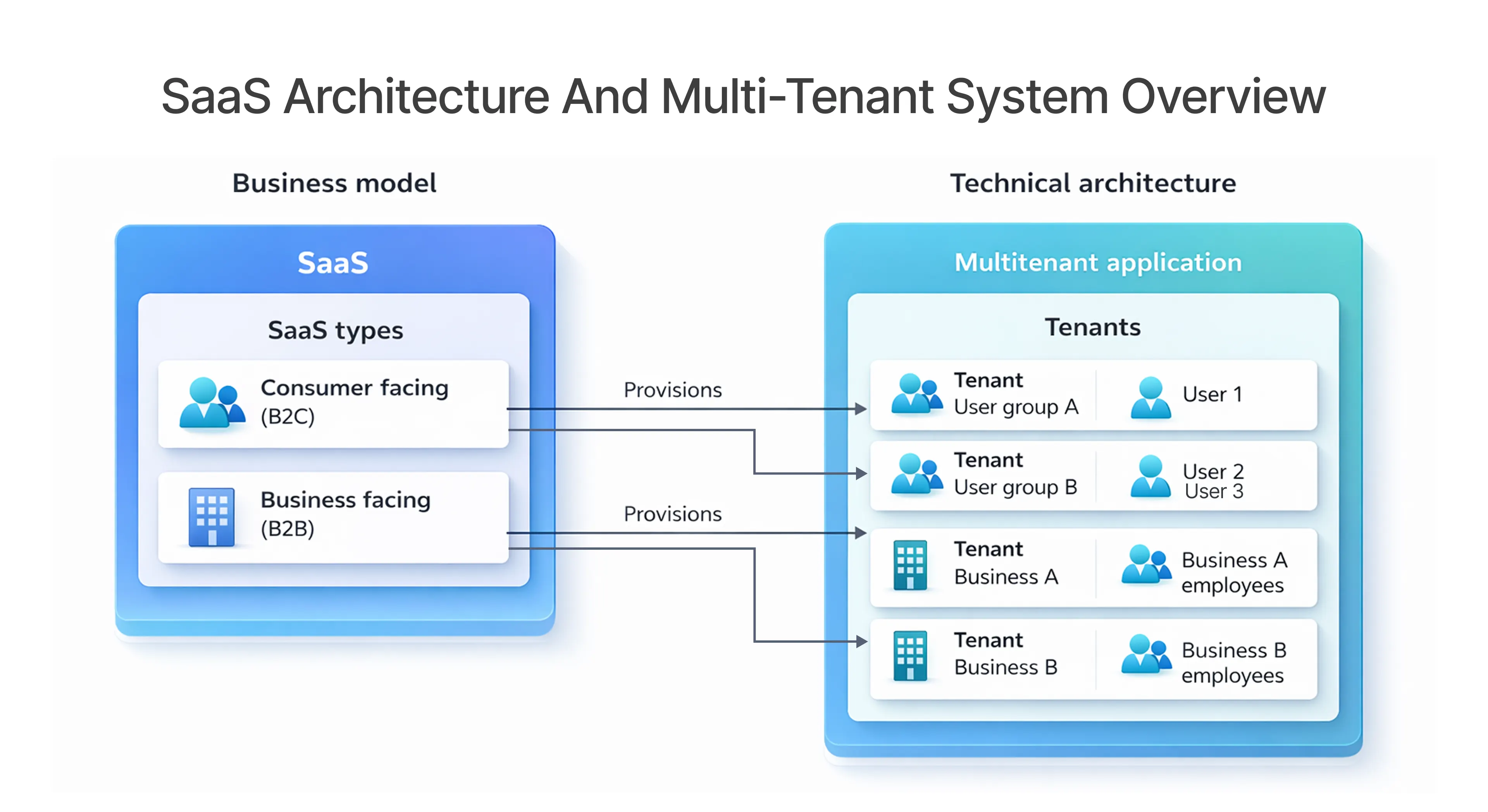
Understanding Regression Testing in SaaS
Regression testing is a significant process in the maintenance of the reliability of SaaS applications, where the introduction of new changes in the code does not affect the existing functionality. It is a significant process in maintaining the quality, stability, and security of SaaS applications.
What is Regression Testing?
Regression testing is a process in Quality Assurance that ensures that no new problems are introduced into existing functionality in SaaS applications, web applications, and mobile app testing environments.
Key benefits include:
- Make sure important features remain properly tested with each release
- Prevent software bugs from reaching production.
- Maintain a consistent and reliable user experience
- Maintain system stability across multi-tenant systems.
Typical regression tests involve executing a test suite containing multiple regression test cases, unit tests, and functional testing scenarios.
Different Types of Regression Testing
Different types of regression testing are used depending on the nature of system updates.
- Retest-All Regression Testing: This involves executing the complete regression suite to verify that the system works correctly. It provides strong test coverage but may require more resources.
- Selective Regression Testing: This approach focuses on executing specific test scripts or test scenarios related to modified modules. It improves efficiency by reducing unnecessary test execution.
- Automated Regression Testing: Using test automation frameworks, automated regression testing executes automation scripts quickly and consistently. Tools such as Katalon Studio, Webomates CQ, and other AI-powered platforms enable AI-powered test automation with self-healing tests and visual regression testing capabilities.
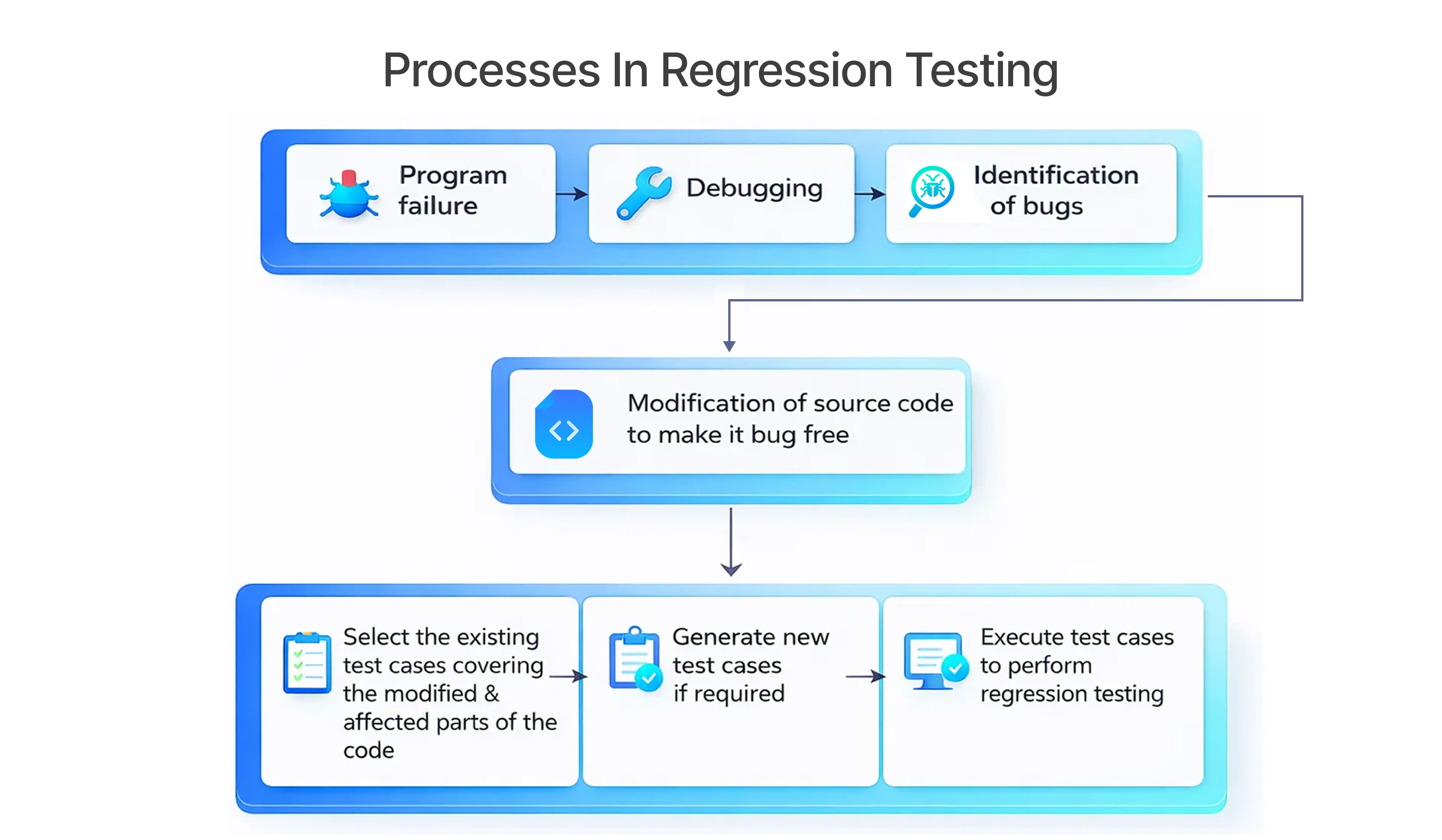
The Regression Testing Process
A structured regression testing process ensures reliable validation of new updates.
The process usually includes:
- Pre-Testing Preparations:
- Setting up a stable test environment and test infrastructure
- Preparing test data and test data management strategies
- Building automation scripts with proper validation checks and element selectors
- Test Execution:
- Running regression test cases within the CI/CD pipeline
- Performing functional testing, API testing, and integration testing
- Test Analysis:
- Reviewing test results and test reports
- Identifying failures and managing defects through bug management
This process helps teams maintain stability throughout the development process.
The Role of Automation in Regression Testing
Automation testing improves regression testing efficiency considerably. It reduces manual effort and allows for quick validation of changes made during testing. SaaS teams today heavily rely on automation testing.
What is Automation Testing?
Automation testing uses automation scripts and test automation frameworks to execute regression testing automatically. It does not require manual effort to execute repetitive regression testing but uses predefined test scripts to execute regression testing in different testing environments.
Automation supports:
- Parallel testings
- Testing application performance across multiple browsers
- Automated sign-up flows and end-to-end flows
This approach improves efficiency across large SaaS testing environments.
Benefits of Automation in Regression Testing
Automation provides several advantages for SaaS platforms.
Key benefits include:
- Faster execution of regression tests
- Improved test coverage across large applications
- Consistent execution of test scripts
- Integration with CI/CD pipelines
Automation also enables:
- Automation makes it easier to test applications across multiple browsers.
- It also allows tests to run efficiently in cloud-based testing environments.
- geolocation testing
- validation of mobile app testing scenarios
These capabilities help ensure high software quality.
Popular Automation Testing Tools
Several software tools support automated regression testing.
- Katalon Studio – widely used for automation testing of web, API, and mobile apps
- Apache JMeter – useful for load testing, stress testing, and performance testing
- Webomates CQ – an AI-powered platform offering AI-powered test automation, self-healing scripts, and natural language test creation
These regression test tools help QA teams scale automated testing efficiently.
The Role of Unit Testing in Regression Prevention
With unit testing, defects can be detected in the early stages of software development. This makes sure that problems are not detected during regression testing.
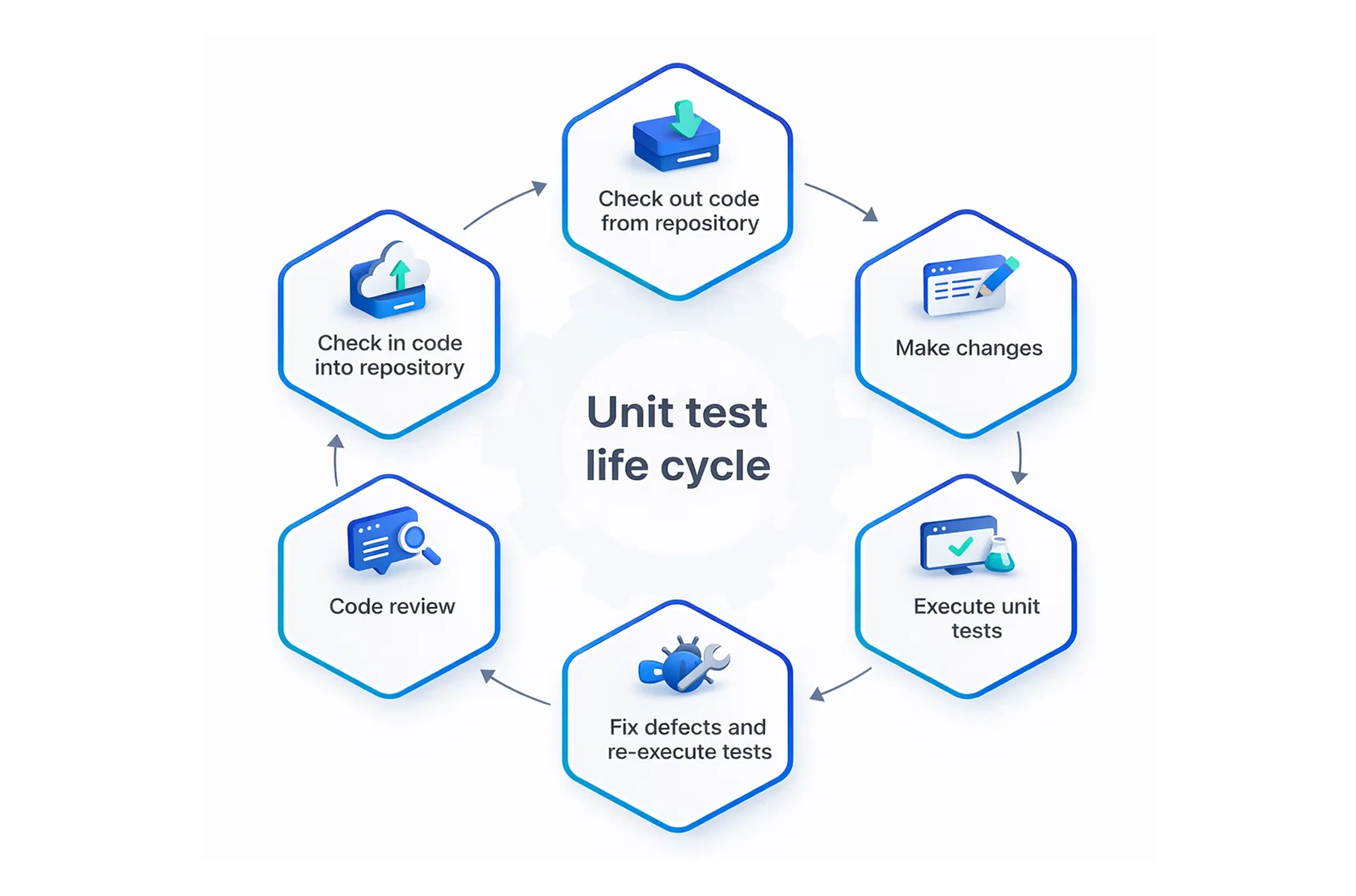
What is Unit Testing?
Unit testing is a process where individual functions of an application are validated.
The developers use unit testing to test individual functions of an application to ensure that they behave in a specific manner.
Benefits include:
- Better visibility into how much of the code is being tested
- Identifying issues earlier in the development stage
- Making it easier and quicker to locate and fix problems
- Helping maintain more reliable and stable software
Best Practices for Unit Testing
To maximize effectiveness, QA teams follow several best practices.
- Writing well-defined and easy-to-understand test scenarios
- Ensuring a large portion of the code is properly tested
- Developing reusable test scripts that can be used across multiple tests
- Checking results to confirm that the application behaves as expected
These practices help improve reliability during regression testing.
Integrating Unit Testing with Regression Testing
Combining unit testing and regression testing strengthens overall Quality Assurance.
It helps to:
- Catch issues early in the development process
- Reduce failures in the regression suite
- Improve stability across SaaS applications
This layered testing approach improves system reliability and performance.
Integrating Regression Testing into CI/CD Pipelines
Modern SaaS teams integrate regression testing directly into CI/CD pipelines to enable continuous testing. This ensures that every code change is validated automatically before deployment.
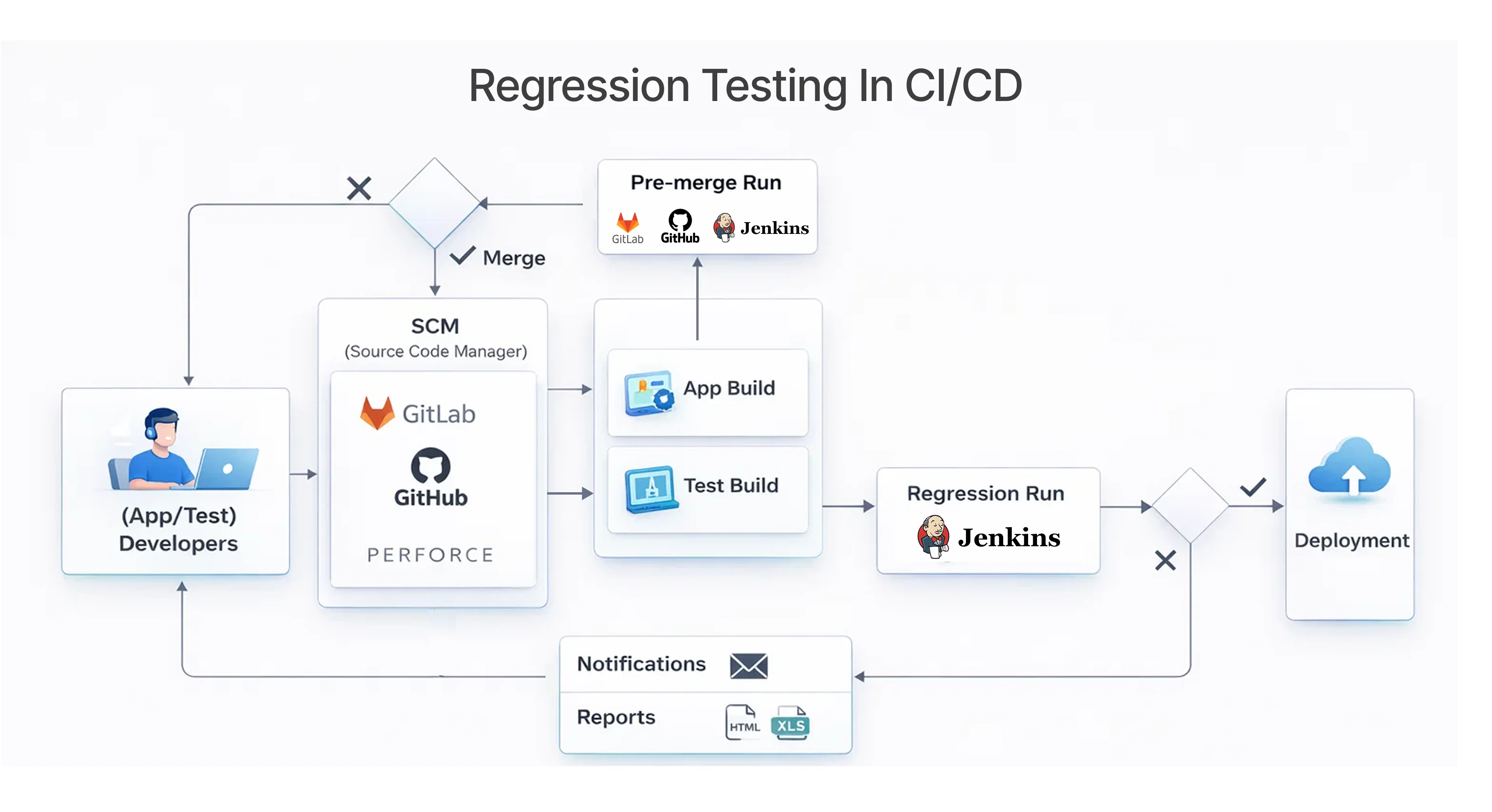
Understanding CI/CD Pipelines
Continuous Integration and Delivery (CI/CD) automates the process of building, testing, and deploying software.
In CI/CD pipelines:
- Developers commit code frequently
- Automated tests validate builds
- Successful builds move toward continuous delivery
This practice ensures faster and safer deployments.
How CI/CD Improves Regression Testing
Integrating regression tests into CI/CD pipelines provides several advantages.
These include:
- Early detection of software bugs
- Faster feedback for developers
- Improved test management
- Consistent execution of regression test cases
CI/CD integration helps maintain stability during rapid releases.
Popular CI/CD Tools for Testing
Several tools support automated testing in CI/CD workflows.
Common tools include:
- Jenkins
- GitHub Actions
- GitLab CI/CD
These tools help automate test scripts, manage test environments, and generate test reports.
Building an Effective Regression Testing Strategy
Developing a strong regression testing strategy helps organizations maintain stability while scaling their SaaS products. A structured approach ensures testing remains efficient and aligned with business priorities.
Key Components of a Strong Regression Testing Strategy
A reliable strategy typically includes:
- Maintaining an optimized regression suite
- Prioritizing high-risk test scenarios
- Ensuring strong test coverage
- Implementing automated regression testing
These practices improve efficiency across SaaS testing environments.
Collaboration Between Developers and QA
Effective collaboration between developers and QA teams improves testing efficiency.
Successful collaboration involves:
- Shared ownership of software quality
- Communication about code changes
- Alignment between Quality Assurance and development teams
This collaboration reduces defects and improves overall product quality.
Measuring Regression Testing Effectiveness
Organizations track several metrics to evaluate testing performance.
Important metrics include:
- Test coverage
- Code coverage
- Number of software bugs detected
- Quality of test results
Monitoring these metrics helps improve testing efficiency.
Challenges in Regression Testing for SaaS Platforms
Despite its importance, regression testing can present several challenges for SaaS teams. As applications grow and new features are added, regression test suites can become large and difficult to maintain.
Some common challenges include:
- Managing large and complex regression test suites
- Keeping test cases updated as features evolve
- Maintaining reliable test data and environments
- Balancing test coverage with faster release cycles
Addressing these challenges requires the right tools, automation strategies, and strong collaboration between development and QA teams.
Continuous Improvement in Regression Testing
Regression testing strategies must evolve alongside modern SaaS platforms. Continuous improvement ensures testing practices remain efficient as systems grow more complex.
Optimising Regression Test Suites
Optimising a regression suite helps maintain efficiency.
Teams should:
- Remove redundant test scripts
- Update outdated test scenarios
- Prioritize high-impact regression test cases
This keeps testing efficient and scalable.
Leveraging Modern Testing Technologies
Modern technologies are transforming SaaS testing.
Examples include:
- AI-powered test automation
- Self-healing tests and self-healing scripts
- Advanced visual regression testing
These technologies improve reliability and efficiency.
Adapting to Evolving SaaS Applications
As SaaS systems evolve, testing strategies must adapt.
Teams must address challenges such as:
- API throttling in API-based systems
- Performance metrics like latency percentiles
- Disaster recovery validation
- Maintaining security standards and compliance frameworks
Regular updates help maintain reliable testing processes.
Conclusion
In the fast-paced SaaS ecosystem, frequent updates are necessary to stay competitive and meet evolving user expectations. However, these constant changes also increase the risk of introducing unexpected issues into existing features. Regression testing plays a crucial role in preventing such problems by ensuring that new updates do not break previously working functionality.
The Importance of Regression Testing for SaaS Platforms
For SaaS platforms operating in complex and multi-tenant environments, maintaining stability across different modules, APIs, and integrations is essential. Regression testing helps teams validate that every update works seamlessly within the entire system, protecting both application reliability and user experience.
Combining Automation, Unit Testing, and CI/CD for Better Quality
Modern QA practices rely on a combination of automation testing, unit testing, and CI/CD pipelines to strengthen regression testing efforts. Automated regression tests allow teams to run tests quickly and consistently after every code change, helping detect issues early in the development cycle and enabling faster, more reliable releases.
How Frugal Testing Can Help Strengthen Your Regression Testing Strategy
Frugal Testing helps SaaS companies build reliable regression testing strategies using automation, AI-driven testing, and cloud-based testing environments. By integrating automated regression testing into CI/CD pipelines, teams can validate code changes quickly while maintaining software stability.
With Frugal Testing’s testing solutions, organizations can:
- Improve test coverage and test management
- Implement scalable automated regression testing
- Detect defects earlier in the development cycle
- Release updates faster without compromising software quality
People Also Ask (FAQ’s)
Q1.What challenges make regression testing difficult for SaaS platforms?
Ans: SaaS platforms often have complex architectures, frequent updates, and multiple integrations. These factors make maintaining large regression test suites and managing dependencies across services more challenging.
Q2.How often should regression testing be performed in SaaS applications?
Ans: Regression testing should ideally be executed whenever code changes occur. Many SaaS teams integrate regression tests into CI/CD pipelines so they run automatically with every build or deployment.
Q3.What is the difference between smoke testing and regression testing?
Ans: Smoke testing verifies that critical functionalities work after a new build, while regression testing ensures that previously working features remain unaffected by recent code changes.
Q4.How can automation improve regression testing efficiency?
Ans: Automation allows regression tests to run quickly and consistently. Automated tests can run in parallel environments, integrate with CI/CD pipelines, and provide faster feedback to development teams.
Q5.How do teams prioritise test cases in a regression test suite?
Ans: Teams prioritise test cases based on business-critical functionality, frequently used features, high-risk components, and recently modified areas of the application.

.webp)