

Your payment platform processed thousands of transactions yesterday. Most of them fail silently. The user sees a success screen. The money never moves, leaving no one to notice until reconciliation occurs. By 2025, Statista estimates that total digital payment volume will surpass $24.07 Trillion. Testing for payment systems is performed in an inconsistent manner, and most of the failures of the payment systems are of a predictable nature.
Digital payment testing is the process of validating payment systems to ensure secure, accurate, and reliable transactions across gateways, processors, and banking networks.
Architecture of Modern Digital Payment Platforms
Payment Orchestration Layers: Gateways, Processors, and Acquirer Networks
A modern payment platform consists of multiple layers, each requiring specific testing.
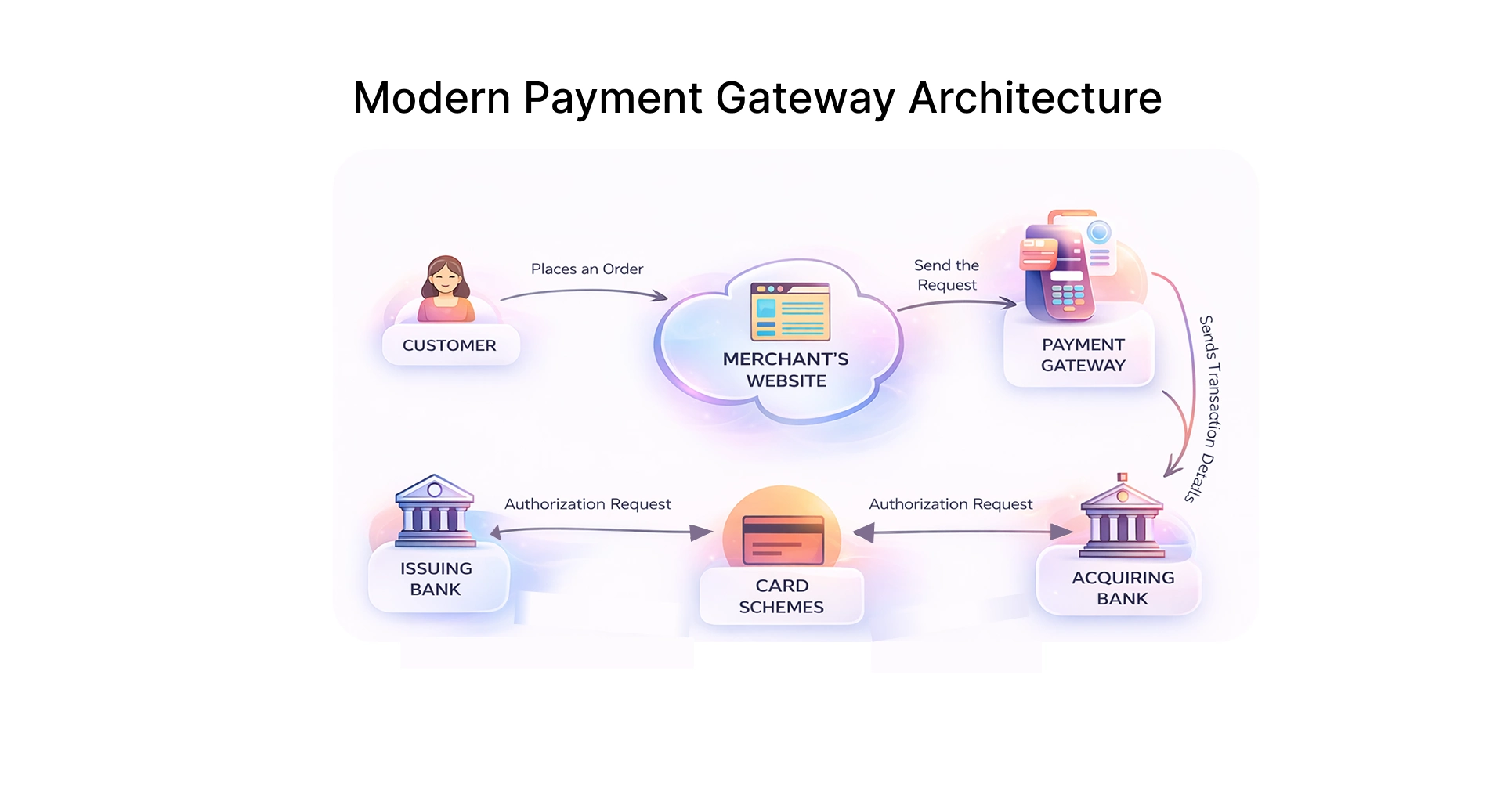
The volume of transactions processed by Visa will be almost $14 trillion in 2025, according to CoinLaw's "Digital Payment Infrastructure Statistics." According to Stripe's research, the volume of transactions via Stripe will be roughly $1.4 trillion during this same period. Each layer has different testing requirements. Errors in the gateway layer can lead to routing failures that are detected only during settlement.
End-to-End Transaction Flow: Authorization, Clearing, Settlement, and Reconciliation
What are the stages of a payment transaction? Authorization, Clearing, Settlement, and Reconciliation.
Every digital transaction passes through all four stages. Testers must validate behavior at each one:
- Authorization - Does the card processor have acceptable time limits for approving transactions?
- Clearing - Are the transaction records maintained in each system accurate?
- Settlement - Are the transactions accurately settled for the merchant's reporting platforms and for the bank accounts?
- Reconciliation - Are there any discrepancies in the customer invoice or billing records, and do you have a process to resolve those discrepancies?
If any of the four components discussed above are left out, incomplete, or ignored in this process, you'll have a gap in your implementation; therefore, to avoid confusion between these 4 components (the "four" steps outlined above), each component should correspond to its own unique (1-to-1) test plan.
Core System Components: APIs, Tokenization, Encryption, and Fraud Detection
Every payment platform is built on four technical foundations:
- External APIs to connect gateways and processors
- Tokenization to replace sensitive cardholder data with non-sensitive tokens
- Encryption to protect data in transit and at rest
- AI fraud detection to identify and block suspicious transactions in real time
According to CoinLaw, tokenization reduced the risk of data breaches by 34% in 2025, while real-time fraud detection systems now process over 1.2 billion transactions daily. Testing must validate how these components interact under real transaction load, not just in isolation. In real systems, the highest-risk failure point is often where the tokenization engine hands off to the third-party processor at peak volume.
Key Challenges in Testing Payment Platforms at Scale
API Security Vulnerabilities, Token Leaks, and Real-World Attack Vectors
API security testing is one of the most critical and often overlooked areas in payment systems. In addition, over the past 12 months, more than half (61%) of reported attacks against APIs have had no authentication methods in place, meaning attackers can bypass the authentication protocol.
Common vulnerabilities include:
- Broken object-level authorization exposing transaction data
- Token leaks caused by poor session handling
- Insecure direct object references in payment API endpoints
- Missing rate limiting, enabling brute-force attacks on card verification
By incorporating security testing into every stage of the CI/CD pipeline, organizations can ensure that their APIs are tested for security vulnerabilities before they go into production. Teams usually face this issue when scaling; existing security checks don't keep pace with new endpoints.
PCI DSS Compliance, Data Masking, and Audit Readiness in Test Environments
Organizations handling card payments must comply with PCI-DSS standards to protect sensitive customer data. A common and costly mistake is copying production data into test environments. This violates PCI DSS directly - test environments rarely have the access controls or audit logging that production systems maintain.
Key PCI DSS considerations:
- New PCI-DSS Version 4.0 requirements taking effect March 31, 2025, will implement mandatory multi-factor authentication (MFA) by all users with access to cardholder data, give greater flexibility in custom implementations/controls, and implement more stringent controls relative to phishing-resistant authentication. Organizations that validate compliance operations under PCI-DSS v3.2.1 are leaving themselves open to audit gaps.
- Tokenization (also referred to as encryption of the cardholder's actual account number during the transaction) and Network Tokenization significantly decrease the scope of PCI-DSS compliance for an organization.
High-Volume Transaction Handling, Concurrency Issues, and Race Conditions
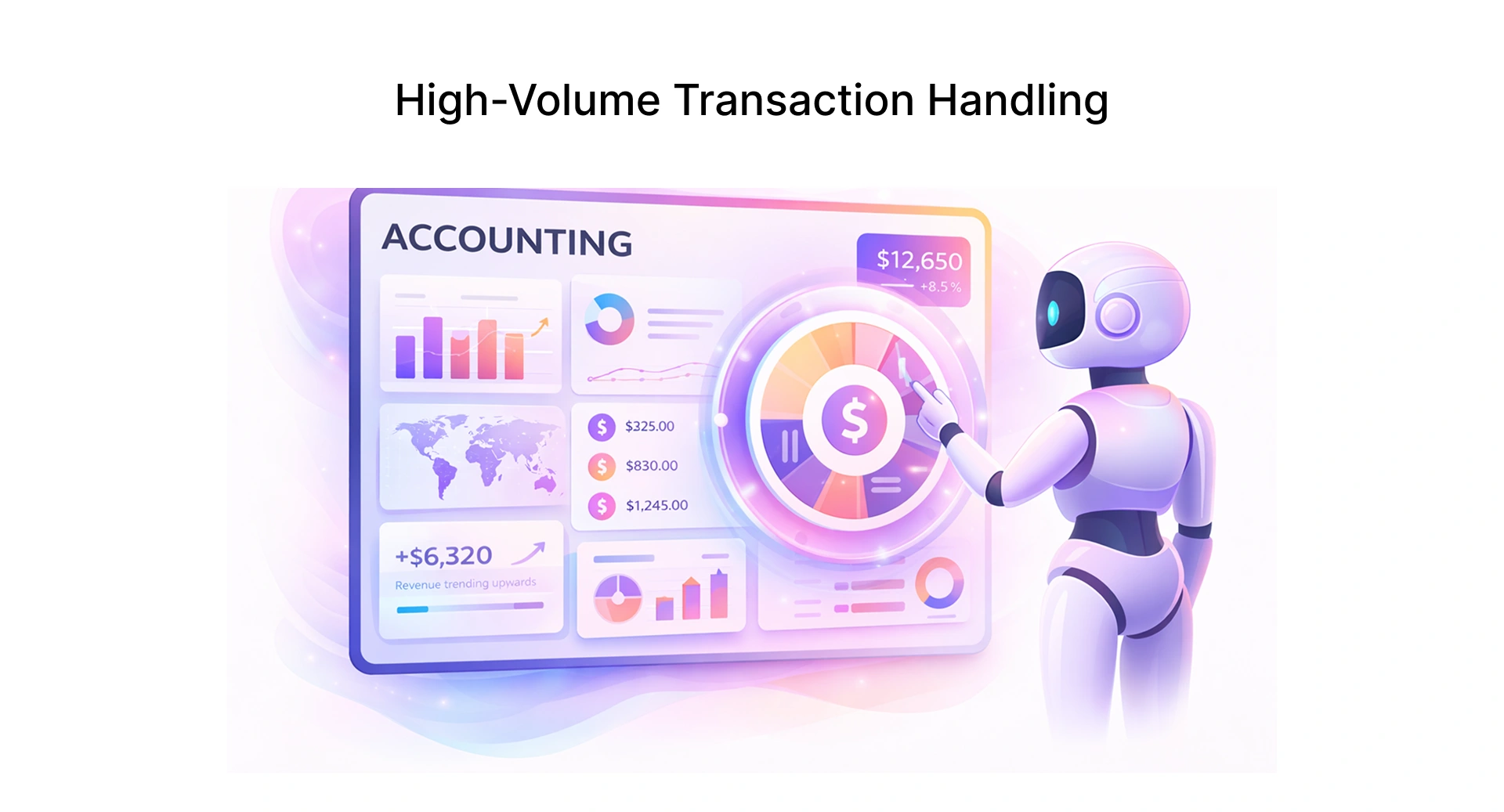
Payment systems must handle high transaction volumes, especially during peak periods like sales events or billing cycles. According to ElectroIQ's Digital Payment Adoption Statistics, point-of-sale digital payments are expected to grow from 38% in 2024 to 53% by 2030. During peak periods, transaction spikes can exceed 10x normal volume and that is exactly when concurrency failures appear.
Key concurrency challenges include:
- Race conditions where two transactions attempt to debit the same account simultaneously
- Database lock contention causing transaction queues to stall
- Async state mismatches between geographically distributed payment services
- Unbounded timeout loops triggering unexpected retry behavior
These issues rarely surface during low-volume functional tests. Teams usually face them during scaling, specifically under load testing that reflects real peak-volume conditions. If your team is only running functional tests in isolated environments, you are not seeing the failure modes that matter most.
Practical Testing Strategies Used by High-Performing Teams
Balancing Manual, Automated, and Continuous Testing in Payment Pipelines
All testing types needed for complex digital payment systems cannot be accomplished with just one method. To this end, high-performing teams frequently use a combination of these methods, including:
- Manual Test - Used for exploratory testing (edge cases) and for user experience checks against end-to-end payment flows.
- Automated Test - Used primarily for regression tests, API tests, and compliance tests.
- Continuous Testing via CI/CD Pipelines - Used for every release, similar to how teams use an AI social media post generator to streamline repetitive content workflows.
An example of where this approach to testing would be beneficial is for organizations that work through multiple gateways. Any changes made in the routing mechanism could trigger unanticipated outcomes based on test scenarios that were not addressed by the automated testing toolset.
Designing Test Coverage for Edge Cases, Retries, Failures, and Fallback Flows
The edge cases where payments get processed are often where payment solutions fail most often. According to Juniper Research, online payment fraud will likely cause merchants to lose more than $362 billion worldwide between 2023 and 2028 due to an increase in fraud during peak shopping times and the possibility of fraud occurring on backup systems that are not properly tested.
An appropriate test design should include the following:
API Testing Strategies Aligned with Real-World Transaction Behavior
Tests that evaluate Payment APIs by mimicking real-world user actions, as opposed to focusing on just the authorizations and validations.
- Validate 3 different condition states of a card (valid, expired, and flagged for fraudulent use) when you authenticate a card.
- Executing the full tokenization process and validating that no data is exposed at any time during the process (back and forth).
- Simulating network outages/drops during established transactions and confirming idempotency keys will prevent duplicate charges.
Performance Testing for High-Throughput Systems: Load, Stress, and Spike Testing
When testing the individual components of the future test payments setup, you will need much more than just load test scripts. You need to:
- Set a realistic, achievable transaction profile by defining multiple dimensions (Geography, Card Type, Payment Type).
- Model several concurrent users from each of the different channels (Mobile Banking, Online Shopping & point of sale (POS) terminals).
To test the performance of the auto-scaling capability, create test scenarios that will cause five times the expected volume of concurrent transactions to occur over a very short duration of time.
According to MageComp Digital Payment Statistics 2025, by 2024, mobile payments will comprise 30% of all digital payment transactions, while 40% of all in-store payments will be made using contactless payment methods. Each of these channels will have unique load profiles and failure modes. Use the severity benchmarks (JMeter, Gatling, k6) to create the scenarios that were built above, and do not use scaled-down versions of production environments for staging; under-provisioned staging creates false confidence capacity which subsequently gets exposed by the utilization of the machine in actual production.Teams implementing proper load testing frameworks typically identify 60–70% of performance bottlenecks before production.
Real-World Lessons from Payment Platforms
Common Failure Patterns in Transactions, Retries, and Third-Party Dependencies
The same kind of failures happen across all payment network systems, no matter how developed the system is.
- Silent failures happen when end-users think they have been charged, but they have not (i.e., they received a successful response; however, no funds were transferred).
- Duplicate charges happen whenever a transaction has already been issued and is topped for resubmission without verifying if an authorized transaction exists.
- Third-party timeouts happen if fraud tools or banking technology do not respond regularly when traffic to them is very high. Idempotency violations occur whenever the same request creates different conditions in the API used to complete the transaction.
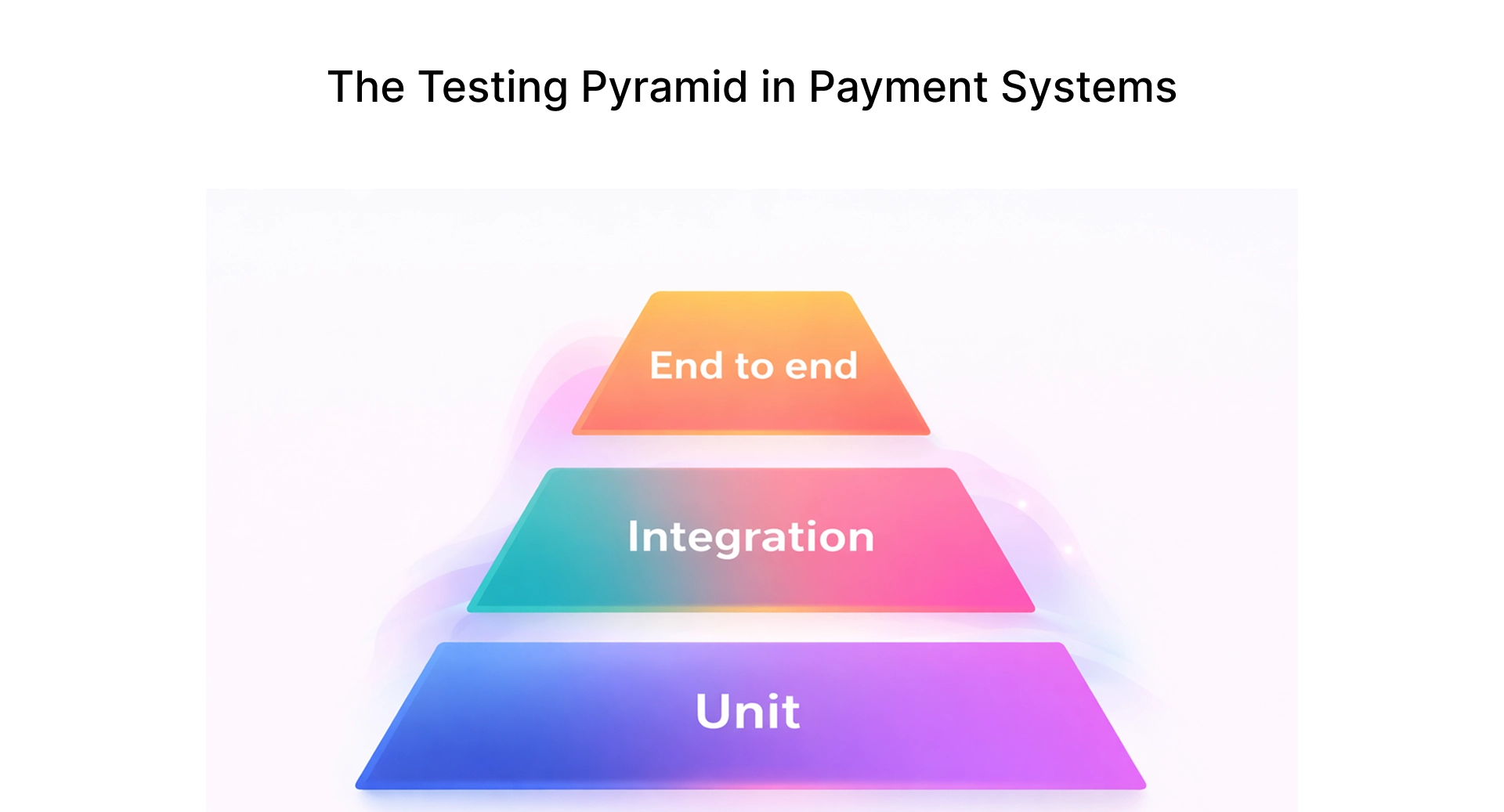
Testing Layers in Payment Systems: Unit, API, Integration, and End-to-End Flows
A complete payment testing strategy covers all four layers:
Most problems will occur at the points of original integration. The primary reason why silent failures occur at those points is due to the inconsistency of how well those two systems communicate with one another (the level of integration). The use of unit tests provides high confidence that you have fully complied with your users' requirements. Once you have tested each of the use cases at the unit test level (testing that the logic has been implemented correctly), you can test the entire flow of the transaction from start to finish with an end-to-end test.
Future of Payment Testing
Testing Challenges in Real-Time Payments and Instant Settlements
There are some challenges in testing real-time payment switches (RTP) that haven't been shown before in the historical traditional synchronous payment streams. According to GR4VY, Europe is likely to see an increase of up to 10x between the instant payments market and 2028, mainly due to SEPA iCT's increased prevalence and as a result of the EU mandating that banks need to provide instant payment facilities. The testing requirements for RTP are actually very different from those of traditional, defined, synchronous flows because failures do not always manifest as a result of payment events right away.
Testing for RTP specifically requires:
- The ability to check that event ordering is accurate, with confirmation that messages sent and received more than once are only processed once, as per the initial payment message.
- The ability to confirm that a settlement is final when a network has lost a partitioned data connection during processing of the payment transaction.
- The ability to validate that B2B payment channels are providing interoperability (compatibility) with other network partners through established standards.
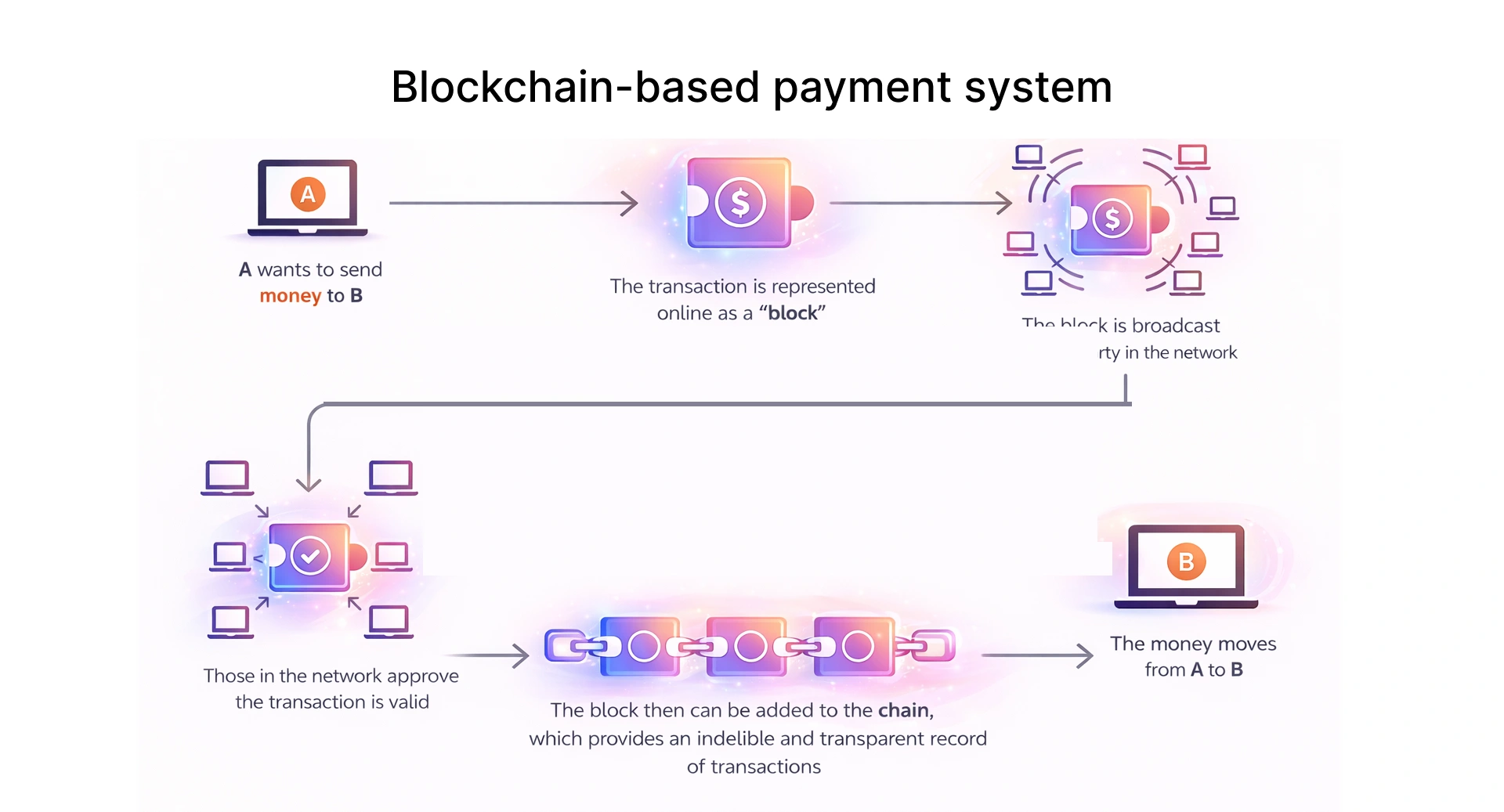
Blockchain-Based Payments: Smart Contract Testing and Traceability
According to research performed by MageComp, blockchain-enabled digital payment methods will decrease the risks of fraud caused by a lack of transparency and security by 40%. There are four main parts to smart contract testing:
- verifying that the logic of your smart contract executes according to your initial expectations with respect to your expected input;
- tracking the entire lifecycle of each transaction, including how it was created;
- simulating malicious environments; and
- verifying that any or all of your compliance features will work as designed/expected.
Conclusion
For most companies, testing payment services is no longer the last testing phase before release. Testing is now determining whether silent issues will be discovered before evolving into reconciliation issues or compliance issues, or being classified as potentially fraudulent, as reported during quarterly meetings.
The industry continues to evolve; Grand View Research projects the global digital payment market will exceed $361.30 billion by 2030, with a CAGR of 21.4%. This increasing level of growth does not mean you will require less testing; it means you will require more testing, as service traffic increases, so do the number of edge cases, and the chances that you receive new regulatory guidance or experience failure with a third-party solution.
Strong payment testing is no longer optional. It directly impacts revenue, trust, and compliance.
If you're mapping out where your payment testing actually has gaps - coverage, compliance, load behavior - Frugal Testing works with fintech and payment teams on exactly this. Not a generic audit, but a look at your specific stack and where it's likely to break.
FAQs (People Also Ask)
Q1.What is digital payment testing?
Ans: Digital payment testing ensures transactions are secure, accurate, and reliable across payment systems, including gateways, processors, fraud layers, and banking networks.
Q2.How can teams simulate real payment transactions without affecting live systems?
Ans: First, processor sandboxing - Stripe, PayTrace, and Square all support sandboxed mode. For third-party APIs beyond your control, WireMock is excellent for mocking successful and error responses. One caveat: test sandboxes that provide only valid responses give an inaccurate picture of your systems' performance. Your tests must be able to mock not only expected behavior but also various failures like timeouts, partial failures, and other error codes.
Q3.What are the most common failure points in payment APIs?
Ans: Retry mechanisms are the most common failure point, often causing duplicate charges. Other issues include missing idempotency keys, poor token handling, and broken authorization controls.
Q4.How do organizations maintain PCI DSS compliance in test environments?
Ans: Use synthetic test data instead of real cardholder information. Enforce strict data masking policies and run automated compliance tools that flag violations at the pipeline level before code reaches staging.
Q5.How do you test multi-gateway and multi-region payment setups?
Ans: First, test the individual scenarios, then test the overall application/system. There will be variances in latency by geographical regions; this should not lead you to think that your geographical area operates the same way everywhere.

.webp)

.webp)