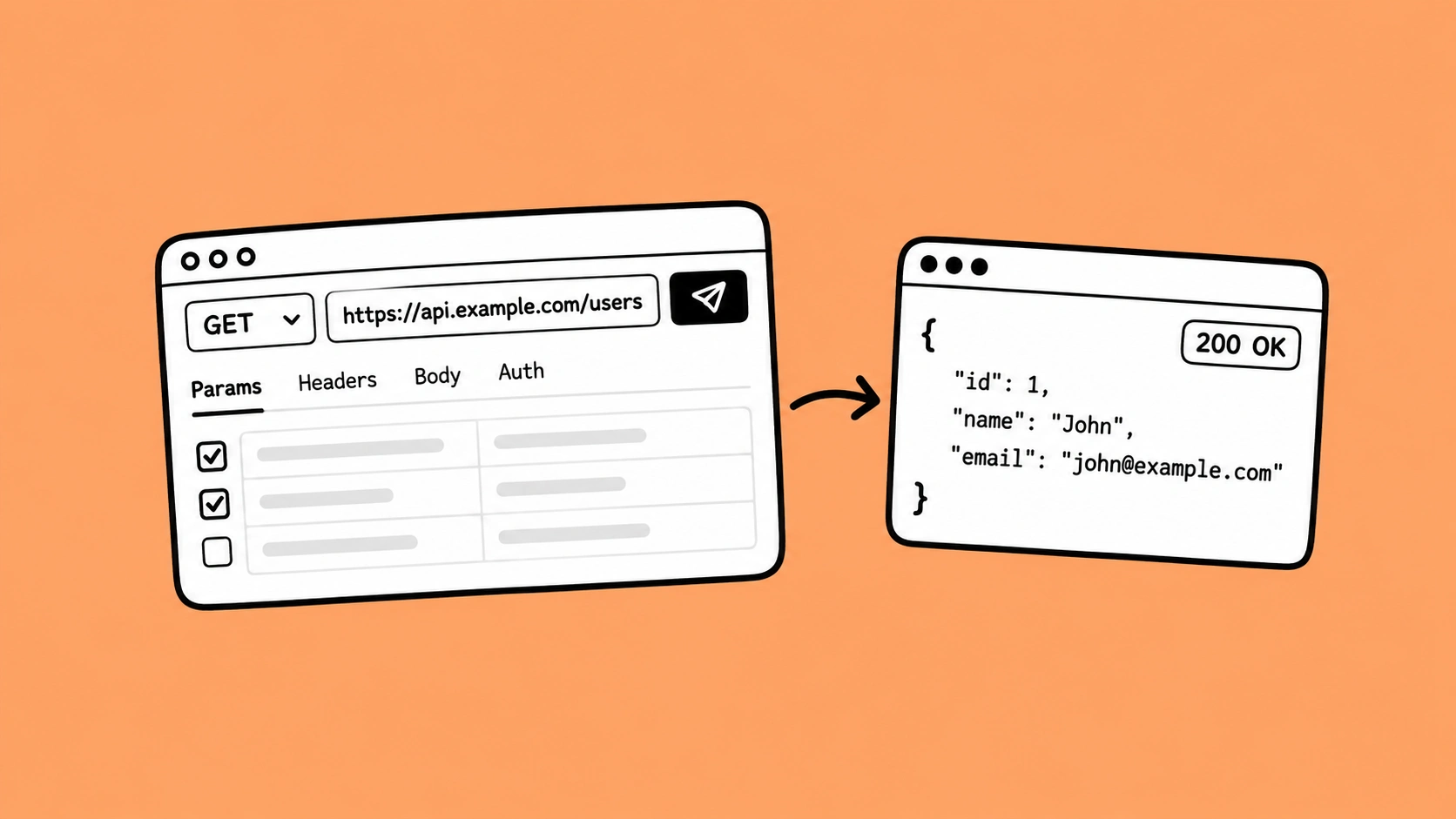


You push nothing. The build goes red. You re-run it. It goes green. Nobody changed a line.
That's a flaky test. And if it's happened more than twice this week, you're not dealing with a quirk in the pipeline - you have a structural problem in your test automation strategy.
Flaky tests are among the most expensive and least-discussed problems in modern QA. They waste engineering hours, erode trust in test suites, and slow releases in ways that don't show up obviously on a sprint report. This blog breaks down the anti-patterns behind them - and what actually fixes them in 2026.
Six anti-patterns cause the majority of flaky tests: poor test isolation and shared state, timing issues and async failures, unreliable selectors and fragile UI locators, test environment instability and data dependencies, lack of proper test data management, and over-mocking. Each one is covered below.

Why Flaky Tests Are Killing Test Automation ROI
What Flaky Tests Mean for Modern QA Teams
A flaky test has intermittent results - it passes some times, and fails other times, but with no changes in code. Reasons include timing problems and state sharing, poor selectors, and unstable environment.
The damage they do follows a predictable pattern:
- Engineers ignore red builds because they assume flakiness.
- False failures pile up alongside real regressions.
- QA teams spend hours chasing test bugs instead of product bugs.
In a 2017 study, Google engineers discovered that 16% of their test suite was flaky, and that 84% of pass-to-fail transitions in CI were due to flakiness, rather than actual regressions.
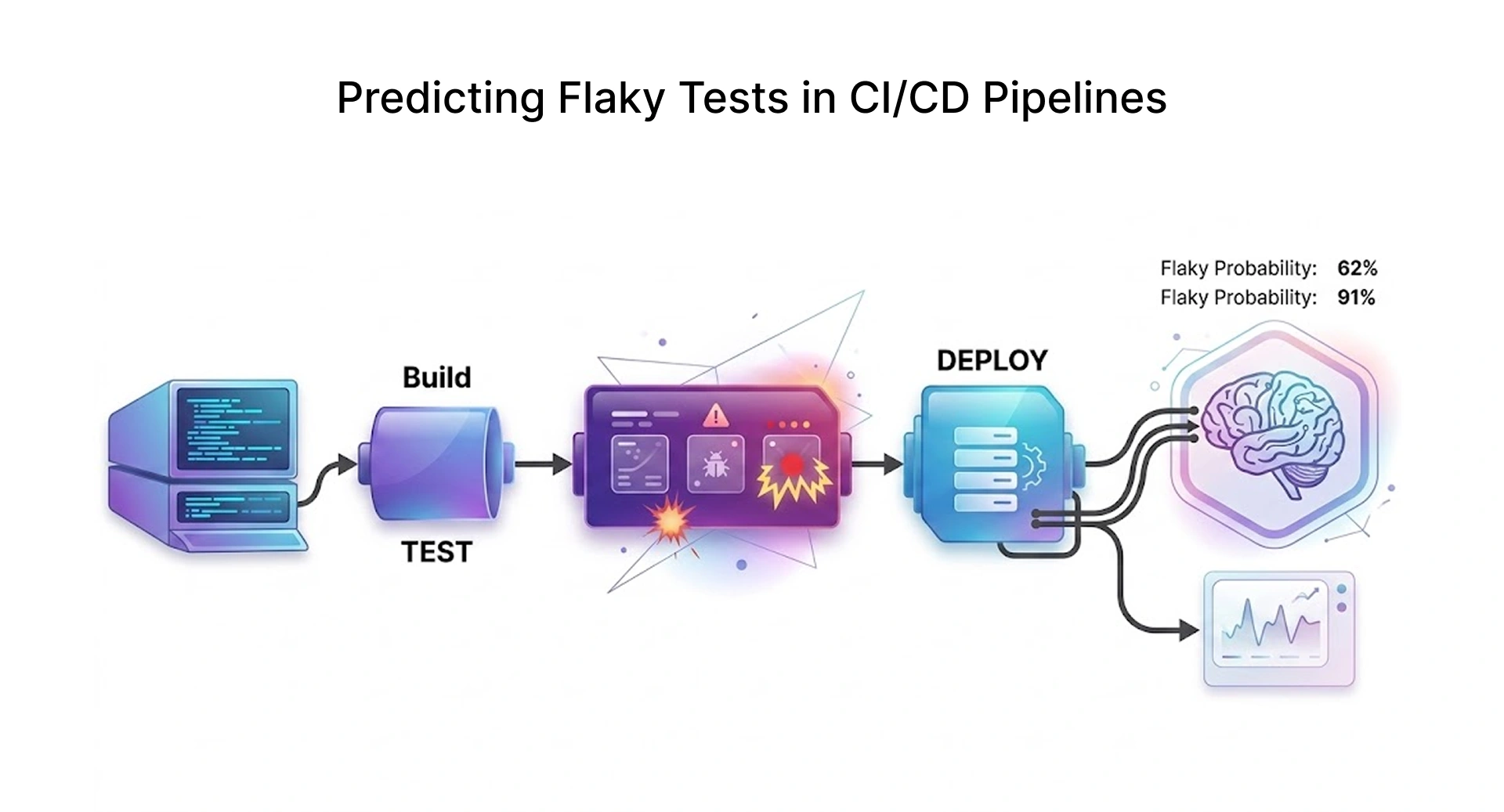
Hidden Costs of Flaky Tests in CI/CD Pipelines
Most teams track build time and deployment frequency. Almost no track flaky test rate - and that's precisely why the problem compounds silently.
Atlassian reported losing 150,000+ developer hours per year to flakiness. Microsoft estimated the cost at $1.14 million annually in developer time.
Why Test Reliability Is Critical for Scalable QA
Test reliability is the difference between a suite that tells you something and one that tells you nothing. Without it, you can't trust automated gates, you can't run regression tests on feature branches, and you can't scale coverage without scaling false positives. The goal isn't to reduce flakiness as a metric - it's to reach the point where a red build means something broke in the product. Based on Frugal Testing's experience across mid-sized SaaS product teams, around 40% of QA time goes to chasing flakiness - time that produces no product value.
High-Impact Anti-Patterns That Cause Flaky Tests
Poor Test Isolation and Shared State Issues
This is the most common root cause. When test cases share resources - a database, a filesystem path, an in-memory object - execution order starts to matter. In parallel execution, it gets worse: two tests writing the same data at the same time produce non-deterministic results.
Fixes:
- Each test case sets up its own data and tears it down afterward.
- Avoid global variables and static state across tests.
- Reset state using transactions or database rollback strategies.
- Use single environments or schemas in parallel workers.
The Ice Cream Cone Anti-Pattern describes this failure: excessive UI tests and too few unit tests produce suites that are structurally fragile. There is a reason why we have the test pyramid.

Over-Mocking That Breaks Real-World Test Validity
Mocking is useful. Over-mocking is dangerous. When you push too hard on the mock API, database, and third-party services, your tests cease to reflect the behavior of the system. They fail in the test environment and malfunction in production.
Problems this causes:
- Mocked HTTP APIs return clean JSON; real APIs throw edge cases, timeouts, and 429s.
- Mocked database layers hide real query performance problems.
- Tests pass even when the integration logic has failed.
Mock at the boundary of the network. External dependencies: Use WireMock or recorded HTTP responses, and internal logic against actual implementations.
Timing Issues and Async Failures in Automated Tests
sleep(3000) is not a wait strategy - it's a guess. It won't hold on slower machines, loaded CI runners, or any environment other than the one the test was first written on.
Race conditions and asymmetric failures manifest themselves most in UI automation and API testing, where the response time is variable. An analysis of 201 flaky test fixes across 51 open-source projects found that async wait and timing issues account for 45% of all flaky test causes.
The patterns that cause them:
- Fixed sleep statements as opposed to waits that are dynamic.
- Lack of waitFor statements before working with UI elements.
- External dependencies have no timeout handling.
- Parallel tests in accessing shared resource deadlocks.
In Playwright, replace fixed timeout waits with condition-based waits:
javascript
// Bad
await page.waitForTimeout(3000);

// Good
await page.waitForSelector('#submit-btn', { state: 'visible' });
await page.waitForResponse(resp => resp.url().includes('/api/submit') && resp.status() === 200);
This applies to API testing as well: do not sleep between steps, poll to the expected state. True concurrency problems - atomicity failures, load-related data races - must be addressed at the application layer, and not covered with longer timeouts.

Test Environment Instability and Data Dependency Problems
Environmental instability is the second most common cause. Tests fail for reasons that have nothing to do with the test logic - network problems, memory pressure, contention with other workloads.
The core problems:
The most common fix that teams arrive at: containerization. Most of the instability is eliminated by Docker-based environments per test run. To have problems with system time, a FakeTimeProvider is used to allow tests to control the clock.
Unreliable Selectors and Fragile UI Locators
This one is specific to UI automation, but more widespread than it should be. A locator that is good today dies tomorrow when a developer alters a CSS class or restructures the DOM. Test fails. No one modified the feature.
The fragility hierarchy, worst to best:
All fragility levels refer to the likelihood of a locator breaking on DOM or layout changes. Explanatory notes are applied to the highest-fragility row only for conciseness.
The actual fix: The QA and frontend teams agree that developers will add data-testid attributes to elements with WebDrivers as part of their definition of done.
Lack of Proper Test Data Management
This one burns slow. Tests that depend on specific records in a shared database break randomly - someone else updated a record your test relied on, and the failure has no obvious cause.
Data-Driven Testing addresses this issue by producing data in a programmable manner:
- Tests generate their own data in setup and clean it up in teardown.
- The data shared by tests should not be records but rather read-only reference data.
In the case of API testing, request bodies are not reused but are built on a case-by-case basis.
Such tools as Faker (JS/Python) or AutoFixture (.NET). The generation of test data is easy with .NET
How High-Performing QA Teams Eliminate Flaky Tests
Designing Stable Test Automation Frameworks
Stability comes from early design decisions, not late-stage patching. Teams that treat a test suite as a product - with the same discipline as application code - consistently hit lower flaky test rates.
Important choices to make to minimize flakiness:
- Adhere to the Honeycomb Testing Model of service-heavy architecture: more integration tests, fewer UI tests.
- Use the test pyramid with monolithic apps: use as many unit tests as possible.
- Isolate test framework-level - render shared state difficult to write.
- Make design test scripts idempotent: When you run the same test, you should always get the same result.
- Assign an owner to every test case - unowned tests go unmaintained and are first to become flaky.
Choosing the Right Automation Tools for Reliability
Popularity isn't the right filter. The tools that actually reduce flaky tests are the ones that handle async behavior and failure modes without requiring manual timing workarounds.
Teams evaluating enterprise test automation solutions for CI/CD pipelines should prioritise built-in async handling and retry logic over feature breadth - those two factors have the most direct impact on flaky test rate.
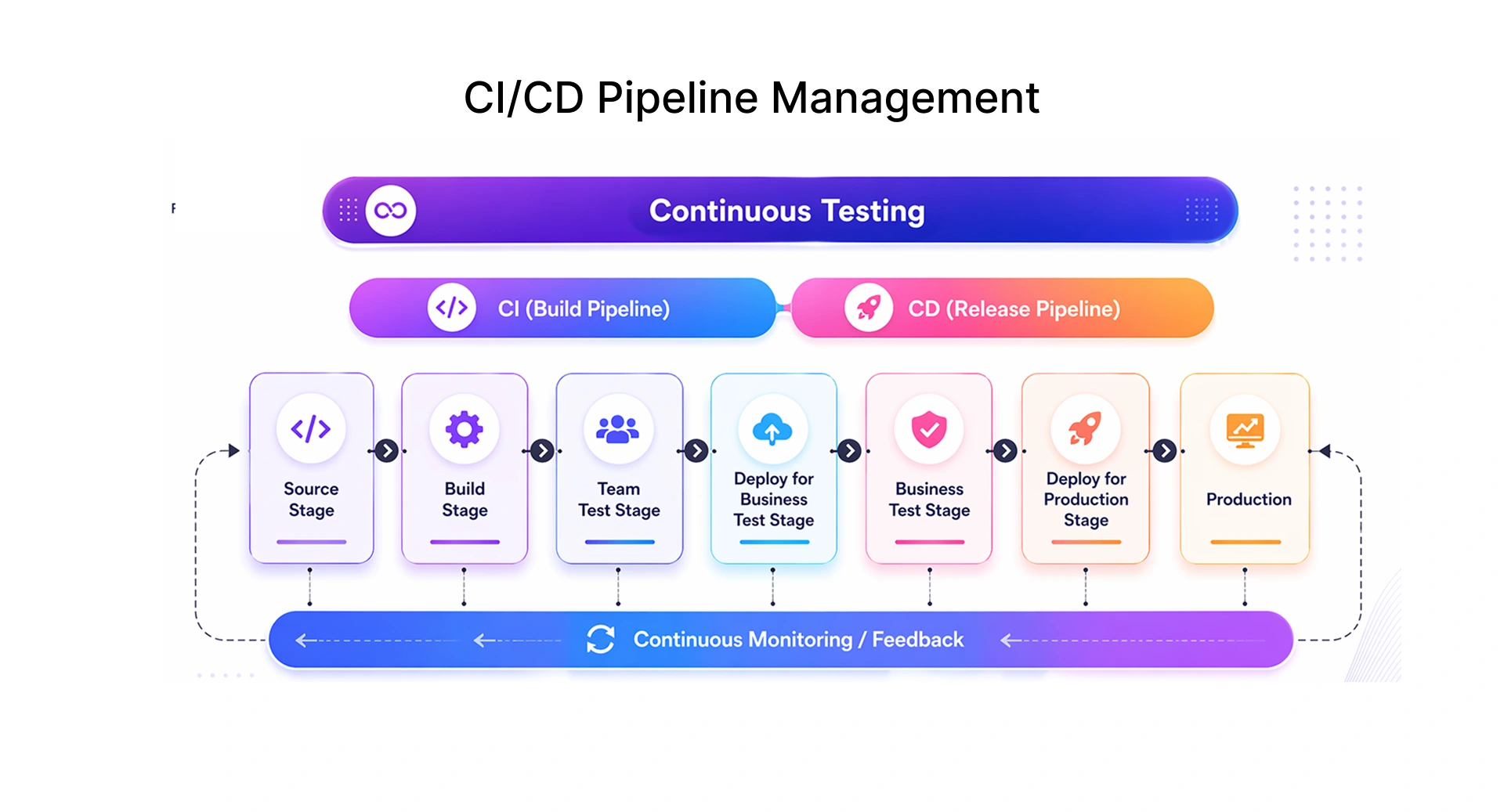
Implementing Continuous Test Monitoring in CI/CD
You can't fix flaky tests you don't know about. Teams need visibility that surfaces flakiness before it compounds:
- Monitor the results on the individual test case level, not only on the build level.
- Flag tests as inconsistent when the results are different on recent runs.
- Create a dashboard displaying the flaky rate by test owner, module, and type of test.
- Policy: When in 10 runs there are >2 inconsistent results in a test, it will be placed in the quarantine queue.
Quarantine does not imply ignoring flaky tests, but rather isolating them, examining them, and fixing or eliminating them.
Improving Test Data and Environment Consistency
For test data, switch to per-test generation with factories or fixtures. For CI environments, use separate test databases per runner - never share across parallel workers. Use EF Core migrations (.NET) or Flyway/Liquibase (Java) to revert schema state between runs.
In the case of environments, Docker Compose, or Testcontainers can be used to bring up isolated environments each time we run a test. Container images - Pin dependencies - never latest. Store load testing tools on a different infrastructure; contention of resources spoils functional testing.
Using AI to Detect and Prevent Flaky Tests
AI-Powered Test Failure Analysis and Insights
Manual triage is slow. An engineer has to reproduce a non-deterministic failure, isolate variables, and usually just guess.
AI-powered software testing tools now handle the first pass:
- Cluster related failures together rather than treating each one in isolation.
- Group failures into environment-related and code-level - no manual investigation.
- Classify failures as product bugs or test bugs before an engineer inspects them.
The practical difference: instead of an engineer spending 45 minutes on a failure that turns out to be a flaky assertion in a timing-sensitive test, the tool flags it immediately as a known pattern and routes it to the quarantine queue.
Tools doing this today include Launchable, Flakybot (Google's open-source quarantine tool), and BuildPulse, which tracks flakiness trends across test runs and ties them to specific commits.
Predicting Flaky Tests Before They Impact Releases
Other AI-based automation systems can learn from a set of past test results to identify tests that are on the way to becoming flaky, before they begin to fail sporadically. A test that is becoming slower, or even retries several times before it passes, is a candidate. It is much more economical to catch and debug it there than it is to debug it when it is blocking CI.
The test impact analysis provided by Launchable, as an example, tells the teams which tests are statistically likely to fail due to what code changed, so they can allocate compute budget to the higher-risk tests.
Scaling Test Stability with AI-Driven Automation
At scale - hundreds of engineers, thousands of test cases - manual flaky test management breaks down. AI-based automation handles this by auto-healing selectors on UI changes, flagging test refactor candidates when flakiness patterns emerge, and prioritising which tests to fix based on deployment impact.
Frugal Testing uses this intelligence layer to help teams scale QA operations beyond simply running tests - identifying which failures need action, which are noise, and where coverage gaps will cause problems before they show up in production
Conclusion: Building a Flaky-Test-Free Testing Strategy
Key Anti-Patterns QA Teams Must Eliminate Immediately
The five anti-patterns below should be addressed in priority order - the ones at the top cause failures that are nearly impossible to trace back to their source.
Practical Steps to Improve Test Stability and Automation Reliability
You need not set everything straight at the same time:
- Week 1–2: Flaky test rate audit. Build the dashboard. Determine the worst offenders.
- Week 3-4: Test isolation of the top 20 percent of the flakiest tests. Migrate to containers.
- Month 2: Move UI locators to data-testid. Introduce waits in UI automation.
- Month 3: Implement per-test data generation. Create a quarantine line with a set SLA.
Microsoft reduced test flakiness by 18% in six months with a "fix or remove within two weeks" policy - and saw a 2.5% increase in developer productivity.
How Frugal Testing Helps Reduce Flaky Tests and Improve QA Outcomes
When you require QA automation solutions to fix flaky tests, be it framework redesign, CI integration, locator strategy, or test data architecture, that is where Frugal Testing comes in. If your build passes more than 70% of the time with no code changes, you do not have a testing quirk - you have a strategy problem. That is where Frugal Testing helps.
FAQs (People Also Ask)
Q1.What causes most flaky tests in modern automation setups?
Ans: Usually two or three things at once: shared state between tests, hardcoded sleeps, fragile locators, and poor test data management. In parallel runs, race conditions pile on top. A test flaking 20% of the time is rarely one root cause.
Q2.How can QA teams systematically reduce and prevent flaky tests at scale?
Ans: Measure at the test case level, not the build level. Know which test fails and how often. Assign owners, quarantine the worst offenders, and fix in order of CI/CD impact. Slack dropped its CI failure rate from 57% to under 4% this way. Prevent new flakiness by enforcing test isolation at the framework level.
Q3.Which Test Automation Tools Deliver the Highest Stability and ROI for QA Teams?
Ans: Playwright for UI work: auto-waiting removes most timing failures without extra code. Postman or Insomnia for API testing. TestNG and JUnit for Java teams that need retry infrastructure. Ranorex has built-in flaky test detection on complex UI suites.
Q4.How Is AI Reshaping Software Testing Processes and Quality Engineering Outcomes?
Ans: Classifying failures, predicting which tests will go flaky, auto-healing broken selectors, and flagging coverage gaps. The value is filtering signal from noise: which failures matter, which tests to trust, and what to fix first.
Q5.How Do You Quarantine Flaky Tests Without Removing Them From CI?
Ans: Move it out of the merge gate into a post-merge suite. It still runs, it just does not block deploys. Assign an owner, set a two-week deadline to fix or delete, and track it in your dashboard. A managed backlog, not a graveyard.

.webp)