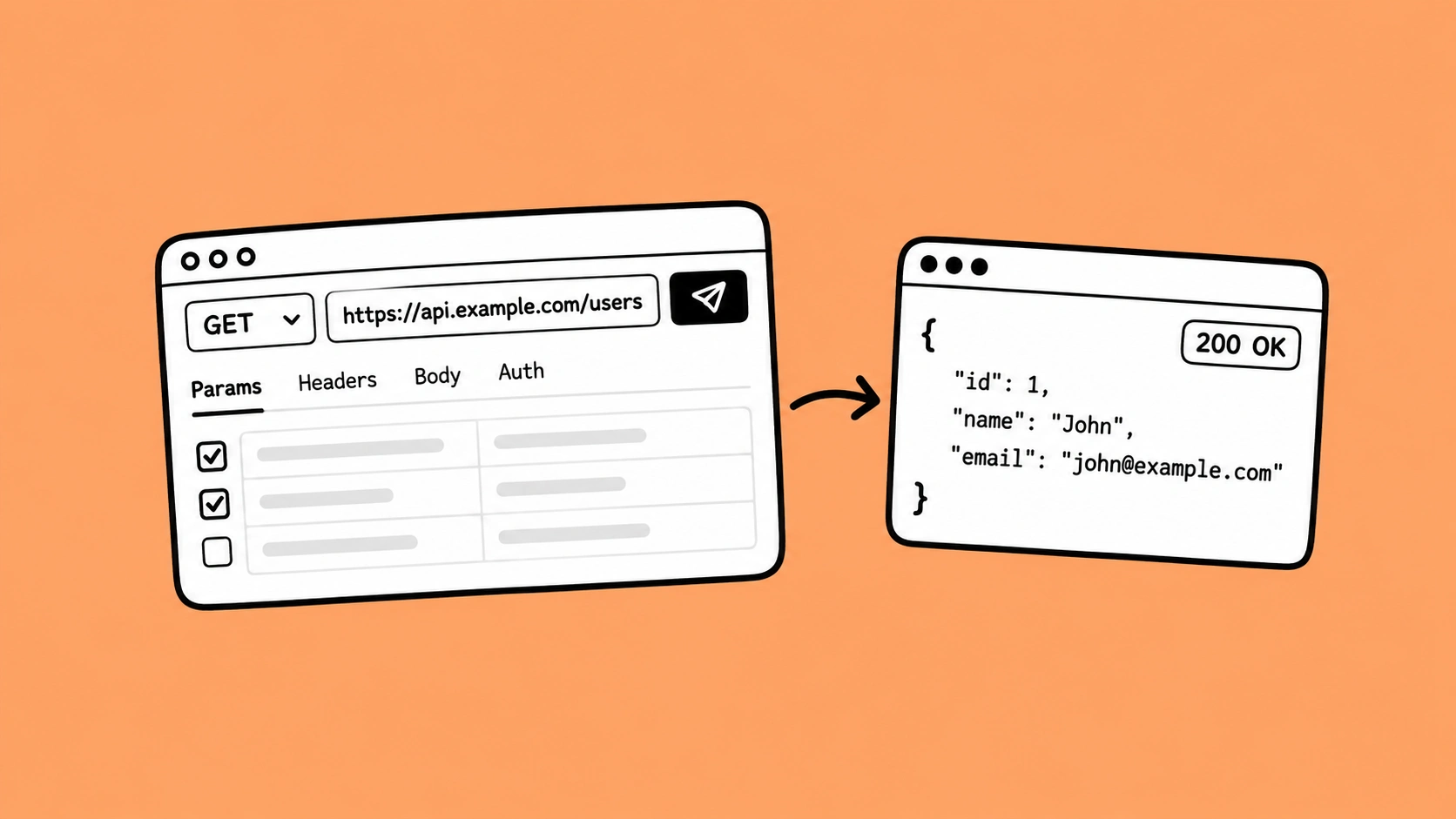


QA automation services are engineering-led implementations built around your application's architecture. They include frameworks, CI/CD pipelines, automated regression suites, and long-term maintenance handled by QA specialists. AI-assisted testing systems are vendor-managed tools that use machine learning to automate test creation, self-heal locators, generate synthetic data, and accelerate execution workflows.
The right choice depends on your product complexity, release frequency, compliance requirements, and operational scale. Most mature engineering teams eventually adopt a hybrid approach that combines engineered automation frameworks with AI-assisted testing acceleration.
Software testing has evolved significantly over the last few years. Selenium frameworks, scripted regression suites, and DevOps-managed QA pipelines dominated most of the previous decade. By 2026, AI-assisted testing systems are helping teams reduce testing overhead, accelerate coverage creation, detect UI changes automatically, and streamline regression workflows without requiring engineers to manually build every test scenario from scratch.
It is about balancing engineered QA automation infrastructure, AI-assisted execution speed, scalability, governance, maintainability, and long-term operational reliability.
According to Gartner, by 2027, nearly 80% of software engineering teams are expected to use AI-assisted testing tools to support quality engineering and automation workflows. This growth reflects how quickly AI testing capabilities are becoming part of modern software delivery pipelines.
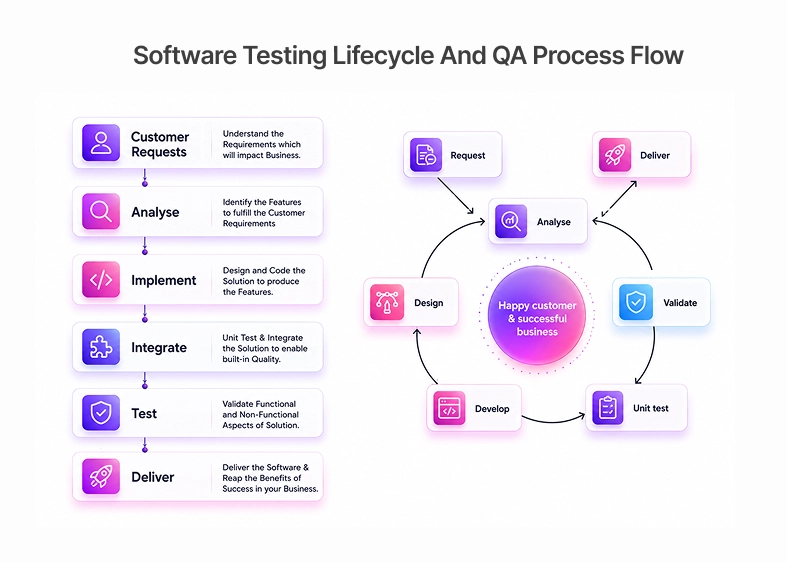
The Core Difference
QA automation services work as implementation engagements. The role of a QA company is to create frameworks, create automated test suites, integrate pipelines, manage regression testing, and maintain them over time. The testing logic is within your codebase and under your team's control.
AI testing platforms are software products that are sold as a subscription. They leverage machine learning and generative artificial intelligence to automate certain aspects of test development, administration, analysis, and execution. In this model, a lot of testing logic will remain in the vendor's platform ecosystem.
This is more important than it sounds when demoing a product. Using the QA automation services, you become the owner of the architecture of the framework and can develop it along with your application. AI testing platforms put you in the shoes of the vendor. This method is effective at first but can have a problem when workflows get more complicated or when business needs increase.
The table below compares QA automation services and AI-assisted testing systems across 16 important dimensions, including ownership, customisation, DevOps integration, compliance support, debugging visibility, and scalability. Use it as a practical decision-making framework when evaluating long-term testing strategies.
Why Enterprise automation infrastructure Outperform AI Platforms on Complex Systems
Enterprise systems are not predictable and uniform, so large organisations still use automation infrastructure for mission-critical applications.
Enterprise systems usually include complex business logic, role-based permissions, API dependencies, legacy integrations, compliance requirements, and deployments across multiple environments.
AI testing platforms often struggle in these scenarios because they rely heavily on workflow predictability and pattern recognition. Enterprise applications rarely behave in predictable ways at scale.
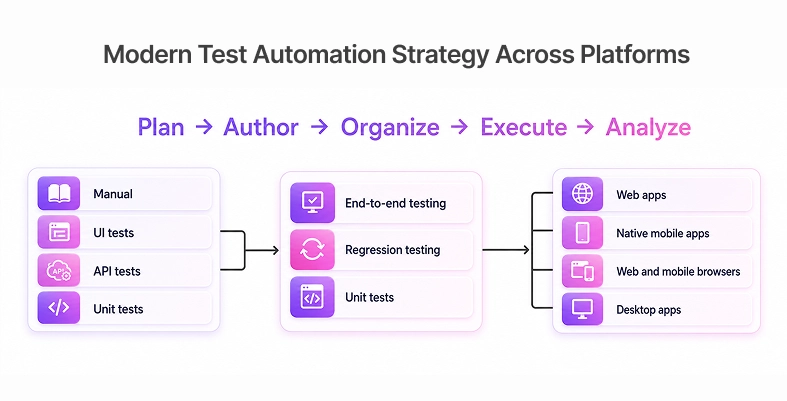
In Frugal Testingi's QA consulting engagements, one recurring failure pattern is teams adopting AI-assisted testing systems for workflows with highly variable business logic, such as insurance approval systems, multi-role compliance workflows, and audit-driven processes. Tests usually perform well during the first few months, but stability starts degrading as the application expands across multiple teams, environments, integrations, and deployment pipelines.
These problems typically begin surfacing 6 to 12 months after deployment, when the organisation is already deeply invested in the platform and migration becomes significantly more expensive.
Modern QA automation frameworks have evolved far beyond traditional Selenium scripting. Today, they encompass cloud-based execution environments, AI-powered debugging, pipeline orchestration, test prioritization, cross-browser validation frameworks, and scalable automation architectures that scale with enterprise applications.
How automation infrastructure Hold Up Longer Than Manual Testing
A healthcare claims processing platform illustrates why deterministic testing matters. These systems often include patient-data validation, insurance verification APIs, audit logging requirements, conditional approval workflows, and role-specific behaviour that changes depending on the user.
Well-structured automation frameworks handle this complexity through explicit assertions, controlled versioning, reusable components, stable CI/CD integration, and human-reviewed validation checkpoints. As the application grows, the test suite grows with it.
When this structure is missing, test suites become difficult to trust, maintain, and scale across teams. The result is predictable: tests pass in staging environments, edge cases appear in production, and engineering teams inherit automation suites that nobody fully understands or owns.
Why Product Teams Move Faster with AI Testing Platforms.
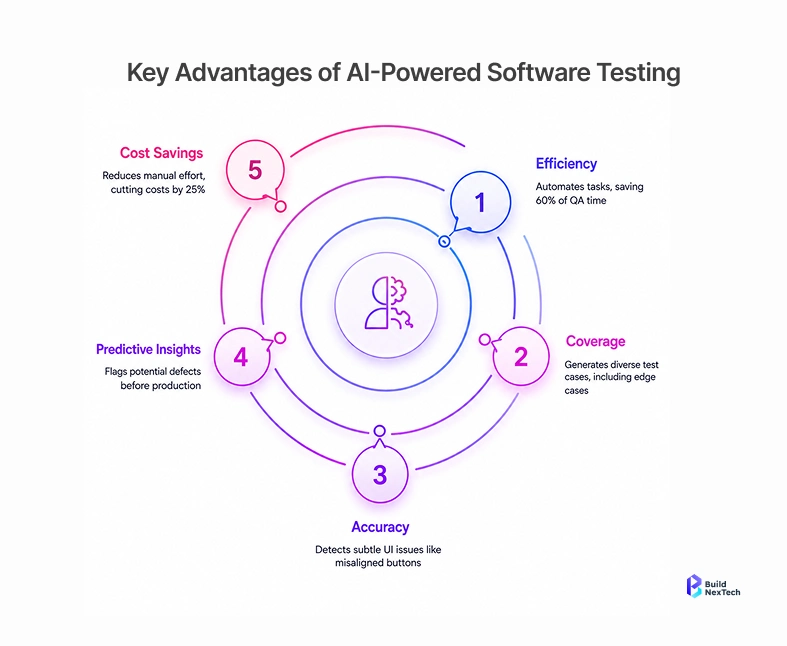
AI-assisted testing systems get to test coverage in days rather than weeks without having to hire a single dedicated QA engineer to write each and every test scenario. Teams can automatically create test cases, detect UI changes, find broken locators, create synthetic test data, and write tests in NLP.
These systems are ideal for fast-moving SaaS ventures, agile product teams, high-frequency deployment pipelines, frequently updated UI applications, and extensive regression suites for which breadth of coverage is more important than in-depth logic validation.
Traditional automation ecosystems built around Selenium, Cypress, and Playwright still remain foundational across many engineering teams. At the same time, newer AI-driven platforms such as Mabl, Testim, and Functionize are gaining adoption for regression acceleration, self-healing workflows, and low-maintenance UI validation.
What AI Testing Tools Actually Do Well and Where They Fall Short
The reliability ratings below are based on consulting observations across enterprise QA automation engagements and real-world production deployments. Some AI testing capabilities are already mature and dependable at scale, while others still require significant human oversight in complex environments.
The underlying limitation is business context. AI platforms recognise patterns. They do not understand what a particular failure actually means for the business. A failed checkout flow is usually easy to identify through testing data and monitoring systems. A compliance violation hidden inside a multi-step financial workflow is much harder to detect automatically, and the operational consequences of missing that issue are significantly more serious than a standard regression failure.
Why Hybrid Testing Has Become the Default
Most organisations are not choosing purely between QA automation services and AI testing platforms. They are combining both, and the split is usually fairly logical once you map it out against what each layer actually needs.
This is where AI earns its place in testing handling high-volume, repeatable work so engineers can focus on the logic that actually requires judgement.
The Scalability Problem Most Teams Notice Too Late
Most testing strategies fail gradually rather than immediately. Problems usually appear when workflows become highly customised, APIs evolve rapidly, applications expand across regions, security requirements tighten, and multiple engineering teams begin contributing simultaneously.
Frameworks designed by experienced QA engineers scale differently because they are built around the application's architecture rather than the constraints of a vendor-managed platform.
Some of the most frequent errors in using AI testing platforms at scale are:
- Tests break after large UI redesigns when self-healing mechanisms fail to adapt quickly enough
- False positives increase as the application surface expands
- Debugging becomes difficult because teams cannot clearly see why AI-generated tests fail
- Vendor lock-in limits framework flexibility and long-term scalability
- Edge cases behave inconsistently across environments and deployment pipelines
Startups vs Enterprises
In the early product-market fit phase, AI testing platforms can deliver quicker short-term value to startups due to their speed and ability to facilitate rapid product iterations, which is more significant than governance at this early stage.
Enterprises operate differently. Operational risk, compliance, auditability, and coordination between teams are much more significant as systems scale. Through deterministic testing frameworks, structured governance, and traceable validation processes, automation infrastructure address key needs in these environments that are not inherently provided by AI-generated test suites.
DevOps and CI/CD Integration
Testing and deployment pipelines are inseparable now. Your testing strategy directly affects release velocity, deployment confidence, rollback frequency, and recovery time when something breaks in production.
Automation infrastructure integrate directly into Jenkins, GitHub Actions, Azure DevOps, GitLab CI/CD, Kubernetes pipelines, and Docker-based environments with logic customised to your specific deployment topology.
AI testing platforms connect through vendor-provided connectors and APIs, but integration depth varies considerably. Problems surface when you have multiple repositories, custom deployment logic, frequently changing infrastructure, or environment-dependent test orchestration.
A strategy that works at 10 deployments per week often breaks at 200 per day. Build for where you expect to be.
According to the GitLab DevSecOps Report, organisations with mature CI/CD automation pipelines deploy software more frequently while reducing rollback incidents, deployment failures, and defect escape rates. That makes testing architecture a direct contributor to release stability and engineering velocity.
Conclusion
QA automation services and AI testing platforms solve different problems, and the right choice depends on your product complexity, compliance requirements, release velocity, and long-term scalability goals. In 2026, most high-performing engineering teams are not choosing one over the other they are combining engineered automation frameworks with AI-driven testing acceleration where it makes sense. AI tools alone will not hold up when the stakes are high and the logic is variable.
Teams evaluating long-term QA scalability should assess not only automation speed, but also framework maintainability, governance requirements, debugging visibility, and operational risk tolerance.
If you are looking to build a scalable, reliable, and future-ready testing strategy, Frugal Testing helps businesses implement QA automation services, AI-powered testing workflows, and hybrid testing ecosystems designed for faster releases, stronger stability, and long-term engineering efficiency
People Also Ask (FAQs)
Q1.How long does implementation take for each approach?
Ans: AI testing platforms can often be implemented within days or weeks because vendors manage most of the infrastructure. Custom automation frameworks typically take longer to build, but they provide greater flexibility, scalability, and control over testing processes.
Q2.Do AI testing platforms require integration with existing DevOps tools?
Ans: Yes. Most AI testing platforms integrate with CI/CD pipelines, version control systems, and cloud testing environments. However, integration capabilities vary by vendor, so compatibility with your existing DevOps ecosystem should be assessed early.
Q3.How secure are AI testing platforms for enterprise applications?
Security depends on the vendor’s architecture and governance model. Organisations should evaluate access controls, audit logs, encryption, compliance certifications, data handling practices, and deployment policies before adopting any AI testing platform.
Q4.How do testing strategies typically evolve as a product scales?
Ans: As products grow, testing strategies shift from basic regression automation to risk-based testing, governance, observability, and pipeline orchestration. Teams also focus more on framework maintainability, test stability, reporting, and compliance requirements.
Q5.Are AI testing results reliable for complex business workflows?
Ans: AI testing platforms perform well for repetitive workflows, regression testing, and UI validation. However, complex business rules and compliance-heavy processes often require human oversight and engineered automation to ensure accuracy, consistency, and auditability.

.webp)