


Quality assurance can be improved through the structured, metric-based approach of the Software Testing Life Cycle (STLC). STLC aligns testing with company-wide goals, supports modern software development lifecycle (SDLC), and enables an automation-first approach to software delivery. The following article will cover how STLC works, the relevance of STLC today, and how businesses can use STLC as a strategic advantage rather than simply a checklist that must be completed.
✨ Key Insights from This Article:
🧩 Structured QA Framework
⚠️ Risks of Unstructured Testing
🔄 Early Defect Prevention
🤖 Scalable Automation & AI
🚀 Faster, Reliable Releases
Why STLC Still Matters in Modern QA
The speed of modern software delivery is higher than ever, driven by the Agile methodology, CI/CD pipeline, and DevOps cultures. However, rapid releases can lead to unstable releases, increased Defects, and a poor user experience. Here, the Software Testing Life Cycle (STLC) remains to be very crucial in ensuring that the standard of software quality is maintained in all industries.
- Growing complexity of software requirements and integrations
- Increased reliance on automated testing and CI/CD
- Higher expectations for Reliability, Performance, and Maintainability
- Rising demand for structured QA processes in regulated domains
At Frugal Testing, we see STLC not as a legacy model, but as a living QA framework that adapts to Agile software development methodology and DevOps. When implemented correctly, STLC aligns the QA team with business goals, improves test coverage, and ensures validation and verification at every stage of the SDLC.
The Problem of Unstructured Testing in Fast-Paced Development
Unstructured testing frequently occurs when the teams are in a hurry to meet the release dates without a proper process of testing. Although Agile is flexible, the omission of formal test planning and test documentation causes long-term risks difficult to rectify later on.
- Missing Requirement Analysis and weak requirements traceability
- Poor test environment setup and unreliable test data
- Inconsistent Bug Reports and Defect Tracking
- Limited test metrics and Test Result Analysis
Without a clearly defined STLC process, software testing services struggle to remain proactive and risk-driven. Formal STLC provides structure with the help of the distinct stages, such as test analysis, test design, test execution, and test closure, that allow teams to achieve the desired balance between speed and quality assurance in a startup or a corporate setting.
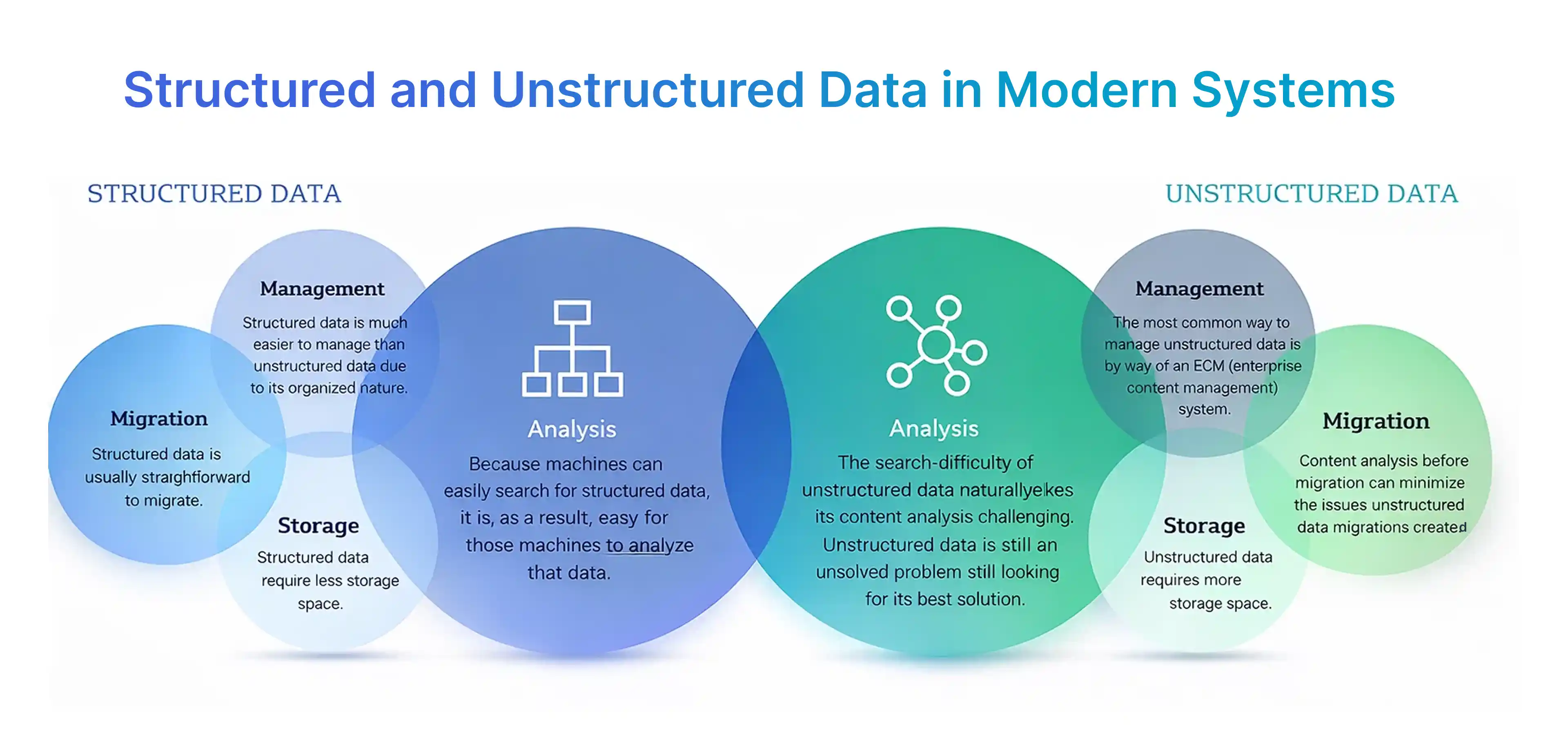
This image visually compares structured and unstructured data based on how they are stored, managed, and used. It highlights differences in format, storage requirements, and complexity, showing why structured data is easier to analyze while unstructured data requires more advanced processing and tools.
What Is STLC and Why Does It Works
The STLC life cycle is a methodological way of testing software. It makes sure that testing is not an appendage to the Software Development Life Cycle (SDLC).
- Focuses on early defect prevention through Shift Left practices
- Establishes traceability using a Requirements Traceability Matrix
- Improves test strategy, test planning, and test schedule accuracy
- Supports both manual Testing and Automation Testing
STLC works because it transforms testing from an activity into a discipline. At Frugal Testing, STLC forms the backbone of scalable QA automation services and enterprise-grade test management software implementations.
STLC vs. SDLC: Where QA Creates Real Impact
While SDLC focuses on building software, STLC ensures that what is built actually works. Understanding QA vs QC and qc vs qa is essential to appreciating this difference.
- SDLC defines what to build and how to build it
- STLC defines how to verify and how to validate
- STLC integrates White Box Testing, Black Box Testing, and Grey Box Testing
- QA processes ensure continuous improvement, not just defect detection
In modern projects, STLC operates parallel to SDLC stages, strengthening the overall software development life cycle (SDLC) and reducing post-release failures.
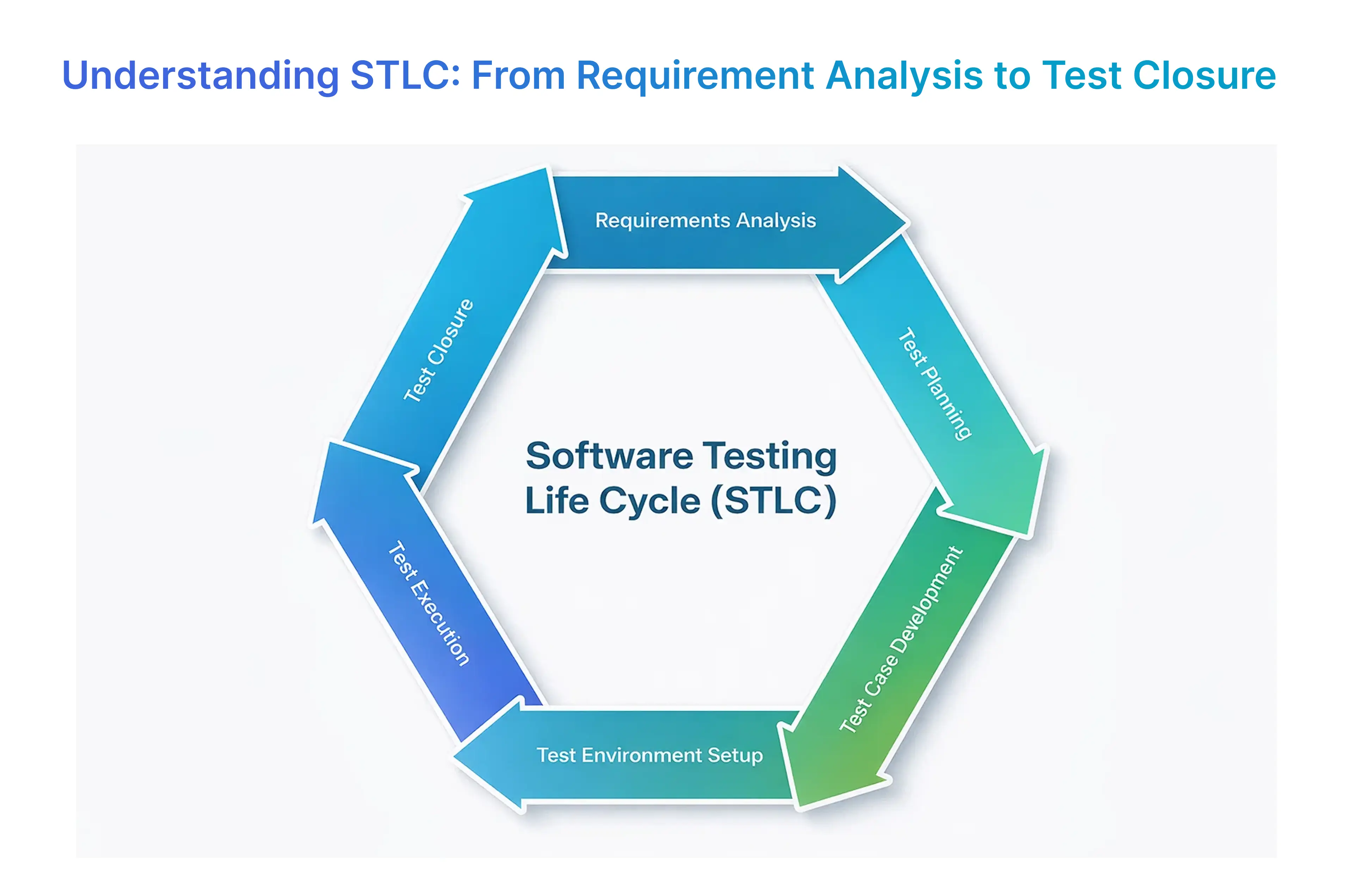
The STLC Workflow: From Requirements to Release
A well-defined STLC model ensures that testing remains predictable, measurable, and aligned with release goals. Each phase contributes directly to test monitoring and control.
- Clear test strategy aligned with business priorities
- Structured testware creation, including test scripts and automation scripts
- Consistent defect report and bug lifecycle management
- Measurable test metrics for decision-making
Organizations adopting a disciplined STLC workflow see faster releases with fewer production defects and improved customer trust.
Core STLC Phases and Their Practical Value
Each phase of the QA Software Testing Life Cycle adds practical value when executed with discipline and the right tools.
- Requirement Analysis: QA teams analyze business and technical requirements to identify testable conditions, risks, and gaps early in the SDLC. This phase ensures strong requirement traceability and prevents defects from entering development.
- Test Planning: This phase defines the test strategy, scope, timelines, resources, and tools needed for testing. A clear test plan aligns QA efforts with project goals and ensures efficient use of manual and automation testing.
- Test Case Development (Test Design): Test cases and test scripts are designed based on approved requirements and test scenarios. This phase ensures comprehensive coverage through positive, negative, and edge-case validations.
- Test Execution: QA teams execute manual and automated test cases and compare actual results with expected outcomes. Defects are identified early and shared with development teams for faster resolution.
- Defect Reporting & Tracking: All identified defects are logged, prioritized, and tracked through their lifecycle using defect management tools. This ensures transparency, accountability, and controlled defect resolution.
- Test Closure: Testing activities are formally concluded after meeting exit criteria, and test metrics are analyzed. Test closure helps evaluate quality, improve future processes, and confirm release readiness.
This structured testing process ensures traceability, accountability, and continuous quality improvements across releases.
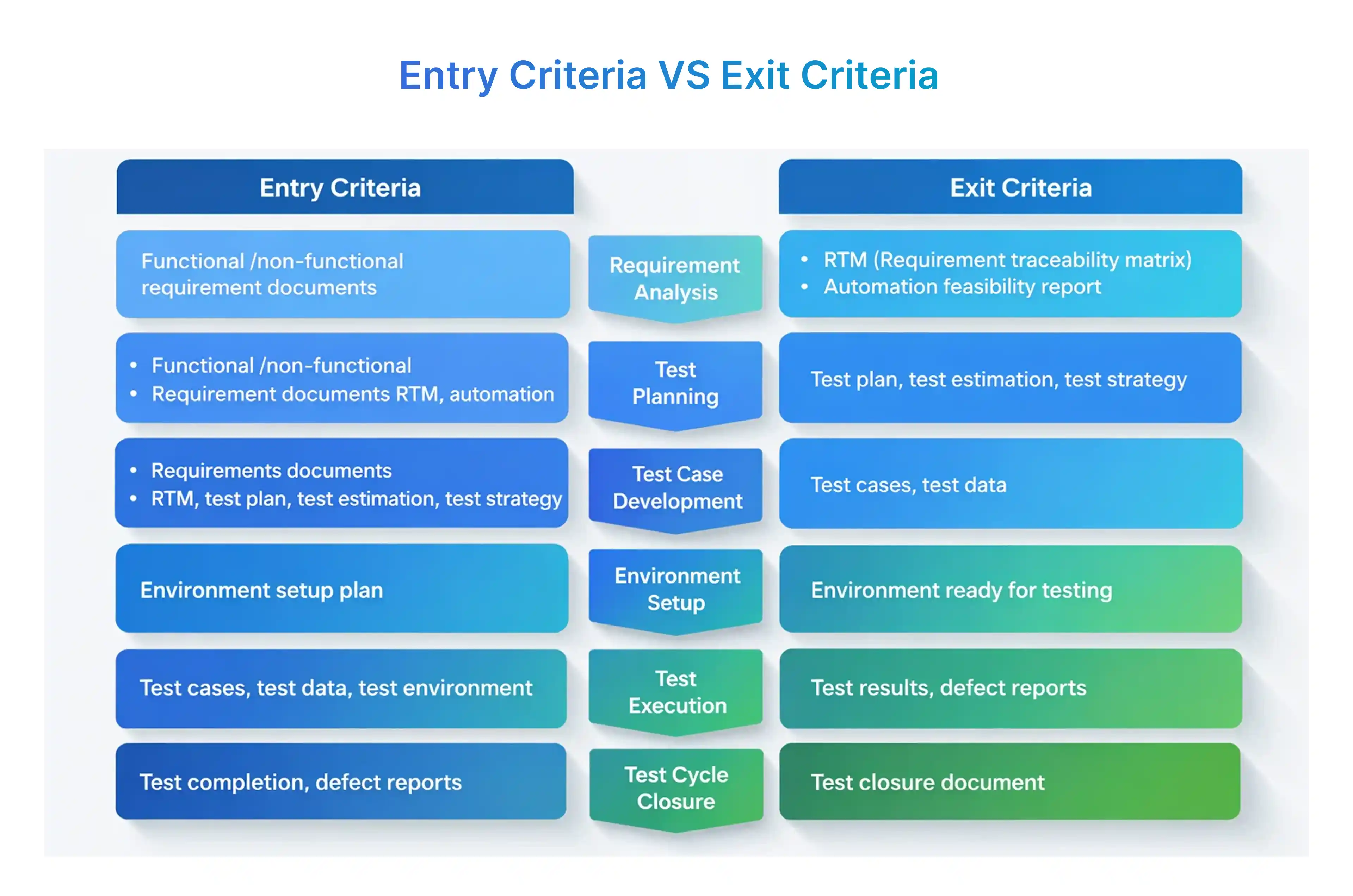
Entry and Exit Criteria Across STLC Phases
Clearly defined entry and exit criteria act as quality checkpoints across every STLC phase. They ensure testing activities start only when prerequisites are met and conclude only after quality objectives are achieved. This prevents teams from moving forward with incomplete inputs, unstable builds, or unresolved risks. By enforcing these criteria, organizations maintain process discipline, improve traceability, and reduce rework across the SDLC.
Strengthening STLC with Automation and AI
Automation and Artificial Intelligence are redefining how STLC operates at scale. From self-healing tests to Machine Learning-based test optimization, QA is becoming smarter.
- Automated test execution using Katalon Studio, GoReplay, and BrowserStack
- Load and Performance Testing with JMeter
- AI-powered defect prediction and test prioritization
- Enhanced maintainability through self-healing test automation scripts
Automation-driven STLC, powered by modern automation testing solutions, reduces manual effort while increasing coverage and release speed.
Smarter Testing with Automation and AI-Driven Insights
AI-driven QA introduces predictive insights into test monitoring and control, enabling smarter decisions.
- Intelligent test case design and prioritization
- Automated defect tracking using Bugzilla, Bugasura, and Fulcrum Rocks
- Real-time dashboards via Tuskr and modern Test Management platforms
- Improved validation through adaptive test automation tools
By combining Automation Testing and AI, organizations achieve faster releases, better test coverage, and long-term cost efficiency.
Conclusion: Making STLC a Competitive Advantage
In addition to being an integral part of how many businesses function today, companies that master the skill of properly handling the STLC will gain a major competitive advantage in being able to produce high-quality items quickly and efficiently, and create happy customers.
Incorporating thorough, systematic testing activities from the very beginning and continuing through every step in the development cycle gives team members confidence in their output and helps to eliminate potential defects that may occur during production.
Software systems will continue to grow increasingly complicated in the coming years; therefore, the STLC is still the cornerstone of a successful quality assurance approach by reducing defects in production. Through streamlined collaborations between QA and the objectives of the firm, the STLC has proved to be an effective framework for creating scalable test environments that facilitate the day-to-day operation of numerous projects for the foreseeable future.
How Frugal Testing Helps You Build a Scalable STLC Framework
Frugal Testing partners with global businesses to design, implement, and optimize STLC frameworks tailored to Agile, DevOps, and enterprise environments.
- End-to-end software testing solutions and QA automation services
- Customized STLC models aligned with SDLC methodologies
- Advanced automation using Selenium, Cypress, Appium, and AI-driven tools
- Proven expertise across industries with real-world delivery success
If you’re looking to turn your testing process into a growth enabler, Frugal Testing helps you transform STLC into a powerful, scalable quality engine.
People Also Ask (FAQs)
Q1. How can small or fast-moving teams apply STLC without adding heavy process overhead?
Ans. Teams can keep STLC lightweight by focusing on critical test planning, risk-based testing, and early QA involvement without excessive documentation.
Q2. In which scenarios can STLC activities be streamlined while still maintaining test effectiveness?
Ans. STLC can be streamlined for low-risk changes or stable features by combining phases and using automation with exploratory testing.
Q3. How does STLC help reduce production defects beyond what automation alone can achieve?
Ans. STLC emphasizes requirement analysis and risk identification, helping catch gaps and edge cases that automation alone may miss.
Q4. What common mistakes cause STLC to fail even when teams claim to follow it?
Ans. Late QA involvement, unclear requirements, and treating STLC as a checklist often reduce its real effectiveness.
Q5. How can organizations measure the effectiveness of STLC in real projects?
Ans. Organizations can track defect leakage, test coverage, and reductions in rework or production issues.

.webp)