



Techsslaash-style tech platforms earn or lose user trust based on what happens after someone lands - page speed, content accuracy, mobile layout, form reliability, and security signals. QA is not a backend concern. It is the direct mechanism that decides whether users stay, convert, or leave.

If you've recently seen the word "Techsslaash" or techsslaash com appearing in search suggestions, domain names like techsslaash.com, or blog discussions - you are not alone. The term is gaining traction precisely because it represents something bigger: how users evaluate technology platforms before they invest their attention.
In this guide, we break down everything that matters - what Techsslaash or techsslaash com tells us about digital trust, how QA plays a direct role in user credibility, and the exact testing framework that keeps tech platforms reliable in 2026.
In this article, you'll learn:
- What Techsslaash is and why the keyword search behavior matters for digital trust
- Why a content platform needs product-level QA - not just a launch check
- 10 testing areas that directly affect whether users trust your platform
- The most common failure modes in tech content platforms and how to fix them
- A ready-to-use QA checklist for any Techsslaash-style website
- How GEO and AEO change the quality bar in AI-driven search
- How Frugal Testing helps platforms close the gap between live and reliable
What Is Techsslaash? Origin and Search Behavior
Techsslaash is searched as a technology-focused content platform. Users search for terms like "techsslaash" or "techsslaash com" to understand what the platform offers, whether its content is reliable, and whether it is worth their time.
That search pattern reveals something specific about how people evaluate digital platforms today. They are not just looking for a URL. They are running a credibility check before investing attention. Before a user reads an article, subscribes, or trusts a recommendation, they are asking:
- Is this platform real and maintained?
- Does the content look current and accurate?
- Does the site feel like it works properly?
- Is it safe to submit a form or my email address?
These are not abstract content questions. They are product quality questions. And the answers come not from what the platform says about itself - but from what users experience the moment the page loads.
Why This Matters for QA: Keywords like "techsslaash" have near-zero competition but rising search interest. The first platform to publish structured, reliable, fast-loading content on this topic owns the search real estate. QA is what makes that content actually trustworthy when users land on it.
The Trust Gap Most Tech Platforms Never Notice
Users rarely say "this website has poor QA." They just leave.
A page that takes eight seconds to load. A mobile menu that refuses to open. A contact form that accepts the submission but never routes the data. A headline that promises a comparison table and delivers three vague paragraphs instead.
These are not dramatic failures. But they accumulate into a trust signal that reads as: this platform cannot be trusted.
For technology and fintech platforms specifically, this credibility cost is higher than average. If the platform about software or digital tools itself feels poorly maintained, users naturally question whether the information it publishes can be trusted either.
Common trust-breaking failure points:
Slow page loads - 8+ second mobile loads mean users bounce before reading a word. Every SEO investment is wasted.
Forms that lose data - The form submits on the front-end. The lead never reaches the CRM. The team finds out months later.
Broken mobile layout - Menus that don't open, text that requires horizontal scrolling, buttons that can't be tapped.
Dead internal links - Broken links are both a navigation dead-end for users and a crawl error for search engines.
Why a Content Platform Needs Product-Level QA
A Techsslaash-style platform is not a static brochure. It is a layered digital product with SEO-dependent article pages, lead capture forms connected to CRM workflows, internal linking structures affecting crawlability, Core Web Vitals scores, mobile rendering across dozens of browser combinations, and analytics instrumentation that must fire correctly.
The difference between a basic QA pass and a product-level QA pass:
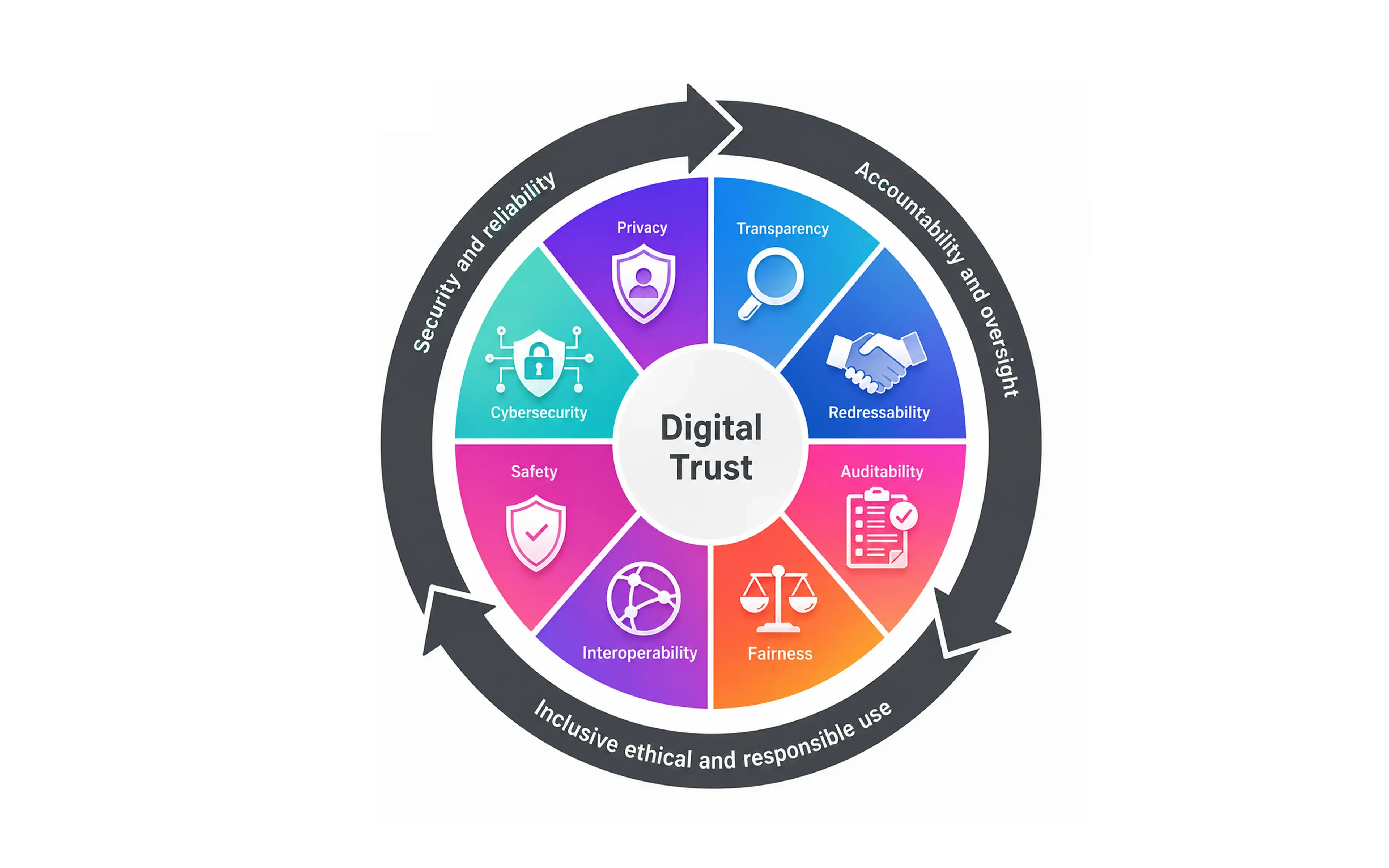
10 Testing Areas That Directly Affect Digital Trust
A Techsslaash-style platform should be tested like a digital product - because every article, link, CTA, form, and page layout contributes to the user journey and the platform's credibility.
Area 01 - Functional Testing covers search, pagination, forms, CTAs, category pages, related articles, social sharing, redirects, and key SaaS PPC firm workflows. A broken CTA is a lost lead. A broken redirect is a user sent nowhere.
Area 02 - Mobile Responsiveness Readable fonts without zoom, tappable buttons, correct menu behavior, image scaling, and slow-network performance simulation (3G baseline for real-world users).
Area 03 - Performance Testing LCP, CLS, FID, image compression, JS payload size, CDN caching behavior, ad script impact, and how pages behave under concurrent traffic. Pages loading in under two seconds feel professional. Pages loading in eight seconds feel abandoned.
Area 04 - Security Testing HTTPS validation sitewide, form spam protection, safe redirect chains, plugin vulnerability checks, admin panel protection, and malware scan verification.
Area 05 - SEO QA Unique title tags per page, canonical setup, single H1 per article, sitemap accuracy, schema markup validation, robots.txt rules, internal link health, and redirect chain length.
Area 06 - Content Quality Testing Title-to-content match, current and accurate information, working external links, accurate screenshots, and - critically - AI-generated sections reviewed and edited by a human before publishing. Using an AI detector extension can help content teams identify AI-generated patterns, maintain content quality standards, and ensure published articles meet authenticity expectations.
Area 07 - Cross-Browser Testing Chrome, Safari, Firefox, Edge, Samsung Internet, and in-app browsers inside LinkedIn, WhatsApp, and Gmail. Layout, forms, buttons, and navigation must be stable everywhere.
Area 08 - Accessibility Testing Heading hierarchy, keyboard navigation, color contrast ratios, alt text on images, clear form labels, readable font sizes at default zoom, and screen reader compatibility.
Area 09 - Analytics and Tracking QA GA4 events firing correctly on form submission and CTA clicks, UTM parameter passthrough to CRM, no duplicated conversion events, correct Search Console indexing for target keywords.
Area 10 - AI Content Workflow Testing Factual accuracy checks against source material, hallucination review, duplicate content detection, tone consistency with brand guidelines, and human approval gates before publishing.
Common Failure Modes in Tech Content Platforms
These patterns appear most consistently in QA audits of content-heavy technology platforms. None of them announce themselves loudly - which is exactly why they persist.
QA Checklist for a Techsslaash-Style Platform
Use this before publishing at scale, before a site migration, or as a quarterly audit framework.
Website Experience
- [ ] All key pages load without errors (200 status)
- [ ] Homepage navigation is clear and functional on mobile and desktop
- [ ] Article pages render correctly at 375px and 414px viewport widths
- [ ] Category and tag pages paginate correctly
- [ ] Site search returns relevant results for primary topics
- [ ] Related article modules show relevant, non-broken content
Technical Health
- [ ] No broken internal links (validated with a crawl tool)
- [ ] All redirects are single-hop - no redirect chains
- [ ] Contact and newsletter forms submit and route data correctly
- [ ] Images compressed (target under 150KB per blog image)
- [ ] Core Web Vitals pass for both mobile and desktop
- [ ] HTTPS enforced sitewide with no mixed-content warnings
- [ ] CMS, plugins, and themes on current stable versions
SEO Readiness
- [ ] Every page has a unique title tag (50–60 characters)
- [ ] Every page has a unique meta description (150–160 characters)
- [ ] Single H1 per page, matching primary keyword intent
- [ ] Canonical tags present and pointing to correct URL
- [ ] Schema markup validated (Article, FAQ, BreadcrumbList)
- [ ] All important pages return 200 in Search Console
- [ ] No unintentional noindex directives on published pages
- [ ] XML sitemap is current and submitted to Search Console
Content Quality
- [ ] Article answers the core query within the first 150 words
- [ ] Information is current - no outdated screenshots or version references
- [ ] All external links return 200 status
- [ ] AI-generated sections reviewed and edited by a human
- [ ] Author byline and content date are visible on the page
Trust and Safety
- [ ] Contact page accessible from main navigation
- [ ] Author profiles or editorial policy visible
- [ ] All forms use HTTPS POST with spam protection
- [ ] Privacy policy accessible from footer
- [ ] No redirect chains leading to undisclosed third-party domains
How GEO and AEO Change the Quality Bar
Search behavior has shifted fundamentally. Google AI Overviews, Perplexity, and ChatGPT search now surface content directly into responses - bypassing the traditional click.In this evolving landscape, an LLM rank tracker helps businesses monitor their visibility across AI-powered search platforms, track how often their brand appears in AI-generated answers, and identify opportunities to improve their presence beyond traditional search rankings. Whether a platform like Techsslaash gets cited or ignored depends on how its content is structured, validated, and technically accessible.
What GEO (Generative Engine Optimization) Requires
What AEO (Answer Engine Optimization) Requires
AEO is about structuring answers so that search engines can extract them as direct responses. For keywords like "techsslaash," users may be asking:
- What is Techsslaash? - needs a definition in the first sentence of that section
- Is Techsslaash safe to use? - needs a direct yes/no plus context, not a three-paragraph preamble
- How should a tech platform be tested? - needs a numbered list or structured checklist, not a wall of prose
Practical Rule: Write every section assuming the first sentence will be the only sentence an AI engine reads. If that sentence is vague, the section will not be cited. If it is specific and direct, it becomes a Featured Snippet or AI Overview entry point.
How Frugal Testing Helps Tech Platforms
At Frugal Testing, we approach platform quality from three angles: user experience reliability, technical performance, and commercial impact. For content-heavy or technology-focused platforms, our QA process covers:
The Goal: The goal is not just to find bugs. It is to protect user trust. A website can publish hundreds of pages, but if the core experience is unreliable, traffic will not convert. QA closes the gap between visibility and credibility.
Final Thoughts
When someone searches for "techsslaash," they are doing something most analytics dashboards do not measure: running a quick trust check before committing attention. What they find in those first few seconds - how fast the page loads, whether it works on their phone, whether the content answers their question directly, whether the platform feels maintained - determines whether they stay or leave.
Most of the time, they do not tell you why they left. They just go.
That is why QA is not a testing phase. It is an ongoing operational function for any platform that depends on digital trust. A website that goes live is not the same as a website that is reliable. The gap between those two things is exactly where user trust is won or lost.
If your platform is live but hasn't had a structured QA audit this quarter - you are likely losing users you have already paid to acquire through paid search, content investment, or SEO. Performance regressions, broken form flows, and tracking failures accumulate silently. A quarterly audit is the minimum baseline for any serious digital platform.
People Also Ask (FAQs)
Q1.What is Techsslaash?
Ans: Techsslaash is a technology-focused content platform. Users search for "techsslaash" or "techsslaash com" to understand what the platform offers, whether its content is reliable, and whether it is worth their time. The search behavior reflects a broader user pattern of credibility-checking before engaging with any digital platform.
Q2.Why does Techsslaash matter for a QA discussion?
Ans: Techsslaash represents the broader category of search-driven technology content platforms. These platforms carry specific quality risks: SEO-dependent traffic that requires technical health, user trust that depends on content accuracy and page performance, and lead capture that requires validated forms and clean analytics. QA is what makes any platform in this category operationally reliable rather than just live.
Q3.What should be tested on a tech content platform?
Ans: A tech content platform should be tested for page speed and Core Web Vitals, mobile responsiveness across real device sizes, broken links and redirect chains, form functionality and CRM data flow, SEO metadata (title tags, canonical tags, schema), cross-browser layout consistency, accessibility, analytics event accuracy, and AI-generated content accuracy before publishing.
Q4.How does QA improve digital trust?
Ans: QA removes the friction points that users interpret as unreliability - slow pages, broken navigation, failed form submissions, outdated content, and unsafe redirects. Each one is a small signal, but they compound. A clean QA process prevents the accumulation of signals that collectively read as "this platform cannot be trusted."
Q5.How does GEO connect to QA?
Ans: GEO (Generative Engine Optimization) requires content that AI systems can accurately parse, cite, and surface. QA supports GEO by validating technical accessibility, content accuracy, and structure. Technically broken or poorly structured pages are less likely to appear in AI-generated search responses regardless of how good the writing is.


.webp)

.webp)