

Blockchain testing isn't just a checkbox exercise. It's a mix of security work and quality assurance, done before anything touches mainnet smart contract audits, Web3 pen testing, functional QA on DApps, and performance checks.
A bug that would be annoying in a web app can drain a protocol in hours in a blockchain environment. We’ve seen reentrancy exploits and cross-chain bridge drains occur often enough that the risk is no longer theoretical. So the testing matters not because it sounds good in a project proposal, but because the cost of skipping it has a proven track record. Audits, pen tests, and load checks none of it is glamorous work. But it’s what separates projects that hold up from ones that become cautionary tales.
What is Blockchain Testing?
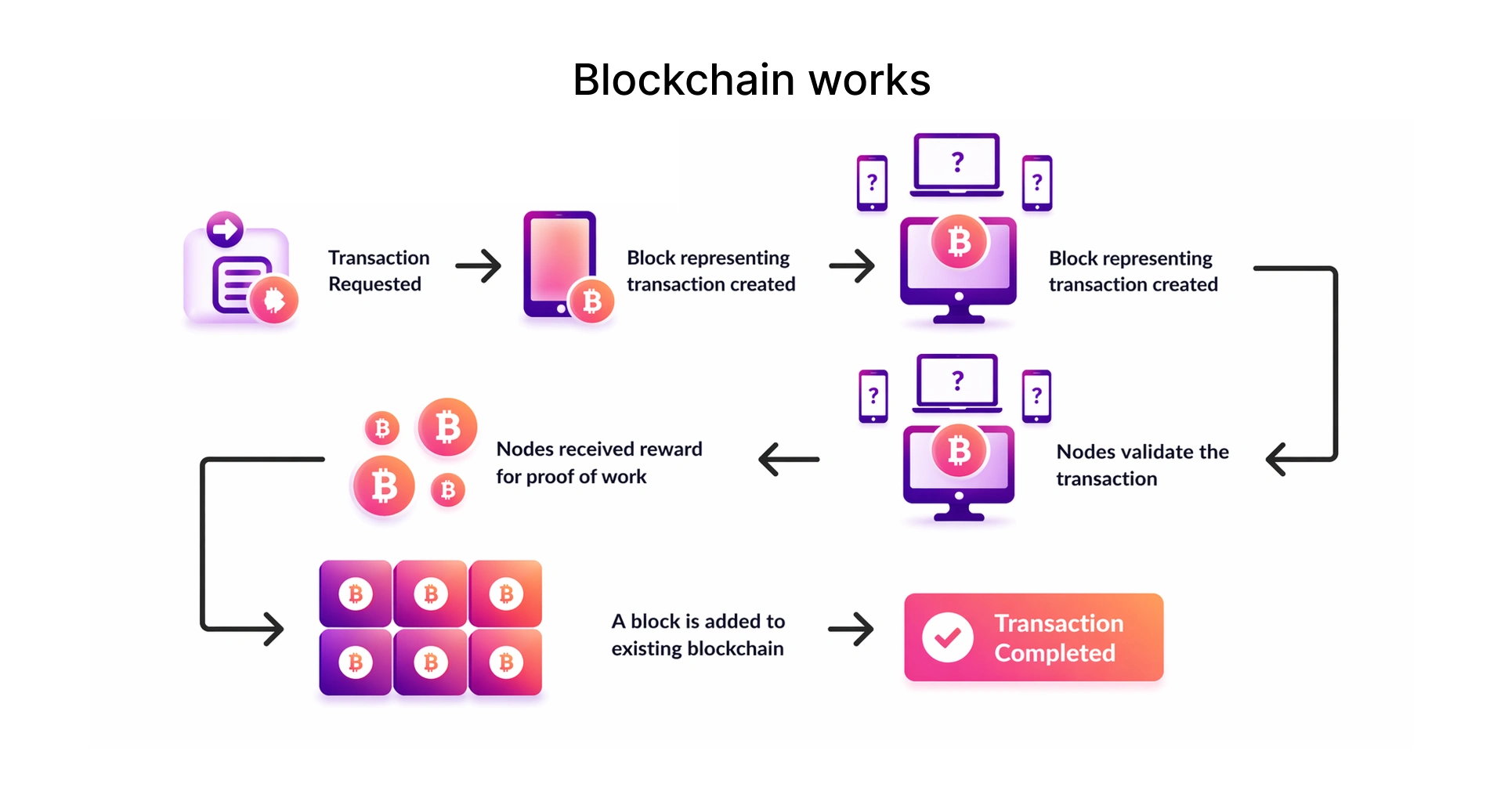
Blockchain testing refers to the process of verifying that blockchain systems, smart contracts, and decentralized applications (DApps) operate as intended before they are released to real users. It involves validating multiple interconnected components from consensus mechanisms to wallet integrations to ensure security, performance, and reliability. By identifying issues during the testing phase, organizations can prevent costly post-deployment fixes and launch Web3 solutions with greater confidence.
How Blockchain Testing Differs from Traditional Software Testing
Traditional software testing typically focuses on centralized applications where updates and rollbacks can be implemented with relative ease. In contrast, blockchain testing takes place within decentralized and immutable environments, where deployed smart contract logic cannot simply be modified if an issue arises. This fundamental difference makes early and thorough validation far more critical.
Several factors distinguish blockchain testing from conventional testing practices:
- Smart contract logic is permanent once deployed unlike traditional applications, bugs cannot be patched easily after release, making pre-deployment validation essential.
- Gas usage and transaction throughput directly influence operational costs and the overall user experience, requiring careful performance testing.
- Consensus mechanisms such as Proof of Work and Proof of Stake introduce unique operational and security considerations that must be thoroughly validated.
- Peer-to-peer networking and node behavior need to be assessed across distributed environments to ensure consistent performance within the blockchain network.
Key Challenges in Blockchain QA
Despite the rapid evolution of blockchain technology, teams engaged in blockchain QA continue to face several practical challenges. These challenges often stem from the decentralized nature of the ecosystem and the need to maintain high levels of security and interoperability.
Some of the most common challenges include:
- Simulating Real-World Network Conditions: Recreating realistic network protocols and distributed scenarios is complex but essential for understanding how the system behaves under production-like conditions.
- Cross-Platform Compatibility: With numerous blockchain standards and platforms in use, ensuring consistent behavior and interoperability across ecosystems requires extensive validation.
- Cryptographic Security and Key Management: Maintaining robust cryptographic security while safeguarding sensitive information is a delicate yet critical aspect of blockchain QA.
- Smart Contract and Economic Vulnerabilities: Issues such as reentrancy bugs or economic design flaws can lead to severe financial consequences if not identified early in the testing lifecycle.
Key Blockchain Testing Services for Secure Web3 Applications
Professional blockchain development companies services play a vital role in ensuring that every component of a Web3 solution performs reliably before it reaches real users. In practice, testing is not limited to verifying smart contracts alone; it extends across the entire blockchain systems stack from the underlying contract logic to the overall user experience of decentralized applications (DApps).
Blockchain testing services cover every layer of a Web3 application, from smart contract validation to DApp functionality and network performance. Each service targets a specific risk area, helping teams identify issues early and ensure stable deployment. The following services represent the core areas that any serious Web3 project should consider before launch.
Smart Contract Testing and Auditing
A smart contract audit is the single highest-impact step in any Web3 security program because deployed contract code cannot be patched. This makes smart contract testing and smart contract auditing essential for identifying potential risks at an early stage.
.webp)
Common issues caught during a contract security audit include:
- Reentrancy bugs that allow repeated withdrawal exploits.
- Integer overflow and underflow in arithmetic logic.
- Access control flaws that expose administrative functions.
- Economic design flaws in tokenomics or liquidity pools.
Performance and Load Testing for Blockchain Networks
Ensuring that a blockchain network performs reliably under heavy usage is just as important as validating its security. Performance testing focuses on assessing how the system behaves when subjected to high transaction volumes and real-world operating conditions. Without this validation, applications may encounter delays or increased costs once they are live.
Blockchain performance testing measures key metrics such as transaction throughput, gas usage, and node response times. These insights help teams identify potential scalability bottlenecks and optimize system performance before deployment.
Such web3 performance test activities are particularly essential for DeFi platforms and NFT marketplaces, where sudden spikes in transaction volume are common.For DeFi platforms, a benchmark of 1,000+ transactions per second (TPS) with sub-2-second transaction finality is typically considered the minimum viable performance target before mainnet launch.
Security and Penetration Testing for Web3
Web3 penetration testing simulates attacker behavior against blockchain infrastructure. This includes threat modeling, vulnerability detection, and testing the attack surface of smart contracts, APIs, and wallet integrations.
Common attack vectors covered in a Web3 security audit:
Interoperability Testing in Blockchain Ecosystems
Cross-chain applications routinely transfer assets across multiple blockchains, and a single validation flaw in a bridge can compromise the entire transaction. Interoperability testing verifies secure communication and consistent state across networks, reducing the risk of asset loss and transaction failures.
Key areas typically covered during interoperability testing include:
- Verification of cross-chain bridges to ensure secure and accurate asset transfers.
- Validation of token transfers between different blockchain networks.
- Testing of message passing mechanisms to confirm reliable communication.
- Ensuring compliance with established blockchain standards across multiple chains.
Testnet Deployment and Pre-Launch Validation
Before moving to a live environment, deploying applications to a testnet such as Sepolia provides a safe and practical way to evaluate system readiness. This step allows teams to validate smart contract logic, transaction validation, and overall DApp behavior within a realistic yet risk-free test environment. It often reveals integration challenges that may not surface during blockchain unit testing alone.
In many web3 testing engagements, testnet deployment acts as a final checkpoint before mainnet release. It enables teams to simulate real user interactions, assess wallet integration, and confirm that all blockchain components function cohesively under production-like conditions.
Pre-launch validation typically includes:
- Test data preparation to mimic real-world usage scenarios.
- Configuration and verification of cloud environments supporting the application.
- End-to-end workflow validation to ensure seamless interaction between decentralized applications (DApps) and the underlying blockchain network.
- Final checks on transaction validation and system performance before mainnet deployment.
DApp End-to-End Testing and Functional QA
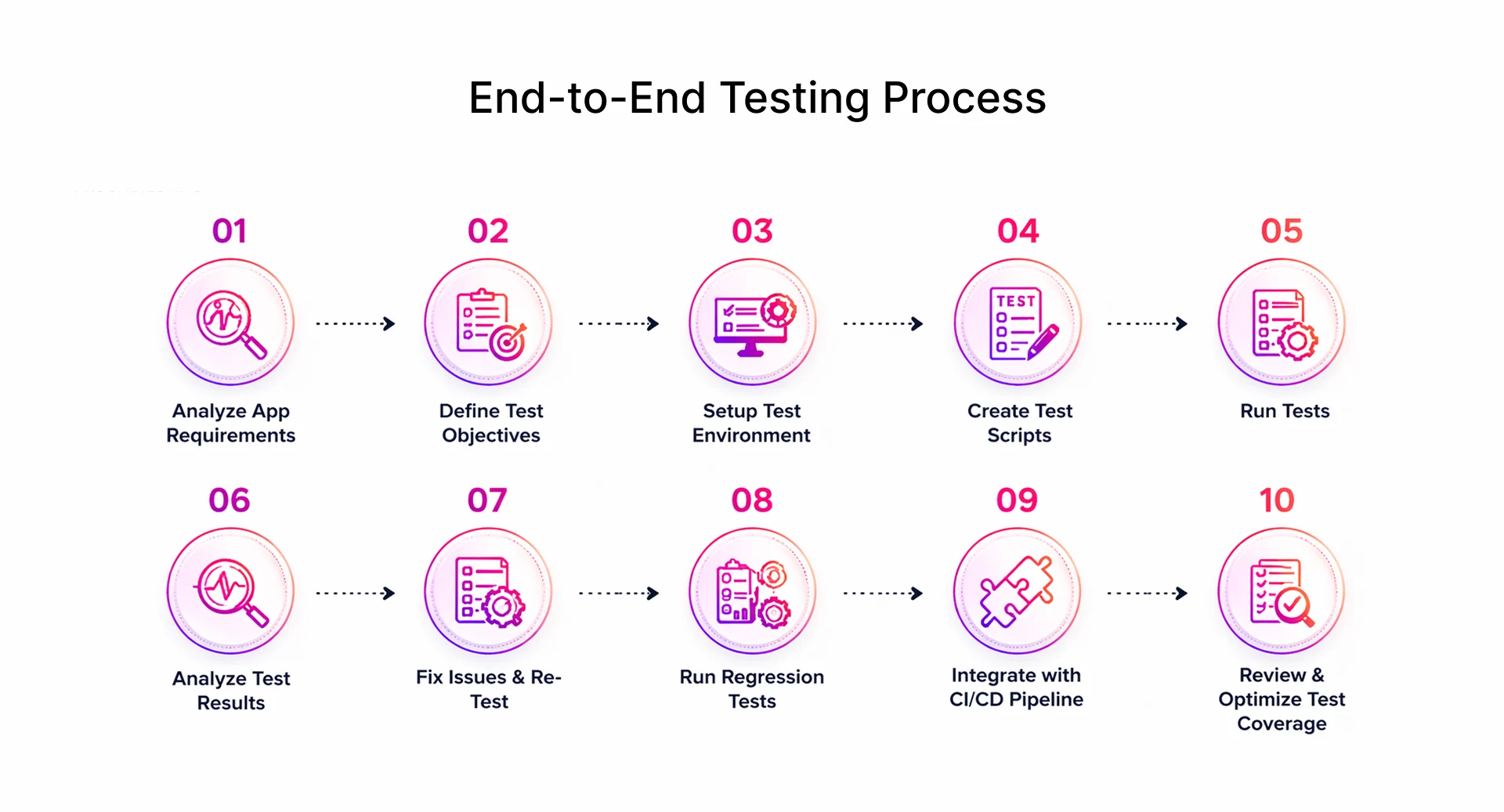
DApp testing validates the full user journey from wallet integration (e.g., MetaMask) to transaction submission and confirmation. Functional QA ensures that decentralized platforms behave correctly under normal and edge-case conditions.
DApp QA services include UI testing, API validation, and cross-browser compatibility checks. In practice, teams that adopt structured DApp testing workflows covering frontend interactions, wallet integrations, and backend APIs identify critical issues before release, leading to smoother launches and fewer production incidents.
Best Tools for Blockchain Debugging and Test Automation
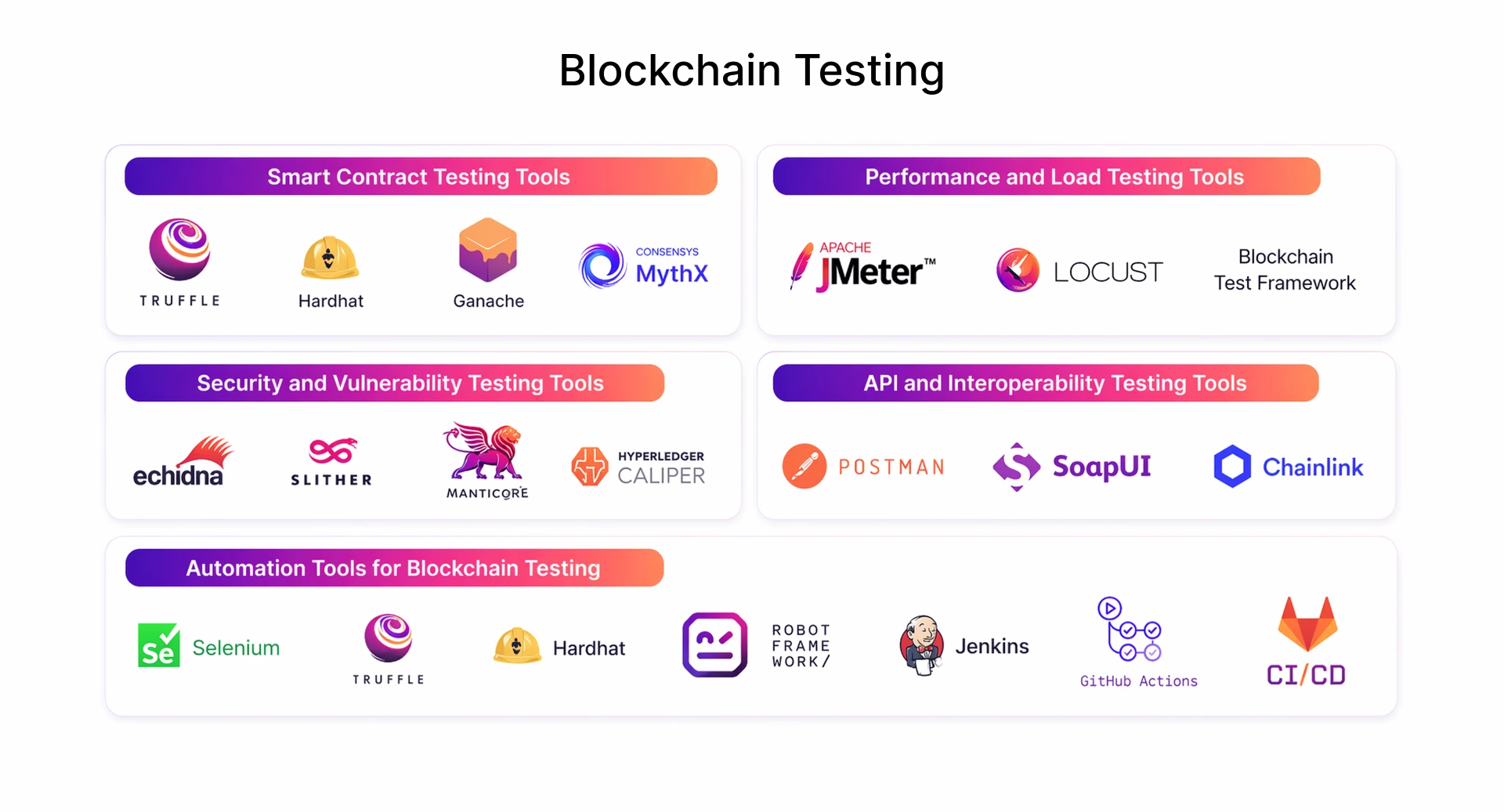
Selecting the right blockchain test tools can make a significant difference in how efficiently teams build, validate, and maintain their Web3 solutions. In real-world web3 development projects, developers and QA engineers often rely on a combination of automated frameworks and monitoring platforms to ensure that blockchain systems behave as expected. Effective blockchain debugging not only helps identify issues early but also provides deeper insights into contract behavior and transaction flows, ultimately improving the reliability of decentralized applications (DApps).
Automated Test Frameworks for Web3 Applications
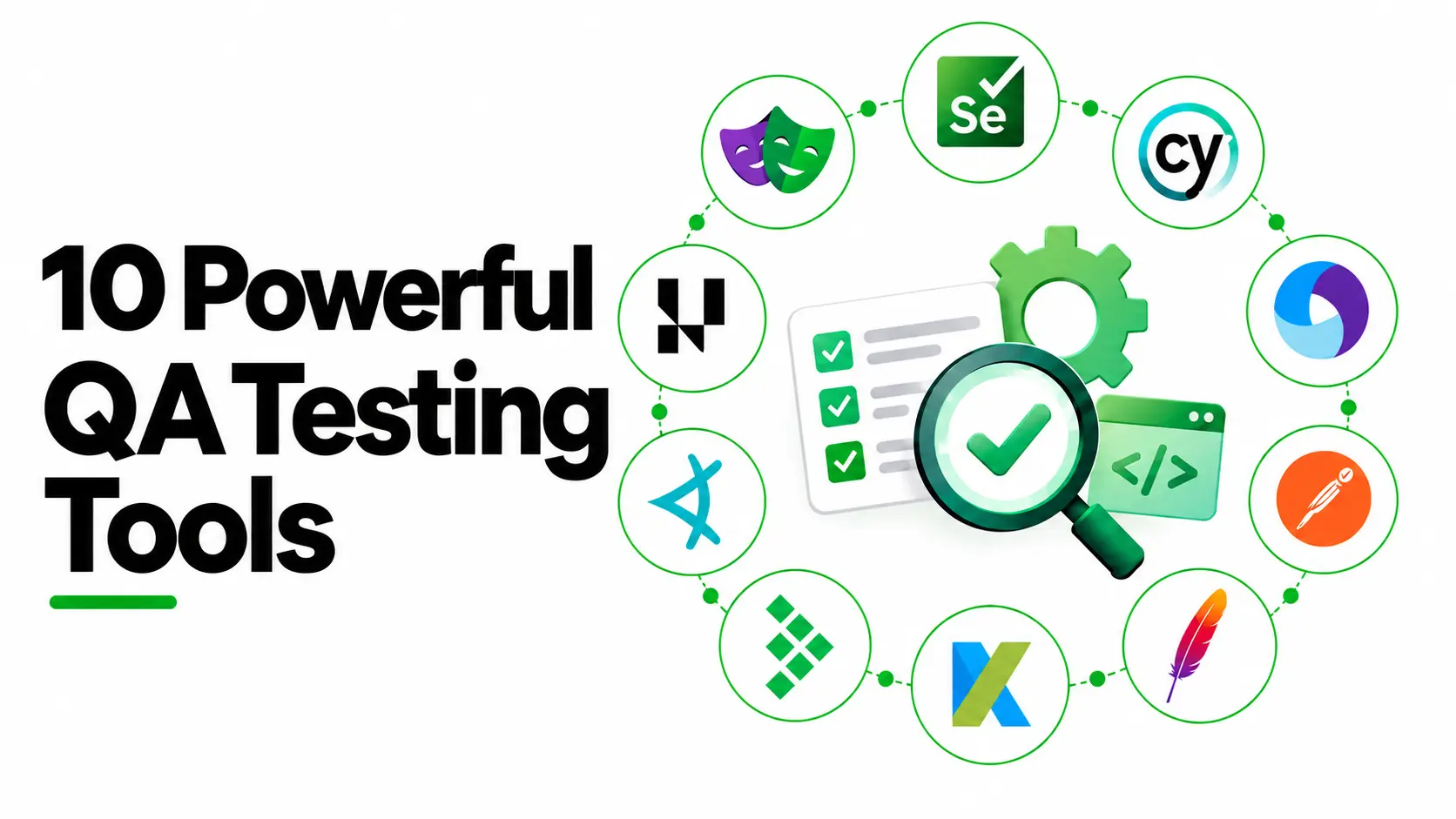
Web3 test automation relies on specialized frameworks that understand blockchain state, contract interactions, and transaction lifecycle. Below are the most widely used blockchain test tools:
Blockchain Network Monitoring and Debugging Tools
While automated frameworks are essential, effective blockchain debugging extends beyond pre-deployment testing. Once smart contracts are deployed, teams need visibility into real-time network activity to ensure ongoing reliability and security validation. This is where blockchain network monitoring tools become invaluable.
These tools help with transaction monitoring, event tracing, and real-time observation of nodes, enabling teams to quickly diagnose issues and maintain the stability of their blockchain network. In many web3 testing engagements, such platforms provide actionable insights that significantly reduce troubleshooting time.
Key tools include:
- Tenderly: Offers real-time transaction simulation and advanced debugging capabilities, allowing teams to analyze contract behavior before and after execution.
- Etherscan: Provides comprehensive on-chain transaction monitoring and contract verification, making it easier to inspect and validate blockchain activity.
- The Graph: Enables efficient querying of indexed blockchain data, supporting analytics and DApp testing across decentralized systems.
- OpenZeppelin Defender: Delivers automated security monitoring and operational management for deployed contracts, enhancing ongoing blockchain security.
Web3 Security Testing: Methods and Best Practices
Securing a Web3 application goes far beyond a one-time smart contract audit. Real-world threats often emerge from misconfigured infrastructure, vulnerable integrations, compromised keys, and user-facing interfaces not just from flaws in Solidity code. Effective Web3 security testing therefore requires a comprehensive, multi-layered approach that evaluates the entire ecosystem surrounding the blockchain application.
Web3 Security Risks and Vulnerabilities
As the Web3 ecosystem continues to evolve, ensuring strong web3 security has become more critical than ever. Unlike traditional applications, decentralized platforms rely on smart contracts, cryptographic mechanisms, and interconnected blockchain networks, which introduce unique web3 security risks. From web3 vulnerabilities such as reentrancy attacks and private key theft to threats like oracle manipulation and insecure integrations, understanding these risks is essential for building secure and resilient Web3 applications.
A comprehensive security audit must cover:
• Cryptographic security flaws in key generation or storage.
• Insecure multi-signature wallet configurations.
• Front-running attacks exploiting transaction ordering.
• Flash loan manipulation as exploited in the $197M Euler Finance attack in March 2023
• Blockchain vulnerabilities in consensus or node software.
• Web3 vulnerabilities in APIs, SDKs, or frontend integrations.
How to Conduct a Web3 Security Audit
Smart contract auditing is the most critical service in any Web3 security program. It involves thorough code review, formal verification, and automated static analysis to identify vulnerabilities in Solidity or other contract languages. In Frugal Testing's smart contract audit engagements across DeFi and NFT projects, reentrancy vulnerabilities and access control flaws consistently account for over 60% of critical findings. This insight highlights the importance of rigorous security validation before deployment.
Additional best practices for Web3 security:
• Follow the OWASP Testing Guide adapted for Web3 contexts.
• Implement bug bounty programs for ongoing community-driven security validation.
• Use multi-signature wallets for all treasury and admin operations.
• Enforce regulatory compliance checks before mainnet deployment.
• Conduct crypto security testing on all randomness sources used in contracts.
Conclusion
A blockchain system that skips security testing is not cheaper to launch it is far more expensive to fix after deployment. The six-phase audit methodology, combined with testnet validation and performance testing, closes the gaps that post-launch patches cannot. From smart contract audit and dapp testing to a comprehensive web3 security audit and blockchain QA, each layer of validation plays a crucial role in preventing costly vulnerabilities and ensuring a secure, reliable user experience.
For businesses looking to navigate this complex landscape, partnering with an experienced team can make all the difference. Frugal Testing offers end-to-end blockchain testing services, including smart contract testing, web3 testing, crypto security testing, and web3 test automation, tailored to meet the unique needs of each project.
FAQs (People Also Ask)
Q1.What makes blockchain testing more complex than Web2 testing?
Ans: Blockchain testing is more complex due to its decentralized and immutable nature, where deployed smart contracts cannot be easily modified.
Q2.How does performance testing impact Web3 scalability?
Ans: Performance testing evaluates transaction throughput, gas usage, and node response times to ensure the blockchain network can handle increasing user demand.
Q3.Why is testnet deployment critical before a mainnet launch?
Ans: Testnet deployment allows teams to validate smart contract logic and DApp behavior in a risk-free environment.
Q4.What skills are essential for professionals involved in blockchain testing?
Ans: Blockchain testing professionals need expertise in blockchain technology, smart contract languages like Solidity, and web3 security principles.
Q5.How do you choose the right blockchain testing service provider?
Ans: A blockchain testing service provider should be evaluated on proven experience in smart contract audits, web3 security, and end-to-end blockchain QA services.


%201.png)