


Selecting the appropriate partner for QA services has become an important consideration for today’s businesses undergoing rapid digital transformation. With the increasing complexity of software applications and the rising expectations of users, quality assurance is no longer the final step in the process but a continuous and business-critical process. For startups, corporations, and digital businesses, the appropriate partner can have a direct impact on product reliability, security, and customer satisfaction.
The blog covers how to evaluate and choose the right QA services partner by explaining outsourced QA and third-party software testing, along with their role in modern software development. It highlights the benefits of outsourced QA, alignment with business goals, and the importance of strong QA processes and project management. The content also explores key evaluation areas such as technology compatibility, security, compliance, and data protection. Finally, it outlines common red flags to avoid, helping organizations make informed, risk-aware decisions when selecting a QA partner.
Understanding Outsourced QA and Third-Party Software Testing
One of the most significant changes in the software testing landscape is related to the outsourcing model. Traditionally, quality assurance relied heavily on in-house teams, manual testing, and specific project requirements. However, as the software development process evolved, outsourcing emerged as a viable option, enabling organizations to share and leverage a vast amount of knowledge.
What Is Outsourced QA and QA in Testing
Outsourced Quality Assurance (QA) refers to hiring an external company to handle the quality testing of a product instead of performing it internally. The main goal of QA is to ensure quality from the very beginning of the process, improving workflows and verifying that the product aligns with business objectives, rather than simply finding mistakes at the end.
- Independent validation of software testing and QA services
- Access to specialized tools, domain expertise, and trained QA units
- Scalability for app development, web development, and custom software.
Role of Third-Party Software Testing Services in Software Testing
Third-party software testing services bring independence, transparency, and industry benchmarks into the testing process. Unlike internal teams, third-party software testing companies validate products without bias, ensuring real-world readiness.
Their role typically includes:
- Functional, performance, and security audits
- Cross-platform and cross-device compatibility testing
- Validation against market trends and user adoption patterns
Third-party software testing services are especially valuable for regulated industries, SaaS platforms, and global products. They enhance trust, support regulatory submission requirements, and help organizations meet quality assurance standards across regions and electronic systems.
Difference Between Software Testing and Quality Assurance
Software Testing:
- Focuses on identifying defects or bugs in the software before release.
- Is a reactive process, performed after development to ensure functionality meets requirements.
- Includes activities like functional testing, performance testing, regression testing, and third-party software testing services.
Quality Assurance (QA):
- Focuses on preventing defects by improving processes, standards, and methodologies throughout development.
- Is a proactive approach, integrated into every phase of the software lifecycle.
Why Businesses Choose Outsourced QA Services
Businesses across the software industry increasingly adopt outsourced QA services to stay competitive while managing costs and complexity.
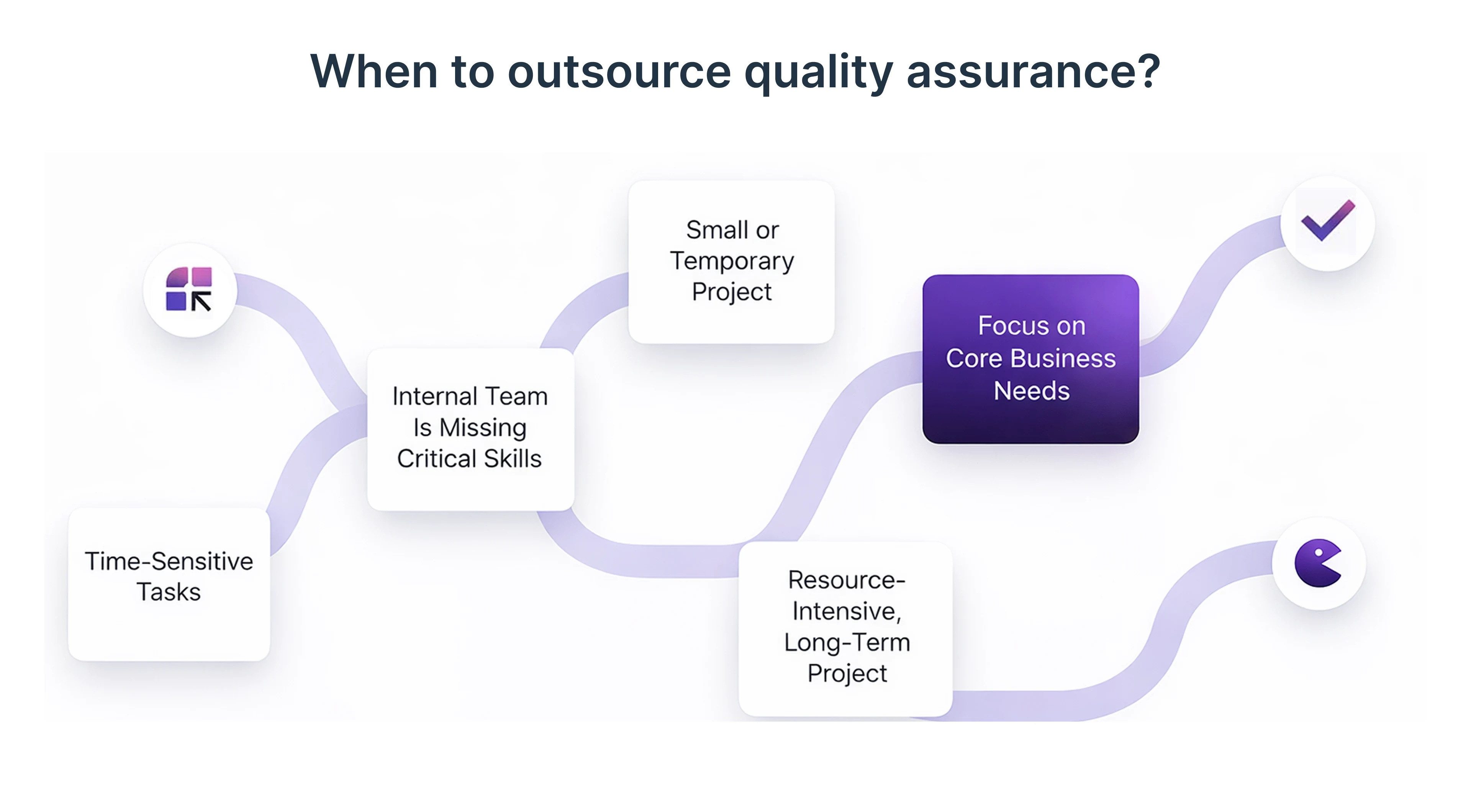
Benefits of Outsourced QA Testing Services
- Cost Efficiency: Hiring and maintaining an internal QA team can be expensive due to salaries, training, infrastructure, and ongoing operational costs. Outsourced QA services offer predictable pricing models, allowing businesses to scale testing efforts without a significant financial burden.
- Faster Time-to-Market: With dedicated teams and streamlined processes, outsourced QA testing accelerates software release cycles.
- Scalability and Flexibility: Projects often fluctuate in size and complexity. Outsourced QA services allow organizations to scale resources up or down based on testing requirements, making them ideal for startups, growing enterprises, or large-scale custom software projects.
- Improved Quality and User Experience: By following structured QA processes, partners ensure higher code quality, enhanced user experience, and greater customer satisfaction.
Outsourced Software QA vs In-House Quality Assurance
Value Delivered by Outsourcing Software Testing Companies
Outsourcing software testing delivers value by reducing costs, accelerating time-to-market, and providing access to specialized QA expertise and advanced tools. It improves software quality through unbiased, objective, and comprehensive testing, allowing internal teams to focus on core development while enabling flexible, scalable, on-demand resource management.
They provide:
- Independent performance metrics
- Faster time-to-market
- Improved risk mitigation.
Defining Business Goals and Project Requirements
Before selecting a QA services partner, it’s critical for organizations to define their business goals and project requirements clearly. Without a well-defined roadmap, even the most experienced QA service provider may struggle to deliver the desired outcomes. A structured approach ensures that QA efforts align with overall business objectives, user expectations, and technical constraints, ultimately improving customer satisfaction and software quality.
Aligning Quality Assurance with Business Goals and Project Goals
Quality assurance must support broader business objectives.
Alignment includes:
- Mapping QA outcomes to business goals
- Prioritizing features impacting user experience
- Supporting long-term partnerships
Understanding Project Scope, Project Requirements, and Change Management
Clear scope and change management reduce delivery risks.
Key considerations include:
- Defined project requirements
- Controlled change management
- Transparent audit trails
Improving User Experience and Customer Satisfaction Through QA
QA directly influences user experience.
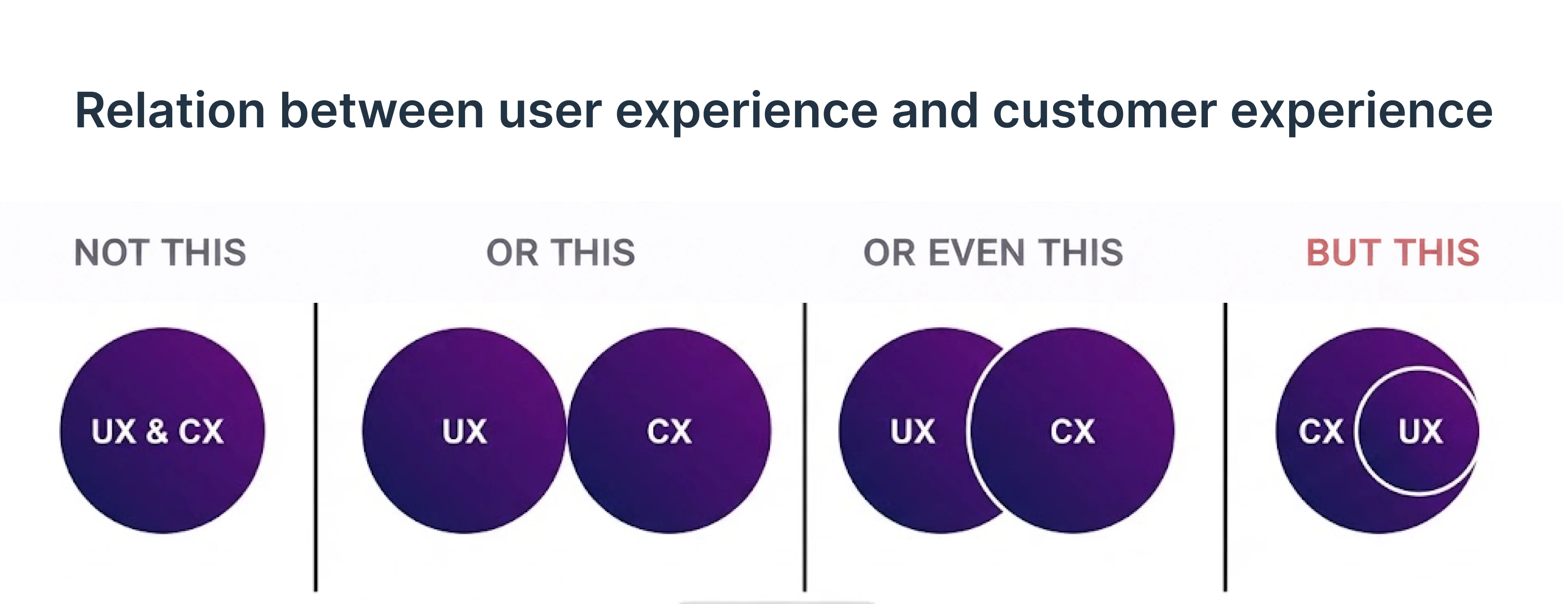
It improves UX by:
- Identifying usability issues early
- Validating real-user workflows
- Acting on user feedback
Evaluating QA Service Providers and Software Testing Companies
Evaluating QA service providers requires prioritizing domain expertise, technical proficiency in automated/manual testing, and cultural alignment over mere cost-cutting. Top firms like BetterQA, Cigniti, and QA Mentor are distinguished by ISTQB/ISO certifications, industry-specific knowledge (e.g., HIPAA for healthcare), and seamless CI/CD integration. Effective partners provide transparent reporting, flexible scalability, and a dedicated team to improve user experience.
How to Assess a QA Service Provider’s Experience and Expertise
Experience matters across industries and technologies.
Assessment factors include:
- Domain knowledge
- QA process maturity
- Tech stack compatibility
Experienced providers deliver consistent quality work.
Reviewing Case Studies, Client Reviews, and Market Reputation
Case studies and client reviews reveal real performance.
Look for:
- Measurable results
- Long-term client relationships
- Relevant industry experience
Quality Assurance Capabilities to Look For
Not all QA partners provide the same level of depth, maturity, or reliability. Strong quality assurance capabilities go far beyond running test cases; they reflect how well a partner can prevent defects, scale with growth, and align quality with business outcomes. When evaluating QA service providers, it is essential to assess their testing breadth, process maturity, and ability to adapt to changing project requirements.
Software Quality Assurance Testing Services and QA Processes
Strong software quality assurance testing services are built on clearly defined and repeatable QA processes. These processes ensure testing is not reactive but planned, measurable, and aligned with development milestones.
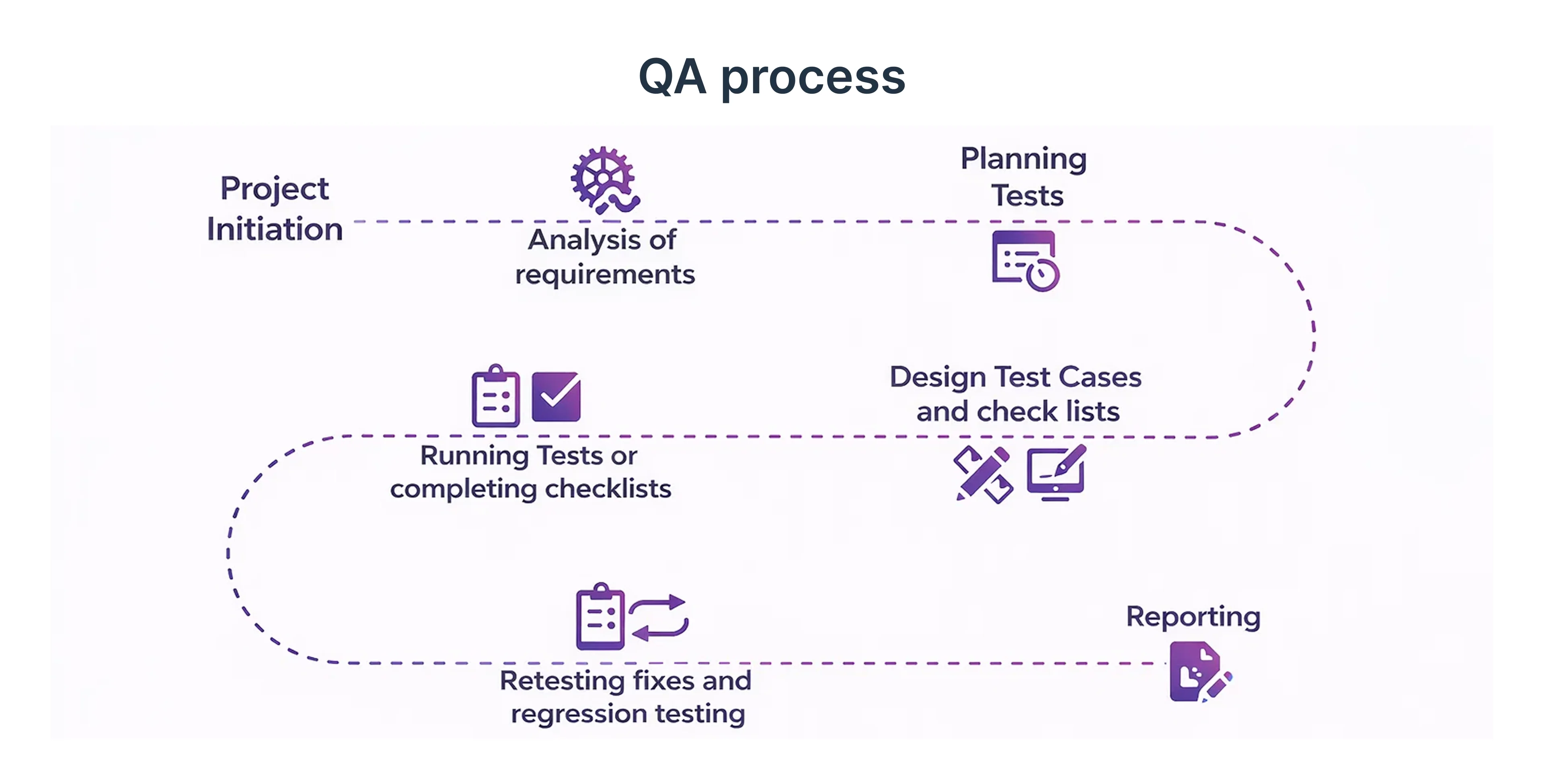
Effective QA processes typically include:
- Test strategy planning aligned with project goals
- Manual and automated testing across functional and non-functional areas
- Defect tracking, root cause analysis, and continuous improvement loops
Quality Management Systems and Quality Control Meaning
Quality Management Systems (QMS) define how quality is planned, monitored, measured, and improved across projects. They give practical meaning to quality control by turning standards into repeatable actions rather than ad-hoc checks.
A mature QMS typically covers:
- Standard operating procedures for testing and reviews
- Documentation, traceability, and audit readiness
- Continuous monitoring through performance metrics
Code Quality, Method Validation, and Study Validity
High-quality software depends on maintainable code and validated testing methods, not just passing test cases. QA partners must evaluate how well the codebase supports scalability, readability, and long-term maintenance.
Key focus areas include:
- Code quality checks for maintainability and performance
- Method validation to ensure test accuracy and reliability
- Study validity for data-driven features and analytics
Project Management and Delivery Approach
Quality assurance success is closely tied to how well projects are planned, tracked, and delivered. Even the strongest QA expertise can fail without effective project management and delivery discipline.
Project Management Practices and Project Management Tools
Effective QA partners rely on structured project management practices supported by modern project management tools. These tools enable visibility into progress, risks, and dependencies across teams.
Strong project management includes:
- Clear sprint planning and milestone tracking
- Centralized defect and task management
- Regular status updates and escalation mechanisms
Performance Metrics, Audit Trails, and Reporting Transparency
Transparent reporting builds trust between QA partners and stakeholders. Performance metrics and audit trails provide objective insight into quality health and progress.
Important reporting elements include:
- Defect trends, severity distribution, and resolution time
- Test coverage and automation progress
- Traceable audit trails for compliance and reviews
Clear metrics enable continuous improvement and informed decision-making. They ensure quality discussions are based on data rather than assumptions.
Technology Expertise and Tech Stack Compatibility
Technical alignment between the QA partner and the development environment is critical for efficiency. A mismatch in tools or platforms can slow testing and reduce effectiveness.
QA partners must demonstrate flexibility across modern and legacy systems while staying aligned with evolving tech stacks.
QA Partner Evaluation Checklist for Technology Expertise and Tech Stack Compatibility
Use this checklist to assess potential QA services partners:
- Confirm experience with your tech stack, programming languages, and frameworks.
- Verify support for software development, web development, and custom software testing.
- Check for integration capabilities with CI/CD pipelines and version control systems.
- Evaluate experience with automation frameworks, test automation services, and AI-powered QA monitoring.
- Assess ability to handle cloud migration and data migration projects safely.
- Ensure compatibility with third-party software testing tools and industry-standard platforms.
- Validate support for functional, performance, and security testing in your environment.
- Confirm understanding of your release cycles and ability to adapt testing schedules accordingly.
- Review past case studies or client examples showing technical problem-solving in similar projects.
- Check for scalable resources and flexibility to support future technology upgrades or legacy systems.
This checklist ensures your QA partner can handle both current and future technology requirements, reducing risks, improving test coverage, and ensuring reliable software delivery.
Software Development, Web Development, and Custom Software Testing
A strong QA partner supports diverse development environments, including software development, web development, and custom software solutions.
This expertise typically includes:
- Testing modern frameworks, APIs, and microservices
- Cross-browser and cross-device validation
- Domain-specific testing for custom applications
CI/CD Practices, Version Control Systems, and Automation
CI/CD-ready QA teams integrate seamlessly into continuous delivery pipelines. Automation plays a central role in maintaining speed without compromising quality.
Key capabilities include:
- Automated test integration into CI/CD pipelines
- Compatibility with version control systems
- Fast feedback loops for developers
Security, Compliance, and Data Protection
Security is a non-negotiable aspect of quality assurance, especially when outsourcing. QA partners handle sensitive systems, test data, and intellectual property..
Data Security, Data Integrity, and Data Backup Practices
Reliable QA partners implement strict controls to protect data throughout the testing lifecycle.
Essential practices include:
- Secure access controls and test data anonymization
- Validation of data integrity during testing
- Regular data backup and recovery procedures
Red Flags When Choosing a QA Services Partner
Identifying red flags early can save organizations from costly delays, quality issues, and failed outsourcing relationships. A reliable QA services partner should demonstrate process maturity, technical depth, and strong communication. The following warning signs indicate potential risks that should not be ignored.
• No Defined QA Processes or Testing Strategy: Lack of structured processes may lead to inconsistent quality outcomes, indicated by:
- No documented test strategy or plans
- Ad-hoc testing without clear criteria
- Absence of regression or risk-based testing
• Overemphasis on Cost Over Quality: Selection based solely on low pricing can risk quality, seen through:
- Unrealistically low pricing without clear scope
- Hidden costs in automation or support
- Vague pricing models
• Limited Automation and Modern Testing Capabilities: Insufficient automation expertise hampers fast release cycles, shown by:
- No experience with automation frameworks
- Heavy reliance on manual testing
- Lack of regression automation plans
• Weak Security and Compliance Awareness: Poor security can lead to serious risks, highlighted by:
- Inability to explain data security practices
- Non-compliance with standards like ISO 27001
- No process for sensitive data handling
• Poor Communication and Time Zone Misalignment: Effective communication is crucial; red flags include:
- Slow response times or unclear contact points
- No defined communication process
• No Proven Track Record or Relevant Case Studies: Lack of demonstrable experience may indicate risk, evidenced by:
- Absence of case studies or client references
- Limited experience in relevant industries
- Inability to show measurable improvements
• Lack of Transparency in Reporting and Metrics: Essential for management, indicated by:
- No regular QA reports or dashboards
- Lack of performance metrics
- Unclear defect severity classification
• Inflexible Engagement Models and Poor Scalability: Difficulty in adapting resources and handling changes can be detrimental, marked by:
- Inability to scale resources
- Rigid engagement models
• Weak Ownership and Accountability: A reliable partner takes ownership, indicated by:
- Blaming development teams for issues
- No accountability for missed defects
• Poor Handling of User Feedback and UX Issues: Focus should extend beyond bugs to user experience, with red flags such as:
- Ignoring usability issues
- Lack of UX testing approaches
Conclusion: Why Choosing the Right QA Services Partner Matters
Choosing the right QA services partner is not just an operational decision but a long-term strategic investment. The right partner strengthens product reliability, accelerates release cycles, and supports consistent user experiences as software evolves. Beyond finding defects, a capable QA partner helps organizations scale with confidence, manage risk, and adapt to changing business demands. Making an informed choice ensures quality remains a competitive advantage rather than a bottleneck. Ultimately, the right QA partnership enables sustainable growth, stronger customer trust, and resilient software delivery.
People also ask for (FAQ’S)
Q1.What are common red flags when evaluating a QA services partner?
Ans: Look for weak QA processes, poor handling of user feedback, limited automation expertise, lack of security compliance, and unclear communication channels. Early detection of these red flags prevents costly mistakes.
Q2.How can a QA partner improve user experience and customer satisfaction?
Ans: A strong QA partner identifies usability issues, validates real-user workflows, and ensures smooth functionality across devices, directly improving user adoption and long-term satisfaction.
Q3.Why is alignment with your tech stack and CI/CD pipelines critical?
Ans: QA partners must integrate seamlessly with your development environment, automation tools, and release workflows to prevent delays, reduce rework, and maintain consistent test coverage.
Q4.How do third-party software testing services add value to your QA strategy?
Ans: They provide independent validation, unbiased reporting, and cross-platform testing expertise, ensuring software is reliable, compliant, and production-ready before release.
Q5.What role does data security and compliance play in choosing a QA partner?
Ans: Strong QA providers implement rigorous data protection measures, adhere to standards like ISO 27001 or SOC 2, and manage sensitive test data carefully, reducing operational and regulatory risks.