

Claude AI provides production-grade language model reasoning through Anthropic's API, while the Model Context Protocol (MCP) standardizes how AI models connect to external tools, databases, and services. Together, they let developers build AI agent workflows that can query databases, call APIs, process documents, and execute multi-step tasks - using a single protocol that works across Claude Desktop, Claude Code, and custom applications.
This guide is built for engineering teams integrating Claude and MCP into test automation, API tooling, and data pipelines - the kinds of workflows Frugal Testing helps teams design and scale.
Introduction to Claude AI and the importance for developers
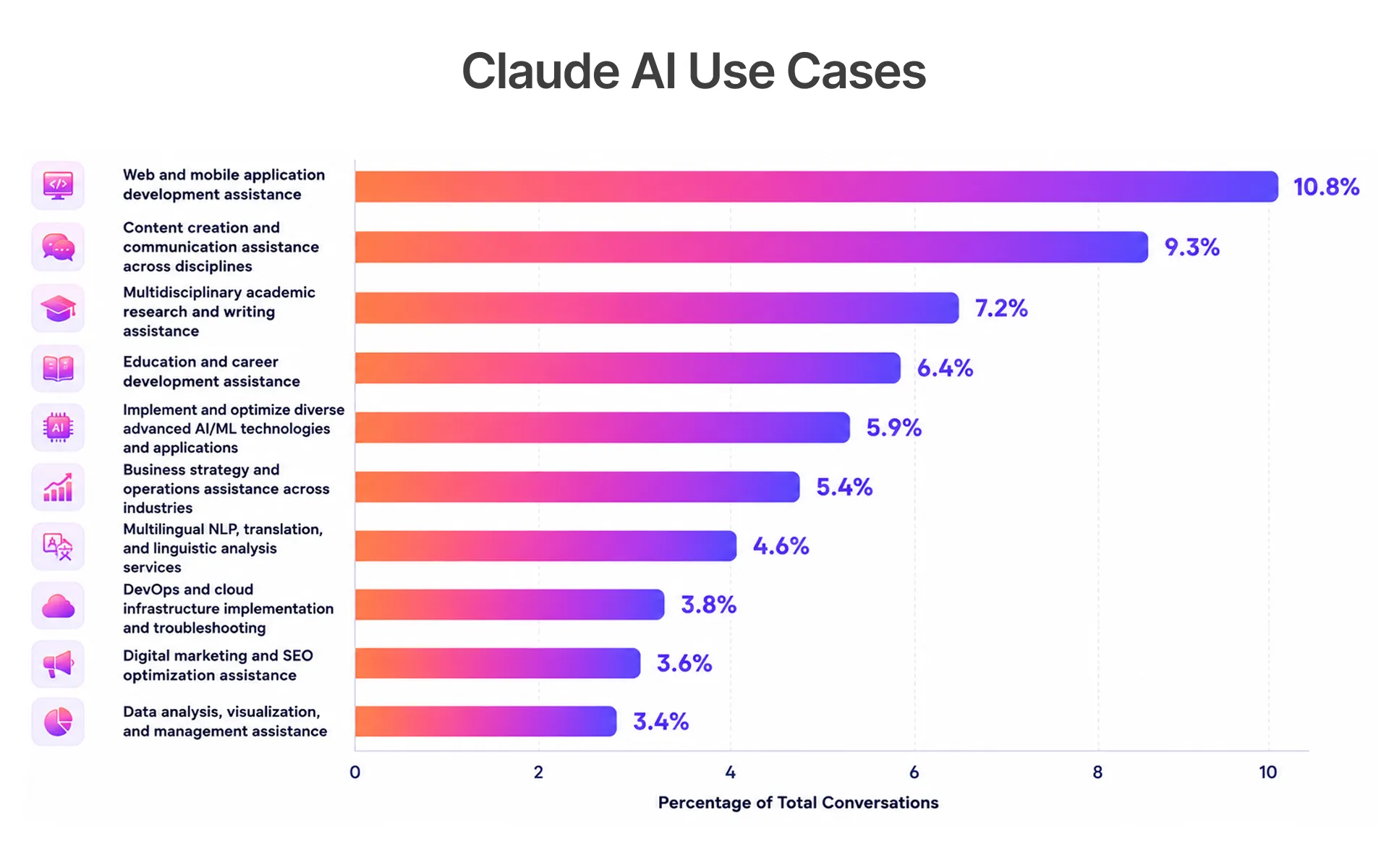
Anthropic's large language models are known as the Claude family of models. These are the current choices (Opus 4, Sonnet 4, Haiku 3.5), which manifest themselves at different points on the speed/intelligence/cost curve. What matters to developers: a 200K-token context window in flagship models, consistency in following instructions, and predictability in agentic workflows - all Claude is not just a chat backend. It handles complex workflows including tool invocation, file access, database queries, and code execution - making it suitable for production-grade agentic systems, not just conversational interfaces.
Claude AI Workflows Developers Are Actually Deploying in Production
Most Claude-based productions are not 'one turn' chats. Teams create workflows, multiple calls are made to the tools, and a result is returned - and the tools actually perform some work.
Patterns that are running at present:
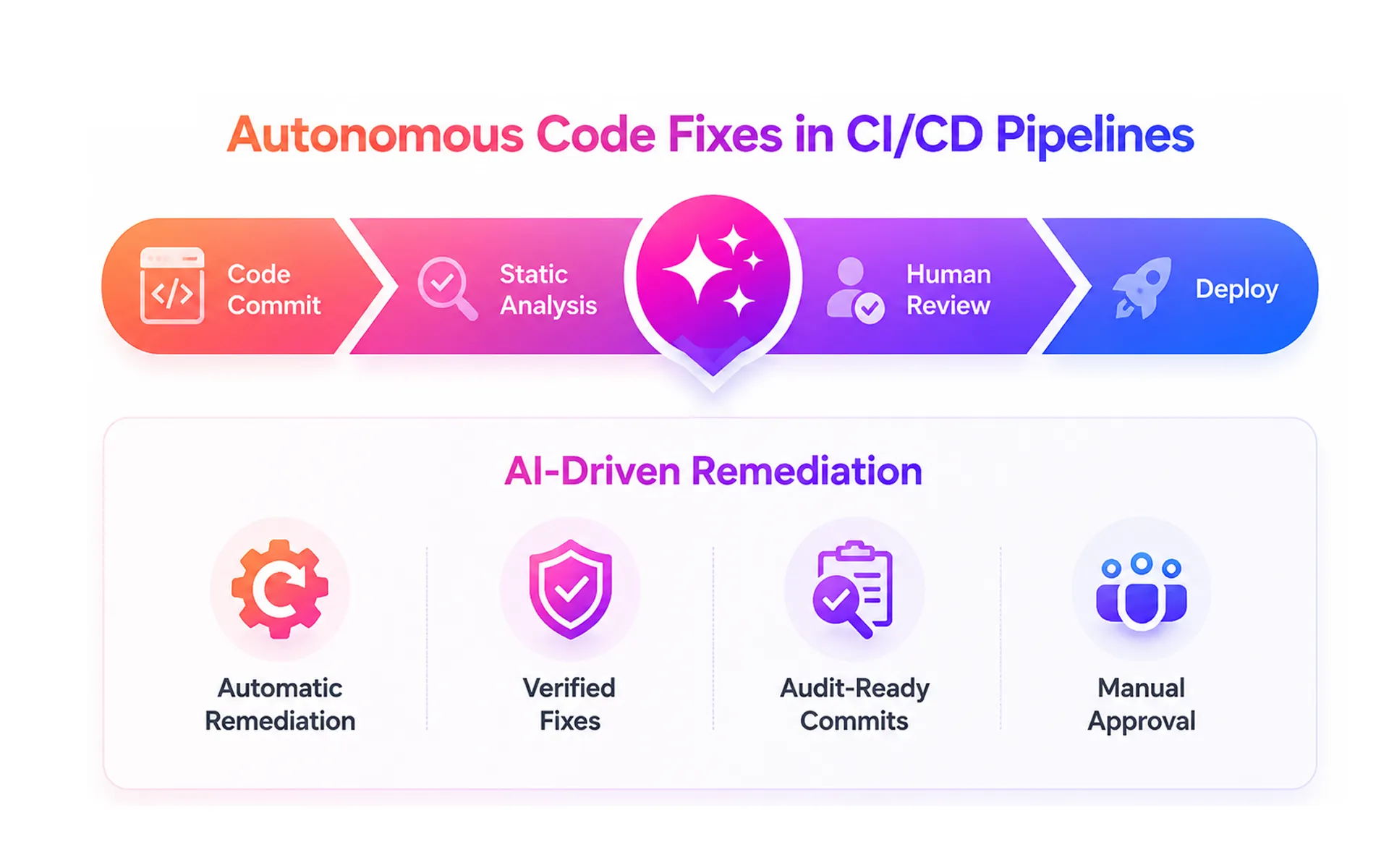
- A new feature in the Code Review Pipeline is to trigger a linting tool, read a diff, and get a structured review comment from Claude.
- Data extraction agents - Unstructured documents (PDF, emails) to structured records to Postgres or to a data warehouse.
- Test generation - Generates unit tests and edge cases, out of a function's signature and JSDoc annotations.
- Support ticket triage - Classifies incoming tickets, pulls up necessary documents from Notion / Google Drive, and composes a response to the ticket.
All of them have a common factor: they are all directed by Claude; a text box isn't prose.
Claude AI vs Other AI Models: Performance, Context, and Developer Experience
The number that makes a difference to agentic system builders: Native MCP. Define once, use many for your tools, Claude Desktop, Claude Code, and for the applications you create.
Claude AI Pricing Explained: Choosing the Right Plan for Your Development Needs
Profitability of a workflow at the volume level is based on the price. Claude's API has three tiers, each designed for different workloads and cost profiles - verify current rates on the Anthropic pricing page.
- Haiku 3.5 - Cheapest. Simple activities that involve a high volume of data, like classification, extraction, or routing.
- Sonnet 4 - Mid-tier. Ideal for most production workloads, such as code generation and using tools
- Opus 4 - The most powerful, expensive. Use it when you must engage in some higher-order thinking, long document analysis, or when you have a significant error to avoid.
In the free tier and trial credits, more can be done than is often thought when using a new feature of AI for validation. On the pricing page of Anthropic, you can see that batch API calls to Haiku 3.5 cost under $0.10 / 1000 calls (depending on payload), so it is viable to use in the context of call automation.
(Note: Check the current Anthropic pricing page for the latest batch API rates.)
Model Context Protocol (MCP): How AI Systems Connect With APIs, Tools, and External Data
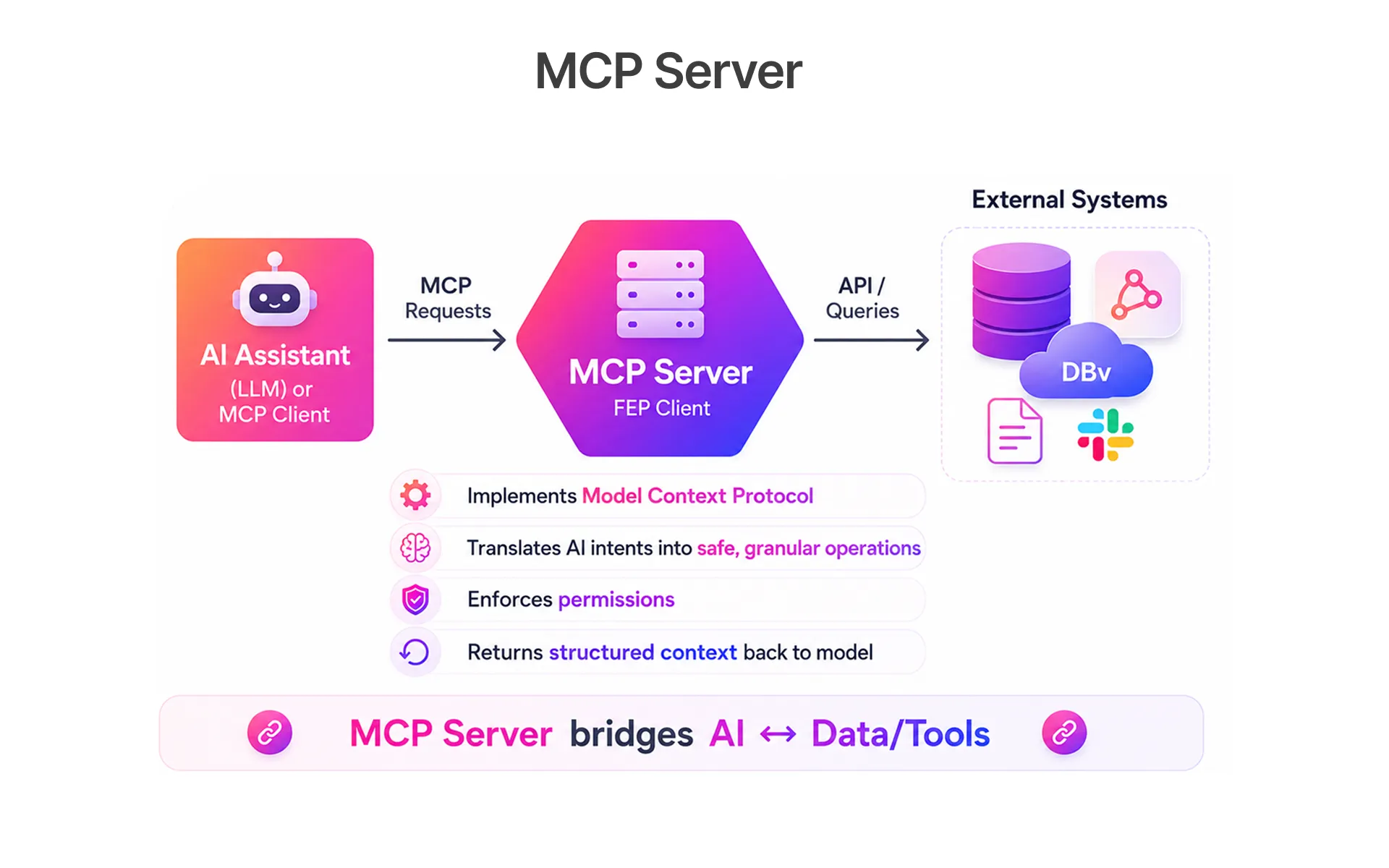
The main goal of the MCP is to facilitate the integration of AI models with external tools, data sources, and services. Anthropic developed the MCP to simplify the interaction between AI models and external tools, data sources, and services. The idea is to develop one MCP server, and then have any client that supports it call it instead of having to write custom integration code for each client. The idea is that all you write is a single MCP Server, and any compatible client (Claude Desktop, Claude Code, your app) can call it.
It will be implemented by the JSON-RPC protocol. Either Server-Sent Events (for remote servers) or stdio (for local processes) may be used to transport. It's a Portable Plumbing Service.
Implementing MCP Servers for Secure Tool Calling and Context Sharing
Here's a minimal MCP server in Python using FastMCP:
python
from mcp.server.fastmcp import FastMCP

mcp = FastMCP("postgres-reader")

@mcp.tool()
def run_query(sql: str) -> str:
    "Run a read-only SQL query against the analytics database."
    import psycopg2
    conn = psycopg2.connect(dsn="postgresql://readonly_user:pass@host/db")
    cur = conn.cursor()
    cur.execute(sql)
    rows = cur.fetchall()
    conn.close()
    return str(rows)

if __name__ == "__main__":
    mcp.run()
And the equivalent in TypeScript for Node.js:
typescript
import { McpServer } from "@modelcontextprotocol/sdk/server/mcp.js";
import { StdioServerTransport } from "@modelcontextprotocol/sdk/server/stdio.js";
import { z } from "zod";

const server = new McpServer({ name: "file-reader", version: "1.0.0" });

server.tool(
  "read_file",
  { path: z.string() },
  async ({ path }) => {
    const fs = await import("fs/promises");
    const content = await fs.readFile(path, "utf-8");
    return { content: [{ type: "text", text: content }] };
  }
);

const transport = new StdioServerTransport();
await server.connect(transport);
Tools are registered with a name by each server; there is a corresponding input schema and a handler for each tool. When Claude determines a tool is needed, it calls that tool directly - no client-side routing logic required.
Why Developers Are Adopting MCP for Secure and Scalable Data Integration
MCP is good to execute at scale for four reasons:
- Contract driven by Schema - Tools specify their input/output schemas.
Separate runs of the MCP servers (process isolation). If a tool becomes "bad," the remaining tools will remain unaffected. - Reusability - All Claude Desktop, Claude Code, and any future agents are supported on one Postgres MCP server.
- Scoped auth - JWT authentication and OAuth 2.1 are server-level authentication. The API key is not presented to the user; it is provided via the MCP layer.
According to the MCP specification repository on GitHub, there are over 1,000 published community MCP servers as of early 2026, ranging from Slack to JIRA, Linear to Figma, Sentry to Discord, Salesforce, and many more.
Best Resources for MCP Documentation, GitHub Repositories, and Tutorials
Claude AI API Integration: What Developers Need for Successful Implementation
Claude's API is on a message format basis. Authentication is provided through API keys in the header of the request. It is available, aside from most production builds, where it is enabled as a default.
Why API Integration Is Essential for Modern AI Application Development
If you are unable to access the API, you will be using the interface that Claude.ai offers. You can use the direct API connection, and you will have:
- Complete History & Management of conversation for Multi-Turn.
- Quick response to ensure a good UX experience in real-time.
- Functions/Tools are called by agents in workflows.
- Uniform model behaviour is obtained by having the ability to manage the system prompts.
- For high volume, Async workloads, batch processing.
Best Practices for Integrating Claude AI Into Existing Tech Stacks
Set up your environment first:
bash
pip install anthropic          # Python SDK
npm install @anthropic-ai/sdk  # Node.js SDK
A basic Python API call with tool use:
python
import anthropic

client = anthropic.Anthropic()

response = client.messages.create(
    model="claude-sonnet-4-20250514",
    max_tokens=1024,
    tools=[{
        "name": "get_user",
        "description": "Retrieve a user record by ID",
        "input_schema": {
            "type": "object",
            "properties": {
                "user_id": {"type": "string"}
            },
            "required": ["user_id"]
        }
    }],
    messages=[{"role": "user", "content": "Get details for user ID 12345"}]
)
When you're creating a production, many things are important:
- Use environment variables to store API keys. Never commit them
- Set a limit on the number of tokens per call, else they'll be "runaway responses," and it will cost you a lot of money!
- Use exponential backoff and retries for 529 (overloaded) responses.
- Record the amount of log tokens used by each request - context window bloat is a typical scaling issue. Scale horizontally by deploying Claude behind Cloudflare Workers for edge latency, or in a Kubernetes cluster for high-throughput batch workloads.
Common API Integration Challenges and Fast Ways to Resolve Them
Developer Tools That Accelerate Claude AI Application Development
Most of the integration boilerplate for Claude is already handled by mature tooling. Here's what's worth adding to your stack.
Top AI Developer Tools That Integrate Smoothly With Claude AI
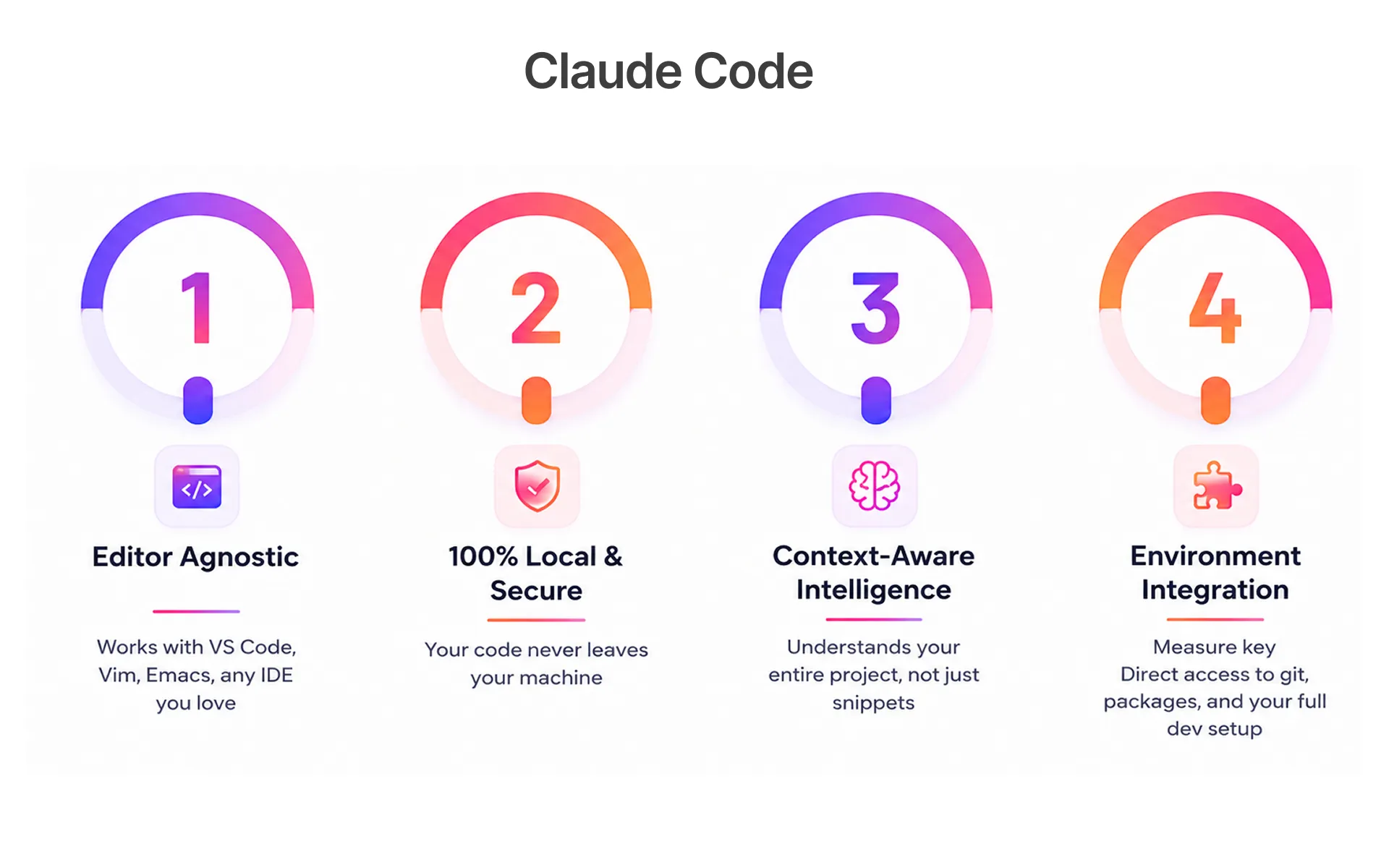
- Easy-to-use agentic coding tool that can be called from the command line, Claude Code. Can execute code in your terminal, traverse your code, and execute shell commands when you approve
- The IDEs that Claude can be used as an Inline Cursor Agent in: Cursor / Windsurf.
- Learn Pair Programming with all natively supported by Claude in a cloud dev environment with Replit.
- Context7 - MCP server to get live documentation for any library directly into Claude's context.
- Playwright / Puppeteer is an automation browser that Claude can use as a part of MCP for end-to-end testing.
Essential AI Infrastructure Tools for Monitoring, Testing, and Scaling Claude AI Apps
For SREs and automation engineers, get observability up and running BEFORE you need it. Make a note of all the calls to the tools, all the numbers of tokens used, and all the incorrect responses. When it doesn't go well at 2 a.m., that information will be helpful.
The Future of AI Developer Tools Over the Next 2-3 Years
Mostly, the use of WebSocket-based MCP will be the replacement of SSE in production, and will include less overhead and better error handling. Java-Based and Rails 8.0-based SDKs have already been developed for MCP. Cloudflare now has an integration with MCP for Durable Objects and Email Routing, in beta.
According to the StackOverflow 2025 Developer Survey, 76% of developers are already using or plan to use AI coding assistants, up from 44% in 2023.
Real-World Business Use Cases for Claude AI and MCP
How Companies Use Claude AI to Reduce Costs and Improve Operational Speed
During a Frugal Testing engagement with a mid-sized SaaS company, the team developed a document processing pipeline utilizing Claude and changed it to a manual document entry process to help them ingest data from contracts. 6 people are working manually on that. The new solution: Claude Sonnet 4 plugged in via the MCP to their PostgreSQL database and Active Storage. All PDFs are automatically parsed, the key fields are extracted, and records are added. They were able to decrease their errors by approximately 8% to less than 1% (manually). Documents were reduced from a processing time of 2-3 business days to less than 4 minutes.
Other verified use cases:
Conclusion: Why Claude AI and MCP Are Shaping the Future of AI Development
Three takeaways: Claude acts as your reasoning layer - it determines what to do and when. MCP acts as your tool protocol - it manages how Claude interacts with databases, APIs, and services. Deployment patterns are established - start with one MCP server and one workflow, validate in production, then scale.
Adoption is increasing rapidly; there are now more than 1,000 community MCP servers on GitHub, and the tools being built around Claude Code, FastMCP, and Context7 make it easier than ever to go from an idea to a working, deployed workflow. Here are three takeaways: Claude acts as your reasoning layer: it determines what to do and when. MCP acts as your tool protocol: MCP manages how Claude works with databases, APIs, and other services. Deployment patterns are established - start with one MCP server and one workflow, validate in production, and then scale.
For those working on Claude and MCP, who wish to have a second opinion on the architecture, please contact the Frugal Testing team. Just a simple discussion, no sales pitch, about what you are constructing.
Developer Communities, Forums, and Support Channels Worth Following
- An eye-catching, active developer community joins Anthropic Discord, and Anthropic engineers are present during the betas.
- Discussions about production use cases, troubleshooting, etc., in r/claudeAI forums.
- Keep an eye out for changes in the modelcontextprotocol repo on GitHub - PRs and issues will be posted for changes that will be coming up before the announcements.
- Justin Spahr-Summers (co-creator of MCP) can be followed on X and GitHub for early indicators of direction for the protocol; he interacts on open issues and PRs directly.
- Frugal Testing Blog - Real-life examples and patterns from production teams for testing AI, integrating MCP into your tests, and more.
People Also Ask (FAQs)
Q1. How do enterprises use Claude AI in production environments?
Ans: Enterprise Claude deployments are typically protected by an API gateway that has JWT authentication and rate limiting. These are typical use cases such as document pipelines, code review automation, and internal knowledge retrieval with RAG. CLD API calls are fully audited and isolated within its own service layer, which is a SOC 2-compliant team.
Q2. Why is Model Context Protocol (MCP) important for enterprise AI applications?
Ans: Without custom integration code for each new AI model or vendor, you can integrate a variety of AI models into your core business applications with MCP, which provides a standard interface. Prompt injection and auditability of integrations are also eliminated with schema-defined tools.
Q3. What are the biggest challenges when integrating Claude AI APIs into existing systems?
Ans: The most common issue that is encountered at scale is 'context window management'. When teams first begin engaging in a multi-turn conversation state, it can be more challenging than they think. While it's the first time, the cost of the authentication overhead between two services is not negligible (JWT tokens, OAuth 2.1, Access with an API-key, etc.).
Q4. What role do MCP servers play in AI agent architectures?
Ans: The MCP servers are used to execute the processes. The MCP server performs the tasks and returns structured results, and the choice of which of the tools to call is up to Claude. This separation simplifies the prediction of LLM behavior and allows the separation of the execution logic from the LLM logic.
Q5. What are the best practices for scaling AI-powered API integrations?
Ans: Use aggressive caching of responses - Claude's responses to many of the same types of questions are likely to be similar. Connect to the level using Upstash or Redis. Asynchronously run Claude API calls for throughput using Prefect or another orchestrator. Take care to keep the number of calls to tools in the MCP servers to a minimum. Track and cap response times and quantities per model tier, and move the high-frequency/low complexity calls to Haiku 3.5.

.webp)