

The modern software delivery environment relies on automation, cloud infrastructure, and rapid release cycles. As organizations increasingly adopt DevOps tools, cloud security platforms, and CI/CD pipelines checklist, security must be integrated throughout the development process rather than treated as a final checkpoint.
In modern Agile teams, security is a shared responsibility across developers, operations engineers, and security teams. By adopting DevSecOps tools, security testing tools, and automated security pipelines, organizations can protect web applications, secure sensitive data, and maintain compliance throughout Continuous Integration and Continuous Delivery processes.
Key goals of secure DevSecOps pipelines include:
- Protecting source code repositories and pulling requests from security vulnerabilities.
- Automating security testing in software testing environments.
- Enforcing shift-left security and continuous monitoring across production systems.
- Supporting secure deployments on cloud platforms such as Microsoft Azure, AWS, and cloud security Azure environments.
DevSecOps Governance, Threat Modeling & Secure Architecture
DevSecOps needs three requirements to begin its effective implementation, which include governance and risk awareness, together with secure architecture design. Teams need to identify all possible security threats that could impact their work on web applications, API gateways, and production infrastructure before they start coding. Development teams use strong Threat Modeling practices to identify security weaknesses during the Security Development Lifecycle.
Organizations implementing DevSecOps governance typically focus on:
- Defining security policies for Agile development environments
- Aligning security with Microsoft Security Development Lifecycle guidelines
- Ensuring architecture complies with frameworks like the Azure Well-Architected Framework
- Performing risk analysis before deployment of cloud resources
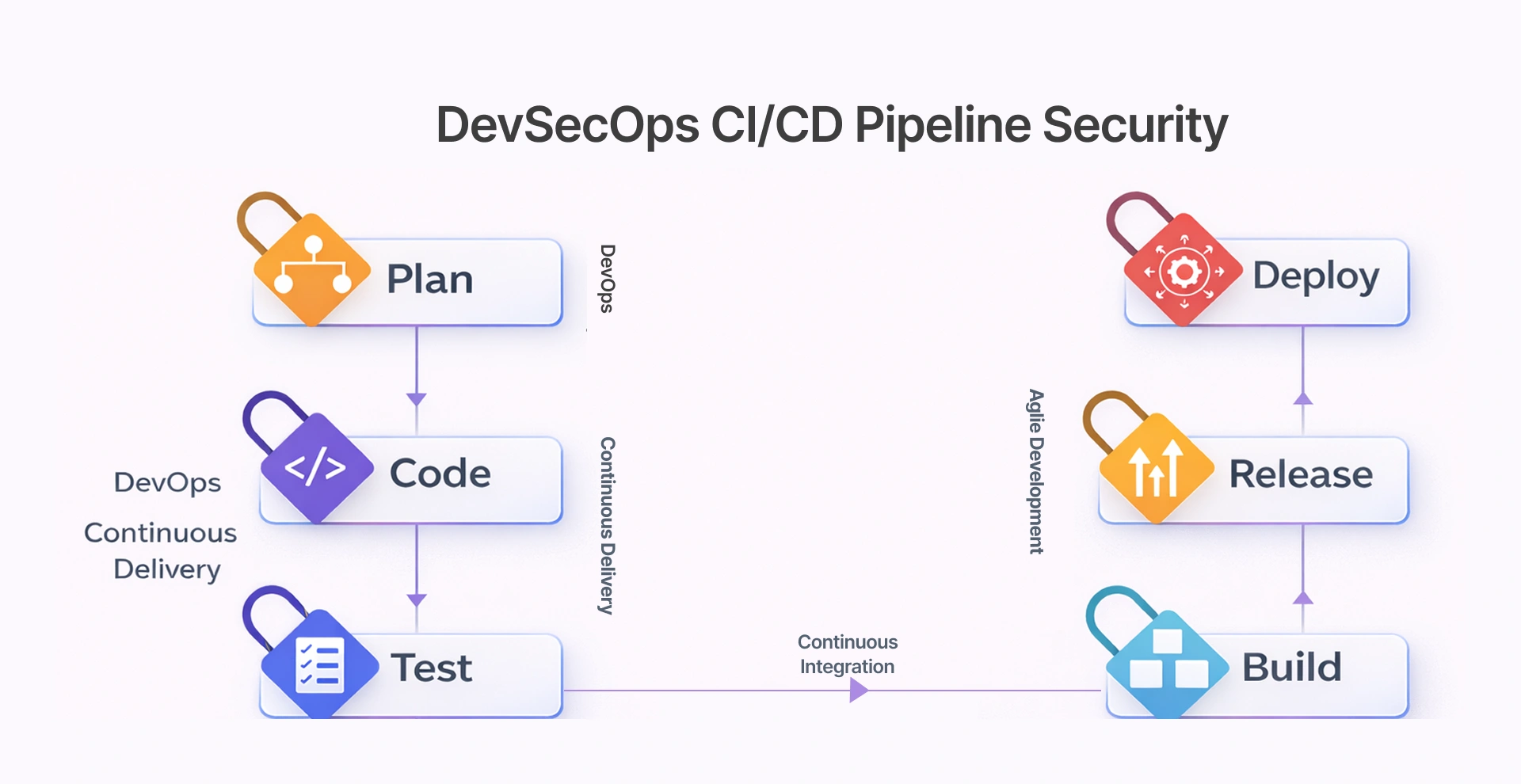
When these governance principles are properly implemented, security teams obtain complete visibility throughout the software delivery process. The organization uses this method to implement Zero Trust enforcement procedures while sustaining operational flexibility in its continuous deployment processes.
STRIDE-Based Threat Modeling & Attack Surface Analysis
Threat modeling enables organizations to discover their upcoming security weaknesses before they implement their systems. Security teams employ the STRIDE framework, which assesses spoofing and tampering, repudiation and information disclosure, denial of service, and elevation of privilege as their primary method to evaluate risks throughout the software development process.
During threat modeling, teams should:
- Analyze application architecture and source code repositories.
- Teams need to find security weaknesses that exist within API gateways and Swagger files and web applications.
- The evaluation process needs to assess attack surfaces which include both exposed services and hidden shadow APIs.
Security Requirements Engineering (OWASP ASVS, NIST 800-53)
Development teams must adhere to recognized security standards according to security requirements. The web application protection framework includes OWASP Top 10 and OWASP ASVS, and NIST 800-53 as its best practice guidelines to prevent SQL command injection and protect sensitive information.
Key security requirements include:
- Implementing secure coding standards across integrated development environments
- Conducting security reviews during pull requests
- Applying Secrets Detection to protect credentials
- Enforcing compliance automation and governance policies
- Protecting production environments from online attacks
Establishing these security requirements ensures that Agile teams build secure solutions aligned with modern application security practices.
Secure Architecture Review & Zero-Trust Design Principles
Secure architecture reviews evaluate whether systems meet security standards before deployment. These reviews focus on cloud-native architectures, infrastructure segmentation, and Zero Trust enforcement.
Important architecture considerations include:
- Designing secure infrastructure using AWS CloudFormation or Azure Resource Manager
- Protecting applications with Application Gateway and Azure Front Door
- Restricting network access through Security groups
- Securing cloud environments using AWS security tools and cloud security Azure frameworks
The implementation of Zero Trust architecture prevents automatic trust evaluation for all users and systems, which results in decreased security risks throughout contemporary DevSecOps pipelines.
Secure Coding, Secrets Management & Static Analysis
Underpinning a solid DevSecOps pipeline are secure coding practices. Developers must usher in all kinds of security OS testing and automated scanning for vulnerabilities. These credentials that developers may inadvertently secure must be held in safe custody through the DevSecOps pipeline.
Organizations should implement the following practices:
- Training developers on application security best practices
- Conducting Pre-commit checks before code enters source code repositories
- Automating Secrets scanning to detect exposed credentials
- Integrating Static Application Security Testing tools into the pipeline
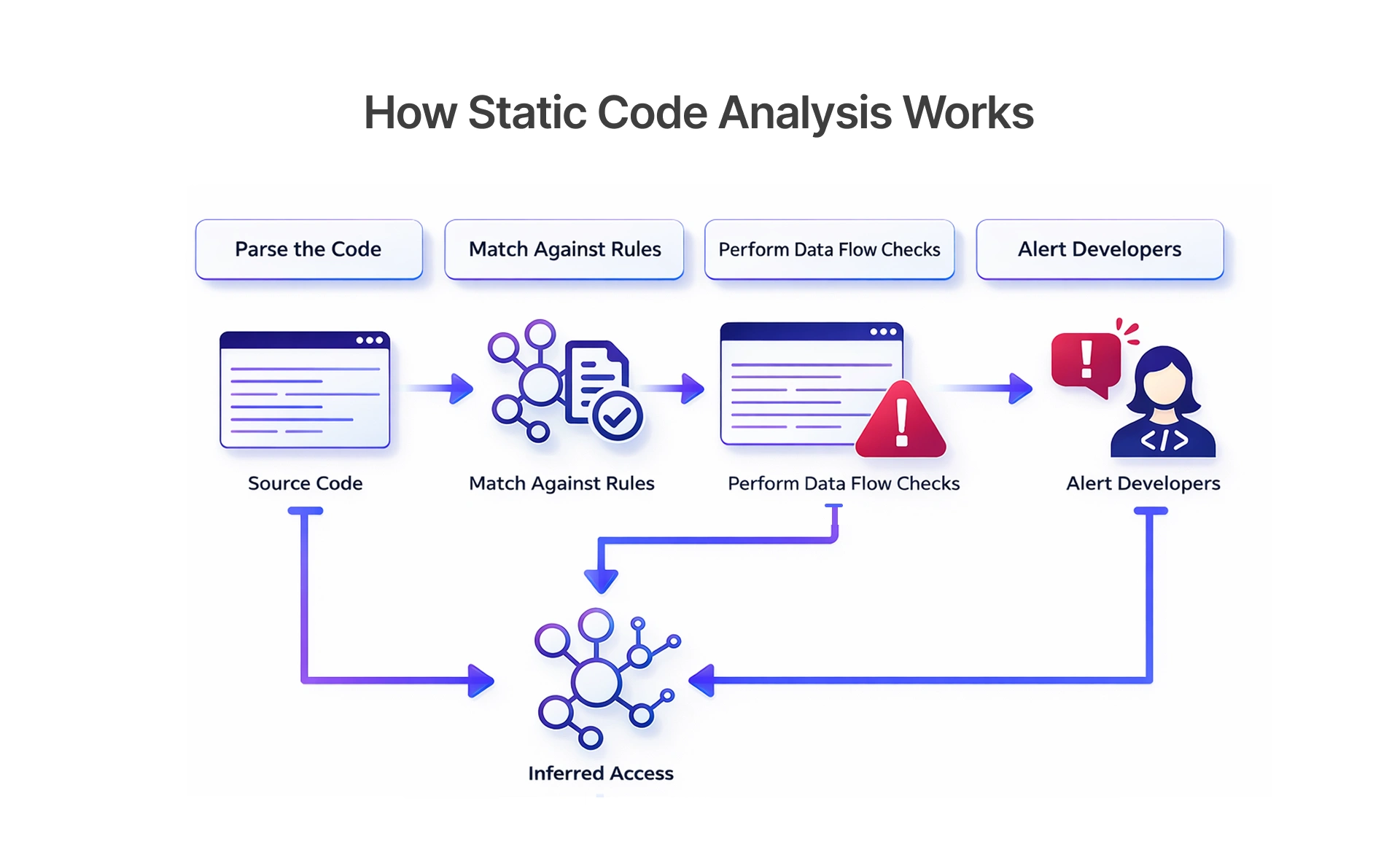
These practices ensure that vulnerabilities are identified early while maintaining the agility of Agile development.
Secure Coding Standards & Peer Security Reviews
The implementation of secure coding standards enables developers to eliminate security vulnerabilities that exist in their code before it reaches production. The combination of peer reviews with security reviews enables the identification of problems that automated tools fail to detect.
Secure Coding Practices:
- Definition: The process of creating software solutions that decrease security risks while stopping attackers from using these vulnerabilities.
- Key Principles: Developers need to validate their inputs while using languages that protect memory, and they must create systems with effective user access restrictions.
- Process: The organization implements security measures that protect all stages of software development through its entire development process.
By implementing consistent code review processes, teams reduce security risks and improve overall software delivery quality.
Enterprise Secrets Management & Credential Hygiene
The practice of secrets management protects credentials, which include API keys and database passwords, and encryption tokens from being revealed. Organizations can protect their sensitive information through the use of Azure Key Vault, AWS Secrets Manager, and HashiCorp Vault, which provide secure secret management solutions across different operational environments.
Secrets Management:
- The Risk: Source code security becomes compromised when developers include API keys together with passwords and certificates.
- Best Practices: Environment variables should serve as a secure storage method to handle sensitive data.
These practices help organizations protect sensitive data and maintain secure CI/CD pipeline operations.
Static Application Security Testing (SAST) & Software Composition Analysis (SCA)
Static analysis tools scan source code for vulnerabilities before execution. Static Application Security Testing identifies issues such as insecure coding patterns and configuration errors.
Static Analysis (SAST):
- Definition: The process of scanning source code, which includes bytecode and binaries, to locate security vulnerabilities, software defects, and quality control problems.
- Key Benefits: The system delivers instant feedback to developers through its "shift left" function, which gets integrated with CI/CD pipelines.
- Tools: The system examines applications for multiple security weaknesses, which include cross-site scripting (XSS), SQL injection, and insecure system settings.
Using Software Composition Analysis, teams can monitor open source packages and generate a Software Bill of Materials for transparency.
Build Integrity, Container Hardening & Supply Chain Security
Secure build environments ensure that production artifacts remain trustworthy. Modern pipelines rely on containers, cloud infrastructure, and automated deployment tools.
Build Integrity & Supply Chain Security:
- Image Signing & Provenance: The system requires users to authenticate software through Cosign-based image signing, which establishes trust for all deployed software components.
- SBOM Analysis: The process creates Software Bill of Materials (SBOMs), which the team uses to identify software dependencies and find security weaknesses.
Container Hardening:
- Minimal Base Images: The process needs to decrease the attack surface through the implementation of stripped-down distroless and specialized base images.
- Non-Root User: The system needs to operate containers through non-root users because this approach reduces potential damage from security breaches.
Infrastructure & Runtime Security:
- Container-Optimized OS: The system requires host operating systems that secure containers through dedicated platforms such as Bottlerocket or Flatcar.
- Disable SSH: The organization banned direct SSH access to nodes and now uses API-based debugging as the only access method.
Hardened Build Agents & Ephemeral CI Runners
All build environments require protection against both unauthorized access attempts and malicious tampering threats. The use of ephemeral runners creates secure build environments that terminate after completing their execution.
Important controls include:
- Hardening build servers with updated patches
- Monitoring activity using SCM Posture Management
- Enforcing access policies across CI systems like gitlab pipeline and azure devops
This reduces attack surfaces across the CI/CD pipeline.
Container Image Scanning, Least Privilege & Image Signing
Containers function as the central components that support the operation of contemporary cloud-native system designs. The existence of insecure container images creates substantial security threats for organizations that implement these technologies.
Security teams should:
- Implement container image scanning for vulnerabilities
- Enforce least privilege within containers
- Use security platforms such as Prisma Cloud, Wiz Security Graph, and Orca Cloud Security Platform
These tools help identify vulnerabilities in container images before deployment.
Software Supply Chain Security (SBOM, Sigstore, Artifact Verification)
A primary concern for Schrödinger security was dependency attacks on systems. It will benefit from the generation of a Software Bill of Materials for assessing and documenting dependencies in the applications.
Supply chain security practices include:
- Monitoring dependencies using Software Composition Analysis
- Signing artifacts with Sigstore
- Verifying builds using trusted repositories

These steps help prevent malicious code from entering the software delivery pipeline.
Dynamic Security Testing & Pre-Production Validation
Dynamic testing evaluates running applications and identifies vulnerabilities missed during static analysis.
Key Components for Effective Pre-Production
- Validation Automation: The CI/CD pipeline receives continuous testing capabilities through DAST integration, which operates as an automated testing system that executes tests for each software build.
- Risk Reduction: The technology protects applications from emerging threats that become active after the system starts operating.
- Efficiency: The system delivers usable information, which enables organizations to fix problems quickly because it generates results with minimal false alarms.
This ensures applications remain secure before production deployment.
Dynamic Application Security Testing (DAST) & Authenticated Scanning
The main elements of the DAST pre-production testing process:
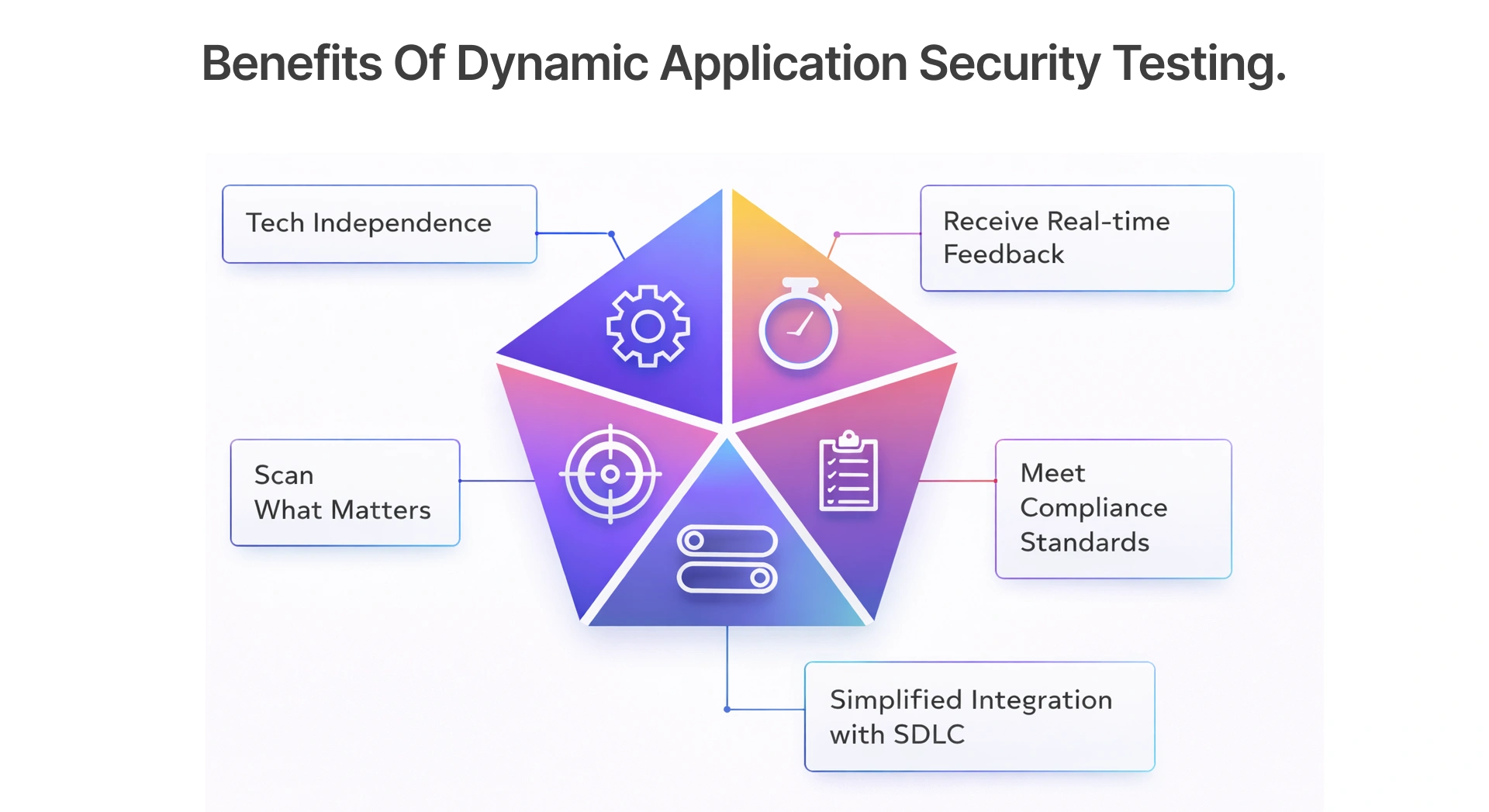
- Methodology: The system functions as a black-hat hacker that conducts external application tests through scanning, crawling, and attacking methods while lacking access to internal code.
- Timing: DAST testing, which organizations used to perform exclusively after production, now occurs as part of CI/CD pipelines that test software during staging.
- Benefits: The system provides three advantages, which include low false-positive rates and identification of run-time misconfigurations, and development teams receive actionable findings.
- Scope: The system detects security vulnerabilities in web applications and application programming interfaces, which include REST, GraphQL, and gRPC.
Interactive Application Security Testing (IAST) & Runtime Instrumentation
Interactive Application Security Testing (IAST) combines static analysis tools and Dynamic Application Security Testing techniques to analyze application behavior while the application is running.
Benefits include:
- Improved vulnerability detection accuracy
- Real-time feedback for developers
- Better visibility into runtime security risks
Unlike traditional security testing types, IAST integrates directly with the application runtime or integrated development environment, enabling security teams to detect vulnerabilities in real time during the development lifecycle.
Fuzz Testing, API Security Testing & Automated Security Gates
Fuzz testing is a powerful technique used to test application resilience by injecting random, malformed, or unexpected inputs into systems. This method is highly effective for identifying vulnerabilities in web applications, API gateways, and services that process untrusted data.
Security teams should:
- Implement fuzz testing for API gateways
- Validate Swagger files for vulnerabilities
- Enforce automated Security Gates within pipelines
By integrating fuzz testing into the software delivery pipeline, organizations can detect vulnerabilities earlier and reduce the risk of online attacks targeting APIs and backend services.
Runtime Protection, Continuous Monitoring & Incident Response
Even with strong testing, threats can appear in production. Continuous monitoring ensures systems remain secure after deployment.
Essential Elements and System Features:
Runtime Protection (Runtime Application Self-Protection - RASP):
- Function: The system protects running applications by observing their internal operations, which include data transmission and function execution.
- Threat Detection: The system detects malware threats, code injection attacks, memory corruption incidents, and unauthorized privilege escalation attempts.
Continuous Monitoring:
- Purpose: The system enables organizations to monitor their complete security status across all systems, networks, and container environments.
- Capabilities: The system detects both security vulnerabilities and newly emerging threats while maintaining continuous monitoring operations.
Incident Response (IR):
- Framework: The system uses a structured cycle, which includes Prep, Detection/Analysis, Containment/Eradication, and Post-Event Activity to handle security breaches.
- Goal: The system achieves its objectives by limiting damage, providing quick service restoration, and collecting evidence for future investigations.
Infrastructure as Code (IaC) Security & Policy as Code (OPA)
Modern infrastructure is increasingly managed using Infrastructure as code, where configuration files define cloud resources, networking rules, and deployment environments. Tools such as Terraform and AWS CloudFormation allow development teams to automate infrastructure provisioning as part of the CI/CD pipeline.
Security best practices include:
- Scanning IaC templates for misconfigurations
- Enforcing IaC security policies
- Monitoring infrastructure for unauthorized changes

This approach strengthens infrastructure security across cloud platforms.
Runtime Application Self-Protection (RASP) & Cloud-Native Defense
Runtime Application Self-Protection (RASP) solutions provide an additional security layer by monitoring application behavior during execution. Unlike traditional perimeter defenses, RASP tools operate inside the application runtime and can detect malicious activity as it occurs.
Common protections include:
- Detecting injection attacks
- Monitoring unusual behavior patterns
- Preventing unauthorized access attempts
These technologies enable continuous protection across modern cloud environments.
SIEM Integration, Vulnerability Management & Automated Incident Response
Security Information and Event Management (SIEM) platforms collect and analyze security data from across applications, infrastructure, and cloud services.
Security teams typically use SIEM systems to:
- Detect abnormal patterns using AI-driven detection
- Correlate events across multiple security tools
- Automatically trigger remediation workflows
Integrating SIEM platforms with DevSecOps pipelines enables organizations to maintain real-time visibility across the entire development lifecycle.
Conclusion: Strengthening DevSecOps Pipelines with Frugal Testing
Modern enterprises must secure complex pipelines spanning multiple tools, cloud providers, and development environments. By embedding DevSecOps practices, integrating security testing tools, and adopting shift-left security, organizations can build resilient software delivery pipelines.
This is the point where Frugal Testing becomes essential. Frugal Testing enables organizations to implement scalable and cost-efficient DevSecOps security testing across development environments, which enables security to function as an ongoing process instead of a terminal examination point.
Key Learnings from This Blog
- DevSecOps embeds security across the development lifecycle, helping teams detect vulnerabilities early.
- Threat modeling and secure architecture design reduce attack surfaces before development begins.
- Secure coding, secrets management, and static analysis prevent vulnerabilities from entering source code repositories.
- Container security and supply chain protection ensure build integrity and trusted production artifacts.
People Also Ask (FAQ’s)
Q1.What is DevSecOps and how does it improve pipeline security?
Ans: DevSecOps integrates security directly into the development lifecycle. It ensures security testing occurs continuously within the CI/CD pipeline, allowing teams to detect vulnerabilities earlier and reduce risks.
Q2.What security tests should be included in a DevSecOps pipeline?
Ans: Typical security testing types include:
- Static Application Security Testing (SAST)
- Dynamic Application Security Testing (DAST)
- Software Composition Analysis
- Secrets scanning
- container image scanning
These tools help protect applications throughout the software delivery process.
Q3.How does shift-left security work in DevSecOps?
Ans: Shift-left security means performing security testing earlier in the development process. Developers run security checks during coding rather than waiting until deployment.
Q4.What role does Infrastructure as Code (IaC) security play in DevSecOps?
Ans: Infrastructure as code allows infrastructure to be defined programmatically. By scanning IaC templates, teams can detect misconfigurations and enforce security policies before deployment.
Q5.How can organizations maintain continuous security monitoring in production?
Ans: Organizations maintain continuous monitoring by using:
- SIEM platforms
- vulnerability scanners
- runtime security tools
These systems provide real-time visibility into production environments and help security teams respond quickly to threats.

.webp)