


Why API Testing Strategy Matters in Today’s Complex Systems
As modern applications grow more complex, organizations rely on dozens or even hundreds of APIs to power critical features, integrations, and services. While this interconnected architecture enables innovation and scalability, it also creates a major challenge: when multiple APIs support core functionality, determining what to test first becomes difficult. Without a clear prioritization strategy, teams may waste resources testing low-impact APIs while high-risk endpoints remain under-tested.
In today’s fast-evolving digital landscape, APIs power everything from SaaS platforms to enterprise systems and cloud-based services. This section explores why a well-defined API testing strategy is essential for managing complexity, reducing risk, and ensuring reliable, high-quality software delivery.
Overview of APIs in modern software development
Modern software development is built on the foundation of the Application Programming Interface (API). Whether you are building SaaS platforms, fintech apps, or enterprise systems, APIs enable seamless communication across connected applications, connected devices, and cloud service providers. In today’s digital ecosystems, APIs are not just technical components they define how businesses deliver value and scale globally.

- APIs enable third-party integrations like payment gateways and analytics tools.
- Use standardized HTTP verbs to exchange data efficiently.
- Support innovations in cloud computing and generative AI.
- Drive modern architectures like microservices and serverless systems.
This blog explores how CTOs, tech leads, and IT managers can prioritize API testing effectively when everything seems equally critical, using practical strategies and industry-proven approaches.
Importance of APIs in critical applications
APIs directly impact business-critical operations. For example, a SaaS product in India or the US relying on a payment processor cannot afford API downtime. Even milliseconds of delay in API endpoints can degrade user experience and revenue.
- APIs control core app functionality in modern applications.
- Failures can disrupt real-time services and transactions.
- High dependency increases business criticality and risk exposure.
- Require strong risk management and monitoring.
According to industry reports from cloud providers, over 80% of modern applications depend heavily on APIs, making them essential assets that must be tested rigorously.
Need for a strong API testing strategy
When everything feels critical, teams often fall into the trap of testing everything equally. This leads to inefficiency and high execution cost. A well-defined API automation test strategy helps teams focus on what matters most.
- Enables risk-based prioritization based on business impact.
- Helps define test case priority levels and execution order.
- Improves defect detection and reduces failures.
- Aligns testing with Release cycles and delivery goals.
At Frugal Testing, teams leverage test intelligence, coverage analytics, and risk-based strategies to ensure high-value APIs are tested first, optimizing both quality and resources.
Understanding the Importance of API Testing
What is API testing and how it differs from traditional testing
API testing validates the functionality, reliability, and security of APIs without relying on the user interface. Unlike traditional testing, which focuses on UI interactions, API testing targets backend logic and data flow.
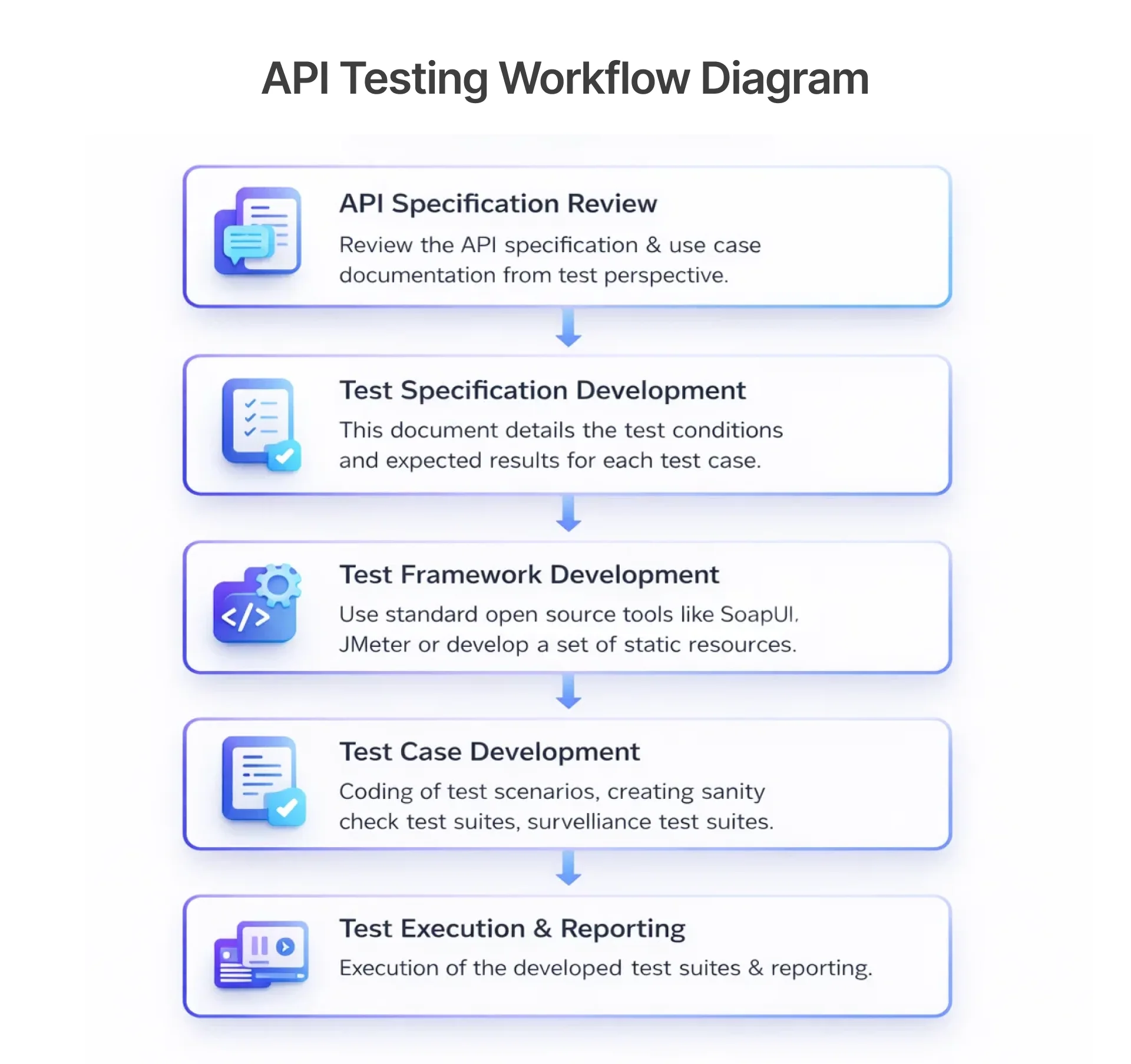
- Covers functional testing, unit tests, and integration testing.
- Validates request-response cycles and test execution.
- Uses structured test cases, test suite, and reusable test scripts.
- Supports advanced techniques like contract testing and end-to-end testing.
Because API testing operates at the service layer, it enables faster feedback, earlier defect detection, and more stable test environments compared to UI testing.
Role of APIs in modern applications and user experience
APIs are the invisible layer powering every digital interaction. From logging in to making payments, APIs ensure smooth communication between systems.

- Enable seamless integration with tools like api layer and postman api testing.
- Support real-time interactions in connected devices.
- Improve performance and response time.
- Ensure smooth user experience across platforms.
For example, an e-commerce platform depends on APIs for inventory, payments, and delivery tracking. Any failure can break the entire user journey, highlighting the importance of robust API testing.
Benefits of API testing for quality, speed, and API security
Implementing API testing delivers multiple benefits, including improved quality, faster releases, and enhanced API security.
- Accelerates delivery through automated testing and CI pipelines.
- Improves test coverage and reduces coverage gaps.
- Detects security vulnerabilities like SQL injections early.
- Strengthens API security testing with advanced tools.
Organizations adopting AI-powered test automation and modern automation tools achieve better efficiency, reduced errors, and faster Release cycles, making API testing a strategic advantage.
Types of Testing in API Strategy
Automated testing vs manual testing in API testing
Modern systems require scalable testing approaches. While manual testing has its place, automated testing is essential for efficiency and consistency.
- Automated testing ensures repeatable and fast test execution.
- Tools like Postman, Sahi Pro, and Katalon Studio enable scalability.
- Manual testing helps explore edge test scenarios.
- Supports advanced capabilities like test scripts from natural language descriptions.
By combining both approaches, teams can balance speed and flexibility while building reliable test automation suites.
Performance testing and load testing for APIs
Performance testing ensures APIs perform under expected conditions, while load testing evaluates behavior under heavy traffic.
- Tools like JMeter enable effective API load tests.
- Measure system response time and scalability.
- Identify bottlenecks in test environments.
- Support advanced techniques like Performance Experience Testing.
For SaaS companies operating globally, performance testing is critical to maintaining consistent service quality and customer satisfaction.
API security testing and common vulnerabilities
Security is one of the biggest concerns in API-driven systems today. Since APIs expose application functionality and data, even a small vulnerability can lead to serious security risks. API security testing helps teams identify weaknesses early, before attackers have the opportunity to exploit them.
- Detects common threats such as SQL injections, authentication flaws, and data exposure
- Uses techniques like fuzz testing and boundary testing to uncover unexpected behavior
- Supported by specialized API security tools and penetration testing practices
- Helps organizations meet security and compliance requirements
As cyber threats continue to grow, proactive security testing is essential for protecting sensitive data, maintaining customer trust, and ensuring the stability of API-driven applications.
Integrating API Testing into CI/CD Pipelines
Role of CI/CD in continuous integration and deployment
Modern development teams rely on CI/CD pipelines to release software quickly while maintaining quality. By integrating testing directly into the development workflow, teams can validate APIs continuously as new code is introduced.
- Enables continuous integration and continuous deployment practices
- Automatically runs tests in CI pipelines whenever code changes are pushed
- Helps detect issues earlier in the development cycle
- Reduces the chances of failures during deployment
When API testing is integrated into CI/CD workflows, teams gain faster feedback and greater confidence in every release, ensuring that new features do not break existing functionality.
Key automation tools for API testing: Postman, Jenkins
Automation tools simplify API testing and integration into pipelines.
- Postman API testing enables quick validation of APIs.
- Jenkins (software) supports automated CI/CD build pipelines.
- Tools like Katalon TestOps enhance test management.
- Provide scalable automation tools for large systems.
These tools empower teams to build efficient testing ecosystems and improve overall productivity.
Best practices for test automation in CI/CD pipelines
To maximize the benefits of test automation, teams must follow proven best practices.
- Maintain reusable test scripts and structured test cases.
- Implement strong test data management strategies.
- Monitor coverage analytics and identify gaps.
- Ensure test automation resilience for stability.
A disciplined approach helps teams achieve reliable test execution, reduce errors, and maintain high-quality releases.
The Role of API Testing in DevOps Technologies
API testing in the DevOps pipeline and lifecycle
In DevOps technologies, API testing is embedded throughout the lifecycle, ensuring continuous quality and collaboration.
- Integrated into the DevOps pipeline.
- Supports faster feedback and issue resolution.
- Enhances collaboration between development and QA.
- Aligns with modern QA organization practices.
This integration enables teams to deliver high-quality software faster while maintaining reliability.
Metrics for measuring API testing effectiveness
Tracking the right metrics is essential for improving testing strategies and outcomes.
- Monitor fault detection rate and change failure rate.
- Track total statement coverage and total branch coverage.
- Analyze defect history and failure history.
- Use coverage-based prioritization for optimization.
These metrics provide valuable insights into system performance and help teams refine their testing approach.
Continuous improvement using feedback loops
Continuous improvement is driven by effective feedback loops and data-driven insights.
- Use AI insights to refine testing strategies.
- Improve resource optimization and reduce execution cost.
- Identify gaps using coverage analytics.
- Enhance testing efficiency and quality.
Organizations leveraging feedback-driven strategies achieve better outcomes and faster delivery cycles.
The Future of API Testing
Emerging trends like AI testing and shift-left strategy
The future of API testing is shaped by innovation and early testing approaches.
- AI-powered test automation improves efficiency and accuracy.
- Shift-left strategy enables early defect detection.
- Use of generative AI for creating test cases.
- Enhances overall test intelligence.
These trends are transforming how teams approach testing in modern environments.
Evolving challenges in API security testing
As APIs evolve, so do security challenges, requiring advanced solutions.
- Increasing complexity of connected applications.
- Growing number of cyber threats target APIs.
- Need for advanced API security testing strategies.
- Continuous updates to security protocols.
Organizations must stay proactive to address these challenges effectively.
Role of QA and QC in API testing strategies
Understanding the difference between QA and QC is essential for building effective testing strategies.
- QA focuses on process improvement and prevention.
- QC ensures product quality through validation.
- Both contribute to better test management.
- Strengthen overall software testing practices.
Balancing QA and QC ensures consistent quality and long-term success.
Conclusion: Strengthening Test Strategy with API Prioritization
Recap of API testing importance in software testing
API testing is no longer optionalit is a core pillar of modern software testing. It ensures reliability, scalability, and security in increasingly complex systems.
- Improves defect detection and system stability.
- Enhances test coverage and reduces risks.
- Supports scalable and resilient architectures.
- Improves overall user experience.
Organizations that prioritize API testing gain a competitive advantage in delivering high-quality products.
Importance of prioritization in test strategy
When everything seems critical, prioritization becomes the key to efficiency and success.
- Focus on risk-based prioritization and business goals.
- Optimize resources and reduce unnecessary effort.
- Improve test prioritization and execution efficiency.
- Align testing with organizational objectives.
A strategic approach ensures teams focus on high-impact areas while maintaining quality.
How Frugal Testing helps implement automation, CI/CD, and API security best practices
To succeed in today’s competitive landscape, organizations need a smart and scalable testing approach. Frugal Testing helps teams streamline API testing by integrating automation testing into CI/CD pipelines, ensuring continuous quality and faster releases.
- Implements efficient test automation for reliable and repeatable testing
- Integrates API validation into CI/CD for faster feedback on code changes
- Strengthens systems with robust API security testing
- Uses AI-powered insights to improve test coverage and reduce execution effort
With Frugal Testing, businesses can prioritize APIs effectively, improve performance and security, and build resilient systems ready for future growth.
People Also Ask (FAQs)
Q1.What is API testing and why is it important in automated testing?
Ans: API testing focuses on validating the functionality, reliability, and performance of APIs. In automated testing, it plays a crucial role by enabling faster execution, early bug detection, and seamless integration into CI/CD pipelines. Tools like Postman and other API testing tools help streamline this process.
Q2.How does automated testing improve CI/CD pipeline efficiency?
Ans: Automated testing enhances CI/CD pipelines by ensuring continuous validation of code through continuous integration and continuous deployment. Using test automation tools and platforms like Jenkins (software), teams can quickly identify issues, reduce manual effort, and improve delivery speed.
Q3.What is the difference between performance testing and load testing?
Ans: Performance testing evaluates how a system behaves under various conditions, while load testing specifically measures system performance under expected user loads. Tools like JMeter are widely used for both, especially when testing APIs and applications for scalability and stability.
Q4.Which tools are best for API testing and automation?
Ans: Popular API testing tools include Postman, api layer, and other automation tools that support test automation. These tools help developers and QA teams perform unit testing, regression testing, and API security testing efficiently.
Q5.What is API security testing, and why is it critical?
Ans: API security testing ensures that APIs are protected from vulnerabilities and unauthorized access. Techniques used by a penetration tester include validating authentication, encryption, and data exposure risks using specialized API security tools. Strong API security is essential for protecting sensitive data.
Q6.How do DevOps technologies support automated and API testing?
Ans: DevOps technologies integrate automated testing, API testing, and monitoring into the DevOps pipeline. With CI/CD, teams can continuously test APIs, improve software quality, and accelerate delivery using tools like Jenkins (software) and other software testing tools.


.webp)
.webp)