

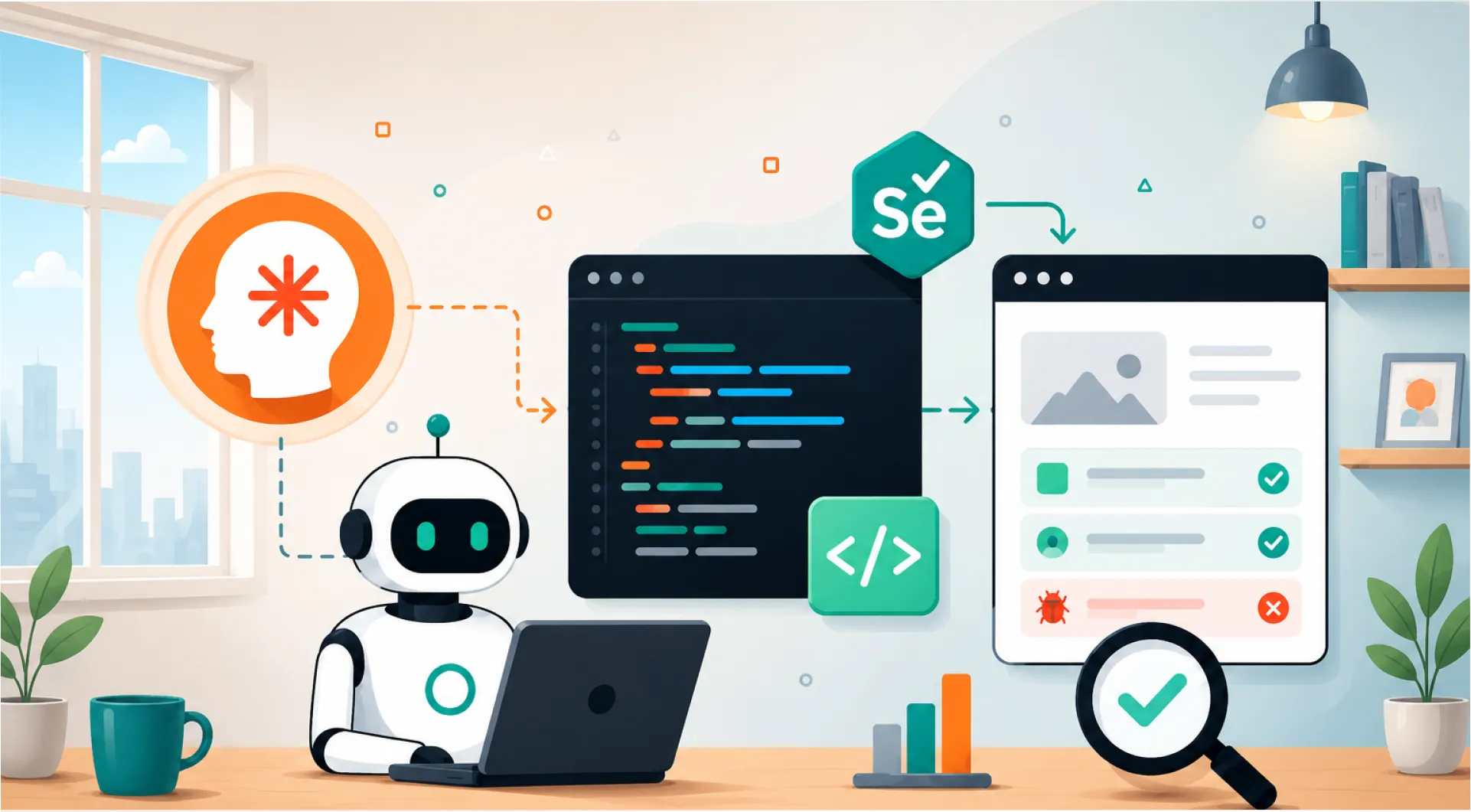
While newer tools like Playwright are becoming more popular, Selenium continues to be one of the most widely used frameworks for testing web applications. As the investment in software testing continues to grow, organizations are looking for quicker ways to build, maintain, and scale automation. This is where Claude is transforming test automation. By generating test cases, page objects, locators, and automation code from natural-language requirements, Claude helps QA teams accelerate Selenium automation while reducing manual effort. Using Selenium with Claude is a practical way for companies aiming to leverage AI in their software development processes without having to reinvest in their automation tools.
Key Insights from This Article:
- How Claude accelerates Selenium test generation by creating test cases, page objects, locators, and automation code from natural language requirements.
- How MCP, codebase context, and application metadata improve the quality, consistency, and accuracy of AI-generated Selenium tests.
- How structured prompt engineering helps teams generate reliable, maintainable, and production-ready Selenium automation.
- How Claude supports automation scaling through test refactoring, coverage improvement, maintenance optimization, and CI/CD integration.
- How governance, security controls, and human validation ensure safe and effective adoption of AI-generated test automation in enterprise environments.
From Traditional Selenium Scripts to AI-Assisted Test Automation
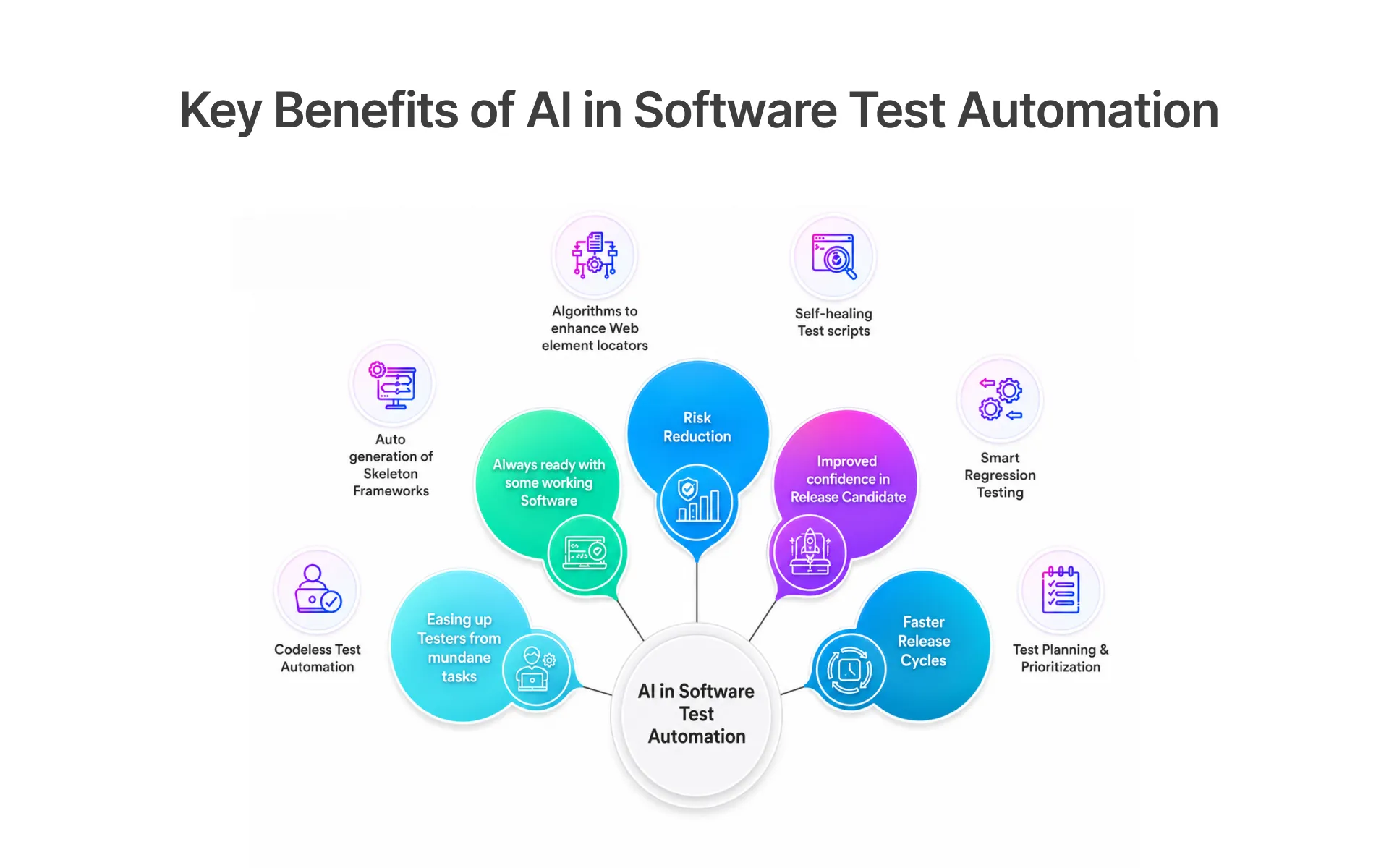
In traditional Selenium development, a great deal of coding, knowledge of frameworks, and continuous maintenance may be needed. This is changing with the help of modern AI testing tools that can create test cases, page objects, and automation workflows directly from requirements.
Teams can get automation up and running sooner and be more consistent with large test suites, all while avoiding repetitive scripting tasks. This also provides new QA engineers with a quick start and boosts productivity in regression testing cycles.
The application of AI-backed automation is increasingly moving from the realm of experimentation to become a strategic asset in the growing digital application and cloud-native world.
Claude vs Traditional Selenium Script Development
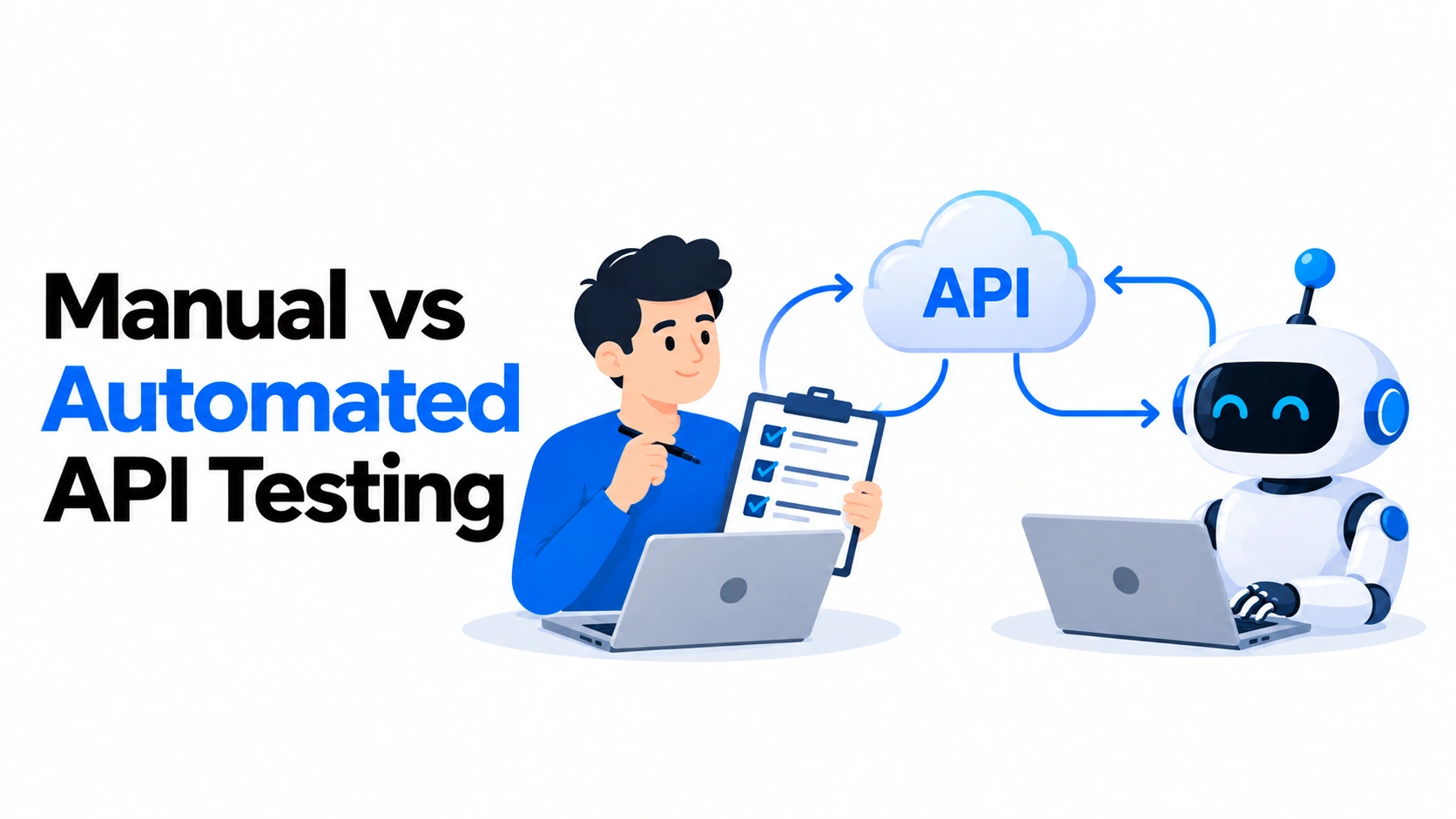
With traditional Selenium development, teams must rely on manual efforts to find and record locators, recode similar automation code, and dedicate additional time to hiring new team members. The larger and more complex the application becomes, the more difficult it is to scale regression suites, and the more expensive they are to maintain.
With Claude, these activities are simplified by sourcing code in the following formats: Selenium Python tests, JUnit 5 test classes, REST Assured API tests, and page object structures from natural language prompts. Testers will not write each line, but concentrate on validation and optimization. This change enables QA teams to focus more on enhancing the product's quality and less on writing boilerplate code.
This comparison shows how Claude-assisted development reduces manual effort across scripting, locator discovery, framework setup, and onboarding.
Why Claude Is Changing Selenium Test Development and Maintenance
AI is no longer limited to code completion. Claude can reason across requirements, application behavior, and testing objectives to generate meaningful automation assets.
- Converts business requirements into executable test cases
- Assists with test planning and test suite hierarchy design
- Suggests reliable Selenium element strategies
- Identifies potential edge cases and validation paths
- Supports continuous maintenance activities
Many organizations now use AI testing approaches alongside existing software testing tools. Claude's ability to understand context enables more accurate automation than traditional code generators. As AI-driven development becomes mainstream, enterprises are integrating intelligent assistants into their test automation software strategies to improve productivity and software quality.
Getting Started with Claude for Selenium Test Generation
Successful Selenium test generation begins with providing Claude access to the right technical context. The quality of generated output depends heavily on application knowledge, framework configuration, and available metadata.
To build reliable automation, teams first align on framework standards and coding practices for consistency. Understanding real application workflows and user journeys helps ground the tests in actual usage. Existing automation examples, along with API and dependency details, make implementation easier. Clear validation rules, then ensure the tests accurately verify expected outcomes.
Teams working with Frugal Testing to integrate Claude-generated Selenium tests report measurable reductions in test script creation time and improved maintainability across regression suites. Teams with reusable application workflows, shared framework standards, API documentation, and existing examples of automation tend to require less changes and create more uniform automation results compared to teams using generic prompts only.
Setting Up Frameworks, Integrations, and Context Sources
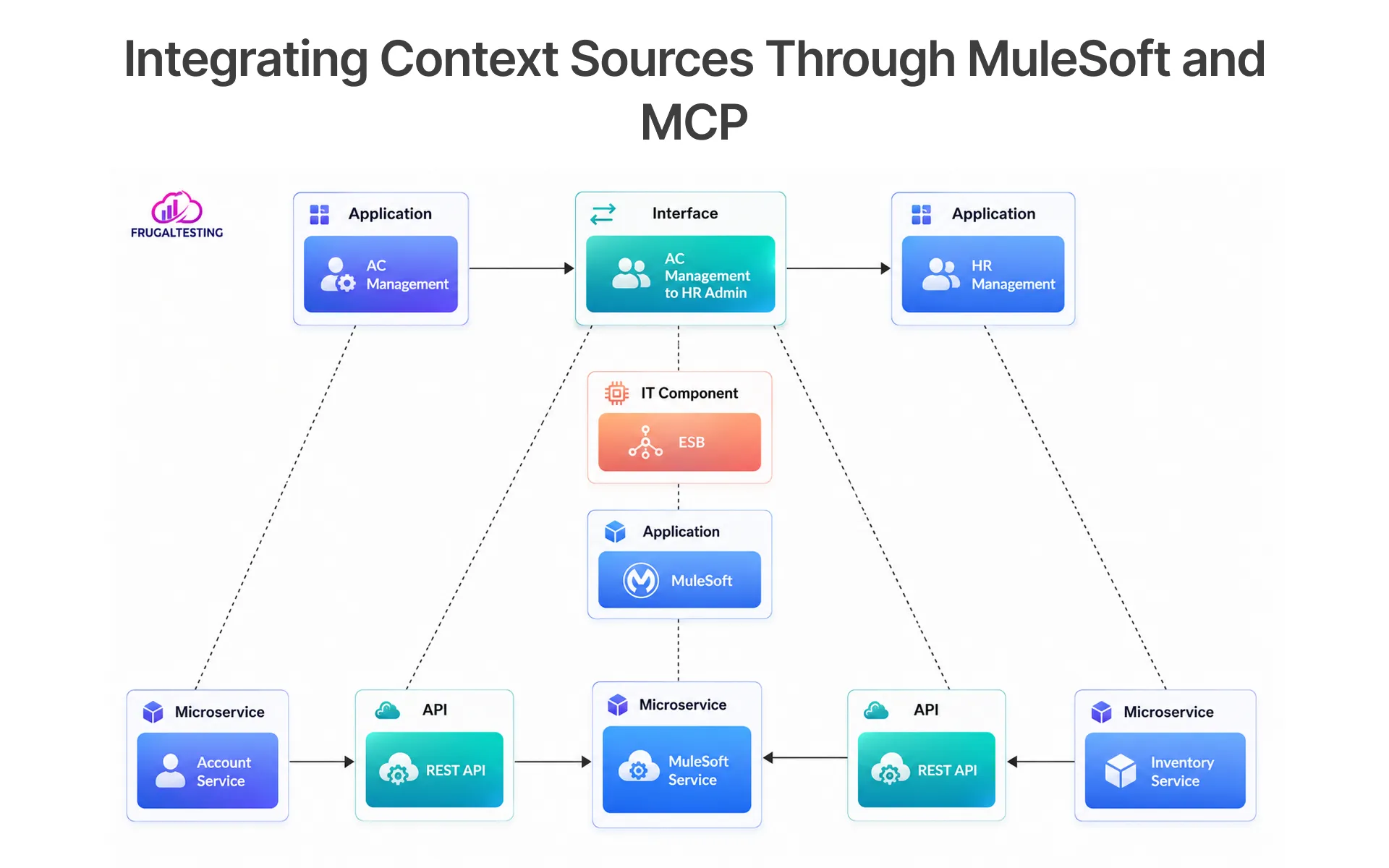
Model Context Protocol (MCP) is an open standard that allows AI models like Claude to securely access external resources for a project, such as code repositories, APIs, documentation and test assets. This extra context creates more consistent and sustainable Selenium automation.
- Existing Selenium testing repositories.
- API endpoints and documentation.
- Test management tool records.
- User stories and acceptance criteria.
- Coverage reports and defect history.
- CI/CD pipeline configuration and build artifacts.
The Model Context Protocol enables Claude Code and AI agents to access relevant project information without requiring manual copy-paste operations. Teams can connect resources such as TestCollab MCP Server, test plans, and development documentation. With proper integrations, Claude can generate automation that aligns with existing frameworks while preserving governance and consistency standards.
Generating Smarter Selenium Tests with Claude
AI-generated automation becomes significantly more effective when combined with structured prompting and rich project context. Rather than asking for generic tests, organizations should guide Claude toward specific outcomes.
Clear automation starts with understanding expected business behavior and defining validation rules to verify outcomes. Using the application architecture and existing automation patterns provides the right context. This keeps the framework consistent and aligned with real system behavior.
The result is more reliable, maintainable, and production-ready automation code that supports enterprise-scale software testing initiatives.
Prompt Engineering Best Practices for Selenium Test Generation
Effective Selenium test generation requires structured prompts covering:
- Define application workflows step-by-step.
- Specify Selenium Python or Java requirements.
- Request assertions and exception handling.
- Include expected UI behavior.
- Describe positive and negative scenarios.
For example, instead of requesting "Create a login test," provide requirements covering authentication rules, error handling, session validation, and security constraints. Structured prompts allow Claude to generate higher-quality test cases while reducing manual correction efforts. This approach has become a best practice among organizations implementing AI Test Case Generation Tools.
Converting Requirements into Test Cases, Page Objects, and Reliable Locators
One of Claude's most valuable capabilities is translating requirements into automation artifacts. It can generate multiple testing assets from a single specification.
- Functional test cases and test scenarios.
- Page Object Model structures.
- Selenium element locators and selectors.
- Validation logic, assertions, and checkpoints.
- API verification and integration scenarios.
For instance, a checkout workflow specification can be transformed into page objects, automated test execution scripts, and API validation routines. Claude can also suggest locator strategies that remain stable across UI changes, reducing maintenance overhead. This capability helps QA teams accelerate automation development while improving overall framework quality.
Using MCP, Codebase Context, and Application Metadata for Better Test Generation
AI systems produce stronger tests when given repository architecture, business rules, and dependency mappings:
- Access repository architecture.
- Analyze existing automation patterns.
- Review API dependencies.
- Understand user management workflows.
Modern implementations frequently combine Model Context Protocol, application metadata, and AI agents to support autonomous testing agent workflows. This enables more accurate code generation while preserving organizational standards. Teams using structured context often report faster development cycles and more reliable automated testing outcomes.
Real-World Selenium Test Generation with Claude
A practical example demonstrates Claude's value. Consider a retail application requiring end-to-end validation of customer registration, product selection, checkout, and payment processing.
- Analyze requirements
- Generate test plan
- Create Selenium scripts
- Build page objects
- Generate API validations
- Produce reports
For a checkout workflow, Claude can generate page objects for product selection, cart management, and payment screens, along with Selenium test scripts that validate successful purchases, invalid payment scenarios, and checkout error handling. It can also suggest resilient locator strategies and create supporting API validations for order creation and payment status verification.
Scaling AI-Driven Test Automation Across the QA Lifecycle
As automation programs mature, organizations seek ways to extend AI support across planning, development, execution, and maintenance activities.
Boosting QA productivity while reducing maintenance effort helps teams scale automation more effectively. As coverage expands, it naturally supports continuous delivery and brings more consistency to quality practices.
Claude and Selenium can work together to create scalable testing strategies that can support fast software releases.
Refactoring Legacy Tests, Improving Coverage, and Measuring Test Quality
Legacy automation suites often contain duplicated code, inconsistent locators, and unreliable validation logic.
- Refactor outdated test structures.
- Improve line coverage metrics.
- Support mutation testing activities.
- Standardize coding practices.
- Strengthen validation quality.
AI-driven suggestions assist organisations in pinpointing existing gaps in their systems. Teams can further enhance automation effectiveness and minimize tech debt with the use of coverage reports and quality metrics.
Integrating Claude into CI/CD Pipelines and QA Workflows
Modern DevOps pipelines increasingly incorporate AI assistance throughout the development lifecycle.
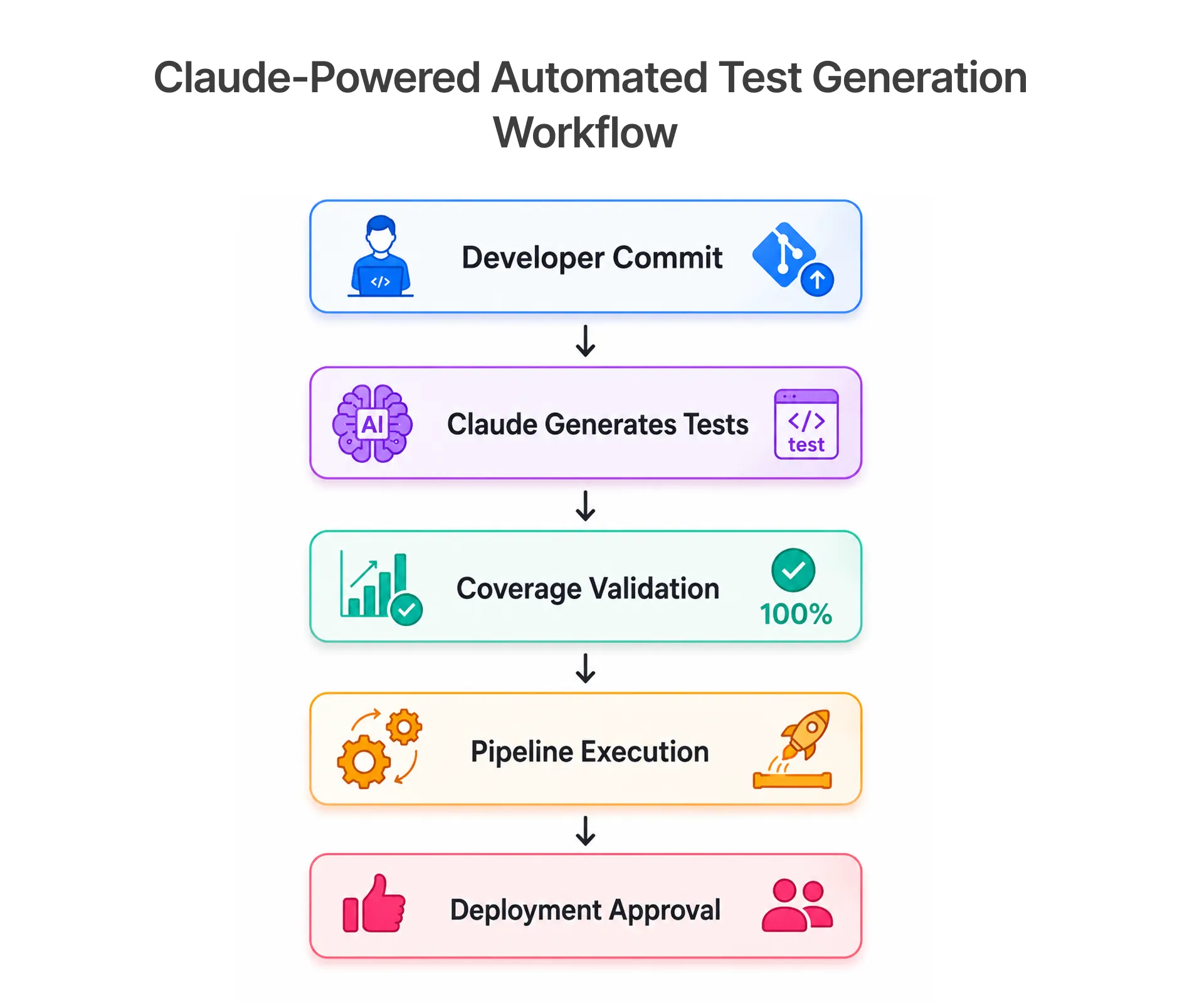
Organizations can integrate Claude Code into CI/CD workflows using secure API token management and governance controls. This allows automated creation, validation, and refinement of test assets and full control of production environments.
Best Practices and Real-World Applications
There's more to enterprise adoption than just capability. Organizations need to set up governance structures and have reasonable expectations for AI-driven automation.
The key to good governance is establishing review and approval mechanisms supported by appropriate security controls and quality measures. Teams should also receive training on how to use, review, and validate AI-generated Selenium tests effectively.
If used properly, AI testing is a tool that amplifies the capabilities of experienced testers.
Challenges and Limitations of AI-Generated Selenium Tests
AI-driven automation is strong, but it has its limitations that should be acknowledged by organizations.
- Potential inaccuracies in generated logic.
- Dependence on context quality.
- Challenges with highly dynamic interfaces.
- Rate limits on AI services.
- Need for human validation.
While AI can generate automation development, generated outputs should always be reviewed and tested to identify and correct potential issues. Successful implementations balance automation speed with quality assurance controls.
Governance, Security, Human Validation, and Enterprise Adoption
Security and governance remain essential considerations for enterprise environments.
- Protect sensitive application data.
- Control access permissions.
- Review generated code.
- Establish audit processes.
- Maintain compliance requirements.
Organizations operating in regulated industries often require formal review workflows before deploying AI-generated automation. Human validation ensures generated tests align with business objectives while reducing operational risk.
Accelerating Regression Testing, Maintenance, and Test Coverage
Automation can be particularly beneficial during regression testing and during the continuous maintenance process, where it can save a lot of manual work. It helps expand coverage faster while improving consistency in test execution. This ultimately accelerates release cycles and supports continuous quality improvement.
Conclusion: Scaling Selenium Automation with Claude
The future of software testing is a blend of human skills and AI automation. Compared to the typical methods, Claude can help organizations create test cases, enhance Selenium testing processes, maintain them faster, and scale up automation efforts more effectively. With the help of Model Context Protocol integrations, structured prompt engineering, and robust governance procedures, enterprises can revolutionize their QA processes without sacrificing quality and control. For organizations considering investing in more advanced test automation tools, this integration of Claude with Selenium provides a viable and scalable approach that could lead to quicker releases, higher test coverage, and improved quality assurance results. Frugal Testing helps organizations adopt AI-enabled testing processes while improving automation efficiency, maintainability, and quality outcomes.
People Also Ask (FAQs)
Q1. How Can Teams Get Consistent Results from Claude When Generating Selenium Tests?
Ans: Use standardized prompts, coding guidelines, and reusable templates. Consistent inputs help Claude generate more predictable and reliable test scripts.
Q2. Can Claude Generate Tests for Dynamic Web Applications with Frequently Changing Elements?
Ans: Yes, Claude can suggest resilient locator strategies and dynamic element handling techniques. Human review is still important for long-term stability.
Q3. What Are the Common Mistakes to Avoid When Using Claude for Selenium Test Generation?
Ans: Avoid vague prompts, skipping code reviews, and relying entirely on generated scripts. Always validate tests against real application behavior.
Q4. How Much Time Can Teams Save by Using Claude for Selenium Automation?
Ans: In Frugal Testing’s experience, teams using Claude for Selenium automation typically reduce script creation and maintenance effort by 40–60%. This helps accelerate test development cycles and reduces time spent on repetitive automation work.
Q5. Is Claude Suitable for Both New Selenium Projects and Existing Test Suites?
Ans: Yes, Claude can help create new test frameworks and enhance existing suites. It supports script generation, refactoring, and maintenance activities.


.webp)