

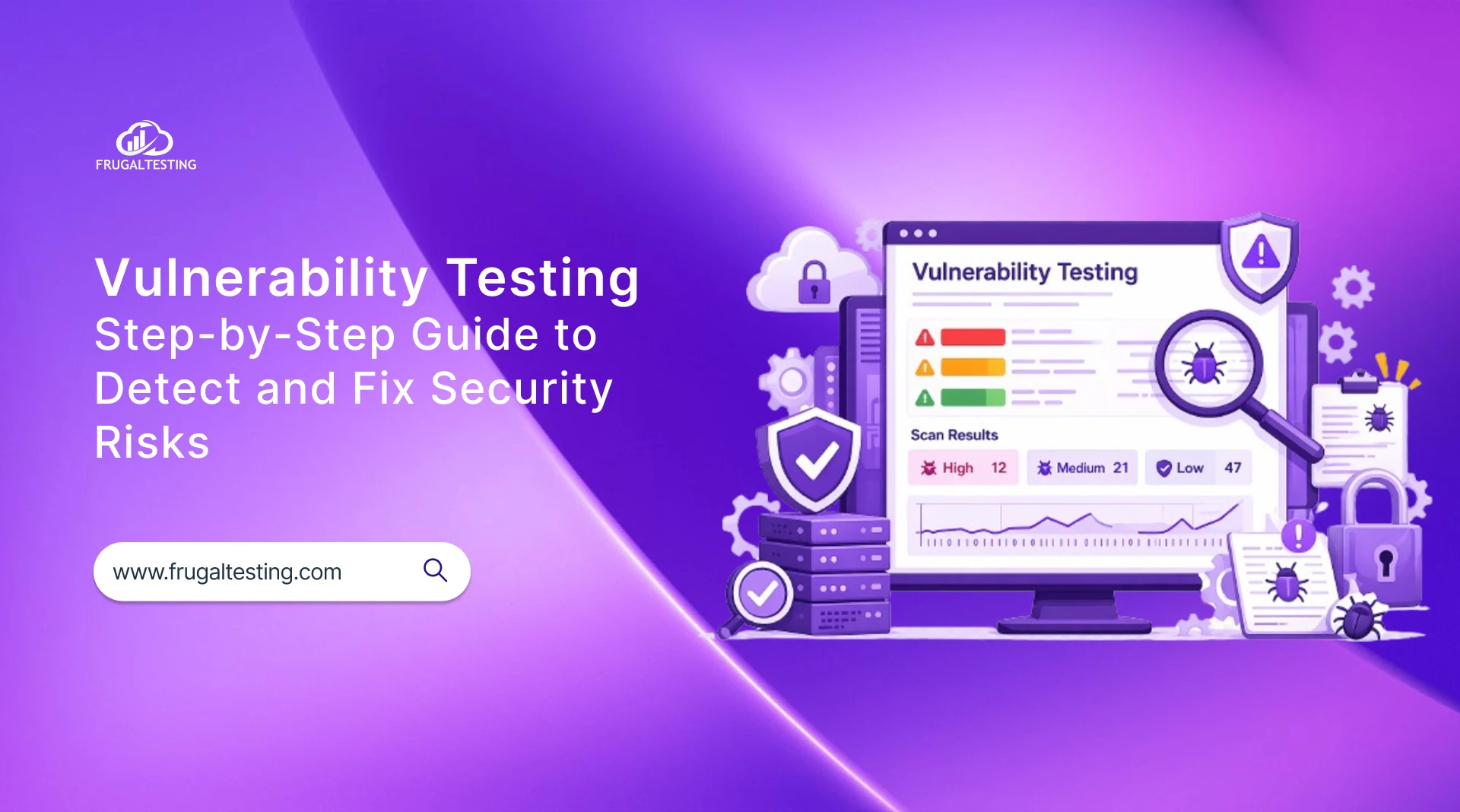
Vulnerability testing is the process of identifying, analyzing, and fixing security weaknesses in systems before they can be exploited.
Cybersecurity today is not as simple as it used to be. Most organizations now run their systems across applications, networks, and cloud platforms, which naturally increases the number of security risks.
This is where vulnerability testing becomes important. It helps teams find weaknesses early, before someone else takes advantage of them. Instead of waiting for something to go wrong, teams can fix issues in advance.
It typically involves three steps:
- Scanning systems using automated tools
- Analyzing and prioritizing risks using frameworks like CVSS
- Remediating vulnerabilities and re-testing to confirm fixes
Modern organizations operate across applications, networks, and cloud environments, increasing their exposure to security risks. Vulnerability testing helps detect these risks early, prioritize critical issues, and maintain a strong security posture over time.
What is Vulnerability Testing in Cybersecurity
Vulnerability testing is a proactive security practice that focuses on identifying and assessing weaknesses before they can be exploited. It involves scanning, analyzing, and prioritizing vulnerabilities across systems to reduce risk and improve resilience.
Vulnerability testing is not just about finding issues and listing them out. What really matters is understanding how serious those issues are and deciding what needs to be fixed first , especially when the findings affect device security. Some problems might look critical but have low impact, while others can cause real damage if ignored.
In most cases, teams put all the findings into a report so it is easier to track what needs attention and what can wait. This helps them take practical steps instead of just collecting data.
According to the IBM Cost of a Data Breach Report 2024, the global average cost of a data breach is $4.88 million.
Common Vulnerability Types
- SQL Injection: Allows attackers to interfere with databases by inserting malicious queries, potentially leading to unauthorized data access.
- Cross-Site Scripting (XSS): Enables attackers to inject harmful scripts into web applications, which then execute in users’ browsers.
- Weak Input Validation: Failing to properly validate user inputs can open the door to multiple types of attacks.
- Misconfigurations and Default Settings: Leaving systems with default configurations or improper setups can unintentionally expose them to security risks.
Importance of Proactive Security Assessment
Most vulnerabilities occur due to misconfigurations, unpatched systems, and insecure coding practices. A proactive approach helps identify and fix these issues before exploitation.
Regular vulnerability assessments provide continuous visibility into security gaps across applications, networks, and cloud environments. This enables teams to detect high-risk issues early, prioritize remediation based on business impact, and reduce the chances of successful attacks.
Step-by-Step Vulnerability Testing Process
A structured vulnerability testing process ensures complete visibility and accurate risk assessment across systems. After identification, vulnerabilities should be prioritized based on their severity and potential impact.
Unpatched software is consistently identified during asset discovery scans, which is why this step includes checking for outdated systems and missing updates.
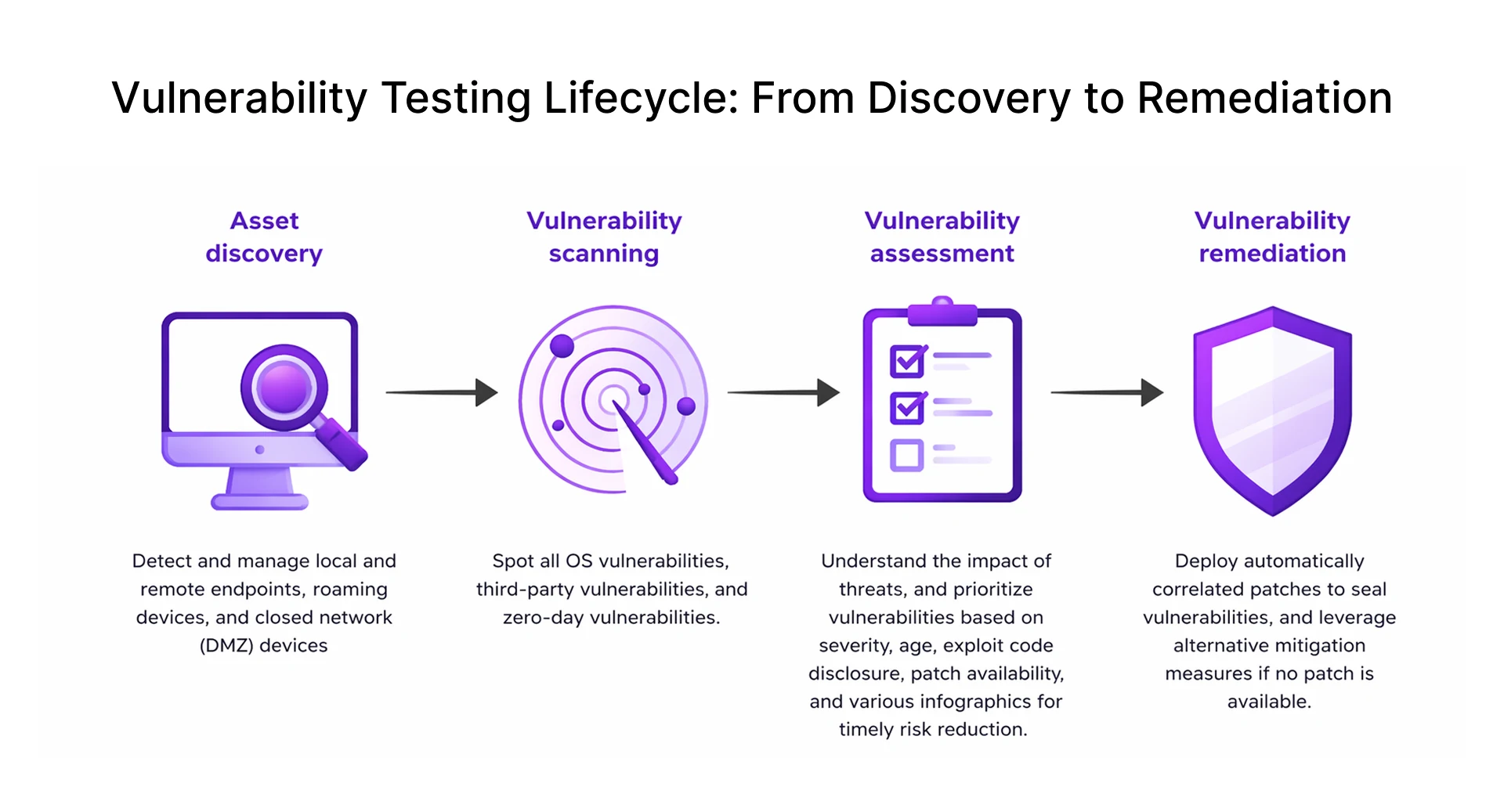
Step 1: Asset Discovery and Vulnerability Scanning
The first step is to clearly define the scope of testing and identify all assets within the environment. This includes networks, applications, servers, databases, and even APIs or connected devices. Having a complete asset inventory ensures nothing critical is missed during testing.
- Use asset discovery tools and network scanners.
- Perform vulnerability scanning across systems and applications.
- Identify exposed endpoints, APIs, and web services.
- Use tools like Nessus, OpenVAS, or similar scanners.
This step provides full visibility into the organization’s attack surface and generates an initial list of potential vulnerabilities.
Step 2: Vulnerability Analysis Using CVSS with Real Examples
Once vulnerabilities are identified, the next step is to analyze and prioritize them based on their severity and potential impact. Not all vulnerabilities pose the same level of risk, so proper evaluation is essential.
- Assign scores using the Common Vulnerability Scoring System (CVSS), which standardizes severity based on exploitability and impact.
- Analyze risk levels using industry standards.
- Example: A critical SQL injection vulnerability in a web application.
- Map findings to Common Vulnerabilities and Exposures (CVE).
This stage also involves filtering out false positives and focusing on real threats. It helps security teams understand which vulnerabilities require immediate attention.
Step 3: Risk Prioritization and Remediation
After analysis, vulnerabilities are prioritized and addressed using structured remediation strategies. The goal is to reduce risk efficiently without disrupting business operations.
- Apply patches and updates to fix software vulnerabilities.
- Strengthen configurations and remove default settings.
- Implement security controls like Web Application Firewalls (WAF).
- Use secure coding practices such as parameterized queries to prevent SQL injection.
Once fixes are applied, systems should be re-tested to verify that vulnerabilities have been successfully resolved. Proper documentation and reporting are also important to track progress and support future audits.
Types of Vulnerability Testing Across Different Environments
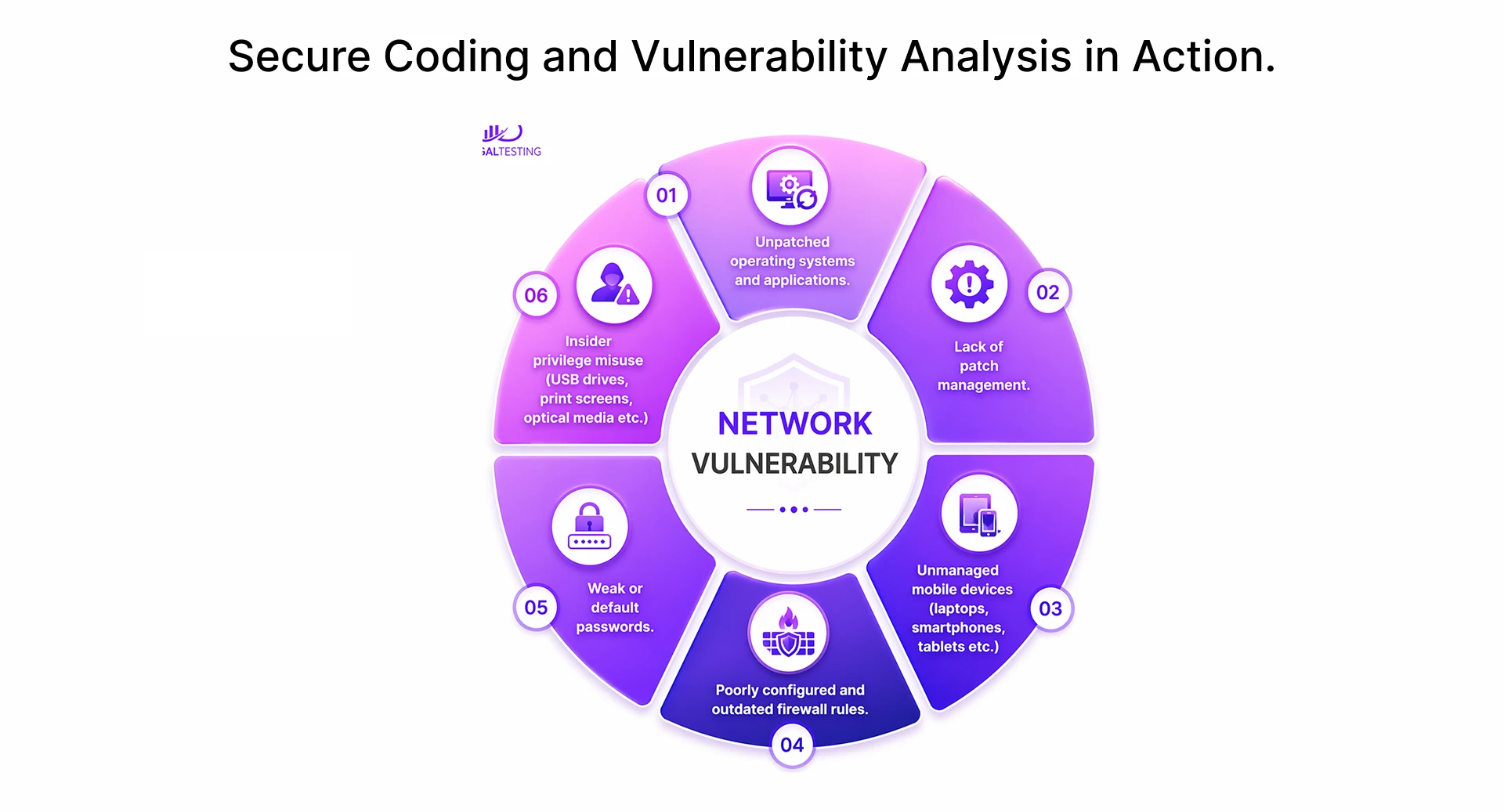
Vulnerability testing is carried out across multiple environments to identify and fix security weaknesses before they can be exploited. Depending on the target such as networks, applications, or cloud systemsthe approach and tools used may vary. Understanding these types helps organizations apply the right testing methods for complete security coverage.
.webp)
Network Vulnerability Testing
Network vulnerability testing is a proactive and structured process used to identify, analyze, and report security weaknesses within an organization’s network infrastructure, including servers, firewalls, and switches.
Key Aspects of Network Vulnerability Testing:
- Process steps: Involves scanning for vulnerabilities, identifying potential threats, prioritizing risks based on severity, applying fixes or patches, and verifying that the issues have been resolved.
- Scanning types: Uses tools like OpenVAS and similar scanners to detect open ports, outdated software, and configuration weaknesses.
- Benefits: Regular testing helps lower cyber risks, supports compliance with standards like PCI DSS, and protects the organization’s reputation.
Application Security Testing using SAST and DAST
Application security testing is aimed at finding vulnerabilities in software applications, including web and mobile apps. It mainly uses two approaches SAST and DAST which complement each other across different stages of development.
SAST and DAST differ in when they run and what vulnerabilities they detect the table below compares them across key dimensions:
Cloud, Wireless, and Database Vulnerability Testing
Modern IT environments rely heavily on cloud platforms, wireless networks, and databases, making them critical areas for vulnerability testing. Each requires a specialized approach to address unique risks.
- Cloud testing: Identify misconfigurations, insecure storage (e.g., open buckets), and excessive access permissions.
- Wireless assessment: Detects rogue access points, weak encryption, and unauthorized network access.
- Database testing: Identify weak credentials, missing patches, and improper access controls.
This type of testing ensures end-to-end protection across distributed and modern environments, helping safeguard sensitive data and business-critical systems.
Vulnerability Testing Tools, Techniques, and Comparison
Vulnerability testing tools help identify security weaknesses across IT systems, applications, and networks using automated scanners and advanced techniques. These tools can detect issues like missing patches, misconfigurations, and insecure code.
Techniques such as credentialed scanning, network mapping, and SAST/DAST analysis improve accuracy, while risk prioritization using CVSS scores helps reduce false positives and focus on critical threats.
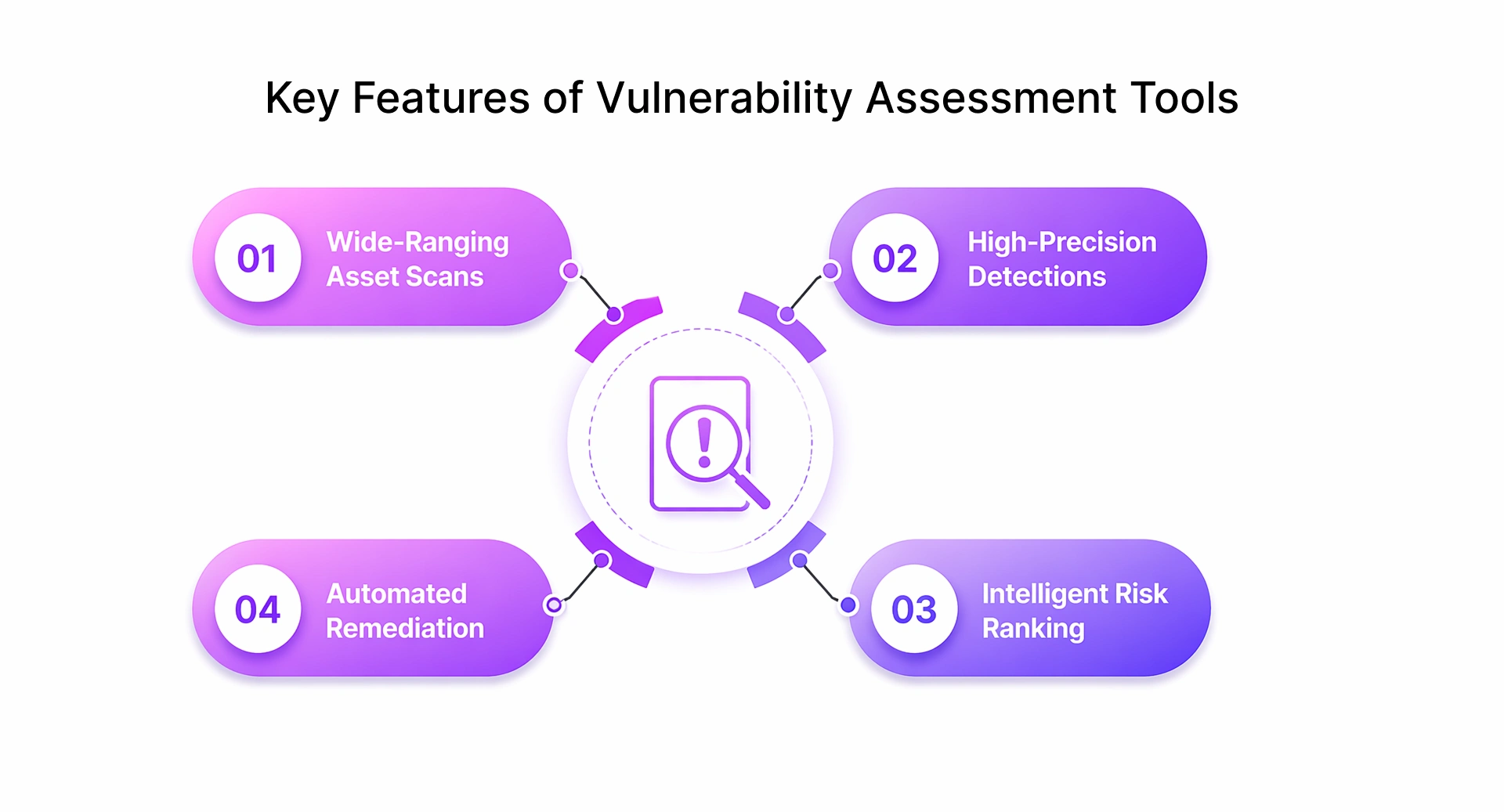
Vulnerability Testing Tools by Category and Use Case
Selecting the right vulnerability testing tool depends on the environment, scale, and specific security requirements of the organization.
Network Vulnerability Scanning Tools
Used to identify open ports, outdated software, and misconfigurations across infrastructure.
- Examples: Nessus, OpenVAS, Qualys.
- Best for: Enterprise networks, IT infrastructure audits.
- Ideal when: You need continuous scanning and compliance checks (PCI DSS, ISO 27001).
Web Application Vulnerability Testing Tools
Focused on detecting OWASP Top 10 vulnerabilities in web apps.
- Examples: Burp Suite, Acunetix, Netsparker.
- Best for: Web apps, APIs, authentication testing.
- Ideal when: You need deep testing for SQL injection, XSS, session flaws.
Cloud Security & Configuration Tools
Designed to detect misconfigurations and access issues in cloud environments.
- Examples: Prisma Cloud, AWS Inspector, Azure Defender.
- Best for: AWS, Azure, GCP environments.
- Ideal when: Managing cloud-native applications and storage risks.
SAST & DAST Tools (DevSecOps)
Used during development and runtime for secure coding and testing.
- SAST: SonarQube, Checkmarx.
- DAST: OWASP ZAP, Burp Suite.
- Best for: CI/CD integration and secure development lifecycle.
Organizations often rely on vulnerability testing services for business to manage large-scale security assessments, ensure compliance, and reduce operational risks.
Manual vs Automated Testing: When to Use Each
Both automated tools and manual testing methods are important for a complete vulnerability testing strategy.
- Automated testing: Quickly scans systems to detect common vulnerabilities such as missing patches and misconfigurations.
- Manual testing: Helps identify complex, logic-based, or business-specific vulnerabilities that tools may miss.
- Combine both approaches to achieve comprehensive coverage.
- Integrate automated tools into CI/CD pipelines for continuous security checks.
Vulnerability Testing vs Penetration Testing
Vulnerability testing identifies and prioritizes weaknesses using automated tools, while penetration testing actively exploits them through ethical hacking to assess real-world impact.
Real-World Challenges, Best Practices, and Testing Checklist
Vulnerability testing is not just about running scans—it comes with practical challenges that can affect accuracy and effectiveness. Organizations need to balance automation with proper validation, integrate security into development workflows, and follow a consistent checklist to ensure nothing is missed.
In real-world implementations, teams often struggle with false positives from automated tools, which can delay remediation. In projects handled by Frugal Testing across 12+ mid-sized SaaS environments, combining automated scanning with manual validation reduced critical vulnerabilities by 40–60% within 90 days.
Handling False Positives, False Negatives, and Zero-Day Risks
In practical assessments, automated vulnerability scanners can generate a high number of false positives, and manual validation typically eliminates a significant portion of these findings before remediation.
- False positives: These are reported issues that don’t actually exist, leading to wasted time and effort.
- False negatives: These are missed vulnerabilities that can silently expose systems to real threats.
- Zero-day vulnerabilities: Unknown or newly discovered flaws that tools may not yet detect.
To manage these challenges, organizations should combine automated tools with manual validation, regularly update their scanning tools, and implement continuous monitoring. This approach improves detection accuracy and reduces overall risk.
Integrating Testing into DevSecOps and Continuous Monitoring
Integrate vulnerability testing directly into CI/CD pipelines to detect and fix issues before deployment:
- Automate vulnerability scanning within CI/CD pipelines.
- Use advanced tools, including AI-powered assessments, for smarter detection.
- Continuously monitor systems for new vulnerabilities.
- Enable real-time alerts to respond quickly to threats.
By embedding vulnerability testing into everyday workflows, organizations can use workhorse software to identify and fix issues early, reducing the cost and impact of security flaws.
Vulnerability Testing Checklist for Effective Execution
Having a structured checklist ensures that vulnerability testing is consistent, thorough, and repeatable across different environments.
Use this checklist before every vulnerability assessment to ensure consistent and complete security coverage:
- Perform asset discovery to identify all systems and components.
- Conduct vulnerability scanning using appropriate tools.
- Validate identified vulnerabilities to remove false positives.
- Prioritize issues based on risk, severity, and business impact.
- Apply fixes such as patches, configuration changes, or security controls.
- Re-test systems to confirm that vulnerabilities are resolved.
Following this checklist helps organizations maintain a disciplined approach to security, ensuring continuous improvement and better protection against evolving cyber threats.
Conclusion
Vulnerability testing is essential for identifying and fixing security weaknesses before they are exploited. A structured approach combining automated tools, manual validation, and continuous monitoring ensures accurate detection and faster remediation.
Frugal Testing helps organizations implement scalable vulnerability testing by combining automation with expert validation and continuous monitoring. This enables businesses to reduce risk, improve compliance, and build a proactive, resilient security strategy.
FAQs (People Also Ask)
Q1.What is CVSS and how is it used?
Ans: CVSS stands for Common Vulnerability Scoring System—a framework that assigns severity scores from 0 to 10 based on exploitability and impact.Organizations use it to:
- Prioritize critical vulnerabilities first
- Standardize risk assessment
- Align remediation with business impact
Q2.What is the difference between vulnerability testing and penetration testing?
Ans: Vulnerability testing identifies weaknesses, while penetration testing simulates attacks to exploit those weaknesses and assess real-world impact.
Q3.Which tools are best for vulnerability scanning in real-world scenarios?
Ans: For enterprises, paid tools offer better automation, reporting, and scalability, while open-source tools require manual tuning but reduce cost.The best tool depends on your environment and scale:
- Nessus / Qualys / Tenable: Best for enterprise network scanning with compliance support
- OpenVAS: Good open-source alternative for small to mid-sized setups
- Burp Suite / OWASP ZAP: Ideal for web application and API testing
- Prisma Cloud / AWS Inspector: Best for cloud-native environments
Q4.What are the most critical vulnerabilities in web apps?
Ans: The most critical ones (based on OWASP Top 10) include:
- SQL Injection → database compromise
- Cross-Site Scripting (XSS) → user session hijacking
- Broken Authentication → unauthorized access
- Security Misconfigurations → exposed systems
These vulnerabilities are commonly targeted because they are easy to exploit and have high impact.
Q5.How do organizations prioritize vulnerabilities effectively?
Ans: Critical vulnerabilities with CVSS scores of 9.0 or higher are typically remediated within 24–72 hours, based on risk, asset criticality, and business impact.

.webp)