

Test maintenance is where most automation effort quietly goes. A small UI change breaks selectors, scripts need repairs, and releases wait on the fix. Generative AI software testing tools can draft test scripts from plain English, recordings, or code, which eases that load. The catch is test layers: Pick the wrong one, and you swap one maintenance headache for another.
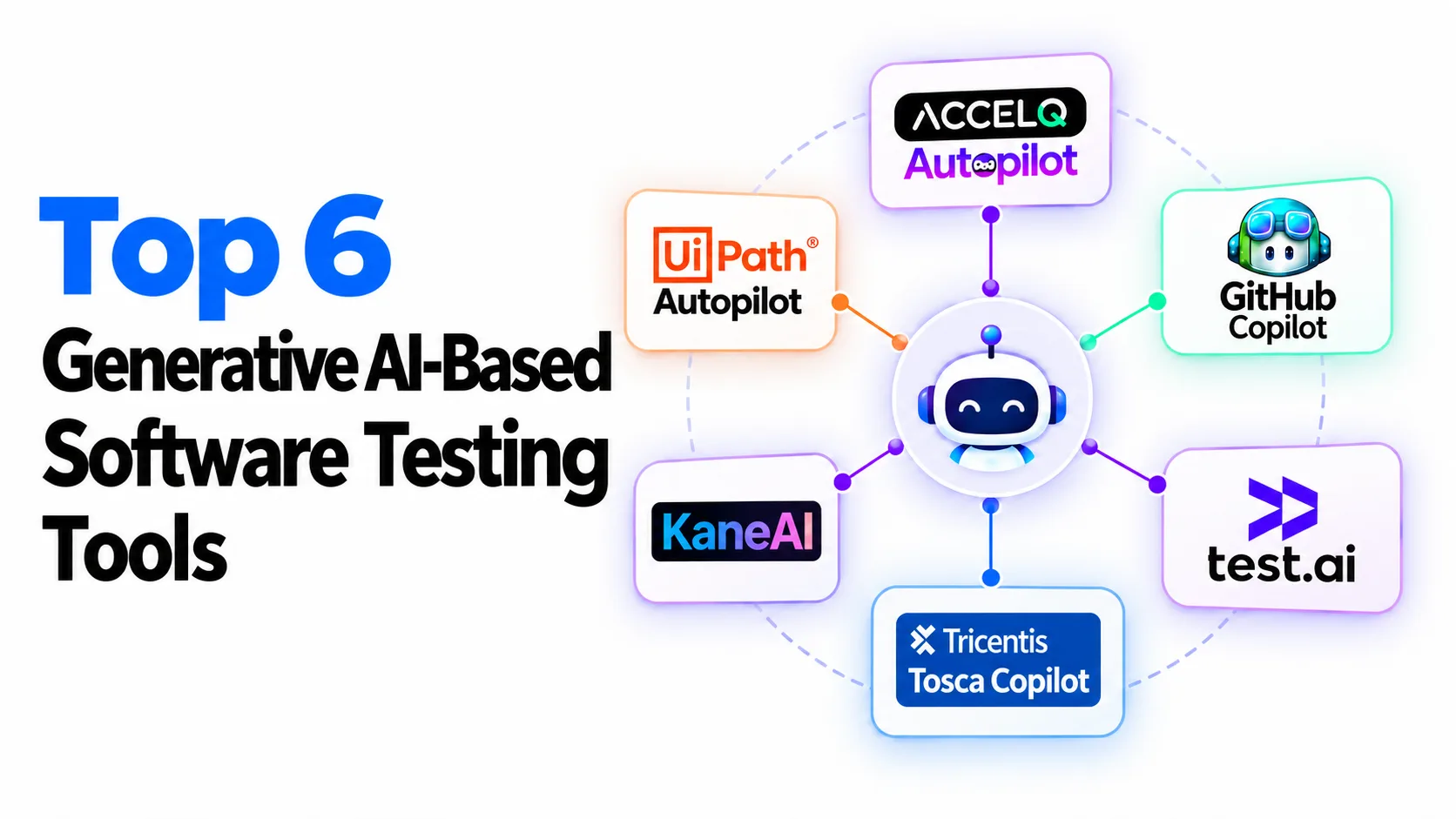
This guide covers Testim, mabl, Applitools, Katalon, testRigor, and GitHub Copilot. Each gets a verdict on fit, strengths, and limits across UI, visual, and code-level testing, so you can shortlist faster and run a focused pilot on the tool that best matches your stack, team skills, and delivery pipeline.
Why Generative AI Is Changing Software Testing
Generative AI testing tools produce test cases, test data, or assertions, rather than only repairing existing scripts. The costly part of automated testing was never running tests; it was writing them and keeping the test suite alive after redesigns.
Two questions come up at kickoff: What is software testing, and what is test automation in software? The first checks the product behaves as intended; the second does it with code on every build. Under the hood, large language models draft the tests while machine learning ranks locators and spots visual drift. In the 2026 Stack Overflow Developer Survey, 58.1% of respondents use AI to write or improve tests, but only 48% say they trust AI when they can easily validate the answers.
Where AI Test Automation Beats Scripted Testing
Scripted suites cost the most to author, maintain, and handle edge cases, which is where AI test automation helps most. Scripted tests still win only at deterministic merge gates and audit trails, where results must be identical.
- Authoring: AI test generation drafts test cases from natural language or a recording, in minutes.
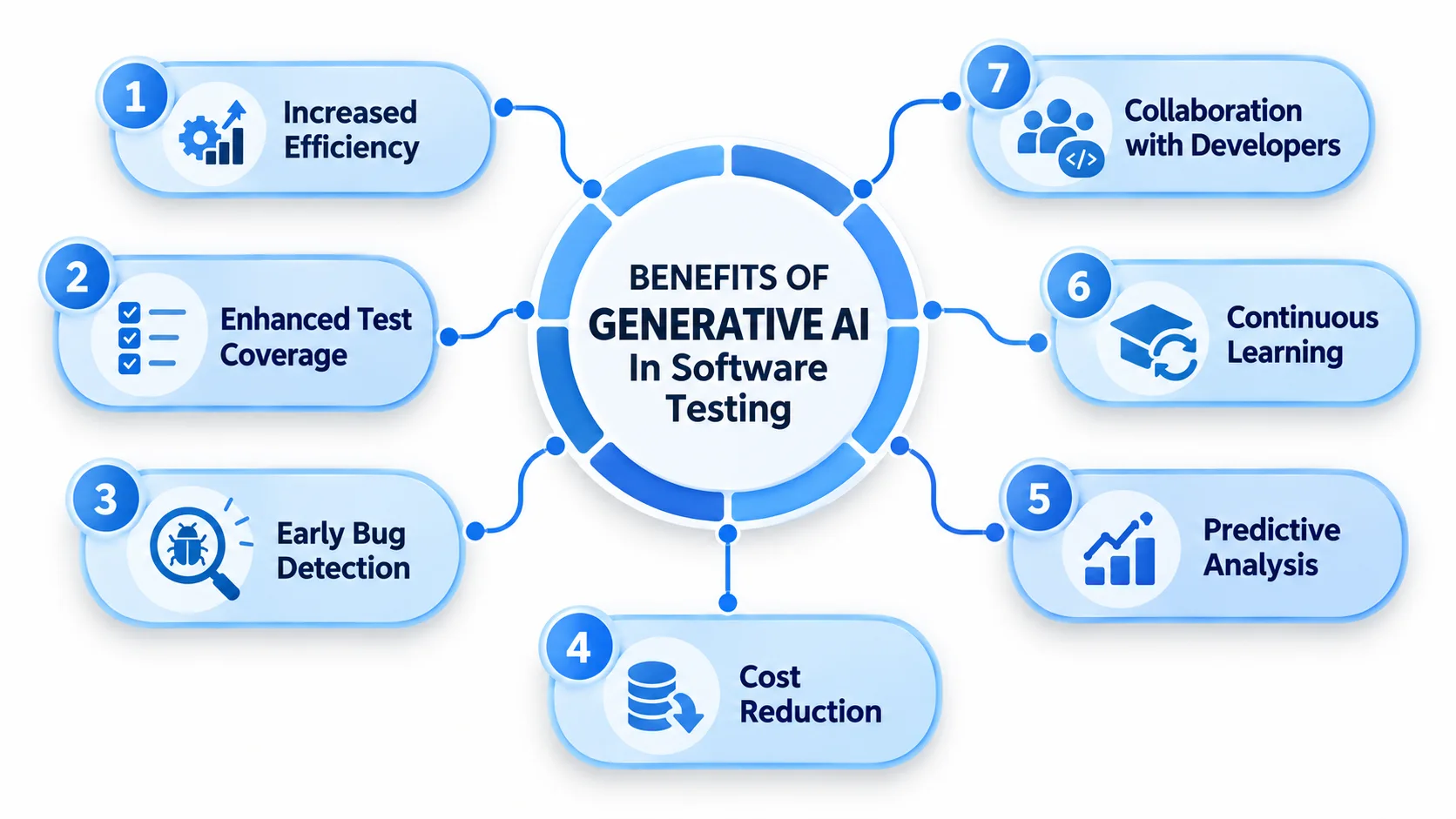
- Upkeep: Self-healing tests and smart locators cut test maintenance by repairing selectors after UI changes, which is where AI software testing pays off.
- Edge cases: Models suggest inputs nobody scripted, widening test coverage.
How to Choose Generative AI Software Testing Tools
Choose by test layer first, then by what the tool demands. Seven criteria cover most of the decision.
- Test layer: UI testing, visual, API, or code level.
- Input type: Natural language, recordings, scans, or code.
- Output ownership: Portable Playwright code in your test automation framework, or test assets locked in the vendor platform.
- CI/CD pipelines: Does CI/CD pipeline integration fit your builds?
- Review gates: Human-in-the-loop review before tests can block a release.
- Data handling: SOC 2 status, a secure connection to staging, and where test data lives.
- Extensibility: LLM & MCP support for your own agents.
Software Advice reviews are a fair cross-check on vendor claims. More generated tests are not a better tool; smaller test suites that survive redesigns win.
The 6 Best Generative AI Tools for Software Testing
Among automated software testing tools, the best AI automation testing tools split into three layers: UI end-to-end, visual, and code level. Vendors now label the shift Agentic Automated Testing, where automation agents plan, run, and repair tests, and some pitch an AI-native quality engineering agent. Treat those labels as marketing until a pilot proves agentic testing works.
Each of these AI tools for software testing follows one template. Treat any automation testing tools list, this one included, as a pilot starting point, since tools cover only some types of software testing.
1. Testim
Testim records a flow as you click through your app, and machine learning picks the elements to anchor on. Smart locators adjust when the interface changes, and you can describe a test in natural language for its agentic workers to build.
- Test layer: Web, mobile, and Salesforce, a fit for cross-browser testing tools.
- Input: Recordings or natural language.
- Output ownership: Platform-hosted; Playwright export needs manual edits.
- CI/CD pipelines: Parallel runs on its cloud or Selenium-compatible grids.
- Review gates: Ask how agentic changes get approved.
- Data handling: Ask for SOC 2 status and data location.
- Extensibility: Agentic workers; confirm LLM & MCP support.
2. mabl
mabl covers web, iOS, Android, and API testing, with AI skills that keep coverage current, run tests, and recover from problems. Its AI auto-healing keeps tests resilient when the application changes.
- Test layer: End-to-end testing on web, native mobile, and API, with API setup alongside UI steps.
- Input: Recordings and AI-generated steps.
- Output ownership: Platform-hosted; check portability before scaling.
- CI/CD pipelines: Works with GitHub, GitLab, Bitbucket Pipelines, CircleCI, and Jenkins.
- Review gates: Review auto-healed changes in your pilot.
- Data handling: Shows an AICPA SOC badge; ask for the report.
- Extensibility: MCP server for Claude Code, Cursor, and Codex.
3. Applitools
Applitools began with Eyes, which uses machine learning and computer vision for visual testing and visual validation. Its Autonomous tier builds, runs, and updates visual, functional, and API tests from assisted recordings and plain-language scripts.
- Test layer: Visual on web and mobile screens, plus functional and API tests.
- Input: Screenshots, recordings, and plain-language scripts.
- Output ownership: Eyes SDKs add visual checks to your framework.
- CI/CD pipelines: Works with Jenkins, GitLab, GitHub, and CircleCI.
- Review gates: A person approves each baseline.
- Data handling: SOC 2 Type II and ISO 27001; SaaS, private cloud, or on-premises.
- Extensibility: MCP guidance on its blog; confirm agent support.
4. Katalon
Katalon puts its AI Assistant inside one platform. It reads a requirement from Jira or Azure DevOps, asks about unclear points, and drafts test cases for review. TrueTest then generates tests from real user behaviour after release, and its Autonomous Test Runner can execute manual test cases without scripts, pausing to ask for input when stuck.
- Test layer: Web, mobile, API, and desktop across the QA lifecycle.
- Input: Jira or Azure DevOps requirements.
- Output ownership: Platform-hosted, so the breadth is the commitment.
- CI/CD pipelines: Parallel runs on real browsers, devices, or your CI runners.
- Review gates: The AI Assistant drafts test cases for a person to review.
- Data handling: SOC 2 Type II audited.
- Extensibility: MCP server in Katalon Studio for agentic mode.
5. testRigor
testRigor is the clearest example of plain-English test automation: You write steps as everyday sentences, then review and edit the actions it generates. Test scenarios can also be generated inside the tool, or from Claude Code through its MCP server.
- Test layer: Web (cross-browser), mobile, API, and Windows desktop, plus email, SMS, and 2FA flows.
- Input: Plain-English sentences.
- Output ownership: Tests stay in plain English; confirm export options.
- CI/CD pipelines: Works with GitHub Actions, GitLab, Jenkins, Azure DevOps, and CircleCI.
- Review gates: Review generated steps like code; loose wording can pass incorrectly.
- Data handling: SOC 2 Type II and ISO 27001; says it never stores private user data.
- Extensibility: An MCP server lets Claude Code generate tests.
6. GitHub Copilot
GitHub Copilot is closer to AI writing assistance than a testing platform. A chat prompt or its Generate Tests action handles test case generation, drafting unit, integration, and end-to-end test code through code generation, and in agent mode it watches test execution output, then tries to fix and rerun failures.
- Test layer: Code level, a good partner for dedicated API testing tools.
- Input: Chat prompts and Generate Tests; ask for deterministic code in a named framework.
- Output ownership: Plain Playwright, Selenium, or pytest code in your repository.
- CI/CD pipelines: No test runner, so tests run in your pipeline.
- Review gates: The docs advise checking every fix.
- Data handling: Check your plan's data and retention terms.
- Extensibility: Agent mode reruns failures, and VS Code supports MCP servers.
Generative AI Testing Tools Compared
The table compares the six tools on layer, output, and limits. Cross off any tool that fails your first two criteria; most teams pair two.
How Frugal Testing Helps You Adopt AI Software Testing Without the Overhead
Frugal Testing is an automation testing company that delivers software QA services across the QA lifecycle. We map AI-assisted test automation to our test automation services, and you own the code and the runbook. Our work spans software quality assurance testing services, QA automation testing services, and software testing and QA services for teams short on capacity.
Buyers search for this as software QA testing services, QA software testing services, or QA and testing services. The label matters less than who owns the pilot, the review gates, and the handover. Teams bring us in because failed in-house pilots are costly, and most of it sits in setup decisions.
What Our AI Testing Engagement Looks Like
Our engagement runs over four weeks. Each week ends with something your team keeps.
- Week 1: Assess the stack and QA lifecycle, including your current test automation tools.
- Week 2: Pilot one tool on one real suite.
- Week 3: Wire review gates, test workflows, and CI/CD integration.
- Week 4: Hand over owned test assets, a runbook, and documentation workflows.
.webp)
Conclusion
Generative AI software testing tools earn their place when the layer is right, a person reviews the output, and a pilot has proved it. Regression testing meaning stays the same: Confirm yesterday's behaviour still works. The tools only change who writes the tests and how fast.
Which tool survives your next redesign is an open question, and vendor demos will not settle it. Run a pilot on one real repository, score it on surviving tests, defects caught, and repair hours, then shortlist the tool that holds up in your pipeline.
People Also Ask (FAQs)
Q1. Can generative AI replace manual testers?
Ans: Generative AI cannot replace manual testers. It drafts repetitive tests quickly, while testers keep exploratory testing, usability judgement and risk decisions, and review what the tools generate.
Q2. How accurate are AI-generated test cases?
Ans: AI-generated test cases cover common user paths well but often miss business rules and edge cases, so review each one against requirements before adding it to your regression suite.
Q3. How does generative AI testing work with CI/CD?
Ans: Generative AI testing connects to CI/CD pipelines through command-line runners, plugins, or APIs. Generated tests then run on every commit or pull request and report results back to the build.
Q4. How is generative AI testing different from record-and-playback?
Ans: Generative AI testing differs from record-and-playback because it creates and adapts tests from intent, requirements, or code, while record-and-playback only replays fixed steps that break when the interface changes.
Q5. Can generative AI testing tools work with existing test frameworks?
Ans: Generative AI testing tools work with existing frameworks such as Playwright, Selenium, and pytest by generating compatible code, so teams keep their current suites and add generated tests gradually.


.webp)