

A QA lead at a mid-size SaaS company told us her team knew Postman cold for REST, but a single GraphQL endpoint broke half their old habits. Multiple routes became one, and status codes stopped meaning what they used to. That kind of confusion is common on teams that inherit a GraphQL API without rethinking how they test it.
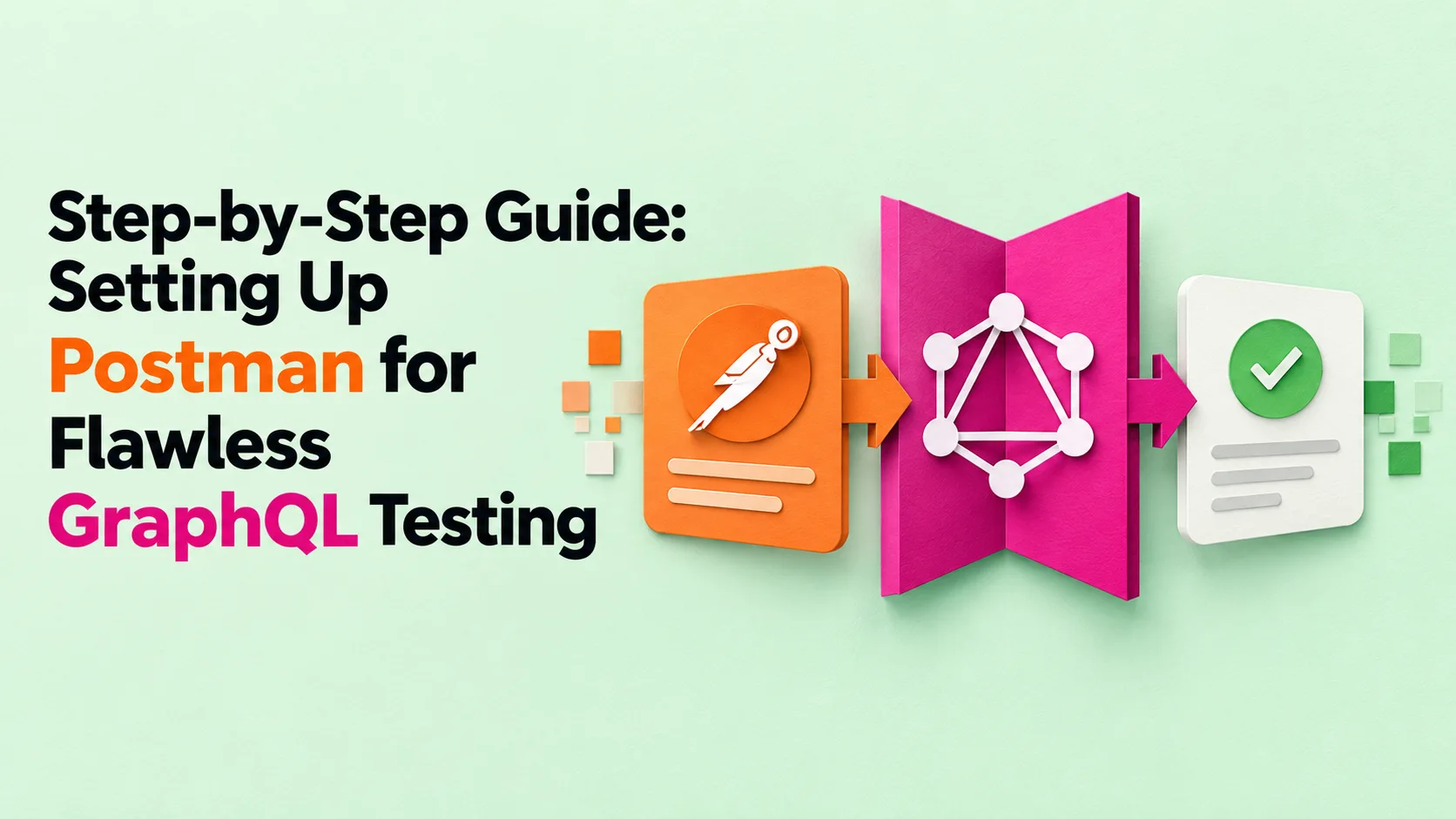
How to test GraphQL in Postman comes down to one workflow: Send queries and mutations as HTTP requests through Postman's API Client, then validate the API response with test scripts- the fastest way to test GraphQL without a separate tool. This guide covers installation, query and mutation testing, regression at scale, and how Postman fits into a broader API strategy.
What Is GraphQL Testing?
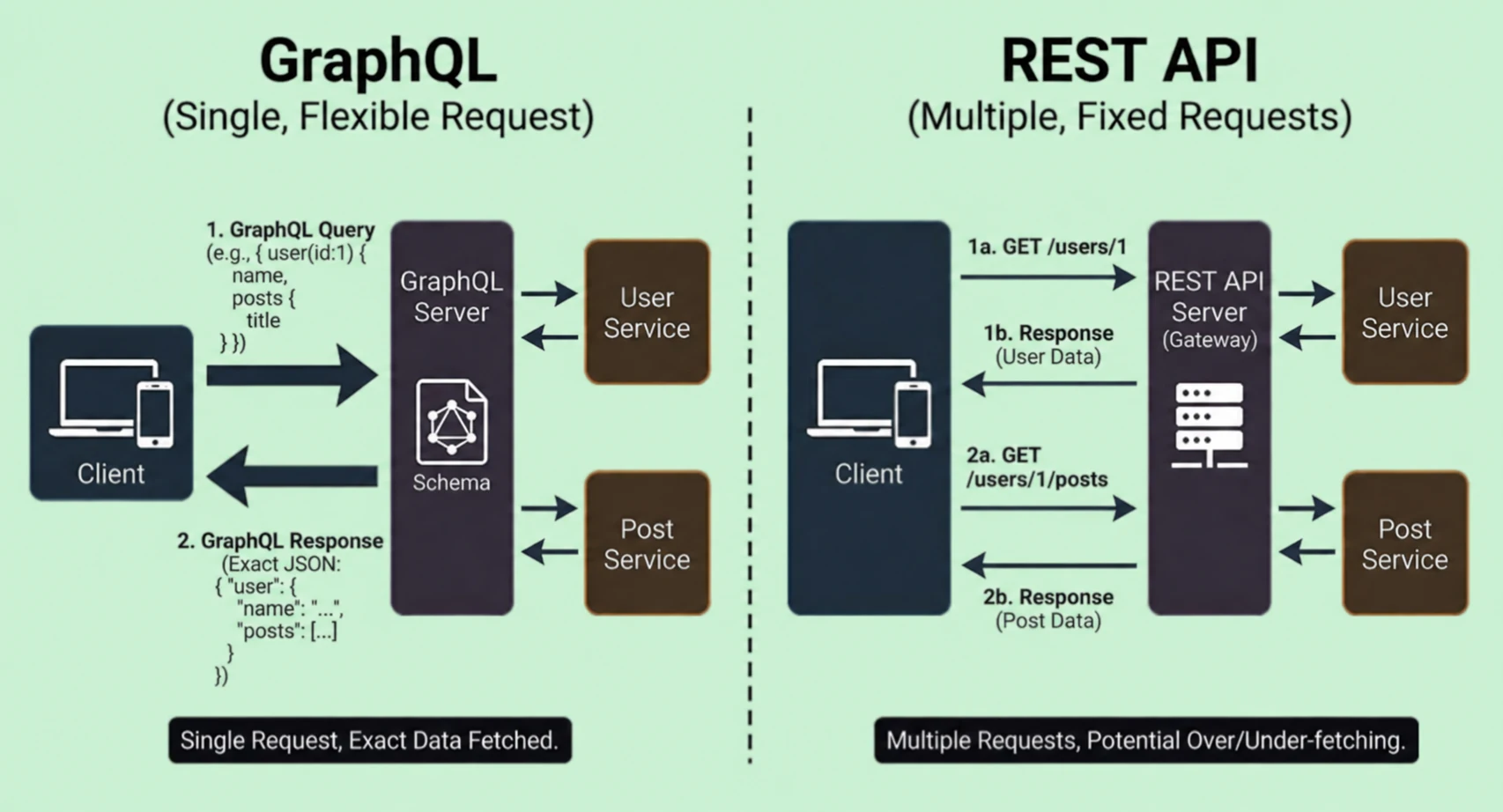
What is API testing in software? Sending a request and confirming the response matches expectations. What is GraphQL, then? A query language that lets a client ask for exactly the fields it needs from one endpoint, instead of many fixed REST routes.
GraphQL testing validates that single, flexible endpoint across many query shapes, and the shift shows up in four places:
- The endpoint structure collapses from dozens of REST routes into one.
- The client decides which fields come back in the response.
- The schema catches type errors before a query even runs.
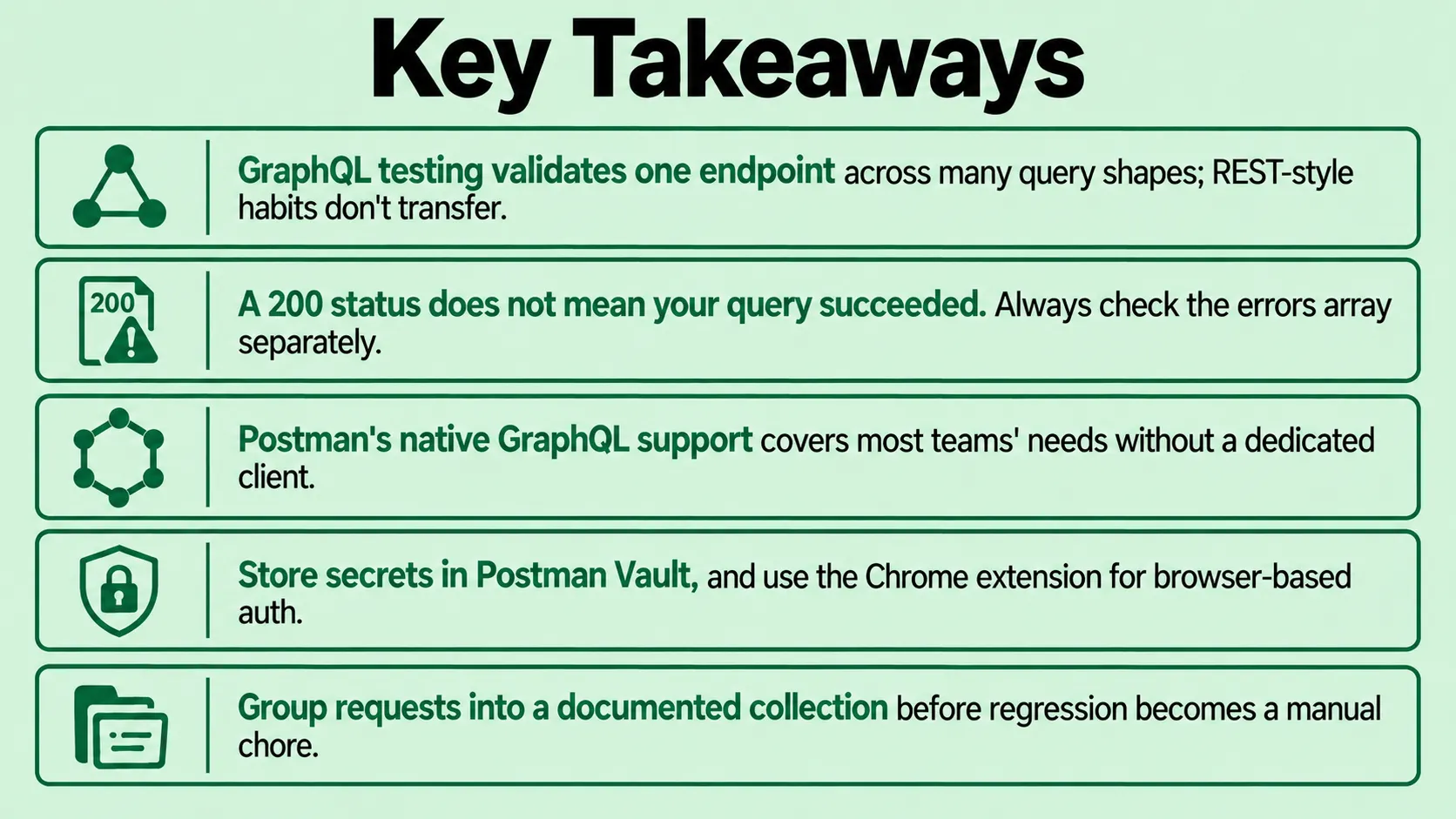
- A 200 status can still hide a failed query underneath it.
Per Postman's 2025 State of the API Report, GraphQL sits at 33% adoption, trailing REST's 93%, and most of that growth lands on teams whose QA process was never rebuilt around it. This guide closes that gap.
GraphQL vs REST Testing: Key Differences
REST testers often trust the status code out of habit. GraphQL breaks that assumption; miss the errors array check, and your suite reports green while the feature is broken- the core of REST vs GraphQL differences.
Why Postman Works Well for GraphQL Testing
What is Postman? The API client most teams already use for REST, now doubling as a capable GraphQL tester: A dedicated body type, schema introspection, and the same test-script layer teams already use. Much of the GraphQL ecosystem, including Apollo GraphQL's own tooling, assumes a similar workflow.
Postman earns its place through a few concrete strengths:
- One workspace: REST and GraphQL testing live side by side, so teams don't context-switch between tools.
- Schema introspection: Structural errors surface before a query ever runs.
- Shared test scripts: The same validation layer works identically across both protocols.
- Postman Vault: Credentials stay secure without adding separate tooling.
The trade-off is subscriptions: WebSocket coverage exists but stays thinner than Postman's query support, so teams leaning heavily on GraphQL subscriptions typically pair it with a dedicated tool. For everyone else, a separate GraphQL testing tool or Postman alternative rarely earns its keep.
Setting Up Postman for GraphQL
Getting Postman ready for GraphQL testing takes only two steps: Installation, and your first authenticated request. Most teams finish both in under fifteen minutes, even on a schema they've never touched before, since Postman's introspection does most of the discovery work automatically once the connection is configured correctly.
Downloading and Installing Postman
The Postman download is free, and you can download Postman and install Postman on Windows, macOS, or Linux in a couple of minutes. Postman online also works directly in the browser, though local GraphQL introspection still needs the Desktop Agent running.
The free tier covers everything here; paid Postman pricing tiers mostly add team workspaces. Postman login syncs saved collections automatically, and the Postman API lets teams manage collections programmatically as a suite grows.
Creating Your First GraphQL Request in Postman
Open a new request, set the method to POST, and enter your API endpoint URL. Switch the Body tab from raw or JSON to GraphQL specifically, since that's what triggers schema introspection and turns on autocomplete, and skipping this step is the single mistake that quietly breaks everything downstream.
query GetUser($userId: ID!) {
  user(id: $userId) {
    id
    name
    email
  }
}
Store your API key in Postman Vault instead of pasting it into the request, keeping credentials out of shared collections. If your endpoint sits behind a browser login rather than a token, the Chrome extension called Interceptor can capture that session for you. Once introspection succeeds, autocomplete starts suggesting valid fields, and you're ready to test GraphQL API requests directly.
Writing and Testing GraphQL Queries and Mutations
Once the connection works, the real test writing begins, where teams either build something durable or something that rots after the third schema change. Two things matter most from here: How cleanly you structure the query itself, and how thoroughly your test scripts validate what actually comes back in the response.
Structuring a Basic GraphQL Query
A typical GraphQL query pulls nested fields through one request, using variables for anything dynamic like a user ID. Postman's schema explorer flags malformed field names as you type. This is what makes GraphQL unit testing possible at the resolver level.
query GetUser($userId: ID!) {
  user(id: $userId) {
    id
    name
    email
    orders {
      id
      status
    }
  }
}
Validating Responses With Test Scripts
Test scripts are where real validation happens, and it's the step most tutorials skip. A GraphQL test that only checks the status code is barely a test.
pm.test("Status code is 200", function () {
  pm.response.to.have.status(200);
});

pm.test("No GraphQL errors returned", function () {
  const jsonData = pm.response.json();
  pm.expect(jsonData.errors).to.be.undefined;
});

pm.test("User name field is present", function () {
  const jsonData = pm.response.json();
  pm.expect(jsonData.data.user.name).to.exist;
});
Notice the second test above. A 200 status alone tells you almost nothing in GraphQL, since the response can carry that code even when the query failed. Skipping the errors array check is the most common gap in suites that pass while broken underneath.
Running Regression Tests for Your GraphQL API in Postman
A QA team we spoke with had built forty-plus GraphQL requests in Postman, tested by hand before every release. Nobody had ever grouped them into something repeatable, and every release cycle quietly cost about an hour of clicking that nobody had actually budgeted for in the sprint.
Building a Postman Collection for Regression Testing
Automated regression testing starts with grouping related queries and mutations into a single collection, organised by feature area rather than by individual endpoints. Environment variables handle authentication centrally, so the collection runs against staging and production without editing every request by hand.
From there, a few additions turn a static collection into something genuinely reliable:
- Collection Runner gives a pass/fail summary across the whole suite in one pass, instead of clicking through requests individually.
- Performance testing checks, added as response-time thresholds, catch a slow resolver before it reaches production.
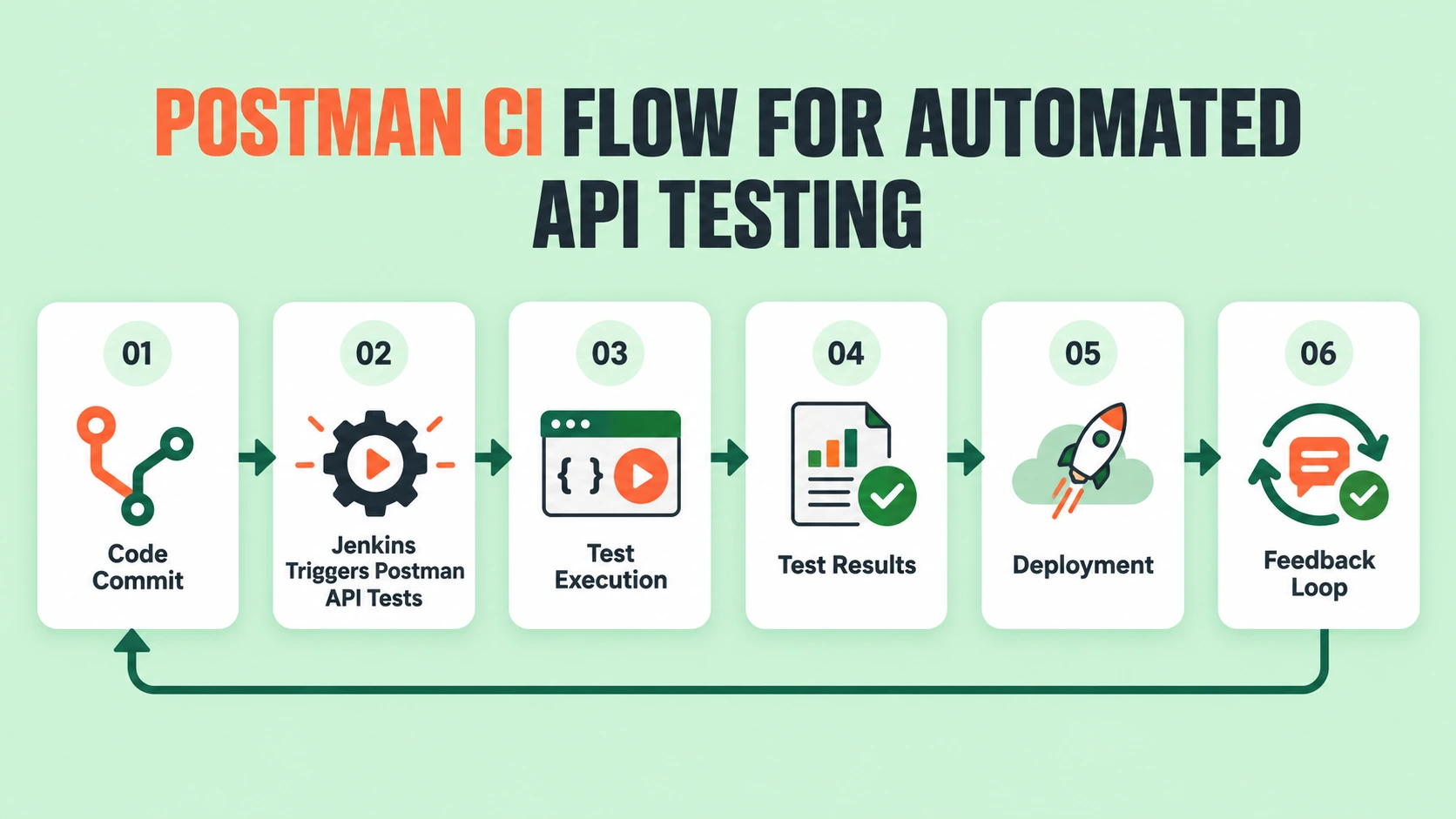
- CI/CD pipelines wired up with Newman, Postman's command-line runner, mean the suite runs automatically on every pull request rather than manually before release.
Converting a folder of ad hoc requests into a collection like this typically takes about a day for one engineer. Postman is one of several regression testing tools most teams already have installed.
10 Postman Features Every Team Needs for GraphQL and API Testing
Postman's GraphQL support doesn't stand alone. A few extras round it out:
- API Client: Sends HTTP requests to any API endpoint, capturing the API response.
- Postman Vault: Keeps API keys encrypted, since schemas sit behind bearer tokens.
- Chrome extension: Interceptor captures browser auth sessions for endpoints behind a login flow.
- OpenAPI Specification import: Generates a collection, turning API documentation into something testable.
- WebSocket APIs support: Covers basic GraphQL subscription testing, though heavy workloads need a dedicated tool.
- CI/CD pipelines via Newman: Turns any regression suite into a step that runs on every pull request.
- Performance testing: Runs a collection under simulated load, surfacing response-time trends before production.
- Security testing (OWASP API Top 10): This api security testing checks for broken auth and SQL command injection risks.
- Third-party integrations: A security service or security solution scans for credentials and online attacks.
- Model Context Protocol: Lets AI test automation tools and api testing tools query your schema.
How Frugal Testing Helps You Scale GraphQL API Testing: Without the Overhead
Most teams reach a point where maintaining GraphQL test coverage in-house starts competing directly with feature work. Query-variant coverage grows fast once a schema matures past a handful of core paths, and somebody eventually has to own it full-time, whether that's a dedicated QA hire or an engineer pulled away from product work they were actually hired to do.
We build GraphQL test automation and regression suites for teams scaling past manual Postman runs, offering test automation services that cover schema-driven design, CI-integrated regression suites, and coverage reporting handed directly back to your own team. Our broader test automation solutions extend the same approach to REST and GraphQL alike, without asking your team to hand over ownership of the suite long-term.
What Our GraphQL Testing Engagement Looks Like
- Week 1: Scope the schema, identify high-risk query and mutation paths, and agree on coverage priorities.
- Week 2: Build the regression suite in Postman, wire it into your CI/CD pipeline, and document everything.
- Ongoing: Hand over ownership. What you keep is a maintained test suite your engineers can extend without calling us first.
Conclusion
Testing GraphQL in Postman isn't complicated once the mental model shifts away from REST. Setup takes minutes, and query and mutation testing follows patterns most QA engineers already know. What trips teams up isn't the tooling; it's assuming old habits apply to a different contract, and that quietly erodes coverage.
Teams who get this right stop trusting status codes and treat their Postman collection as a living asset. Whether building this in-house makes sense depends on how fast your schema is growing, but the fundamentals in this GraphQL tutorial hold regardless of team size.
People Also Ask (FAQs)
Q1. How does Postman compare to Apollo GraphQL's explorer?
Ans: Apollo GraphQL's explorer is built for its own ecosystem, while Postman covers GraphQL alongside REST, WebSocket, and other API types inside one shared workspace.
Q2. Can Postman handle visual regression testing?
Ans: Postman doesn't do visual regression testing directly, focusing instead on functional and data-level checks, so teams needing visual regression testing typically pair it with a screenshot-based tool.
Q3. Is Postman a codeless test automation tool?
Ans: Postman isn't fully codeless, since GraphQL test validation relies on short JavaScript scripts, though point-and-click request building puts it between codeless test automation tools and scripted ones.
Q4. Is Postman a full test automation platform, or just an API client?
Ans: It started as an API client, but with Newman, environments, and Vault, Postman now functions as a lightweight test automation platform for most API-focused teams, GraphQL included.
Q5. What is regression testing, and why does it matter for GraphQL?
Ans: Regression testing means re-running existing checks after a change to confirm nothing broke. For a GraphQL API, that includes shared resolvers, since one change can affect several queries.