

A QA lead at a mid-size fintech client came to us eighteen months into a stalled Selenium build. Three engineers, a working CI pipeline, and still no suite past login. Nobody had checked whether the team had the scripting depth the framework demands, and that gap usually decides whether test automation succeeds or quietly stalls in modern software development teams.
Katalon vs Selenium is the question most teams ask first when comparing automation testing tools, but it is really about your team and your goals, not a feature contest. This guide compares both platforms in depth, from setup and scripting flexibility to enterprise scalability and vendor support, so you can decide which one fits your team with confidence.
What Is Selenium?
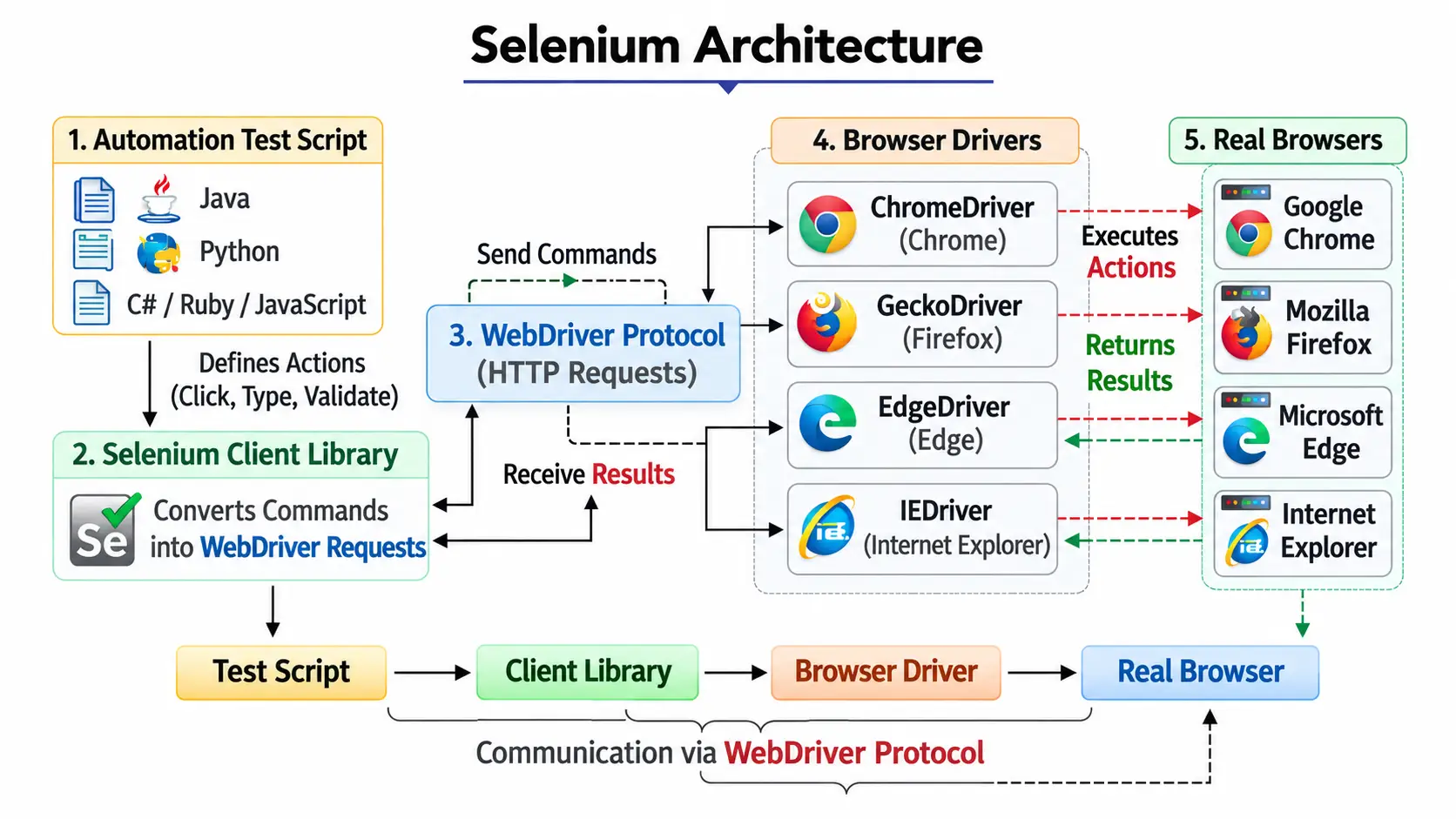
Selenium is an open-source Selenium WebDriver framework for browser automation, not a full testing platform. It gives engineers direct access to the browser for automation testing, and it remains the reference point for Web Testing and web test automation alike, even as newer frameworks emerge around it.
- Selenium WebDriver, for direct browser control.
- Selenium Grid, for parallel testing, parallel test execution, and cross-browser testing across a distributed testing setup.
- Selenium IDE, a basic recorder for quick, disposable test scripts.
- Support for Java, Selenium Python, C#, JavaScript, and Ruby.
What Is Katalon Studio?
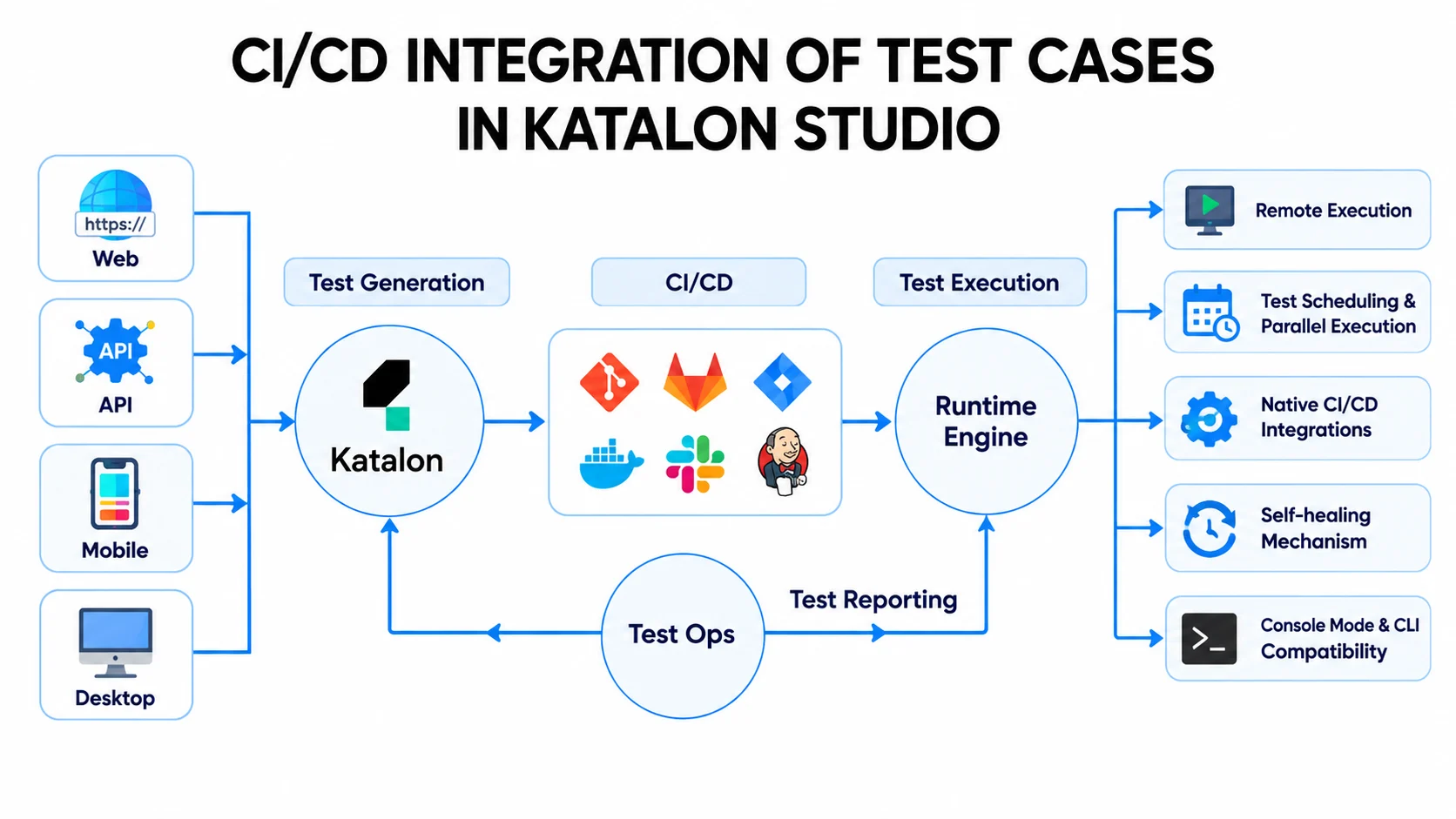
Katalon Studio is a low-code test automation tool and test automation framework built on Selenium and Appium, covering web applications, mobile applications, cross-platform testing, and API testing in one test automation platform. It is one of the more established low-code test automation tools, no-code test automation tools, and mobile test automation tools on the market.
- A user-friendly interface with record-and-playback test creation.
- Katalon Analytics for test case management, test reports, and reporting capabilities.
- Native CI/CD tools integration with Jenkins, GitHub Actions, and Azure DevOps.
- Mobile Testing and low-code scripting that shortens the path to a working suite.
Katalon vs Selenium: Key Differences
Scripting control, or speed to a first suite, is the real trade-off behind most Katalon vs Selenium debates in software testing. The table below compares these two testing frameworks across more factors than ease of use alone, since real decisions rarely come down to just one thing.
Selenium WebDriver vs Katalon Studio: Framework Comparison
Selenium WebDriver is a raw browser-control API, while Katalon is an abstraction layer built directly on top of it, which means it inherits WebDriver's cross-browser testing support automatically rather than reimplementing it.
Switching between the two mid-project is more realistic than most Selenium testing comparisons suggest, since Katalon is not a separate universe underneath the surface. It is Selenium with more of the setup work already done for you.
Mature Selenium suites also organise automation scripts around the page object model, keeping source code maintainable as the test environment grows, often through a formal TestNG Migration once scripts multiply across a team and start to sprawl.
Selenium IDE vs Katalon Recorder
Selenium IDE is a browser-extension recorder built for quick, disposable scripts, while Katalon Recorder is its built-in equivalent inside Katalon Studio. Both tools handle simple, linear flows reasonably well for straightforward automation test needs on a small scale. Both also hit the same ceiling once conditional logic or dynamic waits enter the picture, and neither replaces a properly scripted test automation tool once a suite grows past a handful of pages worth of coverage and real production traffic.
Enterprise Scalability and Support
Automation adoption is less mature than most teams assume, since many programmes still fall short of full test case coverage even after months of investment. Enterprise scale also means extending automated coverage into security testing, Performance Testing, and risk-based testing, confirming a security solution blocks online attacks before every release.
Test Automation Platform Capabilities
Selenium Grid handles parallel testing, but your team builds and maintains that infrastructure yourselves. Katalon, as a test automation platform, shifts more of that maintenance work onto the vendor instead.
- Selenium Grid requires wiring in CI/CD tools such as Jenkins or Travis CI yourself to keep parallel runs stable.
- Katalon offers built-in cloud-based testing without extra infrastructure setup on your side.
- AI-driven automation, drawing on machine learning and model-based testing, self-heals broken locators automatically when a page changes.
- Katalon's roadmap also extends into localization testing and visual test automation, cutting ongoing overhead further.
Test Automation Services and Vendor Support
Selenium runs entirely on community support, with no vendor to call when something breaks. Katalon offers official vendor support and documentation as part of its platform.
- No official vendor exists for Selenium, so a community forum is the main troubleshooting channel, with no guaranteed response time.
- Katalon's vendor support matters more to procurement and vendor-management leads than to the engineer writing the script day to day.
- Teams evaluating test automation services often weigh this support model as heavily as the feature list itself.
- A missed fix during release week costs far more in lost time than any licence fee ever will.
Which Automation Tool Should You Choose?
Selecting the right software test automation tools shapes delivery speed for years. Skip the pros-and-cons recap most comparisons rely on, and answer direct questions about your own team's automation tool needs first.
When Selenium Makes Sense
Selenium fits teams with real scripting depth already on staff, where infrastructure control matters more than setup speed.
- Dedicated SDETs already write Java, Python, or C# daily, so the learning curve is a non-issue.
- An existing Selenium Grid setup means the parallel testing infrastructure is already built and paid for.
- Complex, multi-language suites need the full WebDriver API rather than a packaged abstraction layer.
- Long-term control over every part of the stack matters more than shipping a first suite quickly.
When Katalon Makes Sense
Katalon fits teams that need broad coverage fast, without hiring a full bench of specialist automation engineers first.
- Mixed teams of coders and manual testers can all contribute real test coverage from day one.
- Web, mobile, and API testing live in a single test automation platform instead of three stitched-together frameworks.
- Built-in reporting and Katalon Analytics remove the need to wire up a separate dashboard tool.
- Vendor support cuts time spent debugging tooling issues instead of the application itself.
How Frugal Testing Helps You Pick and Implement the Right Tool
The most common failure mode is choosing a tool nobody stress-tested against the team's actual skill mix, then finding the gap five sprints into a fast agile process. Our test automation services cover tool selection, framework setup, and CI/CD integration to catch that gap before it costs a release.
This work sits inside our broader software test automation services, built for teams that need a defensible, documented decision rather than a guess made under deadline pressure during a busy quarter or a rushed migration window with no real fallback plan in place if it goes wrong.
What Our Engagement Looks Like
- Week 1: Current-state audit of your existing suite, team skills, and release cadence.
- Week 2: Tool and framework recommendation, backed by a written comparison document and rationale.
- Week 3: Pilot test suite built against one real feature, not a toy example.
- Week 4: Handoff with full documentation and a maintenance plan, or ongoing execution if preferred.
Who This Is For
This fits teams choosing between Katalon and Selenium for the first time, teams stuck mid-migration between the two, or teams whose DIY automation attempt stalled the way the fintech clients did earlier, well before real scripting depth ever got involved in the project.
Conclusion
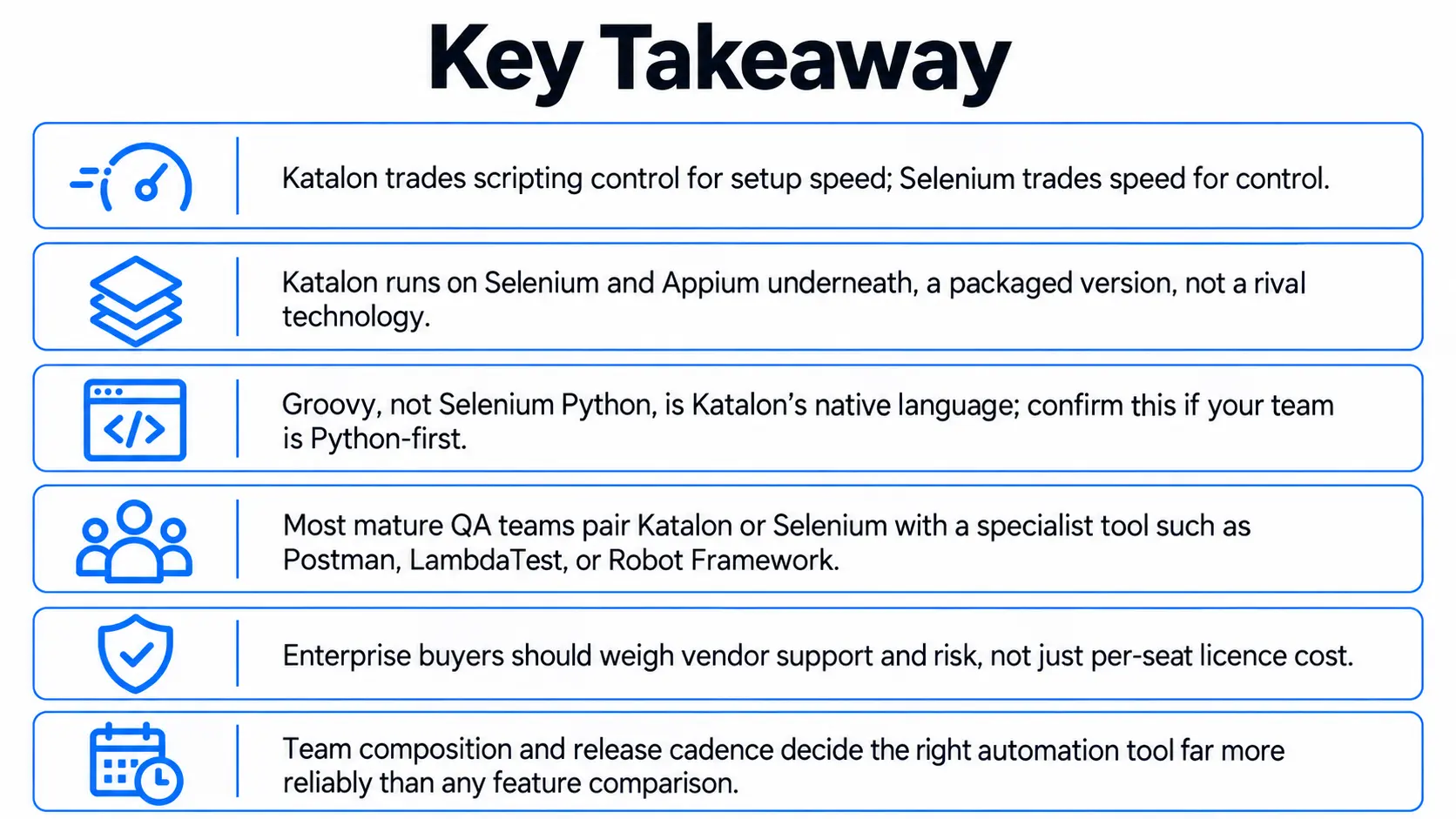
Neither tool wins outright, and that is a more useful answer than it sounds. Selenium suits teams with the scripting depth to use its full range, while Katalon suits teams that need coverage across web, mobile, and API without assembling three frameworks first.
Team composition and release cadence decide it, not a feature checklist copied from a competitor's comparison page. Get that decision right early, and the rest of your test automation strategy tends to follow without much further debate or a costly re-platforming exercise later on.
People Also Ask (FAQs)
Q1. Is Katalon free to use?
Ans: Katalon offers a free Community edition alongside paid Enterprise tiers with added support and cloud execution. Selenium remains fully open-source and free at every tier.
Q2. How long does migrating an existing Selenium suite to Katalon usually take?
Ans: Timelines vary with suite size, but teams typically spend two to six weeks remapping scripts and validating coverage, longer for suites without a page object model already in place.
Q3. Does Selenium support testing on real mobile devices?
Ans: Not on its own. Selenium covers browsers only, so teams pair it with Appium, which shares Selenium's WebDriver API, to extend coverage to real iOS and Android devices.
Q4. Which tool has a larger community for troubleshooting and support?
Ans: Selenium has the larger open-source community, given its two-decade head start. Katalon's community is smaller but supplemented by official vendor support and a public forum.
Q5. Are there official certifications for learning Selenium or Katalon?
Ans: Selenium has no official certification, though third-party courses are widely available. Katalon offers its own Katalon Academy certification covering the platform's core features.