


Picture this. Two teams ship on the same day. Tests go green on both sides. Then staging blows up because a field got renamed somewhere between those two passing pipelines and nobody mentioned it.
Not a hypothetical. Tuesday for a lot of engineering teams.
Pact contract testing catches exactly that. Not a replacement for unit tests or your E2E suite the piece that catches mismatches neither one can see. This guide covers what Pact is, how it works, where it belongs in your pipeline, and what it looks like when it does its job.
API Testing Challenges in Microservices Architectures
Testing APIs in a monolith is hard enough. In a microservices architecture, each service is deployed independently, versioned independently, and owned by a different team. That independence is the whole point but it creates a testing problem that most teams underestimate until it bites them.
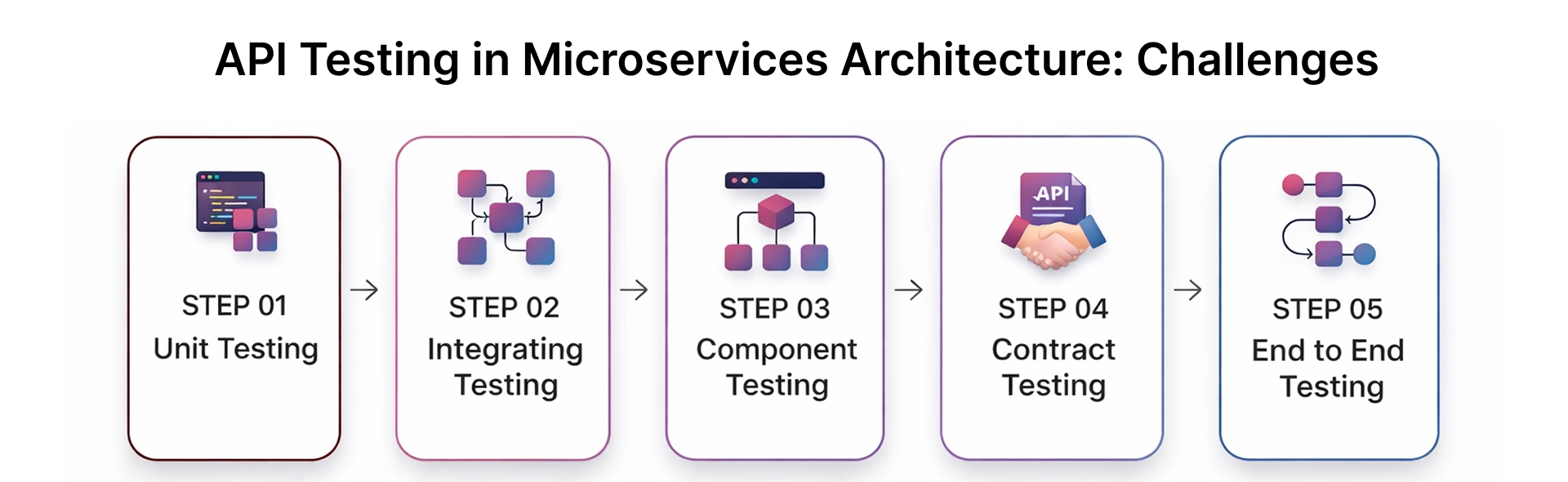
Why API Testing Is Critical in Modern Microservices
When your entire system is built on service-to-service communication, a broken API isn't just a bug it's a failure point that can ripple across every dependent service downstream. Teams that have been through this know the drill: something breaks in production, three teams jump on a call, and everyone is looking at logs from different services trying to reconstruct what happened.
Good API testing prevents exactly that. It gives teams confidence that service communication works before code gets anywhere near production. That means validating not just that endpoints return a 200, but that the response structure, field names, and data types actually match what the consumer expects. It also means catching these issues when they're cheap to fix during development, not during an incident.
Common Issues in Microservices API Integration
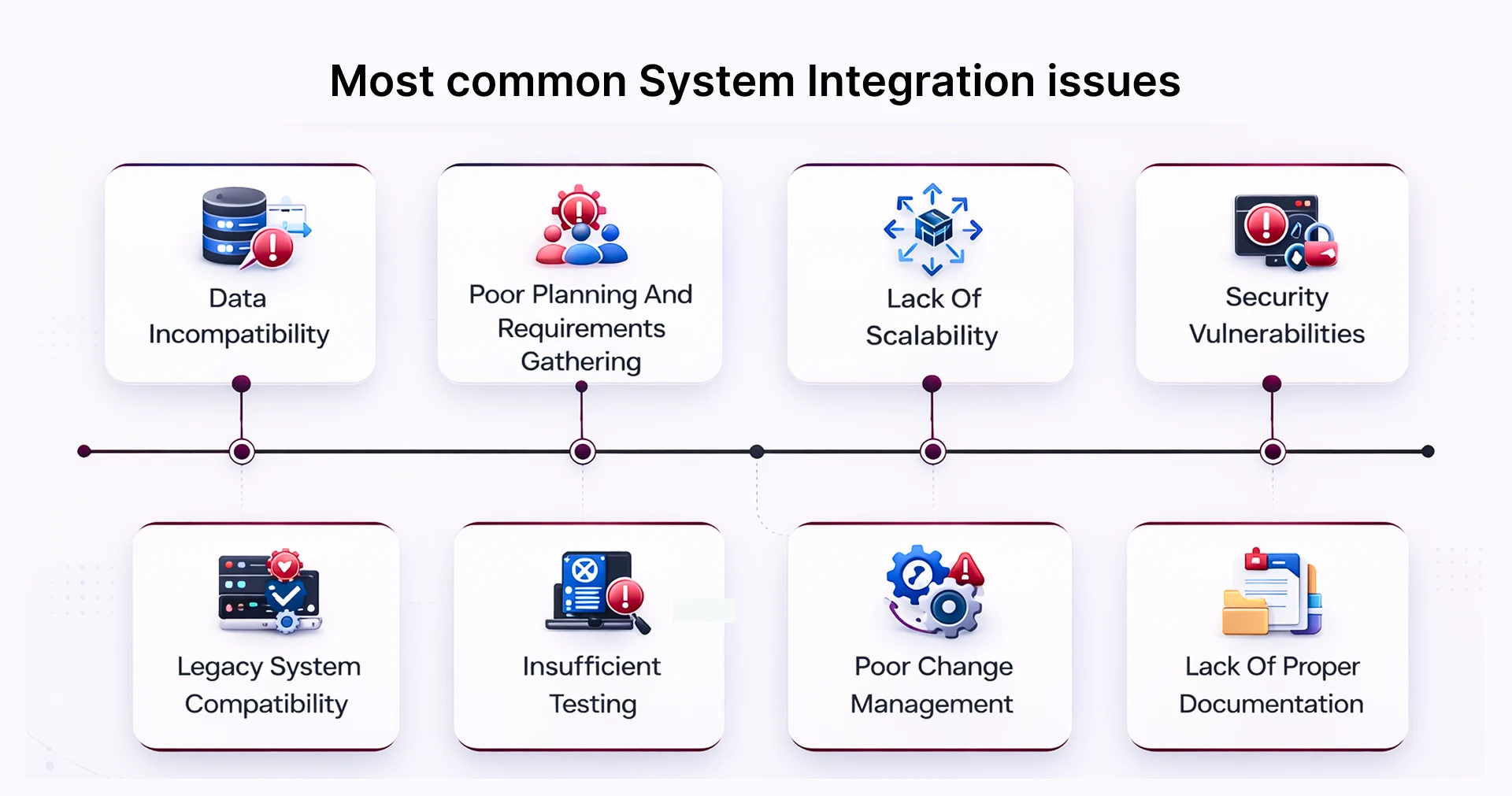
In our experience working across QA engagements, the same integration problems come up repeatedly. They're not exotic they're the boring, avoidable ones that happen when teams move fast without a proper contract between services:
- One team renames a field or changes a response structure, the other team doesn't find out until their service breaks
- API versioning is inconsistent, so consumers end up calling endpoints that have changed under them
- Manual testing with Postman or similar tools doesn't scale when you have dozens of endpoints across multiple services
- Integration failures surface late sometimes only in staging because there was no earlier check on the contract
- CI/CD pipelines deploy broken integrations because no automated check was validating the contract between services
Why End-to-End Testing Alone Is Not Enough
End-to-end testing gets a lot of trust it hasn't always earned. Teams treat a passing E2E suite as proof that everything works but E2E tests are actually pretty bad at telling you why something broke. When a test fails, you know the outcome but not the cause. Was it a bad API contract? A deployment issue? A data problem? You're left guessing.
There's also the maintenance burden. A microservices system with ten services needs a lot of E2E tests to cover meaningful paths, and those tests break constantly as services evolve. The suite becomes something people dread running rather than trust. That's not a testing strategy that's a liability.
Contract testing doesn't replace E2E tests. It just handles a different problem and it handles it much earlier, much faster, and with much more precision.
Understanding Pact Testing and Consumer-Driven Contract Testing
Pact is an open-source framework for contract testing between services. The idea is straightforward: instead of spinning up your entire system to test whether two services can talk to each other, you define the expected interaction between them, encode it in a contract, and verify both sides against that contract independently.
It sounds simple, but the implications are significant. Teams no longer need a shared environment to validate integration. The consumer team doesn't need to wait for the provider to be ready. And when something breaks the contract, Pact tells you exactly what changed and where.
What Is Pact Contract Testing
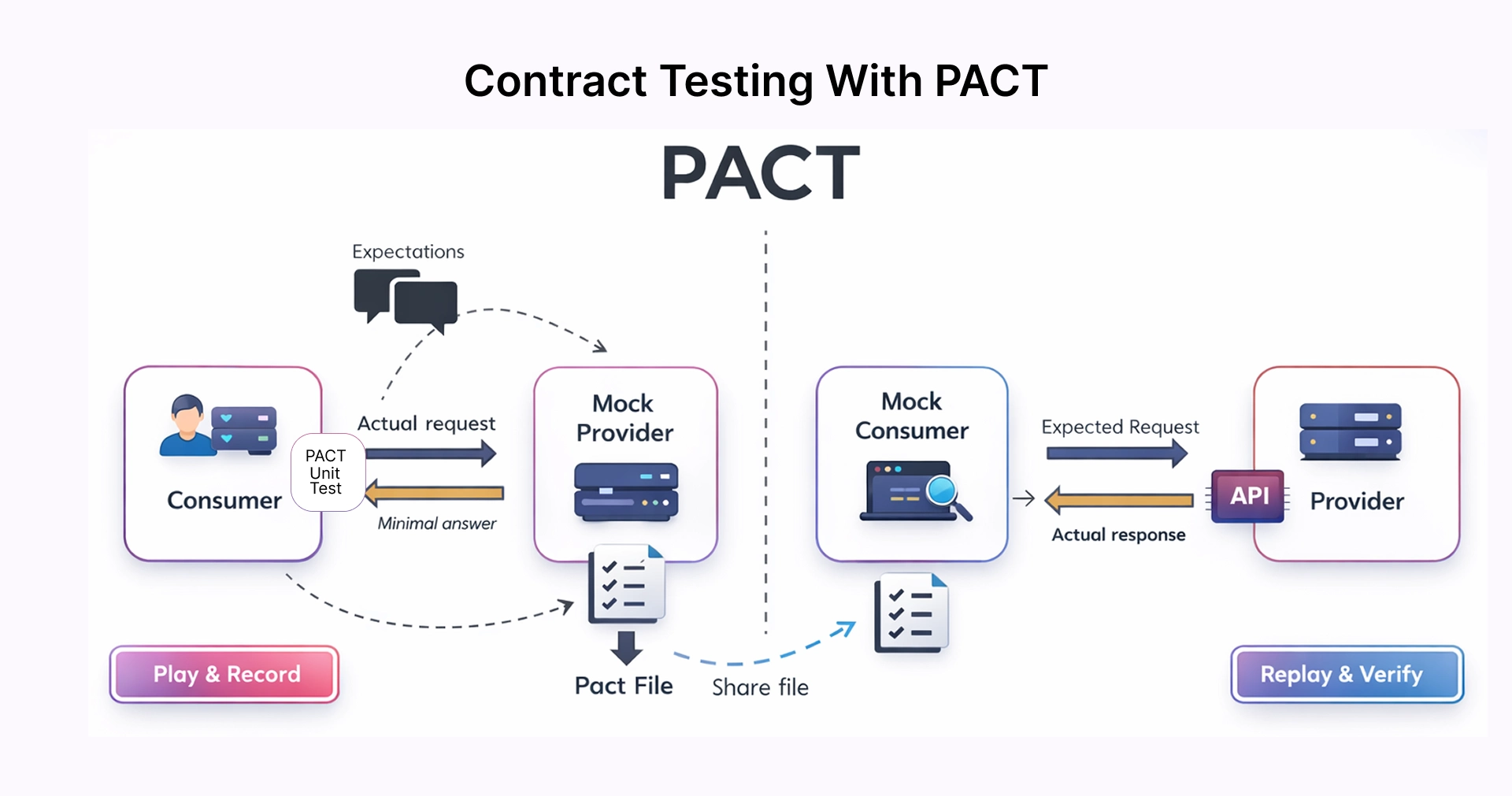
A Pact contract is a JSON file that captures what a consumer service expects from a provider the exact request it sends, the response structure it needs, the status codes it relies on. The consumer generates this file by running its own tests. The provider then takes that file and runs it against its actual implementation to verify it can fulfil those expectations.
Neither side needs the other to be running during their tests. That's what makes Pact different from integration testing in the traditional sense. You're not testing a live connection you're testing whether both sides agree on the terms of that connection.
The Core Components of Pact Testing
Four things make up a Pact testing setup. It's worth understanding all of them before you try to implement it, because skipping any one of them tends to cause confusion later:
• The JSON contract generated by the consumer test. It captures the exact requests the consumer will make and the minimum response it needs back. This is the source of truth.Pact File
• Written by the consumer team. These tests define what the consumer expects from the provider and generate the Pact file as output.Consumer Tests
• The provider pulls the Pact file and runs it against its real implementation. If the provider can't satisfy the contract, the test fails immediately, before any deployment.
A central store for Pact files. It versions them, tracks which contracts have been verified, and exposes a can-i-deploy check that gates deployments. Without the Broker, managing contracts across multiple services becomes messy fast.
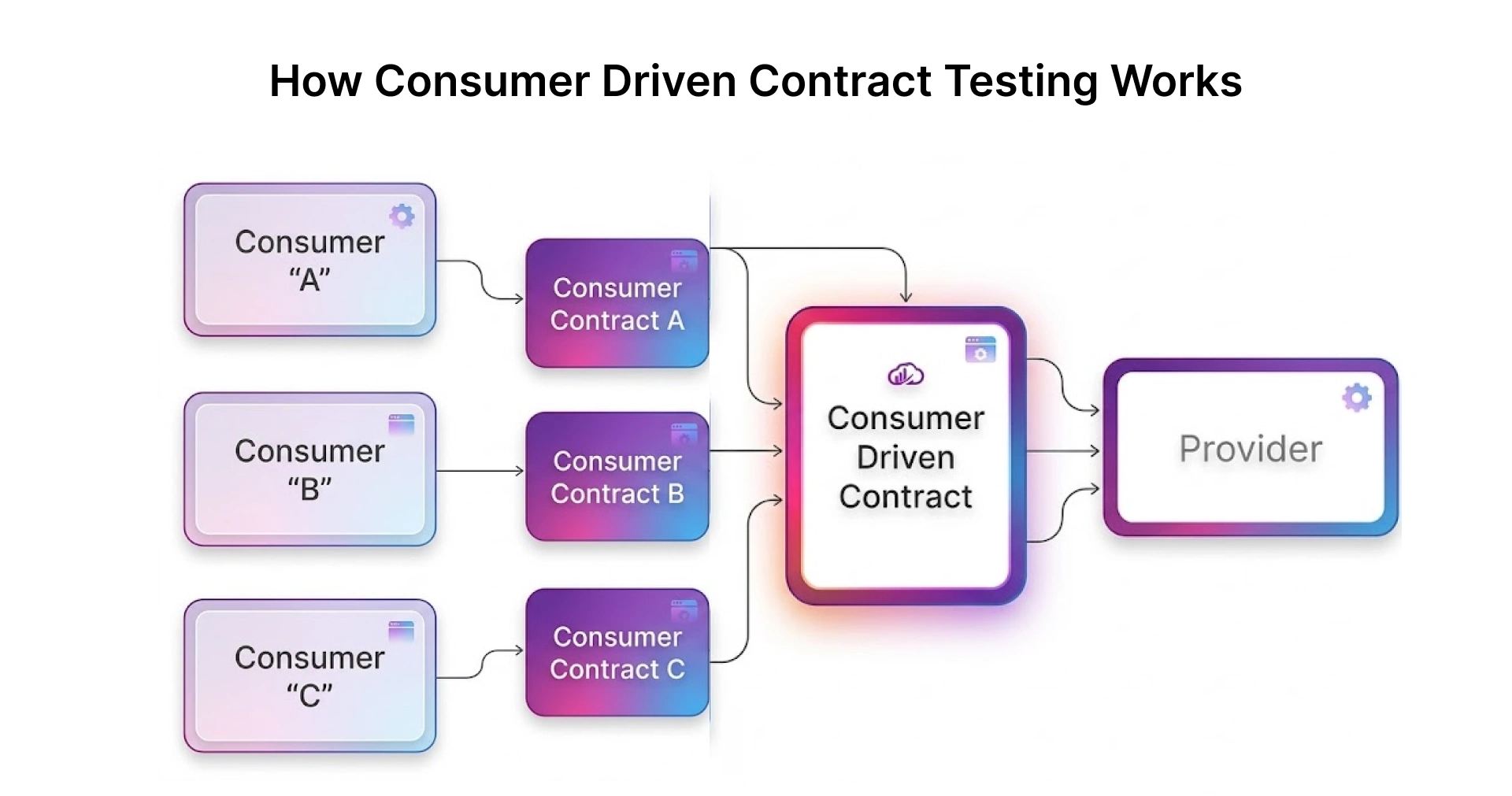
How Consumer Driven Contract Testing Works
The flow is worth walking through step by step, because the order matters:
- The consumer team writes tests that describe exactly what they need from the provider specific fields, data types, HTTP status codes
- Pact generates a contract file from those tests and publishes it to the Pact Broker
- The provider team pulls the contract from the Pact Broker and runs verification against their actual service
- Results are published back to the Pact Broker pass or fail
- Before either side deploys, the can-i-deploy check confirms that all contracts for the target environment are verified
The whole flow can run in CI on every commit. In practice, this means both teams get feedback in minutes rather than waiting for a shared integration environment to be available.
A Real-World Example: Pact in a Fintech Microservices System
Abstract descriptions of contract testing only go so far. Here's what it actually looks like when it catches a real problem.
Consider a lending platform built on microservices. The loan-application service calls the credit-check service to retrieve a borrower's credit score before processing an application. The loan-application team expects a JSON response with a numeric credit_score field, a risk_band string, and an HTTP 200 status.
Now imagine the credit-check team does a refactor. They rename credit_score to creditScore camelCase instead of snake case because their new internal standard says so. It's a small change. Their unit tests still pass. Their service works fine in isolation.
Without Pact, this change reaches staging. The loan-application service starts failing. An incident is raised. Teams start debugging. The root cause a field rename takes a few hours to trace. By the time it's fixed and redeployed, half a working day is gone.
With Pact, the story is different:
• The loan-application team has a consumer test that defines their expected response structure, including credit_score
• That contract is stored in the Pact Broker
• When the credit-check team merges their rename, provider verification runs automatically in CI
• The verification fails immediately the contract expects credit_score, the provider now returns creditScore
• The CI pipeline blocks the merge. The teams see the failure, have a five-minute conversation, and align on the field name before anything is deployed
That's the difference. Not a dramatic rescue just a quiet, automated catch that saves a day of debugging and a potential production incident.
Improving Microservices API Integration Testing with Pact
Pact doesn't just improve the quality of your testing it changes how teams collaborate. When every API contract is versioned and visible in the Pact Broker, the implicit agreements between teams become explicit. That visibility alone prevents a significant number of integration failures.
Contract Testing in Distributed Microservices Environments
- The more services you have, the more valuable contract testing becomes. At five services, you might manage integration risks through communication and careful coordination. At twenty services, that doesn't scale. You need tooling that enforces contracts automatically, and Pact is designed exactly for that environment.
- Running Pact in a distributed system means each pair of communicating services has a contract. Those contracts are versioned. And the Pact Broker tracks which version of each contract has been verified by which version of each service. When a team wants to deploy, they don't need to ask anyone they check can-i-deploy and get an immediate answer.
How Pact Strengthens Cross-Team Communication
One thing that doesn't get talked about enough is what Pact does for the relationship between teams. API mismatches usually happen because of communication gaps one team changes something and doesn't realise another team depended on it. Pact makes those dependencies visible and automated.
The Pact Broker shows every consumer of a given provider API. Before making a breaking change, a provider team can look at the Broker and see exactly which consumers will be affected. That changes the conversation from "we broke something, why didn't you tell us" to "we're planning a change that affects you, let's coordinate." It's a small shift in tooling that has a real effect on how teams work together.
Integrating Pact Testing into CI/CD Pipelines
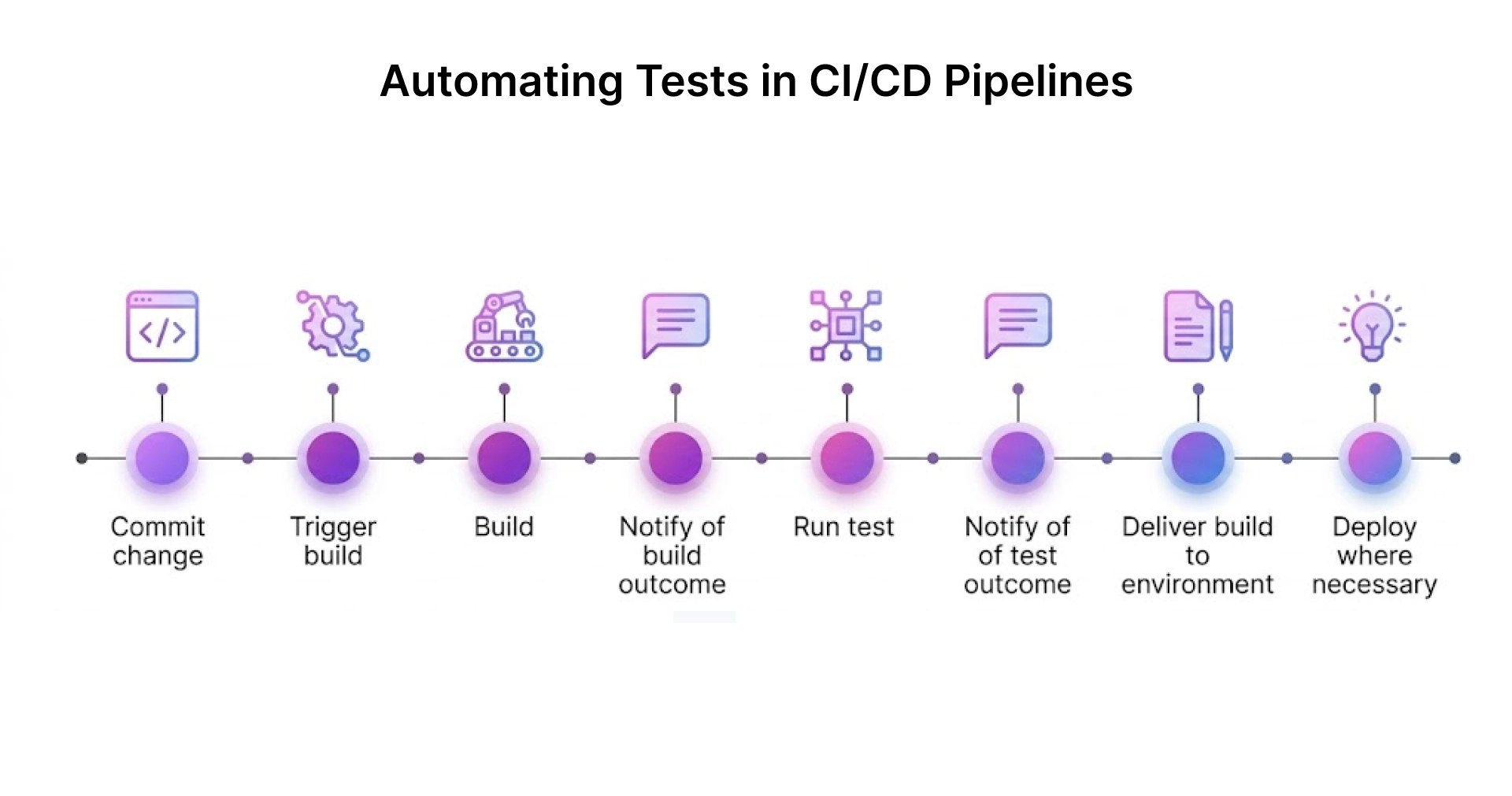
Pact works best when it's fully automated. Running contract tests manually, or only when someone remembers, defeats the purpose. The goal is for every commit to automatically trigger contract verification on both the consumer and provider side no manual steps, no waiting for someone to kick off a test run.
Automating Pact Tests in CI/CD Pipelines
- A well-configured Pact setup in CI runs like this: the consumer pipeline generates a Pact file on every commit and publishes it to the Pact Broker. The provider pipeline pulls all relevant contracts from the Broker and runs verification on every commit. Neither pipeline blocks the other they run independently and publish results back to the Broker.
- The critical piece is the can-i-deploy check, which runs before any deployment. It queries the Pact Broker to confirm that the version of the service being deployed has verified contracts with all its consumers and providers in the target environment. If any contract is unverified, the deployment is blocked. This is the safety net that prevents broken integrations from reaching production.
Using Continuous Integration for Contract Testing
Continuous integration is what gives contract testing its real value. Running Pact tests on every commit means contract regressions are caught the moment they're introduced not in a weekly integration run, not in staging, not in production. Developers get feedback in the same pipeline run that builds their code.
This also removes the bottleneck of shared integration environments. Teams don't need a stable staging environment to validate that their service can talk to another service. They need their CI pipeline and the Pact Broker. That's a significant reduction in infrastructure dependency and a meaningful speed-up for development cycles.
Running Pact Tests with Jenkins in DevOps Pipelines
Jenkins integrates naturally with Pact through standard pipeline steps. A typical provider verification stage pulls the latest contracts from the Pact Broker, runs the verification suite against the local service, and publishes results. Consumer pipelines do the same in reverse run tests, generate contracts, publish to the Broker.
The operational benefit here is visibility. Every Jenkins build record shows whether contracts passed or failed, which version of the contract was tested, and what the current deployment eligibility is. Teams stop relying on tribal knowledge about whether services are compatible and start relying on a verifiable, automated record.
Pact Testing vs End-to-End Testing in Microservices
The question teams often ask is whether Pact replaces end-to-end testing. It doesn't and it's worth being precise about why. The two approaches solve different problems, and confusing them leads to gaps in your testing strategy.
Differences Between Contract Testing and End-to-End Testing
How Pact Reduces Dependency on End-to-End Testing
Here's the practical effect of adding Pact to a testing strategy: your E2E suite gets smaller and more focused. Because Pact catches API contract failures at the service level, your end-to-end tests no longer need to cover integration scenarios. They can focus entirely on validating user journeys and business logic the things only E2E tests can actually verify.
Teams that implement Pact well typically find they can remove 30-50% of their E2E test cases without losing coverage. The tests that remain are faster, more stable, and easier to maintain because they're not trying to do two jobs at once.
Best Practices for Combining Pact and E2E Testing
The teams that get the most out of both approaches tend to follow the same pattern. Use Pact for all service-to-service API contract validation make it a hard requirement in CI, not an optional check. Use end-to-end tests for the critical user journeys that require the full system: checkout flows, authentication paths, anything where the business outcome depends on multiple services working together correctly.
A few specific things that matter in practice: don't let consumer tests become wish lists. They should capture what the consumer actually needs, not every possible response field. Keep contracts minimal and precise. And treat a failing contract verification the same way you'd treat a failing unit test it's a blocker, not a warning.
Conclusion
Contract testing with Pact addresses a problem that most API testing strategies leave unresolved: the gap between services that work individually and services that work together. End-to-end testing finds this gap too late. Unit testing doesn't find it at all. Pact finds it at the exact moment a contract changes in the CI pipeline, before anything is deployed.
The investment is real. Setting up Pact, configuring the Broker, training teams to write consumer tests it takes time. But teams that have been through a production incident caused by an undiscovered API mismatch usually find that time well spent.
How Frugal Testing Helps
At Frugal Testing, we've helped engineering teams implement Pact contract testing as part of broader API testing strategies across fintech, SaaS, and enterprise systems. That means setting up Pact Broker, integrating with Jenkins and other CI/CD tools, writing the first consumer and provider tests, and training teams to maintain contracts as services evolve. If your team is dealing with integration failures or trying to reduce dependency on a slow, brittle E2E suite, contract testing is worth a conversation.
People Also Ask (FAQs)
Q1.How does Pact improve API testing in microservices?
Ans: Pact catches API contract mismatches between services before they reach a shared environment. Instead of discovering a broken integration in staging or production, teams find it in CI usually within minutes of the change being made.
Q2.What is consumer-driven contract testing?
Ans: Consumer-driven contract testing lets the consumer define what it needs from a provider API specific fields, data types, status codes. The provider then verifies it can meet those expectations in isolation, without the consumer running.
Q3.How is Pact different from traditional API testing tools?
Ans: Tools like Postman verify that an endpoint returns the right response. Pact verifies that two services agree on what that response should look like. It's the difference between testing a service in isolation and testing the contract between services.
Q4.Can Pact testing replace end-to-end testing?
Ans: No. Pact validates service contracts. End-to-end tests validate complete user flows. They solve different problems. Pact lets you reduce the volume of E2E tests you need it doesn't eliminate the need for them.
Q5.How does Pact integrate with CI/CD pipelines?
Ans: Consumer pipelines generate and publish Pact files on every commit. Provider pipelines pull and verify those contracts on every commit. A can-i-deploy check before deployment confirms all contracts are verified for the target environment. The whole process is automated no manual steps required.


.webp)