


In today’s digital world, exceptional user experience and flawless functionality are desired by virtually every company. Companies looking to build an effective online presence need to choose a custom web development service that will help them achieve their goals. At Frugal Testing, we know that to create the best custom solution for your company, you will need more than simply good code; you will need to be proactive and integrated with your Software Quality Assurance (QA) and Web Development processes.
✨ Key Insights from This Article:
🖥️ Why collaboration is critical for custom web development success
🤝 Lightweight, practical ways small teams can improve QA–Dev alignment
🌍 How teams maintain seamless collaboration across time zones
📊 Key metrics that show whether collaboration is improving outcomes
🔄 How teams stay aligned when requirements change during development
Why Collaboration Defines Custom Web Development Quality
Developing a distinctive online presence, whether through advanced e-commerce website design or intricate online application systems, presents obstacles. One of the major factors that will determine how successful or unsuccessful a project will be is how well the development team and QA testing team collaborate with each other. If these two teams do not work together, it creates delays, poor communication between them, and many costly defects that will affect the whole development cycle.
- Customizing applications is complicated. Each project for custom web applications has specific needs, and most of the time, the standard testing protocols used for quality assurance do not address those needs.
- Today's web application development cycles are fast-paced, meaning that there is no room for slow and deliberate testing of a web application's quality. It is essential to provide near-instant feedback through tests and iterations continuously.
- Back-end and front-end web development errors are costly from both a financial and reputational standpoint. To understand how enterprise-grade systems influence scalability and long-term digital growth, you can also explore why enterprise web development services matter for business growth.
When a team works to create and maintain quality as part of their project, the work they deliver will transition from "fixing bugs after the fact" to "creating quality upfront," which is critical to building a successful modern web application.
The Demand for Tailored Web Solutions & the Need for Alignment
Businesses today need tailored, scalable, and responsive systems, driving the demand for custom web application development company services. This shift makes alignment between all technical disciplines—from web designing to complex web application frameworks—paramount.
- Addressing Unique Business Logic: Custom solutions incorporate intricate business logic requiring intimate knowledge from both the builder (Dev) and the validator (QA).
- Testing web app architecture is an essential aspect of delivering a custom-built solution; therefore, performance and stability should be the primary focus when designing any type of custom-built web solution.
- User experience (UX) throughout the development process will improve by testing earlier in the web app development process. Testing will help ensure that UX is an important component in the design and development of web apps; thus, UX standards should be employed when creating a web app.
QA and development team members should communicate effectively and share ownership of the web app's success. In doing this, the technical vision of the web app will be in line with the quality goals and acceptance criteria.
Why Collaboration Matters: The Core Challenges and Opportunities
Traditional software development models often treat QA as a final gateway. In the specialized realm of custom web development services company offerings, this friction is amplified due to the unique, untested nature of the solutions being built. In the specialized realm of custom web development services, a white label web development company can reduce friction when building unique, untested solutions for businesses today.
The Reality of Custom Web Development: Complexity, Uncertainty & Unique Demands
Custom projects push technology and design boundaries. Building a custom web development solution often involves inventing solutions and integrating novel systems, making the risk of hidden defects or unexpected edge cases substantially higher than in off-the-shelf software.
- Intricate Integrations: Custom solutions integrate multiple systems, presenting potential points of failure that require specialized software quality assurance testing services.
- Novel Technologies: Implementing modern web development often involves new web development languages or tools, introducing subtle bugs that only an integrated QA quality assurance process can uncover.
- Meeting High Standards: The expectation for a professional web development services company is a near-perfect launch, requiring comprehensive QA testing, including meticulous regression testing.
The opportunity: leveraging the distinct technical expertise of both groups turns uncertainty into robustness. This is the difference between an adequate web app development and a high-performing, resilient software solution.
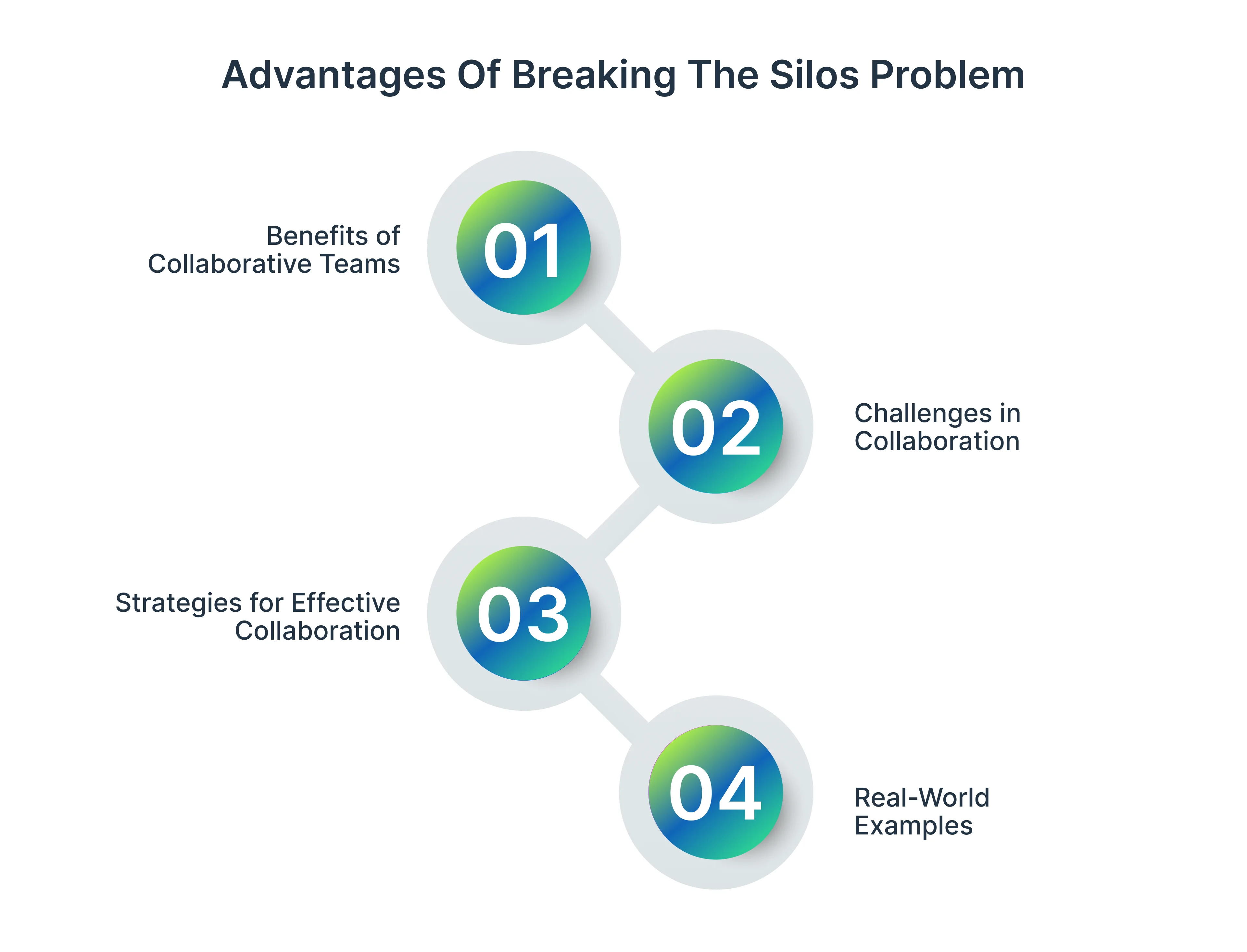
Breaking the Silo Problem: How Collaboration Reduces Risk & Elevates Quality
In traditional SDLC models, the familiar “blame game” belongs to the past. Siloed workflows within web development teams often weaken overall product quality. When QA engineers and developers collaborate effectively, they share critical context around requirements, constraints, and potential solutions. This alignment significantly reduces defect leakage and accelerates the delivery of reliable software.
- Developers who feel responsible for the overall quality of the software and QA practitioners who understand the technical restrictions on the product will create a quality-first culture. The result will be an increase in quality due to working together.
- Real-time discussion regarding bugs facilitates quicker transitions from discovering bugs to fixing and deploying them. Thus, there is a very efficient workflow model in place.
- Before coding formally begins, early collaboration with QA provides an opportunity for QA to identify potential areas of concern that could become bugs—i.e., Shift-Left Testing.
An overall integrated approach reduces the incidence of technical debt and builds a cohesive development and QA team. For a high-quality web development services company, Dev and Test Integration should be considered a key indicator of reliability and quality of project delivery.
Shift-Left in Action: How QA, Dev, and UX Collaborate from Day One
The shift-left philosophy can improve an organisation's operational model and should be applied to custom web application development as part of a strategy. It allows for better collaboration between software quality assurance and User Interface (UI)/user experience (UX) designers before the software has even been developed (e.g., during sprint planning). The proactive involvement of QA and developers during requirement review provides QA with an additional means of ensuring the quality of the software.
- Quality assurance (QA) reviews the user story/acceptance criteria written by developers for testability (i.e., does it provide enough information for a tester to create test cases?), clarity, and whether all the possible test scenarios have been identified.
- Encouraging developers to include unit/integration testing in their code and to use continuous integration enhances the stability and reliability of the application, providing a solid foundation for developing complex back-end web applications.
- The use of a common testing environment and CI/CD pipelines for deployment allows for a consistent testing environment and enables developers to instantly reproduce and validate any fixes that may have been applied to production.
By embedding QA into the Dev teams, the focus of development shifts from finding defect(s) to preventing them. Consequently, the development process can be accelerated, and product stability and customer satisfaction significantly improved.

Practical Collaboration Frameworks for Agile Teams
The Agile framework is used in many applications today in order to create a common language for software development. For example, by having clear forms of communication and rapid iterations of development and testing, Custom Web Development Services can utilize a consistent structure and support real-time communications between Development and Quality Assurance teams, resulting in the highest levels of effectiveness for Agile Quality Assurance.
Clear Communication Channels & Feedback Loops
No effective collaboration can occur in the Agile process without effective communication, which is the heartbeat of Agile collaboration. This is especially true when defect discovery occurs since the context is very important. Having clear and accurate Real-Time Communication Channels provides for little confusion in response to defect reports and reduces the amount of time wasted in communication when developing solutions.
- Daily Stand-Up Meetings: These meetings are used for both status updates and for in-depth conversations around complex issues, i.e. bugs or test cases requiring joint effort.
- Pair Testing: The concept of Pair Testing allows both QA Engineers to work with Developers on the same Test Case, thus developing an understanding of each other’s thought processes and how their problems can be resolved with quick feedback loops.
- Collaboration Tools: Collaboration Tools such as Slack and Microsoft Teams allow for very fast resolutions of bugs and technical questions, and allow for much more immediate responses to bug reports and technical inquiries from development staff.
These streamlined feedback mechanisms turn isolated testing into a continuous, shared conversation. This open approach is a non-negotiable part of our commitment at Frugal Testing to deliver high-quality custom web development solutions.
Streamlined Issue Resolution & Intelligent Automation
In order to keep up with the tempo of development of modern web applications, the matter of issue resolution should be as efficient as possible, being further enhanced by streamlining the processes and considerate automation. The QA team can deliver objective feedback on the changes in the code; this is done by incorporating QA testing into the build pipeline.
- Prioritized Bug Triage: Developers and the QA team can both select defects shared project management platforms, and therefore, it is resolved faster.
- Test Automation Integration: Having automated tests on regression suites would imply that QA will concentrate on complex performance testing and exploratory testing, whereas the developers will be provided with immediate confirmation on fixes.
- Web-based Defect Reporting: Well-defined, repeatable bug tracking reports save time to debug and speed up the process.
This automation and clarity give Dev and QA teams an opportunity to engage in high-value and complex teamwork that provides product excellence. This is one of the methods of incorporating an effective DevOps culture.
Tools & Techniques that Strengthen QA–Developer Collaboration
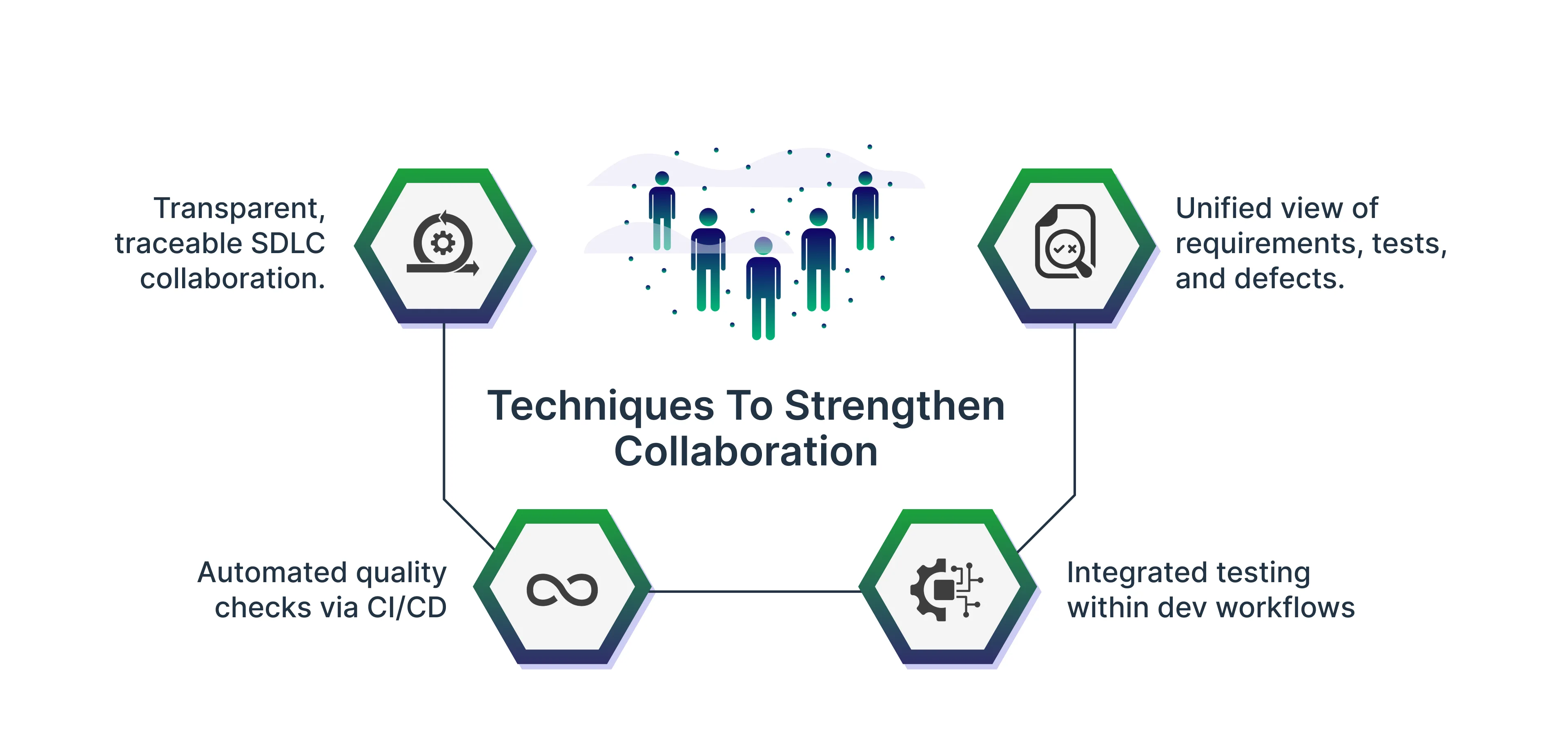
Selecting the right collaboration tools is essential for seamless and traceable Dev-QA collaboration. The modern software development environment relies on integrated platforms that act as a single source of truth for requirements, code, tests, and defects.
Project Management & Issue Tracking for Unified Visibility
Any Agile team has its central nervous system in the form of platforms to facilitate project management and issue tracking. Such tools as Jira, Trello, or others offer a common dashboard that will offer visibility of the whole SDLC, including the feature request and the final deployment.
- Integrated Test Management: Integrating test management systems (Test Cases, test runs) with the issue tracking system would relate the defects to the requirements they break. Such tools as Zephyr or TestRail may be directly integrated.
- Shared CI/CD Pipelines: With such tools as Jenkins, Travis CI, or Azure DevOps, which automatically execute tests on each commit, the quality gates are automatically applied to the developers.
- Version Control: Maintaining all code and test scripts in version control systems such as GitHub ensures that everyone is operating off the same source of truth for front-end/back-end changes.
This integrated process guarantees that software developers and the team of QA team have the same scope and priorities. This is transparency, which is the most important in providing reliable and professional web application development services to satisfy the needs of our clientele.
Conclusion: A Unified Path to High-Quality Custom Web Solutions
The success of any custom web application development services project hinges on the effectiveness of Dev-QA collaboration. At Frugal Testing, we believe that software quality assurance is a shared responsibility. By fostering deep integration through Shift-Left strategies, clear communication, structured Scrum frameworks, and unified tools, we transform the Dev-QA relationship into a powerful partnership based on teamwork.
For companies seeking a resilient, tailored digital platform, choosing a web development services company that champions this integrated development process is paramount. A strong QA–Developer collaboration is your ultimate guarantee of a superior final product, minimizing risk and maximizing your return on investment in web development and software solutions. Partner with Frugal Testing to experience the unparalleled quality that a unified team can deliver in your next web app development project.
People Also Ask (FAQs)
Q. What are some lightweight collaboration methods small teams can adopt without formal processes?
Ans. Daily 10-minute stand-ups, shared chat channels, and quick pair-testing sessions help small teams collaborate effectively without heavy workflows.
Q. How can teams maintain collaboration quality when working across different time zones?
Ans. By using clear handoff notes, async communication tools, and overlapping hours for critical discussions, teams can stay aligned across time zones.
Q. What metrics can help measure whether QA–Dev collaboration is actually improving outcomes?
Ans. Defect leakage rate, cycle time, bug reopen rate, and the speed of issue resolution are strong indicators of collaboration effectiveness.
Q. How should teams handle collaboration when project requirements change mid-development?
Ans. Teams should realign through quick refinement meetings, update acceptance criteria, and re-prioritize tasks to maintain clarity and flow.
Q. What common collaboration mistakes slow down delivery in custom web projects?
Ans. Poor communication, unclear requirements, delayed feedback, and working in isolated silos often create avoidable bottlenecks.