

Blockchain technology is no longer just a buzzword. From DeFi smart contracts to enterprise distributed ledger systems, organisations are building mission-critical applications on decentralised platforms. But here is the thing: deploying a blockchain application without rigorous testing is like minting an NFT collection with a reentrancy flaw in the mint function. By the time you notice, the funds are already gone, and the contract is immutable. One flaw in smart contract code can cost millions. Choosing the right testing vendor before you sign on the dotted line is one of the most important decisions a CTO, QA engineer, or DevOps lead will make.
.webp)
Why Evaluating Blockchain Testing Expertise Matters
Not every QA provider understands the unique demands of blockchain development. Unlike traditional software testing, blockchain testing must account for consensus mechanisms, cryptographic hashes, immutability, and decentralized networks. Evaluating a vendor's expertise carefully is not optional; it is a business necessity.
Risks of Poor Blockchain Testing, Including Security Breaches and Financial Loss
The consequences of inadequate blockchain security testing are well-documented. The infamous DAO hack of 2016 resulted in the theft of over $60 million worth of Ether due to a reentrancy attack, a vulnerability that proper smart contract audits could have caught (source: https://latorreattorney.medium.com/the-dao-hack-of-2016-ethereums-50-million-nightmare-and-its-lasting-impact-on-defi-law-and-ef0c494440d4). More recently, the Parity multi-sig wallet hack drained another $30 million due to undetected contract vulnerabilities (source: https://www.linkedin.com/pulse/158-million-lost-parity-multisig-wallet-hack-shook-world-varshney-4273c/). These are not isolated incidents. Poor application security testing leads to integer overflows, insecure random number generation, and logic errors that attackers exploit at scale. When blockchain applications handle real assets and automated transactions, a single oversight can trigger irreversible financial loss and permanent reputational damage.
Importance of Testing in Smart Contracts and Decentralized Applications
Smart contracts are the backbone of the DeFi ecosystem. Once deployed on Ethereum or BNB Chain, they cannot be modified, making pre-deployment testing absolutely critical. Functional testing of smart contract code must validate that every condition, loop, and transaction behaves exactly as intended. Beyond functionality, decentralized applications require performance testing to ensure the system holds up under real-world transaction loads. Tools like Certora Prover enable formal verification of contract logic, while Diligence Fuzzing stress-tests edge cases. Without thorough blockchain testing at every layer from the Ethereum Virtual Machine to Layer 2 networks teams are essentially deploying unverified code into a trustless environment where errors cannot be undone.
How Expert Blockchain Testers Differ from General QA Providers
A general QA provider may excel at web testing, API testing, and functional regression testing for traditional applications, but blockchain introduces an entirely different set of challenges. Expert blockchain testers understand distributed ledger technology at a protocol level. They know how Proof of Work consensus mechanisms affect transaction finality, how to analyze gas efficiency in Solidity, and how to detect vulnerabilities specific to token contracts. They use specialized security analysis tools and conduct manual code reviews alongside automated tools. A generic QA team running standard tooling on a DeFi protocol may miss a reentrancy vulnerability that a specialized blockchain testing team would detect during manual code review. In production, that difference can mean the gap between a secure launch and a drained smart contract.
Core Areas and Tools in Blockchain Testing
To evaluate a vendor effectively, you first need to understand what comprehensive blockchain testing actually covers. It spans multiple disciplines from functional validation and security auditing to performance benchmarking, each requiring its own toolkit and methodology.
.webp)
In Frugal Testing's smart contract audit engagements, access control flaws and reentrancy vulnerabilities account for over 65% of critical findings across DeFi, NFT, and enterprise blockchain applications. This highlights why deep manual review combined with automated tools is essential, and why vendor expertise in these specific vulnerability classes is non-negotiable.
Functional, Security, and Performance Testing in Blockchain
Three testing disciplines form the core of blockchain QA, each targeting a different failure class that the others cannot catch on their own:
Teams at Frugal Testing apply this layered model across every blockchain engagement because skipping any one layer leaves a class of defects undetected until production, where the cost of discovery is exponentially higher.
Common Tools and Frameworks Used in Blockchain Testing
A capable vendor should be fluent in industry-standard tooling. For API testing of blockchain endpoints, tools like Postman and APILayer help validate data flows and contract interactions. Unit testing frameworks such as Hardhat and Truffle allow developers to test smart contract functions in isolation. For CI/CD pipeline integration, continuous integration and continuous deployment workflows automate regression testing against every code commit. Security auditing relies on tools like Slither, MythX, and OpenZeppelin Contracts for static analysis. DevOps pipeline compatibility, including DevOps technologies like Docker and GitHub Actions, ensures testing fits seamlessly into your development lifecycle. A vendor who cannot demonstrate fluency with these tools is likely not operating at the level your blockchain project demands.
.webp)
Key Challenges in Testing Decentralized Systems
Testing decentralized systems is fundamentally harder than testing centralized applications. There is no single point of control; bugs can emerge from node interactions, consensus protocol edge cases, or cross-chain communication failures. Blockchain explorers help trace transaction behavior, but interpreting that data requires deep familiarity with the underlying protocol. Testing private blockchains introduces different access control concerns compared to public blockchains. Gas Consumption Analysis adds another dimension: inefficient Solidity gas optimization strategies can make a contract prohibitively expensive to use in production. Vendors need to demonstrate they understand these challenges, not just theoretically, but through hands-on experience resolving them in real projects.
.webp)
Essential Skills to Look for in a Blockchain Testing Vendor
Every credible blockchain testing vendor must demonstrate competence across three core areas. Assessing these before you sign any contract reduces the risk of costly mid-project surprises.
Technical Expertise in Blockchain Platforms and Smart Contract Development
A qualified vendor must have hands-on experience with major blockchain platforms: Ethereum smart contracts, Hedera Smart Contract Service, and Layer 2 networks like Arbitrum or Optimism. They should understand the Ethereum Virtual Machine, be proficient in Solidity, and know how decentralized oracle networks like Chainlink VRF introduce randomness-related risks. Experience with smart contract audit processes, including the use of the Common Weakness Enumeration framework for classifying vulnerabilities, is a strong positive signal. Ask to see evidence of past smart contract audits, not just generic application testing credentials. Technical depth in blockchain development, not just testing, separates vendors who truly understand the ecosystem from those who are learning on your project's budget.
Experience with Testing Methodologies, Automation, and QA Practices
Strong blockchain testing vendors combine software testing basics with advanced blockchain-specific practices. They should demonstrate proficiency in functional testing, regression testing, and fuzzing testing for smart contracts. Automation capability is non-negotiable; manual-only testing at scale is neither efficient nor reliable. Look for experience with CI/CD pipeline integration that enables continuous integration across every development sprint. Familiarity with QA testing methodologies, including exploratory testing, automated tools, and transaction monitoring, signals a mature testing practice. Vendors who can articulate how they integrate QA testing into DevOps pipelines and development workflows, rather than treating testing as a final-stage checkbox, are the ones who will actually protect your project.
Strong Focus on Security Vulnerabilities and Risk Handling
Every DeFi protocol that has lost funds to exploits shares a common gap: security testing was treated as a phase rather than a continuous discipline throughout development. The vendor must have a proven track record in pentesting services, vulnerability assessments, and smart contract audits. Experience with bug bounty programs and Capture The Flag competitions demonstrates proactive engagement with the security community. They should be able to identify and remediate multisignature account vulnerabilities, logic errors in token contracts, and risks specific to virtual asset service providers. A vendor without a dedicated security practice, one that treats security testing as an afterthought rather than a continuous priority, is a liability for any blockchain project involving real financial value.
How to Evaluate a Blockchain Testing Vendor Effectively
Evaluation is not just about reading a vendor's website. It requires structured due diligence across their track record, tooling, and communication under pressure. Here is how to do it right.
Reviewing Past Projects, Case Studies, and Audit Reports
Request detailed case studies from previous blockchain engagements, not marketing summaries, but actual audit reports that show how they approached smart contract code review, what vulnerabilities they found, and how they documented their findings. Look for evidence of work on DeFi smart contracts, distributed ledger technology implementations, or enterprise blockchain applications. Ask whether they have experience with risk analytics, cross-chain tracing, or entity attribution. Past performance is the strongest predictor of future execution. If a vendor cannot provide concrete proof of prior blockchain testing work, that gap tells you everything you need to know about their actual capabilities.
Assessing Tools, Technologies, and Testing Frameworks Used
Walk through the vendor's toolchain in detail. Do they use Postman and API security tools for blockchain API testing? Can they demonstrate CI/CD integration with your existing DevOps pipeline? Do they employ formal verification tools like Certora Prover alongside dynamic analysis? Are they familiar with blockchain-based contract verification and audit tools specific to the DeFi ecosystem? A vendor who relies solely on generic software testing services tools, without blockchain-specific instruments, will miss the vulnerabilities that matter most. The right vendor adapts their toolkit to your blockchain landscape, not the other way around.
Asking the Right Questions to Validate Expertise
During vendor interviews, three questions consistently separate genuine blockchain testing expertise from surface-level familiarity: "Walk me through how you would test a Solidity token contract for integer overflows, step by step." "How do you approach gas optimization analysis on a high-frequency DeFi protocol, and what tools do you use?" "Show me a real audit report and explain how you classified severity for each finding." How a vendor answers these questions, with specifics, tooling references, and documented examples, reveals more than any proposal or credentials slide. The answers either confirm expertise or expose its absence.
Security, Compliance, and Contract Considerations
Before any contract is signed, security standards and legal safeguards must be front and center. This phase of evaluation is where many organisations cut corners and later pay the price.
.webp)
Security Standards, Compliance, and Risk Management Practices
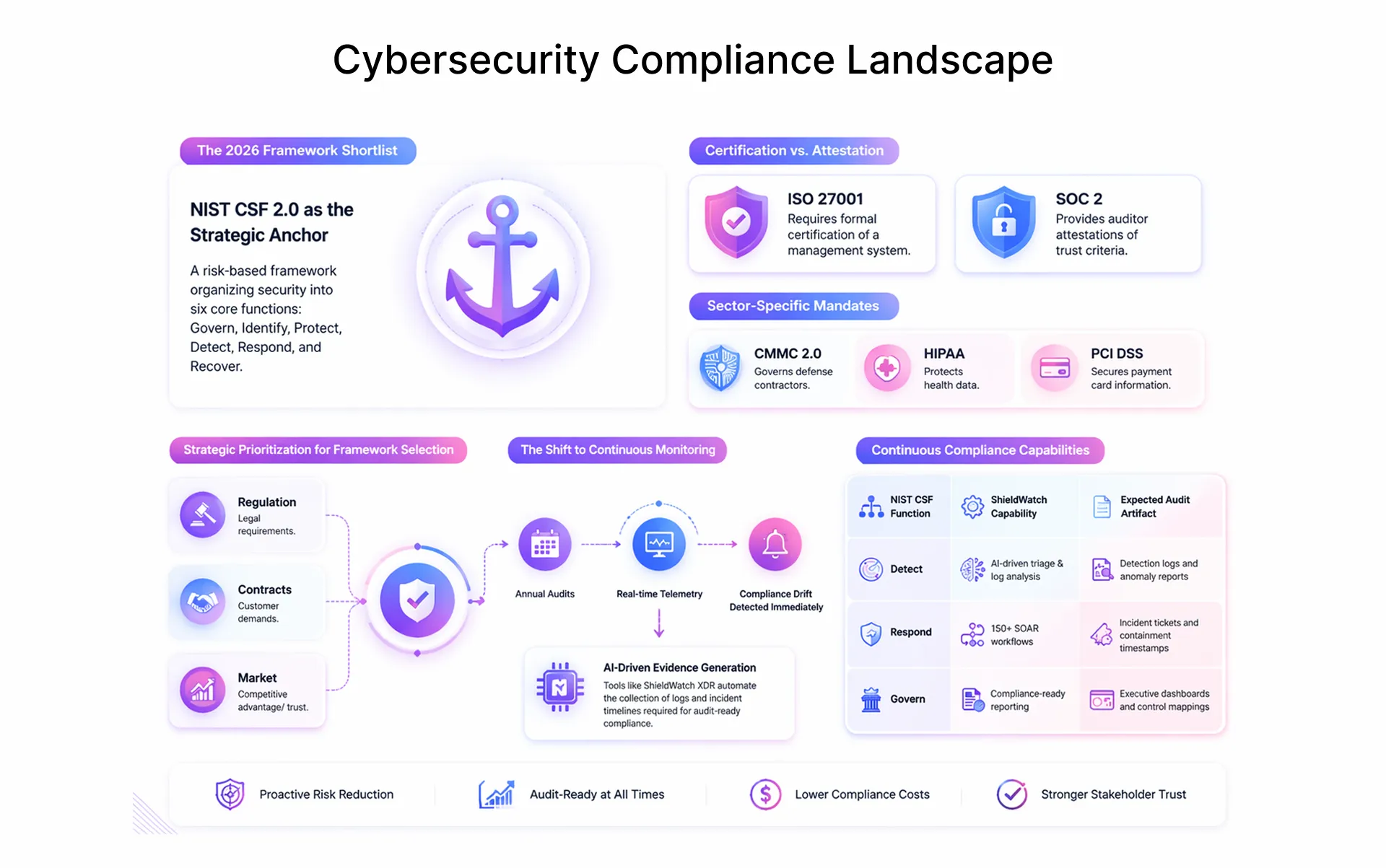
A credible vendor must demonstrate alignment with established security standards and regulatory expectations. This includes familiarity with sanctions screening requirements for virtual asset service providers, wallet cluster analysis, and intelligence platform integrations for compliance-heavy blockchain deployments. They should have clear risk management practices that document how they identify, prioritize, and remediate security vulnerabilities. For enterprise clients, ISO 27001 alignment and GDPR compliance are baseline expectations. Vendors without documented security measures and compliance frameworks represent an unacceptable operational risk.
Role of Vulnerability Assessments and Penetration Testing
Vulnerability assessments and penetration testing are not optional extras for blockchain applications; they are core deliverables. Penetration testing of blockchain nodes and consensus protocol endpoints, application security testing of the web and mobile layers, and API security assessments must be standard components of any engagement. A vendor should be able to describe their methodology for pentesting services, whether they follow OWASP standards, conduct network-level security testing, or perform targeted API security assessments against your blockchain's endpoints. According to the Chainalysis 2023 Crypto Crime Report (https://www.chainalysis.com/blog/2023-crypto-crime-report-introduction/), crypto hacks caused over $3.8 billion in losses in 2022 alone. The cost of skipping thorough security testing is simply not justifiable for any serious blockchain project.
Key Contract Clauses, SLAs, and Accountability Checks
The contract itself is a critical risk management tool. Ensure it includes clearly defined Non-Disclosure Agreements covering all audit findings and proprietary smart contract code. The Master Service Agreement should specify deliverables, timelines, payment terms, and intellectual property ownership of test outputs. Confidentiality clauses must explicitly cover any sensitive blockchain architecture details shared during the engagement. Define warranty protocols for post-deployment issues discovered after audit completion. AI-powered contract review tools can assist legal departments in identifying ambiguous language, but human review by counsel familiar with Software License Agreements in the blockchain space remains essential. Dispute resolution clauses should be unambiguous; knowing how disagreements are handled before they arise saves enormous friction later.
Final Checklist Before Signing a Vendor Contract
You have done your research, asked the hard questions, and reviewed the legal framework. Before you finalize the agreement, run through this numbered checklist to confirm nothing critical has been missed:
- Define scope explicitly and confirm it covers functional, security, performance, and regression testing.
- Review real audit reports and case studies from previous blockchain engagements, not marketing summaries.
- Verify CI/CD pipeline integration and compatibility with your existing DevOps toolchain.
- Confirm SLA terms, including response times for critical vulnerability disclosures and remediation support.
- Validate security practices, including penetration testing, vulnerability assessments, and smart contract audits.
- Check compliance alignment covering ISO 27001, GDPR, or sector-specific regulatory requirements as applicable.
- Run a time-boxed pilot audit on a real module before committing to a long-term engagement.
Verifying Deliverables, Timelines, and Scope of Work
Confirm that the scope of work explicitly covers all required testing types: functional testing, security auditing, performance benchmarking, and regression testing. Timelines should map to your deployment schedule with a buffer for remediation cycles. Deliverables must include a detailed audit report, not just a pass/fail summary; you need documentation of every finding, its severity, and the recommended fix. Ensure the contract specifies whether re-testing after remediation is included. Vague scope definitions are the leading cause of post-signature disputes. Real-time updates and milestone check-ins should be written into the engagement model so you always know where the testing process stands.
Checking Communication, Support, and Client Feedback
Operational compatibility matters as much as technical capability. Verify that the vendor's communication practices align with your team's working model, whether that is daily standups, async updates via Slack, or weekly written reports. Confirm SLA response times for critical vulnerability disclosures during active testing. Request references from past clients who worked on similar blockchain applications and ask specific questions about communication quality and responsiveness under pressure. Use platforms like Clutch and G2 for independently verified client feedback. A vendor who communicates poorly during the sales process will not magically improve once the contract is signed.
Final Validation Before Making the Decision
Before you sign, run a time-boxed pilot engagement if at all possible. Give the vendor a constrained piece of smart contract code or a sample dApp component to audit. Evaluate not just what they find, but how they document, communicate, and prioritize their findings. This pilot is the single most reliable validation method available. It removes assumptions and replaces them with direct, evidence-based confidence. At Frugal Testing, this pilot-first approach is consistently recommended to clients before any long-term vendor commitment, because the only true test of a testing vendor is the work itself.
Conclusion: Making a Confident Vendor Decision
Making the right choice in a blockchain testing vendor requires a structured and evidence-based approach. From evaluating technical expertise and audit capabilities to reviewing tools, compliance practices, and contract clarity, each step reduces risk and improves outcomes.
How to Make a Confident Vendor Decision
The evaluation framework in this guide, covering smart contract audit depth, toolchain fluency across CI/CD and security testing, SLA scrutiny, and compliance alignment, gives CTOs, QA engineers, and DevOps leads a repeatable process for cutting through vendor marketing and making decisions grounded in verified capability. Expertise over cost is not a preference; it is the only rational posture when deploying immutable code that handles real financial assets. The DAO hack, the Parity wallet exploit, and every major DeFi loss since share a common thread: inadequate testing before deployment.
At Frugal Testing, a pilot-first approach is strongly recommended before any long-term commitment. Testing a vendor on a real smart contract or application module provides direct insight into their expertise, communication, and reliability, ensuring your final decision is based on proven performance, not assumptions.
People Also Ask (FAQs)
Q1.What Should I Look for in a Blockchain Testing Vendor?
Ans: Look for strong expertise in smart contract audits, experience with platforms like Ethereum or BNB Chain, a solid security testing and CI/CD toolchain, and real audit reports as proof of capability. Generic QA credentials without blockchain-specific evidence are not sufficient.
Q2.Why Is Security Testing Important in Blockchain?
Ans: Because blockchain is immutable, vulnerabilities cannot be fixed after deployment. Security testing, including penetration testing, vulnerability assessments, and smart contract audits, helps detect issues like reentrancy attacks and integer overflows before they cause irreversible financial loss.
Q3.What Are the Most Common Mistakes When Choosing a Blockchain Testing Vendor?
Ans: The most common mistake when choosing a blockchain testing vendor is selecting based on price over expertise. Other frequent errors include accepting generic QA credentials without blockchain-specific audit evidence, skipping the pilot engagement phase, and relying on general QA teams that lack smart contract security knowledge.
Q4.What Tools Are Used in Blockchain Testing?
Ans: Common tools include Hardhat and Truffle for unit testing, Slither and MythX for automated security analysis, Certora Prover for formal verification, Diligence Fuzzing for fuzz testing, Postman for API testing, and CI/CD pipeline tools for continuous integration and regression automation.
Q5.What Certifications or Qualifications Should a Blockchain Testing Vendor Have?
Ans: For blockchain testing vendors, published audit reports and security community participation are stronger qualifications than certifications alone. Look for vendors with documented findings, bug bounty contributions, and active participation in security communities like Capture The Flag programs.