


Introduction to API Testing and Contract Testing
With the advent of microservices architecture within organizations, reliable communication between APIs has become a major priority area for QA engineers/teams.
If we go through the Postman State of the API Report, it is sure that more than 89% of developers are using APIs to create new applications.This is a clear indication of how important it is to ensure reliable API validation to ensure software application quality. By using API testing and contract testing tools like Pact, Spring Cloud Contract, and Dredd, any organization can maintain reliable communication between the microservices developed by different teams and domains.
Importance of API Contract Testing in Modern Software Development
The service contracts in a microservices architecture are not always clearly defined or verified before implementation.
- Consumer applications depend on stable API client interfaces.
- Providers update APIs frequently, introducing potential API changes.
- Contract testing ensures both consumer contracts and provider implementations remain aligned.
- QA engineers are able to detect issues before full integration testing or end-to-end integrated testing.
According to experts such as Martin Fowler, CDCT plays a crucial role in ensuring the success of a large distributed system.
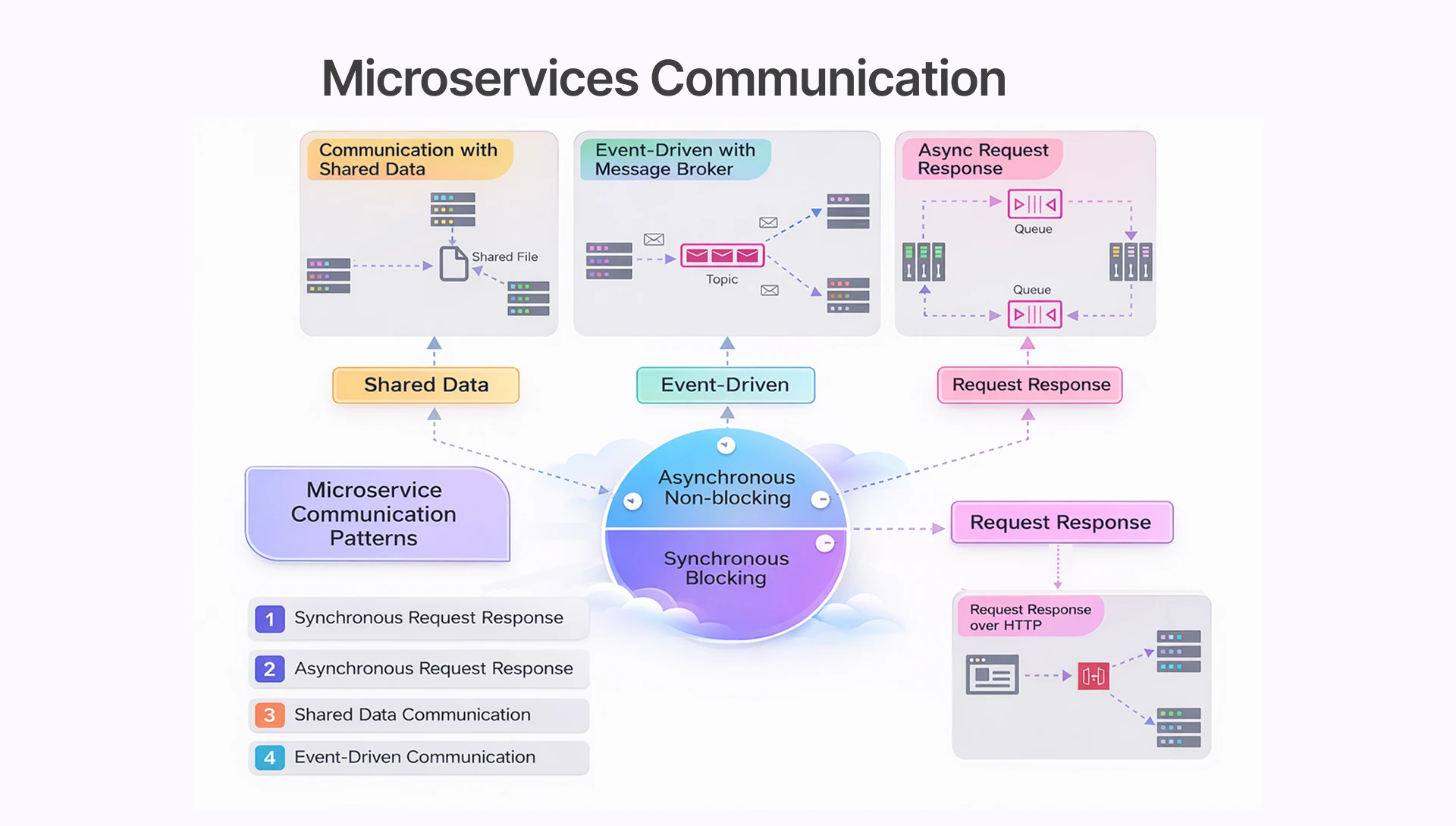
Industry studies on distributed systems reliability show that many system failures originate from communication and integration issues between services, highlighting the importance of contract validation in microservices environments. At Frugal Testing, teams implementing automated software testing services often integrate contract testing frameworks like Pact to strengthen API reliability in modern SDLC environments.
Key Components of API Contract Testing
In order to understand how contract testing works, it is important to identify the main components that define how the service interacts.
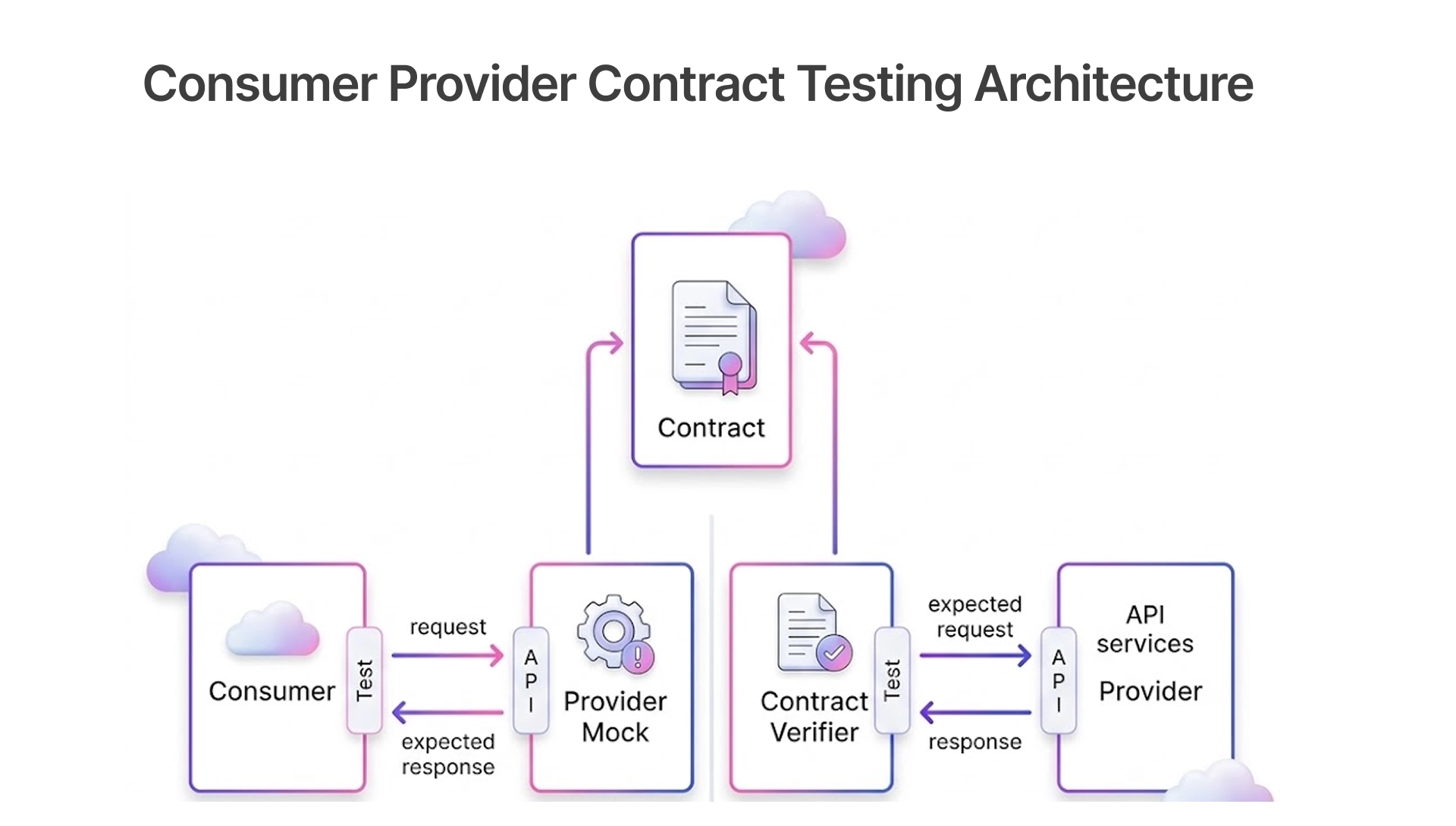
If the implementation is correct, the contract tests can be used as a security net between two services. In addition to using the UI tests and the E2E tests, the engineers can use the Test Pyramid approach.
Why API Integration Failures Happen Without Contract Testing?
Without using the contract tests, the APIs will be unable to integrate. In large microservice systems, these problems can remain undetected until late-stage integration testing.
- Version mismatches occur across multiple environments.
- Lack of communication between teams leads to mismatched expectations.
Research from IBM suggests that integration complexity in large enterprise systems can significantly increase maintenance costs and operational overhead. As organizations scale their applications across multiple services, managing dependencies between APIs becomes more challenging.
How Contract Testing Improves Software Quality
For QA engineers managing web application testing automation, contract tests act as lightweight integration checks within the Test Pyramid. Organizations implementing contract testing often reduce integration-related defects significantly by detecting mismatches earlier in CI pipelines. Companies like Frugal Testing integrate contract testing into software testing and quality assurance services, enabling teams to maintain high API reliability even as systems scale across multiple services and environments.
How Pact Validates API Contracts Between Consumers and Providers?
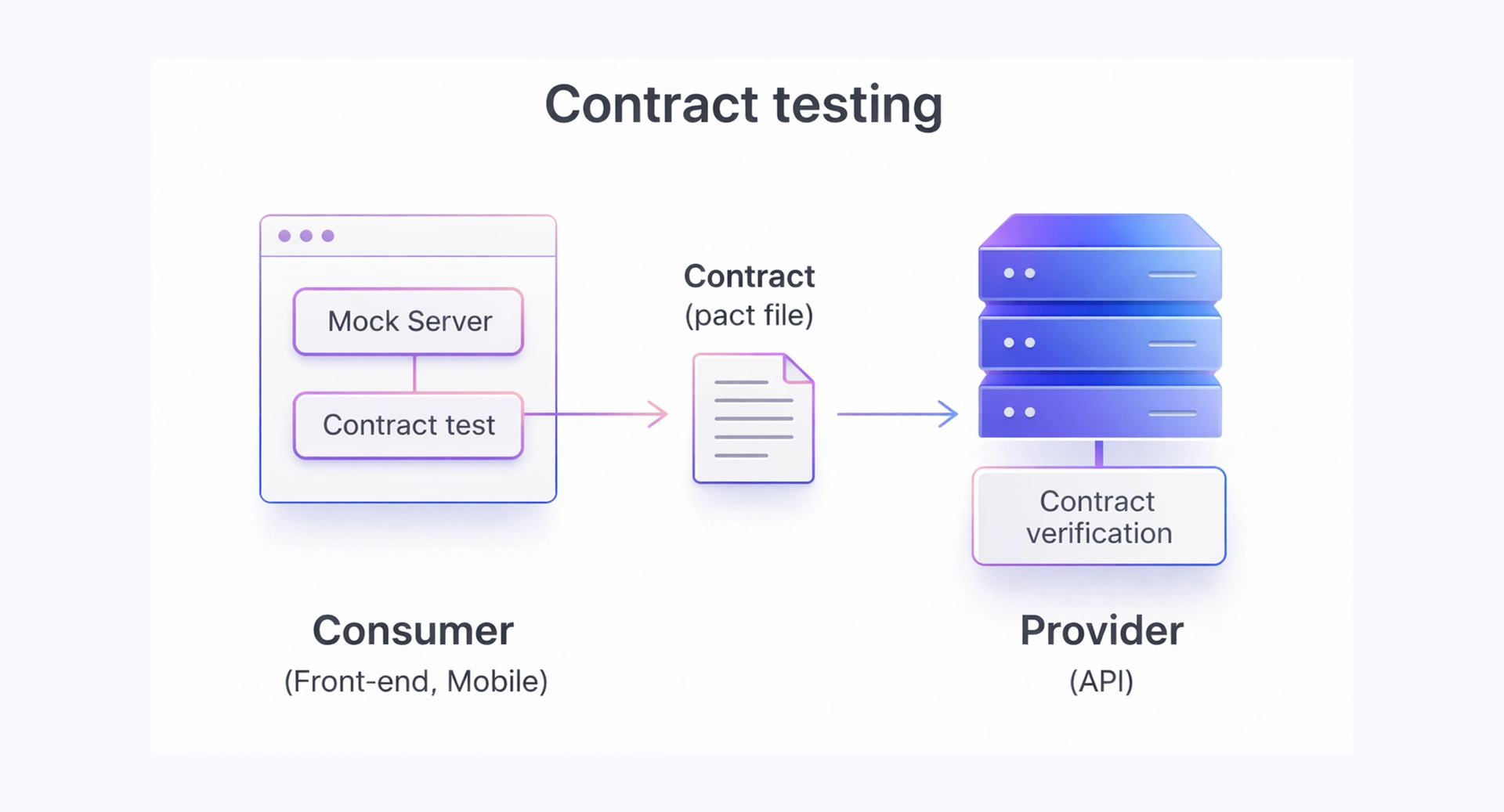
Pact is the leading open-source tool for implementing contract tests in QA automation. It enables Quality Assurance teams to verify API interactions through consumer-driven contracts in JSON file format.
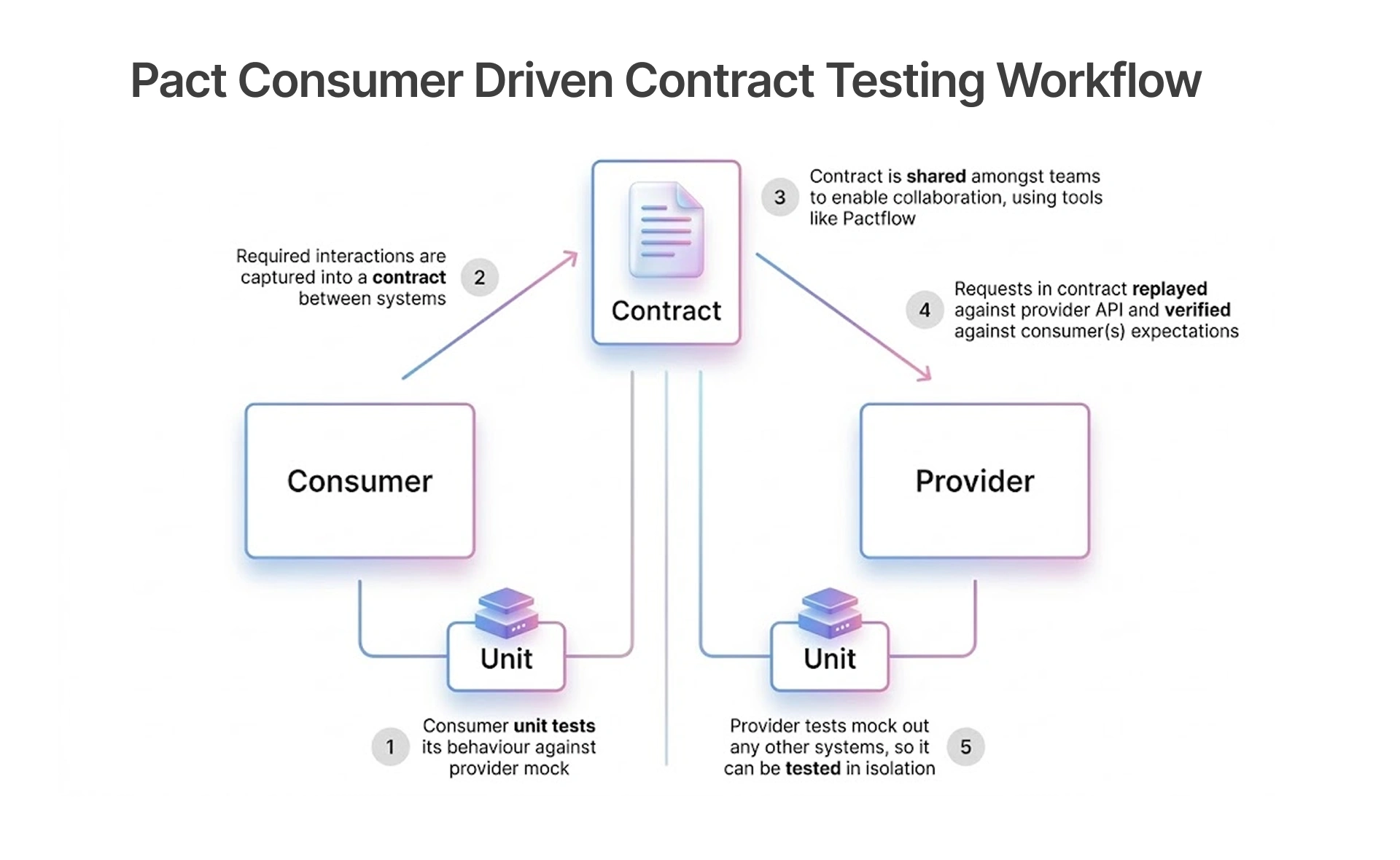
- Consumers define expected interactions with APIs.
- Contracts are stored and shared via a Pact Broker or Pactflow.
- Providers verify these contracts against actual implementations.
- Failed contracts trigger alerts through tools like Slack.
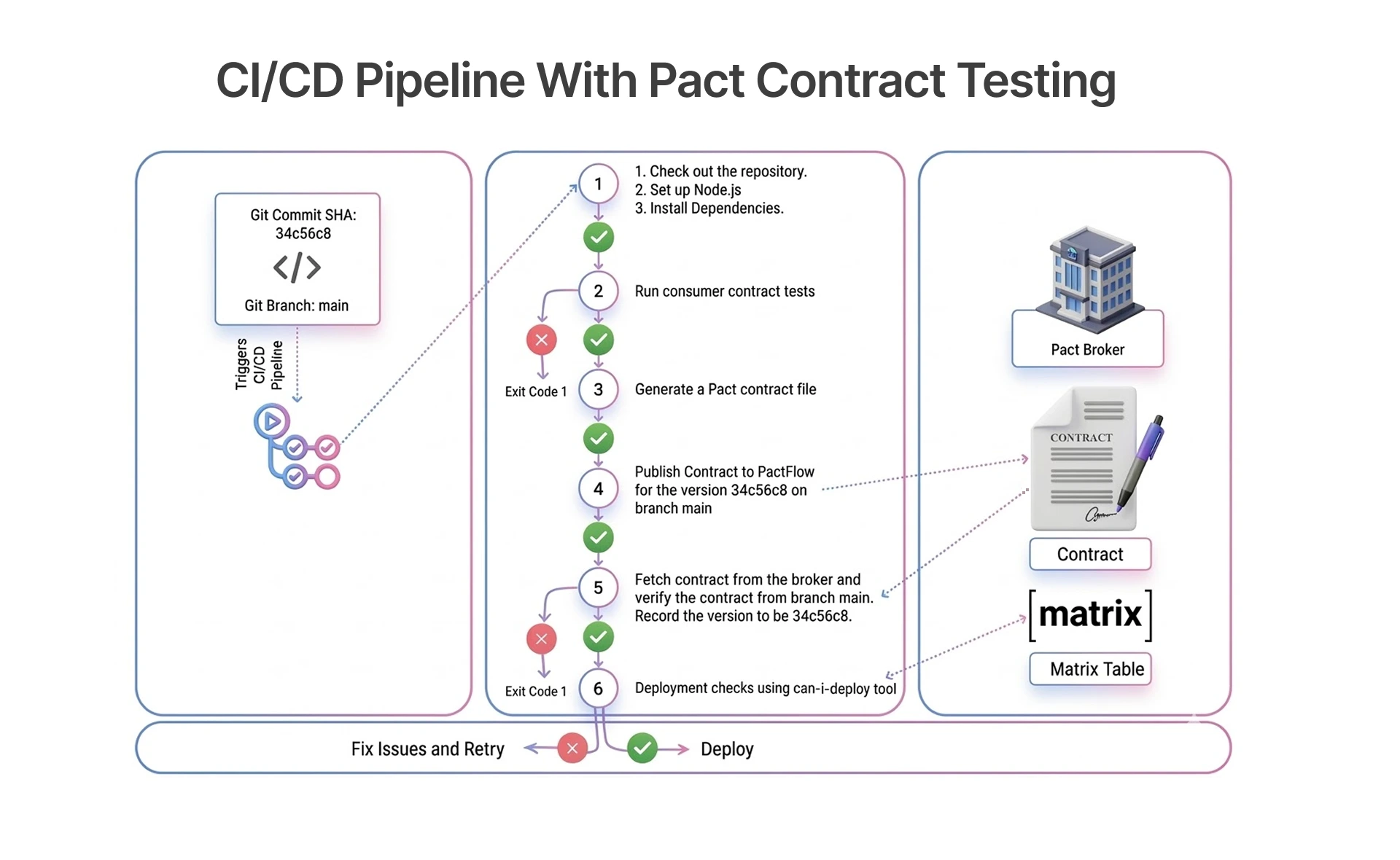
Pact integrates easily with modern CI/CD pipelines, allowing teams to automate contract validation during development and deployment.
Pact Workflow: Consumer Tests and Provider Verification
The workflow is generally constructed around two critical processes: Consumer Tests and Provider verification. These steps ensure that both sides of the API interaction remain consistent.
- Consumers are the ones who write tests that generate consumer contracts.
- Contracts are used to define request and response pairs for API endpoints.
- JSON Pact files are published to a Pact Broker.
- Providers run verification tests against the stored contracts.
- Verification results confirm compatibility between services.
Here is an example of Pact Consumer Test through Node.js Environment.
const { Pact } = require('@pact-foundation/pact');
const axios = require('axios');
const provider = new Pact({
  consumer: 'OrderService',
  provider: 'PaymentService'
});
describe('Pact Contract Test', () => {

  beforeAll(() => provider.setup());

  afterAll(() => provider.finalize());

  it('returns payment details', async () => {

    await provider.addInteraction({
      state: 'payment exists',
      uponReceiving: 'a request for payment',
      withRequest: {
        method: 'GET',
        path: '/payment/100'
      },
      willRespondWith: {
        status: 200,
        body: {
          id: 100,
          status: 'success'
        }
      }
    });
    const response = await axios.get(`${provider.mockService.baseUrl}/payment/100`);
    expect(response.data.status).toEqual('success');
  });
});
Explanation of the Test
1. Setting up the Pact Mock Server
beforeAll(() => provider.setup());It starts a mock server just before the test runs and the mock server then simulates the provider service.
2. Defining the Interaction
await provider.addInteraction({
 state: 'payment exists',
 uponReceiving: 'a request for payment',
Expected scenarios.-
state → This is Provider's state before the request.
uponReceiving → This is the Description of the incoming request.
3. Defining the Consumer Request
withRequest: {
 method: 'GET',
 path: '/payment/100'
}
It is used to define the API request that the consumer will send.
4. Defining the Provider Response
willRespondWith: {
 status: 200,
 body: {
   id: 100,
   status: 'success'
 }
}
Certainly defines the expected response from the provider service.
5. Sending Request to Mock Server5
const response = await axios.get(`${provider.mockService.baseUrl}/payment/100`);Request sent by Axios to the mock server created by Pact instead of the real provider.
6. Validating the Response
expect(response.data.status).toEqual('success');7. Finalizing the Pact Test
afterAll(() => provider.finalize());8.JSON Contract File
{
  "consumer": { "name": "OrderService" },
  "provider": { "name": "PaymentService" },
  "interactions": [
    {
      "description": "request payment details",
      "request": {
        "method": "GET",
        "path": "/payment/100"
      },
      "response": {
        "status": 200,
        "body": {
          "id": 100,
          "status": "success"
        }
      }
    }
  ]
}
Pact Process in Consumer-Driven Contract Testing
In Consumer-Driven Contract Testing (CDCT), the focus is on the consumers rather than the providers. This methodology is used in enterprise application software, where there are a number of consumers for the API.
Understanding Consumer-Driven Contract Testing (CDCT)
- Consumer teams write tests using frameworks like Mocha, Jasmine, or REST-assured.
- These Tests generate contract files describing expected API responses.
- After that, Providers validate these contracts during build pipelines.
- Contracts ensure backward compatibility during API changes.
- Contract failures prevent incompatible deployments.
Many organizations implementing automated QA testing now adopt CDCT to maintain reliability in fast-moving development environments.
Benefits of Using Pact for QA Engineers
Pact has several benefits for QA engineers in a modern distributed system. Pact makes testing more efficient and reduces the complexity of integration environments. Pact also integrates well with modern application stacks, such as Node.js, Spring Boot, and Docker. This makes Pact a perfect fit in a modern application stack. At Frugal Testing, QA engineers use Pact in their ecosystem of testing tools for improved reliability in complex systems.
Improving Automation in API Testing
Automation is essential for modern QA teams managing complex APIs and distributed services.
- Pact integrates with automation testing frameworks.
- Supports automated schema validation and contract verification.
- Reduces manual API validation efforts.
- Improves test coverage for REST API endpoints.
- Enables faster regression testing cycles.
Therefore, by integrating this process with qa test management tools and CI tools, QA engineers are able to ensure proper APIs in distributed systems without having to use APIs extensively.
Organizations offering software testing and quality assurance services, including Frugal Testing, often implement Pact-based workflows to minimize integration risks in distributed architectures.
Setting Up Pact for API Contract Testing
Installing and Configuring Pact
Install Pact for Node.js
npm install @pact-foundation/pact --save-devInstall Pact for Java (Maven)
<dependency>
 <groupId>au.com.dius.pact</groupId>
 <artifactId>consumer</artifactId>
 <version>4.3.0</version>
</dependency>
Once the setup is complete, QA engineers can maintain contract tests alongside existing unit and integration tests.
Integrating Pact with QA Automation Testing Tools
Pact integrates with many popular qa automation testing tools and frameworks used in modern development environments.
- Integrates with Postman API testing workflows.
- Works with Selenium, ReadyAPI, and TestComplete.
- Supports API validation frameworks like REST-assured.
- Works well with CI/CD tools such as CircleCI and Jenkins.
- Supports containerized environments with Docker.
Thus, engineers are able to integrate contract tests with their existing testing tools.
Therefore, organizations providing automated software testing services are able to improve their efficiency without having to use existing tools.
Writing and Managing API Contracts with Pact
Creating Consumer Contracts
Consumer contracts involve how to communicate with APIs, which include parameters for requests, data formats, and authentication details.
- Define API endpoints and responses.
- Use schema validation to ensure consistent data formats.
- Simulate API behavior using test doubles or stubs.
- Generate contract files for provider verification.
Consumer contracts are used as a linkage between consumer and provider teams. Therefore, when implemented correctly, it ensures that there are no integration issues, thus speeding up development.
Validating Provider Contracts
Provider verification ensures that APIs fulfill the expectations defined by consumers.
- Providers run automated verification tests.
- Contract violations results in alerts and pipeline failures.
- Verification results are stored in Pact Broker dashboards.
- Teams track compatibility across multiple services.
- Automated feedback improves collaboration between teams.
Integrating Pact with Testing and CI/CD Tools
Contract testing, when integrated with CI/CD pipelines, can automatically verify the compatibility of APIs during the build process and provide immediate feedback to developers. This can help to identify integration problems and ensure communication between services in microservices-based systems.
Best Practices for API Contract Testing
It is important to implement the contract testing successfully by following industry best practices. It is also important to ensure that the contract is small and specific in nature so that it is easier to maintain. There is also the importance of avoiding the specification of the test results so that the tests do not break easily. There is also the importance of versioning the test so that it is easier during the release. There is also the importance of maintaining communication between the consumer and the provider so that the two can work together.
Managing Contract Versions Effectively
Version management is critical when multiple services depend on shared APIs.
- Maintain versioned contracts in the Pact Broker.
- Track verification results across releases.
- Deprecate outdated contracts gradually.
- Ensure backward compatibility for consumers.
- Use CI pipelines to validate contract versions.
Effective version management helps teams scale contract testing across large microservice ecosystems.
Common Challenges in Contract Testing
Although there are benefits of using contract testing, there are challenges that are associated with the implementation of contract testing. These challenges include managing contract updates for large microservices architecture, managing API changes, and synchronization between the consumer and provider teams.
Handling Contract Changes in Microservices
Frequent API updates can create conflicts between consumer and provider teams.
- Manage a clear communication channels between teams.
- Use contract versioning to manage changes safely.
- Update consumer tests before deploying provider changes.
- Validate contracts in staging environments.
- Monitor verification results across pipelines.
This structured approach ensures the smooth evolution of APIs without breaking integrations.
Future of API Testing and Automation
This is because cloud-native platforms and SaaS applications have led to a proliferation of APIs and service dependencies in modern applications. This has meant that teams have to use testing strategies that are scalable for distributed systems.
Growing Importance of Contract Testing in Microservices
Contract testing is rapidly becoming a standard practice in microservices architectures due to its scalability and efficiency.
- It enables independent development across teams.
- This also ensures stable communication between services.
- Reducing integration risks in distributed systems is a major point.
- Supporting faster deployments and CI/CD pipelines.
- Improving overall software quality assurance plays a crucial role.
Industry trends show that AI in testing automation and contract-testing frameworks will continue evolving to support exponentially increasing complex systems.
Conclusion: Improving API Quality with Pact
When integrated into QA automated pipelines, it enables teams that use microservices to ensure that services are always compatible by continuously testing for it. This minimizes integration problems while enabling quicker releases without depending on intricate end-to-end tests.By using Pact contract tests, organizations can develop robust software that is able to handle quicker development cycles as well as improved quality.
Why QA Engineers Should Adopt Pact
QA engineers looking to improve their qa automation testing and API reliability may want to look at implementing Pact in their applications.
Need help improving your API testing strategy? Frugal Testing’s QA experts help teams implement reliable contract testing and automation frameworks using tools like Pact. Reach out to learn how you can build more stable and scalable API testing workflows.
People Also Ask (FAQs)
Q1.What are some ways that QA automation services can help us reduce API integration problems?
Ans: QA automation services can help us identify potential mismatches between APIs by incorporating automated tests into a CI/CD pipeline. This allows us to test potential mismatches between APIs.
Q2.Can contract testing be integrated into our existing testing framework?
Ans: Yes. Contract testing tools like Pact can be integrated into existing testing frameworks. This means that we can leverage existing testing infrastructure while still taking advantage of contract testing.
Q3.How do professional QA testing services help us implement a microservices architecture?
Ans: Professional QA testing services can help us implement automated API testing, contract testing, and integration validation to ensure that services are able to communicate freely.
Q4.What are some challenges that businesses face if they are not using contract testing?
Ans: Businesses face a challenge if they are not using contract testing. For example, changes to APIs can cause dependent services to break without notice.
Q5.What is the benefit of outsourcing the testing of APIs to our development teams?
Ans: By outsourcing the testing of APIs to QA teams, the development teams within the company will be able to focus on adding features to the application.