

A fintech company came to us with a familiar problem: Forty API endpoints were checked by hand before every release, yet a broken auth header still shipped when one check was skipped under deadline pressure. That gap is the real difference between manual and automated testing for Application Programming Interfaces (API), and the split decides how often such mistakes slip through.
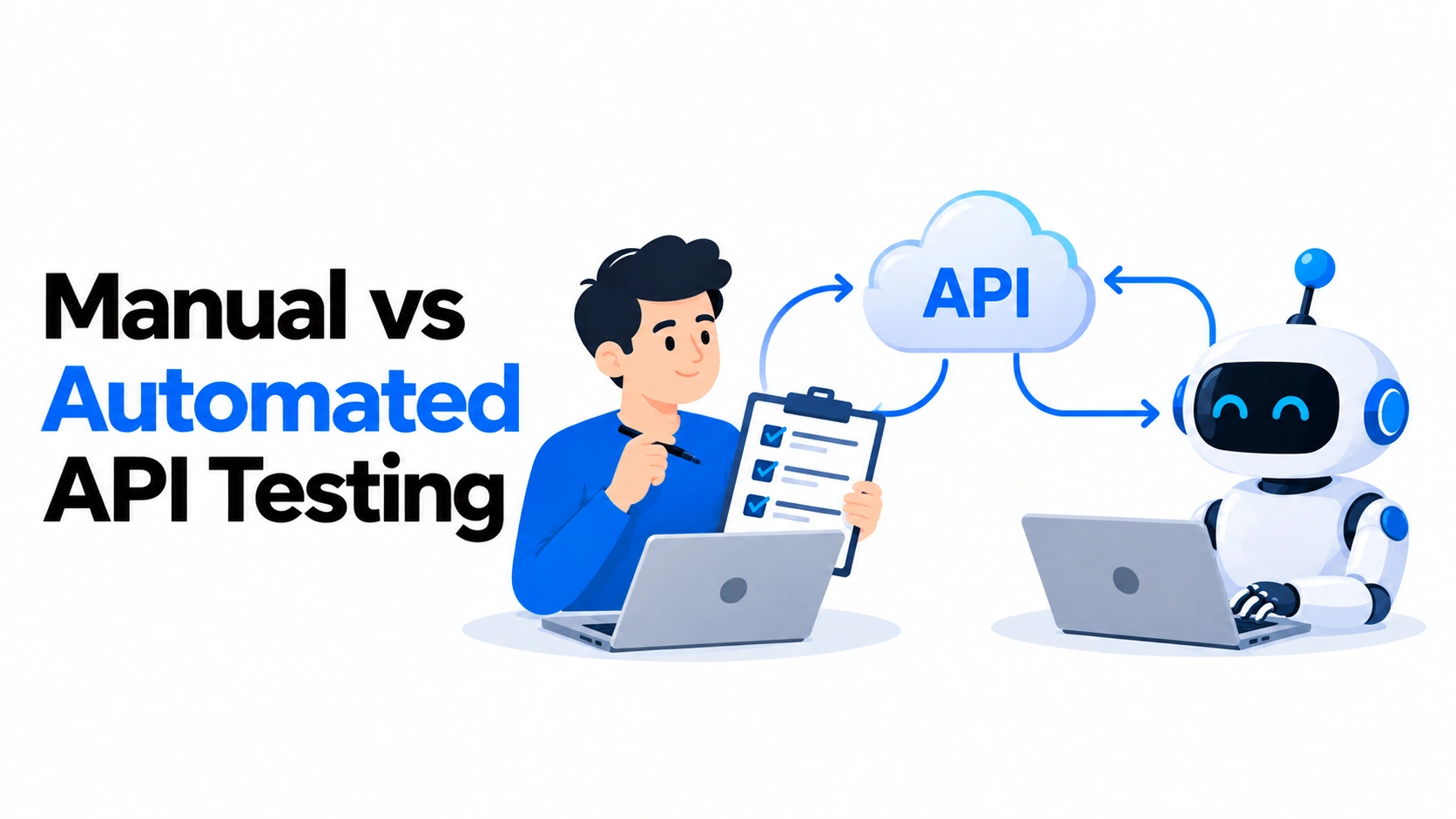
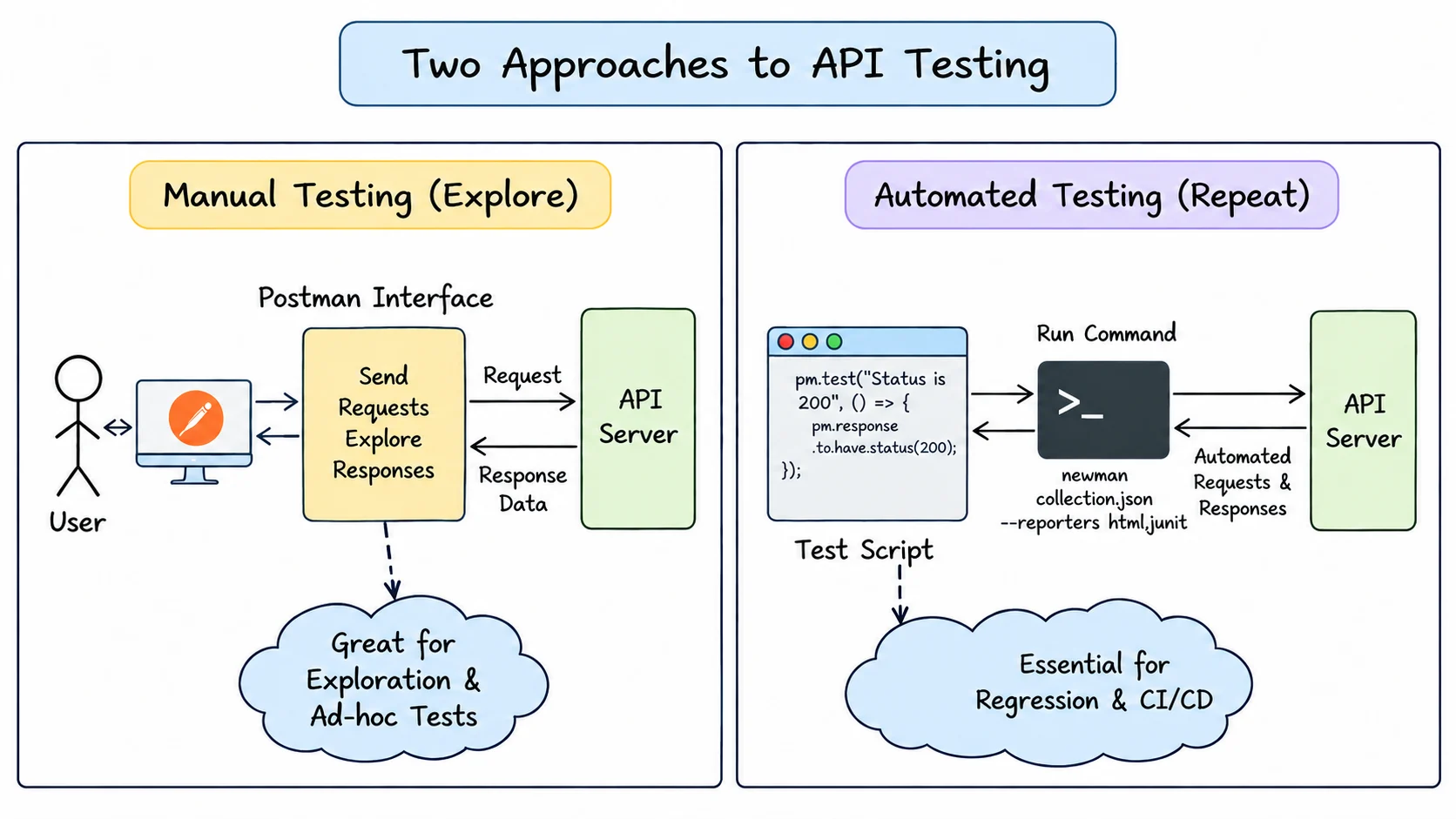
Manual API testing means a person sends requests and judges each response, usually in Postman or cURL, while automated API testing runs scripted checks with frameworks such as REST Assured or Karate on every build. We lean on manual testing to explore changing API endpoints, and rely on test automation for repeatable regression and CI/CD checks.
What Is API Testing?
API testing validates requests, API responses, HTTP status codes, headers, and data contracts at the service layer, without going through the user interface. One defect in a shared endpoint reaches every application, mobile client, and partner integration that calls it, quietly multiplying the damage across the whole product.
Postman's 2025 State of the API Report found 65% of organisations now generate revenue directly from their APIs, making what is api testing a commercial question, not just an engineering checklist confined to a narrow test scope.
What Manual API Testing Involves
Manual API testing puts a person in the loop, using judgment a fixed script does not have.
- Builds and sends a request in Postman or cURL against a test environment.
- Reads the status code, headers, and body against the API documentation.
- Decides the next move based on what the response actually shows.
That judgment catches problems nobody wrote down, such as a field that should never appear.
What Automated API Testing Involves
API automation testing, one answer to what is test automation in software, replaces that person with API test scripts that run the same checks on every commit, without anyone watching.
- Chooses a test automation framework and test automation tools that match the stack.
- Manages test data through data-driven testing, running one script against many input sets.
- Mocking an API response from slow or unreliable third-party dependencies.
- Maintains scripts as API changes ripple through the suite.
GitHub Copilot can draft these scripts faster than typing by hand, but a person still decides what is worth asserting.
Manual vs Automated API Testing: Key Differences at a Glance
The main difference between manual and automated testing is who runs and judges each check; the rest of the automation vs manual debate follows from that.
Speed is not the real difference; judgement is. A script confirms a 400 response a thousand times and never notices an error body leaking an internal table name.
When Manual API Testing Is the Right Choice
Manual testing is a deliberate choice in specific situations, not a fallback for teams that have not gotten around to automating. It fits wherever judgement matters more than repetition, particularly while an endpoint is still new or its behaviour is not yet fully agreed.
Exploring New or Undocumented Endpoints
New endpoints rarely match their documentation in week one. Our testers probe for unexpected fields, missing validation, and odd sequencing, such as calling 'confirm' before 'create'. This kind of ad hoc API testing finds defects that later shape what actually gets automated, once the real behaviour is understood well enough to script.
Testing APIs That Change Frequently
Scripting around API changes that happen every sprint creates maintenance work with little return, since each assertion goes stale almost as fast as it is written. Our signal for when to stop testing manually: Wait until the schema holds steady for two or three releases before automating that endpoint.
Checking Error Messages and Edge Cases
Some checks need a human reader, since they affect developer user experience as much as raw logic. Is the error message clear enough for an integrating developer to act on? Does a 4xx response leak a stack trace it should not? Once that behaviour is agreed and stable, several of these checks move into automation.
When Automated API Testing Is the Right Choice
Automated API testing is the right choice for anything that must run on every single build, where consistency beats fresh judgement. If a check does not change release to release, a script should be running it, not a person.
Running Regression Tests Across Releases
What is regression testing? Regression testing re-validates existing endpoints after every change so old behaviour does not silently break; the regression testing meaning and regression testing definition both come down to one idea: Confirm what already worked still works.
- Catches breakage introduced by unrelated code changes elsewhere in the codebase.
- Runs the same regression tests on every build without skipping any under deadline pressure.
- Prevents API tests that fail before production because nobody re-ran them after a dependency upgrade.
Done by hand, these checks are the first thing cut when a release runs late.
Testing APIs Inside CI/CD Pipelines
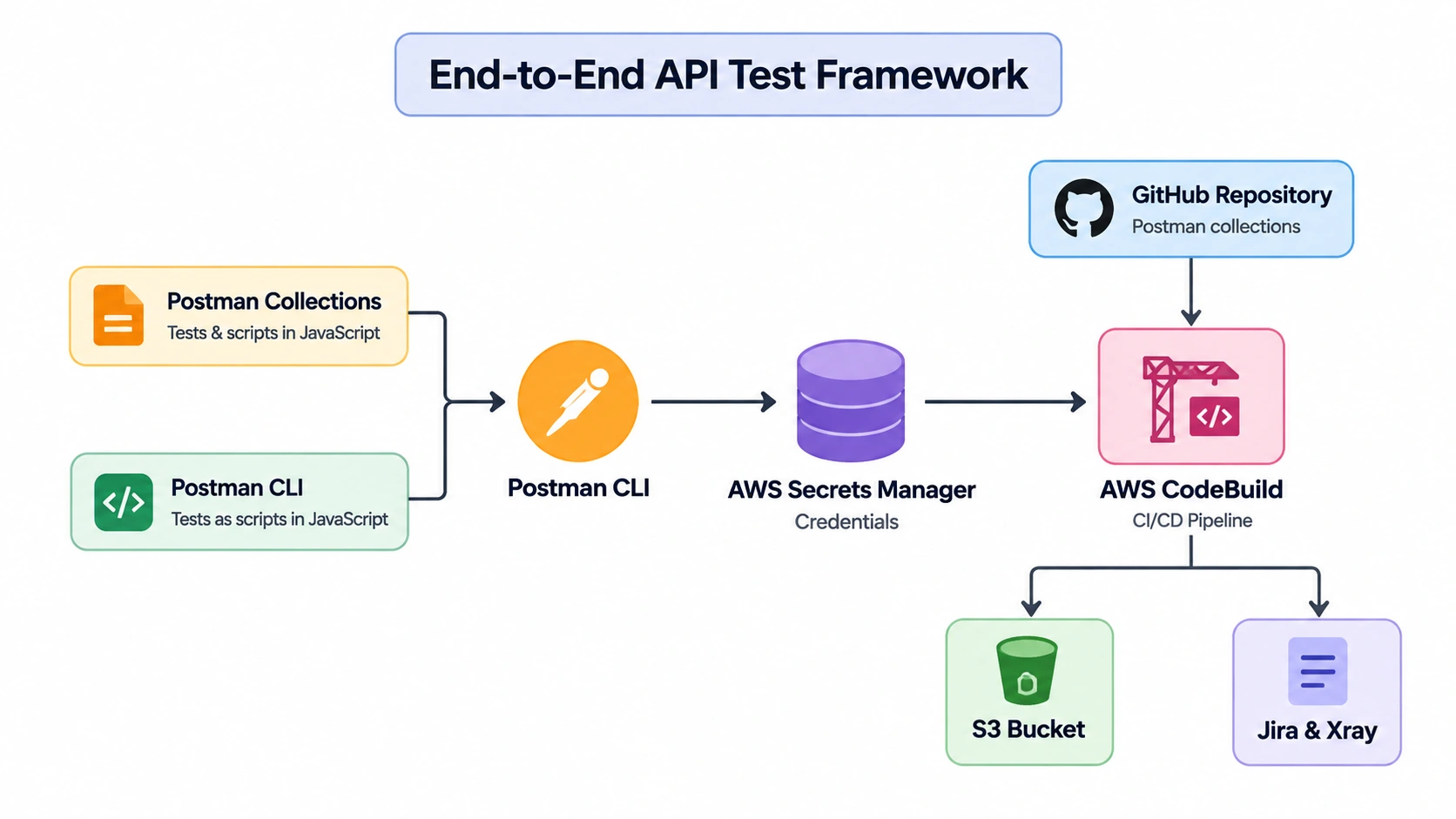
In DevOps testing, Continuous Integration runs the suite on every pull request raised in your source code management systems, and a failed check blocks the merge before Continuous Deployment ships anything further.
- Runs Postman collections through Newman inside GitHub Actions or a similar pipeline.
- Blocks a merge automatically the moment a single check fails, using a flag such as --bail.
- Keeps the regression suite close to the code it protects, rather than running separately.
That immediate feedback is what makes CI/CD testing worth the setup effort.
Validating Performance Under Load
Performance, load, and stress testing cannot happen by hand, since simulating hundreds of concurrent requests manually only produces noise, not usable signal.
- Performance testing checks response times under normal, expected traffic.
- Load testing confirms behaviour holds up at expected peak volume.
- Stress testing pushes past that peak to find exactly where the API breaks.
Run load tests before major launches, basing performance measurements on p95 latency rather than averages, which hide the slow tail users actually notice.
Common Tools for Manual and Automated API Testing
API testing tools and automation tools split cleanly by job, and the mistake most teams make is picking one for its feature list instead of the task in front of them. The right tool depends entirely on who is running the check.
Tools for Manual API Testing
- Postman: Where most postman api testing starts, with saved requests and readable responses.
- Insomnia: A lighter alternative for developers who find Postman's workspaces heavier than needed.
- cURL: The fastest way to paste a reproducible request into a bug ticket.
Frameworks for API Test Automation
Choosing a test automation framework comes down to what your team already knows and what the stack demands, not which tool happens to be trending this year.
- REST Assured: The natural fit for Java stacks, working inside JUnit or TestNG.
- Karate: BDD-style syntax that non-developers can read, with built-in mocking.
- Playwright: API calls alongside UI steps, useful when one flow spans both.
- Postman with Newman: The shortest path from a manual collection into a CI-based test automation platform.
Here is how to set up an API automation framework for free, if your team is starting from zero.
Which one fits your team?
- Existing Postman collections and little coding capacity: Use Postman with Newman.
- Java services and SDETs in the team: Use REST Assured.
- Testers who need readable tests without deep coding: Use Karate.
Key Considerations for Choosing Between Manual and Automation Testing
Key considerations for the manual automation testing decision come down to four factors, and most organisations are still working through the answer rather than following a settled playbook.
- Team skills and resources: The real constraint is not budget but SDET-level coding skill, which is why teams fill that gap through test automation services and QA outsourcing.
- Release frequency: Weekly and daily releases turn manual regression into the bottleneck; quarterly releases rarely justify the same investment.
- Budget and long-term ROI: Automation trades a higher upfront cost for a lower cost per run, so the payoff depends entirely on how often that suite actually gets used.
- Security and compliance needs: Api security testing against OWASP's API Top 10 catches what manual reviews miss, and SOC 2 or HIPAA audits lean on exactly that evidence trail.
No security service or security solution stops online attacks alone: If an unvalidated SQL command slips through, the site owner answers for the breach, which is exactly why the common security vulnerabilities on that list, and the logged evidence automation produces, matter for every compliance audit.
Why Most Teams Combine Manual and Automated API Testing
Most teams run both approaches at once, and treating the choice as either-or misses how a single API actually matures over its lifetime. The right split changes as the contract stabilises, not just once at launch.
How the Hybrid Approach Works
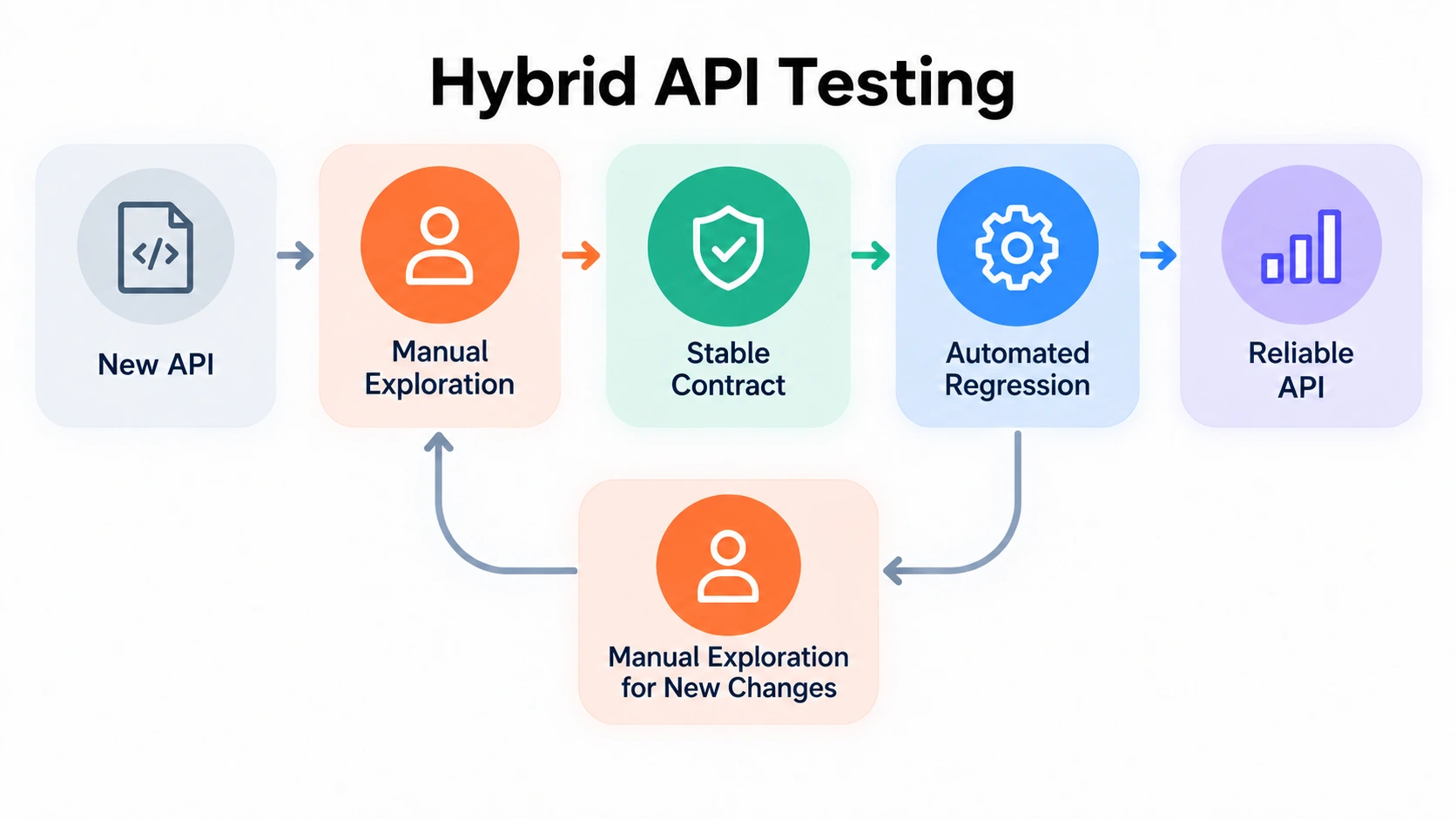
The hybrid model moves each endpoint through the same three stages as it matures, rather than forcing one method on everything at once.
- Test by hand while an API is new and its contract is still shifting week to week.
- Automate the checks once the schema holds steady across two or three releases.
- Keep manual exploration alive for every new feature, even inside an otherwise automated suite.
The advice to 'automate everything' skips this order entirely; a suite built around a sprint-by-sprint contract becomes a maintenance bill, not a safety net.
How to Split Tests Between Manual and Automated
The test pyramid still applies here: Many fast, cheap functional tests at the API layer, with fewer, slower tests layered on top through the UI. Test case selection follows the same logic, starting with what to automate first.
Automate first:
- Authentication, token refresh, and session endpoints.
- Payment and billing flows.
- Core CRUD operations on your highest-traffic resources.
Everything else stays manual for now, since judgment still beats a script there:
- Brand-new endpoints before the spec has settled.
- Error message clarity for integrating developers.
- Exploratory sessions on new features as they land.
How Frugal Testing Helps You Balance Manual and Automated API Testing
As a qa services company, we start by auditing which API checks your team currently runs by hand, then decide together what to automate first and what stays manual for now. The pattern we see most often across engagements is inverted priorities, with authentication and payment regression still handled manually while low-risk read endpoints sit fully scripted.
You gain automation expertise without needing to hire a full SDET team, and your existing testers stay focused on the exploratory work that builds real product understanding. Every engagement ends with a coverage report showing exactly where each approach adds value.
What Our API Testing Engagement Looks Like
- Week 1: Requirement gathering on API objectives, endpoints, expected responses, and authentication.
- Week 2: A pre-engagement test plan agreed before any scripting starts, alongside curated test data.
- Weeks 3 to 4: Assessment covering functional tests, boundary conditions, error-handling, and security checks.
- Handover: You own the test suite, the pipeline integration, and a coverage report.
Conclusion
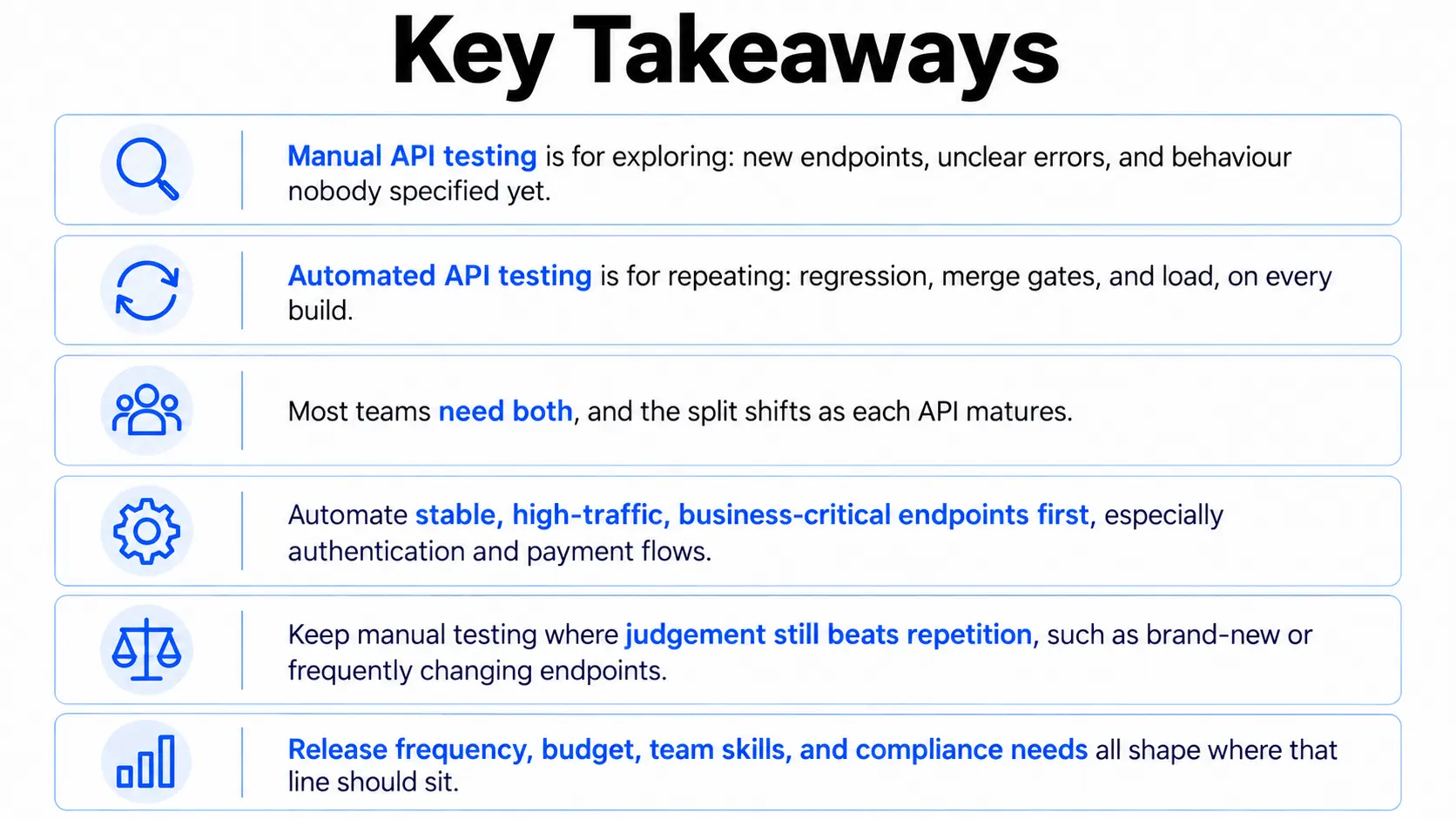
Choosing between manual and automated API testing is not really about skill. It is a sequencing decision: Which endpoint to automate now, and which to leave manual until its contract settles, made deliberately rather than under deadline pressure.
The difference between manual and automated testing is not a competition between two methods, but a decision about where human judgement still earns its keep at every stage of an API's life. Get that sequencing right, and releases stop depending on how much of the checklist someone managed to finish under pressure.
People Also Ask (FAQs)
Q1. How do teams decide which API endpoints to automate first?
Ans: Teams typically prioritise endpoints by traffic volume, business risk, and release frequency, starting with authentication, payments, and core CRUD operations that run before every deploy, then expanding automation outward as each contract proves stable across releases.
Q2. What happens when automated API tests are not maintained alongside API changes?
Ans: Unmaintained test automation frameworks quietly drift out of sync with the API, producing false passes or false failures that erode trust in the suite, until teams start ignoring failed builds entirely and manual regression creeps back in by default.
Q3. Can manual and automated API testing run inside the same CI/CD pipeline?
Ans: Automated regression testing typically gates the pipeline directly, while manual exploratory sessions happen outside it on new or changing endpoints, with results feeding back into what gets scripted next once that endpoint's behaviour stabilises across releases.
Q4. How does API security testing fit alongside manual and automated approaches?
Ans: API security testing against OWASP's API Top 10 combines two layers: Automated scans catching known vulnerabilities every build, and penetration testing and company reviews, at whatever penetration testing cost, probing flaws.
Q5. What signals suggest a company should outsource its API test automation?
Ans: Slipping release dates, a widening regression-versus-release gap, and an upcoming audit are clear signals. Teams then weigh qa outsourcing services, software qa services, AI test automation, and test automation solutions.

.webp)