

Functional testing plays a critical role in modern software development by ensuring that every feature works exactly as intended before release. This article explores functional testing in detail-covering its types, workflows, tools, and integration within the SDLC and CI/CD pipelines-while showing how structured functional validation helps prevent defects, ensure business requirements are met, and deliver reliable, high-quality software products.
Key Insights from This Article:
1. Functional and non-functional testing fundamentals.
2. Testing types across the SDLC.
3. CI/CD-integrated testing workflows.
4. Tools for manual and automated testing.
5. Performance, security, and usability validation.
Introduction: The Dual Pillars of Software Quality
The new software products are supposed to be as quick as feasible, secure, user-friendly, and of adequate quality at the time they are introduced to their customers. In order to offer such quality, a good QA testing services and software testing strategy should consist of equal parts of functional testing and non-functional testing; otherwise, the presence of such a mixture will guarantee the successful implementation of an application, as well as the ability to address the performance needs of users in real-life settings.
- Software quality directly impacts user experience, customer satisfaction, and business growth.
- Functional and non-functional testing address different but complementary risks
- Testing is embedded across the software development lifecycle (SDLC) and CI/CD pipelines.
Frugal Testing is a firm that collaborates with organizations to develop scalable software testing frameworks. These frameworks function as enterprise-ready software testing solutions aligned with agile and DevOps practices. Companies need to be aware of the two major aspects of software testing to come up with credible software products.
Why Functional and Non-Functional Testing Matter Together
Non-functional testing is used to test the behavior of the system, whereas functional testing is used to test the system on what it is doing. Overlooking either of the two results in expensive setbacks in manufacturing, low adoption, and compliance risks.
- Functional testing ensures features meet functional requirements
- Non-functional testing validates performance, security, scalability, and usability
- Together, they reduce defects, production incidents, and rework costs
When testing is integrated early, including both types, QA engineers are able to identify bottlenecks, security assumptions, and usability gaps before the end-users are impacted. This combined measure is one of the foundations of grown-up QA supported by enterprise-grade QA testing services.
Understanding Software Testing: The Foundation of Quality Software
Software testing services refer to a regulated procedure of assessing applications to make sure they are attuned to business objectives, stakeholder anticipations as well as technical specifications. It is a crucial tool in Application Lifecycle Management (ALM) and for contemporary cloud-based applications.
- Validates system behavior against requirements
- Reduces risks across complex application ecosystems
- Improves collaboration between developers, testers, and stakeholders
Software testing is an all-around process that encompasses unit tests, acceptance tests, and so on, with the help of manual testing and automated testing tools. Together with CI/CD and DevOps, testing will be a constant quality gate through integrated software testing solutions, and not a gateway
Functional Testing: Validating What the Software Does
Functional testing is more aimed at ensuring that every element of the application works as per the requirements. It is usually performed by black-box testing, in which testers are only required to test inputs and outputs without understanding the internal code.
- Ensures correct implementation of business logic
- Validates user interface, navigation, and workflows
- Confirms error handling and system responses
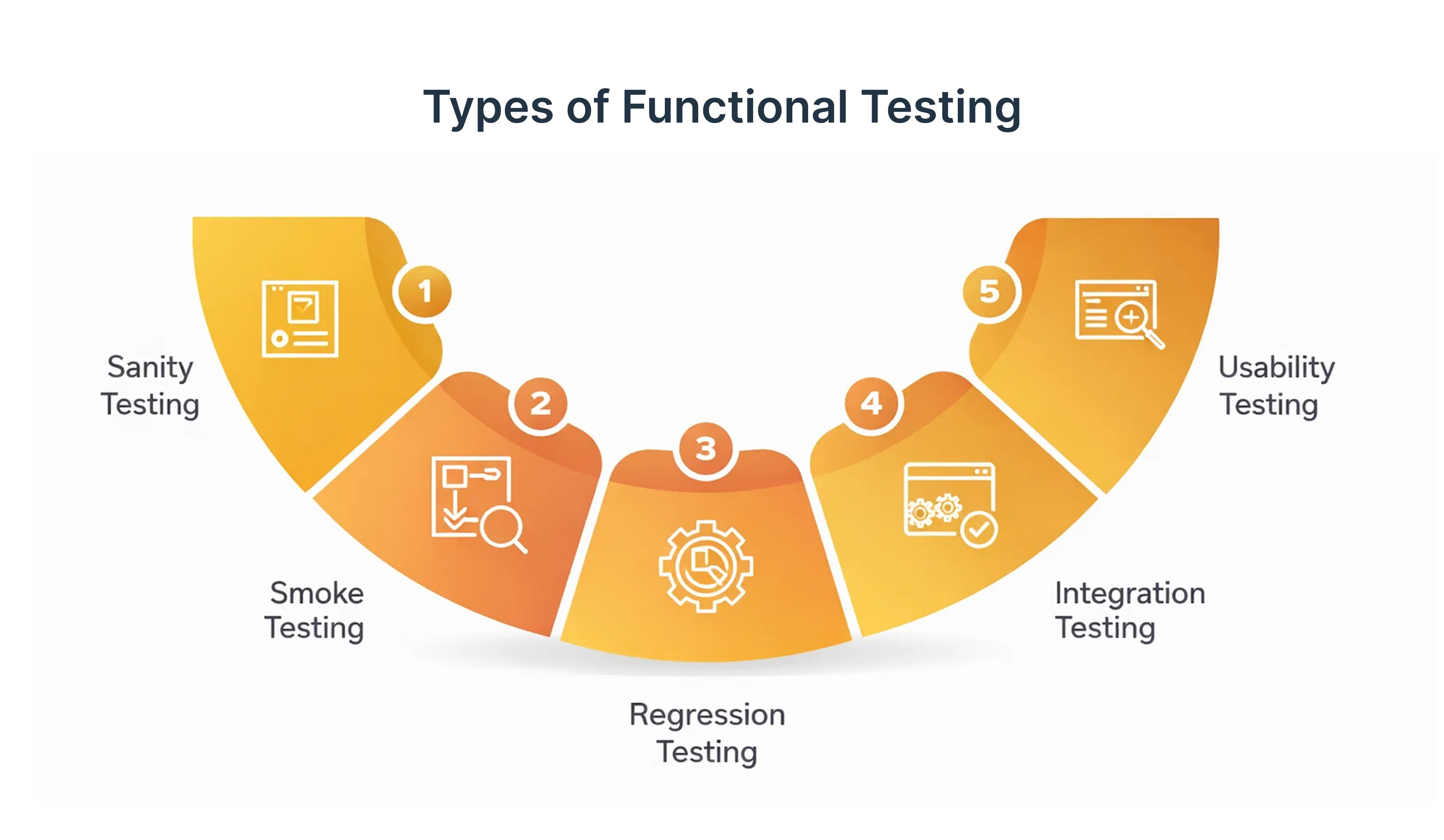
Most test suites are built based on functional testing, and functional testing is needed to support regression testing, smoke testing, and sanity testing between releases.
Definition, Purpose, and Common Types of Functional Testing
Functional testing is used to ensure the application has value through the fulfillment of functional requirements that are stipulated by the stakeholders and product teams.
- Unit Testing: Validates individual components
- Integration Testing: Ensures modules work together
- System Testing: Validates the complete application
- Acceptance Testing: Confirms readiness for end-users
Functional testing encompasses various types, including UI functional testing, API testing with tools such as SoapUI, exploratory testing, and automated regression testing with Selenium WebDriver, TestNG, or Appium. The tests help ensure that software products respond predictably to updates.
Functional Testing Workflow: From Requirements to Execution
A structured workflow improves traceability, coverage, and execution efficiency across projects.
- Requirements analysis and test case management
- Test data preparation and test environment setup
- Test execution, defect tracking, and reporting
QA engineers keep a traceability chain of requirements, test scripts, and defects using systems such as TestRail, Testomat.io, or Perforce ALM. Recent technologies like automation speed up the processes of CI/CD services and CI/CD pipelines like CircleCI.
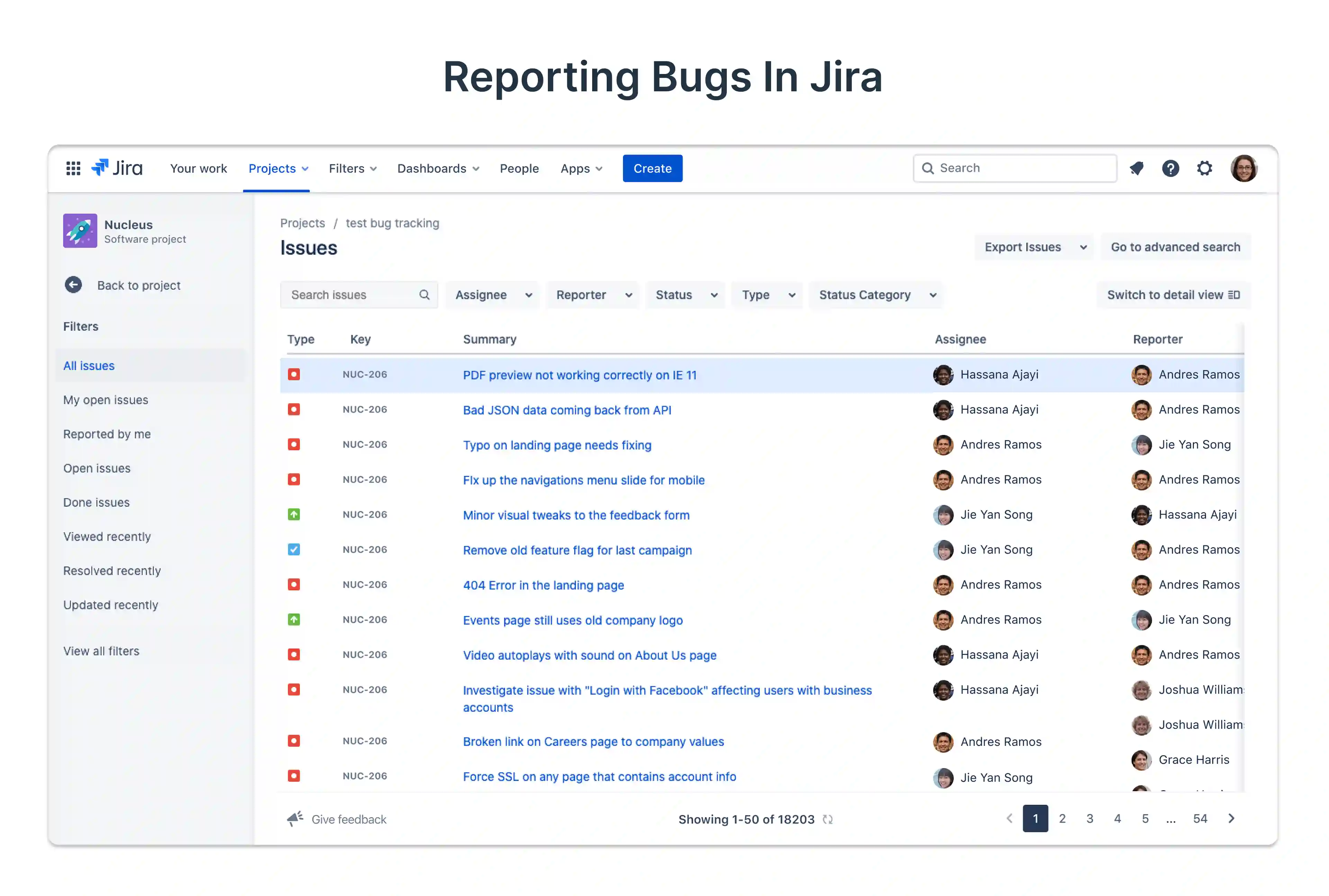
Before logging defects, it is important to document issues clearly and consistently to ensure faster resolution. The following example demonstrates how a bug is reported in Jira, including essential details such as summary, steps to reproduce, priority, and expected versus actual results.
Non-Functional Testing: Ensuring Performance, Reliability, and Usability
Non-functional testing is used to test the quality attributes that stipulate the performance of an application under different conditions. The tests serve the purpose of defending the brand name, compliance, and consumer confidence.
- Measures system responsiveness and response time
- Identifies performance bottlenecks and scalability risks
- Ensures accessibility, security, and usability standards
Even applications that are full of features will fail to run in an environment without non-functional testing, as they will have poor performance, weak security protocols, or low accessibility.
Key Non-Functional Testing Types and Quality Metrics
Non-functional testing covers a wide range of quality indicators essential for modern applications.
- Performance Testing: Load testing, stress testing, volume testing
- Security Testing: Penetration testing, HIPAA compliance checks
- Usability & Accessibility Testing: Navigation testing, device usability testing
Tools like JMeter Load Test, Gatling, BlazeMeter, LoadRunner, and Tricentis NeoLoad are commonly used for performance tests. Security testing ensures compliance with standards such as HIPAA and risk frameworks like FMEA and Hazard Analysis.
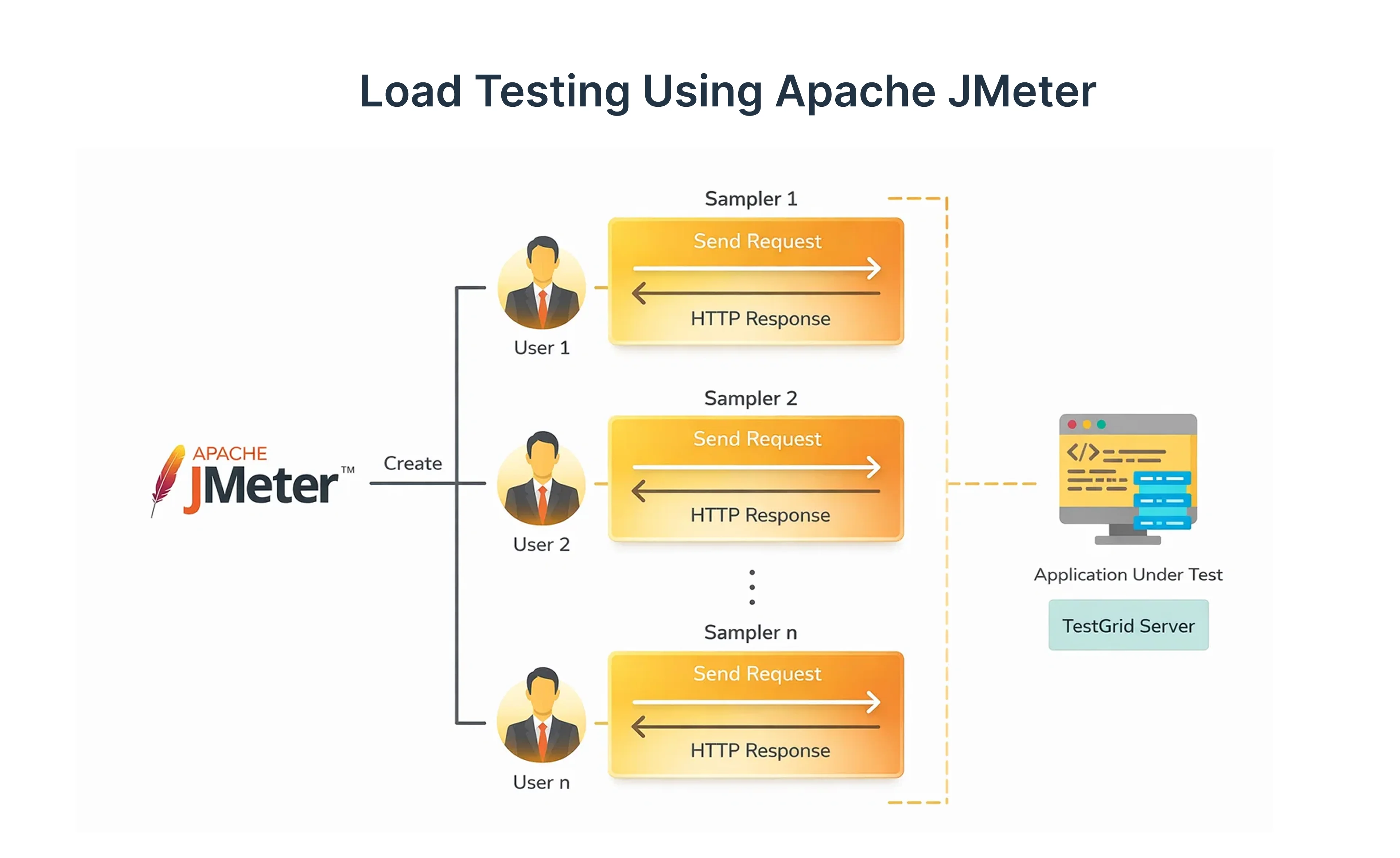
Load testing simulates multiple users accessing an application simultaneously to measure its performance under expected load. The image illustrates how JMeter generates virtual users that send requests to the application, helping teams evaluate response times, throughput, and system stability and behind these efforts, motivated teams supported through practices like recognition and employee rewards are more likely to maintain consistency and accuracy during repetitive testing cycles.
Functional vs. Non-Functional Testing: Key Differences and Complementary Roles
All of the two types of testing are employed in different situations, yet they work best when carried out in tandem as a single QA approach.
- Functional testing focuses on correctness.
- Non-functional testing focuses on quality attributes
- Both contribute to customer satisfaction and business outcomes
The knowledge of the differences assists the teams in distributing the appropriate tools, resources, and test coverage throughout the SDLC.
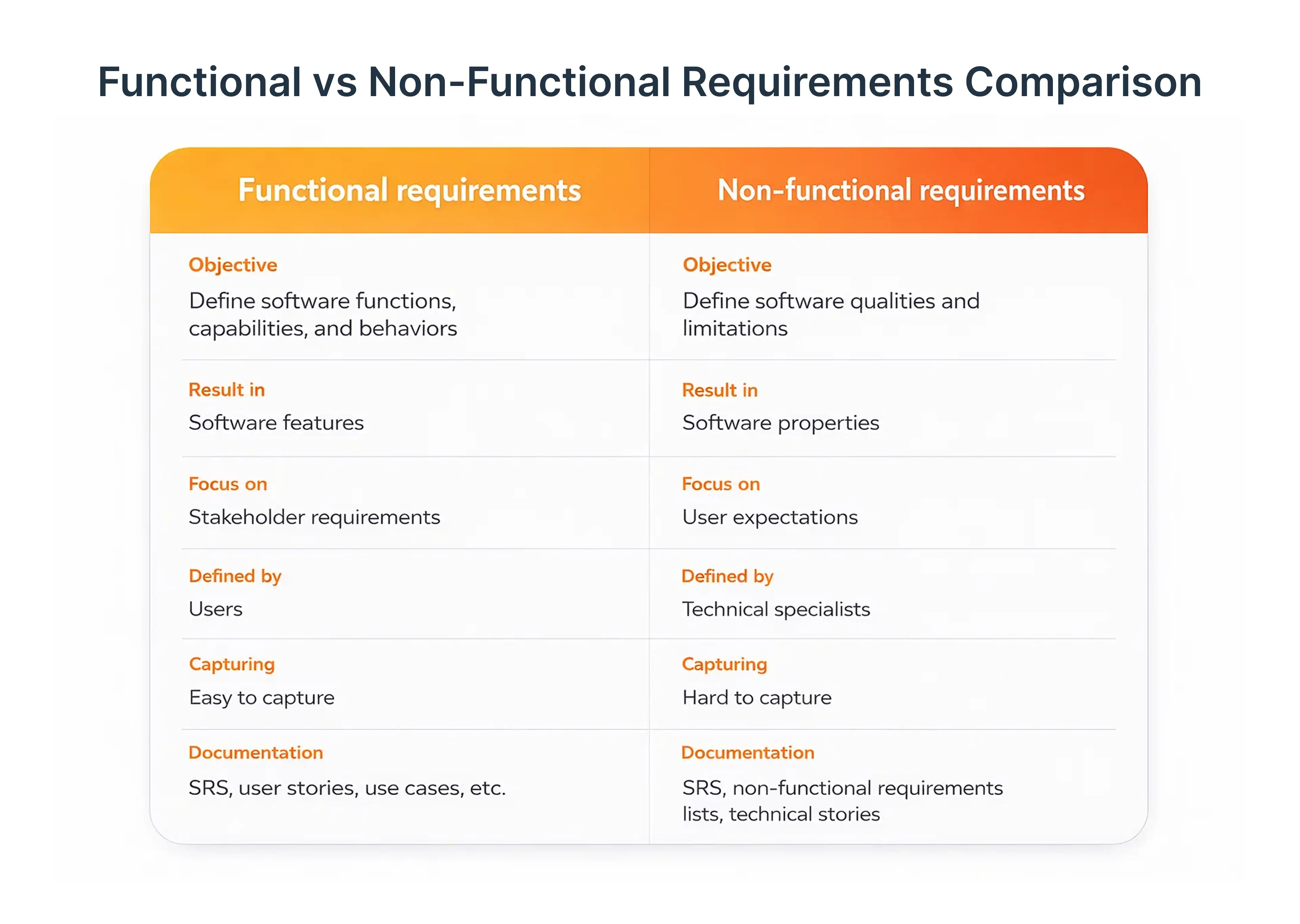
Functional and non-functional requirements address different aspects of software behavior and quality. This comparison table clearly outlines their objectives, focus areas, testing types, and role in delivering a reliable and user-centric application.
What v/s How: Impact on User Experience and Business Outcomes
Functional testing is an assurance that the features are functioning, whereas non-functional testing is an assurance that the user can have pleasure using them. User trust can directly be influenced by performance delays, security breaches, or accessibility problems.
- Faster response time improves conversion rates.
- Strong security testing reduces compliance risks
- Better usability increases retention and adoption
Companies investing in both testing types consistently deliver superior user experience and competitive advantage.
Real-World Case Studies: How Functional and Non-Functional Testing Improve Software Quality
Case Study 1: Regression Testing Time Cut by 70% with Automation
A mid-sized e-commerce platform automated its regression testing suite using TestingWhiz.
- Automated 300+ regression test cases previously executed manually
- Reduced repetitive testing effort and improved accuracy
Result: Regression testing time reduced by 70%, enabling faster and more frequent releases.
Case Study 2: Functional & Non-Functional Testing for Investment Bank Systems
A leading investment bank upgraded its core back-office and trading systems with extensive functional and non-functional testing.
- Multiple cycles of functional testing for business-critical workflows
- Performance testing under increased transaction volumes.Understanding where performance testing fits within the broader landscape of functional and non-functional testing helps QA teams build more structured test strategies knowing which tests verify what the system does versus how well it does it is the foundation of any mature SQA programme.
Outcome: Successful validation and improved system reliability during high-volume operations.
Case Study 3: QA Regression & Mobile Testing for SaaS Application
A SaaS company facing low ratings and high churn partnered with Mindful QA for regression and mobile usability testing.
- Regression testing across iOS and Android devices
- Logged 250+ defects impacting UI/UX and core functionality
Outcome: App rating improved from ~3.1 to ~4.3 stars with better user retention.
Conclusion: Building High-Quality Software with Functional and Non-Functional Testing
Functional or non-functional testing cannot be used to produce high-quality software. It needs a remedial and ongoing process that is consistent with the business objectives, user requirements, and technical requirements.
The entry and exit criteria in the STLC will maintain the fact that every phase of the testing begins with the correct requirements and will only be terminated upon meeting quality standards. This will prevent partial testing, save on rework, and have defects detected at the appropriate phase. Preparation (stable build, requirements, test data) and validation (coverage, defect status, approvals) criteria are helpful. They all introduce order, predictability, and assurance into the general testing process.
How Frugal Testing Helps You Achieve End-to-End Quality Assurance
Frugal Testing provides end-to-end software testing to startups, enterprises, and cloud native businesses worldwide that are supported by highly-qualified QA engineers and automated test engineers. Our highly scaled and automated solutions are based on CI/CD, DevOps, and compliance needs that are powered by sophisticated AI-based testing platforms. It can be functional or non-functional testing or a full-scale QA transformation; we can assist you in producing high-quality software that will perform effectively, scale smoothly, and please the end user.
People Also Ask (FAQs)
Q1. How can project goals and user expectations shape the mix of functional and non-functional testing?
Ans. Project goals and user expectations determine whether focus leans more toward feature correctness (functional) or quality attributes like performance, security, and usability (non-functional).
Q2. At what stage of development should non-functional testing ideally begin?
Ans. Non-functional testing should start early in the SDLC, alongside design and development, to identify performance and scalability risks sooner.
Q3. Can functional and non-functional testing be automated together effectively?
Ans. Yes, both can be automated together using integrated frameworks that validate functionality while also capturing performance, reliability, and security metrics.
Q4. What risks arise if non-functional testing is postponed until the end of the release cycle?
Ans. Delaying non-functional testing can cause late-stage failures, increased costs, poor user experience, and missed release deadlines.
Q5. In what ways does integrated functional and non-functional testing support long-term software stability and performance?
Ans. It ensures features work correctly under real-world conditions, improving system reliability, scalability, and overall long-term performance.