


Enterprise AI is powerful but it's also genuinely risky. From hidden bias to regulatory fines, AI failures can cost millions. And most companies are still deploying faster than they're governing.
Automation risk in enterprise systems is not an issue for which you may set a deadline for solving. It is upon you now. A fraud detection model started missing transactions three months after launch no alerts, no noise. A hiring tool flagged by a regulator because no one audited the training data.
An employee who created a shadow AI tool last Tuesday via a personal account and is now using it for processing client contracts. None of these is rare anymore. This manual is for groups that have already moved from deliberating on 'should we use AI' to ', how to manage the risk of running it? '. We'll talk about what is prone to break, which frameworks or policies are worth the time and effort, and the tools that can help you.
Why AI Automation Risk Is So Hard to Catch
The failures of AI are not ordinary software bugs: they are silent. An error will be produced by a broken API. A malfunctioning AI model will just keep on running and giving results that are slightly wrong, slowly losing its accuracy with time, producing decisions that no one can justify.
Modern deployments introduce risk across several layers:
● Opaque decision-making: Models rendering impactful decisions without a clear reasoning path that the compliance teams or human users can audit for transparency.
● Shadow AI expansion: The use of unapproved AI tools by employees outside of officially sanctioned IT channels, leading to unmonitored data governance and compliance risks.
● Networked automated systems: Bots, no-code platforms, and NLP-based triage assistants integrated across multiple cloud environments.
● Third-party risks: Vendors and third-party risk management gaps leading to the introduction of unvetted models into production pipelines.
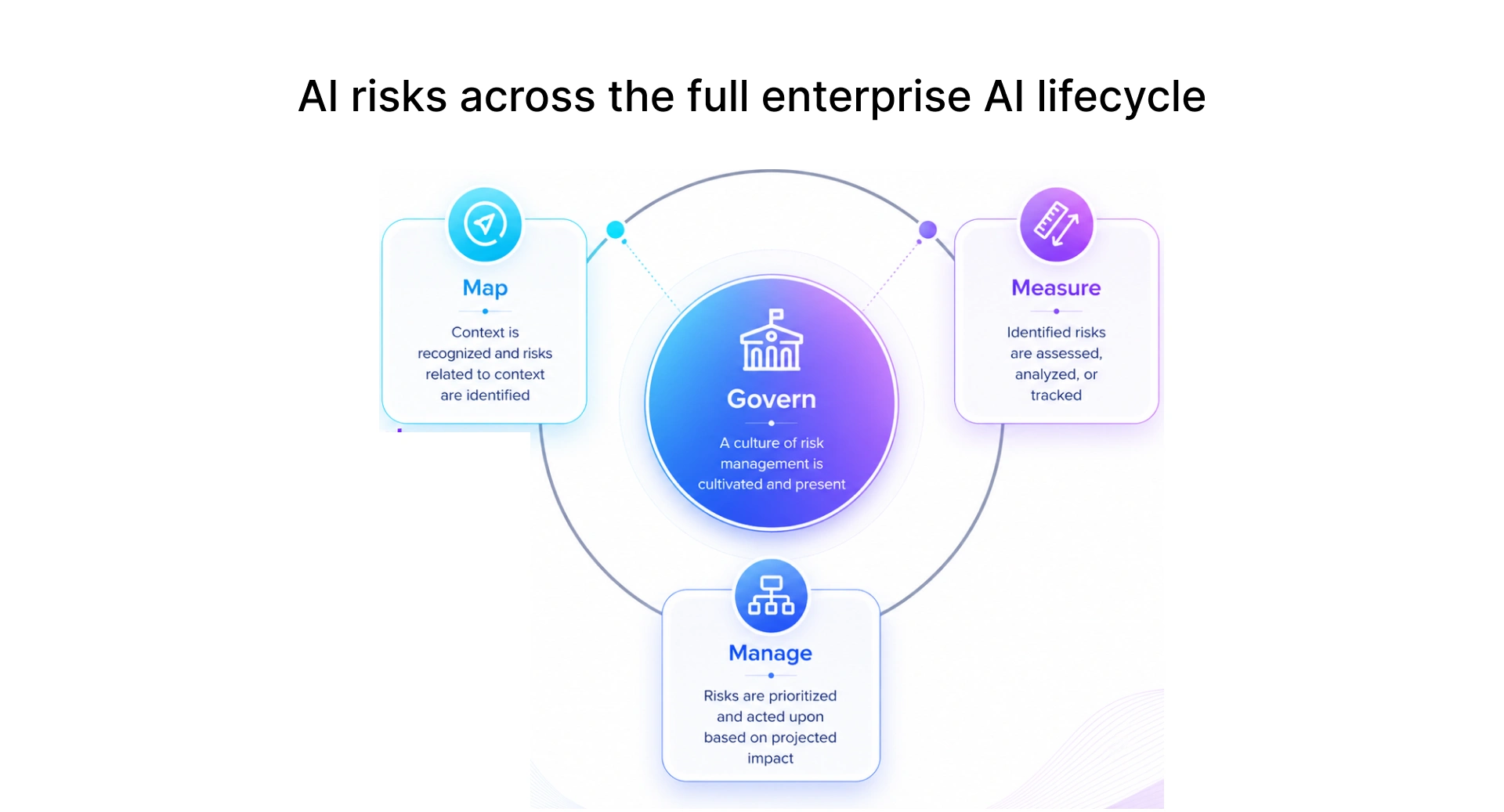
KeyAI Risk Statistics at a Glance:
The Risk Categories Worth Understanding Before You Deploy
Large-scale AI Automation Service for enterprises give rise to a number of overlapping types of risks. Every one of them calls for an individual management strategy. However, on a tale level, they are very much intertwined. The table below presents a summary of the entire spectrum of risks that will be discussed in detail in the following sections.
Overview of Core AI Risk Categories:
Data Privacy and Security: Bigger Attack Surface Than Most Teams Realize
Privacy and data security are the largest concerns for enterprise AI rollouts. Systems that learn from sensitive data like customer profiles, bank transfer details, or even hospital records are a cyber dream come true for hackers, who can use malware, phishing, and other attacks to alter the training data and corrupt behavior. To mitigate these risks, organizations should implement robust security frameworks and ISO 27001 IT solutions that help protect sensitive information, strengthen access controls, and ensure compliance with internationally recognized information security standards.
The most prevalent data risk vectors consist of:
- Training data poisoning - attackers inject bad data to corrupt model behaviour, such as fraud scores in a financial compliance system.
- Model inversion attacks - attackers obtain confidential information by analysing model outputs, posing serious data privacy threats.
- Shadow AI data exposures - employees using unauthorised AI chatbots to handle corporate data outside approved security perimeters.
- Third-party vendor gaps - solution providers without proper risk management can introduce untested models into production.
Model Drift and Algorithmic Bias: The Slow Failures
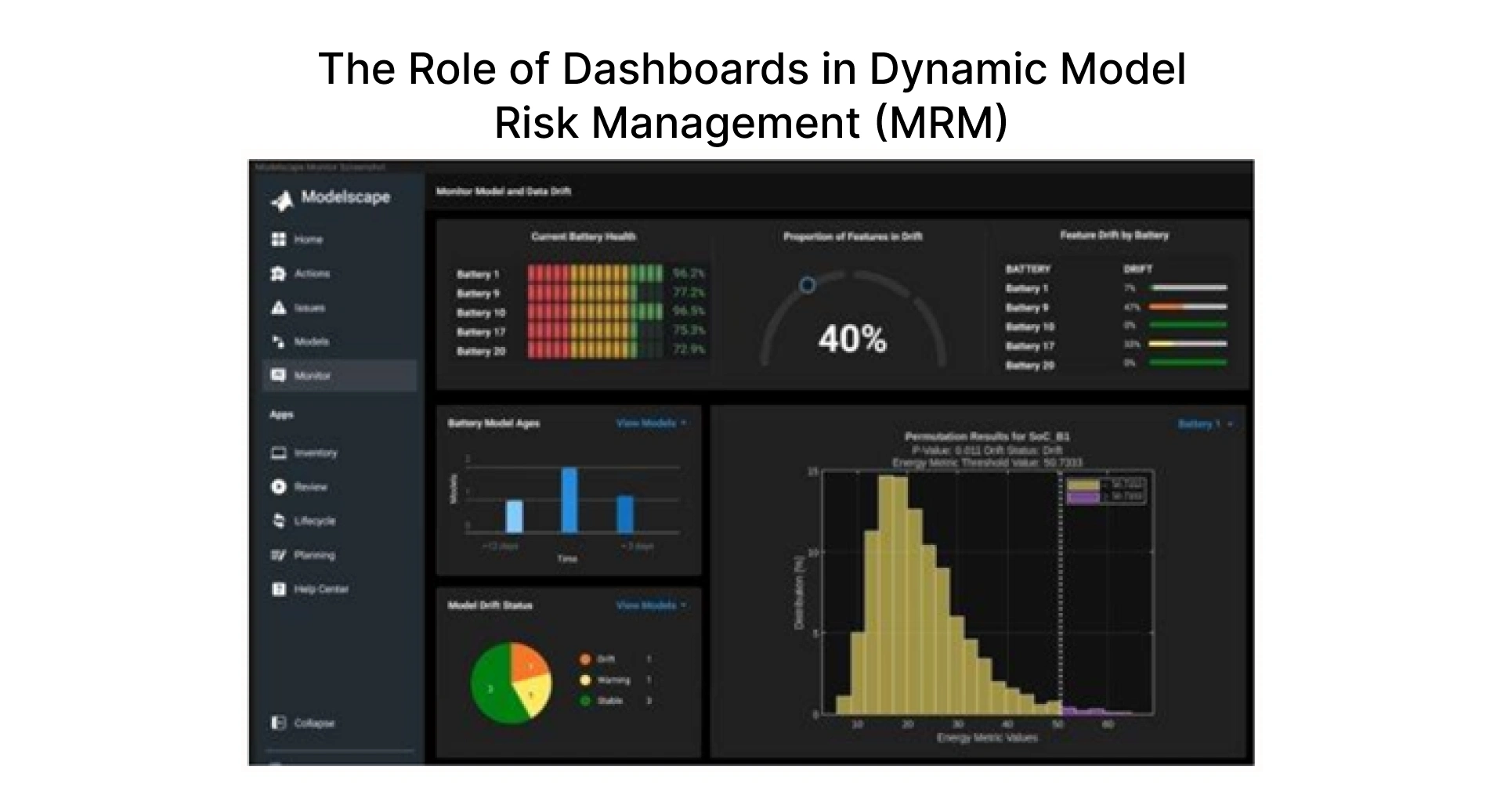
Models aren't fixed - they deteriorate. When changes in the real world cause data patterns to diverge from the distribution used during the initial training of a model, the quality of predictions progressively diminishes via model drift. For instance, a fraud detection system can be fooled into missing fraudulent transactions, or a predictive analytics tool can generate performance standards that don't correspond to the true system capabilities anymore.
Enterprises should be aware of the main model risk factors they will have to monitor:
- Algorithmic bias - If you train your models with biased data, then these models will produce biased or even discriminatory outputs in areas such as hiring, lending, or healthcare triage, which can raise ethical issues and legal liabilities.
- Concept drift - When the connection between inputs and outputs changes, it makes the patterns we learned outdated and the outputs unreliable across various business functions.
Types of Model Drift Compared
The Regulatory Situation (Which Is Moving Fast)
The Responsible AI Institute also offers third-party certification to organizations that seek external validation. Their certification covers NIST AI RMF and ISO 42001 readiness, model governance, risk controls, and responsible AI practices across the model lifecycle. Enterprise procurement teams and regulators increasingly accept it as evidence of mature AI governance.
Major regulatory challenges:
- ISO/IEC 42001 - This is the first international AI management standard, which requires organisations to show that they are practising responsibility throughout the entire lifecycle.
- NIST AI RMF - This one is a very popular choice among US-based organisations as a framework for organising risk assessment and governance at the enterprise level.
- Financial compliance software mandates - Applicable when these systems are used lending, underwriting, and payment routing.
EU AI Act Risk Classification Summary
Operational and Integration Risk: Where Pilots Break at Scale
Operational failures in these systems are in large part non-deterministic, i.e., the same input can lead to different results, hence making it even more challenging to identify and fix the problem than typical software debugging. For example, system failures of AI-enabled GRC platforms may interrupt audit procedures during audits, and errors caused by intelligent automation could spread to all enterprise applications involved in the value chain. Complicated integration is a factor that only adds to this challenge.
These systems often need to connect with CMDB data sources, data pipelines for analytics, and old infrastructures located on different clouds. Most risks that come from API incompatibility or scalability limits, especially when one is moving from pilot programs to full enterprise solutions, get overlooked regularly. Besides the environmental impact, including carbon footprint and water usage, resulting from large inference tasks should be tracked alongside corporate governance and ESG goals. The practical fix is sequenced: baseline monitoring before launch, shadow AI policy before scale, governance training before the first production incident — not after.
The Deployment Risk Checklist
Prior to the launch of any corporate system, the organisation's staff must have a well-ordered validation procedure. This checklist is inspired by NISTAI RMF, ISO 42001, the Responsible AI Institute, and enterprise risk management standards.
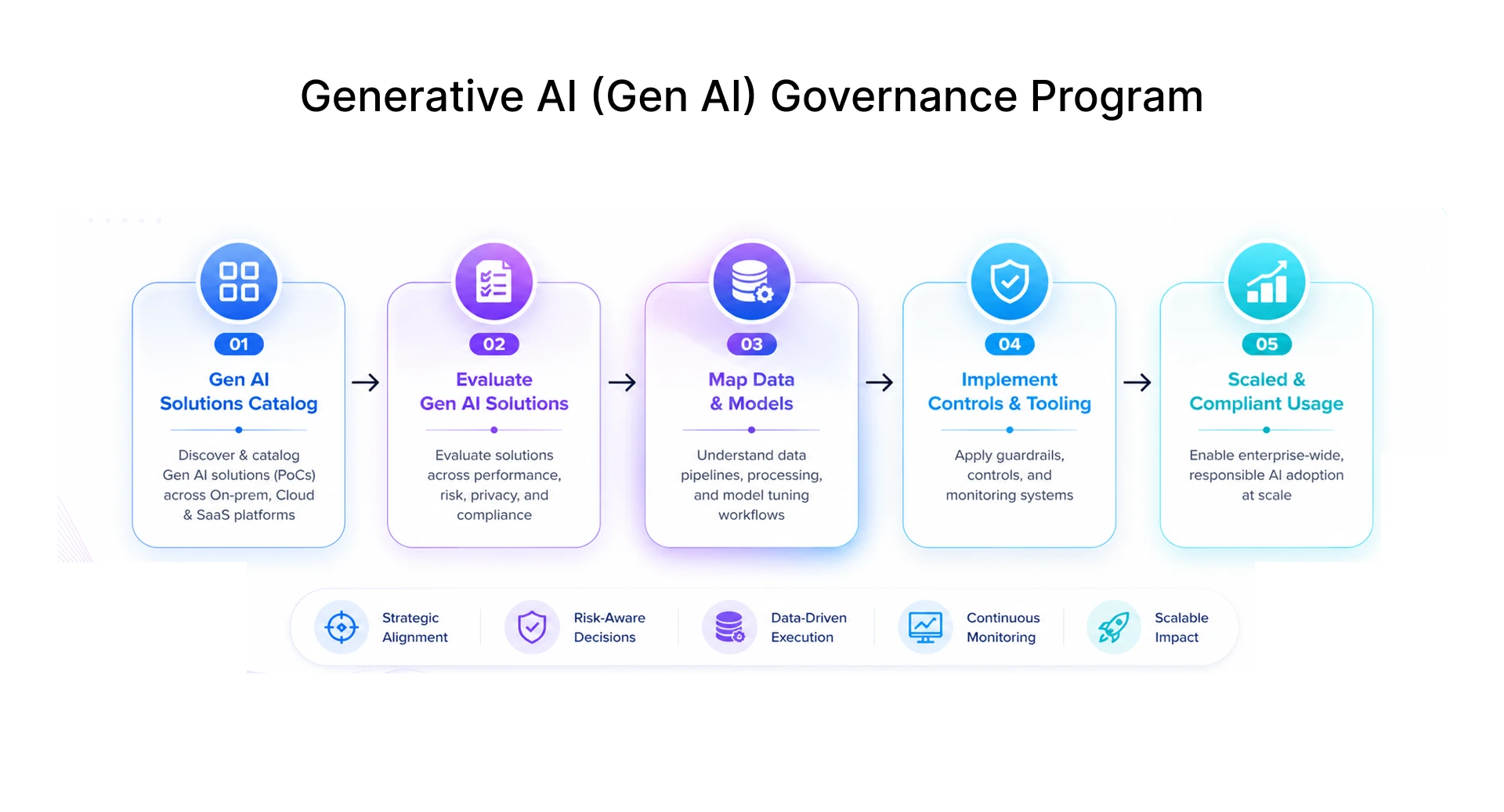
Four-Area Risk Checklist at a Glance
Don't view the completion of the treatment checklist at the time of deployment as the end of the journey. Plan a quarterly examination and connect the results directly to the enterprise risk management reporting cycle.
Tools That Help (And What They’re Actually Good For)
A thoughtful examination of your organisation's needs should guide you in choosing tools for your enterprise AI stack:
AI Risk Testing Tools Comparison
Making AI Governance Actually Work (Not Just Exist on Paper)
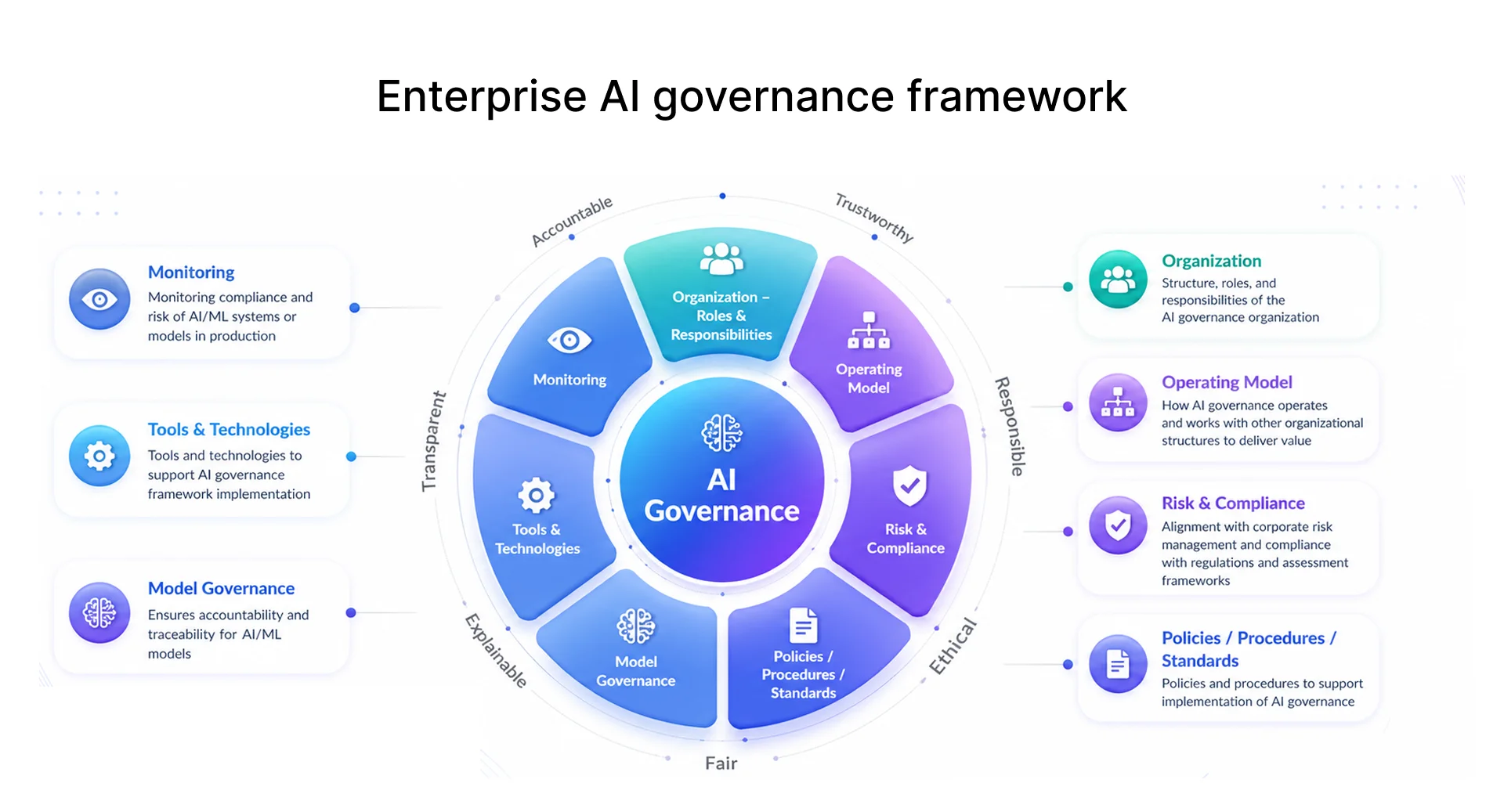
Governance is the trust layer built in at every step of the lifecycle - starting from choosing the model and preparing the training data to deployment, live monitoring, and eventual retirement. Leading enterprise strategy frameworks break governance down into four key areas:
In BNXT.ai's enterprise AI governance engagements, the most common gap is the absence of a named model owner: organisations assign governance to teams rather than individuals, and accountability diffuses across quarterly reviews with no one person responsible for a model's production behaviour.
- Accountability - Appoint specific model owners for each model put into production. Responsibility should be cross-functional, covering data science, legal compliance, and operations.
- Transparency and explainability - Use Explainable methods so that model decisions can be both audited and explained to regulators. Under the EU AI Act, this is a requirement for high-risk systems.
- Fairness and bias governance - Set up rolling bias identification methods and keep a record of how bias issues are identified and handled in production.
Dealing with shadow AI is not just about setting rules; it's also about enforcing them technically: for example, tool allowlists that limit to which AI services can be accessed via corporate networks; integrating DLP (Data Loss Prevention) to identify sensitive data being sent to unapproved AI endpoints; CASB (Cloud Access Security Broker) controls to keep track and block unauthorized SaaS AI tool usages in real time.
People Also Ask (FAQs)
Q1.What is an AI automation risk checklist?
ANS:An AI automation risk checklist is a well-organized validation system that enterprise teams utilize to make sure they have covered all the bases before going live with AI systems. It includes data risk that covers lineage bias anonymization, etc. model risk that comprises setting up accuracy baselines, drift detection, adversarial testing, etc. operational risk that consists of fallback procedures monitoring etc. and compliance risk with respect to EU AI Act, NIST AI RMF, ISO 42001 alignment.
Q2. What are the biggest risks in enterprise AI systems?
ANS:Some of the major risks associated with model drift are that models may perform less effectively over time without providing clear warnings or visibility. Bias in algorithms may result in unfair or discriminatory decisions in areas such as recruitment, loans, and healthcare. Data poisoning attacks and unauthorised, also known as shadow AI, can cause serious security, compliance, and governance disruption.
Q3.How can enterprises reduce AI risks effectively?
ANS:To detect model drift, failures, and anomalies at the earliest stage, companies should deploy real-time monitoring. Besides that, they should clearly designate model ownership, keep testing for bias and stay accountable throughout the lifecycle. Meeting standards such as NIST AI RMF or ISO 42001 and incorporating human oversight can boost reliability and compliance.
Q4.What tools help manage AI risks?
ANS: Fiddler AI or Arize AI are good choices if you want to monitor your model and detect drift. You can use Credo AI or IBM OpenScale if you need AI governance software along with audit trails and explainability features. If you want adversarial security testing, then you should check out Microsoft Counterfit. Looking for integrated compliance management software and enterprise GRC? Consider MetricStream or ServiceNow.
Q5.How often should AI risk assessments be performed?
ANS: You should first do a thorough risk assessment before actually deploying AI systems in production environments. After deployment, we advise keeping continuous automated monitoring along with well-organised quarterly reviews. Industries where safety and compliance are critical, such as finance and healthcare, require monthly assessments that are more frequent.



.webp)