

Your team ships a UI update on Tuesday afternoon. By Wednesday morning, three regression bugs are live in production flagged not by your test suite, but by customer support tickets. Most QA leads have lived that exact scenario. It happens when release velocity outpaces the testing infrastructure behind it, and it costs far more to fix after the fact than it would have to catch in the pipeline.
That gap is where AI-powered test automation fits. Platforms like Mabl are built around a straightforward idea: your tests should keep pace with your application automatically. Not because a developer stayed late rewriting broken locators, but because the platform handles that work itself.
This guide covers how Mabl actually works the AI technologies behind it, how its agentic test creation differs from simple self-healing, where it sits relative to Selenium and Jenkins, and what it looks like to use it inside a real DevOps pipeline. If you've been evaluating AI-powered testing options, this is the breakdown that goes past the feature list.
Introduction to Test Automation and AI in Software Testing
Growing importance of automation testing in modern software development
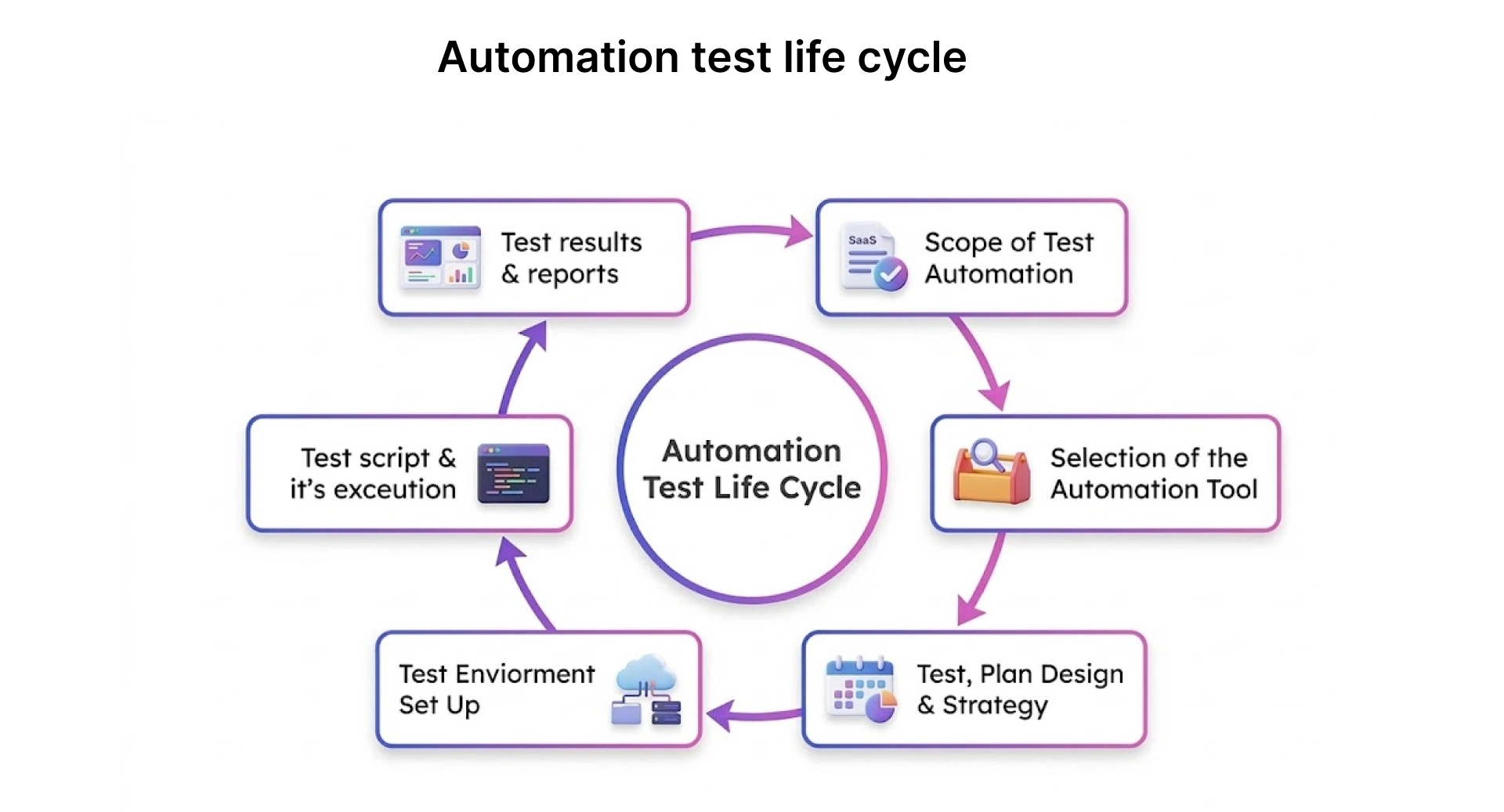
With the transition to continuous delivery, the definition of good testing now takes a new meaning in its practical sense. A two day regression cycle can not be afforded by a team that releases more than once a day. They require automated tests which process within each build, do not take long to process and produce results in which they can make sense of.
That makes the mass adoption of automation testing not a nice thing to have, but the process that enables quick frequent releases to be feasible. The most frequently used drivers are:
- Once you have automatic running of regression suites every time that you create a pull request, not prior to major releases.
- Covering the increasing complex multi-service architectures without necessarily increasing the size of the QA team accordingly.
- Checking APIs, user interface flows and database behaviour in one data pipeline execution.
- Reducing feedback loop hours to minutes to allow developers to be aware of the problem when it is still in context.
- Discovering cross-browser inconsistencies in time before the users.
According to Gartner and Forrester studies there exists a consistent relationship between well understood automation practices and the low cost of production defects. In the case of SaaS companies, more specifically when one poor release can impact thousands of customers at one time, it is automation that allows consistency in the quality across the rate of deployment required by modern development.
Challenges of manual testing and the need for automation tools in QA
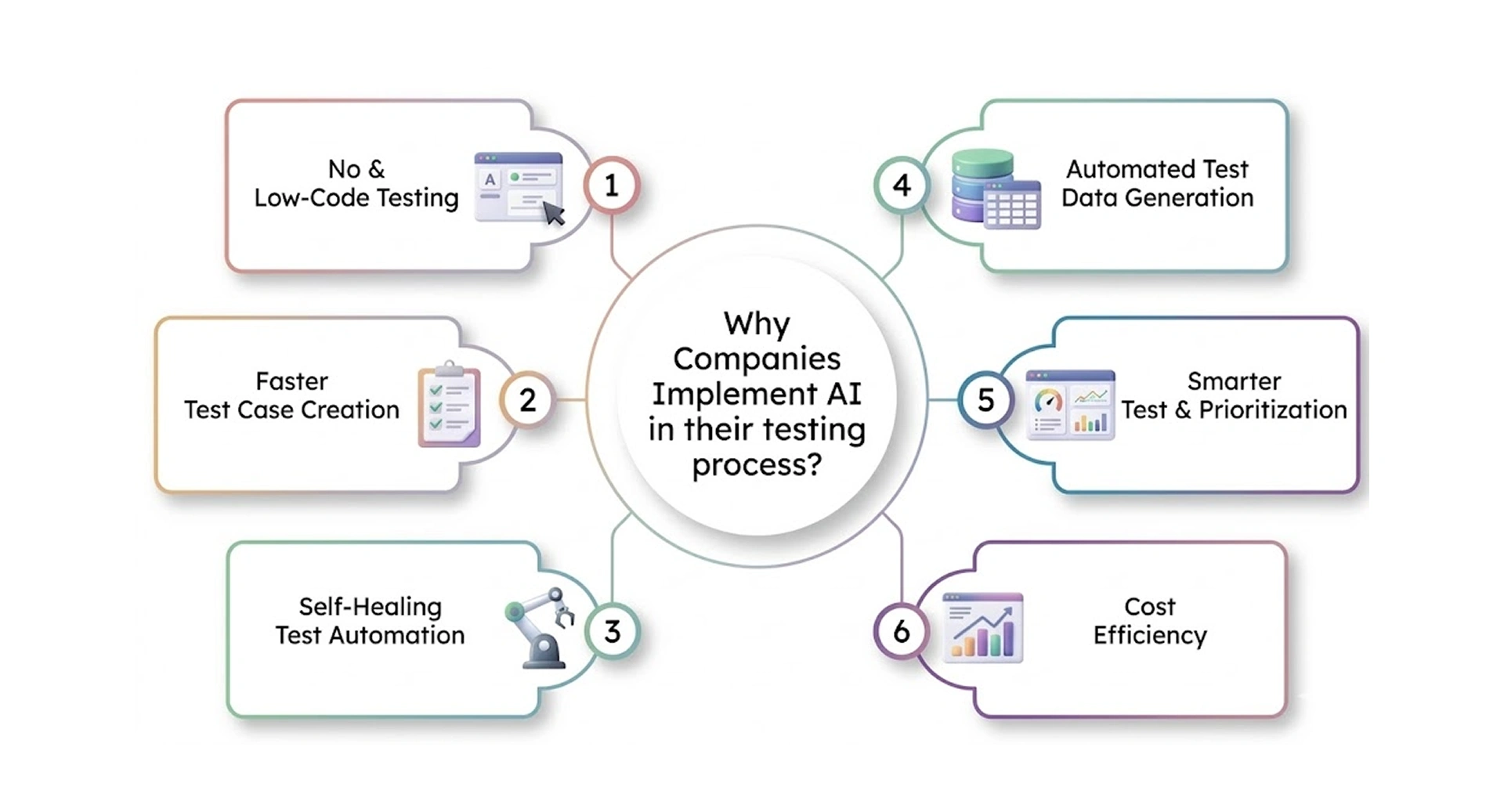
Manual testing is by no means to be displaced - exploratory tests, usability tests, a user acceptance test, all require a human approach that is impossible to simulate with a script. It is not that manual testing is not useful, it is just that it is not scalable. Manual regression coverage is an execution point that slows releases when your application is executed through microservices, dynamic frontends and connected APIs, instead of actually making the release safer.
The most frequent points of friction are the teams that encounter:
- Hours to run Repetitive test cases that give varying results based on the person running them.
- Regression coverage which is quiet contracting in response to time pressure associated with release deadlines.
- No sure method of testing the identical situations on several environments simultaneously.
- Manual operations which simply do not fit within CI/CD pipelines that should be automated in the quality gates.
The solution to this is through automation of testing to allow testing to repeat itself. With a well-integrated test suite, API behaviour, as well as database state, UI interactions, accessibility standards, cross-browser consistency, etc., are all gone through the same pipeline run. The difference between the organisations that automate and implement a formal QA process is found in only two areas: fewer defectors escaping or shorter release times.
Introduction to Mabl as an AI-powered platform improving software quality assurance
Mabl was designed to solve the problem that makes most automation investments expensive over time: maintenance. Traditional frameworks require teams to manually update tests every time the UI changes. On an application that ships weekly, that adds up fast.
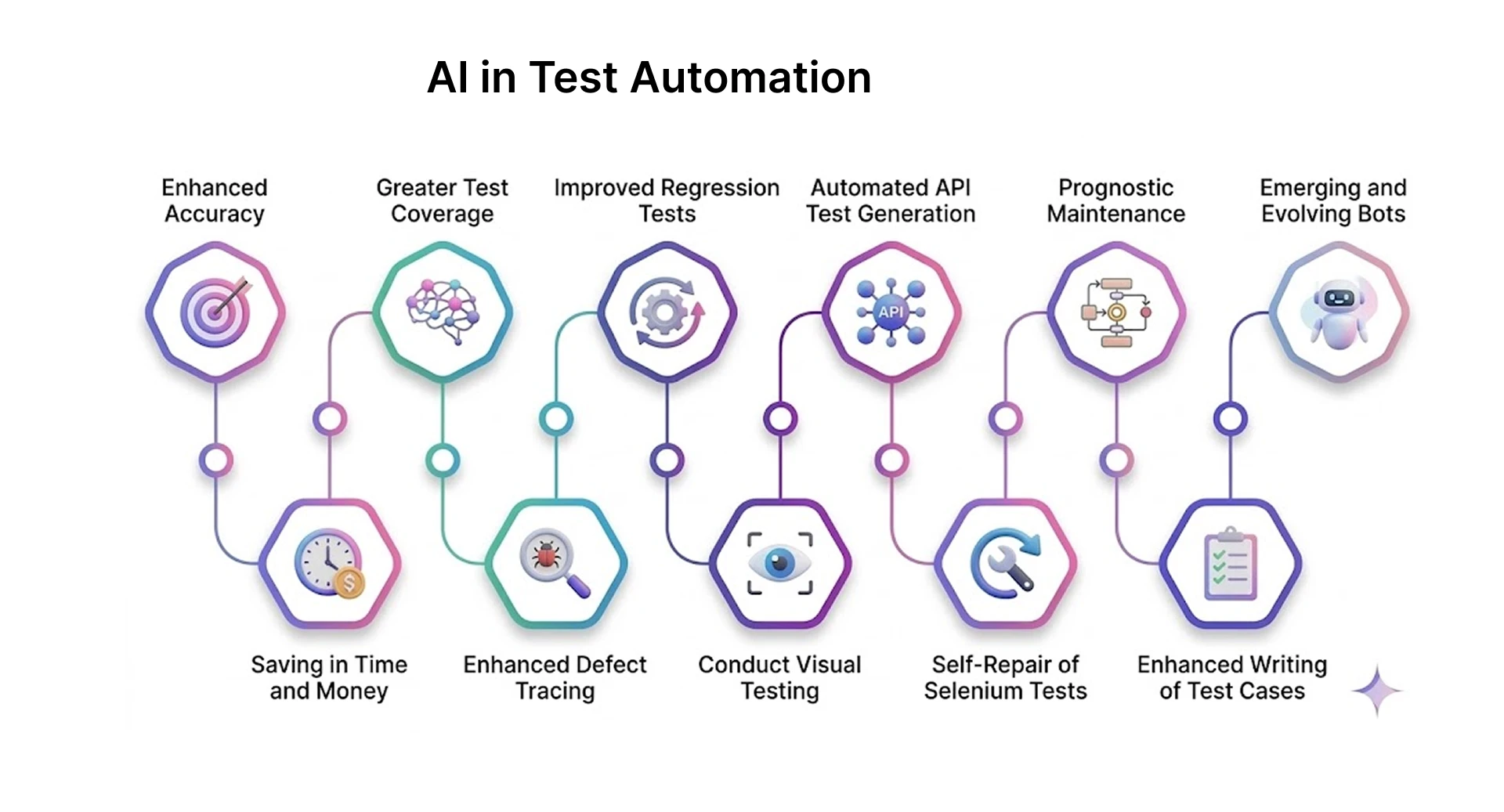
Mabl does not take this as it is. It does not need formal scripts in each case but instead relies on machine learning to develop your application behavior, computer vision to recognize visual changes, and natural language processing to create a test without needing a deep knowledge of code. As part of the application changes, the self-healing process of Mabl finds a way of updating the impacted tests instead of merely considering them as failed.
In addition to maintenance, Mabl handles the cases which actually demand different tools in a traditional stack: visual regression testing, DOM snapshot validation, WCAG-compliant accessibility testing, and screen-reader testing. When a team is attempting to enhance quality assurance without necessarily proportionally increasing the size of the QA staff, it eliminates a variety of types of manual work which silently accumulate until it occurs as a crisis.
Modern Challenges in Test Automation
What is test automation and its evolving role in modern software testing
Test automation means using software tools to run predefined checks automatically, without someone manually stepping through each scenario. The definition hasn't changed much. What has changed is the scope of what those checks need to cover.
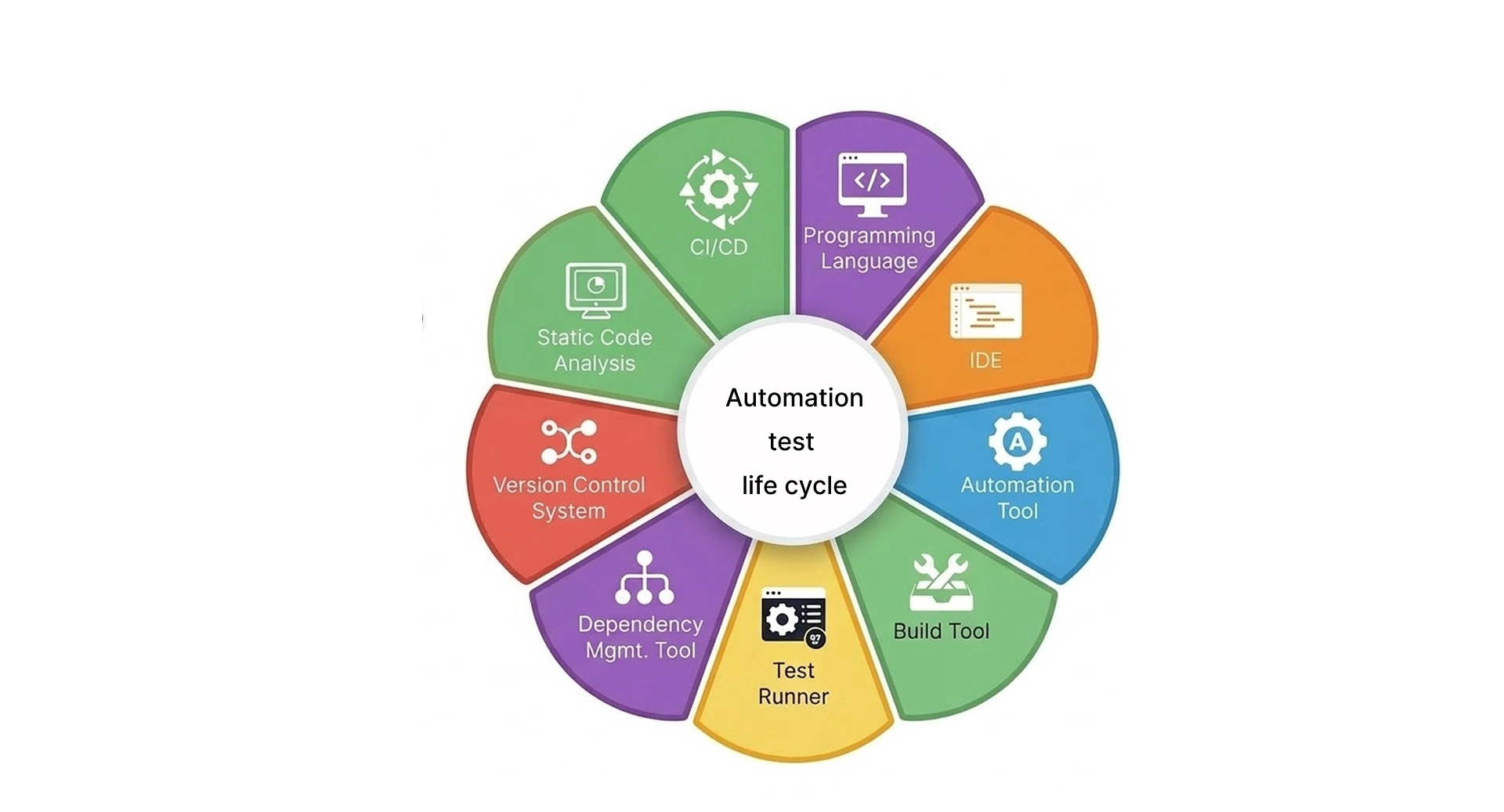
A decade ago, all you needed to do was to automate the happy path, using the core UI of your application. Nowadays, an application has numerous applications distributed among various services, APIs, third-party integrations, and environments. Automation has been forced to grow to correspond:
- Early stage unit testing to identify logic errors in their early stages.
- Integration tests to ensure that services communicate with one another as expected.
- Full-stack testing: Complete user flow and full stack testing.
- Regression suites assuring that the recent modifications have not caused any existing functionality to break.
- Performance tests that prove behaviour when it is loaded in real-world conditions.
- Accessibility tests: compliance with Web Content Accessibility Guidelines.
Unless there is good automated test coverage of these layers, the CI/CD pipelines are missing a quality gate. Deployments get riskier. Developers lose faith in the suite. Teams will eventually either compensate for delivery by slowing down releases, or deliver faster and accommodate more production incidents. It is automation that enables them to escape both of the mentioned trade-offs.
Automation challenges faced by QA teams including scalability and maintenance issues
Despite its advantages, automation testing introduces new challenges for QA teams.
Common challenges faced by quality engineers and QA teams include:
- High test maintenance when UI elements change
- Difficulty scaling automation across multiple environments
- Managing test artefacts and performance logs
- Ensuring reliable test coverage across complex systems
- Maintaining stable test environments and test data development
These challenges often increase operational overhead and reduce test reliability.
AI-powered testing platforms help overcome these limitations by automating test maintenance, improving test stability, and adapting to application changes automatically.
Limitations of traditional automation frameworks and tools
Traditional frameworks like Selenium have been widely used in automation testing. However, they often require heavy scripting and continuous maintenance.
Common limitations of traditional frameworks include:
- Dependency on manual test scripts
- High effort required for test case generation
- Limited support for visual testing and UI validation
- Difficulty detecting subtle changes in user behavior
- Lack of built-in AI-powered features
Newer Test Automation Platforms address these issues by incorporating Artificial Intelligence and Machine Learning.
Platforms such as Tricentis Testim, Rainforest QA, Virtuoso QA, and Mabl combine automation with AI capabilities to simplify testing workflows and improve efficiency, reflecting the growing demand for AI Development Services across modern software teams.
AI-Powered Test Automation with Mabl
What is Mabl testing and how it supports modern QA automation
Mabl testing implies the utilization of the Mabl platform to create and execute automated tests, however, the key difference with conventional automation is that Mabl is adaptive. It does not simply run a fixed program and give a report. It checks on your application, gets to know how it behaves and automatically changes tests in response to changes.
The workflow backends provided by Mabl are:
- End-to-end tests of end-user journeys involved in the user log-in to major business activities.
- Automated regression testing activated during each build or deployment.
- Schema checking and response validation API testing.
- Visual regression, which involves computer vision layouts to identify a layout change between deployers.
- WCAG tests of accessibility, colour contrast and screen-reader compatibility.
- Continuous production control of the key user paths.
The most practically notable feature of Mabl tests to SaaS organizations is its adaptive nature. As the product designer could rearrange the checkout process, or the developer change the name of the field in the registration form, the tests will not simply fail, they are self-healed by the self-healing layer of Mabl. That disparity, in weekly issues over a year, would result in a major decline in QA maintenance work.
Teams finally either must slow down to compensate, or they can release quicker and accommodate more production incidents. It is the automation that helps them to escape both of these trade-offs.
AI tools, AI agents, and AI technologies used in Mabl test automation
Mabl integrates several advanced AI technologies that make automation smarter and more adaptive.
Key AI components used in Mabl include:
- Machine Learning algorithms that analyse application behavior
- Natural Language Processing for simplified test creation
- Computer Vision for visual testing
- intelligent AI agents that monitor application changes
- generative AI capabilities for test case generation
Some advanced capabilities include:
- Vision AI for visual change detection
- DOM snapshot analysis
- adaptive waiting using Intelligent Wait
- predictive error detection in testing workflows
These technologies help improve test stability, test coverage, and automated testing efficiency.
Key features of Mabl including intelligent test generation and self-healing tests
Self-healing has become the best known characteristic of Mabl to the point that in practice it is the one that is most time saving. Every time a UI element changes - a button ID has been corrected, a modal layout rearranged, a form element repositioned, the visual and structural context surrounding it will be scanned by Mabl, which will find the new location of the element and automatically re-write the test. The healed tests are looked at in the dashboard by the teams; the broken locators of the tests need not be identified and fixed manually by the teams.
On top of the self-healing, the most influential capabilities on the platform are:
- Creation of agentic test: Mabl is capable of rewriting application behaviour to create new test cases based on its analysis of user flows, reason about them, not just repairing existing test cases but creating new coverage.
- Integrated test orchestration: a centralised dashboard that reuses the results, failure patterns, visual differences and coverage gaps across environments.
- Intrinsic accessibility testing: WCAG compliance testing is performed concurrently with functional testing, and includes colour-contrast, form labels, and compatibility with a screen-reader.
- Native support to Jira Cloud, GitHub, Jenkins, CircleCI and Azure Devices.
The aggregate impact of these is a change in the way the QA time is spent. As opposed to maintaining the collection of reactive scripts each time a change occurs in the UI, the team considers coverage strategy and the type of exploratory testing not well-capable of being achieved by automated tools.
How Mabl improves website testing and overall software quality assurance
For modern digital applications, website testing is critical to maintaining performance and accessibility.
Mabl enhances website testing by enabling:
- cross-browser testing across multiple platforms
- detection of accessibility issues aligned with accessibility standards
- monitoring of user journeys and business processes
- validation of form labels and color contrast
- integration with performance monitoring systems
By continuously analysing application behavior, Mabl helps teams deliver better user experience and product quality.
Organisations partnering with frugal testing often combine AI-powered automation with strategic QA processes to improve overall testing outcomes.
Automation Tools for Modern QA Teams
Comparison of popular automation tools such as Selenium, Jenkins, and Mabl
Most QA teams don't rely on a single tool. Test creation, execution, and pipeline orchestration typically involve different tools at each layer. Understanding what each one is actually for makes the integration decisions clearer:
The distinction between Selenium and Mabl isn't really about capability — both can cover end-to-end web testing. The difference is ownership. Selenium gives you full control but hands you full responsibility for every locator, every timing fix, and every script update. Mabl reduces that ownership burden through its AI layer, in exchange for some flexibility and a cloud dependency.
Jenkins is neither a testing tool nor a replacement for either — it is the orchestrator. It triggers the tests, gates the deployments, and stores the artefacts. Most CI/CD stacks combine all three in some form: Jenkins or a similar tool running the pipeline, Selenium or Mabl executing the tests, and Mabl or a separate system reporting the results.
Choosing the right QA testing tools and test management tools
Selecting the right testing tools depends on several factors.
Organisations should evaluate tools based on:
- ability to integrate with CI/CD pipelines
- support for end-to-end testing
- scalability across multiple environments
- ease of maintaining test scripts and test cases
- reporting features and test management tools
By carefully selecting the right tools, teams can build reliable automation testing strategies.
Integrating Mabl with CI/CD Pipelines
Importance of CI/CD pipelines in modern DevOps technologies
CI/CD pipelines are the backbone of modern DevOps practices.
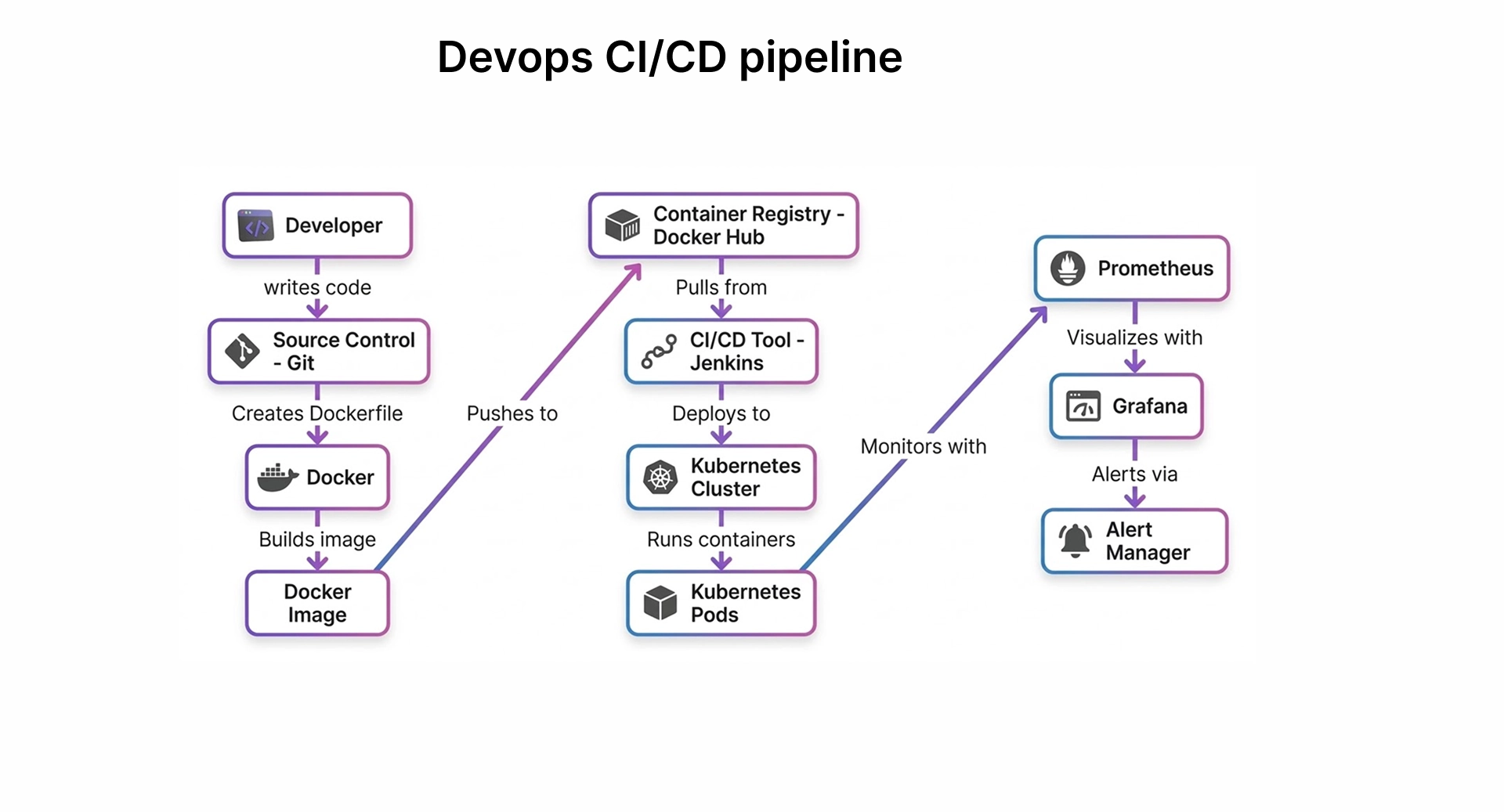
They enable teams to automate code integration and deployment while maintaining product quality.
Key benefits include:
- faster delivery of new features
- automated validation through automated tests
- reduced risk of production errors
- improved collaboration across QA departments and development teams
Automation testing plays a critical role in ensuring these pipelines remain stable.
Role of continuous integration and continuous deployment in automation testing
A continuous integration requires that every code change undergo an automatic validation before the integration. Practically, this is the reason why the test suite has to be fast enough to be able to run on all of the pull requests and at the same time should be sufficiently reliable enough to win the confidence of the engineering teams themselves. A test suite that takes one hour to complete does not serve its purpose no matter how comprehensive it is a test suite that fails 20 percent of the time should not be used.
The continuous deployment goes further. Once validated code is promoted automatically to production, the test suite is the only quality gateway between a local commit and a live, customer-facing deployment by a developer. As a result, the stakes are considerably increased and the negative influence of flakiness and maintenance overhead is especially vivid at this point. A test with low reliability in the continuous integration pipeline is not just an inconvenience, but it is a potentially active threat in the context of continuous deployment.
Mabl has been specifically designed to work in this environment. Tests also run concurrently in different environments thus improving throughput. A self-recovery system sustains the reliability of the suite as the bottom of the user is developed. The resulting test suite, then, can actually serve as a genuine continuous-deployment quality gate, but not like a continued-integration checkpoint, which can be forgotten when it is inconvenient.
Integrating Mabl with DevOps pipeline tools like Jenkins
Mabl integrates easily with DevOps pipeline tools such as Jenkins.
Typical integration steps include:
- connecting Mabl with CI/CD pipeline tools
- triggering automated tests during build processes
- executing end-to-end tests across environments
- storing test artefacts and performance logs
- generating automated reports
This integration ensures testing happens continuously throughout the development lifecycle.
Best Practices for Effective Test Automation
Designing maintainable automated test cases and scalable testing workflows
Designing effective automation strategies requires careful planning.
Best practices include:
- creating reusable test scripts
- ensuring stable test environments
- implementing model-based testing
- improving code coverage and test coverage
- monitoring performance through performance testing
These practices help teams build scalable testing workflows.
Monitoring test results and reporting strategies for quality assurance
Monitoring and reporting help teams continuously improve software quality.
Important reporting practices include:
- tracking test artefacts and performance logs
- analysing failed tests
- monitoring test stability
- detecting accessibility issues
- sharing insights with QA teams and stakeholders
Effective reporting ensures continuous improvement.
Advantages and limitations of using Mabl for AI-powered test automation
Like any tool, Mabl has both advantages and limitations.
Advantages include:
- AI-driven test maintenance
- simplified test case generation
- advanced visual testing
- strong integration with DevOps pipelines
Limitations may include:
- learning curve for new teams
- dependency on cloud infrastructure
- licensing costs for large enterprises
Despite these limitations, AI-powered platforms remain highly effective for modern software development.
Conclusion: The Future of AI-Driven Test Automation
Recap of how AI-powered automation tools improve software testing
The explicit, quantifiable impact of AI based testing systems on software quality assurance costs is that the cost of a test suite has been dramatically lowered as the application evolves. Self-healing manages the drift in locators that previously filled up the QA bandwidth, following each sprint. The visual AI is able to detect regressions which script-based tools would not detect at all. The creation of agentic tests results in new coverage that is not produced by waiting to have all scenarios scripted by an engineer manually.
The teams that benefit the most of the tools are usually known to have some common features. They incorporated testing in their CI/CD cycle appropriately, hence, outcomes are automatic and judged. Maintainability was in their tests at an initial design stage rather than to pass the release at hand. And they handled test output as continuous signal as opposed to pre-release checkbox. The technology does not replace good practice, but can make it even faster.
Importance of adopting intelligent QA automation solutions like Mabl
Most QA leaders and CTOs do not actually ask themselves whether they should invest in intelligent automation, just because the current testing infrastructure will be able to fully support the speed at which the business will be able to release its products. When you are told that the answer requires caveats in the form of we manually add critical paths to major releases or the suite is rather flaky and we understand which tests to rely on then you should think that the infrastructure has lagged behind.
Mabl is focused on the most costly aspect of that gap, which is the maintenance overhead that can render the traditional automation fragile at scale. Together with an active testing plan and actual CI/CD design, it provides teams with a quality base that does not fall when the release speed is high but does need constant propping.
The most effective testing environment is the one that your team does not think much about, since it operates on each deployment, and needs to identify those things that are important, and is kept up-to-date without anyone necessarily having to babysit it. That would be a true achievement using the right platform, and the right approach. It's worth building toward.
People Also Ask (FAQs)
Q1.What is Mabl and its usage in relation to automation testing and software testing?
Ans: Mabl is an AI assisted platform that is created to make automation testing easier in the current software testing process. It enables teams to develop, run and sustain automated test cases with smart capabilities that minimize manual labor. This is useful in enhancing the efficiency of testing and the quality of products.
Q2.What can Mabl do to enhance the quality assurance and QA automation?
Ans: Mabl impresses quality assurance as it allows the efficient instrumentation of quality assurance with the help of AI-generated tests and AI-supported maintenance. It assists QA teams to identify problems at an early stage and ensure testing is done on a regular basis. This will result in improved software quality assurance and increased software release cycles.
Q3.Does Mabl support CI/CD pipelines and DevOps technologies?
Ans: Yes, Mabl is interoperable with CI / CD pipelines and common Devops tech. It promotes the continuity of integration and continuity of deployment software since it automatically executes tests at the development phases. This provides stability on software across the DevOps pipeline.
Q4.What is the comparison between Mabl and the traditional automation tools such as the Selenium testing?
Ans: As opposed to the older automation software like the Selenium testing, Mabl employs AI in order to automatically modify tests as applications evolve. This minimizes the maintenance effort, and test automation is more acceptable. It also has inbuilt analytics and reporting capability to manage tests better.
Q5.What are the features of AI tools and AI agents on the Mabl test automation?
Ans: Mabl uses the power of modern AI tools, AI agents and uses advanced AI technology to test automation. The intelligent capabilities are used to analyse the behavior of applications and automatically generate updates to tests as they change. This renders the automation software smarter and more efficient to the modern development teams.