


Brain-computer interfaces are no longer science fiction. As artificial intelligence, neural engineering, and robotics develop at a rapid pace, companies such as Neuralink are redefining the way human beings can relate to machines.
Neuralink, which was established by Elon Musk, is at the juncture of neuroscience, computer science, artificial intelligence, and biomedical engineering and tries to establish a direct communication pathway between the human brain and other external devices. This blog describes the functionality of Neuralink, the technology underlying brain-computer interfaces, existing functionality, potential risks, and prospects.
What you will gain from reading this blog
- Understand what brain–computer interfaces are and how Neuralink fits into this technology.
- Learn how the Neuralink chip, implant, and AI software work together.
- Discover real-world applications and current capabilities of Neuralink.
- Explore safety, ethical concerns, and ongoing human trials.
- Gain insight into the future potential of Neuralink and human–machine interaction.
What Is Neuralink and Its Mission
Neuralink is a neurotechnology firm that was established by Elon Musk, and its aim is to develop a brain-computer interface that is implantable and safe and can enable human beings to communicate directly with computers. The Neuralink mission statement is aimed at regaining autonomy in individuals with neurological conditions as well as establishing the platform of human-AI cooperation in the future.
Neuralink is a mix of robotics, hardware, and AI, unlike many other companies that specialise in artificial intelligence, and in particular, software. The company focuses on the treatment of conditions like spinal cord injury, Parkinson's disease, and amyotrophic lateral sclerosis and ultimately other more general applications in cognition. To those who pose the question, is Neuralink real? Yes, indeed; Neuralink is already running approved human tests.
What Are Brain-Computer Interfaces (BCIs) and How They Work
Brain-computer interfaces or brain-machine interfaces are a type of gadget that converts brain signals into external device commands. They perform electrode arrays in and around the areas of the brain they would want to record neural activity of those areas that, in turn, conduct movement, sensory inputs, and visual information, which is then translated into machine learning algorithms to create digital signals.
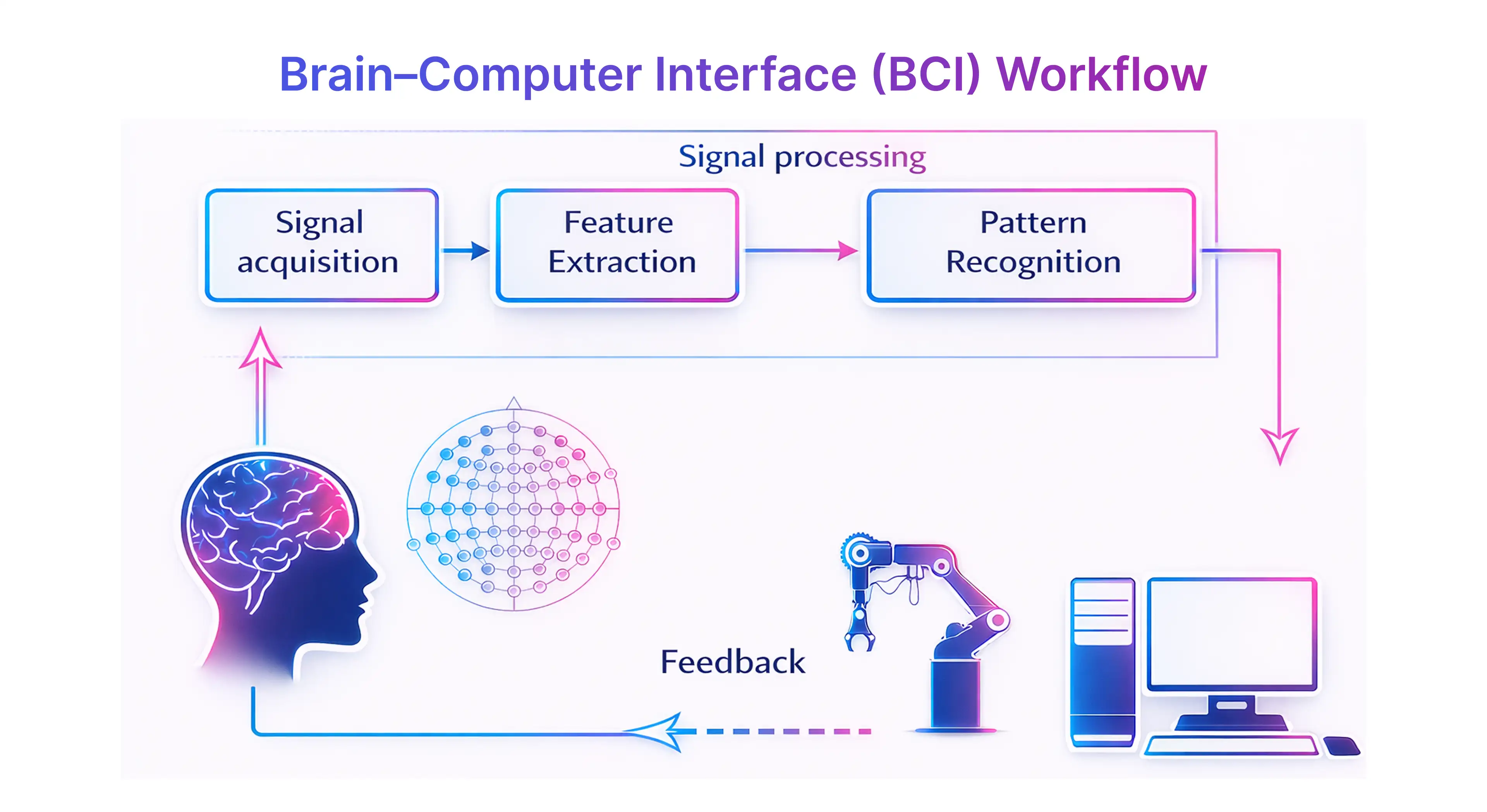
The significance of BCI lies in the fact that it does not use the damaged neural connections that can be restored, allowing brain activity to only display the functions of cursor control, robotic arm movement and typing. The high-level systems can aid in the epidural spinal cord stimulation of motor cortices and interventions such as deep-brain stimulators or cochlear implant technologies. High-resolution imaging and optical coherence tomography are the tools that make placement more accurate and can be seen as a way of application in future research of using these tools to increase memory and to achieve more powerful sensory restoration.
How Neuralink Works
At a high level, Neuralink creates a closed-loop system between the human brain and an external computer. This system enables direct communication by capturing neural signals, interpreting them with artificial intelligence, and converting them into real-time digital actions.
Neuralink starts with recording neural activity of particular sections of the brain, like the motor cortex, where the signals associated with movement are generated. The neurons release electrical impulses when an individual thinks about moving a cursor or typing a letter. Ultra-thin electrode threads, which have been implanted in the brain tissue, detect these tiny signals.
The Neuralink chip that is implanted below the skull increases, filters and digitalises the neural signals once they are captured. This neural data is then analysed using artificial intelligence and machine learning models to determine patterns that match the intent of the user. The system becomes learning and adjusting over time, becoming more accurate with an improved understanding of the brain activity of every individual.
At last, the digital outputs are interpreted based on the decoded signals, e.g., a cursor is moved on a screen, a piece of text is selected, or external devices are controlled. The loop may also be reversible in certain situations, such as when electrical stimulation is fed back to the brain in order to facilitate therapeutic results.
Key steps in the Neuralink process:
- Neural signal capture: Electrode threads record electrical impulses from neurons in targeted brain regions.
- Signal processing: The implant filters and digitises raw brain signals for analysis.
- AI-based decoding: Machine learning models interpret neural patterns into intended actions.
- Wireless transmission: Processed data is sent wirelessly to an external device or computer.
- Real-time feedback: The system responds instantly, enabling smooth and natural interaction.
This closed-loop approach is what makes the Neuralink company's brain-computer interface powerful, adaptive, and capable of evolving alongside the user’s neural activity.
Neural Signal Detection and Brain Data Capture
Neurons communicate through electrical impulses known as neural signals. Neuralink’s implant records this brain activity directly from targeted areas such as the motor cortex. The system captures neural data at high resolution while minimising damage to brain tissue. This precise signal capture is what differentiates Neuralink from earlier brain implant chip technologies.This precise signal capture is what differentiates Neuralink from earlier brain implant chip technologies, an area where professionals often build expertise through UND's electrical engineering degree online.
H3-From Brain Signals to Digital Output
Once neural signals are recorded, machine learning models analyse them to identify intent. These models function similarly to artificial intelligence coding systems used in speech recognition or computer vision. Over time, the system improves through training, decoding neural activity into actions such as cursor movement, typing, or controlling external devices.
Neuralink Implant Technology
Implanting electrode threads with sub-millimetre precision requires advanced robotic assistance, which is where the Neuralink robot plays a critical role. The robot performs the surgical procedure by accurately inserting ultra-thin electrode threads into the human brain chip implantation site while actively avoiding blood vessels. This minimises bleeding, reduces tissue damage, and improves patient safety. Powered by artificial intelligence, the system combines real-time imaging, machine learning, and robotics to achieve a level of precision not possible with manual surgery.
Beyond healthcare, this demonstrates the broader advantages of artificial intelligence, such as automation, accuracy, scalability, and decision support—similar to how an artificial intelligence personal assistant enhances efficiency by analysing data and responding intelligently. This fusion of robotics, AI, and neuroscience makes large-scale clinical deployment of brain–computer interfaces feasible.
The Neuralink Chip and Electrode Threads
The Neuralink chip, sometimes referred to as the N1 implant, connects to ultra-thin, flexible electrode threads inserted into the brain. These threads act as electrode arrays that detect neural activity with minimal inflammation. Compared to older Utah array systems, Neuralink’s approach offers higher channel counts and greater longevity.
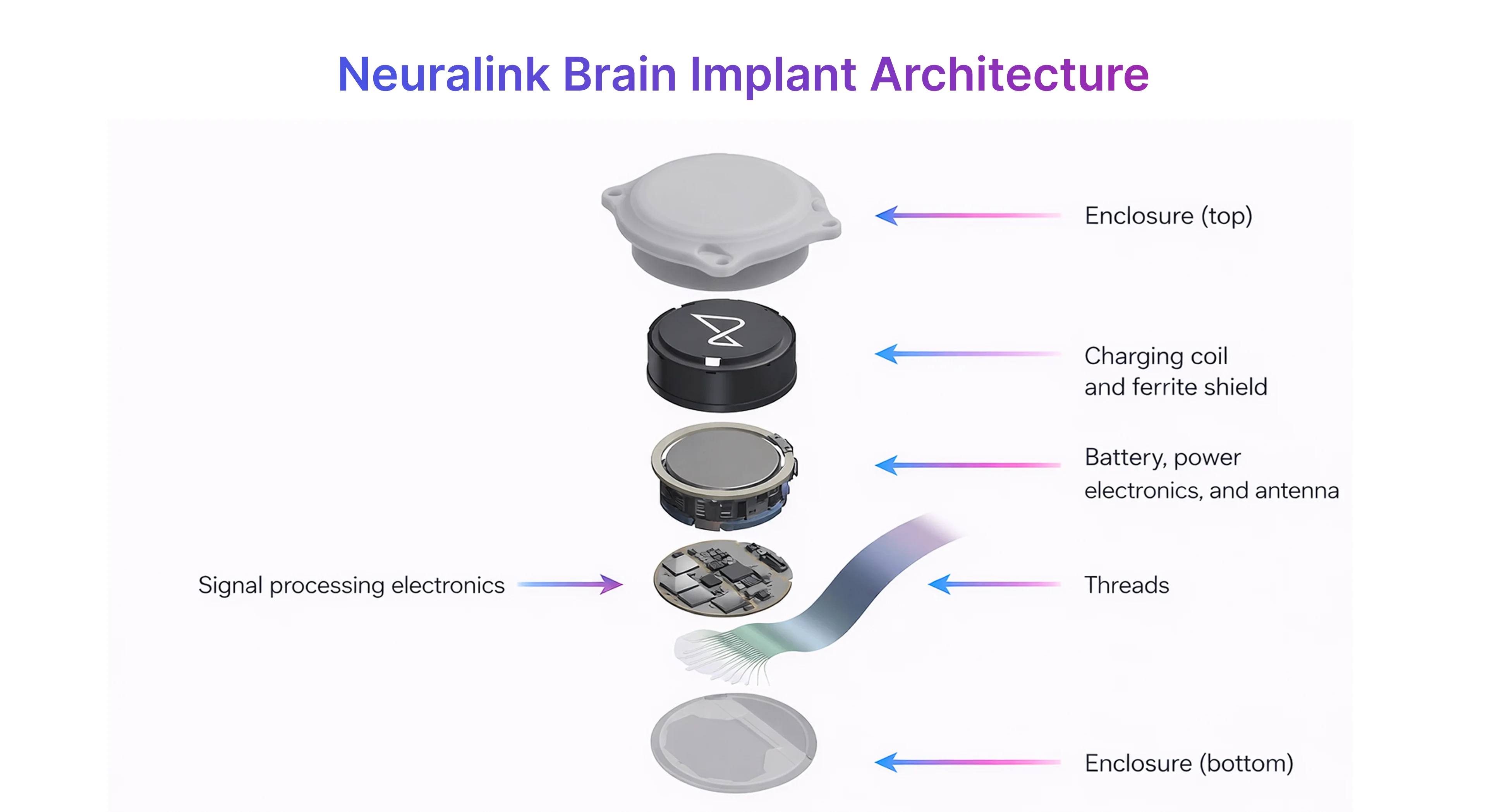
This brain chip implant is often described as Elon Musk’s brain chip or the brain computer chip powering Neuralink technology.
Wireless Data Transmission
Neuralink uses wireless communication to transmit neural data outside the skull, eliminating bulky external hardware. This wireless design makes the Neuralink device safer and more practical for daily use, distinguishing it from earlier brain implant chip systems that relied on external connectors.
The Neuralink Surgical Robot
Implanting electrode threads with sub-millimetre precision requires robotic assistance. The Neuralink robot performs the surgical procedure by inserting threads while avoiding blood vessels, reducing the risk of bleeding and tissue damage.
This robotic precision is critical for safety and scalability, making large-scale clinical deployment possible. The Neuralink robot represents a fusion of robotics, AI, and neuroscience.
Neuralink Software, AI, and Signal Processing
Hardware alone is not enough. Neuralink relies heavily on artificial intelligence to interpret complex brain signals in real time, making brain-computer interface QA essential to ensure accuracy, safety, and reliability. The software layer plays a critical role in transforming raw neural activity into meaningful, actionable outputs, which must be validated through rigorous brain implant QA testing before real-world use.
1. Advanced signal filtering: AI-driven algorithms clean and filter noisy brain signals, isolating relevant neural activity from background interference, validated through structured brain computer interface QA processes.
2. Machine learning–based decoding: Neural networks learn patterns in neural data, improving accuracy in predicting user intent over time, requiring continuous brain implant QA testing to verify model performance.
3. Adaptive learning systems: The software adapts to changes in brain signals, ensuring consistent performance as neural activity evolves -an important focus area for brain-computer interface QA.
4. Low-latency processing: Real-time signal processing enables immediate feedback, demanding extensive brain implant QA testing to meet safety and performance benchmarks.
5. Scalability and updates:Software enhancements can be deployed without hardware changes, making ongoing brain-computer interface QA critical as AI models evolve.
Machine Learning Models for Neural Signal Decoding
Neuralink uses machine learning and neural network models—such as Convolutional Neural Networks (CNNs) for signal feature extraction, Recurrent Neural Networks (RNNs) and Long Short-Term Memory (LSTM) models for temporal neural signal decoding, and Transformer-based architectures for high-dimensional pattern recognition—to identify meaningful patterns in neural data and convert brain activity into usable digital commands. For a neural interface testing company, validating these AI-driven models is critical, as they function similarly to neural networks used in data mining—analysing large volumes of complex data to generate accurate and actionable insights. This makes specialised neural device validation services and neural AI testing services essential to ensure reliability, safety, and performance.

1. Pattern recognition:Neural networks detect recurring neural activity patterns linked to specific intentions or movements, which must be verified by a neural interface testing company for consistent results.
2. Data-driven learning:Models are trained on recorded neural signals, improving decoding accuracy as more data is collected - an important focus of neural device validation services.
3. Noise reduction:Machine learning separates useful neural signals from background noise and irrelevant brain activity, requiring robust neural AI testing services to confirm signal integrity.
4. Adaptive optimization: The system continuously refines predictions based on user interaction and feedback, demanding ongoing validation from a neural interface testing company.
What Can Neuralink Do Today
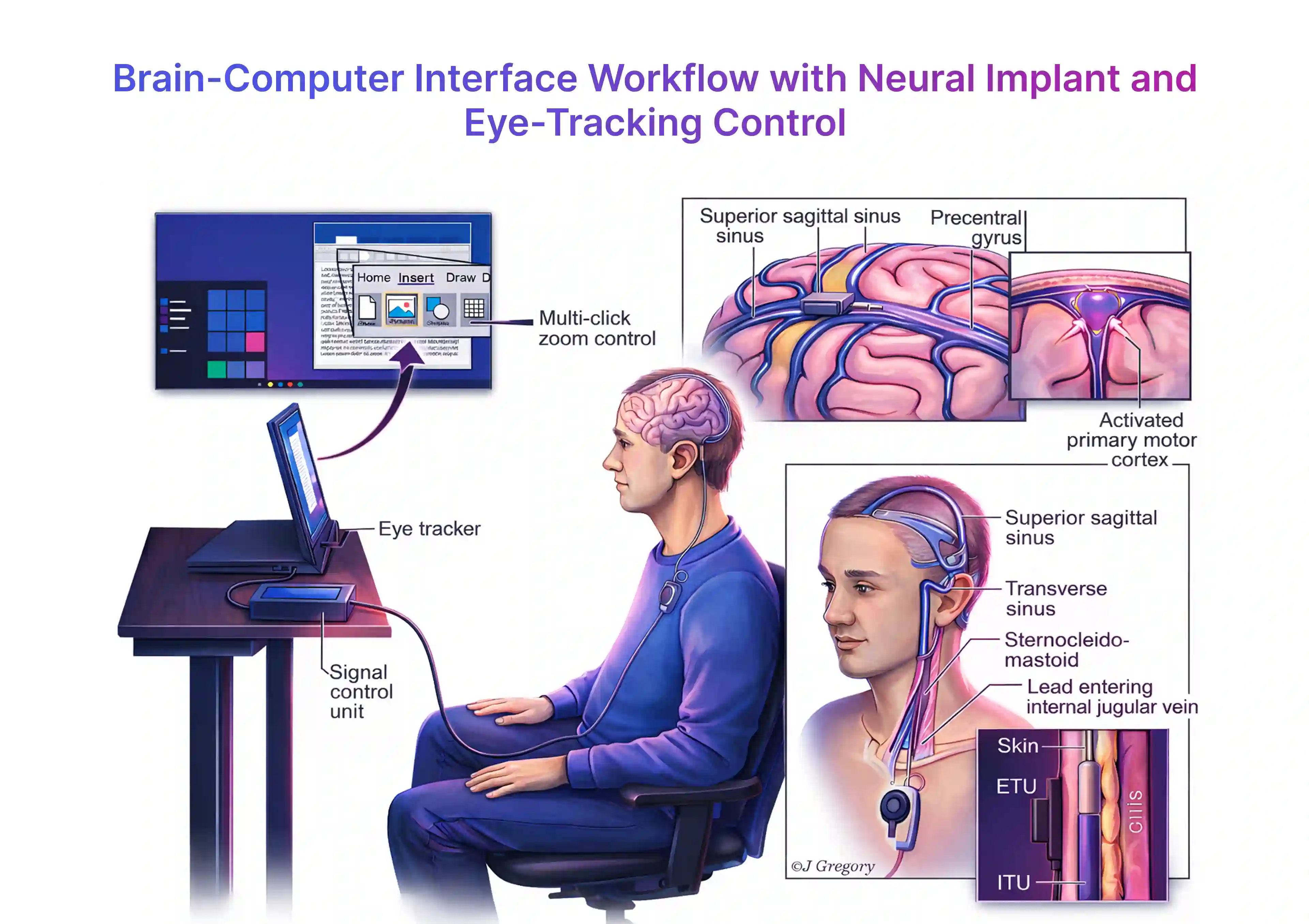
Currently, Neuralink focuses on restoring lost function. In human trials, participants have used Neuralink brain implants to control cursors, type text, and interact with computers without physical movement.
Restoring Communication and Movement for Paralyzed Patients
For individuals with paralysis or spinal cord injury, Neuralink enables communication through thought alone. This includes typing messages, controlling digital interfaces, and potentially operating prosthetic limbs or robotic limbs in the future.
Neuralink Human Trials and Safety
Neuralink’s human trials are conducted under rigorous regulatory supervision, including stringent FDA approval and monitoring processes. These trials place strong emphasis on participant safety, evaluating risks such as infection, implant stability, and the long-term interaction between the device and brain tissue. Ongoing clinical studies, including the PRIME Study, are designed to assess both the safety and functional performance of the implant, while carefully addressing concerns related to neurosurgical procedures, implant longevity, and long-term neural health.
Key Safety & Regulatory Focus Areas:
- FDA Regulatory Oversight – Trials follow strict approval, compliance, and monitoring standards.
- Surgical Safety – Risks related to brain surgery and implantation are closely managed.
- Infection Control – Preventive measures are evaluated to minimize post-surgical infections.
- Device Stability & Reliability – Long-term implant positioning and performance are assessed.
- Neural Tissue Health – Continuous monitoring of long-term effects on brain tissue and function.
Ethical Concerns and Societal Risks
As with any powerful technology, Neuralink raises ethical concerns. Privacy concerns around neural data, the risk of misuse, and unequal access are major issues. Critics worry about cognitive enhancement, surveillance, and the blurred boundary between human artificial intelligence and machines.
Addressing these ethical concerns is essential for public trust and responsible adoption.
Future Possibilities of Neuralink
The future scope of Neuralink goes far beyond its initial medical applications. As artificial intelligence continues to evolve, Neuralink has the potential to fundamentally transform how humans interact with technology and digital systems.
Future use cases may include advanced treatments for neurodegenerative diseases, restoration of vision through direct stimulation of the visual cortex, cognitive enhancement such as memory improvement, and seamless, thought-driven interaction with AI-powered virtual assistants. Although some of these ideas echo science-fiction concepts of brain chips, Neuralink is steadily bridging the gap between imagination and real-world technological innovation.
Final Thoughts on Neuralink Technology
Neuralink is the most ambitious brain-computer interface project that has ever been undertaken, combining artificial intelligence, robotics, and neuroscience into one transformative platform. Through the creation of an advanced brain implant, the Neuralink project created by Elon Musk is intended to establish a direct connection between the human brain and computers that would open up new opportunities to treat neurological disorders and recover the functions that were previously lost.
Neuralink also has major obstacles in spite of its potential. The safety, the long-term safety of the brain implants, the ethical issues about the privacy of neural data, and the rigorous regulatory demands are all major challenges. Continued human testing and government regulations will be important in defining the degree of responsibility and effectiveness of this technology when it is implemented on a large scale.
In the future, Neuralink will have much more far-reaching applications than medical use. Increased human-computer interaction to even a greater level of integration with the artificial intelligence systems, Neuralink may be able to fundamentally alter the way humans interact with machines. When it is developed responsibly, it will allow redefining the future interaction between human intelligence and technology.
Frequently Asked Questions
1. What problem is Neuralink trying to solve?
Neuralink aims to restore and enhance communication between the brain and computers, particularly for people with paralysis, neurological disorders, or loss of motor function.
2. How does a brain–computer interface (BCI) like Neuralink work?
A BCI captures neural signals from the brain, processes them using AI algorithms, and converts them into digital commands that can control external devices such as computers or prosthetics.
3. What makes Neuralink different from traditional BCIs?
Neuralink uses ultra-thin electrode threads, robotic implantation, and advanced machine-learning models to achieve higher signal resolution, improved safety, and long-term scalability.
4. Is Neuralink’s brain implant safe for humans?
Neuralink is undergoing clinical trials to evaluate safety and effectiveness. The system is designed to minimize tissue damage, but long-term safety is still being studied.
5. What role does artificial intelligence play in Neuralink?
AI helps decode complex neural signals, identify patterns in brain activity, and translate them into accurate real-time digital outputs.