


The Invisible Forces Behind Software Failures
Most software teams spend countless hours debugging code, reviewing commits, and fixing error messages in production. Yet many of the costliest defects continue to reappear in various guises. The uncomfortable truth is that most bugs are not due to syntax errors, library breaks, or logical fallacies. They are caused by assumptions - unstated beliefs about users, systems, data, and business rules.
At Frugal, we’ve observed this pattern across web and mobile development, embedded firmware, cloud services, and enterprise applications. Whether it’s a JavaScript null value causing a production defect or a credit limit misinterpretation in a business process, assumptions quietly shape outcomes long before code is written. Understanding this invisible layer is critical for developers, testers, architects, business analysts, and stakeholders involved in the software development process.

Rethinking What We Call a “Bug”
Why “Code Bug” Is a Misleading Label
The term “code bug” implies that the mistake exists inside the program itself. Historically, the word “bug” even traces back to hardware faults, famously popularized by Grace Hopper during early computing days. However, in modern programming, most defects are not random binary errors or compiler failures. They are logical outcomes of decisions made under assumptions.
- Developers assume input formats will remain consistent
- Systems assume network reliability or stable IP addresses
- Applications assume users follow intended workflows
- Business rules are assumed rather than documented
When these assumptions are violated, the software starts acting “incorrectly,” even if it is doing what the code says it should be doing. This characterization of the problem as an issue of coding overlooks the root of the issue.
In reality, this incorrect labeling causes a cycle of debugging without resolving the actual issue.
When Software Fails, Code Is Often Doing Exactly What It Was Told
One of the most overlooked realities in debugging is that software systems are literal. A program does not infer intent. It executes instructions. If a results array overflows, a socket-read blocks indefinitely, or totalBytesRead returns an unexpected value, the code is often honoring assumptions that no longer hold true.
Common examples include:
- Regex strings that fail due to unanticipated formats
- File system code assuming stable directory structures
- Multithreaded programs assuming execution order
- CI pipelines assuming clean environments
These failures occur during deployment or production, not because the code was faulty, but because reality had diverged from the mental model. The implication here is that there has been a paradigm shift in the way teams approach debugging or troubleshooting.
Treating code as the root cause of every issue often leads to an endless cycle of short-term fixes. Refactoring may suppress an error message or additional checks may prevent a failure, but the underlying assumption remains unexamined. Over time, this approach results in fragile logic and increasingly complex, spaghetti-like code.
- Quick fixes accumulate technical debt
- Hidden assumptions remain undocumented
- Future developers inherit fragile systems
A more effective approach reframes bugs as signals - evidence that an assumption was incorrect or incomplete. When teams investigate why an assumption existed, they unlock long-term stability and improved system architecture.
The Role of Assumptions in Software Development
What Assumptions Really Are in Engineering Teams
Assumptions are beliefs accepted as true without verification. In software development, they influence everything from user stories to system architecture. They can exist in documentation, backlogs, design discussions, or simply in a developer’s head.
Typical assumptions include:
- Users understand error messages
- APIs always return valid data
- Libraries behave consistently across versions
- Business users share the same definitions
These beliefs often go unchallenged because they feel “obvious.” Yet in complex systems, even small assumptions can cascade into production defects and customer dissatisfaction.
Implicit vs Explicit Assumptions - Why the Hidden Ones Hurt More
Explicit assumptions are documented, reviewed, and revisited. Implicit assumptions are dangerous because no one knows they exist. They silently influence decisions across the development process.
- Implicit assumptions hide in variable names
- They live in undocumented business rules
- They spread across teams through miscommunication
For example, a Business Analyst may assume a credit limit is fixed, while developers assume it is dynamic. Without explicit clarification, the system behaves incorrectly, even though each role acted reasonably. These gaps are responsible for many defects logged in bug trackers long after deployment.
Why Smart Developers Fall into Assumption Traps
Experience is a double-edged sword. Skilled engineers recognize patterns quickly, but pattern recognition can override verification. Under time pressure, teams rely on familiarity rather than questioning fundamentals.
Common drivers include:
- Agile velocity demands
- Incomplete elicitation
- Overconfidence in prior projects
- Lack of cross-functional reviews
Even teams practicing Extreme Programming or Ensemble development are not immune. Without deliberate checks, assumptions become invisible defaults, shaping outcomes without scrutiny.
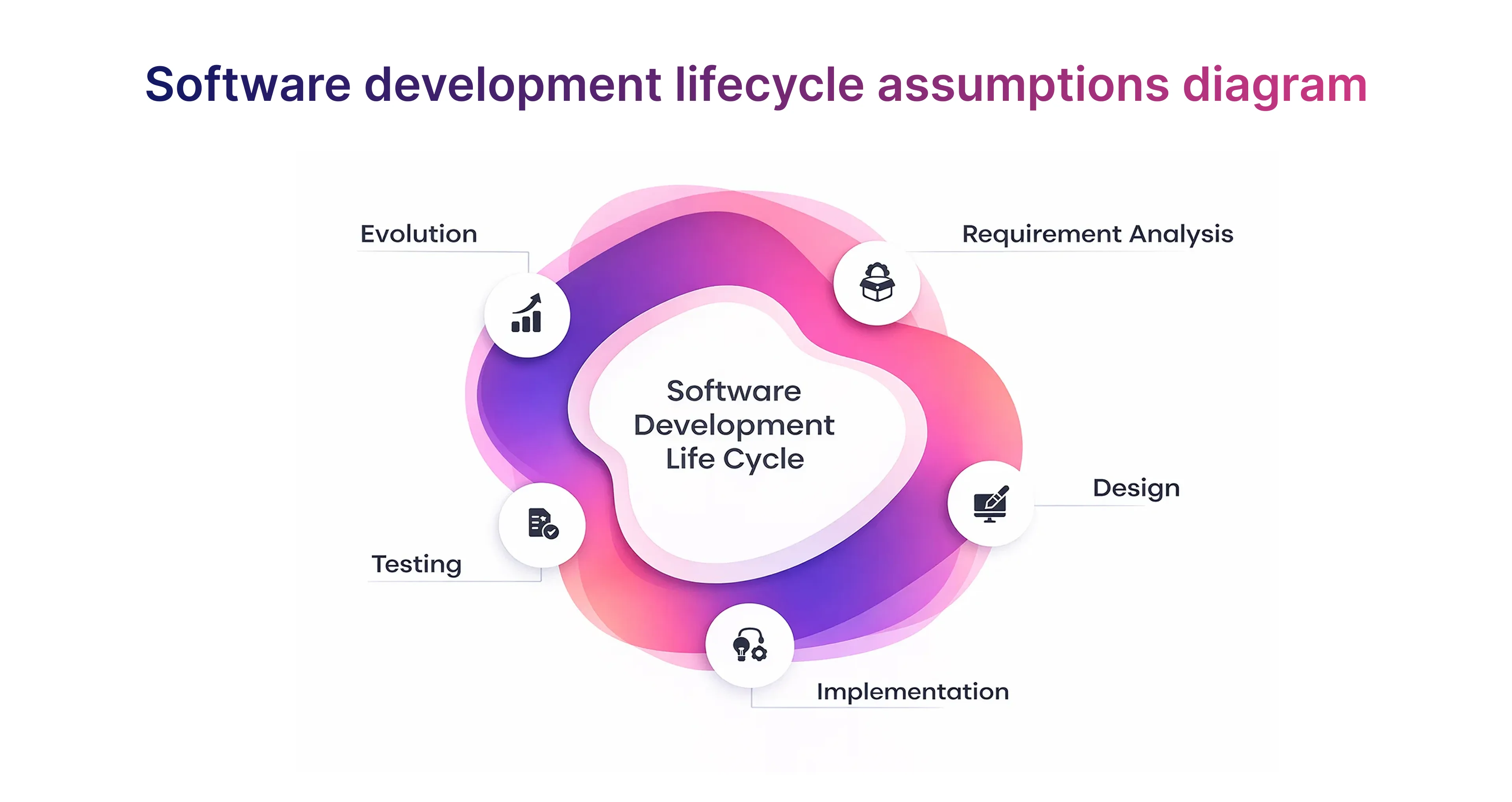
Where Assumptions Enter the Software Lifecycle
Requirements and Discovery- Ambiguity Disguised as Clarity
Requirements often appear precise but hide ambiguity. Terms like “fast,” “secure,” or “user-friendly” lack measurable definitions. During elicitation, stakeholders assume shared understanding, while each role interprets requirements differently.
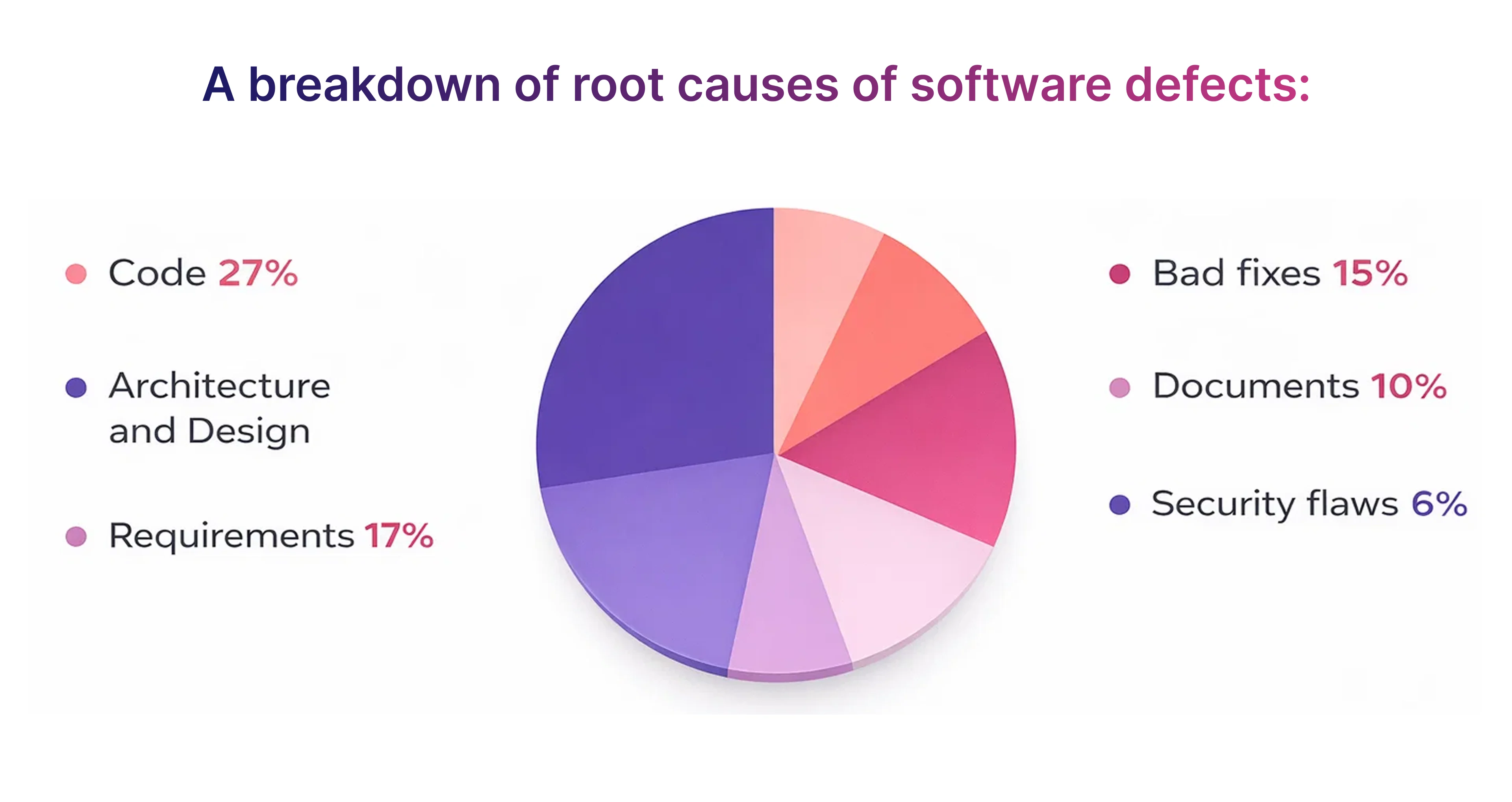
Industry research shows that a large percentage of software defects originate from requirements, design, and documentation issues rather than coding errors alone. This reinforces the idea that assumptions introduced early in the development process have a lasting impact on software quality.
- Business users focus on outcomes
- Developers focus on implementation
- QA focuses on expected behavior
Without clear documentation and validation, assumptions solidify early and propagate across user stories, backlogs, and design artifacts.
Design and Implementation - Building on Mental Models
Architecture and coding decisions are guided by mental models of how systems behave. These models may assume stable network latency, predictable user behavior, or consistent data formats.
Examples include:
- Assuming Linux kernel behavior across versions
- Ignoring boundary conditions in class instance variables
- Assuming null values never occur
Once embedded in code, these assumptions are difficult to unwind, especially after multiple commits and refactoring cycles.
Production Reality - When Real Users Break Mental Models
Production environments are where assumptions are tested against reality. Unlike controlled test setups, real users behave unpredictably, cloud services experience intermittent failures, and data centers undergo routine OS patches that alter system behavior. These conditions expose gaps between how teams expect software to behave and how it actually performs in the real world.
- Production defects reveal assumption gaps
- Support teams become feedback channels
- Observability exposes reality
This stage often highlights the difference between theoretical correctness and practical resilience.
Why Assumption-Driven Bugs Are Hard to Detect and Fix
Assumption-driven bugs rarely announce themselves through obvious errors or failed tests. Because they stem from flawed beliefs rather than faulty code, they often remain hidden until real-world conditions expose them.
Why Tests and Debuggers Rarely Catch Them
Unit tests, automation tests, and formal verification validate expected behavior—not incorrect beliefs. A debugger can inspect state, but it cannot question why a developer assumed something was true.
- Tests encode assumptions
- Debuggers inspect outcomes
- CI pipelines reinforce expectations
As a result, assumption-driven bugs often pass all tests and appear only under real-world conditions.
The Difference Between Local Bugs and Systemic Failures
Local bugs are confined to a specific function or module. Systemic failures arise when an assumption affects architecture-wide behavior.
- Local bug: incorrect regex
- Systemic failure: flawed data invariants
Systemic assumption failures are harder to fix because they require revisiting foundational decisions, not isolated code blocks.
The Hidden Cost of Misdiagnosing These Bugs
When teams treat assumption failures as coding errors, they apply the wrong solutions. This leads to repeated incidents, mounting technical debt, and frustrated customers.
- Increased support costs
- Longer debugging sessions
- Loss of user trust
Correct diagnosis saves time, money, and morale.
Preventing Assumption Bugs in High-Performing Teams
Preventing assumption-driven bugs requires more than better tools or more testing. It demands deliberate practices that surface hidden beliefs, challenge uncertainty, and continuously learn from real-world behavior. High-performing teams treat assumptions as first-class risks, not invisible defaults.
Making Assumptions Visible and Reviewable
The first step is visibility. Teams should explicitly document assumptions during requirement gathering, design, and code reviews.
- Document business rules clearly
- Challenge assumptions during reviews
- Track assumptions alongside user stories
Visibility transforms assumptions into testable hypotheses rather than hidden risks.
Designing and Testing for Uncertainty
Robust systems anticipate failure. Designing for uncertainty means testing beyond happy paths and validating boundary conditions.
- Test invalid inputs
- Simulate production failures
- Validate invariants
This mindset shifts teams from defensive debugging to proactive resilience.
Learning from Reality Through Feedback and Observability
Observability tools provide continuous feedback from production. Logs, metrics, and traces reveal where assumptions fail.
- Monitor real usage patterns
- Learn from support tickets
- Adjust system architecture accordingly
High-performing teams treat production as a learning environment, not a final destination.
Conclusion - Better Software Starts With Better Questions
The most effective debugging question is not “What’s broken?” but “What did we assume?” Shifting focus from fixing code to validating assumptions changes how teams design, test, and maintain software systems across the development lifecycle.
Teams that actively manage assumptions deliver more predictable systems, encounter fewer production defects, and achieve higher customer satisfaction. By reducing reactive firefighting, they build confidence in deployments and create software that behaves reliably under real-world conditions.
Assumptions will always exist. The difference between fragile software and resilient systems lies in whether those assumptions are questioned, documented, and validated. Better software doesn’t come from writing more code—it comes from asking better questions.
Frequently Asked Questions
1. What are bugs caused by?
Ans: Most bugs are caused by incorrect or unverified assumptions about users, systems, data, or business rules rather than simple coding mistakes.
2. How do unvalidated assumptions weaken software reliability and performance?
Ans: They create fragile systems that fail under real-world conditions, leading to unpredictable behavior and production defects.
3. What are best practices to minimize bugs caused by assumptions?
Ans: Clear requirement gathering, assumption documentation, rigorous testing, and strong communication practices significantly reduce assumption-driven defects.
4. How does unclear communication amplify hidden assumptions within development teams?
Ans: It causes mismatched mental models across roles, leading to integration failures and repeated rework.
5. Why is requirement gathering critical to reducing assumptions?
Ans: It removes ambiguity early, preventing flawed assumptions from spreading across the development lifecycle.

.webp)


.webp)