

What is penetration testing? It's a structured, authorised attempt to exploit vulnerabilities in systems, applications, or network infrastructure before attackers do. Penetration testing in cybersecurity, or what is penetration testing in cybersecurity, means simulating real attacks to expose gaps before someone malicious finds them first.
Most engineering teams run penetration tests once a year and call it done. But cyber threats don't work on annual cycles. New APIs ship, cloud environments drift, and your attack surface changes weekly.
In 2026, AI-powered attack tooling will have lowered the bar for adversaries significantly. SaaS platforms, multi-tenant environments, and cloud estates have multiplied attack surfaces. The shift from point-in-time pentests to pentesting as a service isn't a preference. It's a necessity.
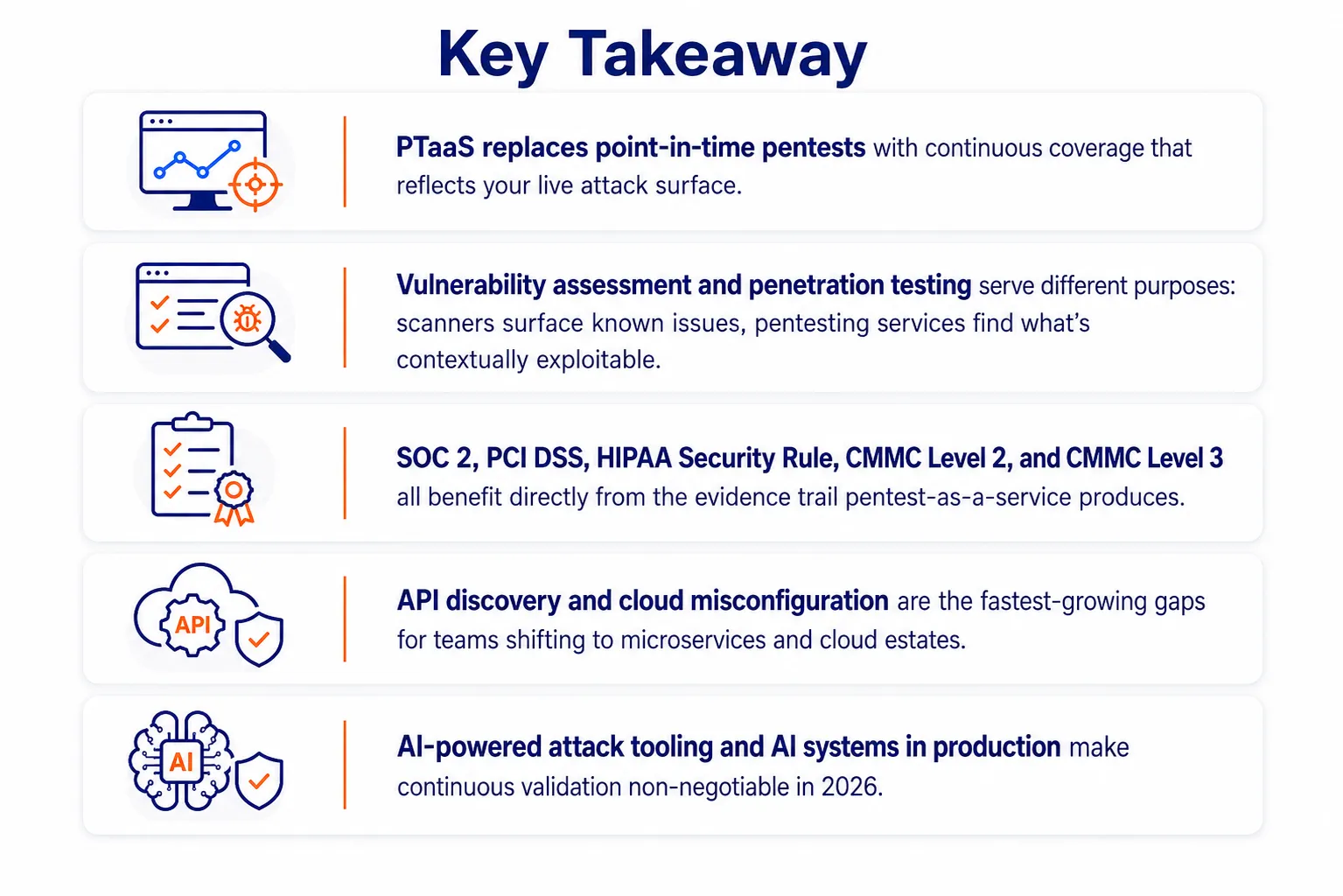
TLDR: PTaaS replaces annual snapshots with continuous, evidence-producing cybersecurity penetration testing. It meets regulatory requirements, keeps remediation gaps from piling up, and tests the attack surface your team has right now, not the one that existed six months ago.
What is Penetration Testing as a Service (PTaaS)?
Penetration testing as a service (PTaaS) is a subscription-based security testing as a service model where dedicated security testers assess your environment continuously across web apps, APIs, cloud estates, and network infrastructure, rather than handing over a static PDF that's out of date on arrival. For organizations looking to strengthen this continuous approach, an AI pentesting platform can also help automate parts of security testing and vulnerability assessment.
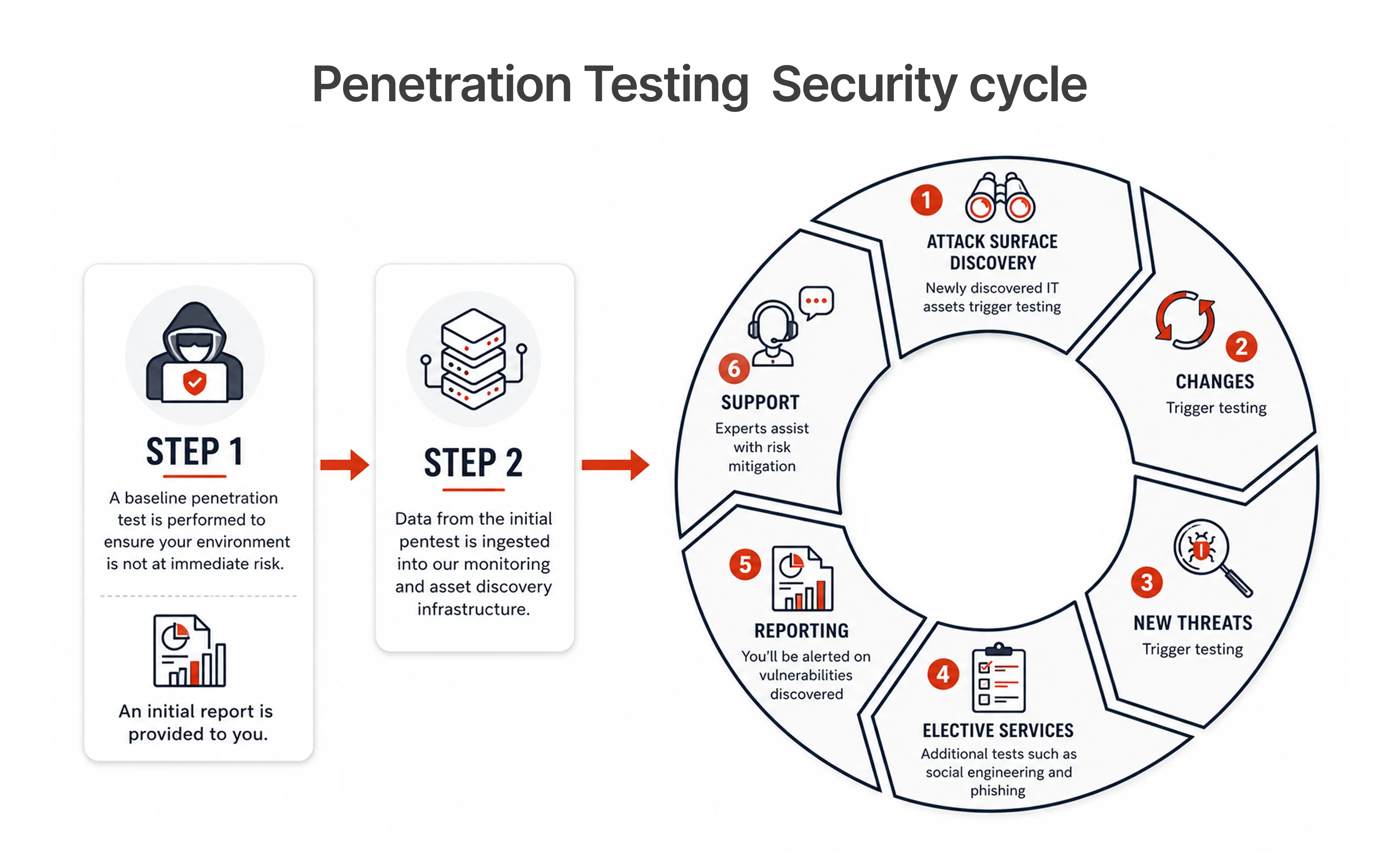
What is PTaaS? Rather than a one-off engagement, pentest as a service runs continuously on a subscription model, testing the environment your team actually operates today, and adapting as it changes.
What PTaaS is:
- A retainer-based, continuous pen testing as a service model.
- Scope that evolves as your environment does, no re-contracting needed.
- A live findings dashboard, not a document that collects dust until the next audit.
- Security teams working against your actual attack surface, not last quarter's snapshot.
According to Gartner, by 2026, more than 40% of organisations will have replaced annual pen testing with continuous testing models. The reason is straightforward: teams shipping bi-weekly cannot operate with a six-month security lag.
What PTaaS is not:
- A vulnerability scanner: Automated scans surface known CVEs. Pentesting services apply human-led ethical hacking to find what scanners miss.
- An MSSP: Managed penetration testing is active exploitation and validation, not monitoring.
- A one-off pentest service: the "as-a-service" model means ongoing coverage, not a single engagement.
The PTaaS Delivery Model: Scope, Cadence, and Continuous Coverage
How a PTaaS engagement runs in practice:
- New APIs, features, and cloud environments are added to scope via lightweight intake; no new contract needed.
- Findings surface in real time with CVSS scores, asset mapping, and remediation workflows attached.
- Continuous validation replaces the annual snapshot cycle.
- Pentest project management is handled by the provider, not the client engineering team.
This is the core difference between managed penetration testing and an annual vendor relationship.
PTaaS vs. Traditional Pen Testing: A Decision Framework
Three signals that your team needs PTaaS over annual pentests:
- Your team ships above bi-weekly cadence.
- A compliance framework (SOC 2, PCI DSS, CMMC) is demanding continuous validation.
- A recent cloud migration has made last year's scope obsolete.
How to Perform Penetration Testing as a Service: The Methodology
Understanding how to perform penetration testing in a PTaaS context means following a consistent, repeatable process regardless of engagement cadence. Penetration testing companies differ on methodology. The best PTaaS companies run every engagement through MITRE ATT&CK and validate controls against Zero Trust principles, not just PTES checklists.
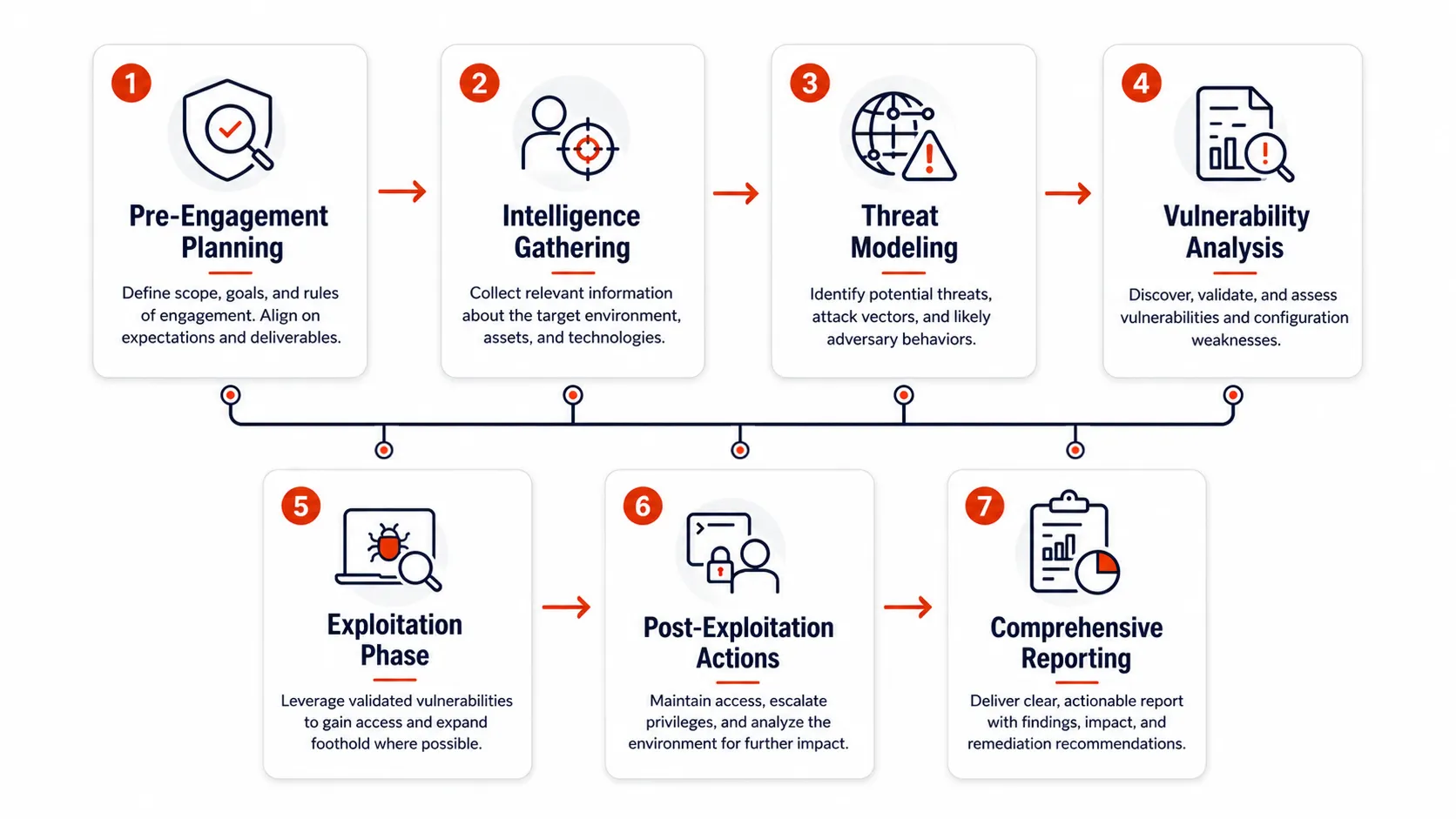
The core phases:
- Reconnaissance and OSINT: Surface the external footprint, exposed services, and leaked credentials.
- Threat modelling: Build a realistic picture of how an attacker would move through your specific architecture and what they would target first.
- Active exploitation: Use standard penetration testing tools per phase: Nmap for discovery, Burp Suite for web-layer assessment, Metasploit for controlled exploitation.
- Post-exploitation: Validate lateral movement paths and segmentation integrity.
- Remediation and retesting: Exposure management is built into the cycle; findings are tracked and closed in the same window.
Red team-style assessment vs. PTaaS: Red teaming simulates a full adversary campaign from initial access to impact. Pen testing as a service is systematic vulnerability identification across a defined scope. The distinction matters because most teams need PTaaS before they need red teaming. Adversary emulation through PTaaS is the right starting point for 90% of engineering teams.
Penetration Testing Tools Used in PTaaS Engagements
The right penetration testing tool for each phase signals how seriously a provider approaches the engagement. Each penetration testing tool should map to a specific phase and not be used as a generic scanner replacement.
Every finding in a pentest as a service engagement should arrive with:
- A CVSS v3.1 score (Critical, High, Medium, Low)
- The affected asset is clearly mapped
- Reproduction steps so engineers can verify the issue
- A clear remediation path tied to the finding, not a CVE reference dropped without context
- Risk analysis context so security leaders know what to fix first vs. next quarter
Risk-based security decisions only work when triage is this specific. A wall of CVEs with no prioritisation is a finding dump, not a vulnerability management output.
PTaaS Across Key Use Cases: Web Apps, APIs, Cloud, and Networks
Web application penetration testing anchors most pentesting services. The OWASP Top 10 frames the coverage: SQL injection, broken authentication, security misconfiguration, and insecure direct object references are the most frequent findings across B2B SaaS platforms.
By surface:
- Web apps: OWASP Top 10 coverage, SQL injection, broken auth, misconfigurations across SaaS platforms.
- APIs: API discovery first, then broken object-level authorisation, rate-limiting gaps, and authentication mechanisms across multi-tenant environments. Protecting customer data at the API layer is a compliance expectation, not optional.
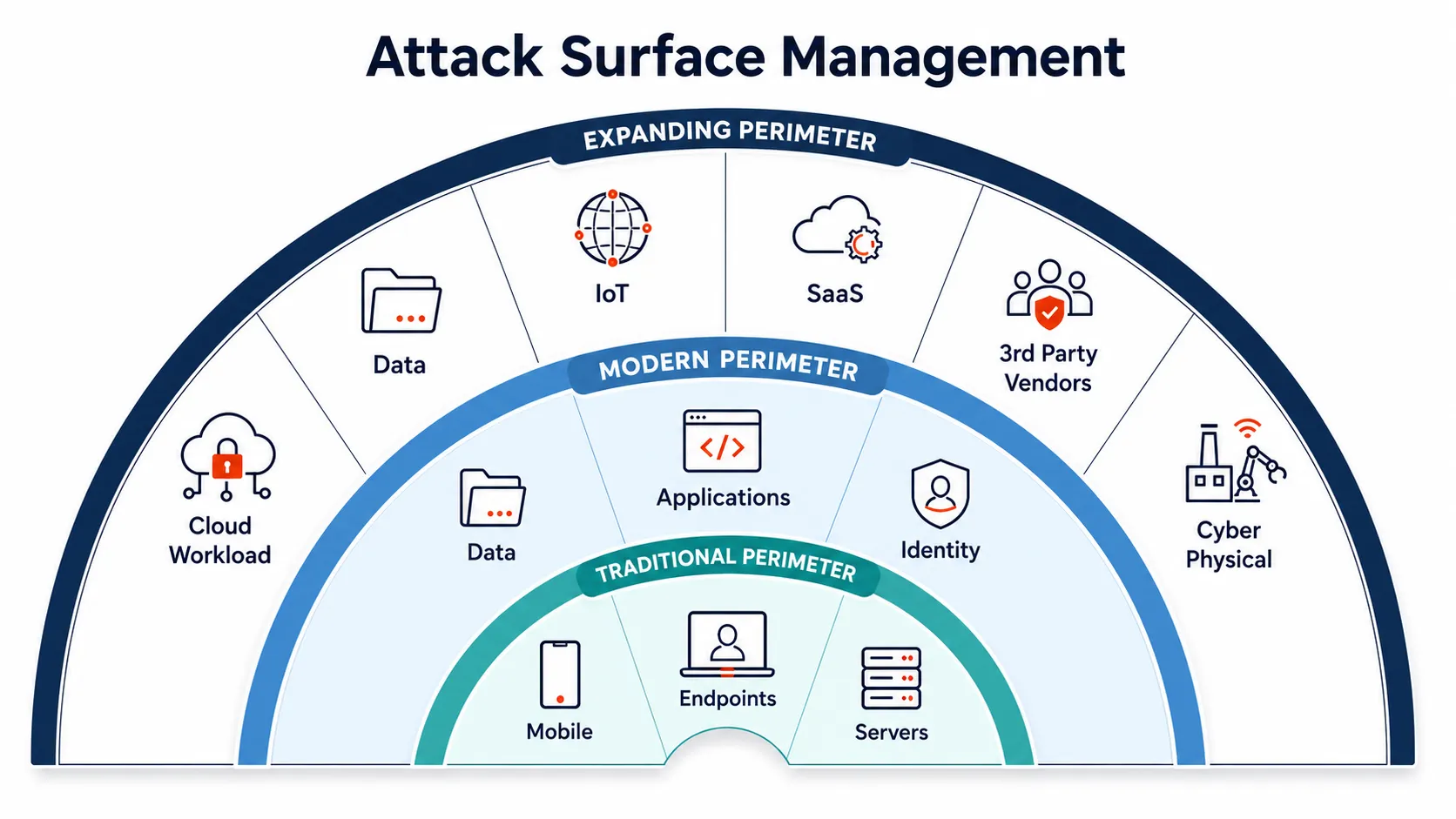
- Cloud: IAM privilege escalation, misconfigured storage, cross-account vulnerabilities across cloud estates on AWS, Azure, GCP. Cybersecurity exposure from cloud misconfiguration is rarely caught by automated tools alone.
- Network penetration testing: Internal segmentation, lateral movement paths, and firewall rule validation across network infrastructure. Critical for PCI DSS, HIPAA Security Rule, and Cybersecurity Maturity Model Certification obligations.
Which Use Case Should You Prioritise First?
- SaaS web app as primary delivery? Start with web and API coverage, including API discovery and third-party integrations.
- Recent cloud migration? Cloud misconfiguration testing across your cloud environments delivers the fastest ROI.
- Regulated industry with PII? Network penetration testing and internal penetration tests first for HIPAA Security Rule, PCI DSS, CMMC Level 2, or CMMC Level 3 requirements.
PTaaS and Compliance: SOC 2, ISO 27001, and What Auditors Actually Want
Compliance is where the gap between point-in-time pentests and pentesting as a service becomes most visible. Auditors aren't just asking whether a test happened. They're asking for evidence that findings were fixed within the audit period.
What SOC 2 and ISO 27001 Auditors Actually Require
SOC 2 Type II:
- Requires continuous validation, not a single test date
- Auditors need remediation evidence within the audit window
- Annual engagements fail here because the report date and remediation date are months apart
- PTaaS produces timestamped finding records and retesting confirmation across the full audit period
ISO 27001:
- Annex A.18 (compliance) and Annex A.14 (secure development) both require ongoing testing evidence
- PTaaS documentation maps directly to control requirements without a separate audit prep exercise
PCI DSS, HIPAA, and CMMC Obligations
- PCI DSS v4.0: Requires annual penetration tests plus targeted testing after significant changes. PTaaS handles scope amendments without re-contracting.
- HIPAA Security Rule: Technical safeguard requirements point to ongoing penetration testing in cybersecurity. Pentest as a service produces the evidence trail that the rule expects.
- Cybersecurity Maturity Model Certification: CMMC Level 2 and CMMC Level 3 require documented testing against security policies and controls. PTaaS generates this documentation as a byproduct of the engagement.
- AI systems: Processing sensitive data in regulated environments faces the same audit obligations. Exposure management documentation from PTaaS satisfies these requirements.
How a Penetration Testing Company Like Frugal Testing Delivers PTaaS Without the Red Team Overhead
Choosing the right penetration testing company matters as much as choosing the right model. An internal red team costs $400,000 to $700,000 annually once salaries, tooling, and ramp time are included. Most PTaaS companies pitch cost substitution. We pitch speed.
Clients moving from annual penetration tests to our managed penetration testing model have reduced SOC 2 audit prep from three months to three weeks. Critical API findings that previously waited for the next engagement cycle now close within 72 hours of identification.
What makes our approach different:
- US-based security testers aligned to your timezone and shipping cadence.
- Direct access to the engineer running your pen test as a service, not a ticketing system.
- Adversary emulation techniques are drawn from MITRE ATT&CK, so findings reflect real attack chains.
- Outputs feed directly into your vulnerability management and exposure management pipelines.
What Our PTaaS Engagement Looks Like
- Week 1: Scoping call covering domains, APIs, cloud environments, and regulatory requirements.
- Week 2: Threat modelling against confirmed architecture.
- Weeks 3 to 4: Active testing with a live findings feed.
- Week 5+: Remediation support, retesting, CI/CD gate recommendations.
Who This Is For
Our security testing as a service fits three profiles:
- SaaS companies (50 to 500 employees) approaching SOC 2 Type II.
- Engineering orgs shipping bi-weekly or faster where annual pentesting services create unacceptable lag.
- IT-led enterprises whose cloud estates have outgrown internal security teams' capacity.
Conclusion
The shift to penetration testing as a service reflects a simple reality: Point-in-time pentests don't match the pace at which engineering teams ship or the pace at which cyber threats evolve. PTaaS aligns vulnerability management, exposure management, and remediation workflows to delivery cadence rather than the calendar.
Security leaders who get this right aren't spending more on their cybersecurity program. They're spending it on a model that produces auditable evidence, closes findings within the same window, and scales as cloud estates and SaaS platforms grow.
The question in 2026 isn't whether your team needs pentesting as a service. It's whether your current approach can prove it.
People Also Ask (FAQs)
Q1. How is PTaaS priced compared to a traditional pen test engagement?
Ans: PTaaS runs on a monthly or annual retainer. Total cost of ownership is typically lower once remediation support, retesting, and compliance documentation are factored into the comparison with project-billed engagements.
Q2. What certifications should a PTaaS provider hold?
Ans: OSCP is the industry benchmark for hands-on exploitation. Ask for engineer-level certifications. CEH and GPEN are common but more theoretical than OSCP in practical pentesting service delivery.
Q3. Can PTaaS replace an internal red team for most engineering teams?
Ans: Yes, for most teams under 500 engineers. Managed penetration testing delivers equivalent continuous coverage at a fraction of the cost of maintaining a two- to three-person internal red team.
Q4. How does PTaaS handle new APIs or cloud resources deployed mid-engagement?
Ans: New assets are onboarded within 48 hours via a lightweight scope amendment. API discovery runs as part of standard intake, and no re-contracting is required for additions mid-engagement.
Q5. What does a PTaaS findings report look like, and how does it integrate with our tools?
Ans: Findings are CVSS-scored and asset-mapped with reproduction steps. Standard integrations include Jira, Linear, and GitHub Issues for direct handoff into existing engineering remediation workflows.


.webp)