

Two crucial components of guaranteeing software quality are functional testing and non-functional testing. Software Functional testing confirms that the program operates as intended. Functional and non functional testing ensure both features and performance are validated. This involves testing functions like transaction completion, data processing, and user login. In essence, it verifies that the program operates by the specified specifications.
Conversely, non-functional testing assesses features that aren't directly tied to particular capabilities, such as performance, usability, and reliability. It helps guarantee that the program functions well in a variety of scenarios by covering topics such as load testing, security testing, and compatibility testing. Functional and non functional in software engineering help ensure complete quality assurance. Functional testing ensures that the system functions properly, whereas non-functional testing ensures that it operates effectively and efficiently in real-world scenarios. Both forms of testing are essential for producing high-quality software.
Functional vs Non Functional Requirements: What's the Difference?
To fully understand functional and non functional testing, it helps to first understand the difference between functional and non functional requirements in software engineering because testing exists to validate requirements.
Functional requirements define what the software must do. They describe specific behaviors, features, and functions the system must perform. Non-functional requirements define how well the system must perform covering quality attributes like speed, security, reliability, and scalability.
Understanding this distinction matters because your test strategy directly follows from your requirements. Every functional test maps to a functional requirement. Every non-functional test maps to a non-functional requirement.
Here are real non functional requirements examples alongside their functional counterparts:
The table above shows how functional and non functional requirements in software engineering work as two sides of the same coin. Functional requirements answer "does the feature exist and work?" non-functional requirements answer "does it work well enough for real users under real conditions?" Both sets of requirements must be tested before a product is production-ready.
What's next? Keep scrolling to find out:
🚀 Importance of functional and non-functional testing in software quality.
🚀 How functional testing ensures features work correctly.
🚀 How non-functional testing improves performance and security.
🚀 Key differences and when to use each type.
🚀 Best practices for effective testing.
🚀 Why both testing types are essential for reliability.
Understanding Functional and Non-Functional Testing
Functional testing focuses on verifying that the software’s features and functionalities work as expected. It ensures that all components of the system perform according to defined requirements, like checking if a user can log in or if data is processed correctly. Non-functional testing, on the other hand, evaluates aspects like performance, security, and usability. It ensures the system performs well under various conditions, such as high user load or security threats. Both types of testing are essential for delivering high-quality software, ensuring it not only works properly but also performs reliably in real-world scenarios.
What is Functional Testing?
Software testing that focuses on confirming that an application does what it is supposed to do is called functional testing. It guarantees that every feature operates by the requirements document. 🔎
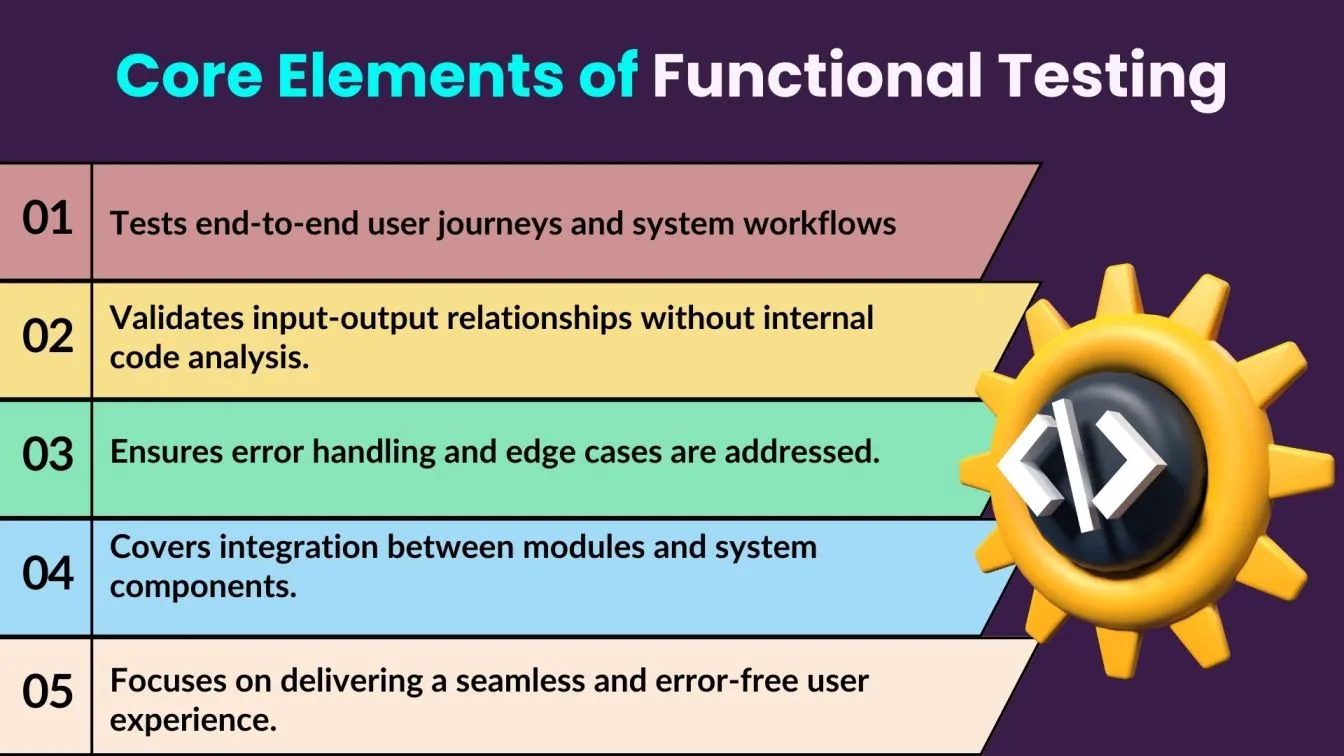
- The system's functionality, including user interactions, business logic, and general workflows, is assessed through functional testing.
- It verifies that the system satisfies functional requirements by validating important aspects such as form submission, login, data processing, and reporting.
- Function test checks if the application behaves as expected.
- Testers frequently employ black-box testing techniques, in which only the input and output are examined and no internal code or structure is taken into account.
- The procedure entails developing automation test cases according to the expected behavior, executing tests, and contrasting the predicted and actual outcomes.
- To make sure the software offers the proper functionality, functional testing encompasses a variety of testing methods, such as smoke testing, automated regression testing, and acceptance testing.
Types of Functional Testing
A vital component of software development, functional testing makes sure a program runs in accordance with its predetermined specifications. Functionality testing in software testing checks if features meet the specifications. It emphasizes verifying that the features and functionalities of the software operate as intended.
Functional testing types include:
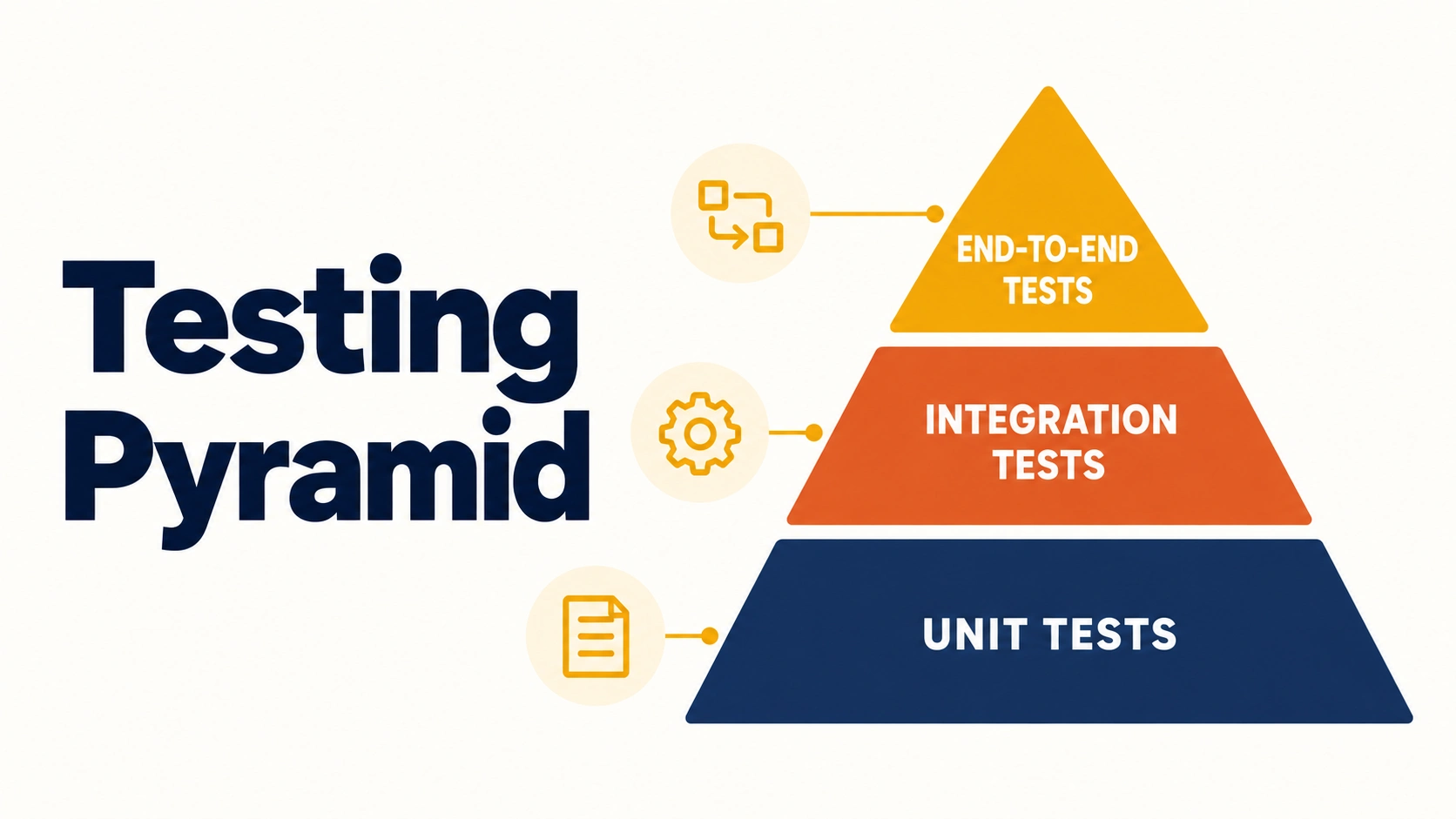
- Unit Testing: Testing individual modules or code units to make sure they operate properly when left alone is known as unit testing.
- Integration Testing: To identify interface flaws, integration testing focuses on confirming how integrated units or components interact with one another.
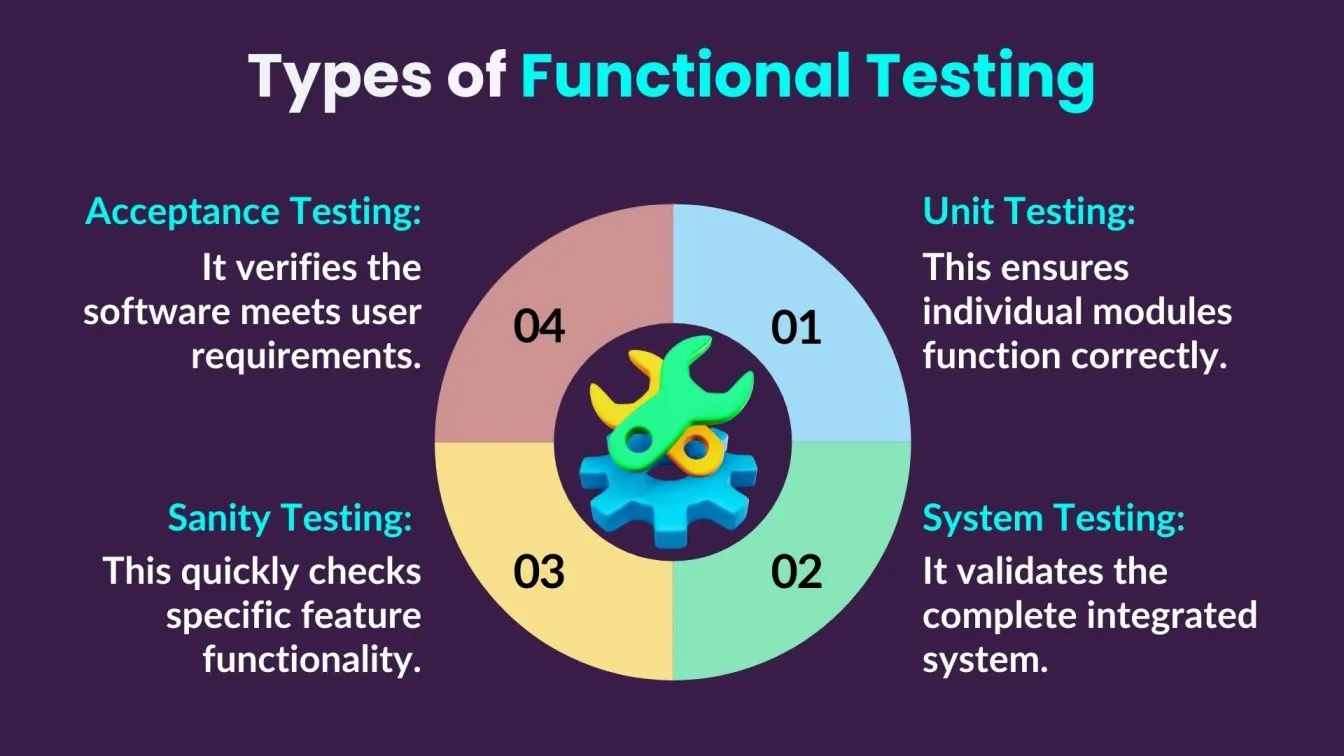
- System Testing: Verifies that the integrated program as a whole satisfies the criteria.
- Regression Testing: Regression testing software verifies that recent code modifications haven't negatively impacted the program's current features.
- Smoke Testing: Smoke testing in software testing evaluates the application's fundamental functionality through preliminary testing, sometimes known as "build verification testing."
- Sanity testing: Quickly assesses whether a certain feature or bug remedy functions as intended.
- Acceptance testing: It verifies that the program satisfies user requirements and is prepared for deployment.
To make sure the software's functionality satisfies user expectations and needs, each of these testing methods is essential.
What is Non-Functional Testing?
Assessing the software's qualities that are essential to its overall efficiency, dependability, and user experience but unrelated to particular functionality is the main goal of non-functional testing. Non functional testing methods evaluate performance, security, and usability. Non-functional testing makes sure the program works properly in a variety of scenarios and satisfies quality requirements like security, usability, and scalability, in contrast to functional testing, which verifies if the application behaves as intended. It is essential to comprehend how the software acts in practical settings.
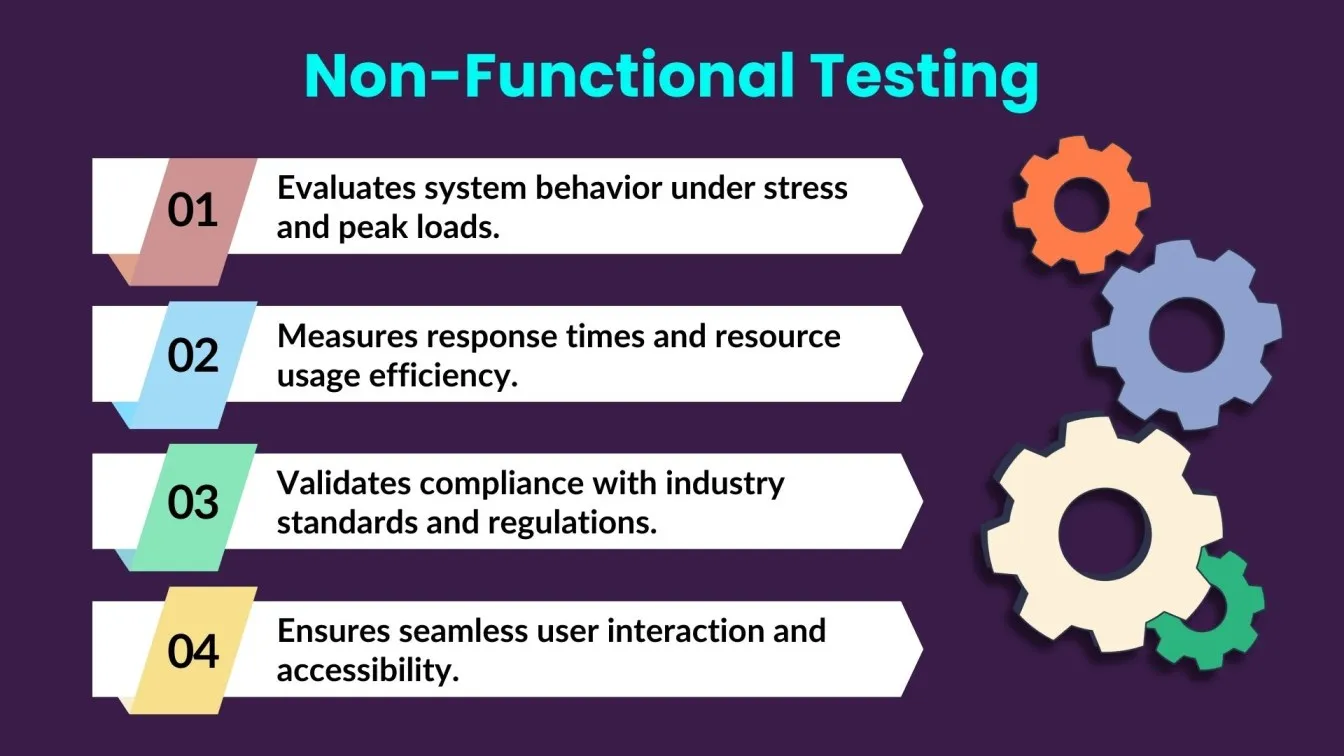
The main components of non-functional testing techniques are various. Software Performance testing examines how responsive and stable the program is under various load scenarios. Scalability testing assesses how well the system can manage growing user traffic or workloads. Finding vulnerabilities and making sure the application is safe and complies with data protection regulations are the main goals of security testing. Non functional testing tools help assess performance, security, and usability of software. Furthermore, usability testing looks at the system's usability and user interface, while reliability testing makes sure the system operates consistently and error-free over time.
Non-functional testing ensures that the software application provides both the appropriate functions and an excellent user experience by concentrating on these areas. It helps guarantee that the application can manage stress testing, function effectively in a variety of situations, and give end users a safe and seamless experience.
Types of Non-Functional Testing
Non-functional testing assesses a software application's non-functional features, including security, dependability, performance, and usability. Is a non functional test focused on system behavior rather than features? Yes, it evaluates aspects like performance, security, and usability, not specific functionalities.
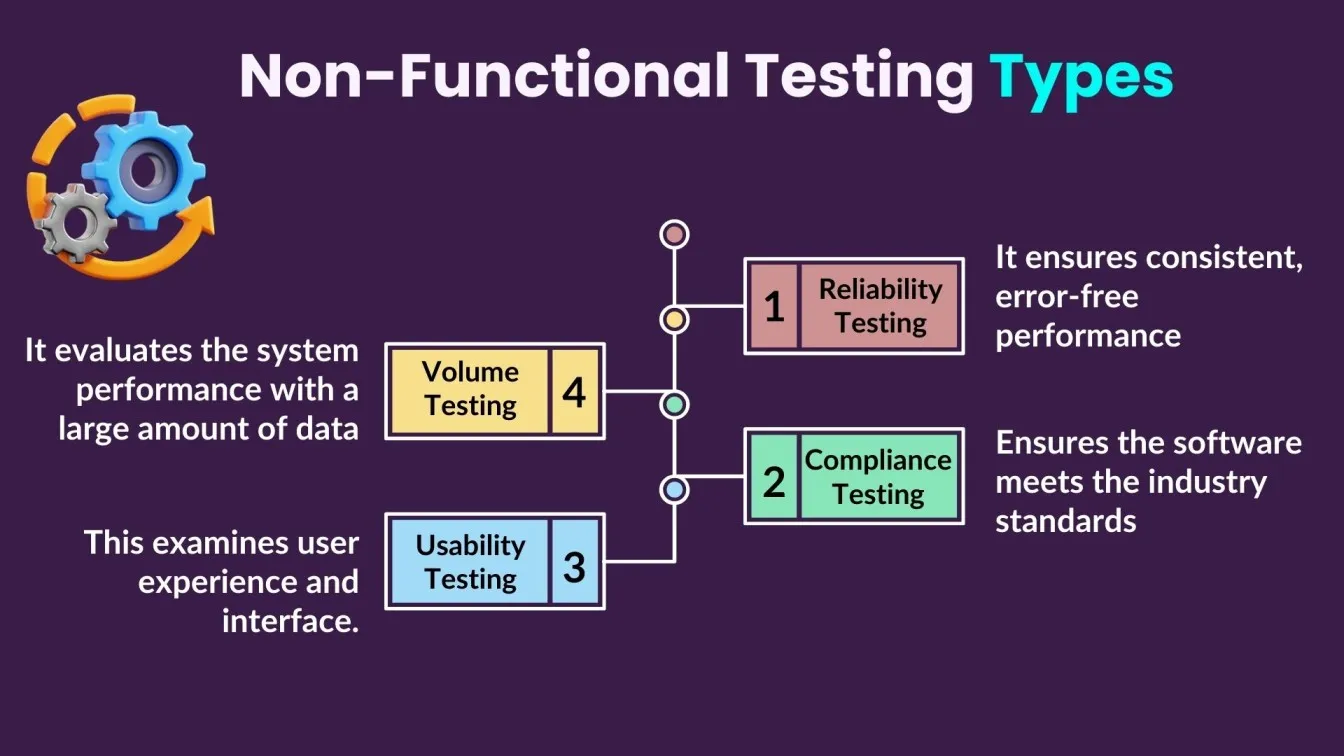
Non-functional testing types include:
- Performance Testing: Performance testing is non functional testing that measures speed and stability.
- Scalability Testing: Scalability testing assesses the system's capacity to manage growing user traffic or workloads.
- Security Testing: Finds weaknesses to guarantee data safety and adherence to security guidelines.
- Usability Testing: Verifies usability by analyzing the user interface and overall user experience.
- Reliability Testing: Verifies that the system can function reliably and consistently over an extended period.
- Compatibility Testing: Verifies that the software works correctly across different browsers, devices, operating systems, and screen sizes ensuring consistent behavior for all users regardless of their environment.
- Accessibility Testing: Confirms the application meets accessibility standards such as WCAG, ensuring usability for people with disabilities and broader user reach.
Understanding what is non functional testing means recognising it covers all these types of non functional testing — not just performance, but security, usability, compatibility, reliability, and accessibility across real-world conditions.
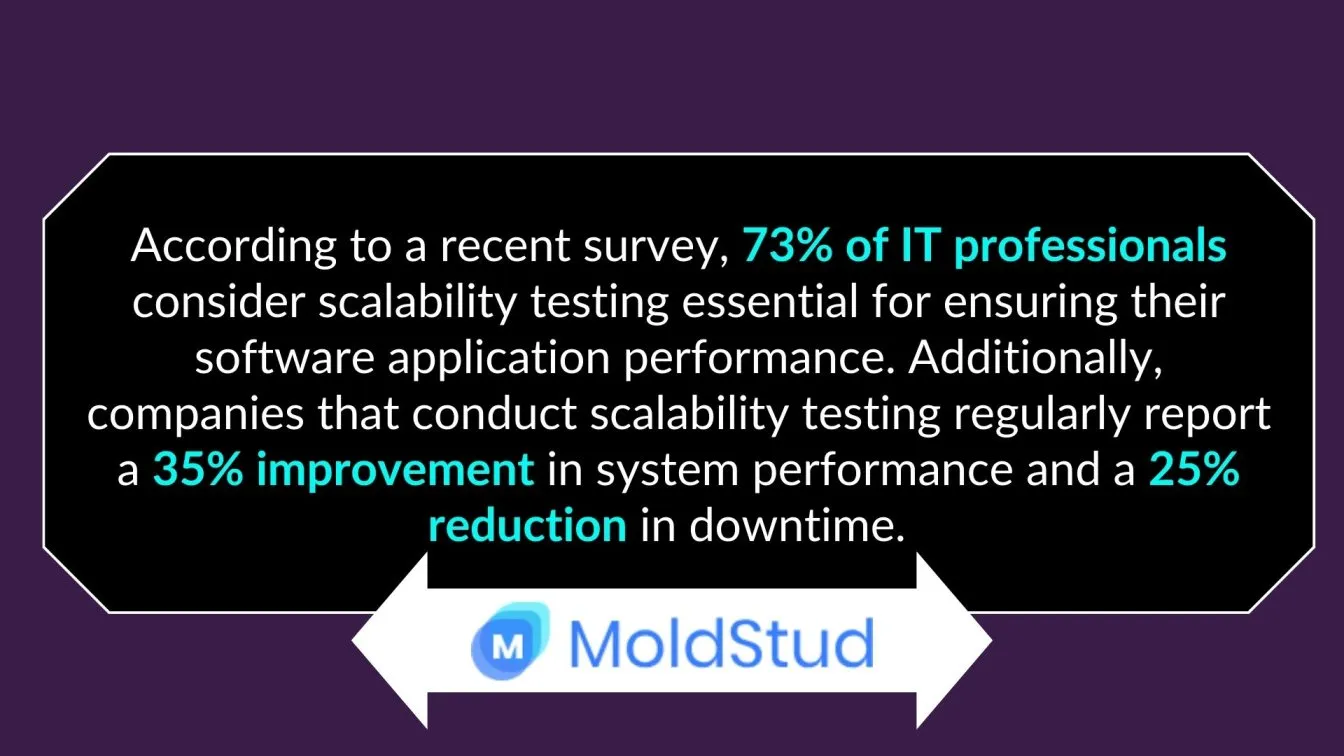
By concentrating on these aspects, non-functional testing guarantees that the program not only operates as intended but also provides an excellent user experience in a wide range of scenarios.
Key Differences Between Functional and Non-Functional Testing
Two essential components of software testing are functional and non-functional testing, which each concentrate on distinct program components. Difference between functional and non functional testing lies in what aspect of the software they assess. A comparison showing their main distinctions may be found below:
It is essential to comprehend these differences to create a thorough testing plan that guarantees the software's functioning and quality.
Key Use Cases of Functional Testing
Functional testing is a critical stage in software development that ensures every feature works as intended. By systematically assessing the application's functions, developers and testers can identify and resolve issues early, leading to a more dependable and robust result. Important Functional Testing Use Cases:
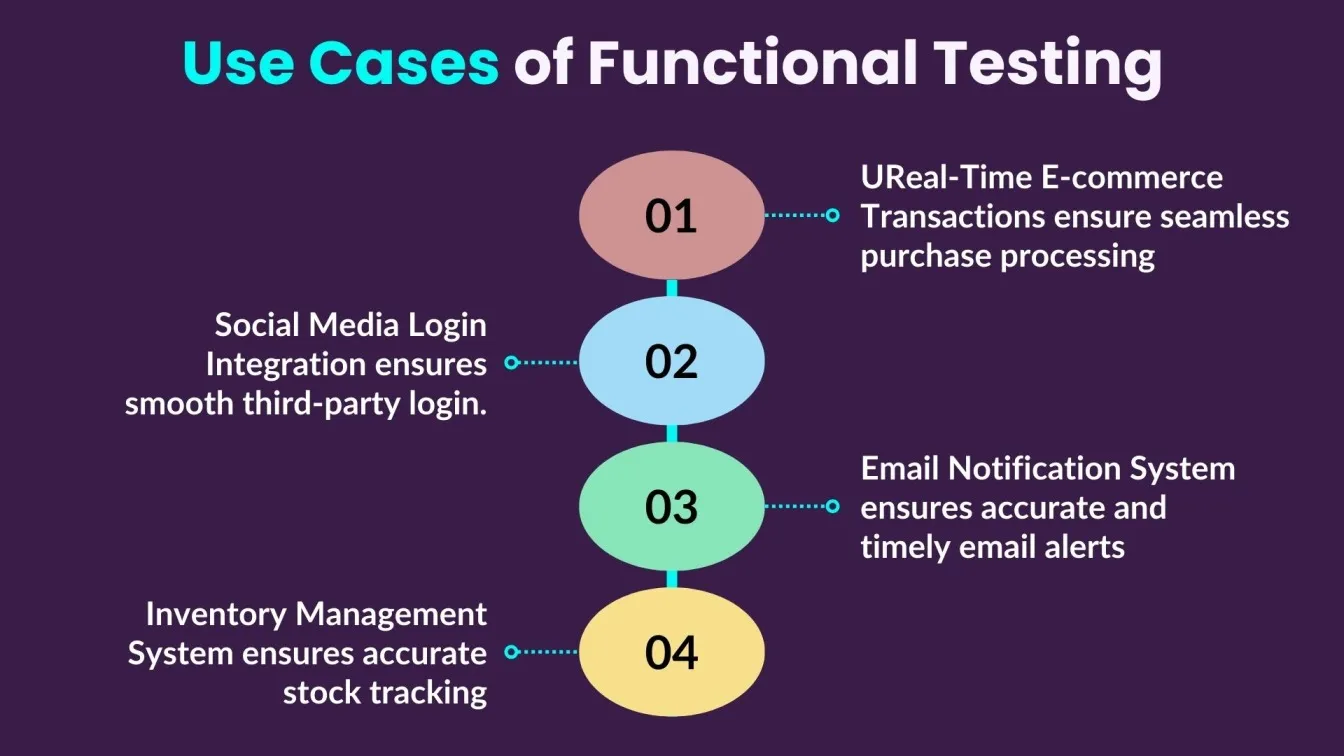
- Real-Time E-commerce Transactions: Ensures that when a user purchases a product, the system accurately processes the transaction, updates the stock, and generates an invoice, validating the core functionality of the e-commerce platform.
- Social Media Login Integration: Verifies that third-party login services, such as Google or Facebook credentials, work properly, ensuring users can access their accounts without issues.
- Email Notification System: Ensures the system triggers appropriate email notifications, such as order confirmations or password resets, ensuring timely communication with users.
- Inventory Management System: Validates that inventory updates, such as adding or removing products, reflect accurately, ensuring proper stock tracking in retail or warehouse applications.
- Customer Support Chatbot: Ensures that the chatbot understands user queries, responds correctly, and routes issues to the appropriate department, ensuring smooth customer support operations.
These functional testing examples show a consistent pattern a specific input is given, a specific output is expected, and the test passes or fails based on whether the actual result matches. For instance: a user enters valid credentials → system grants access and loads the dashboard. A user submits an empty form → system shows a validation error. This input/output pattern is what makes functional testing examples concrete and measurable. Functional testing focuses on these key use cases, ensuring smooth operations and a high-quality user experience that meets both business and user expectations.
Key Use Cases of Non-Functional Testing
Non-functional testing ensures software performance beyond functionality, focusing on quality aspects like performance, security, and usability. Here are key use cases:
- Performance of the Website with High Traffic: It guarantees that an e-commerce website is stable and responsive when several people visit it at once, particularly during periods when sales are high.
- Compatibility of Mobile Apps Across Devices: It ensures a consistent user experience by confirming that the application works properly on a range of mobile applications, operating systems, and screen sizes.
- The security of banking applications: It makes certain that private information, including financial transactions, is shielded from cyberattacks and illegal access.
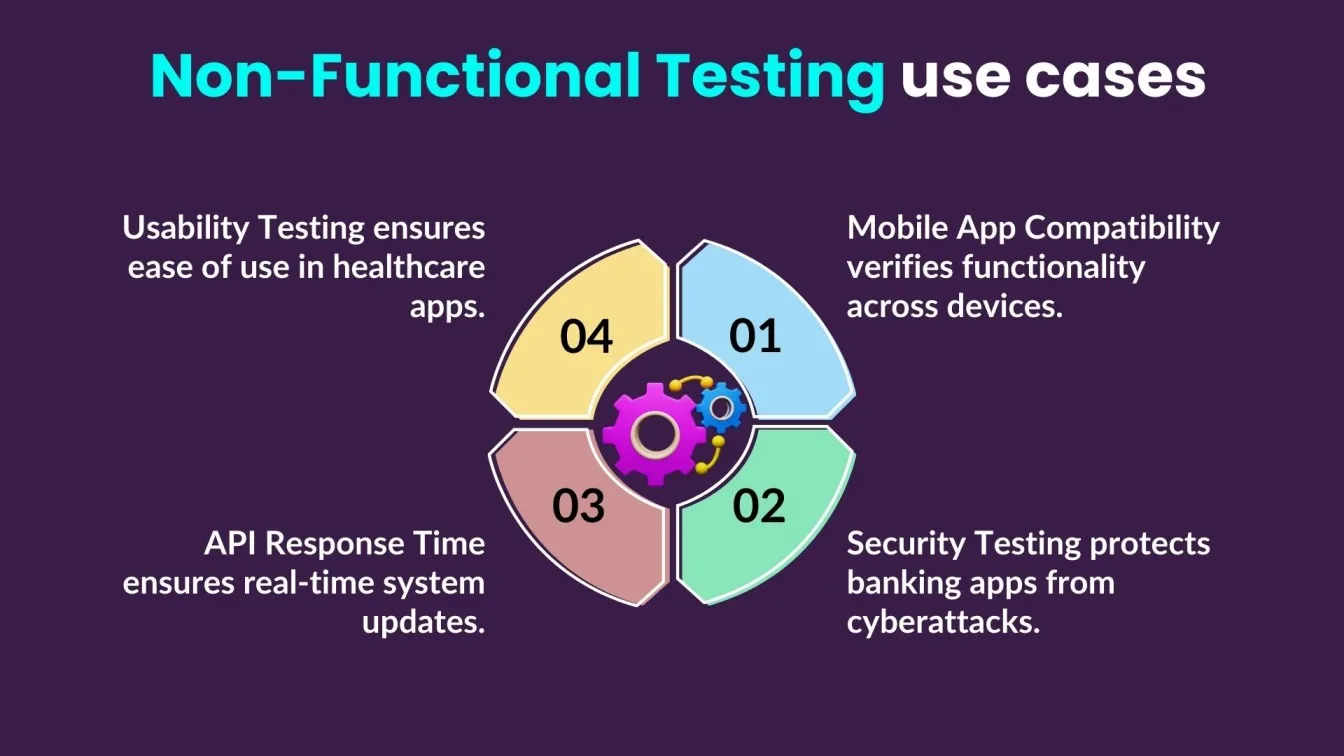
- Real-time systems' API response time: This confirms that APIs deliver uninterrupted real-time data updates, guaranteeing prompt answers for applications such as message platforms or market trading.
- Usability in a Healthcare App: It Verifies that healthcare apps are simple to use and intuitive, enabling medical personnel to swiftly obtain vital information, particularly in emergencies.
Non functional testing examples differ from functional ones because they measure thresholds rather than pass/fail behaviors. For example an e-commerce site must handle 50,000 concurrent users without response time exceeding 3 seconds (performance test), a banking API must return zero critical vulnerabilities from a security scan (security test), and a healthcare dashboard must achieve a 90% task completion rate in usability testing with non-technical staff. Each non functional testing example has a measurable target, not just a feature to verify.
When to Use Functional Testing?
Throughout the software development process, functional testing is crucial to ensuring that every component performs as required. When testing individual units and modules for proper behavior during the early stages of development, it is very important. Functional testing is used throughout the development process to confirm that integrated components function as unit tests and that the system satisfies the intended business requirements.
Functional testing is also essential when adding new features or altering ones that already exist. It guarantees that the application will continue to operate as intended and that these modifications won't result in any new flaws. Developers may find and fix problems early by carrying out functional testing at these phases, which results in a more dependable and user-friendly program.
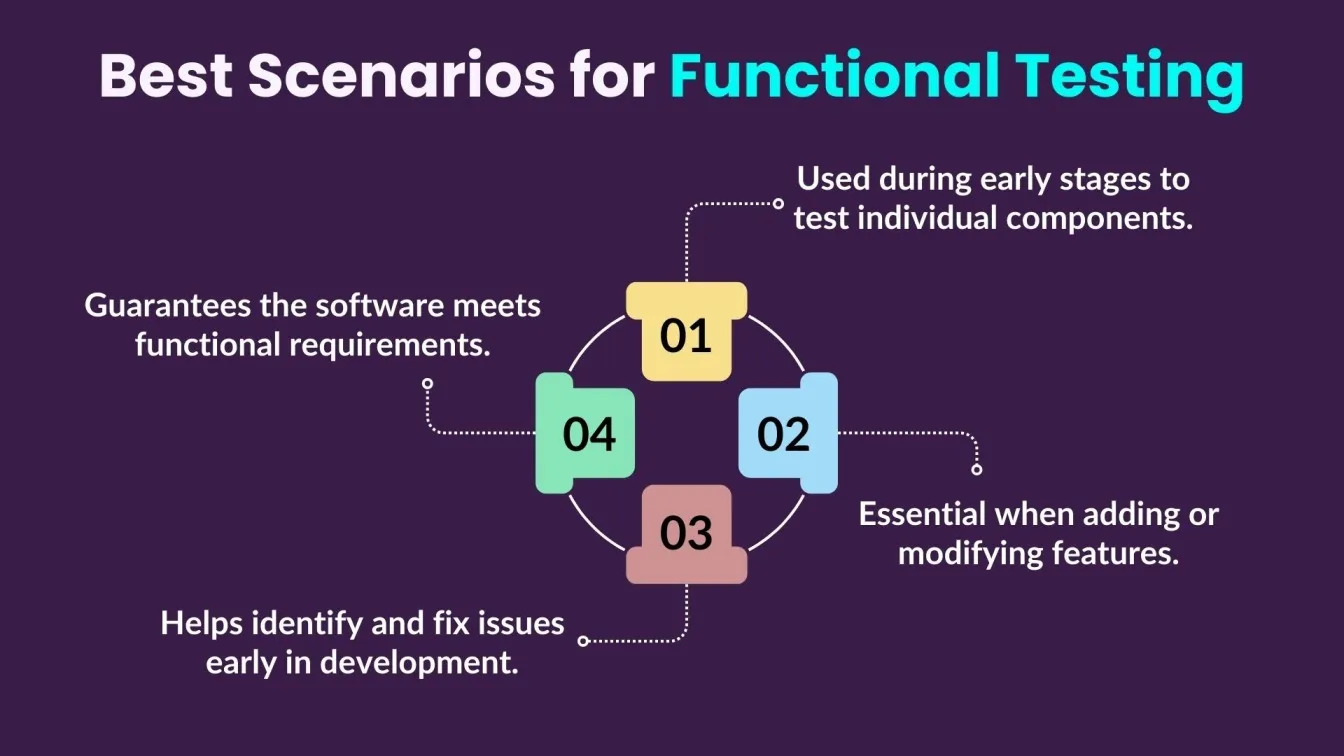
Functional testing should be used whenever a software component is updated or modified, as well as at the early stages of development and integration. This strategy guarantees that the program continuously satisfies its functional requirements and offers end users a flawless experience.
When to Use Non-Functional Testing?
Non-functional testing assesses facets of a software program that are essential to overall performance and user experience but unrelated to particular features. Non-functional testing evaluates the software's performance in a range of scenarios, as opposed to functional testing, which concentrates on certain behaviors.
When Non-Functional Testing Should Be Used:
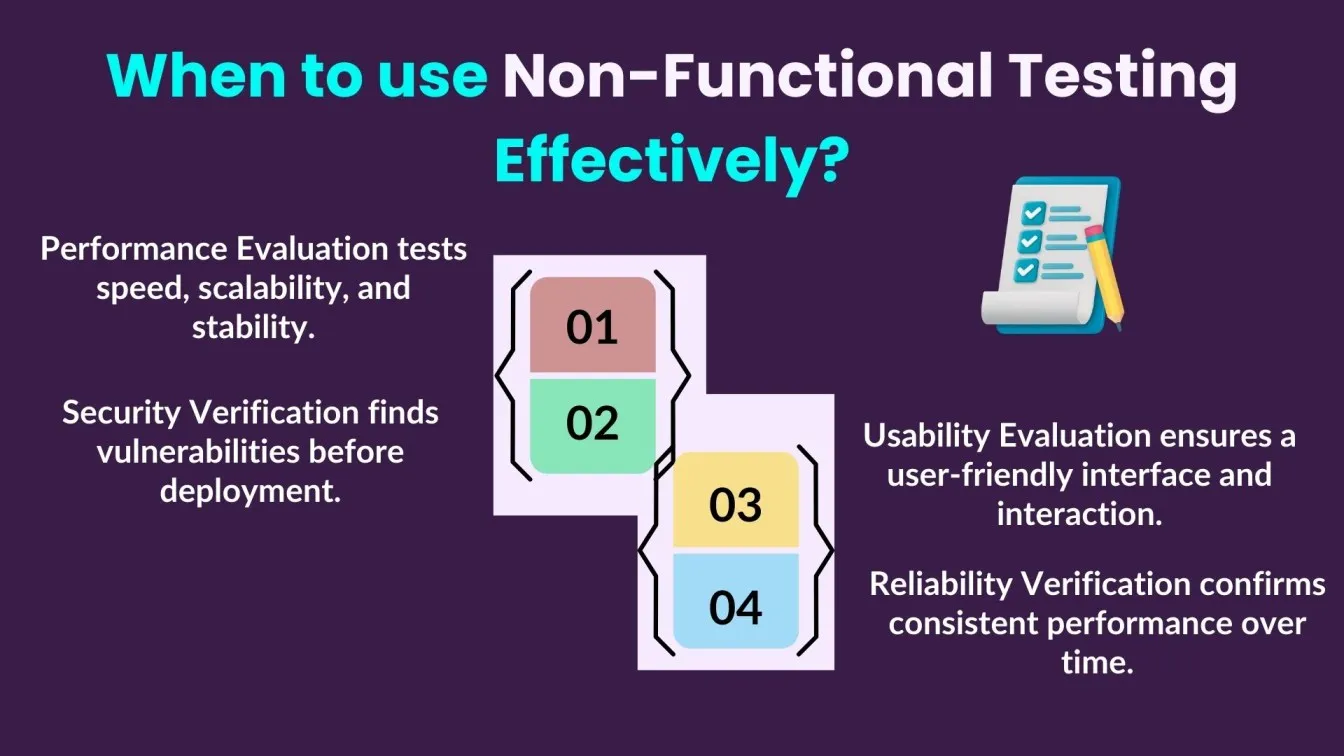
- Performance Evaluation: Speed, scalability, and stability are assessed through non-functional testing to make sure the program reacts effectively under anticipated user demands.
- Verification of Security: Finding potentially exploitable vulnerabilities is crucial before deployment. Non-functional testing aids in determining how resilient the application is to possible dangers.
- Usability Evaluation: Non-functional testing looks at the interface and general user interaction to ensure that the application offers a user-friendly experience.
- Verification of Reliability: It's critical to make sure the application operates flawlessly and consistently throughout time. Nonfunctional testing verifies dependability in a range of scenarios.
- Compliance Validation: Non-functional testing confirms that the application satisfies non-functional requirements when conformity to industry norms or laws is necessary.
Including non-functional testing at the right points in the development process guarantees that the program will not only work as intended but also provide a satisfying user experience in a variety of scenarios.
Benefits of Functional and Non-Functional Testing
Software quality assurance requires both functional and non-functional testing, each of which has unique benefits.
The advantages of functional testing include:
- Verifies that each function behaves as intended and makes sure that the program runs by the requirements.
- Defects are found and fixed early in the development process, saving money and effort on corrections at a later time.
- Verifying that all features function as planned and live up to user expectations increases user satisfaction.
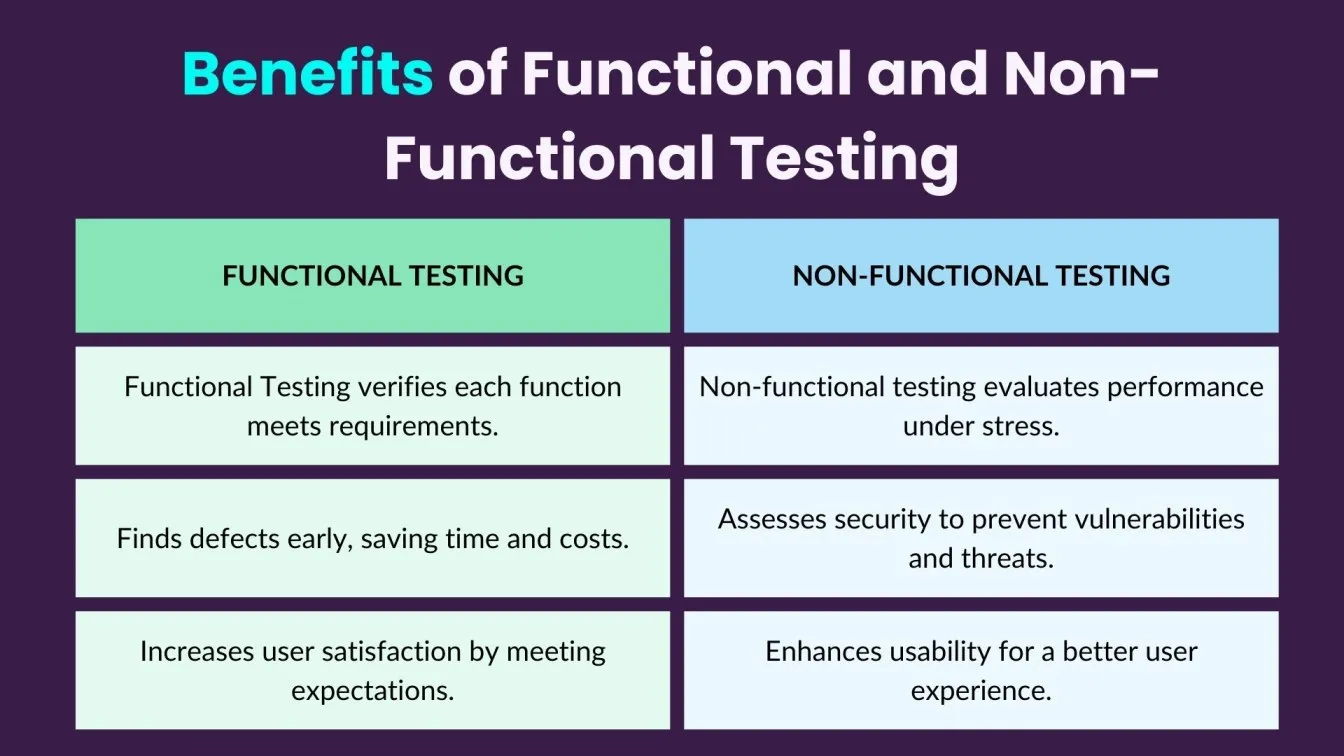
The advantages of non-functional testing include:
- Evaluate the application's performance to make sure it can manage stressful situations and anticipated user loads.
- Assesses security protocols to guard against weaknesses and possible dangers.
- Enhances usability by making sure the program is easy to use and intuitive, which results in a better user experience.
Organizations can produce software solutions that are reliable, effective, and user-focused by combining the two testing methodologies.
Challenges in Functional and Non-Functional Testing
Although both functional and non-functional tests are crucial for guaranteeing the quality of software, they present some difficulties:
Functional Testing Difficulties:
- Ambiguous requirements: Accurate test case creation may be hampered by vague or insufficient functional specifications.
- Dynamic Software Modifications: Regular upgrades could make current test cases outdated, requiring ongoing updates.
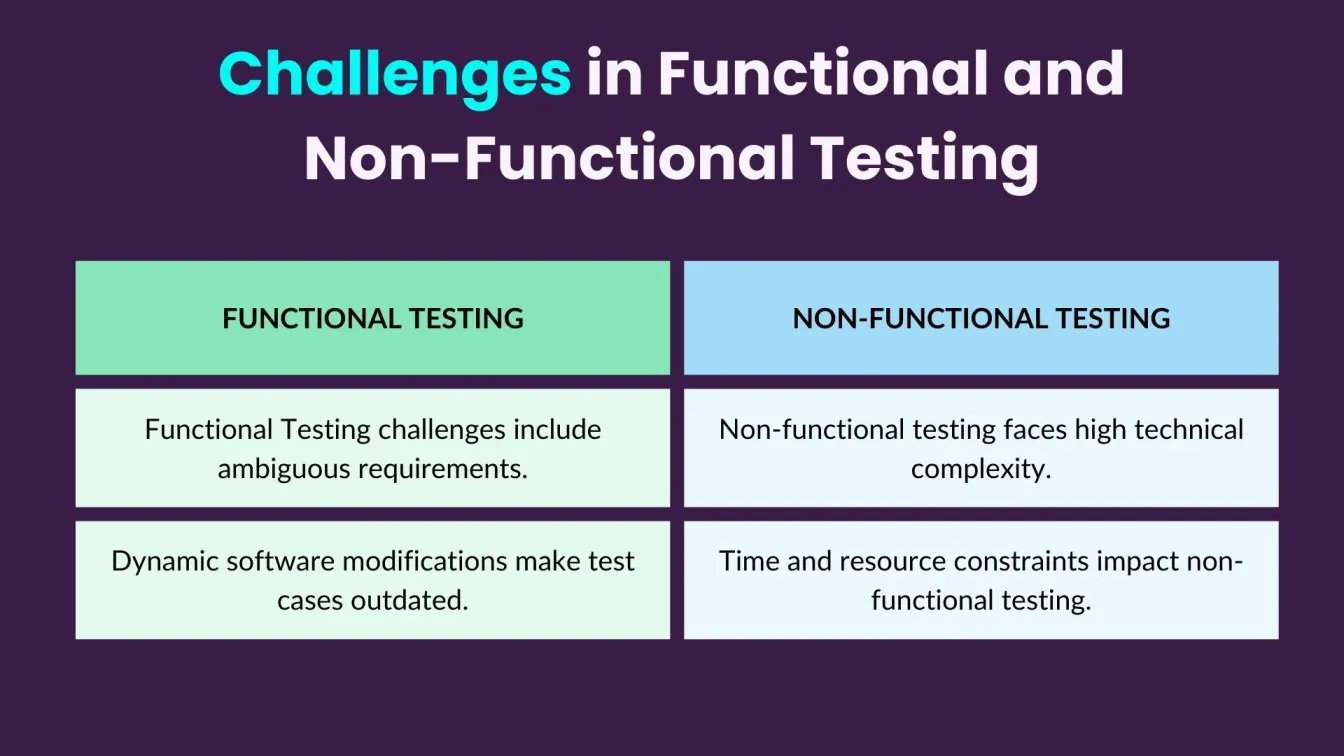
Non-Functional Testing Challenges:
- High Technical Complexity: It frequently needs certain tools and knowledge to evaluate factors like performance and security.
- Restrictions on Time and Resources: Thorough non-functional tests may require a lot of time and resources, which could cause problems with prioritization.
Resolving these issues is essential to producing software that is dependable and strong.
Importance of Both Testing Types
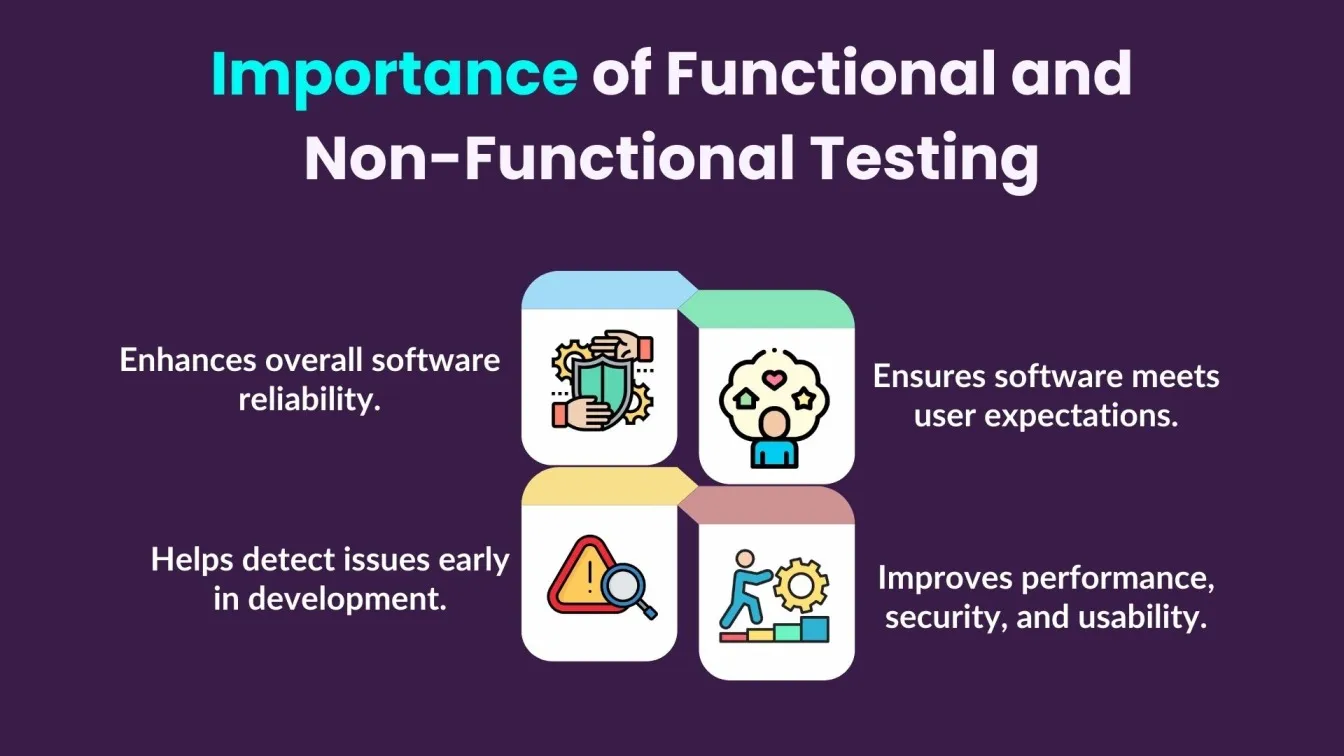
Ensuring software quality requires both functional and non-functional testing. Functional testing verifies that each component operates according to functional specifications, ensuring the software meets customer requirements. This includes methods like unit tests and integration tests. Conversely, non-functional testing assesses aspects such as performance, security, and usability, ensuring the software performs well under various conditions. For instance, volume testing evaluates how the system handles large amounts of data. By implementing both testing types, developers can deliver robust, reliable, and user-friendly applications that align with user expectations.
Wind Up!!
Both functional testing and non-functional testing play essential roles in software quality assurance. Functional testing ensures that individual components of the software, like login or data processing, work as expected, using methods such as unit tests and integration tests. It helps meet customer expectations by verifying functional specifications. On the other hand, non-functional testing focuses on performance, security, and usability, ensuring the software performs well under peak loads and is secure. Compliance testing and installation testing further ensure that the software adheres to standards and installs smoothly. By combining both approaches, developers can deliver reliable and robust applications.
People also ask
👉Difference Between Functional and Non Functional Testing
The difference between functional and non functional testing is that functional testing checks whether software features work correctly, while non functional testing checks system quality such as speed, security, usability, and reliability. Both testing types are important for delivering stable software.
👉What Is Non Functional Testing?
It is a software testing method used to evaluate performance, scalability, security, usability, and reliability instead of checking feature functionality. Non functional testing ensures applications perform efficiently in real-world environments.
👉Which Comes First Functional or Non Functional Testing?
Usually, functional testing is performed first to validate core features. After that, non functional testing checks system quality and performance. In Agile and CI/CD environments, some tests may run simultaneously.
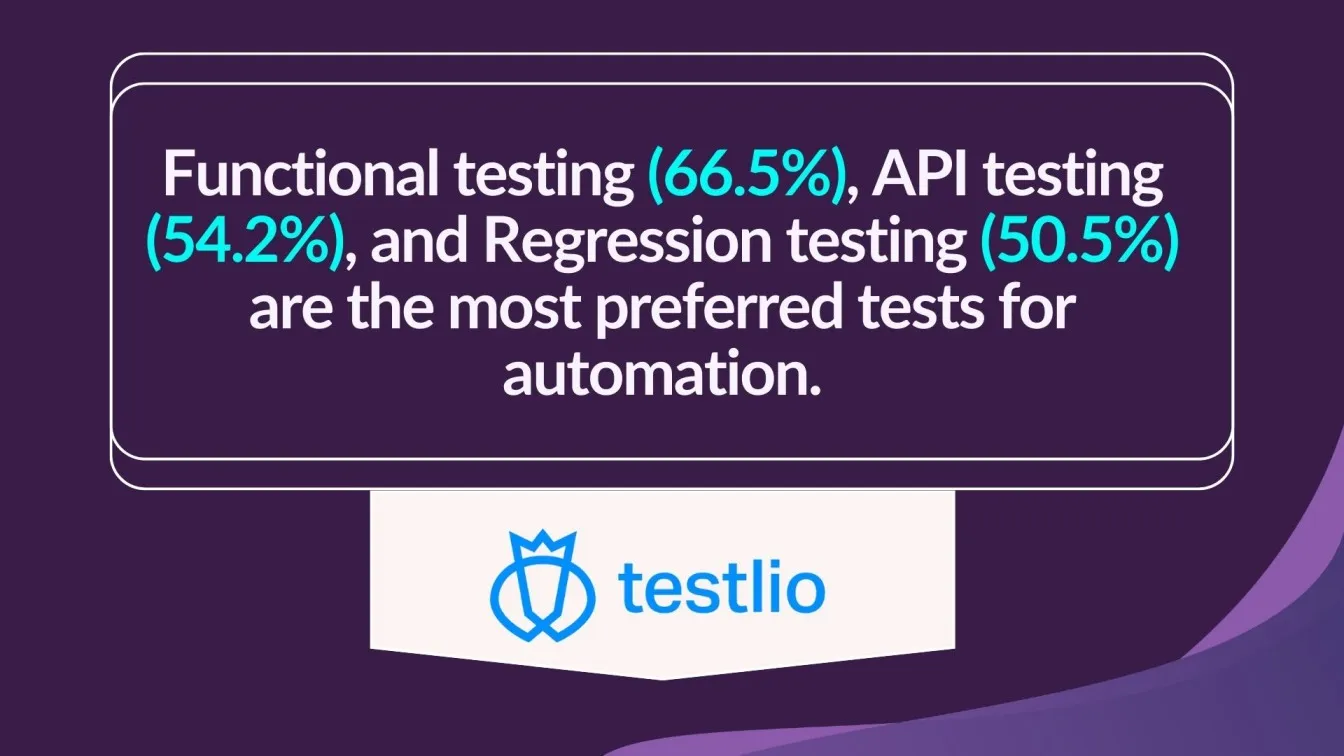
👉Is API Testing Functional Testing?
Yes, API testing is part of functional testing because it verifies API requests, responses, and expected behaviors against requirements.
👉Is Performance Testing Functional or Non Functional?
Performance testing belongs to non functional testing since it measures speed, load handling, stability, and response time instead of feature correctness.