

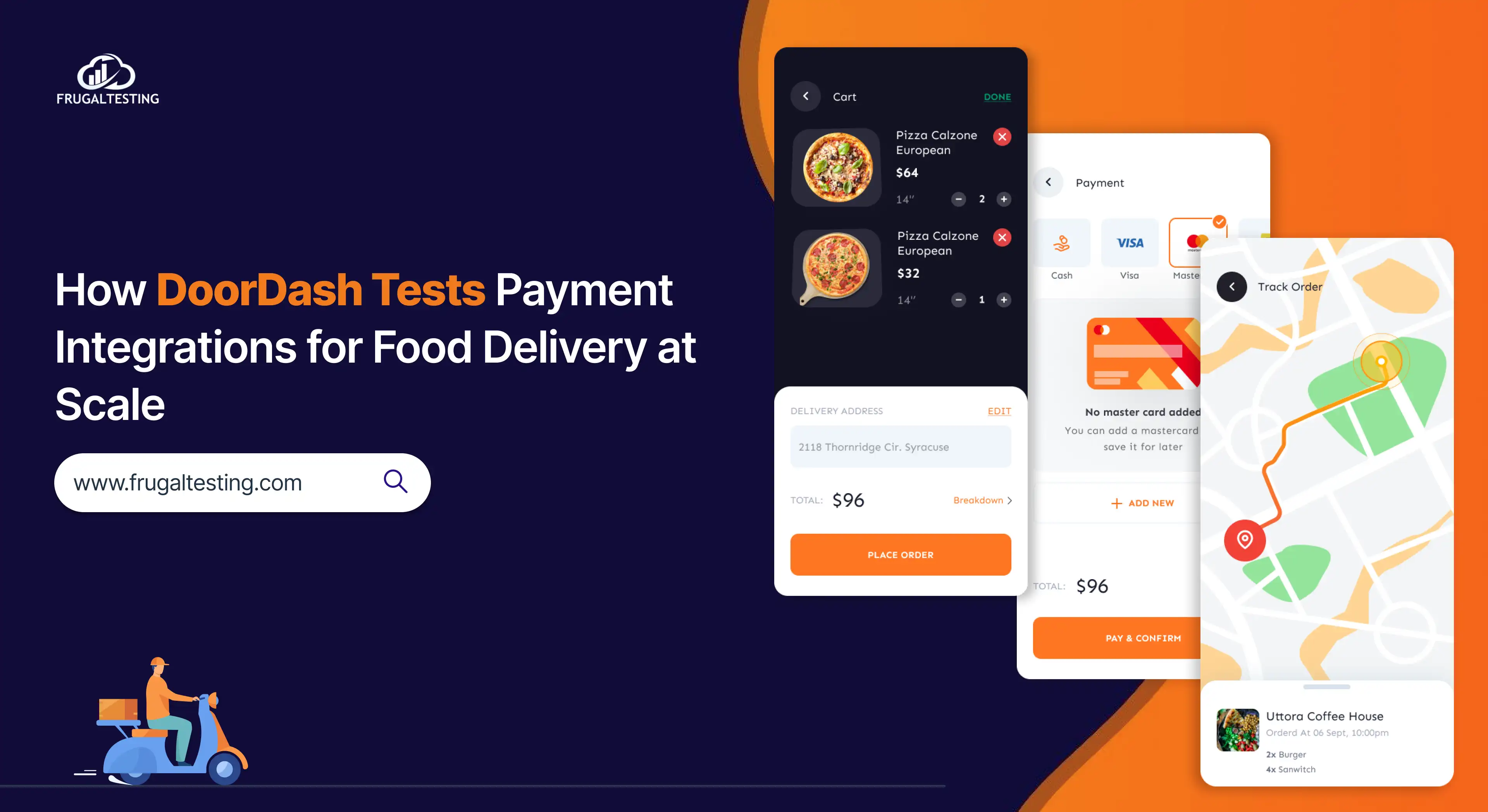
In the high-stakes food delivery industry, payment reliability is the invisible thread of customer retention. As the market matures and M&A deals reshape the landscape, building a reliable custom on-demand service platform requires a sophisticated product strategy. For giants like DoorDash, scaling to millions of orders requires SaaS Platform Modernization that treats payments as a distributed systems challenge. This blog explores how a robust tech stack and payment system integration protect platform revenue while delivering a seamless user experience across the entire order lifecycle.
How Do Food Delivery Apps Manage Payments at Scale?
For a three-sided marketplace connecting Consumers, Merchants, and Dashers, scale is a distributed systems problem. It is about maintaining consistency across millions of concurrent users during a digital transformation where the market matures.
The Scenario: Handling the "Dinner Rush"
Imagine a Friday night in the Phoenix metro area, where infrastructure is expanding as noted by leaders like Mesa Mayor Mark Freeman. The system must coordinate the Customer App Module, Driver Person app, and Restaurant App Module via the admin console to ensure live tracking for the consumer while a logistics-driven technology platform manages route management software to navigate bike lanes. This ensures real-time updates for order tracking, keeping the delivery system efficient even during peak demand.
The Problem: Zombie Transactions at Scale
A "zombie transaction" occurs when the restaurant service is unsuccessful but the payment service is successful. Operational efficiency is at risk because even a 0.01% error rate equates to thousands of support tickets.
How do food delivery apps process millions of transactions daily?
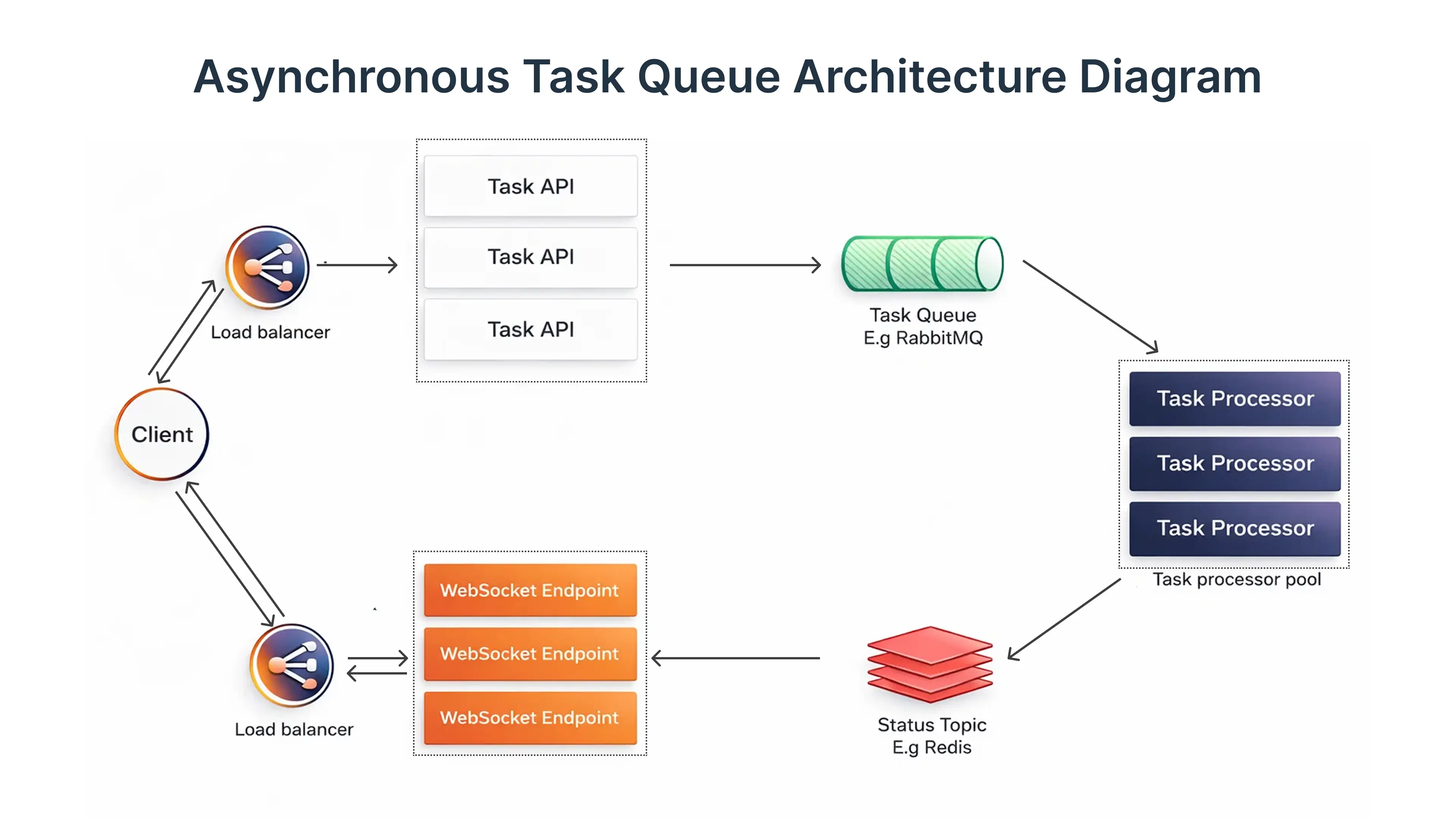
Processing payments at this scale requires a fundamental shift in how tasks are completed. If DoorDash processed every payment synchronously waiting for a confirmed "OK" from the bank the platform would grind to a halt during peak times. High-volume platforms instead use Asynchronous Processing to keep the app responsive.
The Concept: Asynchronous vs. Synchronous
To keep mobile food ordering tech responsive, platforms use Asynchronous Processing.
- The "Ack": The user-friendly interface shows "Confirming Order..." immediately.
- The Background Work: Heavy lifting including AI recommendations, fraud detection, and accounting software updates happens via Backend Technologies to maintain Operational Efficiency happens in the background.
- The Result: The app listens for Geolocation APIs or webhooks to push "Order Confirmed."
The Tech: Message Queues & The "Thundering Herd"
Rabbit MQ or Apache Kafka, function as the shock absorbers for on-demand delivery solutions.
- Ingestion: The frontend pushes requests into a Kafka topic.
- Load Leveling: Consumer services process messages at a controlled rate, preventing a crash of the relational database.
- Outcome: Although this creates a long queue, a fixed rate (say, 5,000/sec) is processed by the database, and it will not crash. We have a flexible but not broken system.
Payment Processing Systems in High Volume Food Delivery Platforms
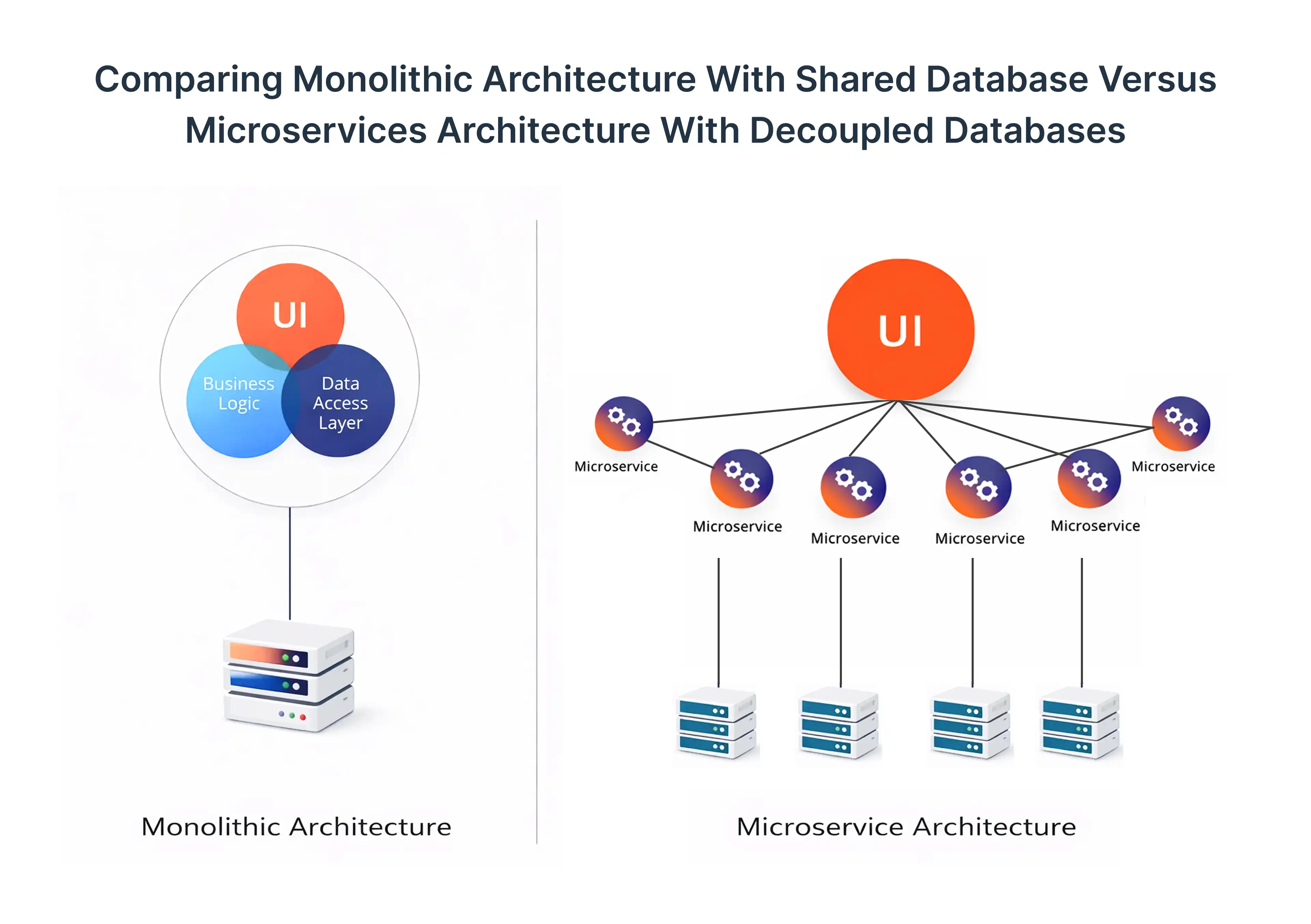
Scaling to millions of daily orders requires a departure from the "all-in-one" approach. DoorDash has transitioned from monolithic architectures to Microservices. This isn’t just a technical preference it’s a survival strategy that prevents payment bottlenecks from crashing the entire platform.
The "Bulkhead" Strategy In a monolithic system, if a payment processor experiences high latency, the application server can exhaust its thread pool while waiting for a response. This would make it impossible for a customer to even browse a menu.
DoorDash addresses this by decoupling the Checkout Workflow into a dedicated microservice. This creates a "bulkhead" between different parts of the app
- The Menu Service : Optimized for high-speed "Reads," serving cached data even if the banking backend is struggling.
- The Checkout Service : Is optimized for “Writes” and data consistency. It handles the heavy lifting of calculating totals , taxes and taking to the payment gateway
This division guarantees that the remainder of the app will still function even if the checkout process lags. Without a complete system crash, users can still build carts and find restaurants.
What Is a Payment Integration API and How Does DoorDash Use It?
At its core, a Payment Integration API is the secure, digital bridge connecting a consumer app like DoorDash to the financial world. It acts as a translator, converting a user's tap on a screen into a formatted request that banks can understand and approve.
This is a huge orchestration layer for DoorDash, not just a straightforward connection. The Payment API, which controls the intricate backend logic, receives a secure JSON payload from the app when a user checks out
As a massive orchestration layer, the Payment API acts as a secure translator for online ordering, managing the cryptographic "handshake" for PCI-DSS compliance and standardizing responses from various logistics providers into a unified code for the Order management system.
Understanding Payment API Documentation for Accurate Integrations
Adding a payment API is not only about sending data out it's also about understanding what comes back. Payment gateways have notoriously tricky error handling. But the only way to tell the difference between a user error (something they can fix!) and a system error (something they can't) is to actually read the docs.
The Translation Layer: Turning Errors into Actions
Effective integration parses cryptic signals into human-readable messages. This Translation Layer maps API signals to system actions (like auto-retries or silent blocks) to minimize support tickets.
What Is a Payment Gateway and Why It Matters for Testing
The Payment Processor is the financial engine for a developer, and the Payment Gateway is the safe passageway. It's critical to distinguish between them in order to build a stable Admin Panel, admin dashboards, and leverage IT Staff Augmentation for payment system integration within custom on-demand service platforms. To ensure cost control and mimic bank fraud algorithms, engineers test the gateway in sandbox mode.
How Gateways Process Transactions in Food Delivery Apps
Apps use an Auth-Capture-Settlement Loop to ensure money only moves when food does:
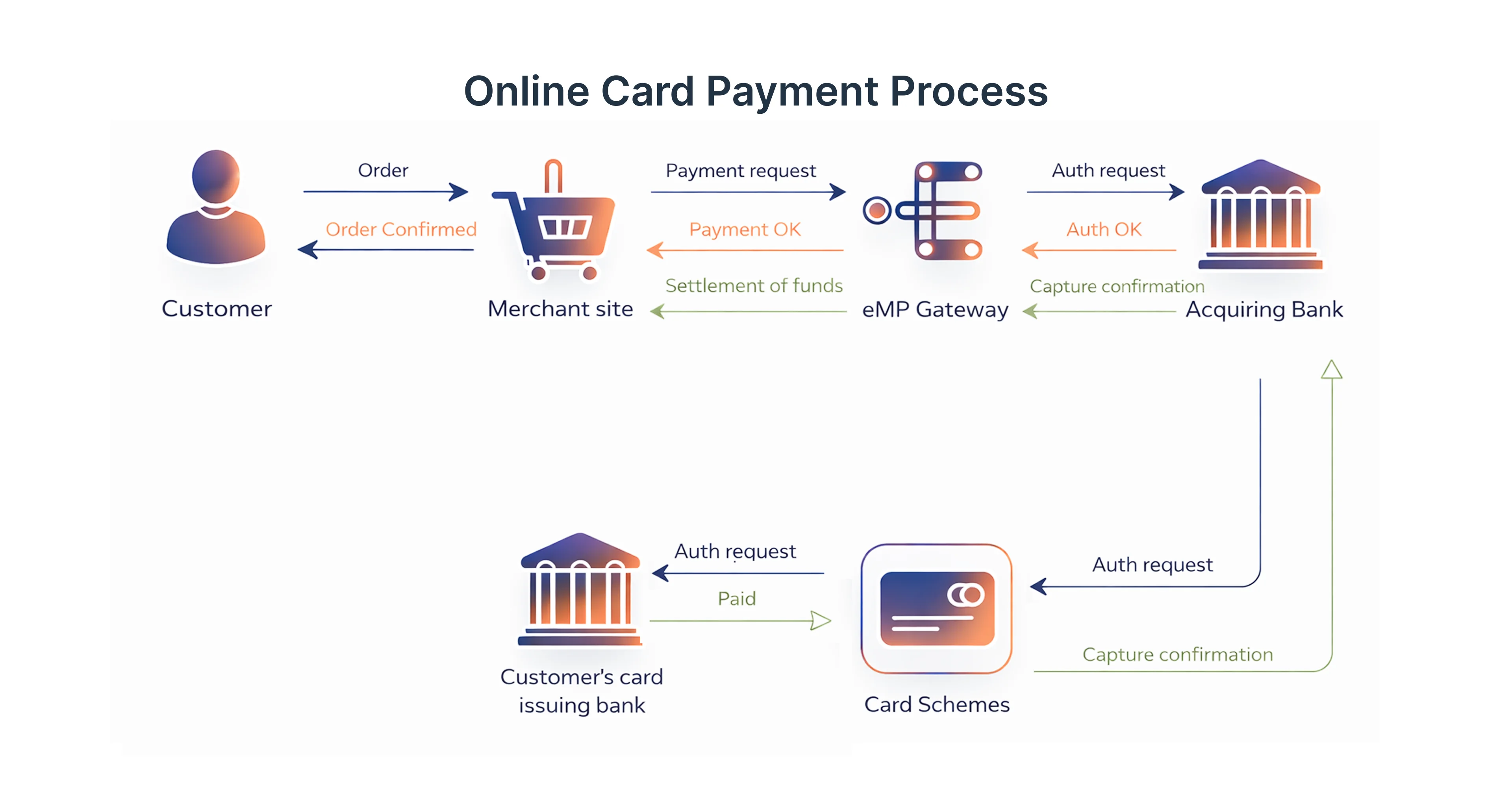
- Authorization (The "Hold"): Funds are reserved but not taken.
- The Decision Window: If a restaurant rejects an order during onboarding, the charge is voided instantly.
- Capture (The "Transfer"): Money moves only after the restaurant confirms.
- Settlement: Occurring days later via batch processing, the payment processor (e.g., Stripe) deposits the aggregated funds into DoorDash's merchant bank account.
By separating "Ordering" (Auth) from "Paying" (Capture), food delivery platforms ensure that money only moves when food actually moves.
Handling Gateway Failures, Retries, and Timeouts
Failures such as network "blinks" or bank outages are unavoidable in distributed systems. DoorDash employs two crucial patterns to prevent these bugs from causing the app to crash. First, the circuit breaker functions as a safety switch. The system "trips" the circuit and automatically reroutes traffic to a backup provider if a particular payment gateway begins to fail. Second, each request includes an Idempotency Key to safeguard the user's wallet. This guarantees that the bank will recognize the unique key and not charge the card again if the connection drops in the middle of the payment and the app tries the request again. These patterns turn a possible double-charge nightmare into a successful, silent retry.
Testing Across Multiple Gateway Providers at Scale
Relying on a single processor is a single point of failure. High-scale platforms use a Payment Orchestration Layer (or "Smart Router") to choose the best bank in real-time based on cost optimization and regional success rates. To minimize risk, engineers use Canary Routing, sending only 1% of live traffic to a new provider. If the gateway performs well, traffic is ramped up if it fails, the system reverts instantly, capping financial risk.
Core Components of a Modern Payment Processing System
Relational databases are frequently insufficient for food ordering and delivery systems at scale. DoorDash uses CockroachDB to ensure data accuracy and Real-time Inventory sync across its restaurant network, while logistics providers use Geolocation APIs to refine delivery time estimation. To manage this traffic, load balancers and API gateways prioritize high-value checkout requests, ensure the Order management system and dispatch system never hit a bottleneck, maintaining data accuracy across the restaurant network.
Handling Failures, Retries, and Reconciliation
To maintain Operational Efficiency, DoorDash uses an automated Reconciliation Bot that performs a daily "Three-Way Match." It compares the Order management system, the payment gateway reports, and actual bank statements to ensure data accuracy.
- Auto-Success: If all three logs match, the transaction is marked as reconciled.
- Self-Healing: If the bank shows a charge but the app shows a failure (a "Ghost Charge"), the bot triggers a "System Void" to refund the user instantly.
- Smart Flagging: If amounts differ, the bot moves the entry to a "Suspense Account" for manual review.
Beyond payments, digital transformation is leading toward an Autonomous Delivery Platform. DoorDash Labs is currently testing autonomous robots and AI dispatchers. Even specialized fields like a Law Transcription Firm or real-time diary-ization services are examining these proprietary automated restaurant ordering systems to see how AI-driven transcription can streamline high-volume operations and improve Operational Efficiency.
Conclusion
Processing payments on an enormous scale is an extremely difficult puzzle involving complex distributed systems that are not really considered to be part of the end user's experience. End users don't know what a gRPC connection or asynchronous message queue is, nor do they have any idea about shards of a CockroachDB database all the end user cares about at the end of the day is whether or not their food arrives. Even 1 millisecond of latency can destroy a customer's trust in the business and reduce conversions.
Reliability has become competitive advantage for many businesses, especially those that use distributed architecture to build their platforms and use automation for arbitrage transactions like DoorDash. The business that can guarantee to its customers that they will receive their order correctly every time is the leader in the on-demand economy, providing superior Customer Experiences through a logistics-driven technology platform .
People also ask for (FAQ’S)
Q1.What environments does Doordash provide for testing integrations?
Ans: DoorDash offers two primary environments a production environment for live, real-world orders and a sandbox environment for development and testing.
Q2.Can i test my integration before going live ?
Ans: Yes, You should model orders, menu changes, and other workflows in the Sandbox environment to ensure everything functions properly before transferring to the live production environment.
Q3.How long does it take to build an integration to Doordash ?
Ans: It varies based on your resources, but many partners finish development in less than a week. Simple integrations can sometimes be done in just 1-2 days, while more complex roadmaps might take a few sprints.
Q4.Do test orders send a Dasher to the restaurant ?
Ans: No. In the Sandbox environment, placing a test order is entirely a simulation. No real money is exchanged, and no real Dasher will be sent.
Q5.How safe is my payment data on the platform?
Ans: To keep your data safe and stay PCI-DSS compliant, we use tokenization. Your card numbers are swapped for secure digital "tokens" so your actual info is never stored on our servers, keeping your finances protected even if a glitch occurs.

.webp)