

The loss of a single WHERE clause in a shared-schema SaaS data-store can reveal all of the records of another tenant - and again, unlike most software bugs, that disclosure is often silent, invisible to the team, and already recorded in the logs of an attacker by the time anyone notices. This guide discusses the real-world testing of these problems by the QA and security teams: actual tools, actual strategies, and the point at which most teams fail to test these problems silently.
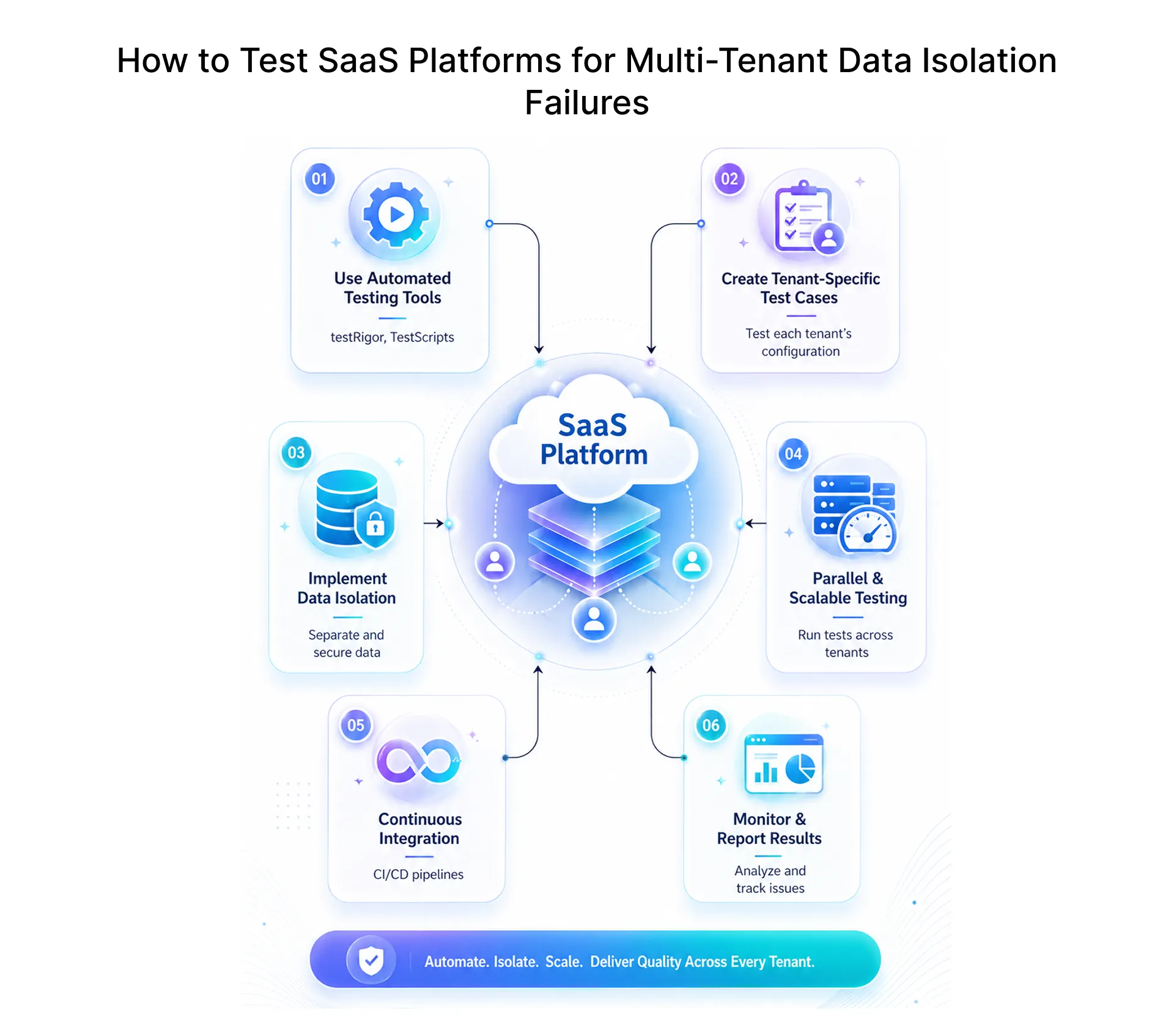
Why Multi-Tenant Data Isolation Failures Are a Critical SaaS Security Risk
What Multi-Tenant Architecture Looks Like in Modern SaaS Systems
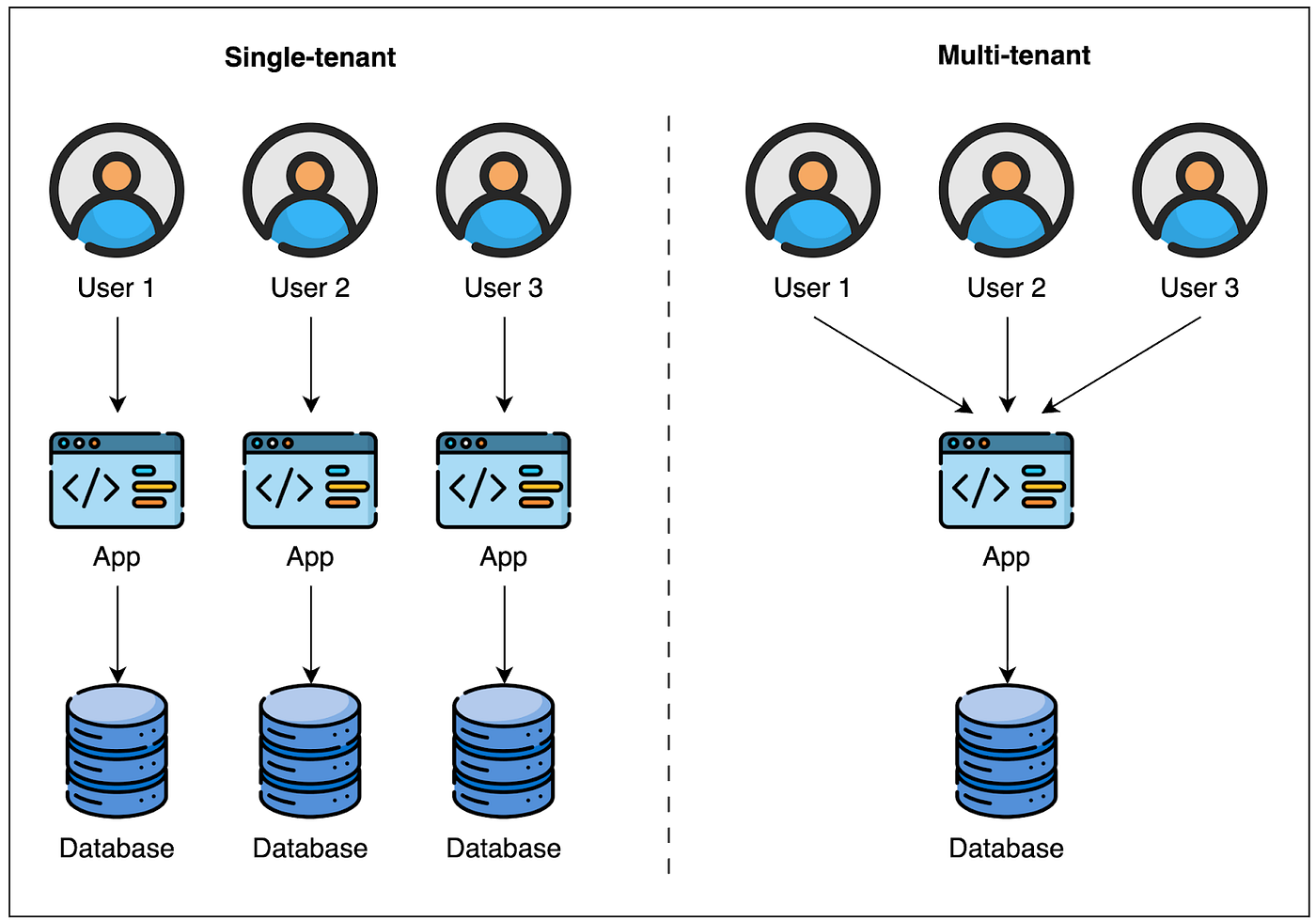
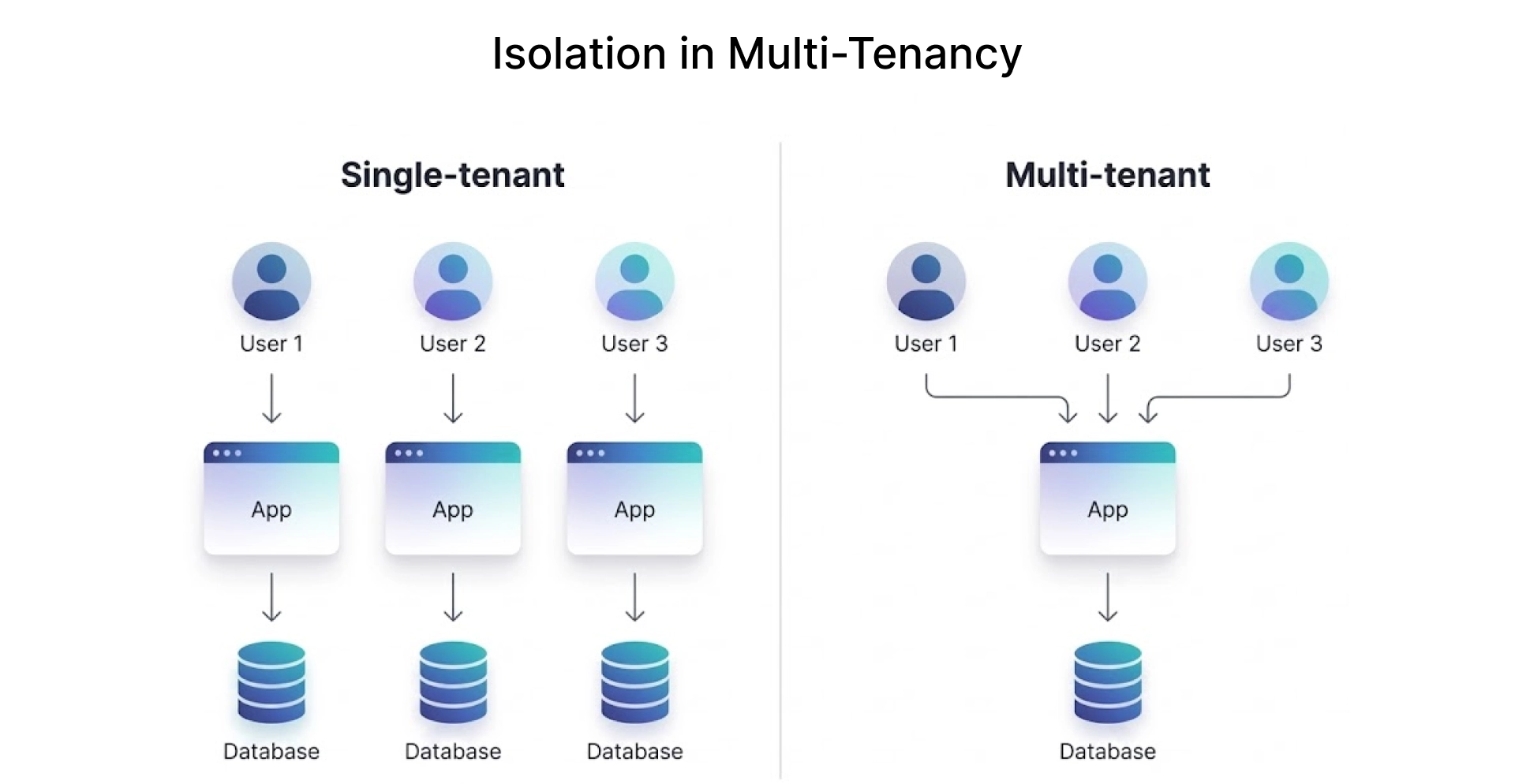
The current SaaS systems are mostly based on shared infrastructure. A single database, single application layer, many tenants - their data must remain completely isolated from every other tenant's records.
The production SaaS environments are dominated by three models of isolation:
- Silo model - every tenant is assigned a database instance. Most isolation, most expensive.
- Bridge model - single database, different tenants, different schema.
- Pool model - common database, common schema, tenant IDs used as row-level separators.
In cost-sensitive SaaS products, the pool model is most frequently used. It is also the location of isolation failure. Having only one missing WHERE tenant_id clause will reveal all the records of another tenant. The first question that any serious test plan would have to answer is to understand which model your platform is.
Where Multi-Tenant Systems Break: Common Data Leakage & Isolation Failures
Isolation failures rarely announce themselves. The most common failure patterns are:
- ORM misconfiguration - query scopes generation switched off or evaded within some code paths.
- Shared cache and no tenant-scoped keys - Redis is delivering out-of-date data of Tenant A to Tenant B.
- Background workers have a queue processing step that executes outside of a tenant context.
- Error responses in API - endpoints that reveal IDs or metadata of other tenants in 404 or 500 responses.
- File storage paths: S3 bucket paths with no policy-layer tenant-level access control.
Verizon's 2024 Data Breach Investigations Report demonstrates that misconfiguration and application-layer vulnerabilities form a huge proportion of cloud data exposure events- 68 percent of breaches occurred with a human component. These patterns of failure can be directly related to the above risks.
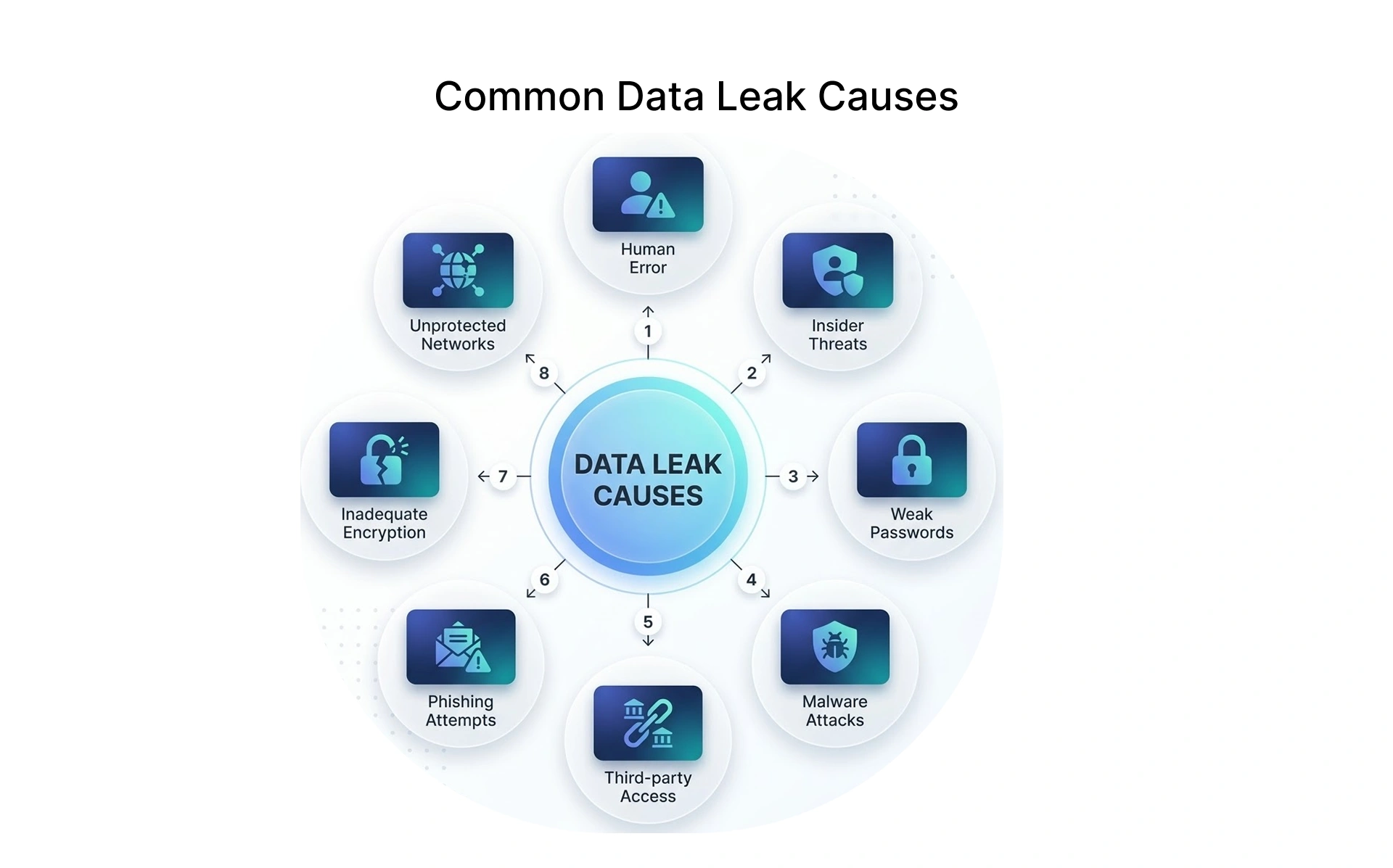
Why Data Isolation Is a Non-Negotiable in Enterprise SaaS Security
Security questionnaires are conducted by enterprise buyers before signing a contract. SOC 2, ISO 27001, GDPR, HIPAA - each of them needs a written confirmation that your platform provides a high-level of data separation between tenants. An isolation failure not only exposes you to legal liability, but it also renders you ineligible for enterprise business.
SaaS data leakage prevention is not a post-additional feature. It is core - and it must be thoroughly tested as soon as possible.
SaaS Testing Strategies That Actually Prevent Data Isolation Issues
How to Run Cross-Tenant Access Tests
Most QA teams test features. Fewer test tenant isolation boundaries - the exact seams where cross-tenant data leakage occurs and where attackers probe first. Security testing for tenant isolation is seam-specific - it targets the exact points where tenant context can leak, be ignored, or be deliberately bypassed. The fundamental technique is cross-tenant access testing: Open two tenant accounts (Tenant A and Tenant B), log in as Tenant A, and then attempt to access resources belonging to Tenant B under known or enumerated identifiers.
A simple Python program:
python
import requests

TENANT_A_TOKEN = "Bearer eyJhbGciOiJIUzI1NiIsInR..."
TENANT_B_RESOURCE_ID = "resource-uuid-belonging-to-tenant-b"

headers = {"Authorization": TENANT_A_TOKEN}

response = requests.get(
    f"https://api.yourapp.com/v1/resources/{TENANT_B_RESOURCE_ID}",
    headers=headers
)

assert response.status_code == 403, (
    f"ISOLATION FAILURE: Expected 403, got {response.status_code}. "
    f"Response body: {response.text[:200]}"
)

print("✓ Isolation check passed" if response.status_code == 403 else "⚠ CROSS-TENANT LEAK DETECTED")
print("✓ Isolation check passed" if response.status_code == 403 else "⚠ CROSS-TENANT LEAK DETECTED")
An isolation failure is a response of 200 containing data. Run this pattern across every resource type in your API surface - not just the obvious ones.
Multi-Tenant Data Isolation Testing Tools & SaaS Security Testing Strategies Used by QA Teams
No tool will bridge this gap. The thing is, that a layered approach - automated software testing, software, and focused manual testing of edge cases that are never covered by automation - works.
At Frugal Testing, API boundary and auth bypass tests are recommended to be run at the end of each sprint, and a complete cross-tenant penetration test is to be run every quarter.
Automated vs Manual Testing for SaaS: When to Use Each and Why
Regression is caught by automated tools at high speed; logic-layer isolation failures - that is, the type where a filter performs well in single-tenant mode, but silently fails to scale to multi-tenant load - are caught by manual and exploratory tests.
Selenium-based regression suites confirm that newly deployed builds haven't broken existing isolation controls. But bugs in logic-layer isolation - such as a filter which in single-tenant mode would correctly receive and process packets, but when loaded with simultaneous multi-tenant users, silently goes out of range - can hardly be identified by automated scans.
- Automated: runs in response to every push of CI/CD, identifies regressions on the fly.
- Manual: determined quarterly, and determines architecture and logic-layer gaps.
- Hybrid: anomaly flagging is automatically done with human triage of ambiguous anomalies.
The automated scanner is unable to produce everything, some of which can only be found by testing them manually and by scripted exploratory runs.
How to Choose the Right SaaS Testing Stack for Security & Scale
The selection of stacks depends on three dimensions, which include your cloud environment, your CI/CD tooling, and your compliance requirements. An enterprise with regulated health data on a different software testing platform is required compared to a startup on AWS with GitHub Actions.
Begin with what you have in the pipeline. The majority of teams use Postman to test API - add collections of tests to isolate tenants to it, and buy nothing new. Introduce a PR level SAST tool in its initial phases. Installation of layer DAST once you have a stable staging environment.SCA tools are inexpensive to execute on each build and are passive dependency risk tools.
A typical initial stack of SaaS teams: Newman to run API isolation tests in CI, Semgrep to run SAST on every PR, and Snyk to run SCA on every build.
Security testing for SaaS Applications: Tools & Real Implementation
Why Security Testing Is Core to SaaS Business Risk Management
The average cost of a breach in the IBM Cost of a Data Breach Report 2024 was estimated at $4.88 million worldwide, and breaches in the cloud space never occur at a lower than average price.
Security testing tools aren't overhead. They are a risk mitigation system that will pay for itself, provided they do not have a production incident in the first instance that they cover.
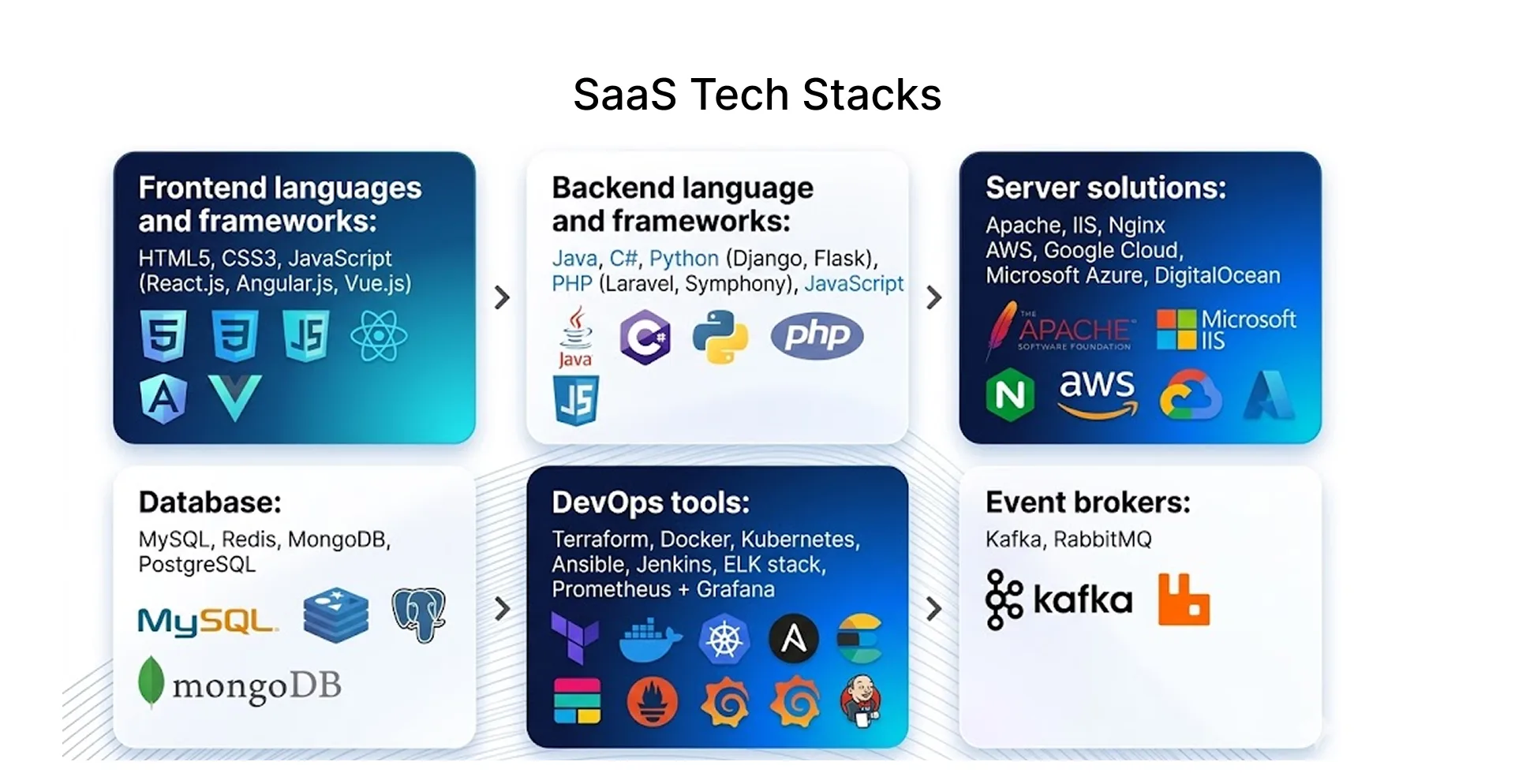
SAST vs DAST vs SCA: How Security Teams Use Them in SaaS
Each tool type runs at a different point in the pipeline and catches a different class of vulnerability:
DAST picks up what SAST fails to pick up through testing the live application. SCA is never-ending and notifies you when one of the dependencies you depend on is vulnerable. They combined to meet the security testing requirements on the majority of enterprise vendor questionnaires.
How to Integrate Security Testing into CI/CD Pipelines (DevSecOps Approach)
DevSecOps of SaaS platforms implies that there is no such implementation of security gateways as a pre-release gateway, but all pushes include security gateways.
A working GitHub Actions SAST integration:
yaml
name: SAST Security Scan

on: [pull_request]

jobs:
  semgrep-scan:
    runs-on: ubuntu-latest
    steps:
      - name: Checkout code
        uses: actions/checkout@v3

      - name: Run Semgrep SAST
        uses: semgrep/semgrep-action@v1
        with:
          config: >-
            p/owasp-top-ten
            p/jwt
            p/sql-injection
            p/secrets
        env:
          SEMGREP_APP_TOKEN: ${{ secrets.SEMGREP_APP_TOKEN }}
This blocks PR merges on high-severity findings. DAST runs post-deployment to staging; SCA runs on every build. Together, all three layers of the CI/CD security pipeline are covered with minimal operational overhead.
API Testing Strategies & Common Tools Stack for Multi-Tenant SaaS Applications
Why APIs Are the #1 Attack Surface in SaaS Platforms
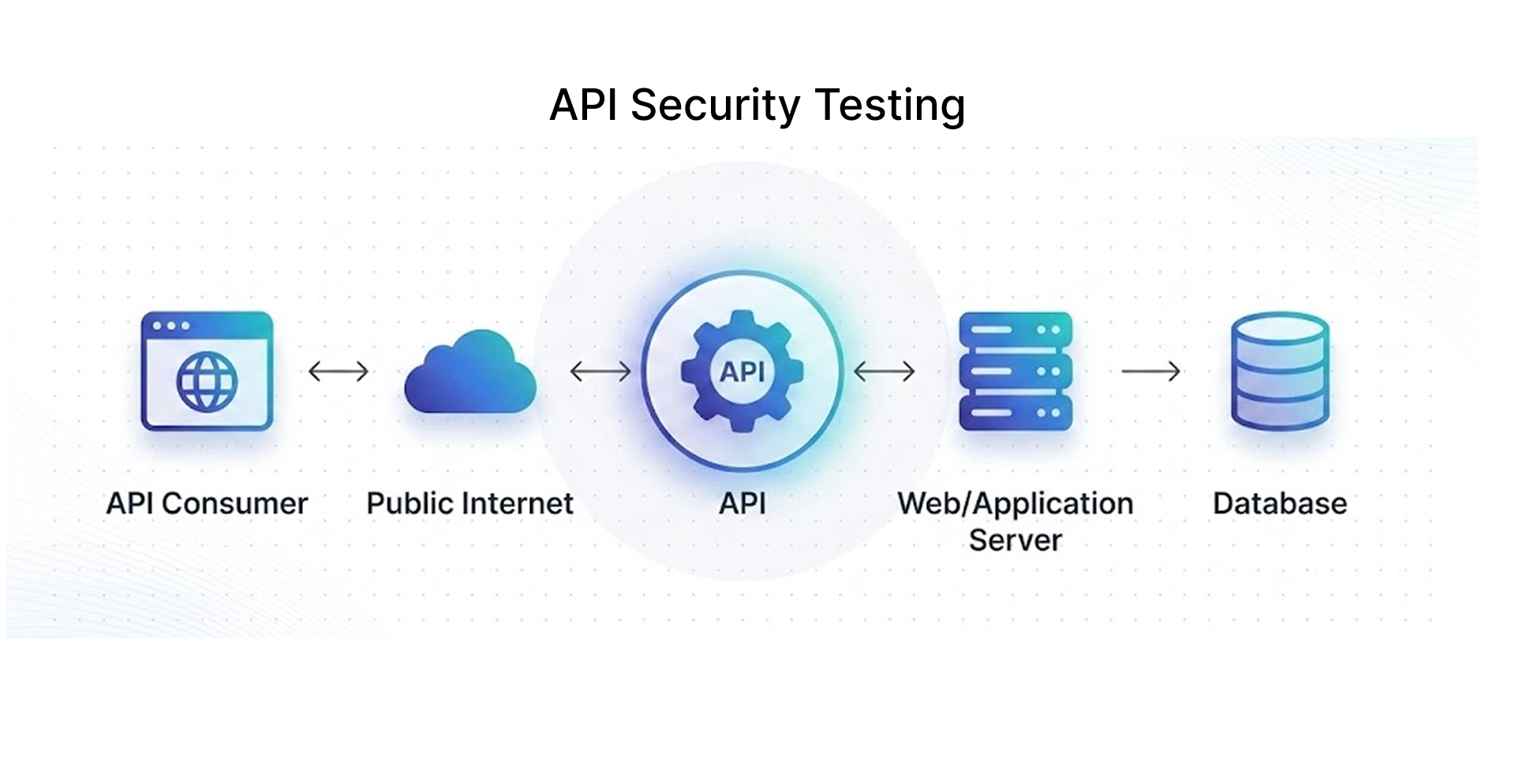
Each SaaS function has an endpoint of the API, and each endpoint can be a potential tenant isolation boundary. The vulnerability that most teams overlook: they verify APIs work, but not that they are tenant-enforced - and attackers make inquiries about the difference.
API Security Testing Best Practices Using Postman & Insomnia
The Postman API testing and Insomnia API testing are two of the unanimous starting points of most QA teams. Both of them favour environment-based configuration, and therefore, can be parameterised using tenant credentials, and the same test suite could be run in a systematic manner, as in the case of Tenant A and Tenant B.
Practices that separate real API security testing from superficial checks:
- Test all endpoints that have a wrong tenant token - not only the unauthenticated requests.
- Enumerate resource IDs - sequential IDs are especially vulnerable to IDOR attacks across tenant boundaries.
- Check to test the existence of error messages - even the existence of a 404 containing data of some other tenant in the body is also a leak.
- Test pagination - depth - some APIs will correctly scope page one, but the tenant context is no longer available on subsequent pages.
- Check OAuth token scopes - a token to one tenant must not be able to access the administration endpoints of another tenant.
The API testing (insomnia) offers environment chaining and an auth flow that is based on the plugins, so it will be helpful with OAuth and multi-tenant setups that use API keys. Postman collections run in CI/CD via Newman, see the automation setup in the next section.
How to Automate API Testing for Continuous SaaS Validation
Postman collections run in CI/CD via Newman. A minimal setup:
bash
# Install Newman globally
npm install -g newman newman-reporter-junit

# Run tenant isolation test suite
newman run tenant-isolation-tests.postman_collection.json \
  --environment staging.postman_environment.json \
  --reporters cli,junit \
  --reporter-junit-export test-results/isolation-results.xml \
  --bail
Put the JUnit output into your CI pipeline and consider failures of isolation tests to be build-blocking. Isolation regressions should never reach staging silently.
Cloud Security in SaaS: Services, Risks & Compliance Requirements
Key Cloud Security Risks in SaaS Environments You Can't Ignore
Cloud-native risk is fundamentally different from on-premise. Misconfigured IAM roles, overly permissive S3 bucket policies, unencrypted inter-service traffic, and missing resource tagging - these are the mundane vulnerabilities that cause real breaches at scale. Cloud testing tools (e.g., Orca Security) provide agentless access to the entire cloud estate to engineering teams to identify the instances of misconfigured assets, unencrypted data paths, and lateral movement vulnerabilities without necessarily placing an agent on the instances.
A combination of an Orca Security-GuardDuty, Security Hub, and AWS Config is a fair choice in the scenario of AWS-native SaaS teams, as it provides a decent level of base-level cloud security at a fair price of operation.
AWS & CCSP Certifications for SaaS Security Teams + Multi-Tenant Data Isolation Testing Checklist
The AWS security certification (Security - Specialty) and CCSP certification are an indication to enterprise buyers that your security team is knowledgeable about cloud architecture, and not just skin-deep security controls.
Multi-Tenant Data Isolation Testing Checklist:
The following checklist will address the seven test areas needed to confirm multi-tenant data isolation at API, database, cache, and file storage, as well as background jobs and auth layers.
How to Select the Right Cloud Security Services for SaaS Platforms
The hosting and compliance needs determine the type of cloud security services. The recommended starting point of AWS-native teams is the native security stack - GuardDuty to detect threats, Security Hub to manage posture, Macie to classify data - and include third-party tools where native coverage is not available.
Do not buy cloud security services with which you are unable to operationalise. A tool that generates alerts nobody acts on is worse than no tool at all - it creates the appearance of security coverage while the actual risk goes unaddressed.
Conclusion: Key Takeaways on SaaS Data Isolation Testing and Security Validation
Multi-tenant data isolation testing is not a pre-release check box. It is a continuous engineering science that is exercised at any stage during the product life cycle (code, API, database, cache, file storage, and background processing).
The teams, which succeed in this regard, do not consider security as a gateway. They make isolation validation part of the development cycle: SAST on all PRs, API isolation testing during CI, quarterly architectural coverage penetration testing, and continuous cloud security monitoring during production.
At Frugal Testing, we perform API boundary and auth bypass testing at the end of each sprint and a comprehensive cross-tenant penetration test every quarter, a pace that has identified isolation regressions before reaching production in 40+ client engagements.
People also ask for(FAQs)
Q1. How do I choose automated testing tools for a SaaS platform?
Ans.The best automated testing tools for SaaS platforms are those that integrate natively with your CI/CD pipeline - Semgrep, Snyk, and Newman can be set up on GitHub Actions in a day by most teams.
Q2. How do engineering teams enforce data isolation at scale?
Ans. A default-deny ORM layer is the surest way to implement data isolation by engineering teams in multi-tenant SaaS architectures, where all database queries run in a tenant scope unless explicitly overridden by an authenticated administrator context. This, in combination with PostgreSQL row-level security policy and automated query log auditing, enables isolation enforcement to be structural, instead of just relying on individual developer discipline.
Q3.How do enterprises use SAST and DAST in DevSecOps pipelines?
Ans. SAST tools are usually used at the PR level in enterprise DevSecOps pipelines, and DAST in a dedicated staging environment post-deployment. SCA executes each dependency update. They can be combined to offer coverage of shift-left security without significantly reducing release velocity.
Q4.Why is API testing a critical control layer in SaaS security?
Ans. API testing is the most important control layer to test tenant isolation since the boundaries of isolation are most likely to be crossed at the API surface - and most likely to go unchecked. The actual danger lies in API testing services that equate functionality tests and isolation testing to the same thing - they demand different test designs, different credentials, and different pass criteria.
Q5.Which cloud security certifications matter for SaaS compliance teams?
Ans. The AWS Security Specialty certification is directly valuable to the teams operating a production workload of SaaS on AWS; the CCSP certification is meaningful to the enterprise procurement teams that conduct vendor due diligence. Both are worth the investment to those senior engineers who own the security posture of a SaaS product to scale.

.webp)