

The Growing Tension Between Low-Code Tools and Senior Automation Engineers
I've been in software testing long enough to have written Selenium scripts by hand and watched a product manager reproduce 80% of them in 90 minutes with a point-and-click tool. Today, I'm watching something much bigger unfold low-code platforms are no longer just hobbyist tools or startup shortcuts. They're reshaping entire QA departments, and senior engineers are feeling it.
In my conversations with QA leads at mid-size product companies this year, a recurring anxiety keeps surfacing: "Will our team's deep scripting expertise still matter in 12 months?" The answer isn't simple. Low-code development platforms are solving real business problems speed, cost, accessibility but they're also creating blind spots that only experienced engineers can navigate. This tension is what I want to unpack in this blog.
What Is Software Testing Automation and Why It Matters Today
At its core, software testing automation is the practice of using tools and scripts to execute test cases automatically, compare actual results against expected outcomes, and report findings all without manual intervention each time. For anyone revisiting the software testing basics, this matters enormously because modern applications deploy dozens of times per day. Human testers simply cannot keep up.
Software testing today covers a vast surface area: functional testing in software testing, performance testing, API functional testing, regression testing, smoke testing software validation, and more. Each of these types of software testing demands different tooling, skills, and strategies. The challenge is that software testing services once required highly specialized talent to stitch all of this together and that reality is changing.
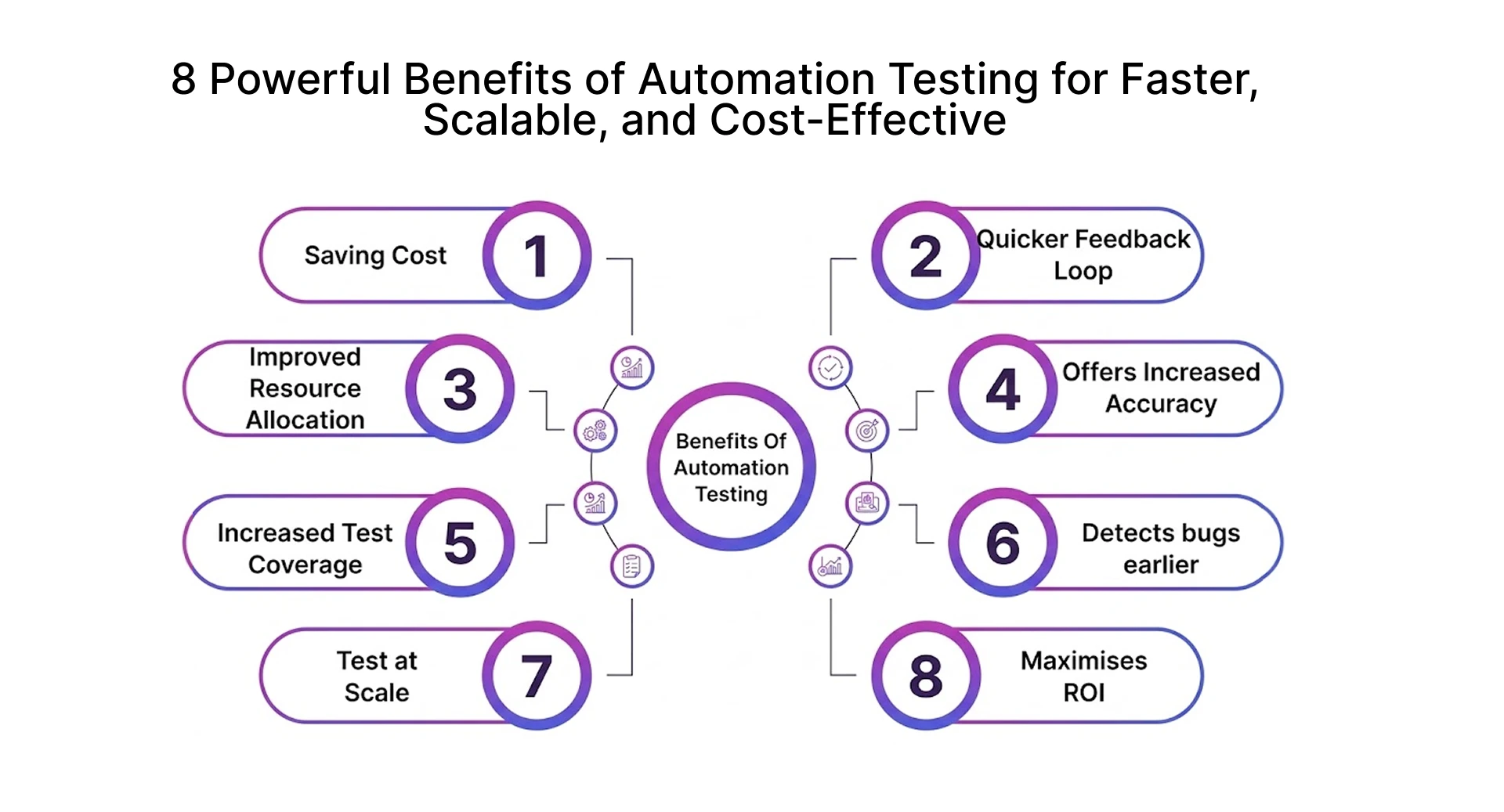
Take a practical example: a mid-market e-commerce company I worked with ran a 45-person QA team, spending 60% of their budget on manual testing. After implementing an automated functional testing strategy with a hybrid approach (low-code for UI tests, script-based for API validation), they cut manual testing effort by 38% in eight months. That's the kind of ROI that makes executives pay attention.
Rise of AI in Software Testing
From hands-on testing of four AI-driven QA platforms this past year, the improvements are real. Test self-healing works. Anomaly detection catches things humans miss. These tools watch how your application behaves, update tests when UI elements shift, and flag the code areas most likely to break after a release.
What's changed isn't just which tests run it's who designs them. Before, automation engineers manually mapped user journeys, wrote assertions, maintained brittle locators. Now, AI platforms infer most of that from browser interactions alone. Senior engineers I know have mixed feelings about this. Understandably.
One QA engineer at a SaaS company told me a tool did in two days what her team previously spent three weeks scripting. Not perfect maybe 80% there. But 80% is usually enough to start.
How Low-Code Testing Tools Work
Low-code platforms abstract away the complexity of test scripting by providing visual interfaces, drag-and-drop workflows, and pre-built integrations. On low-code no-code platforms, testers click through application flows, and the tool records and generates the underlying test logic automatically. Some even leverage AI task automation to suggest next steps based on application behavior.
Most low code development tools in the testing space work in layers. At the surface, you get a point-and-click recorder. Underneath that, there's a rule engine that maps actions to assertions. Beneath that, many tools generate actual code (often in frameworks like playwright automation or selenium automation) that experienced engineers can inspect, modify, and extend.
Low code integration platforms have also matured significantly. They now connect seamlessly with CI/CD pipelines, Jira, Slack, and cloud infrastructure making them viable for enterprise-scale deployments. This is what's made AI low-code testing services for enterprises a serious conversation at the boardroom level.
Automation Engineers vs Low-Code Tools: A Practical Comparison Framework
Rather than declaring one winner, I want to offer a fair, practical comparison across three dimensions that actually matter in the real world.
Speed and Scalability Comparison
Low-code tools win decisively on initial speed. I watched a product manager with zero scripting background set up a 12-step end-to-end checkout test in about 90 minutes using a popular low code platform. That same test in playwright automation or selenium automation would take an experienced engineer half a day to write, parameterize, and stabilize.
However, scalability tells a different story. When a retail client of mine tried to scale their low-code test suite from 200 to 2,000 test cases, maintenance became a nightmare. Tests broke in bulk when the UI was redesigned, and the platform's self-healing features couldn't keep up with the volume. A script-based approach would have allowed modular, reusable component libraries something low code platforms still struggle with at scale.
Flexibility and Customization Comparison
This is where senior engineers still have a massive edge. Custom data automation software pipelines, complex API validation chains, database-level assertion logic none of this is well-handled by most low code no code platforms. When I needed to validate encrypted payload transformations across a microservices architecture, I had to fall back to custom Selenium automation scripts combined with a Python data pipeline. No low-code tool on the market could handle that elegantly.
AB testing software integrations, multi-environment orchestration, and conditional logic that spans multiple services still require genuine engineering skill. Low code development simply isn't there yet for deeply technical test scenarios.
Cost and Resource Efficiency Comparison
Low-code tools score high on cost-efficiency for straightforward testing needs. Frugal QA automation services built on low-code platforms can deliver 70-80% of the testing coverage at 40-50% of the cost of a fully scripted approach especially for functional software testing of UI-heavy applications. For small product teams or startups, this is a compelling value proposition.
But hidden costs emerge at scale: licensing fees for enterprise low code platforms, training time, and the eventual need to hire engineers who can maintain or extend the tool's limitations. Software testing companies that have gone all-in on low-code often discover a 'complexity ceiling' they can't break through without traditional engineering.
Where Low-Code Tools Excel
From hands-on experience, low-code testing tools earn their place in a few specific situations: regression testing on stable, UI-heavy apps; quick smoke tests after deployments that non-engineers can actually own; cross-browser and cross-device testing using built-in cloud grids. They also work well for SMB clients needing fast, affordable QA coverage, teams without a dedicated automation engineer, and CRM or marketing workflow validation where the logic runs in a straight line.
Where Senior Automation Engineers Still Win
Despite all the low-code hype, I firmly believe senior engineers remain indispensable in these areas:
- Complex API functional testing tools usage especially for multi-step OAuth flows, token chaining, and schema validation
- Performance and load testing scenarios that require custom data automation software generation
- Security testing and penetration-adjacent validation that requires deep code-level understanding
- Architecting n8n automation or n8n workflow automation pipelines that orchestrate across multiple systems
- Debugging flaky tests in CI/CD pipelines a task that requires genuine engineering intuition
- Designing test frameworks that will serve the organization for years, not just months
Script-Based Automation Tools
The traditional backbone of software testing automation remains robust and relevant. Here are the tools that still dominate enterprise pipelines:
Selenium automation is the grandfather of browser automation still widely used despite its verbosity, because it supports every major language and integrates with virtually every CI tool. When I inherited a 3,000-test Selenium suite at a FinTech client, the framework's maturity and community support made debugging far more manageable than any low-code alternative would have been.
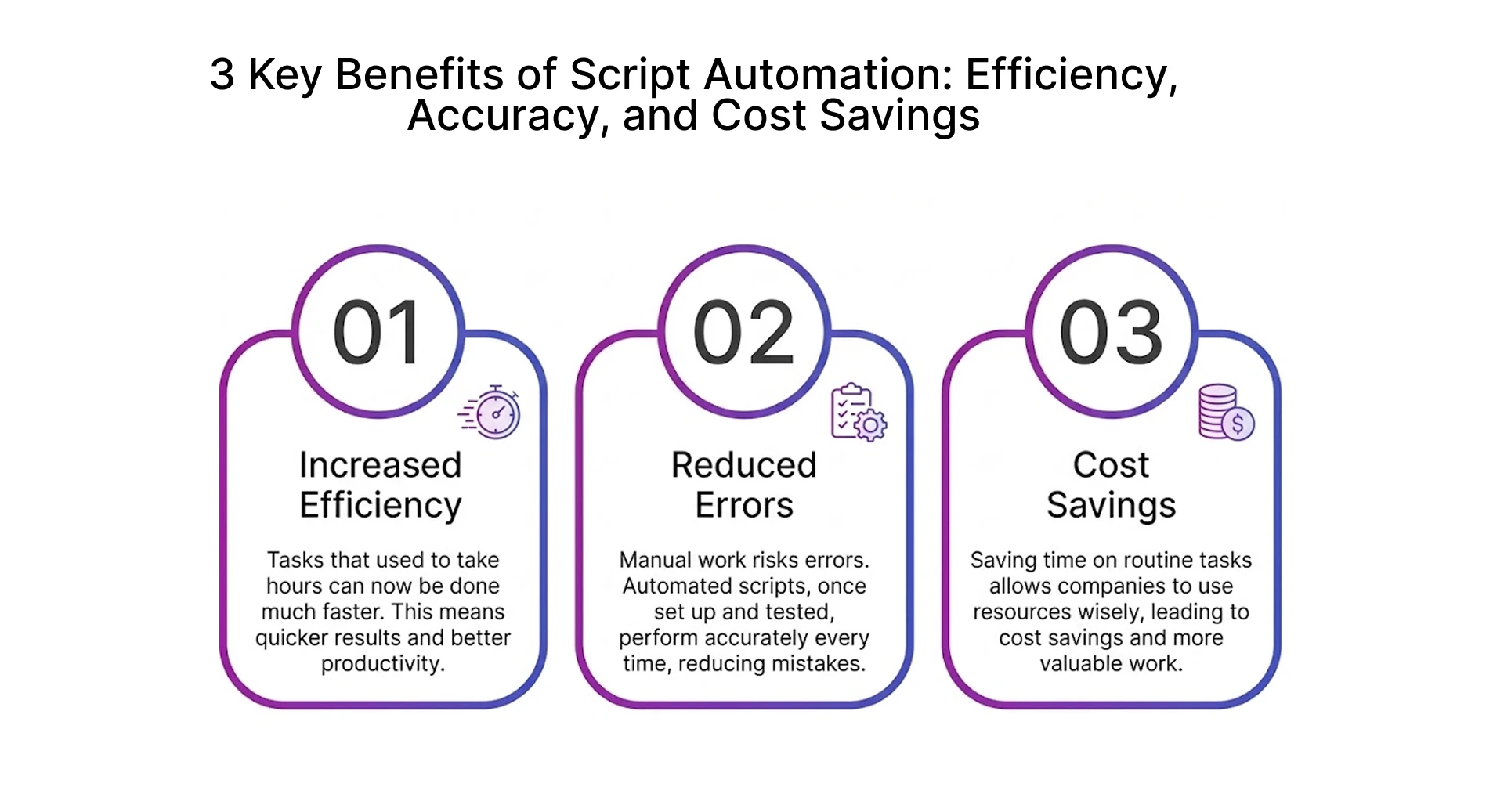
Playwright automation has emerged as my personal favourite for modern web testing. Microsoft's framework offers superior auto-waiting, network interception, and multi-browser support. For types of functional testing that include complex SPA interactions, it's hard to beat.
These script-based tools work beautifully with data automation software, supporting parameterised tests driven by CSV files, databases, or API responses. That level of data-driven sophistication remains difficult to replicate in low code development platforms.
Low-Code Automation Testing Tools
Low-code automation testing tools have made test coverage something smaller teams can actually manage. A few years ago, setting up a reliable test suite meant hiring someone who knew Selenium, Java, and had the patience to babysit flaky CI pipelines. Now, tools like Katalon, Testim, and Leapwork let QA analysts record, edit, and run tests without writing a line of code. That shift matters most in companies where developers are too stretched to own test automation and testers have domain knowledge but not a programming background.
The tradeoff worth knowing upfront: low-code tools get you moving fast, but they can get messy as the product grows. Tests built through click-recording tend to break when the UI changes, and debugging them is harder without readable code to trace. Teams that scale these tools well usually pair them with some scripting for edge cases and set clear rules about when a test should be rebuilt versus patched. The platform handles the routine coverage; engineers step in for anything that demands logic.
Role of AI in Modern Test Automation
AI-powered testing platforms have moved past the hype. Self-healing locators, intelligent element detection, visual regression flagging, and smart test prioritisation are now standard defaults not experimental features. For non-technical teams, this unlocks real autonomy over QA workflows. Visually built, multi-branch pipelines replace hand-written YAML, and ML-driven risk analysis cuts CI times dramatically; one platform reduced a 47-minute run to 18 on a 4,000-test suite.
The caveat remains honest: auto-generated assertions can pass confidently on broken builds when business logic isn't understood. These tools are powerful but they still need engineers who understand AI's limitations, not just its buttons.
How to Decide: Low-Code Tools vs Automation Engineers
My honest recommendation, after years of navigating this choice for clients, comes down to three questions:
- What is the complexity ceiling of your application's testing needs? If your software usability testing and functional flows are relatively linear, low-code is probably sufficient.
- How often does your UI change? High-velocity UIs break low-code tests frequently. Script-based frameworks with strong component abstractions handle this better.
- What is your team's technical maturity? Low code app development tools require less engineering skill to start but more QA intuition to maintain well.
For most product companies today, the answer is a hybrid: use low-code automation for 60-70% of your test coverage, reserve scripted automation for complex functional testing in software testing, API validation, and performance scenarios. This is the approach I advocate for at every engagement.
Impact on Software Testing Services and Consulting
The rise of low-code has dramatically reshuffled the software testing services market. Traditional functional testing companies that offered purely manual or script-based services are under pressure to evolve. Clients increasingly want frugal QA automation services high-quality coverage at lower cost and low-code enables that equation.
Software testing companies that are thriving in 2026 are those that have repositioned as strategic advisors rather than execution bodies. They help clients choose the right low-code platforms, architect hybrid frameworks, and govern test quality across the pipeline not just write test scripts.
Software testing consulting has similarly evolved. Clients don't just want testers anymore they want partners who understand low code integration platform options, can evaluate AI automation tools, and can design testing strategies that scale. This creates a real opportunity for engineers willing to expand their skill sets beyond traditional scripting.
Limitations of Low-Code Testing Platforms
In the spirit of balance, let me be direct about where low-code testing platforms genuinely fall short because I've seen teams learn these lessons the hard way:
- Vendor lock-in is a real risk. Proprietary test formats make migration painful and expensive.
- Debugging failed tests is significantly harder when you can't inspect or modify the underlying code.
- API functional testing tools built into low-code platforms often lack the depth needed for complex payload validation, header manipulation, or multi-step auth flows.
- Data automation software capabilities are limited and parameterisation options are often basic compared to script-based frameworks.
- Pricing scales poorly for large test suites on most low-code no-code platforms per-test or per-execution models get expensive fast.
- Software usability testing requiring custom user journey analysis often requires bespoke scripting that low-code tools can't support.
Future of AI and Automation in Software Testing
Looking ahead, the direction is clear: AI systems that don't just run tests but decide which ones to run, flag what's likely to break before a release, and update test coverage as the application changes without waiting for an engineer to schedule it. The line between developer tools and testing tools is already blurring, and shift-left practices are accelerating that.
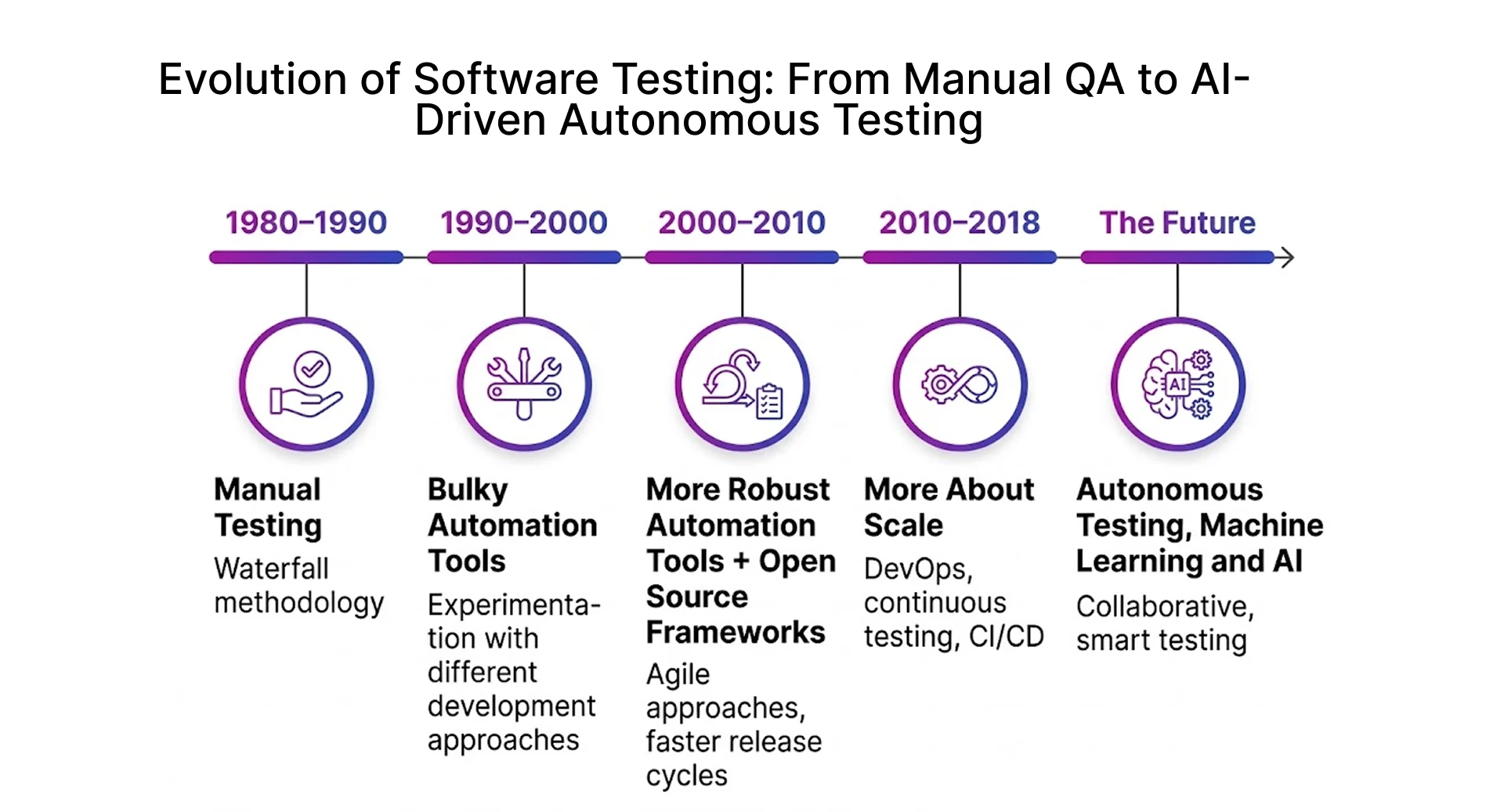
Low code development platforms will continue gaining sophistication, particularly in ai software testing capabilities. We'll see more platforms that can ingest a user story and auto-generate a test plan, bridging the gap between business requirements and technical test coverage.
The demand for engineers who understand how to architect, govern, and extend AI-powered systems will grow, not shrink. Software testing itself is expanding into new territory AI model validation, bias testing, adversarial testing and none of that work runs on drag-and-drop tools alone. Engineers who pick up low-code and AI skills early will have more leverage, not less. The discipline isn't getting simpler; it's getting broader.
Conclusion
I started this blog acknowledging a real tension, and I want to end it with a clear-eyed perspective. Low-code automation is not a threat to senior engineers who are willing to evolve. It is, however, an existential threat to those who insist on doing things the old way simply because that's how they've always been done.
The smartest engineers I know are already positioning themselves as orchestrators of automated systems using low code platforms where they make sense, applying deep scripting expertise where complexity demands it, and leveraging AI automation tools to multiply their output. That hybrid posture is the future of software testing automation.
Whether you're evaluating low-code test automation services, building out an internal automation capability, or deciding between low code development tools and traditional scripting frameworks, the answer is almost never 'one or the other.' The teams winning in 2026 are the ones that know when to use each approach and have the talent to execute both. If you're evaluating which approach fits your stack, Frugal Testing's QA automation service helps teams design the right hybrid framework.
People Also Ask (FAQs)
Q1. Can low-code testing tools handle complex enterprise-level testing scenarios effectively?
Ans: They handle UI and regression well, but complex API chains, encrypted payloads, and multi-service logic still need engineers with real scripting depth.
Q2. How do low-code platforms impact the long-term career growth of automation engineers?
Ans: Repetitive scripting work disappears, so engineers who shift toward framework architecture, tool evaluation, and QA strategy will grow those who don't, won't.
Q3. Are low-code testing tools secure enough for sensitive or regulated applications?
Ans: Most enterprise platforms carry SOC 2 certifications, but auto-generated test logic can leak sensitive data if left unreviewed regulated industries should always have an engineer auditing the output.
Q4. What skills should automation engineers learn to stay relevant alongside low-code tools?
Ans: Double down on API testing, CI/CD pipeline design, and test architecture then add working knowledge of at least one low-code platform so you can govern it, not just use it.
Q5. How do organizations balance low-code adoption with traditional automation strategies?
Ans: Use low-code for 60–70% of functional and regression coverage, keep scripted frameworks for complex and high-risk scenarios, and define that boundary clearly before both approaches start conflicting.



.webp)