


Lyft is a complex online mobility services platform with large-scale operations in terms of payments, data, and automation. Lyft uses cloud computing, data pipelines, and AI-based IT systems. These technologies secure and handle millions of transactions daily. Online payment systems now use artificial intelligence, AI models, and data management methods. These help with real-time decisions, online security, and platform efficiency. Lyft's online payment method uses payment flexibility, data management, and scalable technology. This approach builds customer trust and supports platform growth.
In this guide, you’ll learn:
- How Lyft combines payments, AI infrastructure, and data platforms to scale operations
- How data quality, automation, and governance improve payment reliability
- How Lyft compares with Uber on pricing transparency and platform efficiency
- How payment systems influence revenue enhancement and customer experience
Why Payment Flexibility Drives Growth and Trust in Ridesharing Platforms
Payment flexibility is essential in digital platforms because payments sit at the intersection of customer experience and revenue realization. Ridesharing platforms process high volumes of real-time transactions that depend on data quality, data efficiency, and reliable infrastructure. Lyft supports multiple payment methods to reduce checkout friction and increase transaction success rates. This approach also supports compliance efforts and minimizes failures caused by integration hurdles or rigid systems. In competitive environments such as Uber vs Lyft, flexible payments become a trust signal rather than just a technical feature.
Key reasons payment flexibility builds trust:
- Reduced checkout friction: Flexible payment options allow users to complete transactions smoothly, which increases completed rides and lowers abandonment rates.
- Reliable transaction processing: Consistent and dependable payment handling builds confidence among both riders and drivers.
- Scalability during demand changes: Payment adaptability helps the platform handle traffic spikes and economic fluctuations without service disruption.
Source: The Role of Technology in Modern Rideshare Services
Understanding Rider and Driver Payment Preferences
Riders and drivers interact with payments differently, requiring separate design considerations. Riders prefer fast and familiar checkout experiences using credit card payment, saved credentials, or contactless payment options. Drivers want predictable payouts. They depend on direct deposit payments, ACH payments, and automated reconciliation processes. These processes are like CMMS reconciliation in enterprise systems. Lyft aligns these needs using structured data unification, clean data points, and automated workflows that ensure transparency and reliability.
Consider key preferences.
- Rider checkout expectations: Riders value fast, simple, and familiar payment experiences that minimize effort during booking.
- Driver payout requirements: Drivers depend on reliable and visible payouts to maintain income stability and trust in the platform.
- Unified payment architecture: A single, well-integrated payment design balances rider convenience with driver reliability to stabilize the marketplace.
Competitive Analysis – Lyft vs Uber
When comparing Lyft versus Uber or Uber versus Lyft, the role of transparent pricing and payments in shaping trust towards one service over the other is significant. However, when it comes to retention of users over a period of time, rather than looking at aspects of Uber vs. Lyft cost or Lyft vs. Uber cost, predictability of cost has more importance. Lyft focuses on making cost estimates more predictable. It uses analytics software, clean data flows, and consistent cost prediction systems to help with this. Moreover, effective customer services of Lyft also play an important part in overcoming cost-related complications in payments.
Key competitive factors:
- Pricing transparency: Clear fare breakdowns help users understand charges and reduce confusion or disputes.
- Estimate accuracy: Accurate pre-ride estimates increase user confidence and encourage completed bookings.
- Payment experience reliability: Smooth and predictable payment processing strengthens trust during and after the ride.
- Customer support responsiveness: Quick resolution of issues through customer service improves long-term loyalty.
Lyft’s Multi-Method Payment Strategy
Lyft's payment solution is designed and integrated as a part of a comprehensive enterprise platform that includes payment processing, analytical capability, and automation. It is believed that supporting multiple payment types makes a platform less dependent on individual payment providers. The approach is similar to that in Fortune 500 firms that target redundancy, scalability, and total cost optimization. The payment platforms in Lyft's case are considered a part of its software development.
Core strategy benefits:
- Multiple payment rails: Using several payment providers reduces the risk of transaction failures caused by single-provider outages.
- Built-in redundancy: Redundant payment systems improve overall platform uptime and operational reliability.
- Scalable architecture: Payment infrastructure is designed to scale smoothly with growing transaction volumes.
- Feature rollout flexibility: A modular payment design supports phased rollout of new features without disrupting existing services.
Supported Payment Methods and Regional Variations
Lyft offers multiple payment options like cards, wallets, and ACH payments, though these may vary by region to adapt to local regulation and demand. This enables Lyft to work effortlessly in all regions without compromising on local compliance requirements. The payment system is further localizable with effective data management and data duplication to ensure consistency in all payment processes. As is in large enterprise platforms that manage local ERP platforms, Lyft's local payment method enables effective balance of local regulations and convenience to ensure effortless transactions.
Key regional factors to consider:
- Regulatory compliance: Local payment rules are regulated by governance structures that keep payments in legal compliance in the region where services are accessed.
- User payment familiarity: Regionally favored payment methods ensure a high adoption rate among users.
- Data consistency across regions: Effective data management and deduplication strategies promote accuracy and integrity in payments worldwide
- Scalable localization strategy: The regional flexibility of the Lyft model enables the company to easily enter other regions without needing to modify the existing payment system.
Payment Orchestration, Testing, and Continuous Feedback Loops
Lyft uses intelligent payment orchestration systems for smart transaction routing across multiple payment providers, ensuring not only high success rates but also predictable performance. These systems are dependent on AI frameworks, automated routing logic, and continuous testing to monitor key metrics such as latency, transaction success rates, and failure patterns. Analytics-platform-powered feedback loops help Lyft evaluate performance in real time and make dynamic routing decisions. This orchestration layer helps optimize payment flows across core ride bookings and newer Lyft delivery services, especially during spikes in traffic.
Identify key orchestration abilities.
- Smart Transaction Routing: Exchanges are automatically directed to reliable sources in order to ensure successful transactions.
- Continuous performance testing: It helps in identifying any lag or failure issues before they can impact users.
- Feedback loops - Real-time: Feedback for making analytics-informed payment routing choices can now happen instantly.
- Across-service optimization: There is a common optimization layer for rides and payment, as well as delivery services.
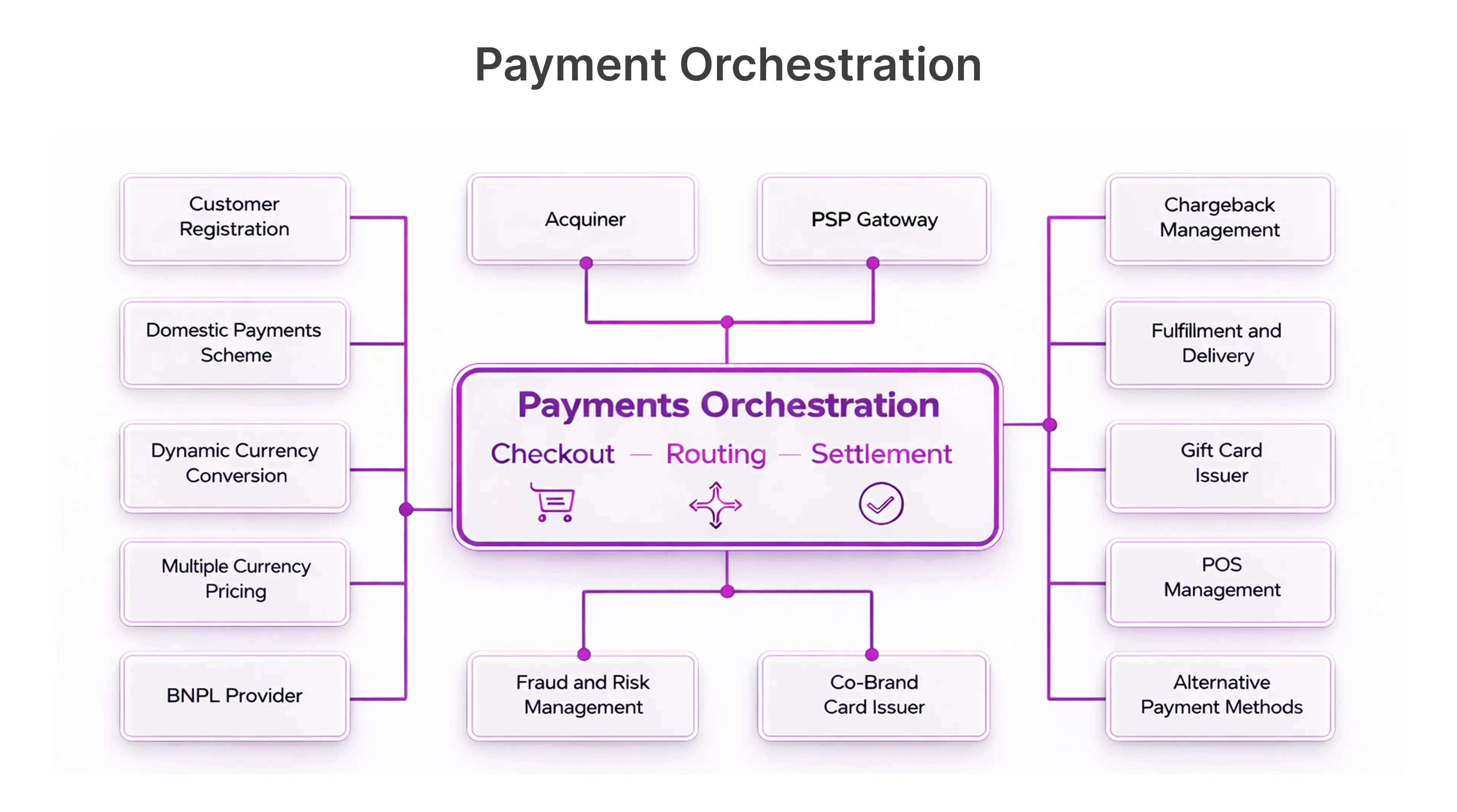
This image shows how a Payments Orchestration system connects and coordinates various payment functions such as checkout, routing, and settlement. It illustrates the integration of providers like acquirers, PSP gateways, fraud management, currency conversion, and alternative payment methods into one unified payment flow.
Technology Powering Lyft’s Payment Ecosystem
The payment processing system of Lyft relies on cloud-based, scalable solutions that work well in hybrid setups as well as within on-premises setups to ensure flexibility. The real-time processing of transactions at Lyft functions through event-styled architectures that have been developed using Apache Kafka®, Apache Flink®, and Hadoop. This enables the company to efficiently process heavy volumes of transactions. The framework works by continuously collecting data. It analyzes data in real time. It makes decisions almost instantly. This ensures transactions are reliable.
Source: Lyft Built a Real-Time Data Platform with Apache Kafka and Flink
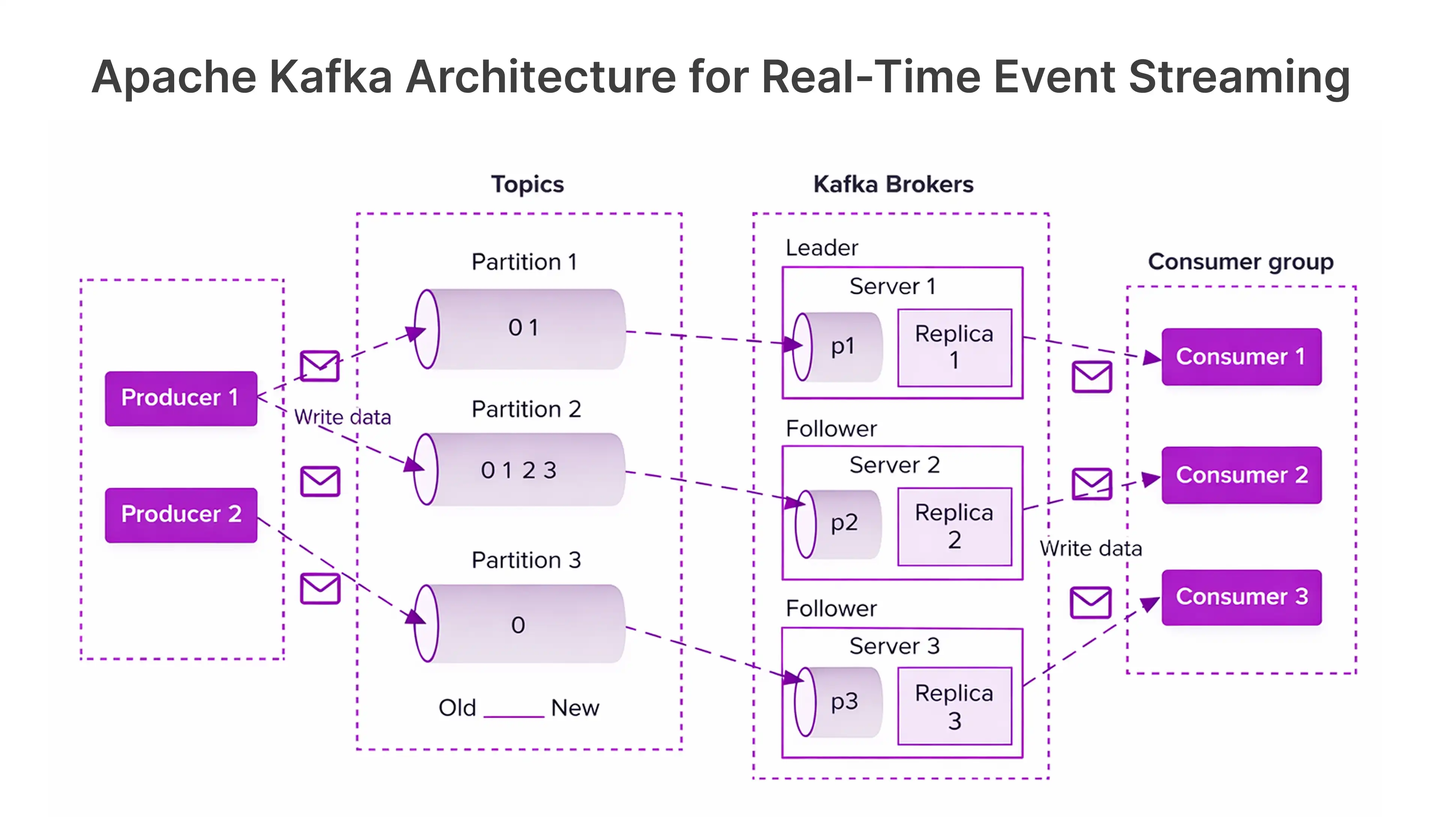
This diagram illustrates how Apache Kafka enables real-time data streaming using producers, partitioned topics, brokers with leader–follower replication, and consumer groups to process high-volume events reliably and at scale.
Technology foundations include certain elements.
- Real-time stream processing: Transactions are processed instantly by event-driven systems to allow timely payment decisions.
- Scalability to store large volumes of data: Data warehouse systems are designed to store immense volumes of transaction data for analytics and reporting.
- High availability architecture means no downtime whatsoever on payment operations via redundant infrastructure.
- Hybrid infrastructure support: Operating across cloud and on-premises environments fosters flexibility and reliability.
- Source: Lyft, Inc., Annual Report on Form 10-K, filed with the SEC (Dec 31, 2024)
Secure, Scalable, and Compliant Payment Infrastructure
Security and compliance are critical for handling sensitive payment and identity data across large-scale platforms. Lyft enforces strong encryption, strict access controls, and structured data management practices to protect user information and maintain data integrity. These actions help Lyft follow rules in different areas and payment systems. They also keep operations secure and consistent. The security model supports compliance efforts. These efforts are common in highly regulated industries like healthcare systems, credit unions, and Patient Care platforms. In these areas, protecting data and following rules is required.
Set priorities for infrastructure.
- Data encryption standards: Strong encryption ensures sensitive payment and identity data remains protected both at rest and in transit.
- Regulatory compliance frameworks: Structured compliance frameworks help maintain readiness for evolving regional and industry regulations.
- Access control mechanisms: Role-based access controls restrict sensitive data access to authorized systems and personnel only.
- Scalable security architecture: Security systems are designed to scale with platform growth without compromising protection.
Payment Routing, Failover, and Reliability Engineering
Lyft’s reliability engineering keeps payment processing running even when internal systems or external providers fail. Automated failover reroutes transactions in real time, minimizing disruptions and ensuring accurate pricing. Continuous health checks maintain reliable payment performance under varying loads.
Reliability uses certain mechanisms.
- Automatic gateway failover: Payment traffic is instantly redirected to backup providers when a primary gateway becomes unavailable.
- Redundant routing paths: Multiple routing paths ensure transactions can be processed even during partial system outages.
- Continuous system monitoring: Real-time monitoring detects failures early and triggers corrective actions automatically.
- Operational resilience: Built-in redundancy maintains stable payment performance during peak demand or unexpected disruptions.
Managing Payment Challenges at Scale
Large-scale platforms inevitably face challenges such as failed payments, disputes, and refund processing due to transaction volume and system complexity. Lyft addresses these challenges by using AIOps solutions, AI agents, and automated remediation to continuously monitor payment systems and detect anomalies at an early stage. This proactive approach allows issues to be resolved before they impact users at scale. By reducing reliance on reactive and manual issue resolution, Lyft improves operational efficiency and platform reliability.
Key challenges addressed:
- Payment failures and retries: Automated systems identify failed transactions quickly and trigger retries or alternate routing to minimize disruption.
- Dispute and refund management: Intelligent workflows streamline dispute handling and refund processing to reduce resolution time.
- Operational automation: Automation reduces the need for manual intervention, lowering operational overhead and error rates.
- Proactive issue detection: AI-driven monitoring identifies anomalies early, preventing small issues from escalating into large outages.
Related: The Technology Behind Lyft’s Ride Testing: Telemetry, Simulations, And High-Impact Scenarios
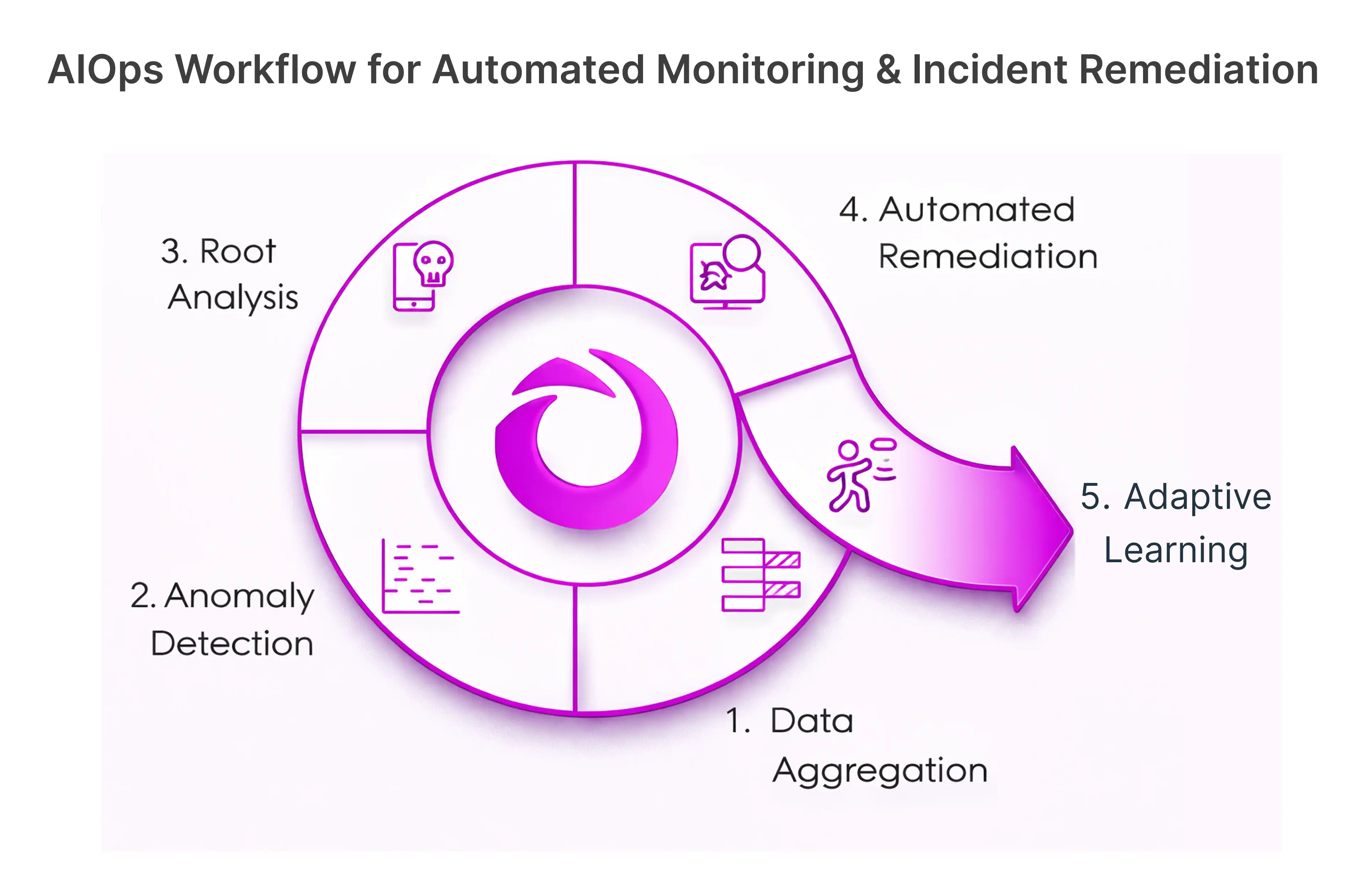
This diagram illustrates how AIOps works by ingesting logs, metrics, and events into a unified data layer, running anomaly detection and correlation algorithms, identifying root causes, and triggering automated remediation workflows that continuously improve through adaptive machine learning.
Common Payment Failures and Disputes
Payment failures and disputes are common in high-volume transaction environments and can occur for several operational and user-related reasons. Failures may result from insufficient funds, temporary network issues, or payment provider outages, while disputes often arise from mismatches between the Lyft ride estimate and the final charged amount. To minimize these issues, Lyft relies on strong data quality practices, detailed process mapping, and analytics-driven monitoring to identify potential problems early. This proactive approach helps reduce customer frustration and prevents issues from escalating into large-scale support challenges.
Common causes:
- Card declines and insufficient balances: Transactions fail when payment instruments lack sufficient funds or are declined by issuing banks.
- Network or provider outages: Temporary disruptions in payment networks or gateways can interrupt transaction processing.
- Fare expectation mismatches: Differences between estimated and final fares can lead to customer disputes if not clearly explained.
- Data or validation inconsistencies: Inaccurate or delayed data validation can contribute to payment errors and user confusion.
Lyft’s Resolution, Support, and Trust Framework
Lyft’s trust framework combines automation with human support to resolve payment-related issues efficiently and fairly. Automated systems handle routine cases such as simple refunds or validation checks, allowing issues to be resolved quickly without user friction. More complex or sensitive cases are escalated to trained support teams for deeper investigation. Strong Lyft customer service ensures that payment problems are addressed promptly and do not negatively impact overall customer experience or long-term trust.
Trust mechanisms include:
- Automated refund processing: Routine refunds are handled automatically to reduce resolution time and user effort.
- Human support escalation: Complex payment issues are escalated to support teams for personalized resolution.
- Transparent communication: Clear updates and explanations keep users informed throughout the resolution process.
- Consistent service standards: Standardized support workflows ensure fairness and reliability across all customer interactions
Financial and Market Impact of Payment Strategies
Payment efficiency affects revenue, cost control, and overall profits for large platforms. Higher transaction success rates reduce revenue leakage caused by failed payments, refunds, or chargebacks and improve the accuracy of profitability analytics. These operational improvements lead to more predictable cash flows and better financial planning. As a result, strong payment performance positively influences investor perception and plays a role in Lyft stock performance.
Source: Reducing Failed Payments, Abandonment & Chargebacks
Financial impacts include:
- Improved revenue realization: Higher payment success rates ensure more completed transactions translate into actual revenue.
- Reduced operational losses: Fewer failures and disputes lower costs associated with refunds and manual intervention.
- Enhanced profitability analysis: Cleaner payment data improves the accuracy of profitability and performance metrics.
- Stronger investor confidence: Reliable financial operations signal stability and efficiency to investors and analysts.
Source: The Impact of Failed Payments on Subscription Businesses
Influence on Lyft’s Revenue and Stock Performance
Reliable payment systems increase ride completion rates by minimizing transaction failures and reducing the need for refunds or retries. Efficient payment operations reduce refund costs. They also lower operational overhead. Investors see strong payment performance, efficient operations, and low total cost of ownership as signs of long-term business stability and good execution. These factors collectively contribute to sustained revenue growth and positive market perception.
Revenue drivers:
- Higher transaction success rates: More successful payments result in a greater number of completed rides and transactions.
- Predictable cash flow: Stable payment processing enables consistent revenue collection and better financial planning.
- Lower dispute-related losses: Fewer disputes and chargebacks reduce revenue leakage and operational costs.
Economic Factors Shaping Payment Choices
Macroeconomic events like the stimulus payments in July, October, and November 2025 can affect consumer cash flow and short-term spending. During such periods, users may change how frequently they use ridesharing services or which payment methods they prefer. Lyft adapts to these shifts by maintaining flexible payment options and scalable infrastructure that can respond quickly to changes in demand and user behavior. This adaptability helps the platform remain stable and accessible across different economic conditions.
Look at economic factors.
- Shifts in consumer liquidity: Changes in disposable income directly affect ride frequency and payment preferences.
- Flexible payment reliance: Users increasingly depend on flexible payment methods during uncertain economic periods.
- Demand variability: Economic cycles create fluctuations in ride demand that platforms must handle efficiently.
- Infrastructure scalability: Scalable systems allow Lyft to adjust capacity without disrupting payment performance.
Conclusion
Lyft’s multi-method payment strategy goes far beyond simply supporting multiple ways to pay. It represents a deeply integrated enterprise-level system where payments, AI-driven decisioning, real-time data platforms, and automation work together seamlessly. By leveraging scalable cloud infrastructure, intelligent payment routing, and resilient backend systems, Lyft ensures high transaction success rates even during peak demand periods. Advanced analytics and machine learning models help optimize authorization rates, reduce fraud, and minimize payment failures, while automation streamlines reconciliation, refunds, and dispute handling. This tightly coupled architecture allows Lyft to maintain reliability, consistency, and performance across millions of transactions, reinforcing user confidence in the platform.
At the same time, strong governance, compliance controls, and operational oversight ensure that this complexity remains manageable and secure. Lyft’s ability to balance flexibility with control enables it to adapt quickly to regional regulations, evolving consumer payment preferences, and new financial technologies. This strategic approach not only strengthens trust among riders and drivers but also improves operational efficiency and cost optimization. As Lyft continues to expand beyond core ridesharing into delivery and other mobility services, its robust payment foundation provides a critical competitive advantage against players like Uber. Ultimately, Lyft’s payment ecosystem acts as a growth enabler—supporting innovation, scalability, and long-term sustainability in an increasingly competitive mobility and logistics market.
People Also Ask (FAQs)
Q1: What payment methods does Lyft accept?
Ans: Lyft supports debit and credit cards, digital wallets, ACH bank transfers, and contactless payment options. Availability depends on the country, local regulations, and user account settings.
Q2: How does Lyft compare to Uber in payment options?
Ans: Both platforms offer similar payment methods, such as cards and wallets. Lyft differentiates itself by focusing more on upfront pricing transparency and simpler dispute and refund resolution.
Q3: Can I estimate my Lyft ride cost before booking?
Ans: Yes, Lyft provides fare estimate tools that calculate the expected ride cost in advance. These estimates factor in distance, time, demand, and route conditions to help riders plan better.
Q4: Does Lyft use AI in its payment systems?
Ans: Yes, Lyft uses artificial intelligence, analytics platforms, and automation to manage payments. These systems help improve transaction success rates, reduce fraud, and streamline payment operations.
Q5: Is it safe to store my payment information on Lyft?
Ans: Yes, Lyft uses secure encryption, fraud detection systems, and compliance with industry security standards to protect users’ payment information. Sensitive payment details are not shared with drivers, ensuring safe and secure transactions for riders.

.webp)



.webp)