




Software quality plays a key role in customer satisfaction, brand trust, and overall business revenue. As applications become more complex and release cycles grow shorter, businesses must balance thorough testing with faster delivery. Choosing the right testing approach is no longer just a technical decision - it directly affects product stability, user experience, and time to market.
This blog explains manual testing and automation testing in clear, business-friendly terms. It compares their advantages, limitations, and ideal use cases, while also covering testing tools, industry trends, and best practices. The guide helps businesses understand when to use manual testing, when automation makes sense, and how combining both can create a scalable, cost-effective QA strategy that supports long-term growth.
Understanding Manual Testing
Definition and Key Characteristics
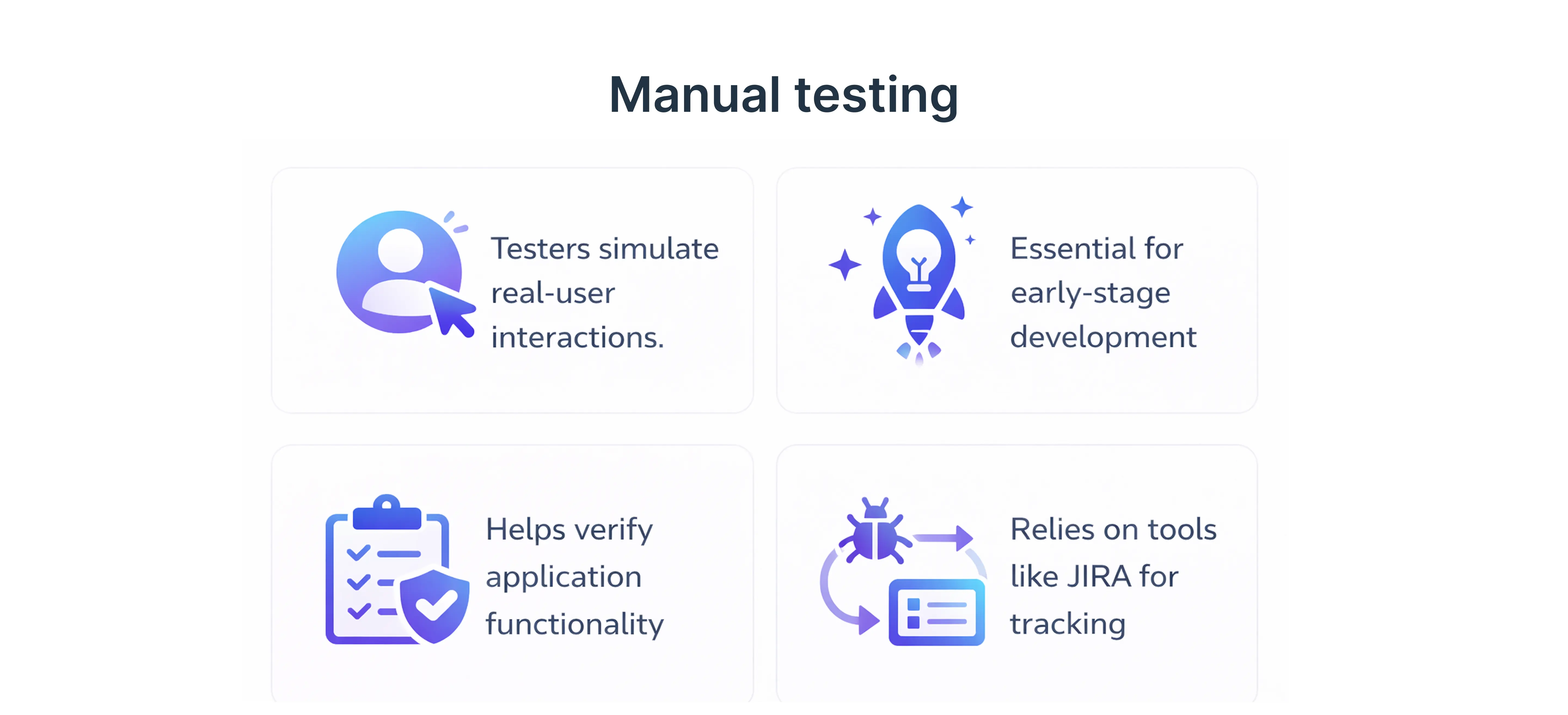
Manual Testing is the approach to validate software manually by executing tests without automated means. Using the GUI, APIs, or workflows, test cases are executed in the application, and QA testers will evaluate functionality, usability, and overall user experience.
Manual testing involves a lot of human intuition and judgement, and testers will create scenarios that simulate what a real user would do, explore all possible edge cases and judge scenarios that are typically not easy to plan in advance. Examples of manual testing include Acceptance, Exploratory, Usability, and Early stage validation.
Key characteristics include:
- Human-driven execution of test cases
- Flexibility to adapt to changing requirements
- Strong focus on user interactions and experience
- Limited dependency on tools or frameworks
Advantages of Manual Testing
Even with the huge advancement of automated testing and Artificial Intelligence-based testing methods, manual testing will always be a critical part of the software development process.
Here are some of the advantages of performing manual tests on software applications:
- Manual Testing is the best way to perform an exploratory test against software that has little or no specifications.
- Manual Testing is a better way to identify User Experience (UX) defects, design layout inconsistencies, and usability issues.
- Manual Testing is the best way to test various User Journeys, validate data entry forms, and verify the logic/rules of a Checkout Process.
Additionally, performing manual testing allows for the verification of edge-case scenarios, provides better insight into User Behavior, and uncovers deficiencies that testing scripts may not have discovered.
Limitations of Manual Testing
While valuable, manual testing has clear limitations at scale.
Common challenges include:
- Slower execution for repetitive tests, such as regression testing
- Limited scalability across browser versions and devices
- Higher long-term costs for large applications
- Increased risk of human error and inconsistent results
- Difficult to integrate fully into CI/CD pipelines
For fast-moving DevOps environments, relying only on manual testing can slow down release cycles and reduce testing coverage.
Exploring Automation Testing
Definition and Key Characteristics
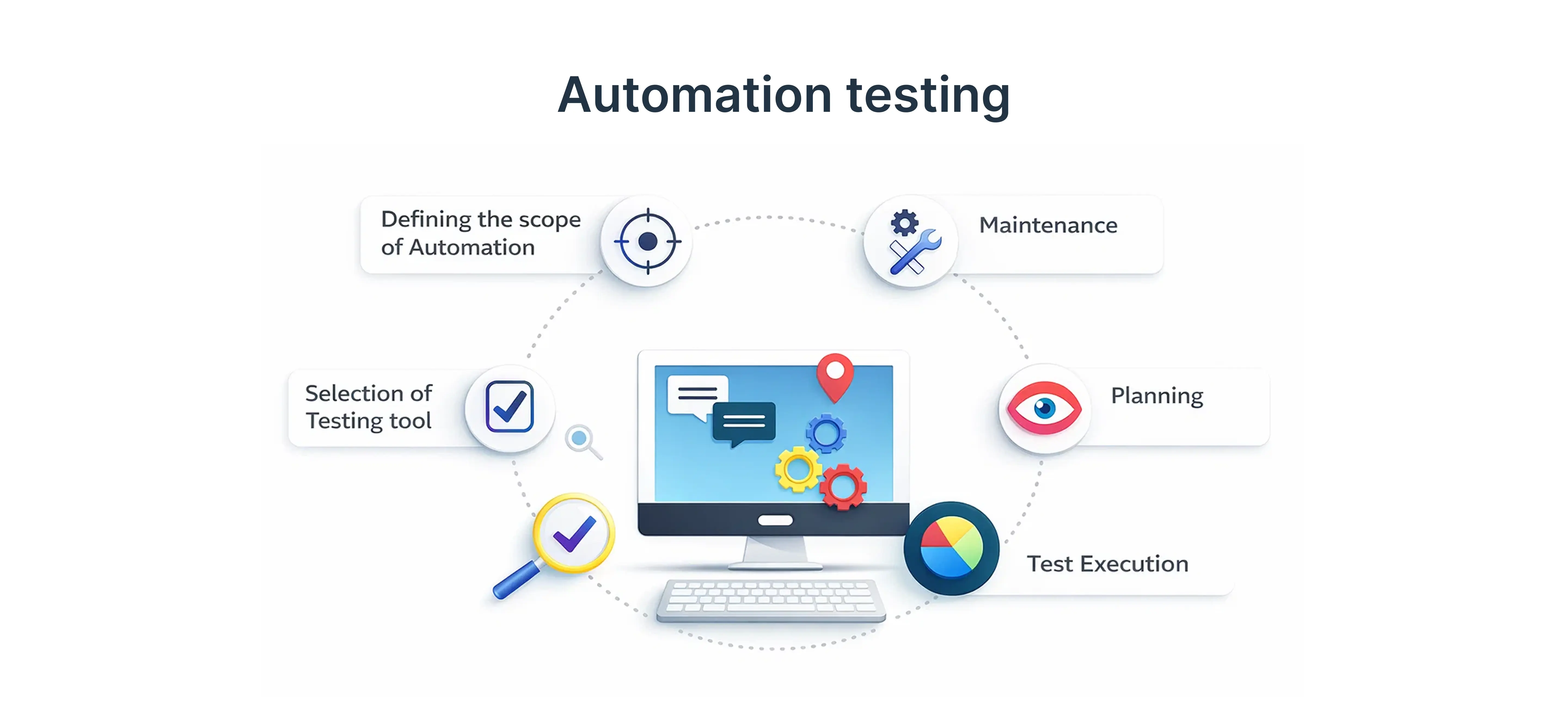
Automated testing is the use of software programs, code libraries (or scripts), and/or frameworks to fulfil existing test cases without human intervention. Test scripts (or programs) are reusable across testing types, including different environments, and can be reused multiple times without human intervention.
Automated testing is often integrated with Continuous Integration (CI), Continuous Testing (CT), and DevOps pipeline workflows that allow you to receive faster feedback and provide an option for better regression coverage.
Key characteristics include:
- Script automation execution using various tools, such as Selenium or Playwright
- Ability to incorporate test results into CI/CD pipelines
- High repeatability and accuracy
- Suitable for large test suites and repetitive tasks
Advantages of Automation Testing
Automation testing delivers significant business value when applied correctly.
Major advantages include:
- Rapid execution of regression and smoke testing
- Parallel test execution across browsers and environments
- Improved coverage for APIs, integration testing, and performance testing
- Consistent and repeatable results
- Faster release cycles with reduced manual effort
Modern platforms now offer low-code automation, self-healing test scripts, and AI-native automation, reducing maintenance effort and improving test stability.
Limitations of Automation Testing
Automation is powerful but not universal.
Key limitations include:
- Higher initial investment in tools, frameworks, and skilled QA engineers
- Ongoing maintenance when UI or APIs change
- Limited ability to evaluate usability and subjective user experience
- Not cost-effective for short-lived or frequently changing features
Automation testing delivers the best results when applied strategically rather than universally.
Manual Testing vs Automation Testing: A Comparative Analysis
The difference between manual and automation testing is a common topic in software quality assurance, as teams often compare manual and automation testing to decide the best approach for their projects. When discussing manual testing vs automation testing, it is important to understand the strengths, limitations, and use cases of each method. Many professionals also search for the difference between manual testing and automation testing to evaluate factors like cost, speed, accuracy, and maintenance. Ultimately, choosing between manual testing and automation testing depends on project requirements, timelines, and long-term testing goals.
When to Choose Manual Testing
Manual testing is the right choice when human judgment and flexibility are required.
Ideal scenarios include:
- Early-stage product development and MVP validation
- Exploratory testing and test discovery
- Usability testing and user experience design validation
- Acceptance testing with business stakeholders
- Complex user scenarios with unpredictable behaviour
Manual testing helps teams understand how real users interact with the software and uncover UX bugs that automation may miss.
When to Choose Automation Testing
Automation testing is most effective for stable, repeatable workflows.
Best-fit use cases include:
- Regression testing across frequent releases
- CI/CD pipeline validation
- API testing and integration testing
- Performance, load, and stress testing
- Large-scale applications requiring high coverage
For U.S - based enterprises operating at scale, automation is essential for maintaining quality without slowing delivery.
Hybrid Approaches: Combining Both Methods
Most successful organisations adopt a hybrid testing strategy.
This approach:
- Uses automation for repetitive, high-risk, and time-consuming tests
- Reserves manual testing for exploratory, usability, and acceptance testing
- Aligns with the test automation pyramid
- Balances efficiency with human insight
Comparison Table
Industry Trends and Statistics
Current Adoption Rates
In the United States, automation testing adoption continues to rise across industries such as fintech, healthcare, retail, and SaaS. Organisations increasingly rely on automation to support continuous testing and frequent deployments.
However, manual testing remains critical for:
- User acceptance testing
- Regulatory validation
- UX and accessibility checks
Most mature QA organisations use both approaches rather than choosing one exclusively.
Future Predictions
The future of software testing is evolving rapidly.
Key trends include:
- Increased use of AI-assisted tools and AI-native automation
- Growth of self-healing automation frameworks
- Wider adoption of natural language programming for test creation
- Stronger alignment between QA strategy and DevOps cycles
- Greater focus on ROI, coverage, and testing efficiency
Testing will continue shifting left and becoming an integral part of the software development lifecycle.
Best Practices for Implementing Testing Strategies
Developing a Testing Strategy
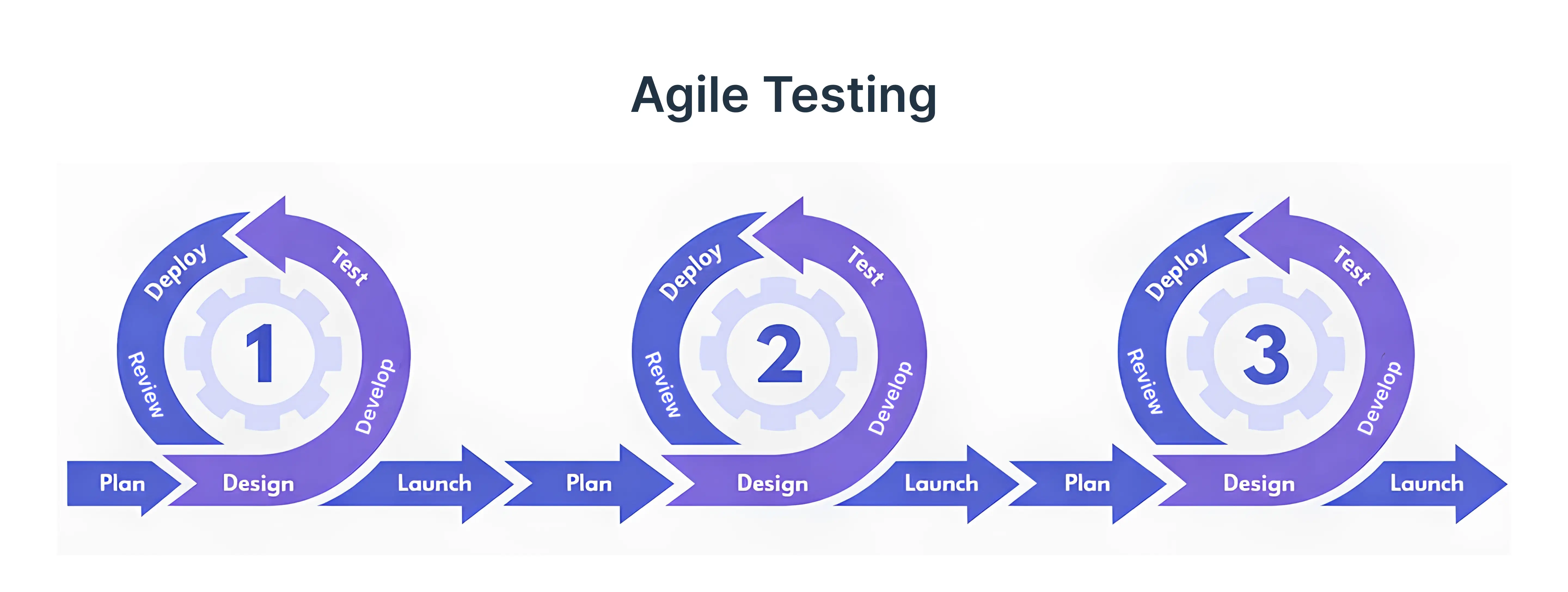
A strong QA strategy starts with business goals.
Best practices include:
- Align testing efforts with customer experience and revenue impact
- Define which test cases provide the highest value for automation
- Use risk-based prioritisation for test coverage
- Maintain clear test artefacts and documentation
- Balance short-term delivery needs with long-term scalability
A structured QA strategy ensures testing supports business outcomes, not just defect detection.
Tools and Technologies
Selecting the right tools depends on application complexity, team skills, and goals.
Tool Comparison Table
Continuous Learning and Improvement
Testing strategies must evolve with the product.
Key improvement practices:
- Regularly review test results and test reports
- Eliminate low-value or flaky test scripts
- Upskill QA testers in automation and modern frameworks
- Encourage collaboration between developers and QA engineers
- Measure testing efficiency and ROI consistently
Continuous improvement keeps QA aligned with fast-changing business needs.
How Frugal Testing Helps Businesses Build the Right Testing Strategy
Tailored Manual and Automation Testing Solutions
Frugal Testing provides customised QA solutions based on application maturity, industry needs, and business goals. Rather than pushing tools, the focus is on choosing the right mix of manual testing and automation testing.
Faster Release Cycles With Scalable Test Automation
By integrating automation into CI/CD pipelines, Frugal Testing helps U.S. businesses reduce regression cycles and accelerate time-to-market without compromising quality.
Domain-Specific QA Expertise Across Industries
Frugal Testing brings domain expertise across fintech, healthcare, e-commerce, and SaaS. Testing strategies are aligned with regulatory requirements, security protocols, and real-world user scenarios.
Cost-Optimised, ROI-Driven Testing Services
Every testing effort is measured against business value. Automation is applied where it delivers long-term efficiency, while manual testing is used where human insight matters most.
Key outcomes include:
- Improved testing coverage
- Reduced release risks
- Faster feedback loops
- Optimised QA spend
Conclusion
Manual testing and automation testing are not competing choices - they are complementary capabilities. When used together strategically, they help businesses achieve higher software quality, faster release cycles, and a more reliable customer experience. A balanced testing approach ensures that both human insight and automation efficiency contribute to long-term product success.
For organisations operating in the United States, an ROI-driven QA strategy is no longer optional - it is essential for building scalable, secure, and customer-focused software. Frugal Testing supports this approach by helping businesses choose the right mix of manual and automation testing based on application maturity, industry needs, and business goals, enabling teams to reduce risk, optimize testing costs, and deliver quality software with confidence.
People Also Ask (FAQs)
Q1: How does the right balance of manual and automation testing accelerate faster product launches without compromising quality?
Ans: By using automation testing for repetitive and regression testing while reserving manual testing for exploratory and usability checks, teams gain speed without losing human insight. This balance ensures faster releases with reliable quality validation.
Q2: What long-term maintenance, scalability, and tooling challenges should organizations evaluate before committing heavily to test automation?
Ans: Organizations must assess script maintenance costs, tool compatibility, team skill gaps, and scalability across environments. Poorly planned automation can increase technical debt and reduce ROI over time.
Q3: How should startups vs enterprise companies approach manual and automation testing differently?
Ans: Startups should prioritize manual testing for flexibility and rapid iteration, automating only critical flows. Enterprises benefit more from scaled automation testing to support frequent releases, compliance, and large regression suites.
Q4: What KPIs should business leaders track to measure the success of their testing strategy?
Ans: Key KPIs include defect leakage, test coverage, release frequency, test execution time, and cost per defect. These metrics connect testing effectiveness directly to business outcomes and ROI.
Q5: How does an effective testing strategy reduce production risks and protect long-term brand credibility?
Ans: A strong testing strategy catches defects early, reduces production failures, and ensures consistent user experience. This minimizes customer churn, avoids reputational damage, and builds long-term brand trust.

.webp)