


Quick Answer: MCP is not a replacement for Selenium or Playwright. It is a protocol layer that gives AI systems structured access to browser tools, APIs, and execution context, which makes modern test automation more adaptive, auditable, and useful for dynamic workflows. In practice, deterministic scripts still handle stable regression checks, while MCP improves exploratory testing, context-aware execution, and failure analysis.
I have spent enough time with Selenium logs, fragile UI locators, and endlessly patched Page Object Model layers to know that script-centric test automation still has value, but it no longer maps cleanly to the pace of modern delivery. At organizations running frequent releases whether a SaaS product team pushing multiple times a day or an enterprise pipeline coordinating across cloud and API layers web flows, APIs, infrastructure, and CI/CD changes now move together in the same release cycle. When that happens, large banks of hardcoded regression scripts start behaving less like a quality asset and more like a maintenance burden.
Selenium still documents Page Object Models as a maintainability pattern, and Playwright continues to emphasize resilient locators and cross-browser coverage. Those practices remain useful. What is changing is the kind of testing teams need on top of them: more context-aware execution, better failure interpretation, stronger validation layers, and more controlled ways for AI systems to interact with real tools.
That is where the Model Context Protocol (MCP), Playwright MCP server patterns, and agentic testing begin to matter. I do not see the MCP era as a replacement for engineering discipline. I see it as a way to give large language models structured tool descriptions, bounded execution paths, and observable feedback so test generation and diagnosis become more trustworthy.
Why Script-Centric Test Automation Is Breaking Down
I do not think traditional automation scripts are “dead.” I do think they are struggling under modern delivery pressure. In Agile development, one checkout flow might depend on feature flags, API contract changes, Docker environment updates, Kubernetes namespace settings, cloud computing services, and visual changes that all land in the same sprint. When test frameworks depend on page structure remaining stable, every UI refactor creates code smells, rework, and lower success rate in the suite. Selenium’s own guidance makes an important distinction here: the framework helps drive browsers, but it does not automatically produce well-architected test suites.
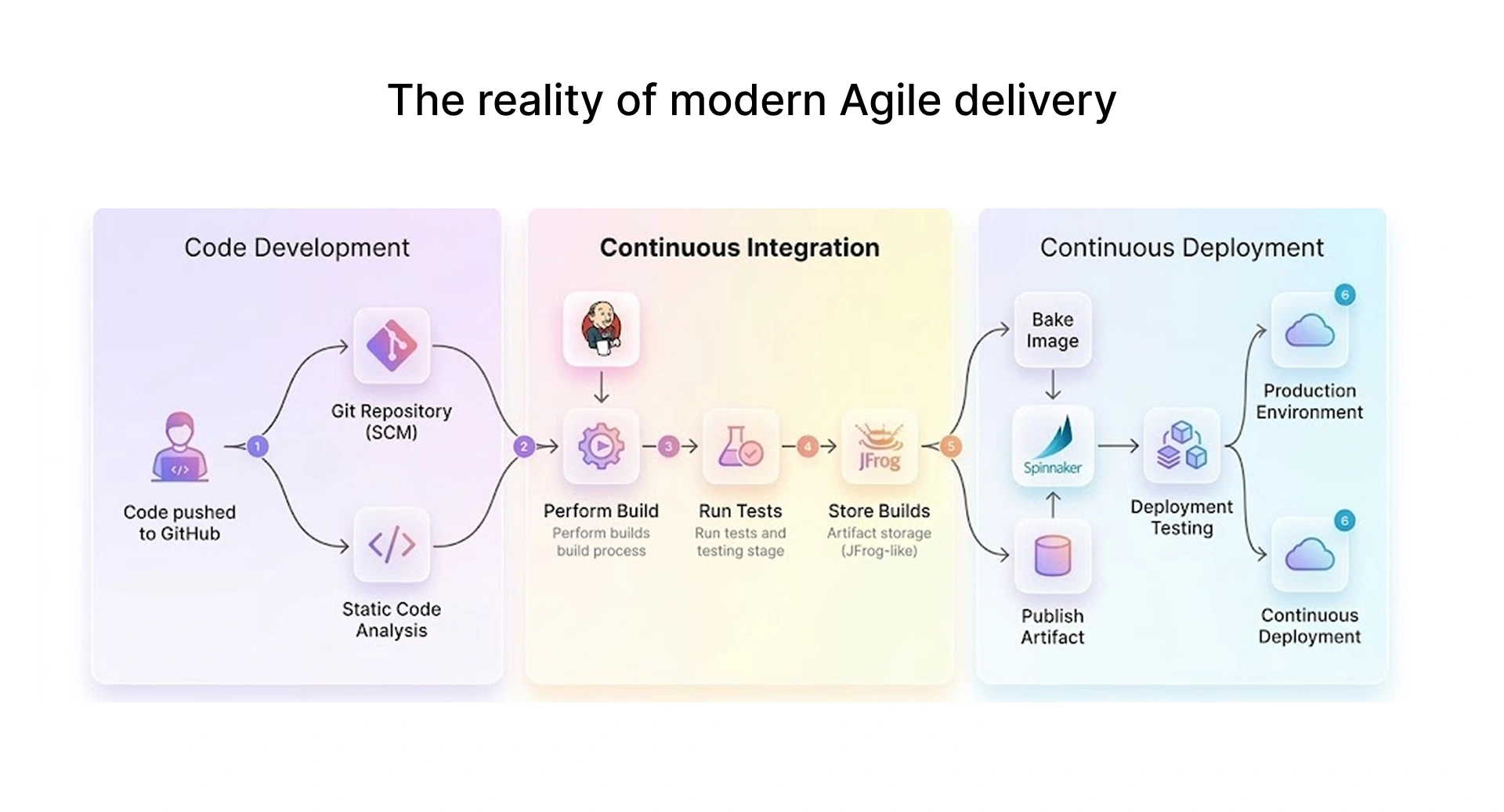
What breaks first is rarely the first script. It is the operating cost of keeping the suite aligned with a product that changes every sprint. As UI structure, API contracts, and delivery pipelines evolve together, test maintenance starts consuming the time that should have gone into deeper coverage and faster feedback. That is why the practical question is no longer only how to write more scripts; it is how to make automation more adaptive.
The Hidden Maintenance Cost of Selenium-Based Frameworks
I still respect Selenium-based frameworks because they taught the industry repeatability and discipline. The problem is not that Page Object Models are wrong; the problem is that they do not remove the cumulative cost of change. Selenium itself recommends Page Object Models to reduce duplication, not to eliminate maintenance.
A login button rename may sound minor, but in a mature framework it can ripple through page objects, step definitions, assertions, and regression paths. A DOM update can invalidate waits or visual checks without changing the business flow at all. Infrastructure changes can introduce environment drift that the UI layer reports poorly. In real projects, the difficult part is rarely getting the first script to pass. It is keeping the suite useful after dozens of releases.
Where Rule-Based Automation Fails at Scale
Rule-based automation works well when the workflow stays predictable. It becomes less effective when the product is dynamic, personalized, or partly AI-driven. A strict script can still click, type, and assert, but it cannot easily infer intent, distinguish a UI shift from a business failure, or explain why a test failed in a way an engineering team can act on quickly.
That limitation matters at scale. In fast-moving front ends, brittle scripts often report symptoms rather than causes. They fail on selectors, timing, or state assumptions even when the underlying user goal is still achievable. That gap is one reason agentic testing is attracting attention: teams want systems that can inspect, reason, retry carefully, and return evidence instead of only dumping logs and screenshots.
Is MCP Better Than Selenium? From Codeless Tools to MCP: The Evolution of Scriptless Testing
I see MCP as the next logical step after codeless and low-code automation. Codeless tools proved that not every test needs hand-written code. Low-code platforms proved that business teams and QA engineers can collaborate faster when workflows are modeled visually. But both approaches often hit a ceiling when test flows become complex, context-rich, or deeply integrated with CI/CD automation, security scanning, or multi-system validation. MCP changes the shape of the problem by standardizing how an AI-powered platform connects to tools, data, and workflows. The official MCP documentation describes it as an open-source standard for connecting AI applications to external systems, while the formal specification defines protocol requirements for tool integration and context exchange.
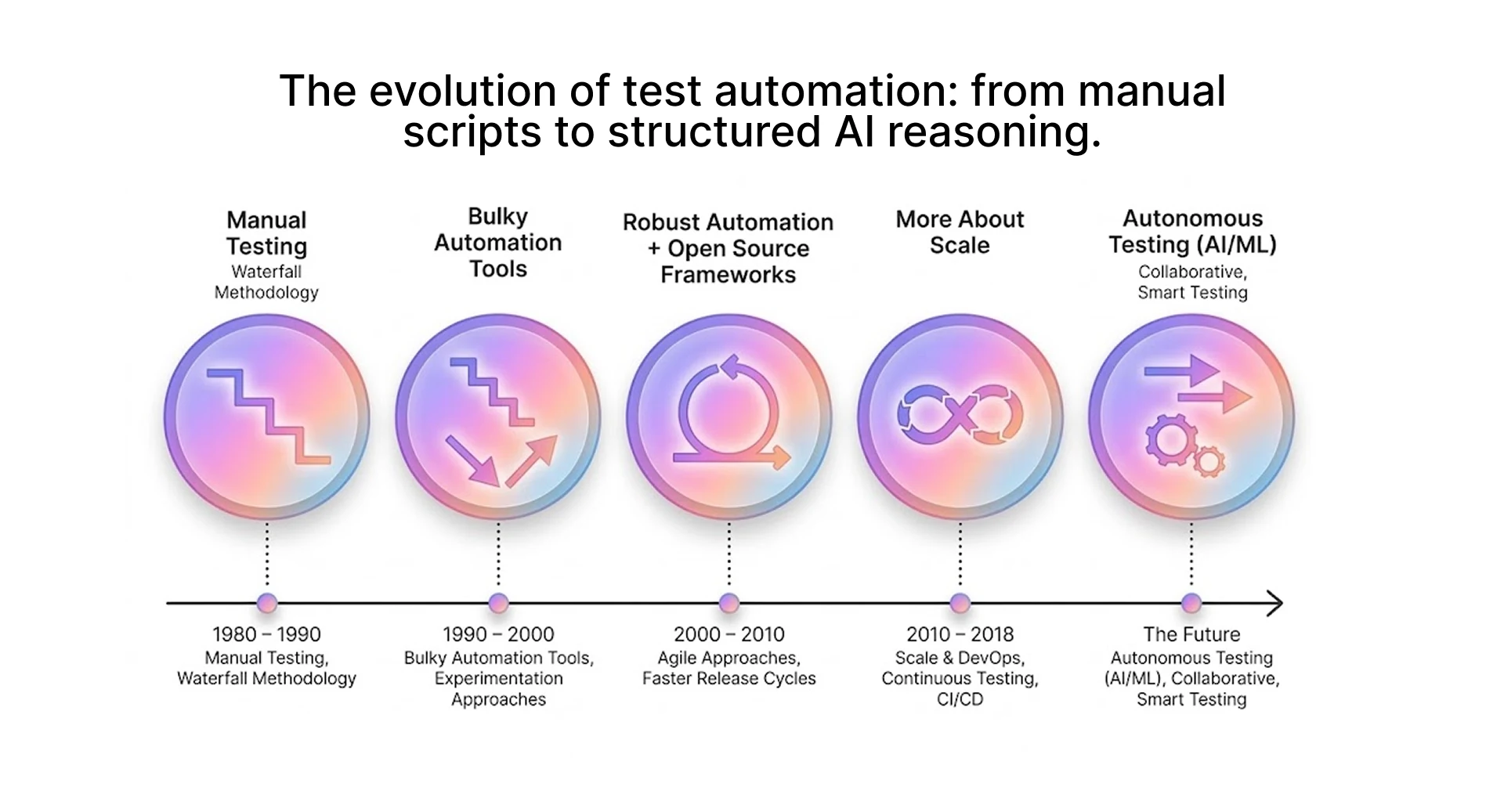
What makes MCP different is not that it removes code. It changes how capability is exposed. Instead of choosing only between hand-written scripts and drag-and-drop flows, I can expose controlled browser actions, API checks, accessibility validations, and other tools through a structured interface. That gives AI agents explicit capabilities instead of vague instructions, which is why MCP-driven testing feels less like a nicer authoring layer and more like a different execution model.
How Codeless and Low-Code Tools Paved the Way for MCP
Codeless tools mattered because they changed who could participate in automation. They made test intent more visible, encouraged reusable validation steps, and lowered the barrier for non-developers to contribute to quality workflows. Low-code platforms pushed that further by giving teams more customization without forcing every scenario into hand-written code.
That history matters because MCP did not appear in a vacuum. The shift toward readable flows, reusable components, and broader collaboration was already underway. MCP builds on that shift, but adds something earlier approaches often lacked: a standard way for AI systems to access tools, context, and execution feedback in a controlled manner.
Why Low-Code Automation Still Falls Short Without AI Context
Low-code automation reduces scripting effort, but it still depends heavily on humans to define logic, fallback behavior, and edge-case interpretation. It makes automation easier to build, not necessarily smarter to run. A low-code flow can represent a process well, yet still struggle when the UI changes, when business rules collide, or when a failure needs interpretation instead of replay.
That is the practical difference AI context introduces. With MCP, the model can work from tool descriptions, execution feedback, and structured environment signals before taking the next step. Without that context, low-code remains simplified scripting. With it, automation becomes more adaptive and better grounded in the real state of the system.
Can MCP Replace Playwright? Understanding Playwright MCP and the Model Context Protocol
When I explain Playwright Model Context Protocol setups to teams, I keep it simple: MCP defines how tools are exposed to an AI client, and Playwright MCP gives browser automation capabilities through that protocol. Playwright’s official MCP documentation says the server enables LLMs to interact with web pages using structured accessibility snapshots and works across clients such as VS Code, Cursor, Windsurf, and Claude Desktop. It also notes that Playwright MCP operates on the page’s accessibility tree rather than pixels, which is a major step beyond blind coordinate clicking.
{
  "mcpServers": {
    "playwright": {
      "command": "npx",
      "args": ["@playwright/mcp@latest", "--isolated"]
    }
  }
}
- This setup gives an AI MCP client a controlled browser tool instead of unrestricted browser freedom.
- Structured accessibility references improve locator stability and Accessibility (a11y) validation.
- It also fits naturally with Visual Regression Testing, cross-browser testing, and CI/CD pipelines when paired with standard Playwright assertions.
For me, that makes Playwright-MCP system design more practical than hype. It is grounded in observable tooling, not magic.
How Playwright Works with the Model Context Protocol
Playwright MCP exposes browser actions as tools that an LLM can call through the model context protocol. Instead of hardcoding every selector path upfront, the model can inspect a structured accessibility snapshot and use references from that tree to click, type, or validate.
Because it relies on accessibility snapshots rather than raw pixels, it gives the model a more stable understanding of page structure. It can also connect with existing browser state through the Playwright MCP Chrome extension, and it works alongside normal Playwright locators and assertions rather than replacing them. That matters because it moves UI interaction away from brittle guesswork and closer to structured reasoning.
Setting Up a Playwright MCP Server
A basic setup is lightweight. I usually start inside VS Code with Node available, then register the Playwright MCP server in the client config.
From there, the key steps are to install and expose @playwright/mcp, run it in isolated mode for safer sessions, and add storage state or endpoint options only when authenticated or shared sessions are genuinely necessary. In practice, though, the harder part is not installation. It is governance: who can invoke tools, what data is exposed, and how auditability and security compliance are enforced.
Playwright MCP in Practice - What a Real Test Run Looks Like
A realistic run is not “AI clicks around and hopes.” I define a goal, expose allowed tools, and let the agent inspect the page, navigate, validate, and summarize. In a real run, the agent opens the page, inspects the structured accessibility tree, executes the target journey, and captures evidence through assertions and snapshots. Adding visual or ARIA-based checks creates a far better debugging trail than a single failed selector buried in logs.
How Generative AI and MCP Work Together in Test Automation
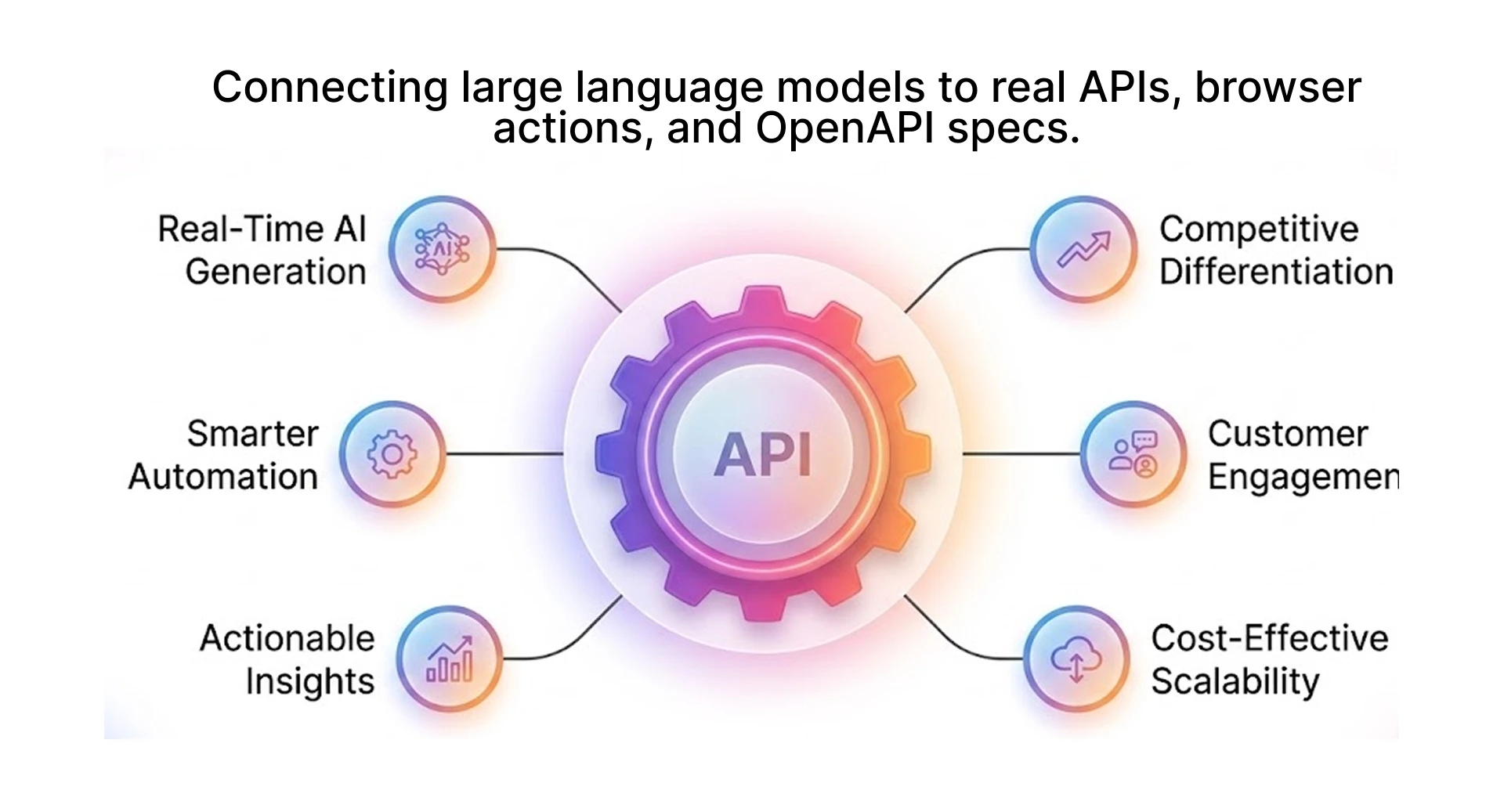
To me, generative AI becomes useful in testing only when it is constrained by real tools. Large language models are excellent at requirements analysis, synthesizing Gherkin scenarios, identifying missing paths, and suggesting AI-generated code. But without execution tools, they stay theoretical. MCP gives them grounded access to browser actions, API contract checks, OpenAPI specification artifacts, and workflow-specific data. The OpenAPI Initiative describes OAS as a standard, language-agnostic interface description for HTTP APIs that helps humans and computers understand service capabilities, which makes it ideal input for AI-powered testing around API contract validation.
- This is where TestMu AI, an AI testing platform, or internal AI-powered platform ideas become interesting.
- It also explains why tools like GitHub Copilot now talk about using MCP to expand agentic capabilities.
The result is not perfect autonomy but more intelligent automation intelligence that comes from the combination of reasoning and bounded execution, not from removing human judgment entirely.
Before MCP vs After MCP in a Real Failure Scenario
In a script-centric flow, a checkout test may fail because a locator changed after a UI update. The suite reports a selector error, a screenshot gets attached, and an engineer still has to determine whether the failure is cosmetic, functional, or environmental.
In an MCP-assisted flow, the model can inspect the page structure, retry within allowed boundaries, compare the expected user goal with the current state, and return a more useful summary. Instead of only saying that a selector failed, it can report that the payment CTA moved, the API response remained valid, and the user flow failed at the final confirmation state. That does not eliminate engineering review, but it reduces diagnosis time and makes the output more actionable.
Generative AI Testing and MCP Integration
I use generative AI best when the model can see context and act with limits. That means feeding it requirements, prior failures, tool descriptions, and environment rules. The workflow is simple in principle: the model drafts candidate flows, MCP-connected tools verify them against the real product, and human reviewers approve high-risk logic where needed. That reduces hallucinated testing ideas because the model is not forced to rely only on text prediction; it can validate assumptions against actual system behavior before declaring success.
AI Test Case Generation in MCP-Driven Automation
AI test case generation becomes far more useful when connected to real artifacts such as user stories, OpenAPI specs, accessibility expectations, and regression history. It can propose missing edge cases, generate starter scenarios or Gherkin flows, and prioritize work by risk instead of by screen count alone. That is where AI assistance starts helping coverage in a meaningful way, provided the generated output is verified rather than accepted blindly.
Is AI Test Automation Reliable in Production? Autonomous Testing and Continuous Test Automation with MCP
I do not think autonomous testing means “remove the QA team.” I think it means moving humans up the stack. In a production-ready model, the agent handles repetitive exploration, environment-aware execution, and first-pass diagnosis, while engineers define boundaries, approve risky actions, and improve the system. That is where continuous test automation becomes realistic. An agent can run against web flows, API contract checks, accessibility gates, and Visual Regression Testing in CI/CD automation, while cloud infrastructure signals from Google Cloud Platform, Kubernetes namespace policies, or Docker Swarm deployments provide environmental context for failures.
The trade-off is not speed versus control; it is how to get both. I want autonomous generation with validation layers, self-healing behavior that is visible rather than hidden, and faster execution without losing an audit trail for bug fixing, security scanning, or compliance. That balance is exactly what I discuss with teams at Frugal Testing when they evaluate where agentic testing can safely add value in enterprise delivery.
What a Production-Ready MCP Test Framework Actually Looks Like
A production-ready MCP test framework is not a chatbot with browser access. It is a governed system with scoped permissions, observable evidence, and fallback paths when the model is uncertain. Browser actions, API calls, and data access need to be bounded. Logs, snapshots, and explainable summaries need to be retained. Human approval gates still matter for high-risk actions and sensitive workflows.
That is the real difference between an engineering-grade framework and a demo. The value is not that the agent can act autonomously; it is that the team can understand what it did, why it did it, and whether the result should be trusted.
How to Evaluate MCP Readiness for Your QA Team
I usually assess readiness in four layers: process maturity, artifact quality, tool governance, and team mindset. If requirements are weak, APIs are undocumented, and the team does not trust versioned automation, MCP will not save the day. But if the basics are present, MCP can significantly improve test coverage, troubleshooting speed, and adaptability. Teams that already use Playwright, k6 studio, GitHub Copilot, or OpenAPI-driven testing typically move faster because the mindset of structured tooling already exists.
The practical way to start is with one controlled workflow, not a full-platform rollout. Measure success rate, false positives, and troubleshooting time, then decide where agentic testing adds real leverage. In most cases, selective adoption creates more value than forcing MCP into every testing layer at once.
Build In-House vs Partner with QA Automation Services
If your team already has strong software engineering depth, building an internal Playwright-MCP system may make sense. It gives you more control over cloud access, data boundaries, and orchestration decisions. If that depth is still developing, a partner can reduce early design risk and accelerate governance, framework design, and rollout.
In practice, the decision usually comes down to delivery urgency, internal capability, and risk tolerance. A hybrid model often works best at the start: internal ownership of the strategy, with outside support to shorten the path from experimentation to a stable operating model.
Conclusion: From Scripts to Autonomous Automation
I do not believe the future is scriptless in the literal sense. I believe it is script-light, context-rich, and increasingly agent-driven. Test scripts, page objects, and standard Playwright tests still matter. They remain useful building blocks for deterministic checks. But the center of gravity is shifting toward MCP servers, AI agents, and AI-powered self-healing workflows that can inspect state, use structured tools, and reason through failures instead of only replaying steps. The official MCP ecosystem, Playwright MCP guidance, and GitHub’s expanding agent workflows all point in that direction.
Deterministic tests still matter, and they should continue to handle the stable checks that regression suites are good at. MCP belongs where context, adaptability, and tool-aware reasoning actually improve the outcome. The point is not to treat AI-powered testing as a shortcut. It is to treat it as an engineering system that earns trust through validation, observability, and bounded execution.
That is how I see the real transition from scripts to autonomous automation. If your team wants to explore that shift in a practical way, Frugal Testing can help evaluate where MCP, agentic testing, and continuous test automation fit your stack without turning your QA program into an experiment.
Choosing the Right QA Automation Services for MCP Adoption
The right partner should understand far more than browser automation. I would look for depth in Playwright, accessibility, API contract testing, CI/CD automation, security compliance, and enterprise rollout. Just as important, they should be able to explain how validation layers work, how agent performance is measured, and how failure explainability is maintained.
A strong partner will usually present a phased roadmap rather than a sweeping promise. That is often the clearest sign they understand MCP as a delivery model, not just a buzzword.
People Also Ask (FAQs)
Q1. What exactly is the Model Context Protocol (MCP) in test automation?
Ans: MCP is an open protocol that lets AI applications connect to tools, data, and workflows in a structured way. In test automation, that means an LLM can use browser, API, and validation tools through defined interfaces rather than relying only on prompts. The benefit is better grounding, more controlled execution, and a clearer audit trail.
Q2. Is MCP better than Selenium?
Ans: Not in every case, because the two solve different problems. Selenium is a browser automation framework, while MCP is a protocol that gives AI systems structured access to tools and execution context. For stable regression checks, Selenium still works well. MCP becomes more useful when tests need context-aware behavior, tool orchestration, and better failure diagnosis.
Q3. Can MCP replace Playwright?
Ans: No. In most practical setups, MCP works with Playwright rather than replacing it. Playwright remains the execution layer for browser automation, while MCP exposes those capabilities to an AI client in a controlled way. That makes Playwright more adaptable without removing its core role.
Q4. Is AI test automation reliable in production?
Ans: It can be reliable in production when it operates within clear boundaries. The important factors are scoped permissions, validation layers, evidence capture, fallback behavior, and human review for high-risk actions. AI automation becomes risky when it is treated like magic; it becomes useful when it is treated like an engineering system.
Q5. If intelligent automation tools run the tests, what is the role of the QA engineer?
Ans: The QA engineer becomes more strategic, not less important. The role shifts toward defining quality goals, validating agent outputs, improving requirements, shaping risk-based coverage, and governing how autonomous systems behave in delivery pipelines. The work moves upward into design, oversight, and decision-making rather than disappearing.

.webp)

.webp)