


TestRail is usually the better choice for Agile QA teams that need cross-project governance, reusable test repositories, and release-level reporting. Zephyr is usually the better choice when Jira is already the team’s operating hub and test execution must stay close to user stories, defects, and sprint boards.
The real decision is not only feature count. QA leaders should compare cost, admin ownership, automation results, reporting needs, and how much process discipline the team can maintain after rollout. Frugal Testing sees this decision most often when teams are moving from spreadsheets or fragmented Jira tickets into a more controlled QA process.
TestRail vs Zephyr for Agile Teams: What QA Leaders Should Compare First
Start with ownership: if QA owns reusable test assets across products, TestRail deserves early evaluation; if Jira owns sprint execution and defect flow, Zephyr deserves early evaluation. Some teams need better sprint execution, while others need traceability, reusable test cases, or release-level reporting for several products.
TestRail works well when QA needs a central system of record for test cases, test runs, test plans, and historical results. Zephyr works well when Jira is already the daily workspace and test execution should sit beside user stories, defects, and sprint delivery.
Strong comparison criteria usually include:
- Governance: who owns test repositories, permissions, and reporting standards.
- Jira fit: how closely tests must connect to user stories, bugs, and sprint ceremonies.
- Automation flow: how automation frameworks, CI/CD tools, and test results will sync.
- Adoption effort: how quickly manual testers, automation engineers, and QA leads can use the system.
The right choice should reduce QA coordination work instead of creating another reporting layer that teams ignore after the first month.
Test planning visibility across sprints and releases
Agile teams need visibility at two levels: sprint work and release confidence. Zephyr usually feels natural for sprint-level testing because tests can sit close to Jira issues. A QA lead can connect test cycles to stories, track defects through the same backlog, and show progress during sprint reviews.
TestRail gives more structure when testing spans multiple projects, versions, or release trains. It can help teams separate test planning from day-to-day Jira movement while still pushing defect information back into the bug tracker. That separation matters when QA must maintain regression suites, exploratory testing notes, and release history across several squads.
A small Jira-centered team can start with Zephyr if test ownership stays inside one project. A growing QA organization should consider TestRail when release evidence must span products, squads, or audit reviews.
Jira-native workflows versus standalone test governance
Zephyr fits teams that want QA work close to Jira planning. Testers can manage test cycles, connect results to issues, and keep product managers in the same workflow. That can improve transparency for Agile teams that already depend on Jira Software for planning.
TestRail adds a separate QA workspace, but that separation gives test leaders more control. Teams can design test plans, build reusable suites, manage test case versioning, and report across projects without forcing every testing detail into Jira fields.
Use the current workflow as the deciding signal: teams testing across several Jira projects usually need stronger QA governance, while teams testing inside one disciplined Jira project usually benefit more from Jira alignment.
TestRail vs Zephyr Feature Comparison for Agile Delivery
Feature comparison is useful only when it maps to real QA work. A tool can look complete in a demo and still fail if it does not support how the team writes, executes, reviews, and automates tests every week.
The table below compares the practical feature areas Agile teams should review before choosing TestRail or Zephyr.
The feature choice depends on operating model. TestRail supports a more structured QA management practice, while Zephyr keeps testing closer to Jira for teams that want fewer separate systems.
Test case design, reuse, and execution tracking
TestRail is often better for teams with large reusable test repositories. QA teams can organize test cases by project, suite, section, milestone, and run. That helps when regression coverage grows and teams need to reuse the same test cases across versions or release branches.
Zephyr supports test case management too, but its value depends heavily on Jira structure. If Jira projects, issue types, and workflows are already clean, Zephyr can make test execution easy to track. If Jira is messy, Zephyr may inherit that mess.
A useful tipping point is repository size: once QA manages hundreds of reusable regression cases across more than one product, TestRail’s structure becomes more valuable; when tests mainly validate active Jira stories, Zephyr stays easier to adopt.
Traceability, reporting, and defect workflow differences
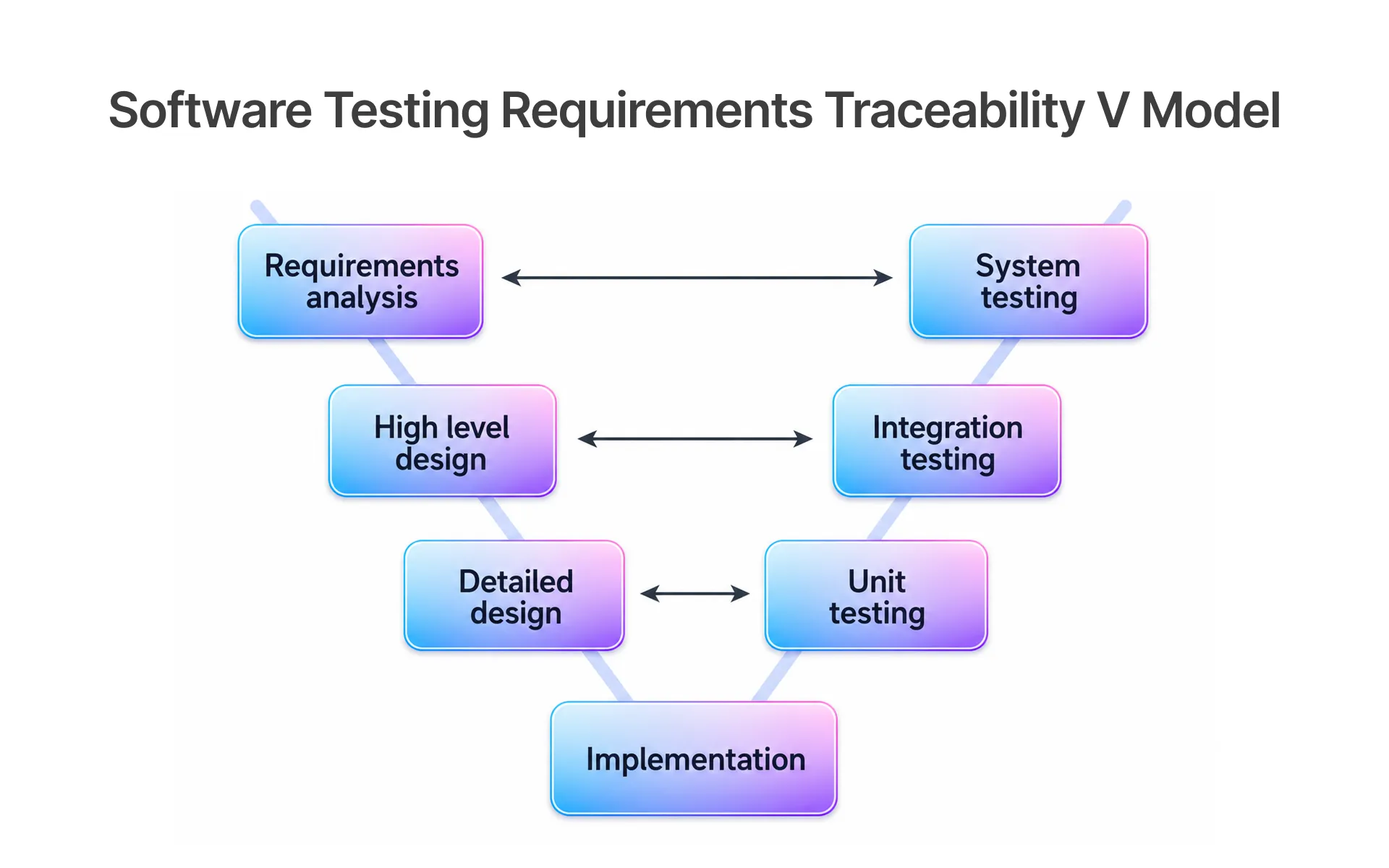
The V-model helps explain why traceability matters in a test management tool. QA teams need to connect requirements, test cases, execution results, and defects so release decisions are based on coverage evidence, not only pass counts.
Traceability matters when QA leaders must show which requirements, user stories, defects, and test cases are connected. Zephyr can be strong here because Jira already holds many planning artifacts. A tester can link test execution to defects without leaving the Agile workflow.
TestRail can also support traceability, especially when integrated with Jira or other bug trackers. Its reporting dashboards can help teams compare test runs, track pass/fail trends, and review release readiness across multiple products.
The difference is where the source of truth lives. Zephyr makes Jira the center. TestRail makes the test management platform the center and integrates outward.
Integrations, Jira fit, and CI/CD support
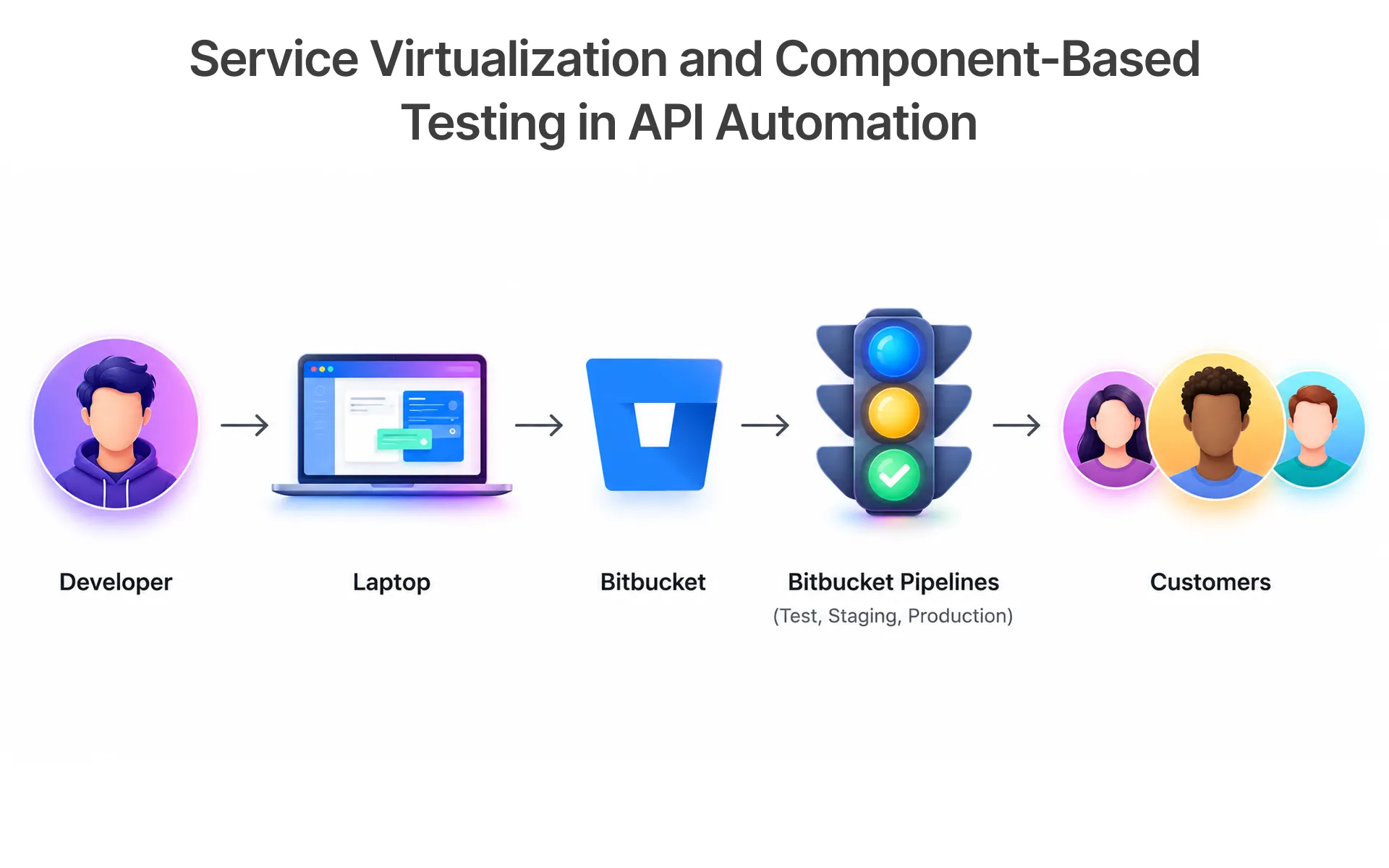
This pipeline view shows why automation-result syncing is part of the tool decision. TestRail or Zephyr should receive reliable test output from CI/CD pipelines so failed builds, flaky tests, and release risk are visible in one place.
Both tools can connect with automation pipelines, but teams should test the integration path before buying. Automation results should not require manual copy-paste. CI/CD tools should be able to push results into the test management platform, and QA leads should be able to separate stable automation signals from flaky tests.
Useful checks include:
- Can automated scripts publish results into the tool reliably?
- Can failed tests create or update defects without duplicate noise?
- Can QA filter manual testing, automated testing, and regression test results separately?
- Can reports show coverage by release, sprint, and requirement?
This matters because poor automation reporting can make a paid tool feel like a spreadsheet with a nicer interface.
Reporting, dashboards, and release readiness signals
Reporting should help teams decide whether a release is ready. TestRail reporting is helpful when QA leaders need release-level summaries, audit logs, historical trends, and cross-project visibility. It can support more formal review routines for regulated or multi-product teams.
Zephyr reporting is useful when the main audience is already in Jira. Product managers, scrum masters, and developers can inspect test status beside sprint work. That makes it easier to discuss test progress during ceremonies without opening a separate tool.
A strong dashboard should answer one question quickly: what risk remains before release? If a dashboard only counts passed tests without showing coverage gaps, blocked tests, or defect severity, it is not enough.
When TestRail Fits Better for QA Governance
TestRail is a better fit when QA needs structure beyond a single Jira project. It helps teams that maintain reusable test suites, run regression testing across releases, or need reporting that stays consistent even when engineering teams use different workflows.
TestRail works best when QA already has ownership habits in place: a QA lead, test case review routines, release gates, and naming standards. Teams with those practices usually get more value from its structure.
Cross-project test repositories and reusable suites
A common pain point appears when each squad writes its own tests in its own style. One team may use Jira tickets. Another may use spreadsheets. A third may store automation results in CI logs. Over time, coverage becomes hard to trust.
TestRail helps by giving QA teams a central place for test repositories and reusable suites. This is useful for:
- Regression suites shared across releases.
- Product modules tested by multiple squads.
- Test cases that need version control or review.
- Test assets that must survive team changes.
That structure can reduce duplicated work and make test coverage easier to explain during release planning.
Audit-ready reporting for manual and automated testing
Some teams need more than sprint visibility. They need to show what was tested, who tested it, when it passed, what failed, and which defects were linked. TestRail can support this kind of audit-ready reporting when configured carefully.
This is especially useful for teams working with regulatory standards, customer security requirements, or enterprise software products. Manual testing and automated testing can both be tracked, but the team still needs rules for naming, ownership, and review.
Naming rules, ownership, and review routines keep reporting usable. TestRail gives QA leaders a clearer view of release risk only when those governance rules are maintained.
When Zephyr Fits Better for Jira-Centered Agile Teams
Zephyr for Jira is usually easier to justify when Jira is already the team’s planning and delivery hub. Instead of creating a separate QA workspace, it lets testing happen near user stories, bugs, sprint boards, and release planning.
That closeness helps when QA and development collaborate daily. Developers can see test status without learning a new platform. Product owners can review test progress beside backlog items. QA teams can reduce handoff friction during active sprints.
Sprint-level execution, scalability, and enterprise readiness in Jira
Zephyr supports sprint-level execution well because test activities stay close to Agile work. Teams can create test cycles, connect tests to stories, and review defects in Jira. This makes it easier to discuss testing during standups, sprint reviews, and release readiness meetings.
Scalability depends on Jira discipline. If teams use consistent projects, workflows, permissions, and naming conventions, Zephyr can scale across squads. If Jira has too many custom workflows or inconsistent issue structures, test management can become difficult to govern.
Enterprise readiness should be judged by administration effort, reporting needs, access controls, and how well teams can standardize testing across projects.
Zephyr Scale versus Zephyr Squad decision points
Zephyr is not one simple option. SmartBear’s Zephyr editions comparison lists Zephyr Essential, Zephyr, and Zephyr Advanced for Jira-based teams, while Zephyr Enterprise has a separate enterprise pricing path. Teams should compare edition fit against team size, Jira architecture, reporting expectations, and test case management depth.
A smaller Jira team may prefer a lighter setup, while a larger QA organization may need stronger reuse, reporting, real-time Jira alignment, automation integration, and cross-project controls. Before choosing, teams should map current QA work to the Zephyr edition that matches their scale.
The key question is not only whether Zephyr works with Jira. It is whether the selected Zephyr edition supports the team’s future test management needs.
Pricing, Adoption, and Migration Trade-Offs
Cost is not only license price. TestRail pricing should be checked against its current Cloud, Server, and Enterprise plan rules, while Zephyr pricing should be checked against the relevant Zephyr edition, Jira deployment model, and Zephyr Enterprise pricing path. QA leaders should also include migration effort, training, administration, integrations, reporting setup, and process cleanup.
The table below summarizes the practical trade-offs teams should review before moving from spreadsheets, Jira-only testing, or legacy test management tools; use it to anchor cost, migration, ownership, and pilot-scope decisions.
Teams should run a short pilot before making the final decision. A useful pilot includes one active sprint, one regression cycle, one automation results sync, and one release-readiness report.
License planning, training effort, and admin ownership
TestRail and Zephyr both need clear ownership. Someone must decide naming rules, permissions, fields, workflows, dashboards, and how automation results are handled. Without ownership, adoption stalls.
Training should focus on role-specific tasks:
- Manual tester: how to write and execute test cases.
- Automation engineer: how to publish automation results.
- QA lead: how to review coverage, defects, and reports.
- Product manager: how to read release readiness without changing QA data.
The best tool is the one the team can use consistently after the rollout team stops helping.
Migration risks from spreadsheets or legacy tools
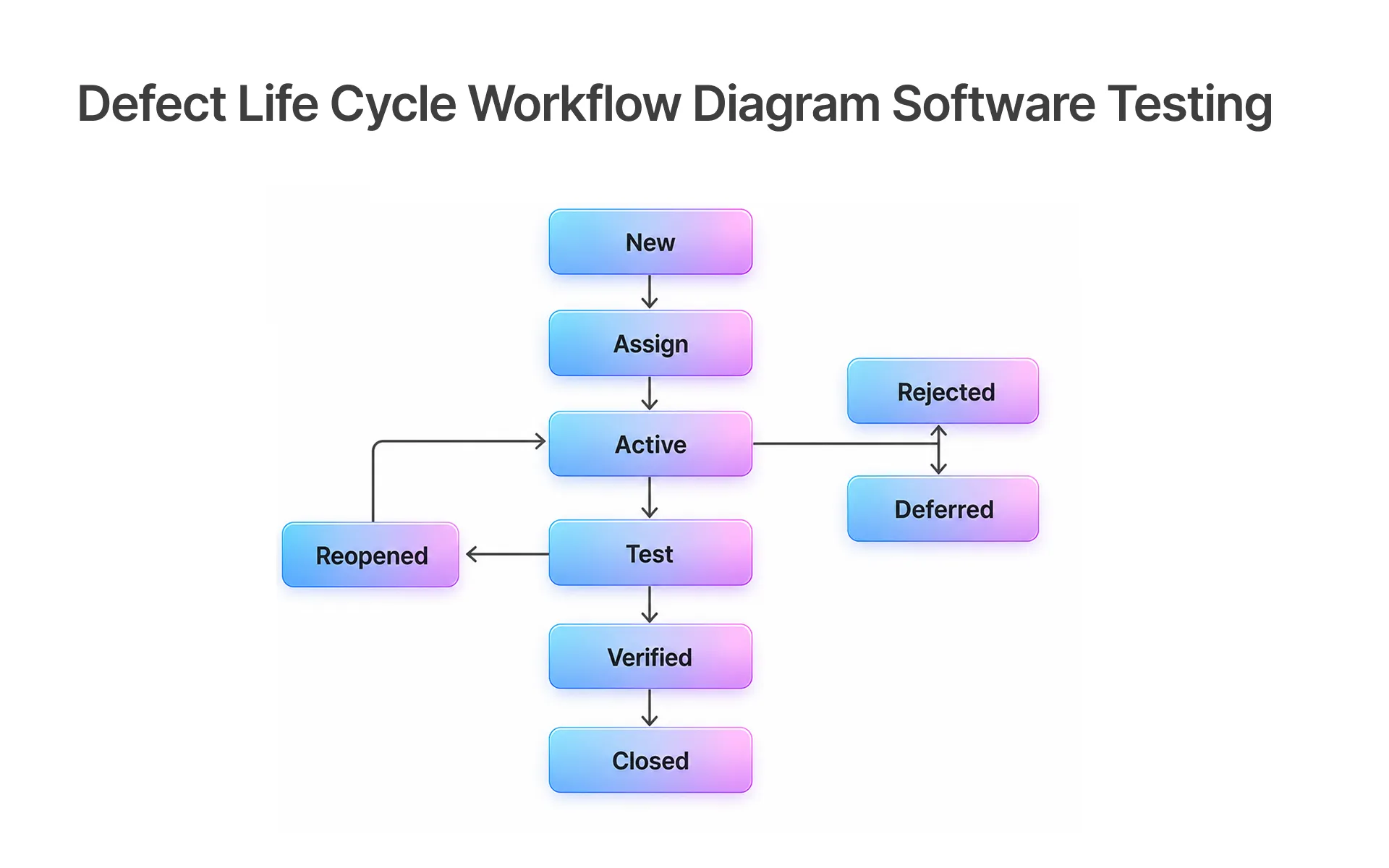
The defect workflow diagram shows how an issue moves from discovery to closure during a migration. It matters because teams switching tools need a shared defect process before old spreadsheet data becomes live release evidence.
Migration is where many test management projects slow down. Old spreadsheets often contain duplicate cases, unclear steps, outdated expected results, and test scenarios no one owns. Importing all of that into a new platform only moves the problem.
Before migration, QA teams should clean test data, merge duplicates, archive obsolete cases, and decide which test suites deserve long-term maintenance. This reduces clutter and makes the new tool easier to trust.
Teams evaluating a move to another test management platform should also check how existing test data can be carried over. For example, BrowserStack Test Management supports importing projects and test cases from TestRail and Zephyr, as well as CSV files. This can reduce the need to rebuild test repositories manually, although teams should still review and clean the data before importing it.
A clean migration also helps automation teams because stable test IDs and organized suites make result mapping easier.
Decision Framework: Choose TestRail or Zephyr Based on Team Workflow
The best decision comes from the team’s workflow, not from a generic tools list. TestRail and Zephyr can both support Agile QA, but they solve different coordination problems.
Use this decision framework during a pilot:
- First, count how many products and Jira projects need shared release reporting.
- Then, confirm whether Jira is clean enough to hold test cycles, defects, and reporting.
- Next, check whether reusable regression suites need versioning and review ownership.
- Finally, run one sprint and one regression cycle before buying either platform.
- Delay the purchase if old test cases, naming rules, and dashboard ownership are still unclear.
This keeps the decision grounded in real work instead of vendor demos.
Choose TestRail when QA governance spans multiple projects and tools
TestRail is stronger when QA needs consistent test management across different teams, products, and delivery workflows. It helps if the organization uses several bug trackers, multiple automation frameworks, or separate release processes.
It also works well when QA leaders need dashboards that show test coverage, execution status, defect trends, and release risk across more than one Jira project. The trade-off is that teams must maintain the platform as a real QA system of record.
If no one owns suite hygiene or release reporting, TestRail can become another repository to maintain rather than a governance improvement.
Choose Zephyr when Jira-native execution matters most
Zephyr is stronger when Jira is already the center of planning and delivery. It keeps testing close to user stories, bug tracking, and sprint routines. That can improve collaboration because developers and product owners do not need to leave Jira to understand test status.
It is especially useful when teams want to start quickly and avoid a separate test management workspace. The trade-off is that Jira structure becomes even more important. Poor Jira hygiene can weaken Zephyr reporting and test organization.
If Jira projects are inconsistent, Zephyr’s convenience can turn into scattered test data and weak release reporting.
Conclusion: Choose the Test Management Tool That Fits Your Agile Workflow
TestRail and Zephyr are both capable test management platforms, but they serve different team needs. TestRail is often better for QA governance, reusable test repositories, cross-project reporting, and audit-ready test tracking. Zephyr is often better for Jira-centered Agile teams that want testing, defects, and sprint work in one place.
The practical answer is to pilot both tools against one real release workflow. Include manual testing, automation results, defect tracking, reporting dashboards, and migration effort. If the platform improves release confidence without adding unnecessary admin work, it is the stronger fit for that Agile QA team.
People Also Ask (FAQs)
Q1. Can Agile teams use both TestRail and Zephyr during a migration?
Ans: Agile teams can use both TestRail and Zephyr during a short migration if each tool has a clear role. For example, teams may keep existing TestRail test repositories while piloting Zephyr for Jira-native sprint execution. The risk is duplicate reporting, so QA leaders should define one source of truth before rollout.
Q2. What test management data should teams clean before switching tools?
Ans: Test management data should be cleaned before teams switch tools, including duplicate test cases, outdated expected results, unclear steps, unused regression tests, and inconsistent naming. Clean test data improves test coverage, reporting dashboards, automation result mapping, and long-term test case management.
Q3. How should QA teams compare reporting needs before choosing a tool?
Ans: QA teams should compare reporting needs by listing the reports required for sprint reviews, regression testing, release readiness, defect tracking, and audit review. Then they should test whether each tool can produce those reports without manual spreadsheet work.
Q4. Which tool works better for teams with mixed manual and automated testing?
Ans: The better tool for mixed manual and automated testing is the one that can track manual execution and automation results in the same release view. TestRail often fits teams that need central reporting across frameworks. Zephyr often fits teams that want automation results tied closely to Jira issues.
Q5. What adoption risks should QA leaders plan for before rollout?
Ans: QA leaders should plan for adoption risks such as training gaps, messy test repositories, unclear admin ownership, weak reporting standards, and automation integration delays. A pilot should test these risks before the team commits to a full rollout.





.webp)