

APIs, microservices, and cloud-native deployments are essential components of the software delivery today. But at the scale of organisations looking to expand out on their digital platforms, there is a challenge around late-stage testing which can lead to delays, API issues, unstable releases and security vulnerabilities. Therefore, shift-left testing has emerged as a crucial QE strategy among businesses that embrace DevOps automation and CI/CD pipelines. As companies utilize APIs at an earlier stage in the development lifecycle, they need strong API testing frameworks to ensure that APIs are tested before deployment.
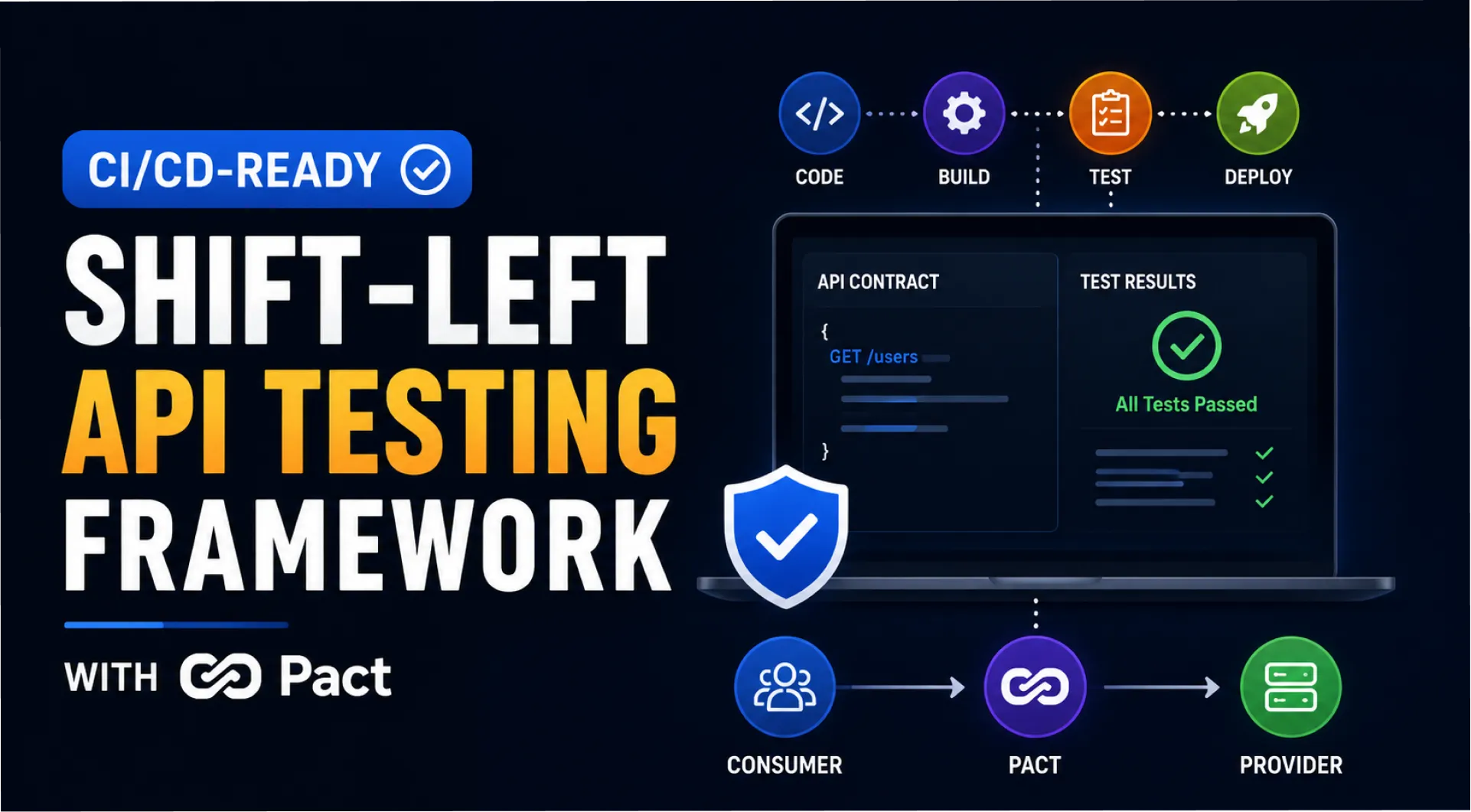
A shift-left API testing framework is an automated CI/CD method that incorporates API validation, contract testing, security validation and performance testing at the beginning of the software development lifecycle (SDLC).
- Shift-left API testing helps teams detect defects earlier and reduce deployment risks.
- Contract testing and OpenAPI governance prevent breaking API changes.
- Developer-centric testing integrates API validation into pull requests and CI/CD pipelines.
- Security, performance, and test data management strengthen API reliability.
- AI-powered observability platforms improve monitoring and troubleshooting.
In the era of automation frameworks and cloud-based architectures, firms such as Frugal Testing play a crucial role in helping businesses establish scalable API testing strategies that are in line with today's software engineering methods. Whether it's the implementation of the Pact testing framework, performance testing, or security testing, enterprises need to have a testing ecosystem that is automated and seamlessly integrated into CI/CD Jenkins workflows and modern CI/CD tools.
Shift-left API testing helps with continuous testing throughout the software development lifecycle (SDLC) of your software, including contract, unit, integration, security, and performance testing, prior to deployment. Automated testing for APIs as part of a CI/CD pipeline can contribute to the early detection of defects, risk reduction in releases and improve software quality.
Key Insights from This Article:
- How to implement shift-left API testing to identify defects earlier and speed up software releases.
- How contract testing, OpenAPI, and Pact help prevent breaking API changes before deployment.
- How to automate API testing within CI/CD pipelines using tools like Jenkins, Postman, JUnit, and pytest.
- How to improve API security, performance, and compliance through continuous testing and quality gates.
- How AI-powered testing and observability platforms like Datadog and Splunk help monitor and maintain API reliability at scale.
- How to build end-to-end API testing workflows with automated quality gates and continuous monitoring.
Shift-Left API Testing Best Practices for CI/CD Pipelines
The main difference is timing: shift-left testing moves API validation earlier in the lifecycle, which improves feedback speed and reduces release risk before production.
Shift-left API testing involves testing the API's functionality as early in the software testing lifecycle as possible. API teams continuously run API tests during the development, pull requests, and CI/CD pipeline stages rather than waiting till regression testing before production. This is to ensure agile delivery and stability of software over distributed systems.
Organizations like Frugal Testing can help achieve quicker feedback cycles and reduced defect leakage through effective test-driven development and automated testing practices. In many cases, Frugal Testing can also help in integrating software testing tools like Postman and JUnit into CI/CD pipelines. This helps enhance the confidence of deployment and minimize risks while releasing enterprise applications.
The Speed Vs. Stability Challenge in Microservices Testing
While microservices enable teams to ship quicker, they also establish a web of dependencies between APIs, databases, gateways, and external services. Hence, integration testing and contract testing are important since a small API change can impact the services below. The more systems grow, the more regression testing gets, the slower E2E gets, and validating API calls between distributed services becomes more challenging. Good monitoring and observability also help teams catch issues earlier, not larger failures later on.
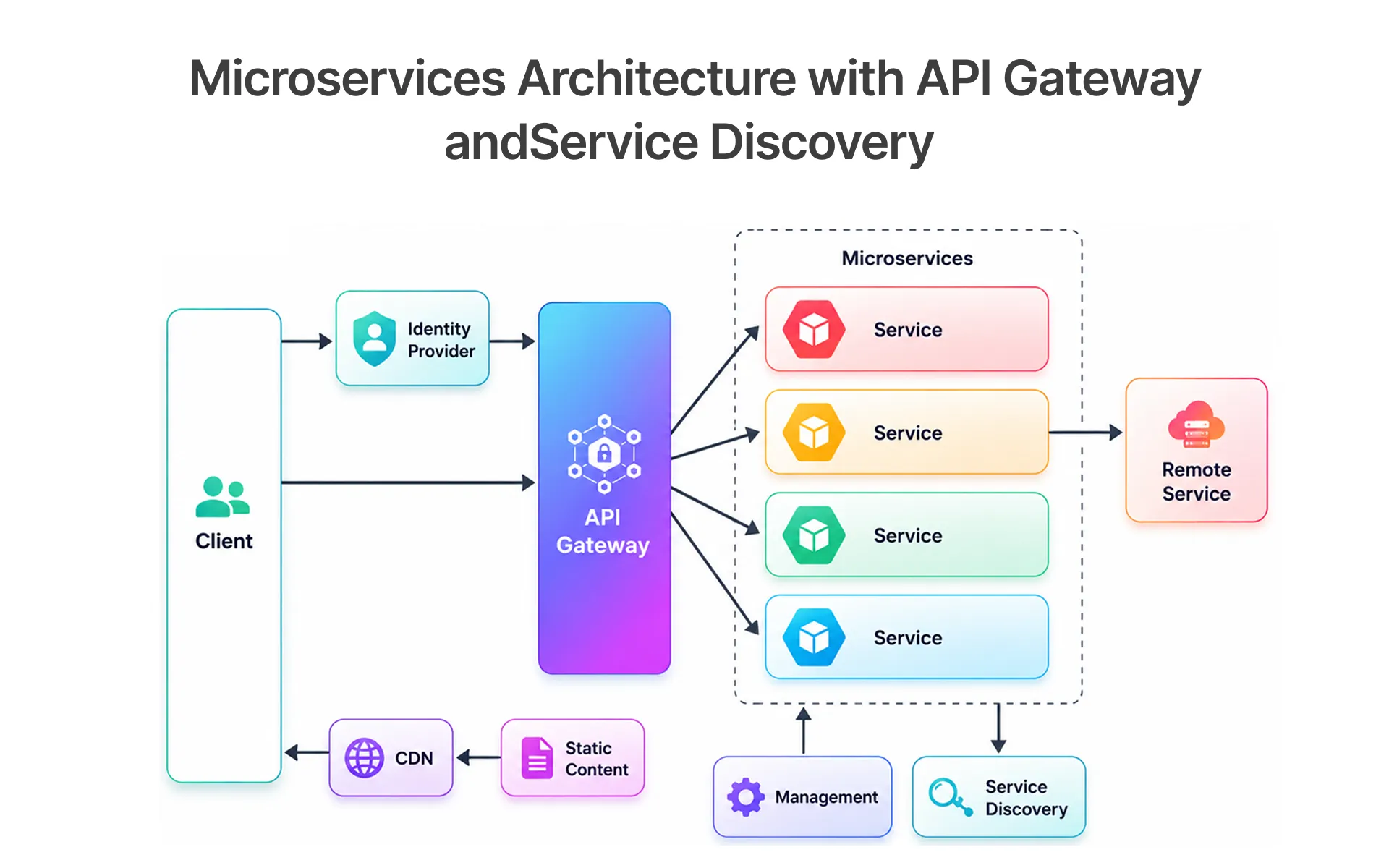
For instance, if the operations were embedded in a large-scale API ecosystem, a load test may be needed that is continuous, and performance baselines to identify bottlenecks well in advance before they impact the users. Early API validation helps teams to catch integration issues before they go into production, reducing the chances of production incidents and slowing down deployment. Frugal Testing supports enterprise adoption of cloud-native API testing architectures with microservices-based environments such as: OpenAPI validation, Jenkins pipeline automation, contract testing, and continuous quality engineering practices to enhance release confidence and accelerate delivery.
Continuous API Testing Strategies for DevOps Teams
Successful DevOps teams validate APIs on every commit, pull request, and deployment candidate so defects are caught before code moves further in the pipeline.
Many engineering teams are also using Selenium Webdriver for UI validation along with API testing and Postman workflows for end-to-end Quality Assurance. This multi-layered approach to testing can cut down cycle times for release, enhance interaction amongst the development, QA, and operations teams, and enables organisations to gain from quicker recovery times through ongoing testing and early security scans.
Design-First API Testing with Pact Contract Testing and Schema Governance
Design-first API development starts with defining API contracts before coding begins. Teams use OpenAPI Specification documents and schema validation strategies to standardize communication between services. Contract testing helps prevent incompatible API changes across distributed systems.
OpenAPI improves API documentation consistency by establishing a shared contract across teams. Schema governance reduces integration risks, while consumer-driven contract testing helps provider and consumer teams collaborate more effectively. Contract verification further strengthens deployment quality by identifying compatibility issues before release.
Frugal Testing helps enterprises adopt contract testing tools that align with DevOps automation and API-first development practices. These approaches improve integration reliability while supporting scalable software testing workflows.
OpenAPI and Swagger for Schema-Driven API Development
Create API contracts in OpenAPI and Swagger to have a common format for development, testing, and integration from the beginning. Swagger and OpenAPI allow teams to codify endpoints, authentication rules, responses, and JSON structures early on. This design-first approach improves collaboration and onboarding and reduces API errors with schema validation. Schema governance is often applied in healthcare and banking environments to support compliance and reduce failures. API schema validation in CI/CD increases maintainability and reduces the risk of downtime.
Consumer-Driven Pact Contract Testing with PactFlow
Pact testing allows consumer and provider teams to agree on how an API should behave with shared contracts before they’re deployed. With Pact Broker and PactFlow, teams can continuously validate consumer-driven contracts in CI/CD workflows and catch compatibility issues early. If a provider changes an API response, contract verification will alert dependent services before they are deployed into production.
For example, API contract testing is commonly employed for retailers to test interactions between their internal services before they enter integration testing. Payment processing is just one critical workflow that still needs to be validated and tested for compliance end-to-end before it is released.
This reduces the risk of integration and accelerates deployments across distributed systems.
Preventing Breaking API Changes Before Deployment
Breaking API changes can disrupt applications, third-party integrations, and customer experiences. Shift-left validation ensures incompatible updates are identified before deployment begins.
- CI/CD pipeline automation blocks unstable releases.
- Schema governance improves compatibility.
- API tests validate backward compatibility.
- Contract testing tools reduce production failures.
- Performance thresholds maintain API reliability.
Organizations using automated API governance significantly reduce emergency rollbacks and production incidents.
One challenge that is seen repeatedly in API testing engagements is discovering that there are mismatches between dependent services before integration testing starts. Teams that adopt "contract validation" into their pull request workflows are likely to catch any compatibility problems sooner, thereby, avoiding deployment delays and emergency fixes.
Developer-Centric API Testing and CI/CD Automation
Modern API testing must support developers directly within their workflows. Teams increasingly integrate API testing tools into pull requests, local development environments, and CI/CD pipelines to improve productivity.
Developers get immediate feedback on validation, dependency bottlenecks are eliminated with mocking tools, and automation tools make testing easier. Test automation contributes to the speed of releases while integration tests bolster deployment confidence.
Organizations that leverage Frugal Testing can create developer-focused API testing environments that connect with OpenAPI governance, microservices validation, Jenkins pipeline testing and automated quality gates all within the CI/CD pipeline.
Mocking and Service Virtualization for Isolated API Testing
Mocking tools and service virtualization help teams test APIs independently of external dependencies. This approach is especially useful when third-party services are unavailable or expensive to access during development.
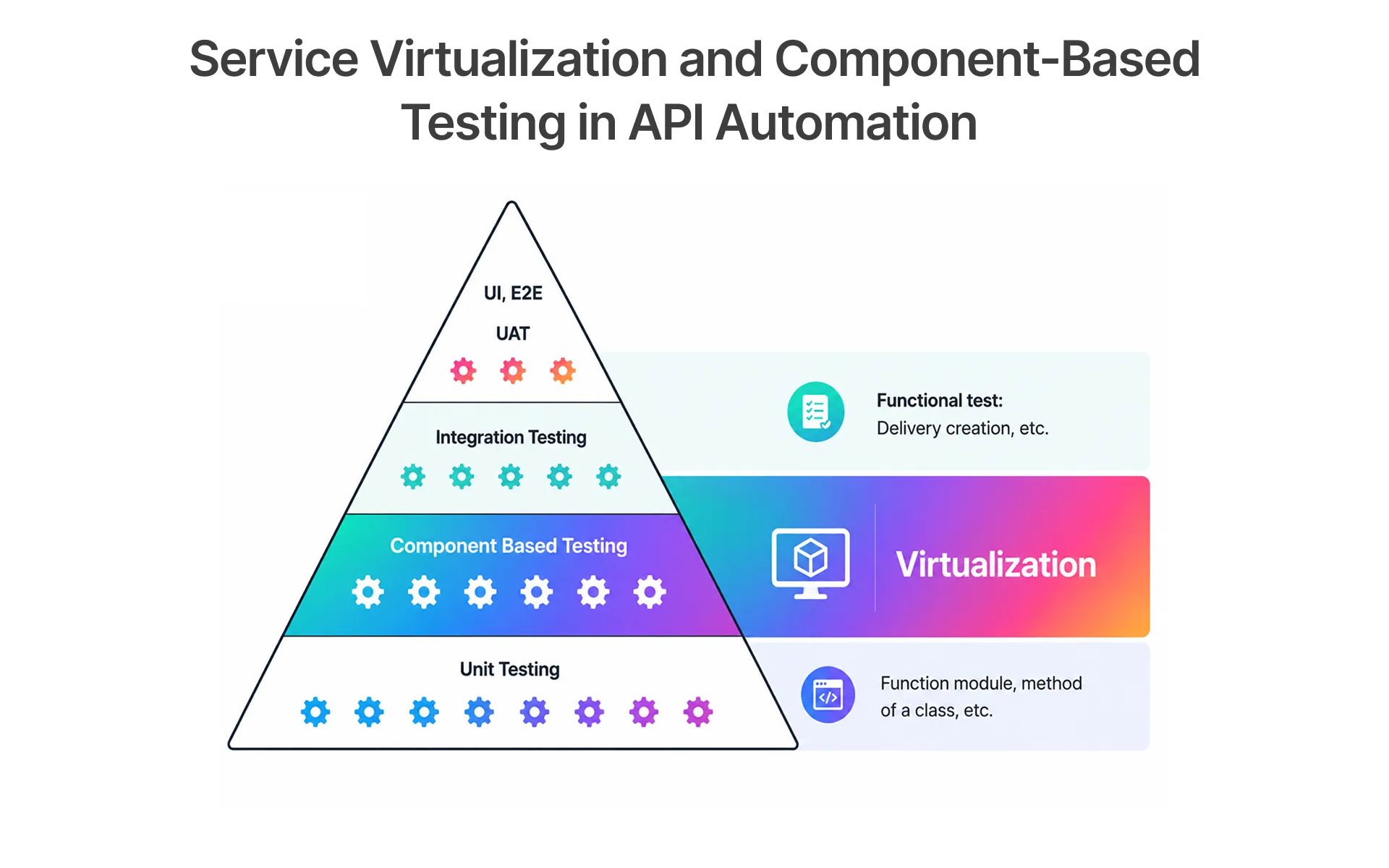
For instance, when a payment gateway sandbox goes away during development, a team can utilize service virtualization, which lets them mock payment responses and keep checking the checkout process. This prevents dependency delays and ensures that API behaviour is tested in the same way wherever it's deployed.
Isolated testing improves development efficiency while enabling earlier issue detection.
Automating API Test Execution in Pull Requests and Pipelines
In today's engineering teams, API validation is automated directly in pull requests and CI/CD pipelines, to ensure code changes adhere to functional, contractual and quality standards before deployment. Automated API tests help verify expected behavior, check contract compliance, and reduce the chance of integration failures before deployment.
Usually, teams use GitHub Actions, GitLab CI, Jenkins, or Azure DevOps pipelines to run automatic tests of Postman collections, suites of pytest, and contract validation. Feedback early on allows the developers to catch failures right away, cut down on the debugging time and stop the unstable code from getting to the deployment stages.
Automated API testing within pull requests helps to boost the confidence of releases and reduce review cycles and production defects.
Contract Verification and Deployment Quality Gates
Quality gates prevent unstable code from progressing through deployment pipelines. Teams use contract verification and security testing rules to enforce release standards automatically.
The deployment quality gates (DQG) follow these automated tests to ensure API validation, security testing, contract verification, and performance testing are done before code moves forward in the pipeline. These checks will be enforced automatically, ensuring that teams don't have to worry about unstable releases and increasing visibility across environments.
Enterprises implementing deployment quality gates reduce production incidents and strengthen operational stability.
API Security, Performance, and Test Data Management Strategies
API ecosystems must balance scalability, performance, and security. Modern testing strategies validate API behavior under realistic conditions while maintaining compliance and privacy requirements.
Security scans continuously detect vulnerabilities and help strengthen API security throughout the software development lifecycle. Load testing frameworks validate scalability, while synthetic API monitors improve reliability by identifying performance issues before they affect users.
Organizations increasingly prioritize automated validation to secure cloud-native deployments and distributed applications.
Automated API Security and Performance Benchmarking
To ensure reliable APIs at scale, security testing and performance benchmarking are integral.
- API testing identifies authentication flaws.
- Performance testing tracks response times.
- Load testing validates traffic handling.
- Monitoring tools improve observability.
- Security scans strengthen compliance.
For a high-volume SaaS or logistics API ecosystem, performance benchmarking should test partner integrations, authentication flows, response-time thresholds, and failure recovery during peak traffic windows.
Continuous benchmarking ensures APIs remain secure, scalable, and resilient.
Managing Synthetic Data and Privacy Compliance in API Testing
Sensitive production data should never be exposed during software testing. Teams increasingly adopt synthetic datasets and format-preserving data masking to maintain compliance.
- Synthetic data reduces privacy risks.
- Data masking protects sensitive information.
- Test automation improves compliance workflows.
- Security testing supports governance.
- API testing remains realistic and scalable.
When connecting to other systems, privacy requirements are frequently a top priority in the healthcare, banking, HR technology platforms and payroll industries.
Modern test data management improves compliance while helping QA teams run scalable automation tests without exposing sensitive production data.
AI-Powered API Testing Tools and Observability Strategies
AI-powered testing platforms are transforming software testing through self-healing automation, predictive analytics, and autonomous artificial intelligence capabilities.
Agentic AI streamlines test maintenance; AI-integrated test generation boosts test coverage, and monitoring and observability aid troubleshooting. Self-healing test frameworks minimize test failures. Organizations increasingly combine AI-driven testing with observability platforms to strengthen API reliability.
Self-Healing API Test Automation with Agentic AI
Self-healing automation frameworks automatically adapt to API changes without requiring extensive manual updates.
Self-healing API testing platforms utilize AI models to detect API changes, automatically update test logic, and ease maintenance duties. This will enable engineering teams to have a wider test coverage while reducing the manual update of the tests across the ever-changing microservices environment.
AI-powered testing helps enterprises reduce operational overhead while improving testing consistency.
Using Datadog and Splunk for API Test Monitoring
The following comparison summarizes the key differences between Datadog and Splunk for API monitoring and observability.
Datadog vs Splunk for API Monitoring and Observability
Observability platforms provide visibility into API performance, failures, and user behavior. Real-time monitoring enables proactive issue resolution and stronger operational stability.
Building a Scalable Shift-Left API Testing Workflow
Across enterprise API modernization projects, Frugal Testing has repeatedly seen contract mismatches appear late when consumer and provider services are tested only during integration cycles. Adding Pact-based contract validation to pull request checks helps teams catch schema and response mismatches earlier, before they delay release validation.
Organizations that integrate contract testing, automated validation, security checks, and monitoring into a single workflow typically achieve faster releases with fewer production defects.
Frugal Testing helps teams evaluate API testing maturity across contract coverage, automation result sync, Jenkins pipeline quality gates, regression stability, and production observability.
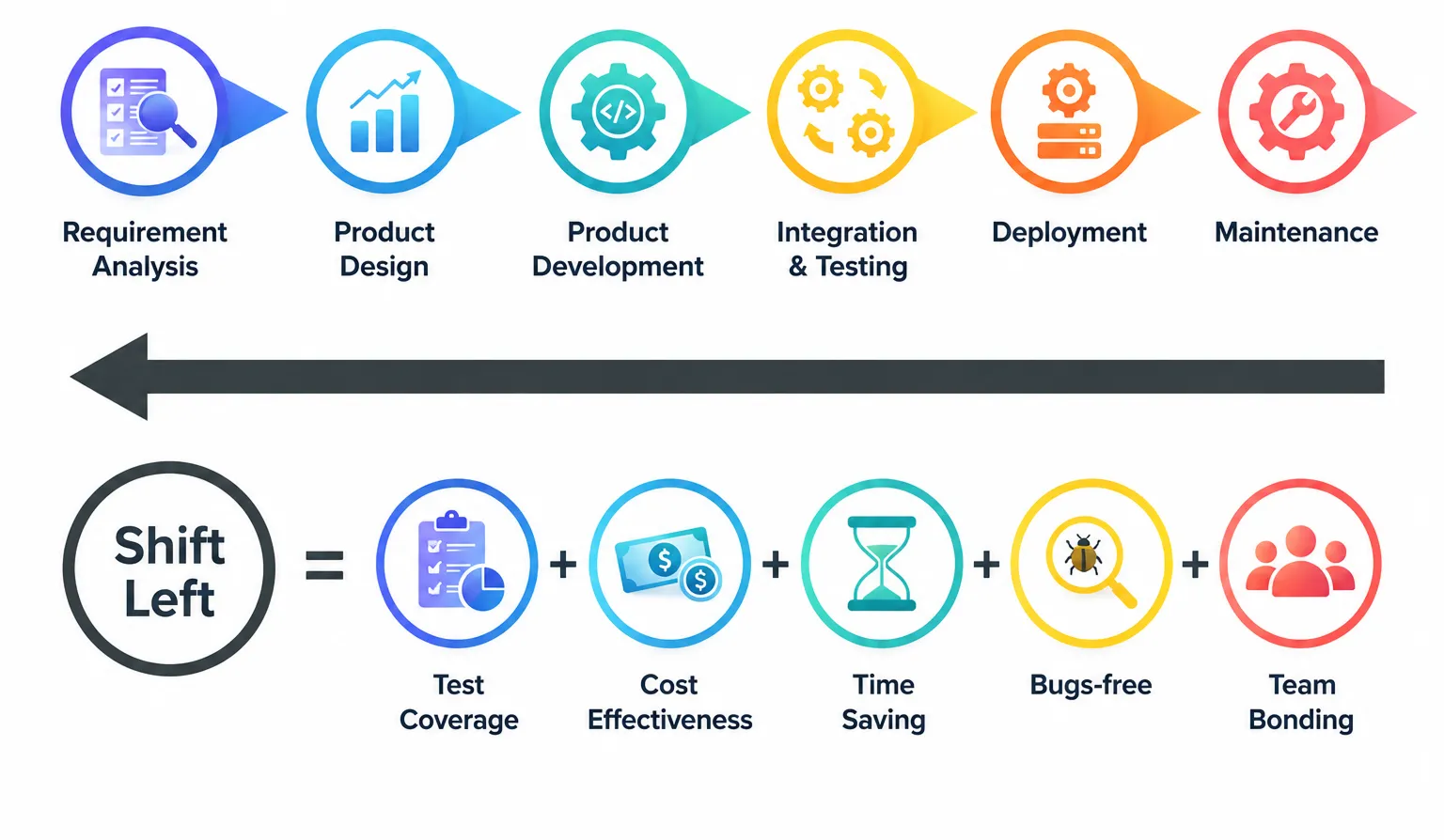
Organizations adopting integrated testing ecosystems achieve faster releases and improved software quality.
From API Contract Definition to Continuous Monitoring
A scalable shift-left API workflow should begin with an OpenAPI contract, validate it during pull requests, enforce quality gates in CI/CD, and continue monitoring API behavior after release.
A scalable API testing workflow begins with OpenAPI documentation to standardize APIs, uses contract testing to validate integrations, incorporates security testing to reduce vulnerabilities and load testing to maintain scalability, and concludes with continuous monitoring to improve visibility and operational reliability. This end-to-end strategy creates resilient software delivery pipelines.
Setting Up API Quality Gates in CI/CD Pipelines
Quality gates ensure only validated code reaches production environments.
Automated validation is run to discover problems as early as possible as soon as a pull request is created. Contract verification then is used to make services compatible and performance thresholds are used to prevent instability. Security scans ensure compliance throughout the pipeline and CI/CD tools increase trust of each release. Organizations implementing automated quality gates significantly improve release reliability and customer trust.
Conclusion: Building Resilient API Architectures with Shift-Left Testing
If you are following the latest software development trends, such as CI/CD automation, cloud-native architecture and microservices architecture, you obviously cannot afford to test your APIs after they have been built. These are the different types of tests that modern organisations deploy, including those for contract, integration, AI-driven automation, observability, performance and security to identify issues at an early stage before they hit production. Contract testing improves API reliability by detecting incompatible changes before they reach later testing stages. CI/CD pipeline automation also improves delivery speed by validating API quality continuously before release.
Performance testing can enable you to scale your system, and security testing is employed to protect your system against all potential security threats. Because Frugal Testing allows you to develop scalable, resilient API testing methodologies aligning with the DevOps methodology, enterprises are able to test their APIs as they start to scale and embrace the DevOps mindset. API testing can be beneficial for organizations aiming to improve their software quality and speed up digital transformation initiatives.
People Also Ask (FAQs)
Q1. How does shift-left API testing support faster software release cycles?
Ans: Shift-left API testing helps teams detect defects early in development before they impact later stages. This reduces rework, speeds up feedback loops, and enables faster and more stable software releases.
Q2. How do API rate limits affect automated testing pipelines?
Ans: API rate limits can slow down automated test execution by restricting the number of requests sent within a specific timeframe. Teams often use throttling, mock APIs, or staggered test runs to avoid failures.
Q3. What is the difference between API testing and UI testing in DevOps workflows?
Ans: API testing and UI testing differ because API testing validates backend services, integrations, business logic, and data flow, while UI testing validates the user-facing interface.
Q4. Can shift-left testing reduce cloud infrastructure costs in CI/CD environments?
Ans: Yes, shift-left testing reduces costly late-stage failures and minimizes repeated deployment cycles. Early defect detection also lowers resource consumption in cloud-based CI/CD pipelines.
Q5. How do teams measure ROI from API automation initiatives?
Ans: ROI from API automation is measured by reduced testing effort, lower defect leakage, shorter release delays, and less manual validation time. These other metrics include increased release frequency, more stable deployments, fewer incidents throughout production and more test automation coverage throughout CI/CD.