

Introduction Why Zero-Downtime Deployments Are Critical
Thursday afternoon deploy. CI is green; staging is quiet. Twelve minutes after shipping, Slack lit up order confirmations had stopped. A fulfillment developer had renamed a response field two sprints back. Nobody owned that boundary. Four hours of rollback later, the retro question was obvious: why no contract tests?
That gap nothing watching the API boundary between two independently deployed services is what Pact closes. This guide covers how we actually wire it up: broker setup, CI triggers, deployment gates, and the CLI commands you'll use daily.
One thing worth flagging upfront: the Pact Broker only re-runs verification when a pact actually changes. No new pact, no rerun. That principle run only what has a new signal is frugal testing. It's baked into the broker, not a separate tool. More services don't mean more CI cost. You'll see it throughout the broker and CI/CD sections.
Understanding Contract Testing and Pact The Foundation
What Is Contract Testing? (And Why It's Not Integration Testing)
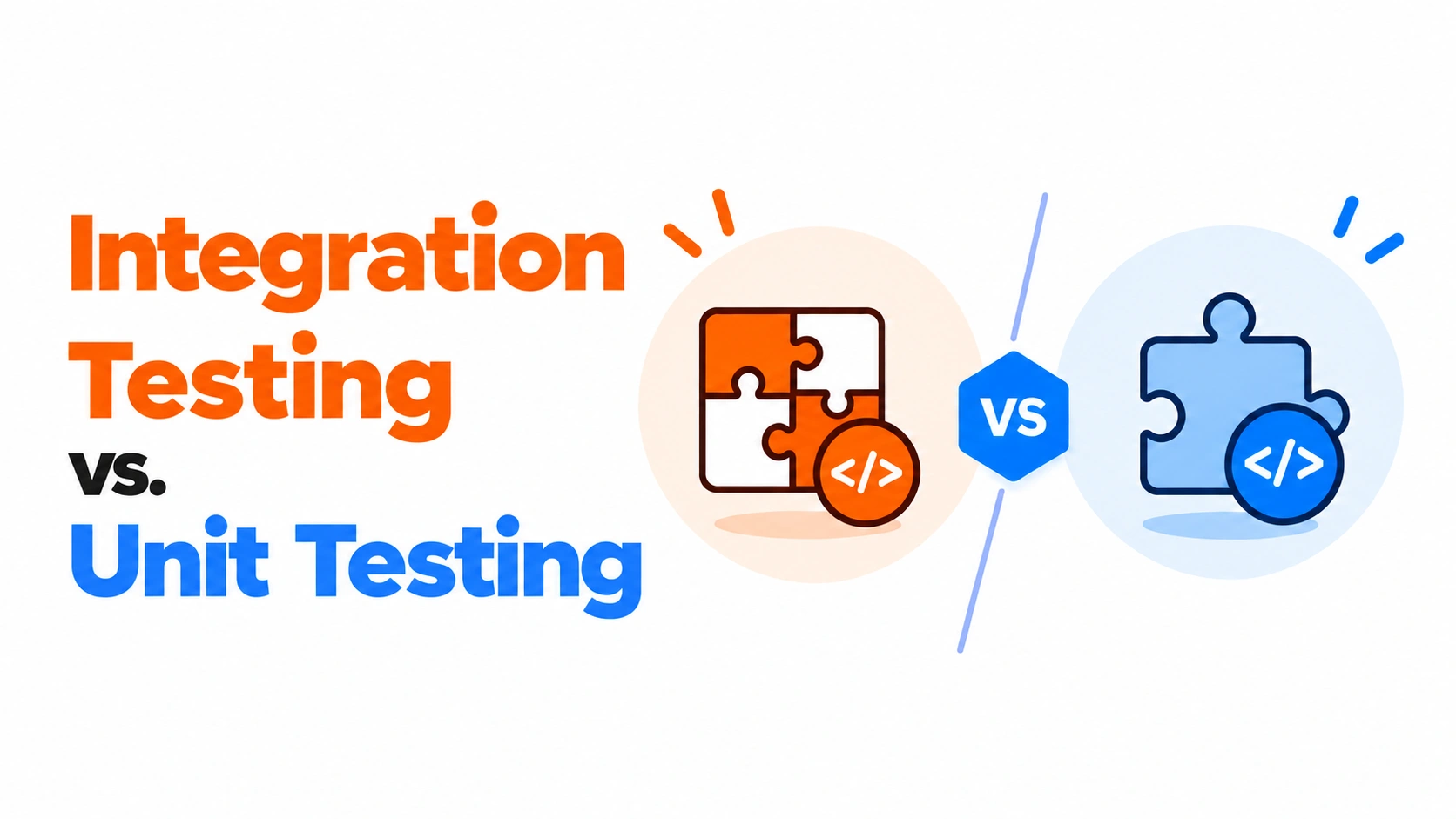
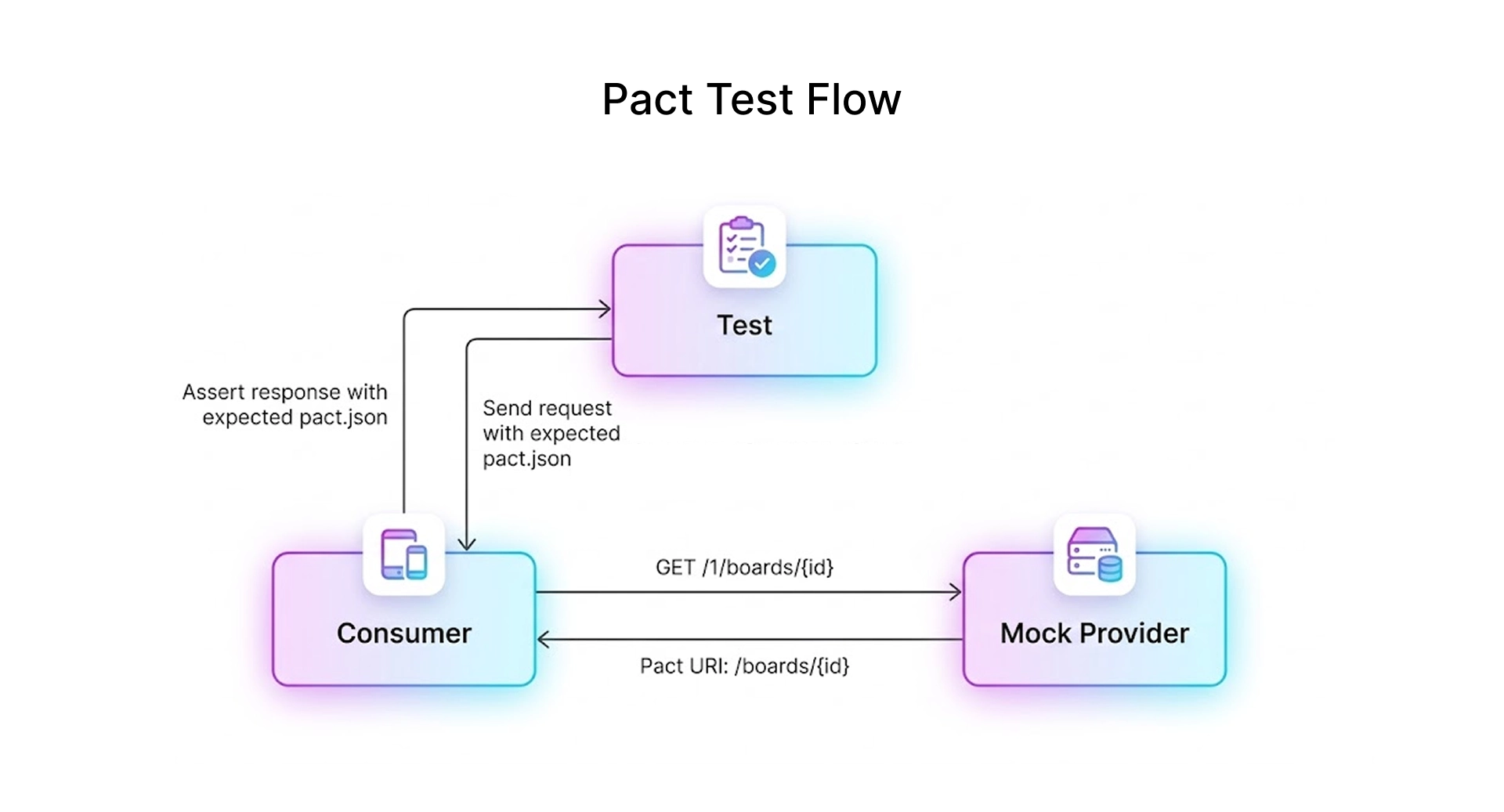
Every team I talk to conflates these two. Integration tests spin up both services live and test them talking to each other. Contract tests don't spin up anything the consumer runs against a Pact mock server, the mock records what was expected, and the provider later verifies its real behavior matches. No shared environment, no timing issues, no 'service B is down, so half the build is red.'
Simple rule: if an integration test is failing because a field was renamed, that's a contract test that should have fired two stages earlier.
Pact vs Integration Testing A Direct Comparison
In a monolith, a field rename is a compiler error. In microservices, that same rename silently breaks a downstream service that deploys on a different schedule and you find out days later. A pact shrinks that to seconds: the provider renames a field, verification fails against stored consumer pacts, and the PR is blocked before the merge. The consumer team was notified via webhook. No production incident.
Consumer-Driven Contracts Who Holds the Power?
The consumer drives the contract. The consumer writes a test expressing the request it sends and the response shape it expects Pact captures that as a JSON pact file. The provider verifies that its real behavior matches it. If the response no longer matches, verification fails, and the PR is blocked. Provider teams stop making unilateral API changes once they can see in the broker exactly which consumers depend on each endpoint.
Introduction to Pact The Leading Contract Testing Framework
Pact has SDKs for JS/Node, Java, Go, Python, Ruby, and .NET. The loop is the same everywhere: consumer tests generate pact files, files are published to the broker, provider pipelines fetch and verify them, and results return to the broker. The pact files are readable JSON we use them as living API documentation when onboarding developers.
Bi-Directional Contract Testing and Advanced Pact Patterns
What Is Bi-Directional Contract Testing?
Classic Pact requires the provider to write verification tests fine when you own both sides. Not fine when you're consuming a Stripe API or a third-party provider who has an OpenAPI spec but zero interest in writing Pact code for you. Bi-directional contract testing (BDCT) solves this: the provider uploads their OpenAPI spec to Pactflow, and Pactflow compares it against the consumer's pact automatically. No Pact code on the provider side, no coordination needed.
Classic Pact vs BDCT When to Use Which
Pact Testing Examples Real-World Scenarios
Frugal Testing scenario: Field rename caught before merge: The payment team renamed transactionId to txId. Checkout had a consumer test expecting the old field. Provider verification failed, PR blocked, webhook fired. Resolved in 40 minutes. Without a pact, it goes to staging, breaks silently, and someone gets paged.
Frugal Testing scenario: Removing the staging bottleneck: With 15 services, staging was a coordination nightmare. Replaced inter-service compatibility checks with Pact. Teams get contract evidence before building the container. Staging now handles functional and load tests only.
Frugal Testing scenario: Third-party gateway with BDCT: Gateway publishes an OpenAPI spec. Pactflow catches breaking field changes when our pipeline runs no more manually diffing changelogs.
Pact Mock Service Testing in Complete Isolation
The Pact mock service is the built-in HTTP server that handles consumer test requests. Define the expected interactions, mock responses, and everything that gets recorded into a pact file. Consumer tests end up with zero runtime dependencies no Docker Compose, no shared test database, and no 'auth service is down, so everything is red.' That whole category of CI noise disappears.
Pact JS Tutorial Getting Started in JavaScript / Node.js
Minimal consumer test using pact-js v3. The like() matcher means 'this field must exist with this type,' which is what you almost always want rather than exact value matching.
Pact JS Consumer Test Node.js Example (pact-js v3):
# Frugal Testing -- production Pact configuration
Run this pact file in ./pacts → publish to broker → provider verification and deployment gates are automated from there.
Zero-Downtime Deployment Strategies The Big Picture
Blue-green, canary, and rolling each solves the downtime problem differently. But they all share one assumption: the version going live is compatible with the services already running. Most teams don't verify that explicitly. Pact does.
Blue-Green Deployment Switch Traffic Without Risk
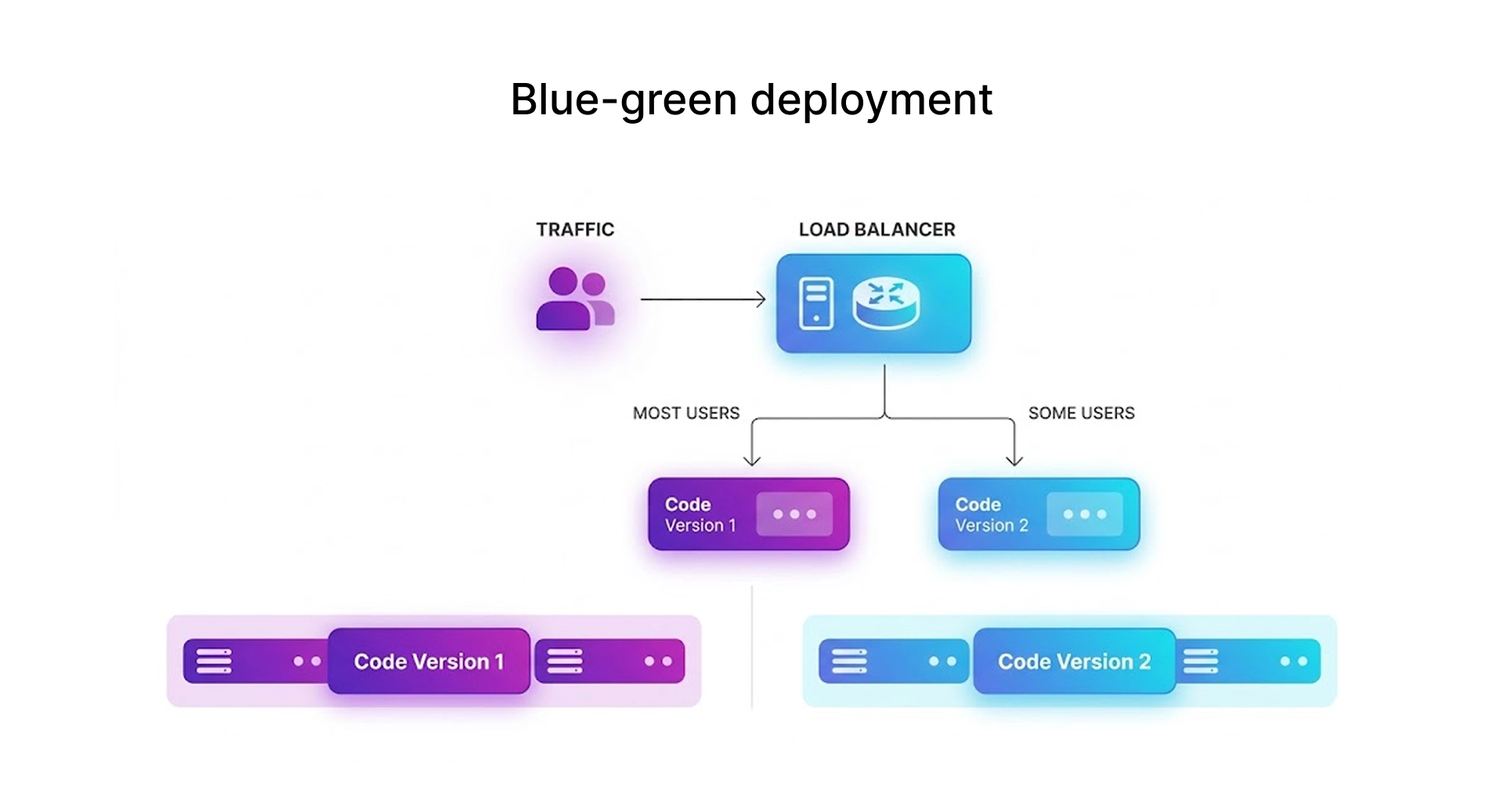
Two environments blue (live) and green (new version). Once green is ready, you flip the load balancer. The mistake teams make: verifying green works in isolation but not verifying it's compatible with the services it'll talk to after the flip. Run can-i-deploy against the green tag first. If any contract is unverified, the switch doesn't happen. The load balancer moves on contract evidence, not just smoke tests.
Canary Deployment Gradual Rollout With Safety Nets
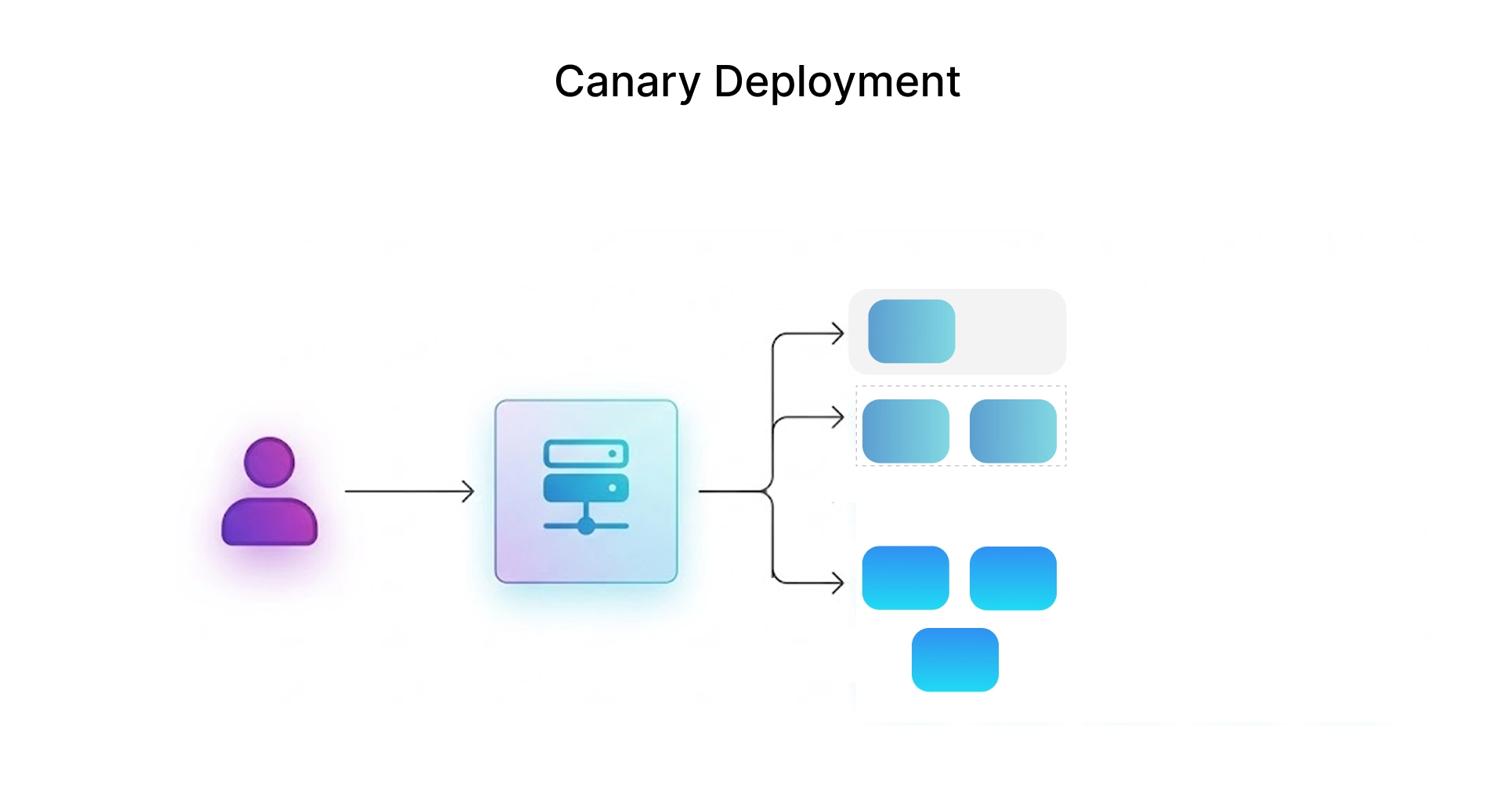
Canary sends 5–10% of traffic to the new version before full promotion. Real traffic exposing API contract bugs isn't a canary strategy that's using users as testers. Pact gates the canary before a single request touches it: if can-i-deploy detects a contract break, the canary never starts. By promotion time, the API contracts are already proven clean.
Rolling Deployment Service by Service Updates
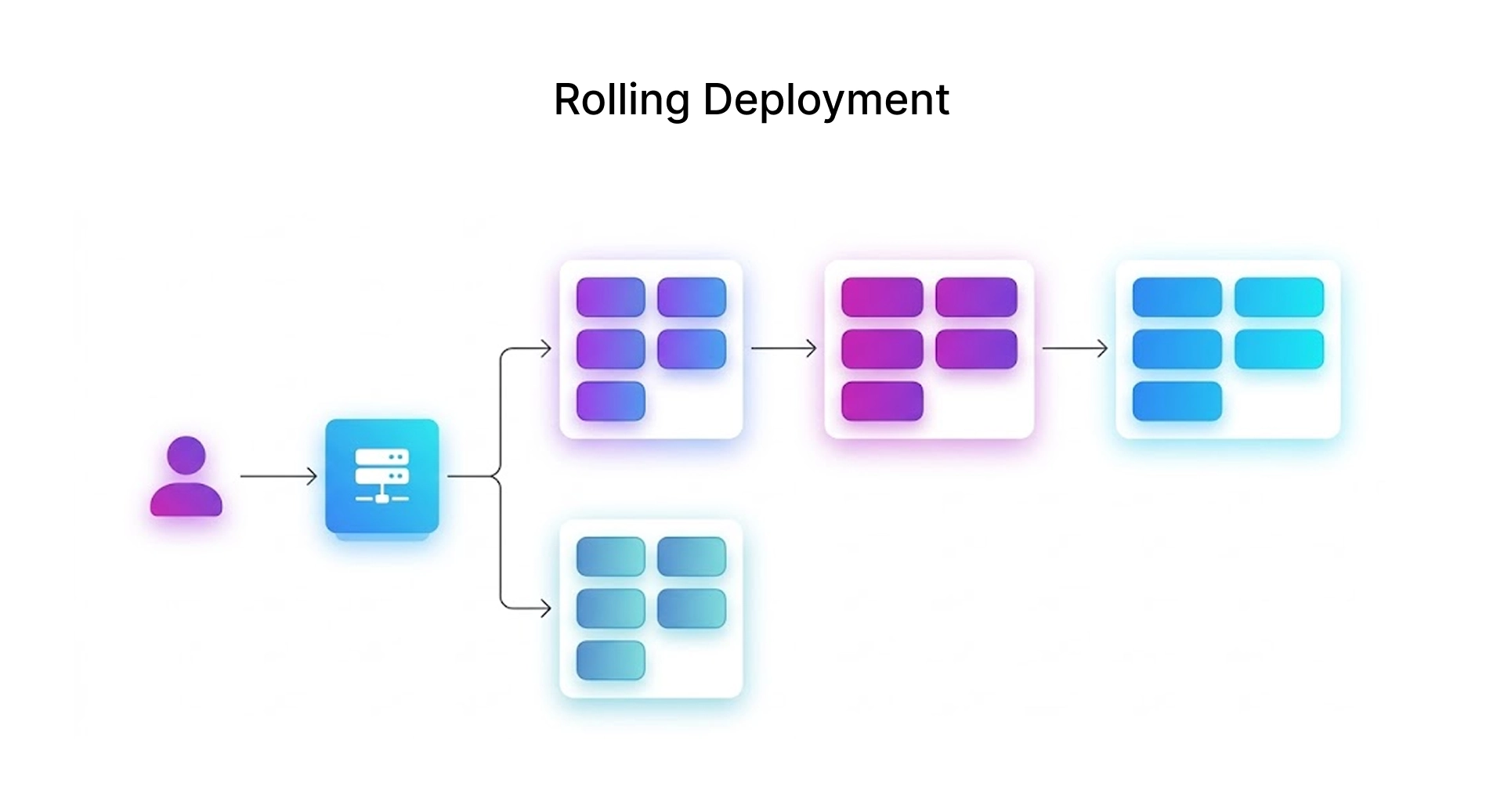
Kubernetes rolling updates briefly run old and new versions of the same service simultaneously. Teams focused only on 'the latest version' miss this window. The broker's environment tagging handles it: it records which version is deployed after every deploy, and can-i-deploy checks compatibility across all currently live versions not just head of main.
Zero Downtime Release Stitching the Strategies Together
The Pact Broker Your Deployment Control Center
What Is the Pact Broker and Why Do You Need One?
You can commit pact files to a shared repo. We tried that for three weeks. Fine for a proof of concept, but it falls apart with multiple services on independent schedules. The broker stores pact files versioned by git SHA, stores verification results, tracks environment deployments, and answers " can I deploy " in seconds. Without it, you're maintaining all that state manually. Nobody does it reliably.
This is where frugal testing shows up in the infrastructure. The broker serves cached results it doesn't re-run verifications on a schedule. A webhook fires when a consumer publishes a changed pact, the provider verifies it, and the result is cached. Next, can I deploy query reads to that cache? No new pact, no re-verification. More services don't mean more CI cost.
Pact Broker Setup Step-by-Step (Self-Hosted and Pactflow)
At Frugal Testing, we've wired this setup for teams running 15–50 microservices here is what the production-ready configuration looks like
Pact Broker Docker Compose Setup Self-Hosted:
# Frugal Testing production Pact configuration
# docker-compose.yml
version: '3'
services:
  postgres:
	image: postgres:15
	environment:
  	POSTGRES_USER: pact
  	POSTGRES_PASSWORD: pact
  	POSTGRES_DB: pact
	volumes:
  	- pgdata:/var/lib/postgresql/data

  pact-broker:
	image: pactfoundation/pact-broker:latest
	ports:
  	- '9292:9292'
	environment:
  	PACT_BROKER_DATABASE_URL: postgres://pact:pact@postgres/pact
  	PACT_BROKER_BASIC_AUTH_USERNAME: admin
  	PACT_BROKER_BASIC_AUTH_PASSWORD: changeme
  	PACT_BROKER_ALLOW_PUBLIC_READ: 'false'
	depends_on:
  	- postgres

volumes:
  pgdata:
docker compose up -d
# Broker UI at http://localhost:9292
How to Publish Pacts to the Broker
One command, wired into CI so nobody has to remember it:
pact-broker publish ./pacts \
  --consumer-app-version=$(git rev-parse --short HEAD) \
  --broker-base-url=https://your-broker \
  --broker-token=$PACT_BROKER_TOKEN \
  --tag=$(git rev-parse --abbrev-ref HEAD)
• Version with Git SHA ties every contract to an exact code commit
• Tag with branch name broker filters WIP pacts from main
• Automate it in CI if developers run this manually, they will forget
Can I Deploy? The Most Important Pact Broker Command
Everything else builds toward this one command:
pact-broker can-i-deploy \
  --pacticipant order-service \
  --version $(git rev-parse --short HEAD) \
  --to-environment production \
  --broker-base-url https://your-broker \
  --broker-token $PACT_BROKER_TOKEN
Checks two things: has every consumer's pact been verified against this version? Has this service's pact been verified against every provider currently live in production? Yes to both green. No to either blocked. Responds in seconds because it reads cached broker results, not live services. The work was already done upstream. Verification runs once, the result is cached, and every subsequent query reads it.
Deployment Gating with Pact Preventing Breaking Changes
What Is Deployment Gating and Why It Matters
A deployment gate is an automated check that must pass before a release proceeds. Contract verification belongs alongside unit tests, coverage, and security scans and unlike most gates, it's fast because it queries the broker cache rather than running tests. One production incident from a contract break costs more than months of Pact infrastructure. We tracked ours: one prevented production incident in Q1 covered six months of Pact infrastructure cost
Setting Up a Deployment Gate in Your Pipeline
GitHub Actions config simplified but production-representative. Key points: Deploy has hard needs: pact-gate dependency and record-deployment runs after deploy, not before.
GitHub Actions Deployment Gate Full Pact CI/CD Configuration:
# Frugal Testing production Pact configuration
name: Deploy to Production

on:
  push:
	branches: [main]

jobs:
  pact-gate:
	runs-on: ubuntu-latest
	steps:
  	- uses: actions/checkout@v4

  	- name: Run consumer Pact tests
    	run: npm run test:pact

  	- name: Publish pacts to broker
    	run: |
      	pact-broker publish ./pacts \
        	--consumer-app-version=${{ github.sha }} \
        	--broker-base-url=${{ secrets.PACT_BROKER_URL }} \
        	--broker-token=${{ secrets.PACT_BROKER_TOKEN }} \
        	--tag=main

  	- name: Check can-i-deploy
    	run: |
      	pact-broker can-i-deploy \
        	--pacticipant ${{ env.SERVICE_NAME }} \
        	--version ${{ github.sha }} \
        	--to-environment production \
        	--broker-base-url=${{ secrets.PACT_BROKER_URL }} \
        	--broker-token=${{ secrets.PACT_BROKER_TOKEN }}

  deploy:
	needs: pact-gate   # hard dependency -- deploy never runs if gate fails
	runs-on: ubuntu-latest
	steps:
  	- name: Deploy service
    	run: ./scripts/deploy.sh production

  	- name: Record deployment in broker
    	run: |
      	pact-broker record-deployment \
        	--pacticipant ${{ env.SERVICE_NAME }} \
        	--version ${{ github.sha }} \
        	--environment production \
        	--broker-base-url=${{ secrets.PACT_BROKER_URL }} \
        	--broker-token=${{ secrets.PACT_BROKER_TOKEN }}
Record deployment is not optional skip it and the broker's environment picture goes stale, making future can-I-deploy queries unreliable. The full gate adds under 30 seconds because can-i-deploy reads cache, not live services.
Integrating Pact Into Your CI/CD Pipeline
Pact in CI Running Contract Tests Automatically
Consumer tests run on every commit fast, have zero dependencies, and produce a pact file. Provider verification shouldn't fire on every provider commit. The broker handles it: a new or changed pact triggers a webhook, and the webhook fires provider verification. No new pact, no webhook, no redundant run. Work only happens when there's something new to verify frugal testing in action.
Pact in CD Gating Releases With Contract Validation
By the time can-i-deploy runs, verification is already done and stored. The gate reads results; it doesn't run tests. Contract-gated deploys don't slow release cadence the cost is distributed across CI runs, not concentrated at deploy time. No flakiness, no environment issues, and no 'test passed but service is actually broken. ' The broker's verdict is based on versioned, committed verification runs.
Safe Deployment Practices Using Pact
Pact and feature flags cover different concerns and complement each other. Pact proves the API plumbing is safe. Feature flags control what users see post-deploy:
• Deploy code to production Pact already confirmed the API contracts are clean
• Keep new features behind a flag off by default, no user impact
• Enable gradually internal users first, then a wider cohort
• Rollback without redeploying flip the flag, not the container
Deploy and release become separate events. Pact makes the deploy safe. Feature flags make the release controlled.
Contract Testing and Deployment Strategies for Microservices
Choosing the Right Strategy by Team Maturity
Start small. Here's the progression that works:
Pact as the Unifying Safety Layer Across All Strategies
Blue-green, canary, rolling they all need the same thing answered before every deployment: is this version compatible with what's already running in production? Bigger staging environments don't answer it reliably. Feature freezes delay everyone. A deployment gate backed by Pact answers it definitively, at broker-query speed, every time.
H2: Conclusion Pact as the Backbone of Safe Deployments
There's a version of zero downtime that's mostly theater: blue-green setup, smoke tests, and a prayer before the flip. It works until it doesn't then you're rolling back at 11 pm over a field rename nobody caught.
The version that works is boring in the best way. Consumer tests catch breaks before PRs merge. The broker tracks what's verified. Can I deploy blocks when evidence is missing? Record deployment keeps the environment picture accurate. No surprises.
Because the broker caches results and only re-runs when a pact actually changes, the system stays lean at scale. The tenth service costs the same as the first. The frugal testing principle is built in not something you enforce manually.
Start today: one consumer test, a self-hosted broker, and can I deploy before deploying? Run that loop once with one service pair. You'll understand quickly why some teams deploy Friday afternoons without a second thought.
People Also Ask (FAQs)
Q1.What is the difference between Pact contract testing and integration testing?
Ans: Integration tests validate business behavior between services running together. Contract tests validate API shape between services running in isolation. Field gets renamed in the provider: Pact fails in CI before the PR merges. Integration tests catch the same rename only after code reaches a shared environment hours or days later. Use both; they catch different failure modes at different costs.
Q2.How does Pact help achieve zero-downtime deployments?
Ans: Can I deploy checks for broker-stored verification results? Is this version compatible with every service it'll talk to in production? Unverified contract deploy blocked. That block prevents mismatched versions from co-existing in production, which is where most microservice downtime originates.
Q3.What is a pact, and do I need Pactflow, or can I self-host?
Ans: The broker stores contracts and verification results, tracks environment deployments, and powers can-i-deploy. Self-hosted is free and runs in Docker right for teams who own both sides. Pactflow adds bi-directional CT, managed webhooks, and enterprise access controls. Start self-hosted. Move to Pactflow when you need BDCT or outgrow the OSS feature set.
Q4.Can Pact be used with blue-green and canary deployment strategies?
Ans: Yes. Blue-green: can-i-deploy runs before the load-balancer switch it only flips when contracts are verified. Canarying gates the initial traffic shift so you're not using live users to discover API breaks. Rolling: Environment tagging makes the broker aware of the mixed-version window Kubernetes creates, and can-i-deploy accounts for it.
Q5.Where in the CI/CD pipeline should Pact tests run?
Ans: Consumer tests: every CI commit. Provider verification: separate pipeline, webhook-triggered on new pact only. can-i-deploy: hard gate in CD before every deploy. record-deployment: immediately after every successful deployment. That's the full loop.