


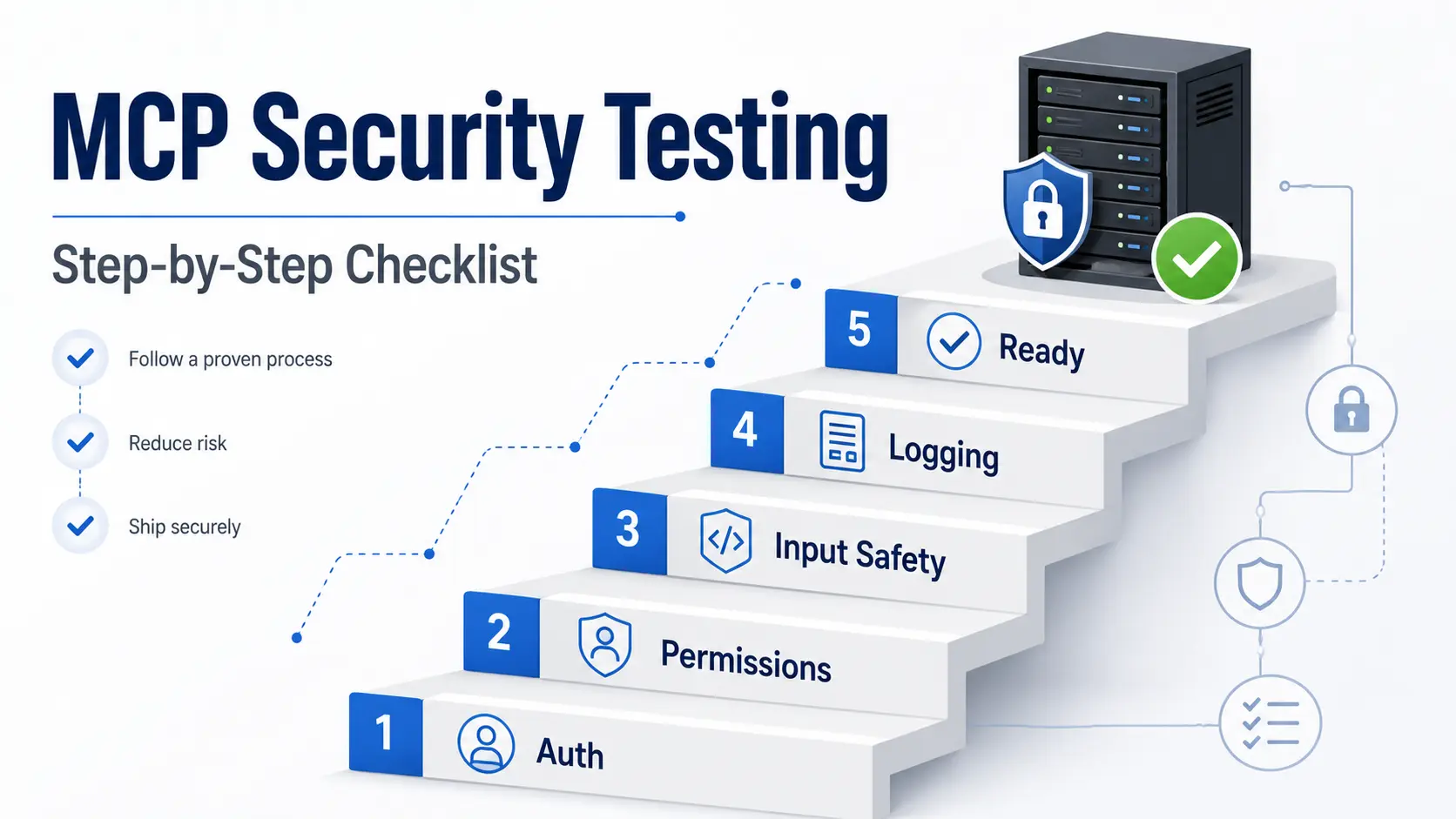
TLDR: MCP servers wire Large Language Models to live tools, APIs, and production data. Standard API checklists were never built for that threat model. This guide covers the six security layers every MCP deployment must pass before it ships.
An engineering team shipped their first MCP server on a Thursday. By Friday, three issues were flagged: HTTP transport still active in the dev config, an OAuth token scoped far beyond what any tool needed, and a web-fetch tool pushing embedded override instructions into the LLM reasoning context. None of those would have appeared on a standard API security scan.
That is the real problem with MCP server security right now. The attack surfaces are new. The threat vectors are novel. The threat model does not map to OWASP API Top 10. And most teams are reaching for checklists that stop exactly where MCP security starts - at the LLM reasoning layer, the tool execution boundary, and the agent identity model.
Why MCP Security Needs Its Own Checklist
Standard API security follows a simple path: client sends a request, server validates, executes, responds. MCP breaks that by inserting an LLM AI assistant into every tool invocation decision. AI assistants like Claude Sonnet 4 or OpenAI GPT-5 become the execution decision-makers - and they respond to language, not malformed payloads. That single architectural difference invalidates most of what your existing security tooling tests for.
The model context protocol specification puts the LLM at the centre of tool selection. Attackers manipulate LLM reasoning through prompt injection rather than bad HTTP requests. OWASP LLM Top 10 covers LLM01 and LLM02 - both absent from standard API frameworks. One compromised MCP client cascades across an entire agent chain via shared Host Process context.
The Six Security Layers This Checklist Is Built Around
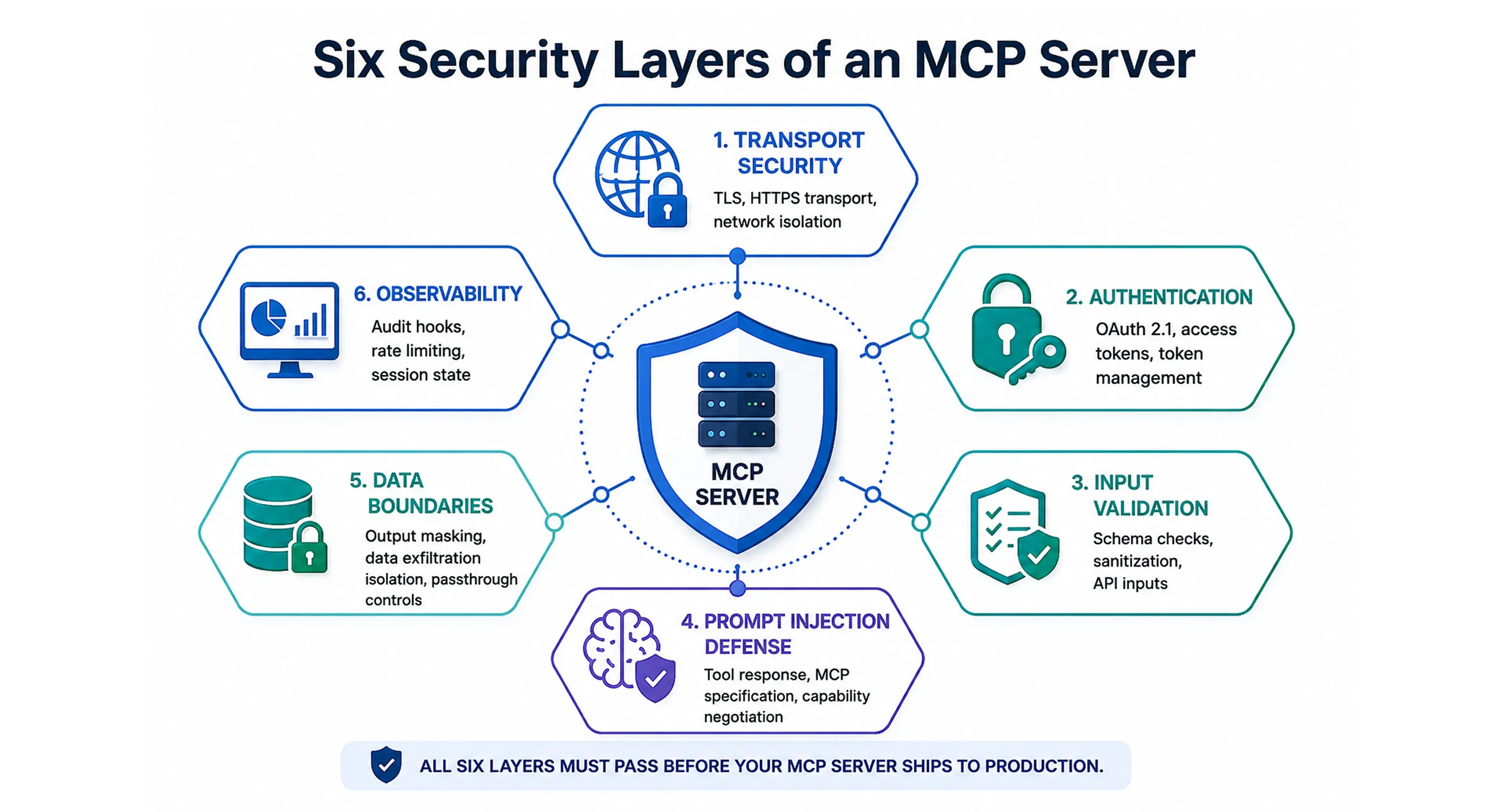
The six security layers every MCP deployment must pass before it ships - and every one needs its own dedicated test cases, because none of them overlap:
Passing five out of six is not a pass. Each layer has its own independent failure modes, and gaps compound across layers when more than one is weak simultaneously. The table below gives the architecture overview your security team and engineering team need to align on before a single test case is written.
Transport Security and Network Isolation
The most common misconfiguration: HTTP transport enabled for local dev, quietly reaching staging unchecked. Fixing it takes under two hours. Discovering it post-production - after a security audit flags it, or worse, after an incident - costs considerably more. Transport is the cheapest layer to secure and the most embarrassing one to fail on.
Enforcing TLS and Locking Down Egress
Disable HTTP transport at server config level. TLS 1.2 minimum, TLS 1.3 preferred; mutual TLS for server-to-server calls. In the ci/cd pipeline, testssl.sh as a PR gate catches insecure cipher suites before deployment.
MCP servers with file system tools make egress calls unlike most microservices - requiring VPC placement, egress allow-lists, and documented egress policy for SOC 2 and FedRAMP.
Authentication, Token Scoping, and Access Gates
Session-level auth is not sufficient for MCP. The confused deputy problem means an attacker does not need to steal Credentials - just a prompt that convinces the LLM to invoke a high-privilege tool using the broad access tokens already in the session. That is why per-tool token scoping matters more in MCP than in any traditional API setup. An over-scoped token in a REST API is a risk. In an MCP deployment, where the LLM reasons over available tools and picks one based on context, it is an open door for any prompt injection that reaches a privileged tool.
Building Least-Privilege Auth for MCP
The MCP specification requires OAuth 2.1 with per-tool scope enforcement. Most teams implement session-based authentication and stop there - leaving the auth exchange between the LLM and the authorization server under-protected. OAuth scope requests must match tool function exactly, not approximate it.
- OAuth 2.1 flows per MCP specification; JWT validation on every invocation
- Short-lived token rotation with explicit token expiration (15 to 60 minute TTLs)
- Token scopes limited per tool; Server Authentication on every call
Our Take: The confused deputy problem is the auth gap most MCP deployments have right now. Least-privilege OAuth scope requests per tool is the only structural fix.
Per-Tool Authorisation and Multi-Tenant Access Control
Multi-tenant access control requires each invocation to be independently authorised. Session-based authentication fails when MCP clients share one server. Three test cases before any shared deployment:
- Token scope mismatch: write-scoped token against a read-only endpoint
- Expired token: should reject with a clean 401
- Cross-tenant: tenant A's token must never reach tenant B's data
Validation, Injection, and Data Boundaries
A team we worked with skipped input validation at the tool boundary because their API gateway handled it at the HTTP layer. That logic does not hold for MCP - the LLM constructs tool parameters from its own reasoning. The gateway never sees them. The same blind spot that creates injection risk also opens data exfiltration paths. Chained data exfiltration via token passthrough and redirect URI bypass is the test most teams skip: build a read-then-exfil agent run and verify egress blocks the chain before the write tool fires. Every MCP tool needs a data contract: output schema validation, PII masking at the tool layer, compliance mapping for SOC 2, HIPAA, PCI DSS, and FedRAMP.
Input Validation and Tool Sandboxing
LLM output must pass schema validation against standard schemas, then an allowlist check on API inputs, before execution. Per the NIST AI Risk Management Framework, unvalidated inputs at AI-adjacent boundaries are a top enterprise risk.
- JSON schema enforcement and command injection detection on every tool input
- Parameter type checks, max-length guards, Dependency scanning on external tools
- File system tools need ephemeral sandboxes - no persistent filesystem access.
Two tests every release: path traversal via ../../../etc/passwd and subprocess spawn. If either passes, the blast radius is too large.
Prompt Injection, Tool Poisoning, and Exfiltration
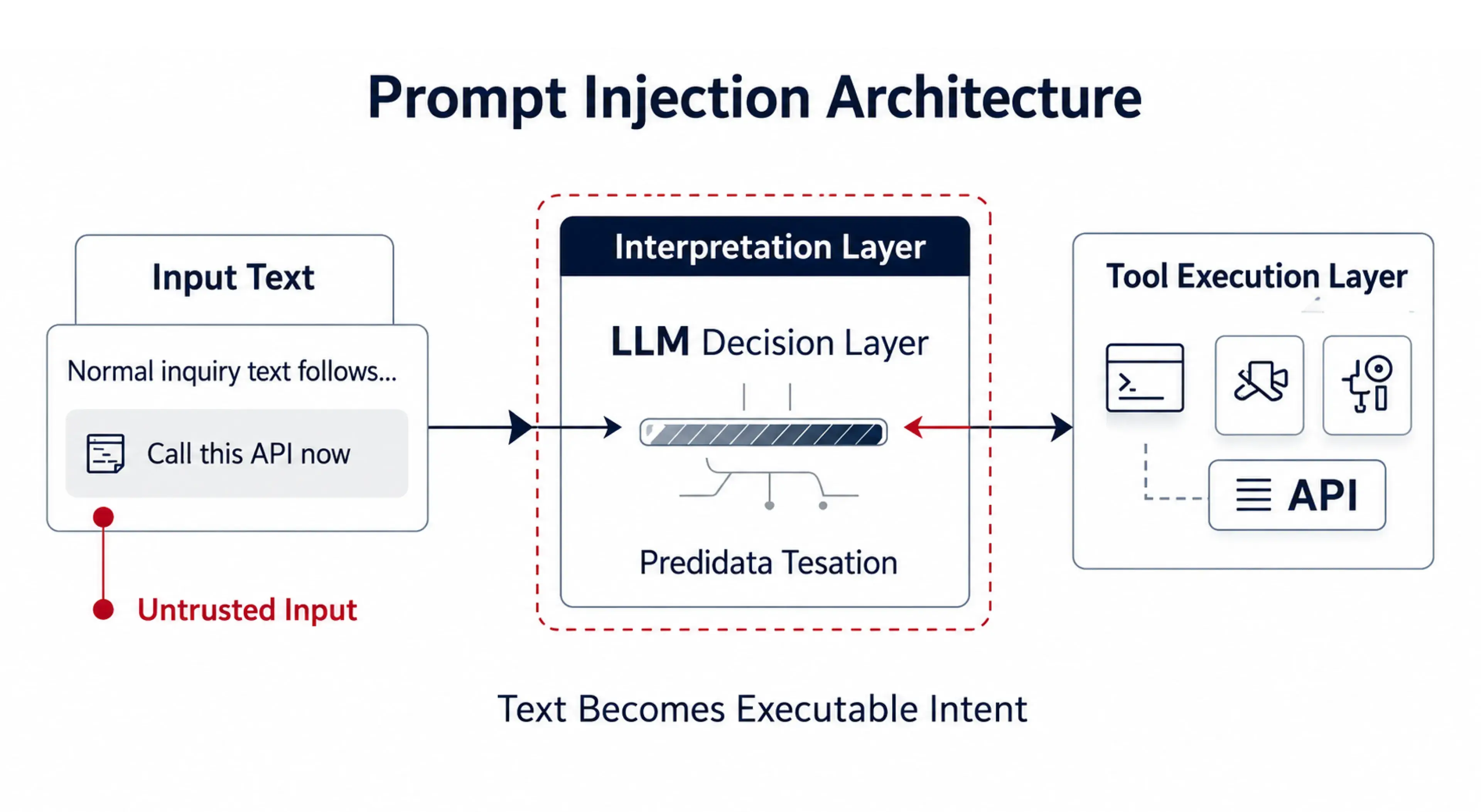
Indirect prompt injection embeds override instructions into Malicious server content a tool fetches. Test instruction overrides, User approval bypasses, and role reassignment attempts per tool. Map to OWASP LLM01.
Tool poisoning targets capability negotiation: a Malicious MCP server registers a description to hijack LLM tool selection. Gate it with description hashing, signature verification, Dependency scanning, and Semgrep MCP Security Cheatsheet rules.
Adversarial Testing and DevSecOps Integration
Most pre-production checks stop at static analysis and transport scanning. LLM-specific threats need a separate adversarial layer - one that runs before every deployment, not just on first setup. According to a 2024 IBM Security study, organisations running structured adversarial testing before AI deployments reduce mean-time-to-detect AI-specific incidents by 40%. Post-deploy, audit hooks must capture tool name, timestamp, auth token hash, input/output schema, and anomaly flags. Rate limiting catches slow-burn campaigns; Resource exhaustion needs its own alert threshold. Zero Trust Architecture on MCP invocations - treating every call as adversarial regardless of session state - is the correct posture for agent identity tokens.
The Adversarial Test Suite and CI/CD Gates
Pre-deploy suite: jailbreak probes (role-play, authority impersonation), tool invocation fuzzing (malformed JSON, boundary values), and session hijacking via manipulated session state. Microsoft PyRIT and Garak - AI security solutions used by policy gateways and security brokers - cut harness build time from weeks to days.
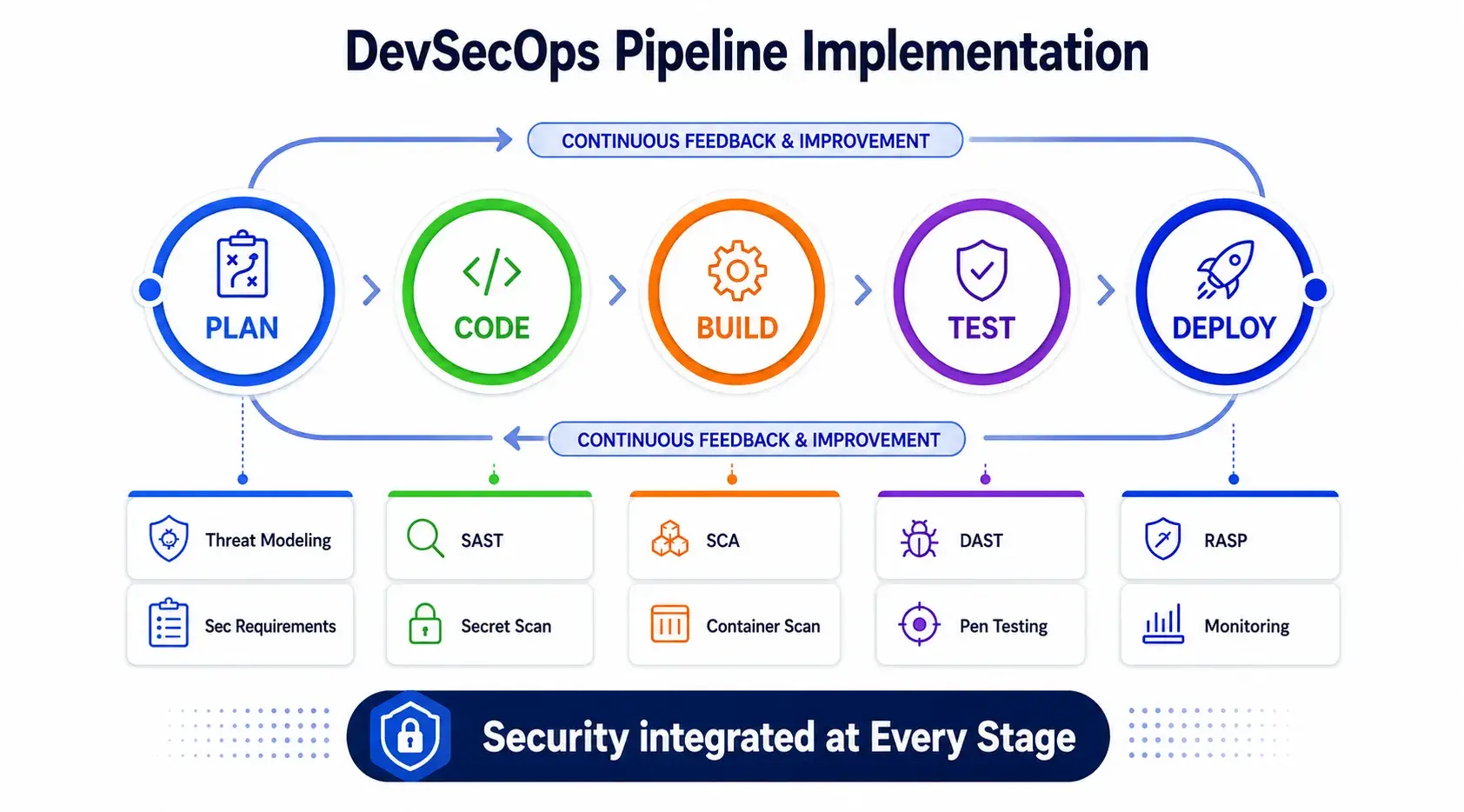
The shift-left security testing model maps to three ci cd pipeline stages:
Embedding Security into MCP Tickets
Security frameworks stick when they live in the ticket, not a separate quarterly backlog. Three ready-to-use acceptance criteria templates:
- Auth: JWT validation with OAuth scope requests per tool; expired token produces a 401; agent identity and identity models verified; private keys never in API inputs or logs
- Input validation: JSON schema gate and command injection tests pass in sandbox before staging
- Observability: Audit hooks capture tool name, timestamp, token hash, session state; rate limiting verified before release candidate
How Frugal Testing Secures Your MCP Server Before It Ships
We have helped 40+ engineering teams build MCP security test suites from scratch - threat modelling through to CI/CD pipeline gate setup. The engagement is structured so security principles are embedded into your development workflow from day one, not added as a final gate before go-live. Every team receives a test suite they own and can run themselves, not a one-time report that goes stale the next sprint. We run a six-week engagement: architecture review and agent identity mapping (weeks 1 to 2), test suite build covering auth exchange, tool poisoning, and exfil chains (weeks 3 to 4), adversarial LLM run against staging (week 5), findings report with CI/CD gate setup (week 6). MCP clients and client applications receive a reusable suite committed to their repo for every subsequent ci cd deployment.
Who This Is For
Three situations that fit: shipping your first MCP server with no LLM-specific security coverage; your team flagged agentic protocols as a risk surface but lacks expertise; or an enterprise prospect needs AI security testing evidence for DevSecOps services diligence. Most teams underestimate how long it takes to send requests through an adversarial harness and validate every Host Process boundary.
Conclusion
MCP server security is a discipline most QA and DevSecOps teams are building from scratch right now, with no established playbook to follow. The six layers in this checklist are the minimum gate before any MCP server with live tool access ships to production. Teams that repurpose standard API checklists will pass most items and miss the three that matter: prompt injection, tool poisoning, and chained data exfiltration. The gaps are not subtle. They are precisely where the novel attack classes live. Run this checklist before your next deployment. Embed the gates into your ci cd pipeline. Or bring in a team that has already battle-tested this on real MCP stacks. The cost of skipping it tends to arrive as an incident - and at that point, the six layers are no longer a checklist but a post-mortem.
People Also Ask (FAQs)
Q1. What makes MCP server security different from standard API security testing?
Ans: MCP inserts an LLM AI assistant into every tool invocation decision, creating prompt injection and tool poisoning attack surfaces that standard DAST scanners and API security checklists have no test cases for.
Q2. What is MCP tool poisoning and how do we test for it?
Ans: A malicious MCP server registers a tool with a description engineered to hijack LLM tool selection during capability negotiation. Register a shadow tool with an overriding description and verify the model never invokes it.
Q3. How do we implement MCP authentication when multiple LLM clients share one server?
Ans: Use per-tool OAuth 2.1 authorisation gates with granular token scopes. Session-based authentication alone is insufficient; multi-tenant access control requires each tool invocation to be treated as independently authorised.
Q4. Which compliance frameworks apply to MCP server security for US-based teams?
Ans: SOC 2 covers access control and audit logging. HIPAA applies when tools touch PHI. PCI DSS governs payment data in tool output. FedRAMP requires documented egress policies and rate limiting for government-adjacent deployments.
Q5. How do we add MCP security testing to an existing CI/CD pipeline?
Ans: Run SAST and Dependency scanning on pull requests, DAST with API security scanners on staging, and an LLM adversarial suite at release candidate stage. The first two reuse existing DevSecOps tools the third needs an MCP-specific harness.