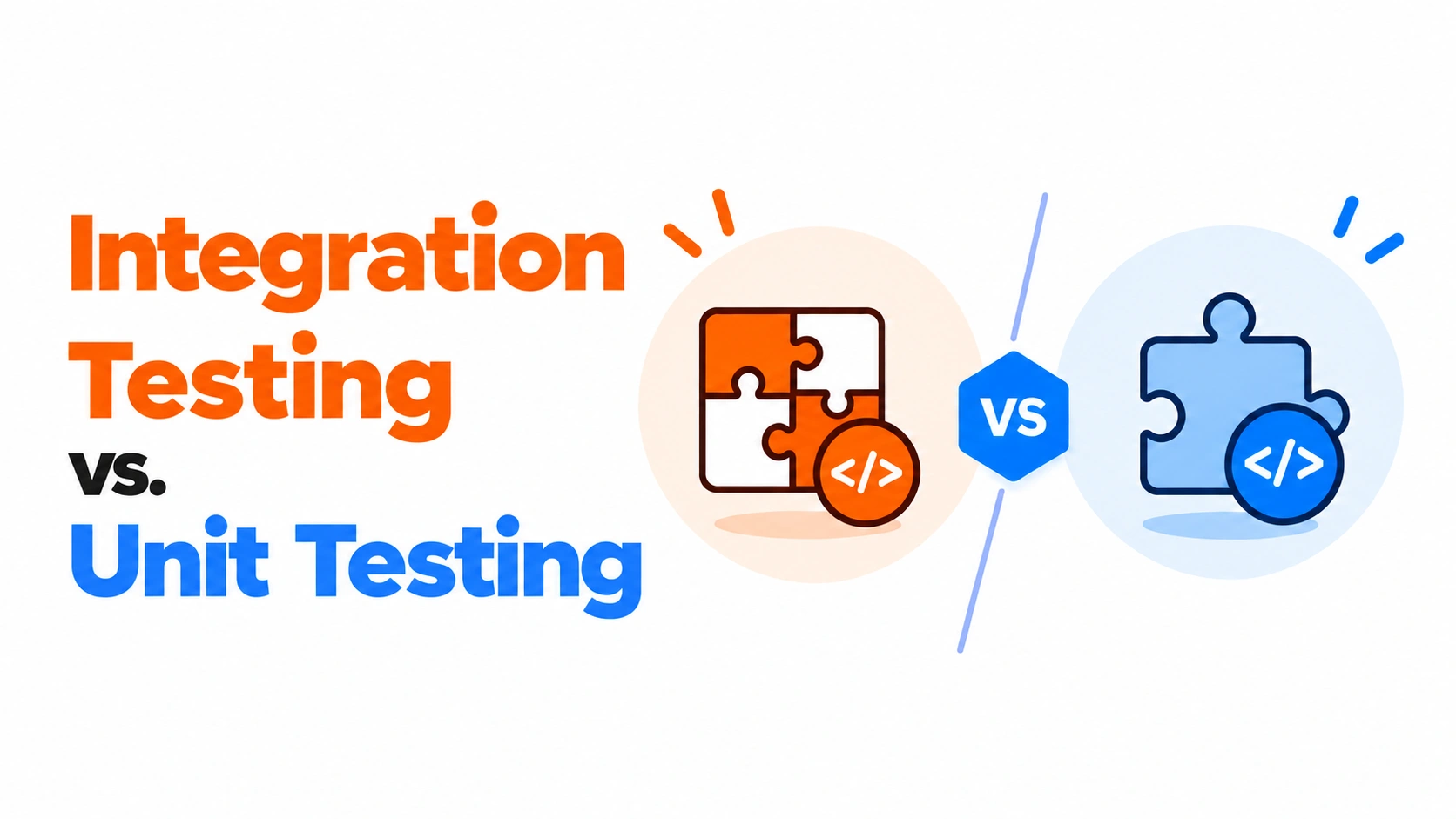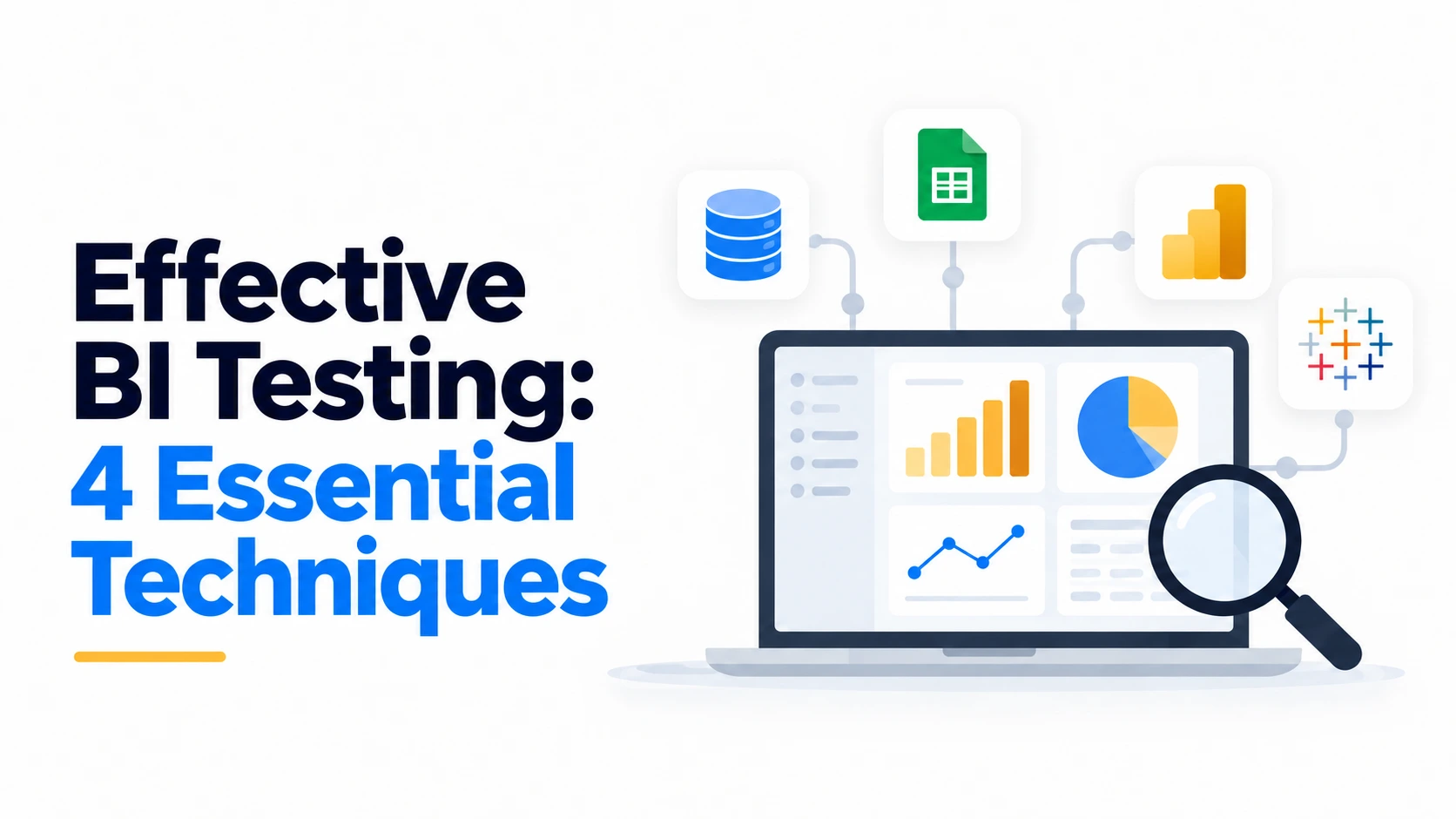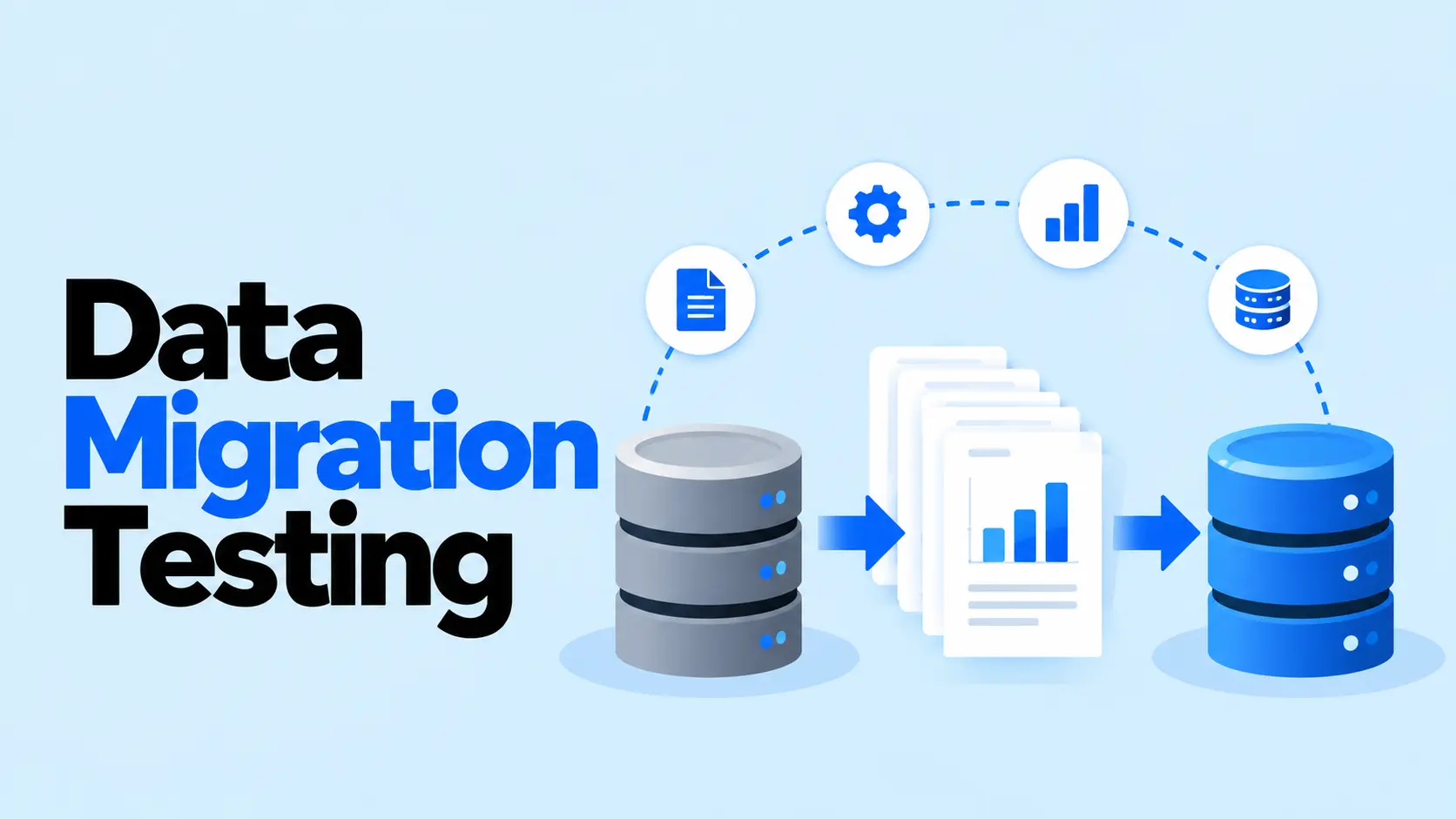


.webp)
Teams that ship weekly aren't smarter. They just stopped treating quality assurance like an afterthought bolted onto the end of a sprint. Everyone else is stuck in the same loop: code finishes Thursday, QA scrambles Friday, and the release slips because a four-hour regression suite just failed on something nobody remembers touching.
That gap between "we test things" and "we have software testing strategies that actually work" is where release velocity quietly dies. This guide is the blueprint: strategy types worth knowing, automation framework decisions that matter, how shift-left and continuous testing convert quality work into shipping speed, and metrics that prove any of it is working, all tied back to real business goals and a better customer experience.
What a Software Testing Strategy Is and Why It's Not a Test Plan
A test strategy is the organization-level approach governing what gets tested, when, by whom, and to what depth. A test plan is smaller and shorter-lived: a project-specific document tied to one release. Teams with a documented QA strategy make release decisions on data, not gut feel, which is the point of these testing strategies.
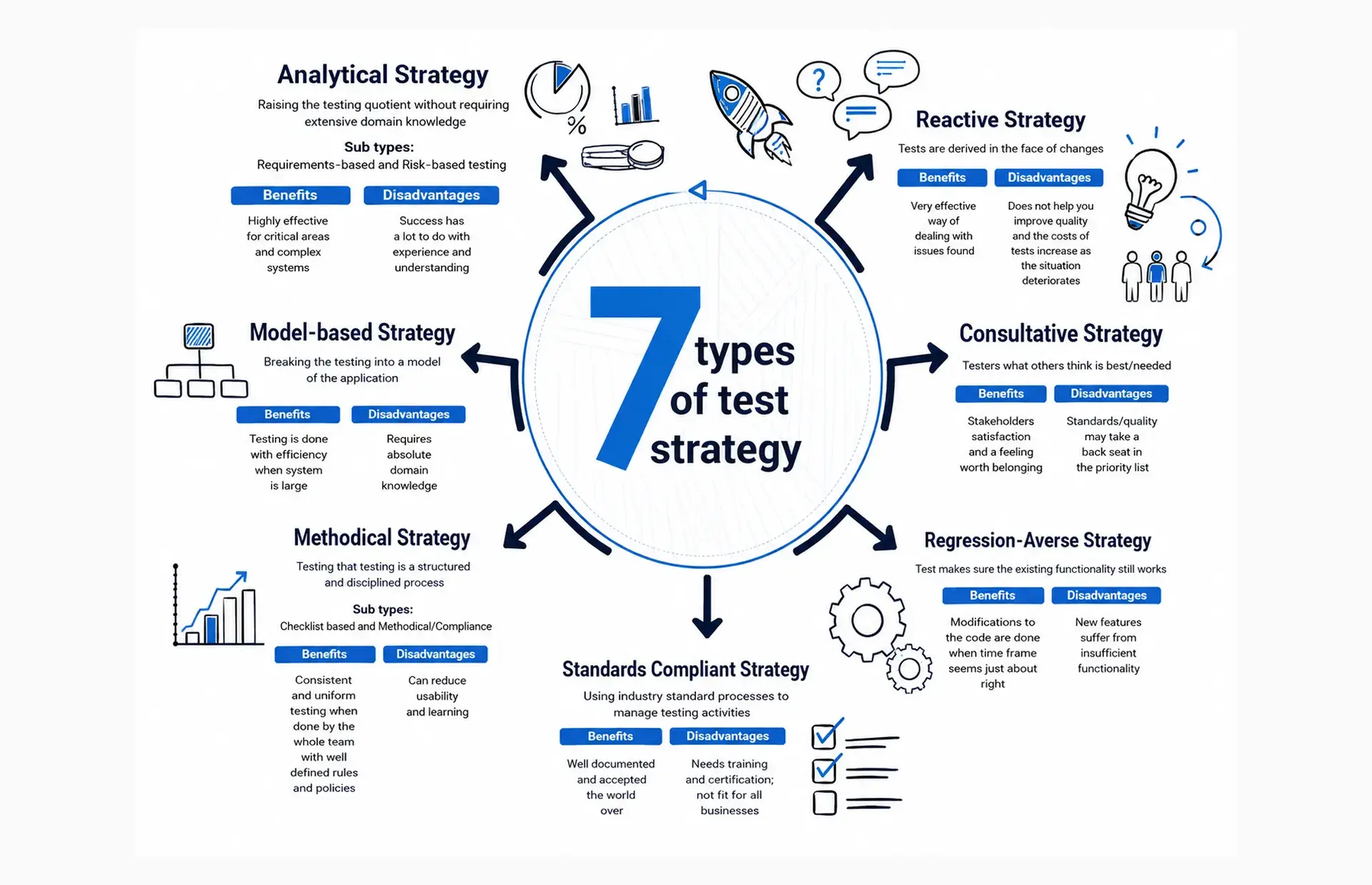
The 7 Types of Test Strategy From Analytical to Regression-Averse
ISTQB recognizes seven types: analytical, model-based, methodical, process-compliant, reactive, consultative, and regression-averse. Fast-release SaaS teams lean hardest on analytical (risk-driven prioritization) and regression-averse (protecting what already works). Test strategy example: analytical for new features, regression-averse discipline for the core platform, reactive coverage for edge-case scenarios nobody predicted. Picking the right blend builds confidence across the team.
Why Release Velocity Stalls Without a Testing Strategy
Unstrategic testing fails slowly: delayed releases, hotfix cycles, and obvious defects reaching production instead of getting caught in application code on a branch. Fixing a defect in production costs roughly 15 times more than catching it at the coding stage, per IBM's Systems Sciences Institute research. Engineers feel this as pipeline time. PMs feel it as slipped dates. Stakeholders feel it as risk exposure and churn.
The Types of Software Testing Every Strategy Must Cover
Types of testing only matter if each one earns its place by the risk it retires. See our software testing basics primer for the full taxonomy.
Functional Testing to Validate What the Software Does
Functional testing scopes user-critical flows: login, payment, core workflows first, using equivalence partitioning and boundary value analysis. Validation of core functionality means confirming behavior against expected outcomes, not just requests and responses returning a 200, and covering realistic scenarios with evidence-backed assertions rather than happy-path checks. Pair it with integration testing so components talk correctly before a release candidate ships, and gate merges on code quality and schema checks so obvious defects and potential issues get caught early. Feature flags let teams ship a release candidate dark and test against real devices in staging before full rollout.
Regression Testing to Protect What Already Works
Risk-based regression selection, running the most critical automated tests first, keeps suites fast and preserves confidence in every release. Visual regression (Percy, Applitools) belongs here for front-end-heavy products. The anti-pattern: a "run everything every time" suite that balloons past four hours. Google's own data found roughly 16% of tests flaked at least once in a 30-day window, a number that compounds quickly once ignored.
Non-Functional Testing for Performance, Security, and Reliability
This is where meaningful coverage gets tested against reality, not assumptions. Performance testing needs real devices and real browsers, not emulators, since journeys across mobile behave differently on physical devices than in a simulator. Monitor Web Vitals continuously, validate across operating systems and real operator networks, and use device fleet control for real mobile network conditions. Mobile Fleet Management: Centralize scheduling across a device fleet; Mobile Network Monitoring surfaces failures tied to specific mobile networks, including USSD and SMS paths emulators miss. Validate transactions across channels, monitor call quality and QoE on IVR systems, and confirm hardware availability across your infrastructure, since timing-sensitive and safety-critical corrections deserve the same behavior checks as anything else. Security aligned to OWASP's Top 10, plus SOC 2, HIPAA, and PCI DSS, makes this a procurement requirement, not a nice-to-have.
Building a Test Automation Framework That Scales With Your Codebase
A test automation framework is shared architecture: runners, reporting, data management, and CI hooks working together to run automated tests consistently. It blends scripting practices, an execution engine, and clear input and output contracts that build confidence, not just green checkmarks. A pile of scripts is not a framework.
.webp)
The Test Automation Pyramid and Where to Invest First
Heavy unit coverage at the base, API and integration testing in the middle, a thin UI layer on top. Inverting that ratio by leaning on UI tests because they demo well is the top cause of slow, flaky pipelines. Watch the flakiness rate; anything past single digits needs attention before it becomes the new normal.
Choosing Software Testing Tools Without Vendor Lock-In
Weigh open-source options: Selenium, Playwright, Cypress, PyTest, JUnit against commercial platforms on cost, available skills, and who maintains them once the original owner leaves. Fewer tools with deeper CI integration and reliable integrations across your stack beats a sprawling toolchain nobody fully understands.
Shift-Left Testing to Catch Defects Before They Cost You
A shift-left strategy moves test design into the earliest SDLC phases, well before deployment: testable acceptance criteria at refinement, unit tests gated at commit, API and contract tests pre-merge. It needs QA embedded in planning with full context, not handed a finished build at sprint end. See our shift-left testing benefits breakdown for the full sequence.
How to Implement a Shift-Left Testing Strategy in Agile Sprints
Sequence: testable acceptance criteria in refinement, TDD and unit gates at commit, API and contract tests pre-merge, exploratory testing in-sprint. These practices become a smooth automation habit once QA sits in planning instead of receiving builds cold.
Shift-Left Testing Benefits Your CFO Can Measure
Catching defects early changes how a team operates. Lower cost per defect, more predictable sprints, fewer hotfix cycles, and more confidence heading into every release it all starts with catching issues before they spread.
- Cost multiplies with delay - A bug caught in development costs far less than one caught in production.
- Predictability comes from fewer surprises - Early testing turns unknown risk into plannable work, keeping sprints on track.
- Speed and stability aren't a tradeoff - Fast releases and high stability coexist only when quality is built in early, not patched in later.
Continuous Testing as a Pipeline Gate, Not a Phase
Continuous testing means tests run automatically at every stage commit, merge, and deploy with quality gates blocking bad builds before they move forward. This embeds QA into DevOps pipelines instead of treating testing as a Friday afterthought.
- Tests run at every commit - Issues surface the moment code changes, not days later.
- Quality gates enforce standards automatically - Bad builds get blocked before they reach the next stage, no manual gatekeeping required.
- Testing becomes continuous, not periodic - QA is woven into the pipeline itself, replacing the old model of one big test pass before release.
Wiring Continuous Testing Into Your CI/CD Pipeline
Our implementing continuous testing guide covers the anatomy. Unit tests on commit through Jenkins, GitHub Actions, or CircleCI; API and integration testing on merge; smoke plus regression on deploy. Provision infrastructure through Puppet or similar config-as-code tools so environments match the deployment target, and feed results into one dashboard. If the merge gate exceeds 15 minutes, developers route around it. Parallelization fixes that.
Continuous Testing Tools Worth Evaluating in 2026
Shortlist by category: CI servers, test orchestration, service virtualization, and observability platforms, two or three named options each, with a US pricing lens. Favor platforms testing across real devices and real browsers on real versions of operating systems without heavy tooling, rolling risky changes behind feature flags. For mobile portfolios, Mobile Fleet Management: Centralize control across your device fleet; for web, Automated Web Testing: Automate scripted flows across browsers.
AI Testing and Where AI Testing Tools Fit in Your Strategy
Artificial Intelligence and Machine Learning accelerate test generation, self-heal brittle locators, and prioritize suites by defect risk. This isn't a revolutionary concept that replaces strategy; it extends one. Automated Web Testing: Automate the repetitive layer while risk criteria stay human-owned. As AI adoption rises, models work best with full context: given a clear input and expected response, they flag issues fast, but evidence-backed validation still keeps confidence high. Our QA automation trends piece tracks adoption, and testing AI systems in CI/CD covers the reverse. Done right, AI testing tools deliver smooth automation, consistent UX, and Cost Optimization and Customer Satisfaction gains without heavy tooling. Coverage decisions and audit trails still stay human-owned.
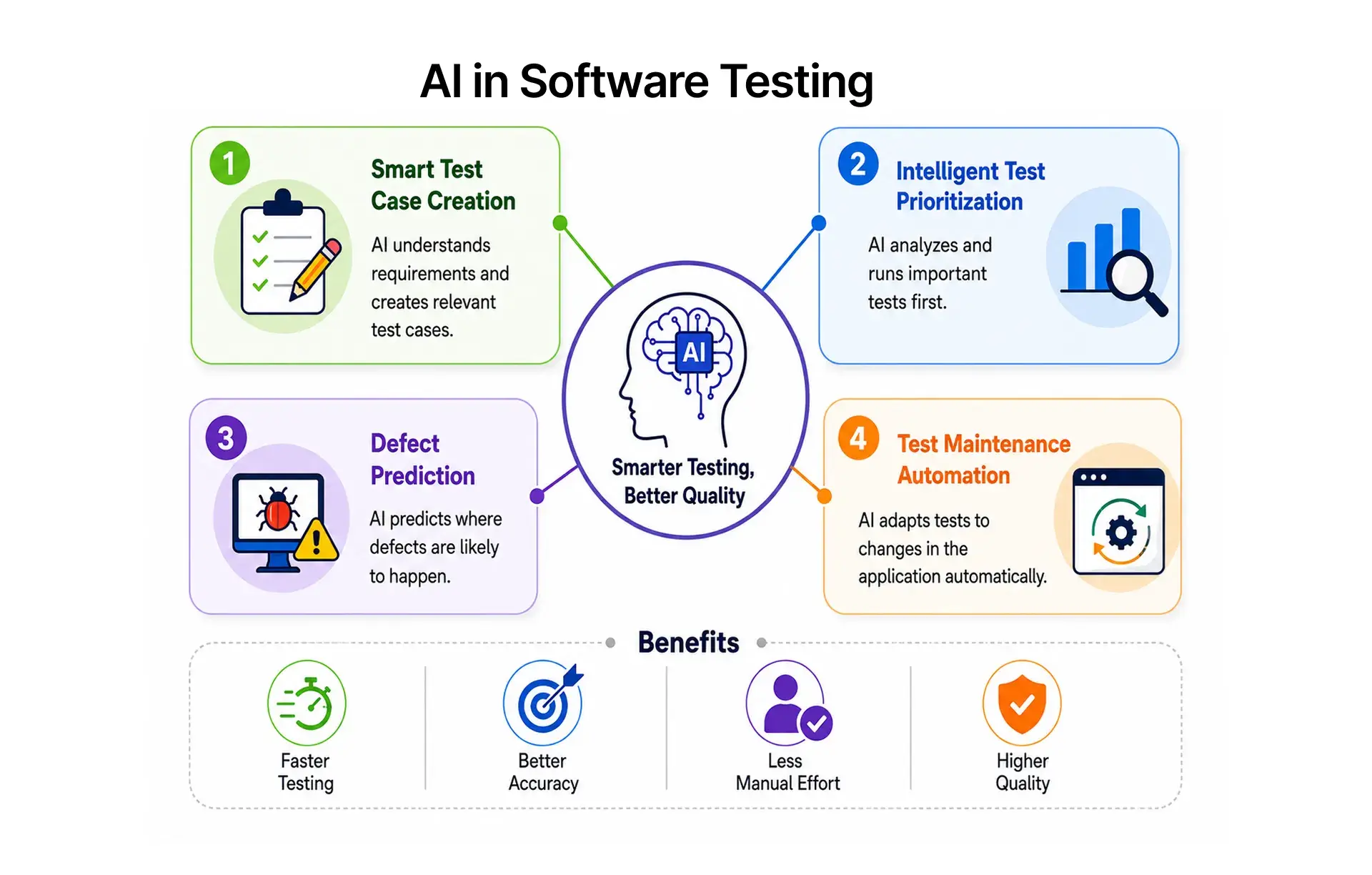
Manual vs Automated vs AI-Assisted Testing and Choosing Your Mix
Automate the repeatable, keep humans on the exploratory scenarios, pilot AI on whatever keeps flaking. That single heuristic settles most tooling debates faster than a feature comparison chart.
How to Measure Whether Your Testing Strategy Is Working
Engineers watch coverage, flakiness rate, and pipeline duration. Managers track escaped defect rate and release frequency. Executives care about cost of quality, uptime, and time to market. Skip vanity metrics like raw test count and "100% coverage." Route failures automatically to email, Slack, or a Jira ticket. One shared dashboard, fed by that Jira ticket creation flow, tells stakeholders whether uptime and reputation are trending the right way.
How Frugal Testing Turns Your Testing Strategy Into Faster Releases
We map this blueprint to specific services: test automation, regression testing, DevOps and continuous testing, and performance testing, tied back to the business outcomes stakeholders care about. Engagements start with a risk-based strategy audit, move into framework build, then CI/CD integration. Clients leave owning a documented strategy, a running suite, and a gated pipeline.
What Our Testing Strategy Engagement Looks Like
Weeks 1 to 2: audit current coverage and pipeline. Weeks 3 to 4: framework and priority suite build, timed against your actual release calendar. Week 5 onward: CI/CD gating and team enablement. At close, the client owns the strategy document, the automation framework, and the pipeline configuration.
Who This Is For
Product teams of 10 to 200 engineers shipping weekly or faster, with partial automation and no documented strategy. Regression suite past four hours? Shipping weekly with no automated release gate? That's the trigger.
Conclusion
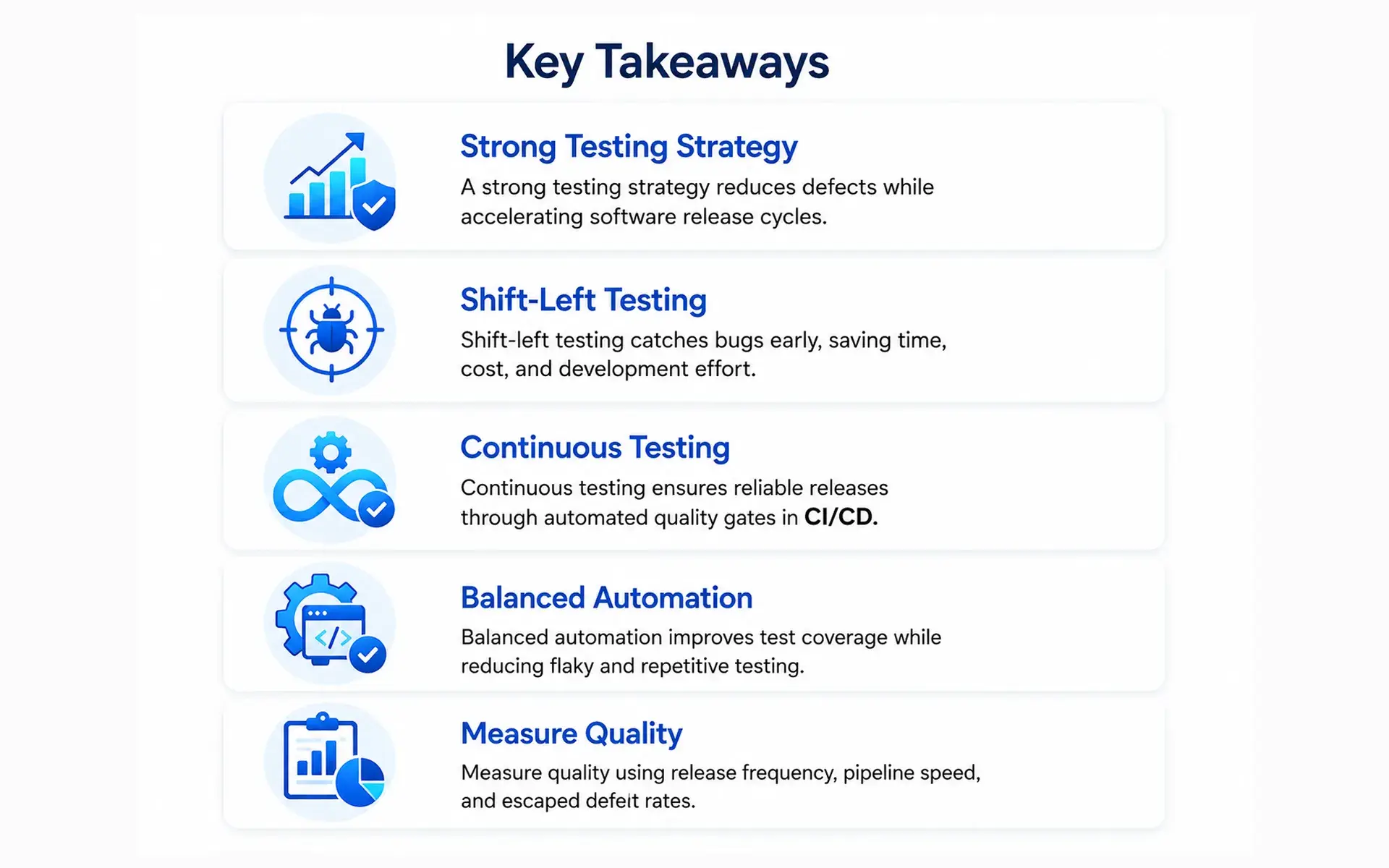
Strategy comes before tooling. Shift-left and continuous testing convert quality work into release speed, and teams measuring escaped defects and pipeline duration instead of raw test counts catch problems before a customer does. Software testing strategies aren't a document you write once and file away. They're the operating system underneath every release decision your team makes, and the confidence your business runs on.
People Also Ask (FAQs)
Q1. What is a software testing strategy?
Ans: An organization-level approach defining test scope, types, tooling, and quality gates across releases. A test plan is project-specific and stays scoped to one release cycle only.
Q2. What are the 7 types of test strategy?
Ans: Analytical, model-based, methodical, process-compliant, reactive, consultative, and regression-averse. Fast-moving SaaS teams typically blend analytical prioritization with regression-averse discipline for stability.
Q3. What is the difference between a test strategy and a test plan?
Ans: A strategy is organization-level and stable across releases. A test plan is project-specific, living, and rewritten for each individual release cycle or sprint.
Q4. Which software testing strategy is best for Agile teams?
Ans: A blended analytical and regression-averse approach, paired with a shift-left strategy and continuous testing gates, fits most Agile release cadences without slowing sprint velocity down.
Q5. How does shift-left testing speed up releases?
Ans: Earlier detection means cheaper, faster fixes and no late-cycle QA crunch. Defects caught during development cost far less to fix than ones reaching production environments later.