

Introduction to API Testing and Modern Development Needs
Overview of API Testing and Its Importance in Modern Software Development
Modern apps rely on APIs for almost everything user logins, payment flows, data fetches, third-party integrations. When an API breaks, it doesn't just affect one feature; it can cascade through an entire product. A failed authentication call, an unexpected response pair from a third-party API, or a silent integration error can all lead to user-facing failures and in serious cases, production crashes. Teams that ship fast without solid API testing often find out about these failures from end users, not their test suites.
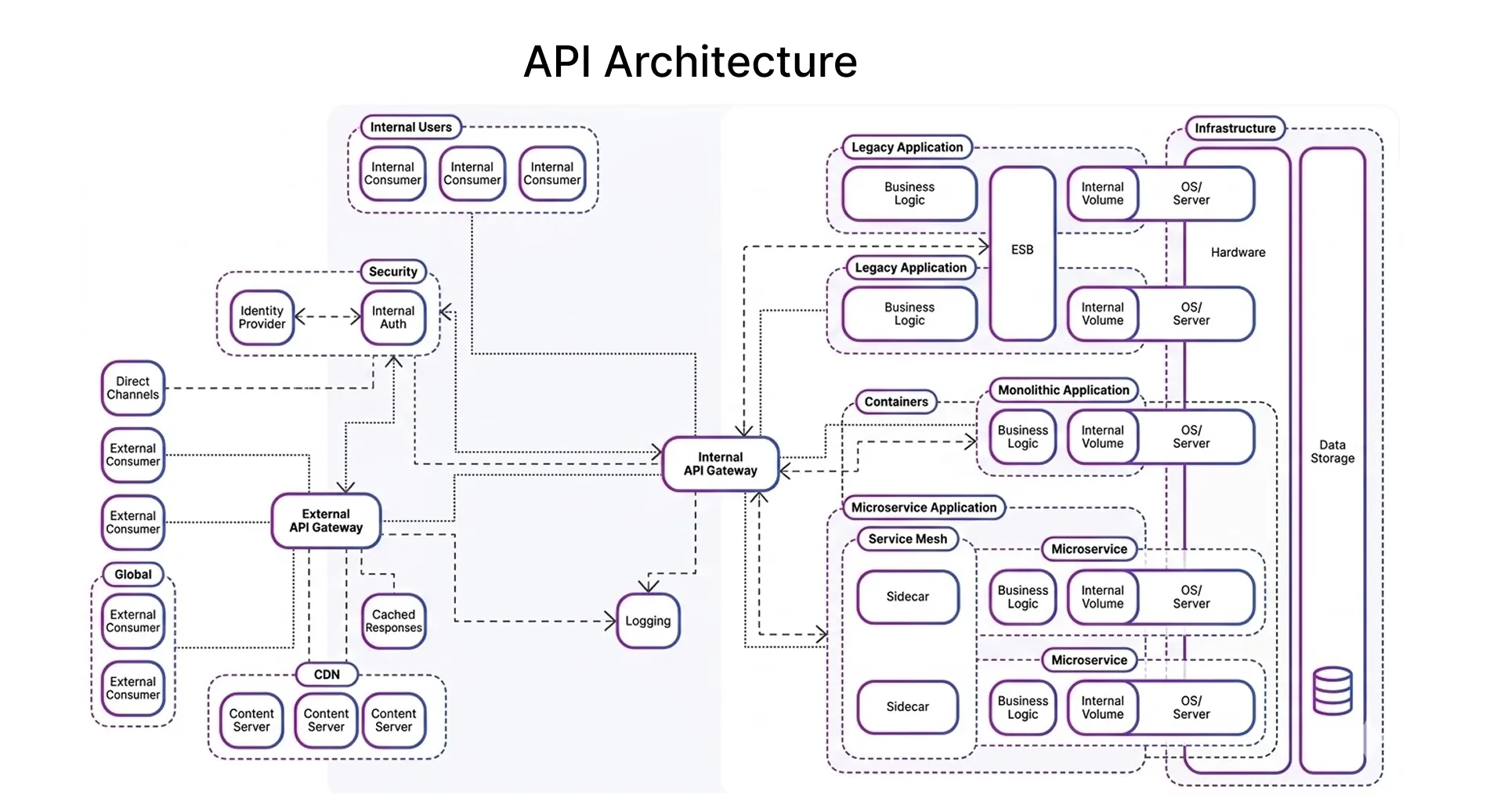
The shift toward microservices architecture has made this problem more acute. Services no longer run as a single monolith they communicate through REST APIs and API gateways, which means a single contract break between two services can silently corrupt data or kill a workflow. According to the 2023 Postman State of the API report, 86% of developers say APIs are critical or very important to their organisation’s software strategy and failures at the API layer are among the leading causes of production incidents.
Introduction to Pact and Postman as Popular API Testing Tools
When developers and QA teams talk about API testing tools, two names consistently come up: Pact and Postman. But they solve fundamentally different problems. Postman started as a simple API client a way to fire off HTTP requests and inspect responses and has evolved into a full API platform covering API development, documentation, and collaboration. Pact, by contrast, was built from the ground up for contract testing in microservices environments, where service-to-service compatibility matters more than UI-level validation.
What your system needs determines which tool belongs where. Postman excels at exploratory testing, debugging API calls, and sharing test collections across teams. Pact excels at guaranteeing that API consumers and API providers stay compatible as code evolves especially inside CI/CD pipelines.
Objective of Comparing Features, Usability, and Effectiveness
Many engineering teams default to Postman because it's familiar, then later realise they have no strategy for catching contract breaks between services. Others adopt Pact without fully understanding where Postman still does a better job. The result is duplicated effort, untested edge cases, and blind spots in the testing pipeline. This guide compares both tools on approach, setup, real-world use cases, and integration so you can build an API testing strategy that actually fits your system, whether you're running a small startup API or managing dozens of microservices across distributed teams.
Understanding API Testing and Its Core Concepts
API Testing Role in Software Quality Assurance and Modern Architectures
API testing goes deeper than checking whether a button works. It validates the communication layer whether services send correct data, handle auth properly, and respond consistently under different conditions. In a microservices architecture, multiple services are constantly calling each other through REST APIs and API gateways. A bug at this layer is particularly dangerous because it can fail silently: Service A sends a request, Service B processes it incorrectly, and no error surfaces until a user hits a broken workflow three steps downstream.
Good API testing checks request and response pairs, validates authentication mechanisms like bearer tokens, and confirms that API consumers get what they expect from API providers. It's the safety net between "it works in dev" and "it works in production."
Common Types of Testing: Unit, Integration, and Functional Testing
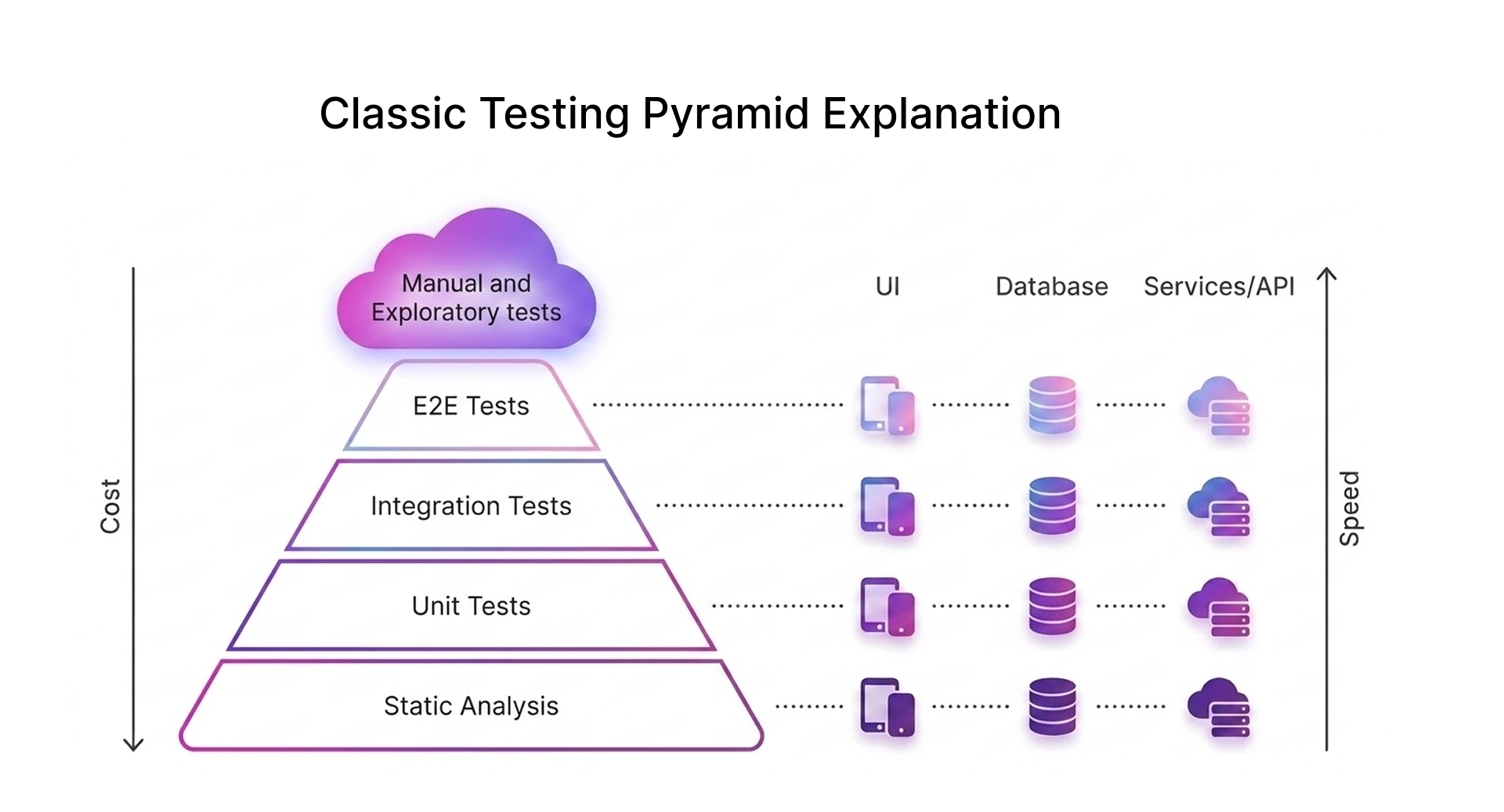
API testing spans several types of software testing, and each layer catches a different class of bug. Unit testing checks small components in isolation a single function or module. Integration testing validates that services work correctly when connected, which is where API integration failures usually surface. Functional testing confirms that APIs return the right data for the right business scenarios. End-to-end testing traces complete user workflows across multiple services.
Performance testing and load testing reveal how APIs behave under stress critical for any service that handles variable traffic. Security testing identifies vulnerabilities like exposed endpoints, weak authentication, or improperly validated inputs. Most teams start with functional testing and add contract and security testing as their system grows the sequencing matters less than actually having coverage at each layer.
Importance of API Testing Tools in Automation and Efficient Workflows
Manual API testing works for small projects and early-stage validation, but it doesn’t scale. As teams ship faster and CI/CD pipelines become the norm, automation is what keeps quality consistent. Every code push triggers hundreds of API calls automatically regressions surface in the build, not in production. Tools like Postman (via Newman) and Pact (via its broker and test runners) plug directly into CI/CD workflows, so tests run on every commit rather than as a pre-release scramble.
Overview of Pact for Contract Testing in Microservices
What Pact Is and How Consumer-Driven Contract Testing Works
Pact is an open-source framework built specifically for consumer-driven contract testing. The idea is straightforward: instead of testing service integrations after the fact, you define the expected interactions upfront. The consumer (the service making the API call) writes tests that describe exactly what it expects from the provider (the service responding). Pact captures those expectations as contract files.
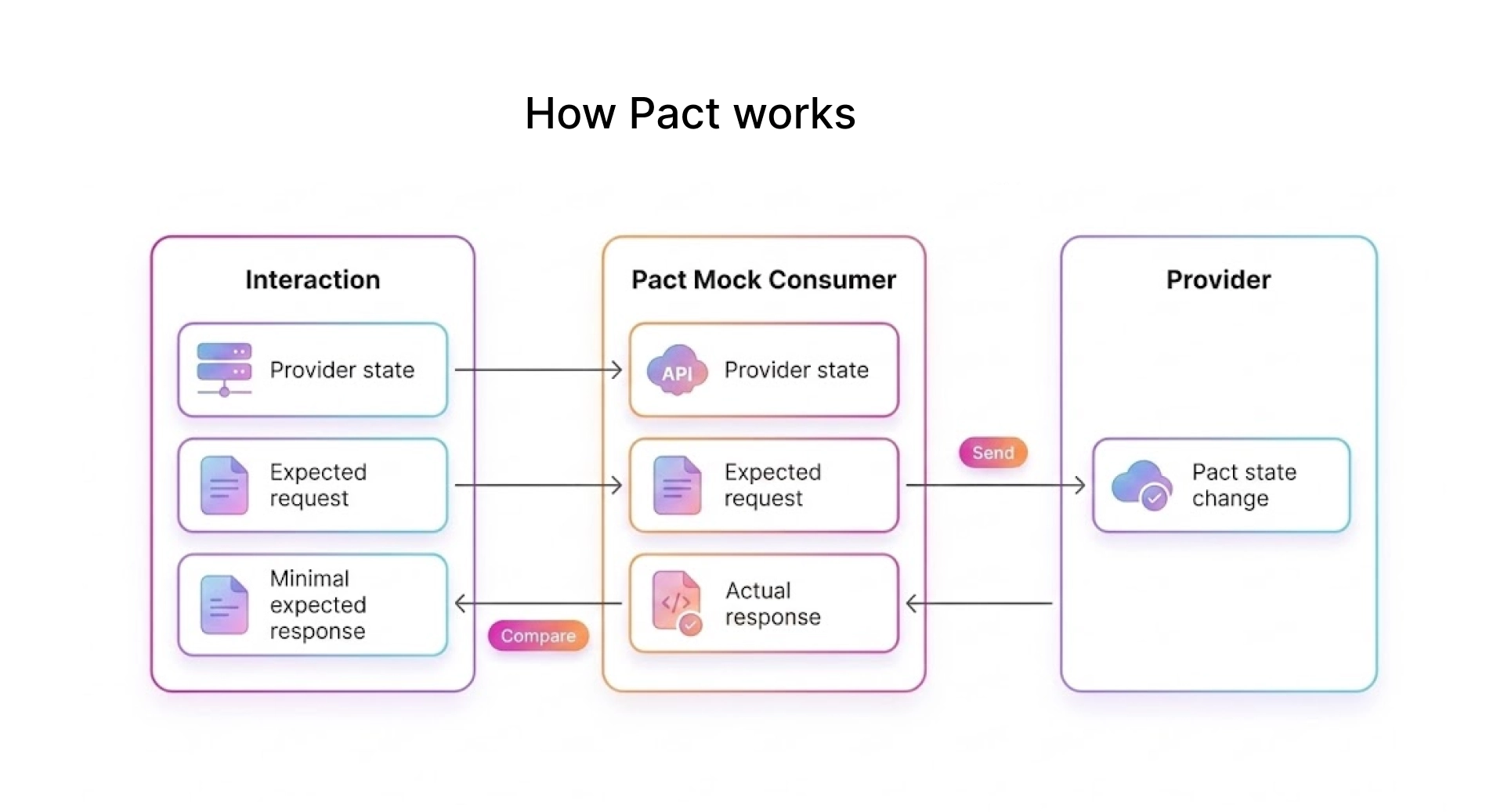
When the provider runs its tests, it verifies against those contract files not against a live version of the consumer. If the provider's response doesn't match what the consumer expects, the test fails before deployment. This catches breaking changes early, when they're cheap to fix, rather than during integration testing or after a production crash.
Role of Pact Broker in Managing Contracts and Enabling CI/CD Workflows
As systems grow to dozens of services, managing contract files manually becomes unworkable. The Pact Broker solves this by acting as a centralised store for all consumer contracts and verification results. Every time a consumer or provider runs tests, results are published to the broker. Teams whether co-located or distributed across India, the US, or Europe can query the broker to check whether it's safe to deploy a specific service version.
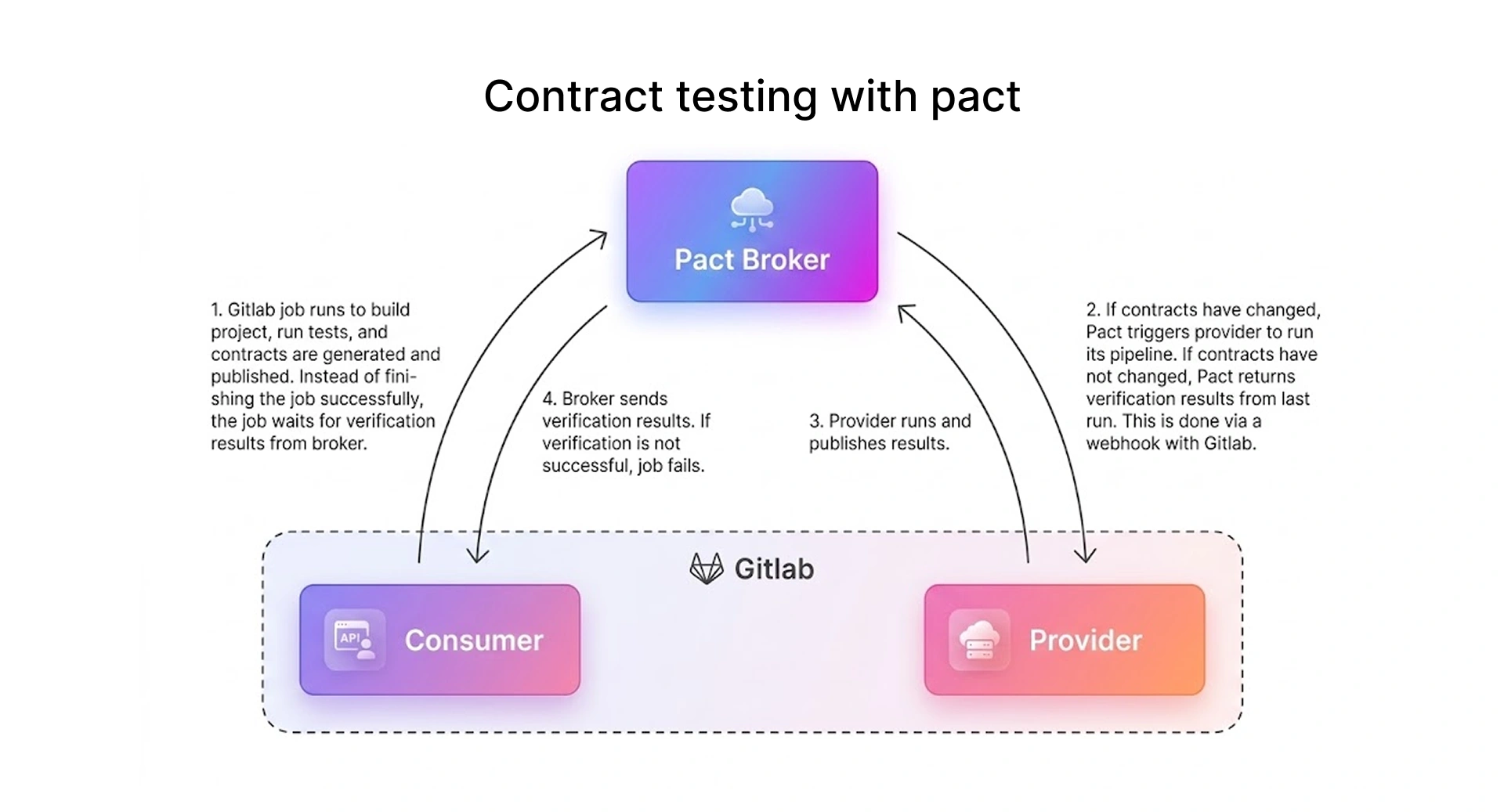
This "can I deploy?" capability is one of Pact's most practical advantages for CI/CD pipelines. Rather than guessing whether a change will break a downstream service, the broker gives a definitive answer based on actual verified contracts. It turns contract validation from a manual review process into an automated deployment gate.
Key Features and Benefits of Pact in Ensuring API Compatibility Across Services
Pact supports multiple languages, including Java, JavaScript, Python, Ruby, and Go making it practical for polyglot microservices environments. It supports both standard contract testing and bi-directional contract testing, where providers publish an OpenAPI Specification and Pact verifies consumer contracts against it without requiring direct provider tests. For teams already invested in Open API specification or API Blueprint, this significantly reduces the overhead of adoption.
The biggest practical benefit is preventing the kind of subtle API breaks that cause production crashes a provider changes a field name, a response structure shifts, or a new required parameter appears. Without Pact, these changes can go undetected until a dependent service fails in production. With Pact, they're caught the moment the provider's verification step runs.
Overview of Postman as a Comprehensive API Testing Platform
What Postman Is and Its Evolution from API Client to Full Platform
Postman started as a Chrome extension in 2012 a quick way for developers to send HTTP requests and inspect responses without writing code. Over the past decade, it has grown into a full API platform used across the entire API lifecycle: API design, API development, testing, documentation, and team collaboration. Today, it's one of the most widely used API tools in the industry, with both a downloadable desktop client and a Postman online workspace.
It supports REST API, RESTful API, SOAP, GraphQL, and WebSocket testing. Whether you're working with a simple public REST API or a complex microservices system with multiple authentication flows, Postman covers the basics without requiring any code which is why it's popular with both developers and QA engineers.
Key Features Including Collections, Automation, Collaboration, and Authentication Support
Postman organises API calls into collections shareable groups of requests that can be run in sequence, used as documentation, or exported as test suites. Collections can include pre-request scripts, test scripts using JavaScript assertions, and environment variables that make it easy to switch between dev, staging, and production endpoints.
For automation, Postman uses Newman its CLI runner to execute collections inside CI/CD pipelines. Authentication support covers bearer tokens, OAuth 2.0, API keys, Basic Auth, and more, which makes it practical for testing secured endpoints without manual setup. Teams can collaborate in real time on shared workspaces, comment on requests, and sync changes across members. Mock servers let you simulate API responses before the actual provider is built, which is useful during API-first design phases.
Pact vs Postman: Key Differences in API Testing Approach
Contract Testing vs Functional API Testing Comparison
The core distinction between Pact and Postman comes down to what they're testing and when. Postman tests whether an API works correctly does it return the right status code, the right data structure, the right response for a given input? Pact tests whether two services have agreed on how they'll communicate and whether that agreement is still valid after code changes.
Postman catches bugs in individual endpoints. Pact catches the class of bugs that happens when one team updates their service without realising another team's service depends on the old behaviour. Both are real problems. The comparison table below breaks down the key differences:
Ease of Use, Setup Process, and Learning Curve
Postman wins on initial accessibility. You can download it, create a request, and run your first test within minutes. The visual interface makes it approachable for product testers, non-developers, and QA engineers who don't want to write code. Test scripts use JavaScript, which most developers already know.
Pact has a steeper learning curve. Setting it up requires understanding contract testing concepts, configuring test runners, and integrating the Pact Broker into your CI/CD pipeline. For teams new to consumer-driven contract testing, the initial investment is real. That said, once it's running, it largely operates automatically the overhead sits at setup, not day-to-day use.
Performance, Scalability, and Integration Capabilities
Both tools integrate with CI/CD pipelines, but they serve different roles within those pipelines. Postman, via Newman, runs functional test suites against live API endpoints useful for smoke testing after deployments. Pact runs contract verification as part of the build process, catching incompatibilities before services are ever deployed together. For large microservices architectures with dozens of interdependent services, Pact scales more naturally because it doesn't require running every service simultaneously to validate integrations.
Choosing Between Pact and Postman Based on Use Cases
When to Use Pact in Microservices and CI/CD Pipelines
Pact is the right choice when your architecture has multiple services that communicate via REST APIs and you need confidence that they'll work together after code changes. A practical example: a payments team and an orders team both maintain separate services. The orders service calls the payments API to check transaction status. If the payments team changes their response schema even slightly the orders service can break silently. Pact catches that break the moment the payments team runs their provider verification, before anything ships.
We’ve seen this exact scenario at a logistics client a shipping service silently broke an orders integration for three days because neither team knew the other had changed their response schema. By the time it surfaced, the debugging cost far outweighed what a Pact setup would have taken. Teams managing third-party APIs also benefit from Pact. You can define consumer contracts that describe how your system expects to interact with an external API, then test against that contract even when the external provider isn’t available. This reduces the risk of unexpected failures when the third-party service makes undocumented changes.
When to Use Postman for Exploratory Testing and Collaboration
Postman is the better tool for debugging individual API endpoints, validating new features during development, and sharing API documentation with other teams. If a developer ships a new endpoint and the QA team needs to verify it works checking response bodies, status codes, authentication flows, and edge cases Postman is faster and easier than any code-based alternative.
It's also the standard choice for teams onboarding to a new API or working with external APIs they don't control. When a backend team documents their endpoints in Postman collections and shares them with frontend developers, it removes a significant source of miscommunication. For teams where not everyone is comfortable writing test code, Postman's visual interface lowers the barrier to participation.
Final Verdict: Choosing the Right API Testing Tool for Your Workflow
Key Takeaways from the Pact vs Postman Comparison
Pact and Postman aren’t competing for the same job. Pact is infrastructure for trust between teams it ensures services stay compatible as they evolve independently. Postman is the working environment where APIs get built, debugged, and validated day to day. The teams we work with at Frugal Testing typically run Postman throughout development and layer Pact in once a second service takes a dependency on the first. That sequencing keeps the setup cost low and the coverage meaningful from the start.
Pact belongs in CI/CD at the contract verification stage run it before services are ever deployed together. Postman belongs at the endpoint level, for functional validation, debugging, and post-deploy smoke tests. Used together they cover both layers. Add performance testing and security testing on top and you have a complete strategy.
How to Choose Based on Project Size, Architecture, and Team Needs
For small projects or single-service APIs, Postman is sufficient. You don't need the overhead of contract management when there's only one service involved. As your system grows and services start calling each other, introduce Pact incrementally starting with your most critical service interactions. For large distributed systems with multiple teams working independently, Pact becomes essential: it's the only reliable way to prevent teams from accidentally breaking each other's services without knowing it.
Team composition matters too. If your team includes non-developers who need to participate in testing, Postman's low barrier to entry is an advantage. If your team is entirely backend-focused and comfortable with code, Pact's code-based approach fits naturally into existing workflows.
Practical Next Steps: Implementing the Right API Testing Strategy
If you're starting from scratch, map your riskiest service dependency first the integration that, if it broke silently, would cost you the most. That's where Pact pays off immediately. For everything else, Postman collections give you fast, shareable coverage without heavy setup. Once both are running in your CI pipeline, add security and load testing to the endpoints that handle the most traffic or the most sensitive data. That order of priority is what we recommend to most engineering teams, regardless of stack size.
Frugal Testing helps engineering teams build practical API testing strategies from setting up Postman collections to implementing full contract testing with Pact.
People Also Ask (FAQs)
Q1.Can Pact replace Postman for all API testing needs?
Ans: No. Pact handles contract validation between services it confirms that API consumers and providers have a compatible agreement. Postman handles functional API testing, debugging API calls, and exploratory testing. They address different layers of the same problem, and most mature teams use both.
Q2.How does contract testing improve reliability in microservices architectures?
Ans: Consumer-driven contract testing with Pact ensures that any change to an API provider is validated against all dependent consumer contracts before deployment. If a provider changes a response structure and a consumer hasn't updated, the Pact verification step fails stopping the breaking change before it reaches production. This is particularly valuable in large microservices architectures where manual integration testing is impractical.
Q3.Is Postman suitable for automated testing in CI/CD pipelines?
Ans: Yes. Postman integrates with CI/CD pipelines through Newman, its CLI test runner. Collections run automatically on every code push, validating that REST APIs return the correct responses after each change. This makes Postman useful for continuous testing, though it tests live endpoints rather than service contracts.
Q4.What are the limitations of Postman for large-scale microservices testing?
Ans: Postman doesn't have native support for consumer-driven contract testing. In distributed systems where dozens of services call each other, Postman alone can't guarantee that API providers won't introduce breaking changes that affect downstream consumers. Without Pact (or a similar contract testing tool), teams have to rely on manual coordination or expensive end-to-end test suites to catch integration failures.
Q5.Which tool is better for developers new to API testing?
Ans: Postman is the better starting point for beginners. Its visual interface makes it easy to understand REST API concepts, construct requests, and inspect responses including authentication mechanisms like bearer tokens without writing code. Once a developer understands how APIs work, Pact's code-based approach to contract validation becomes much more approachable.

.webp)