

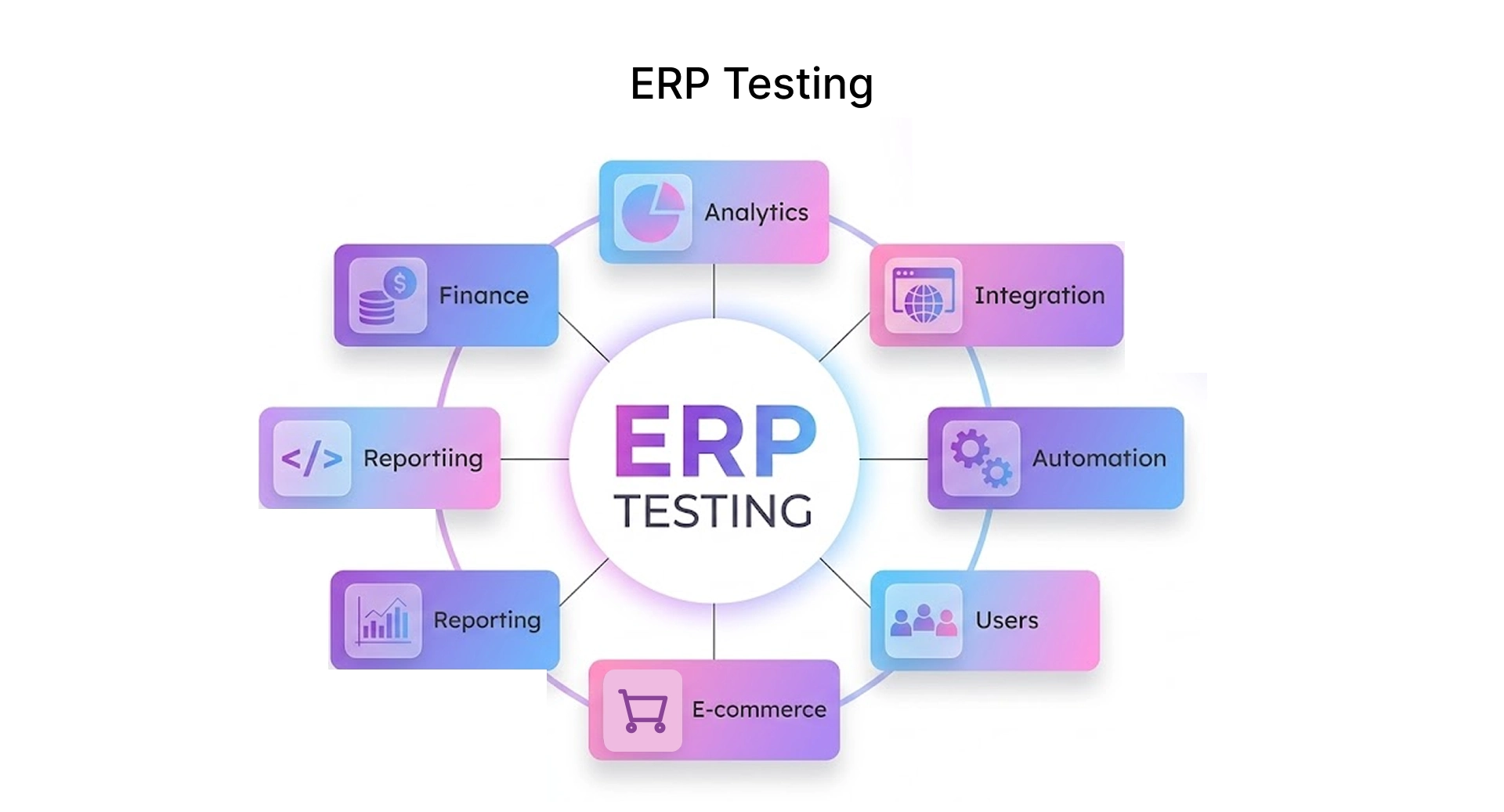
ERP systems sit at the centre of modern digital transformation. They connect finance, operations, supply chain, procurement, and customer workflows into one platform.
When ERP testing is rushed or underfunded, failures spread quickly: delayed shipments, reporting errors, broken integrations, and poor user adoption.
At Frugal Testing, we see the same three gaps in the majority of ERP engagements we review: data migration validation, third-party integration coverage, and compressed UAT windows. This guide explains why ERP testing matters, what to test, and how to reduce go-live risk.
ERP Testing: The Foundation for Enterprise Systems
What Is ERP Testing?
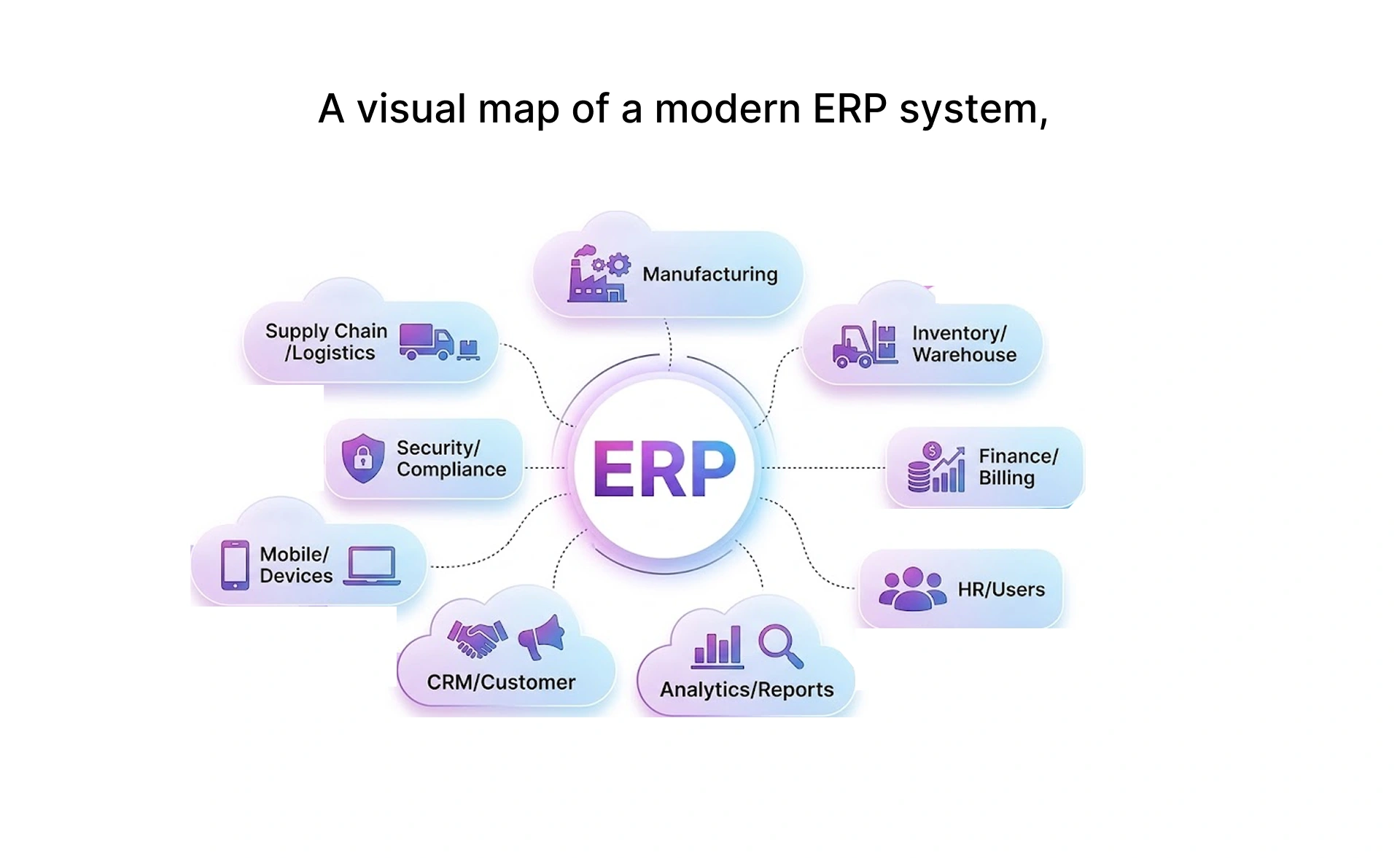
ERP testing is the structured process of verifying that an Enterprise Resource Planning system functions correctly, integrates properly, and meets business requirements before go-live. It spans modules such as inventory management, customer relationship management, supply chain management, and financial reporting, ensuring that each component works both independently and as part of the wider system.
Think of it like a parallel run in finance old and new systems operate together until both produce matching outputs before cutover. Each module and integration must be validated before the system goes live. In the same way, no ERP module should go live without being tested.
ERP Testing in Enterprise Environments
ERP systems affect nearly every operational layer of an enterprise. Any misconfiguration in SAP S/4HANA or Microsoft Dynamics 365 can lead to payroll errors, inventory discrepancies, or breaches of compliance. Testing helps identify these failures before they affect the production environment.
Important reasons why ERP testing is a must-have:
- Protects business continuity by catching integration failures early.
- Ensures data integrity during migration from legacy systems.
- Reduces financial risk by identifying defects before go-live.
- Supports regulatory compliance through security and controls validation.
- Builds user confidence through thorough User Acceptance Testing (UAT).
ERP projects often exceed budgets and timelines when testing is treated as an afterthought. This risk can be controlled by making testing a core stage of the implementation lifecycle.
Essential Types of ERP Testing
ERP systems require a multilayered testing approach. No single kind of test exists that can adequately cover all the aspects of an enterprise deployment.
- Functional Testing verifies individual business operations such as order-to-cash and procure-to-pay.
- Integration Testing verifies data flow between the ERP platform and third-party systems.
- Performance Testing evaluates system behaviour under load, especially during peak business periods.
- Security Testing identifies weaknesses in access controls, data protection, and system permissions.
- Regression Testing ensures that new configuration changes or custom developments do not break existing functionality.
- User Acceptance Testing (UAT) confirms that end users can complete real business tasks successfully.
All types have different purposes. Any missing one of them creates a blind spot that may manifest itself after go-live as an operational crisis.
ERP Implementation Process and Execution
ERP Testing Lifecycle: Planning to Validation
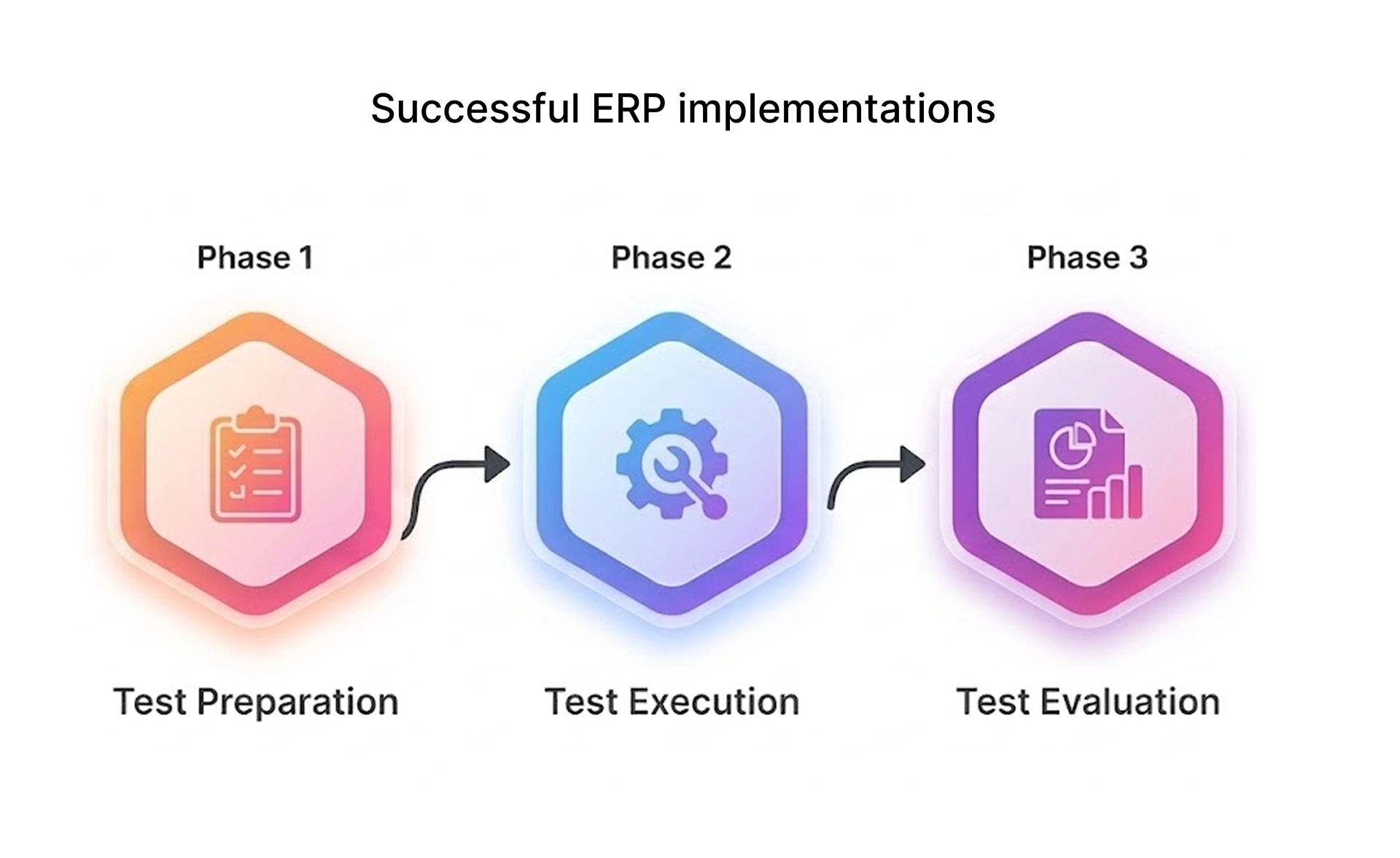
The ERP testing lifecycle typically follows three stages: Planning, Execution and Validation. Each phase has defined entry and exit criteria, otherwise known as sign-off points, and teams should not move to the next phase until quality standards are met.
The phases can be broken down as follows:
- Planning defines the test scope, builds test cases, sets up the test environment, and aligns testing with business requirements.
- Execution run functional, integration, performance, and regression tests; log defects; and track resolution.
- Validation: conduct UAT, complete performance benchmarking, perform fit-gap analysis, and obtain stakeholder sign-off.
At Frugal Testing, teams that document this lifecycle explicitly and follow an established test management process consistently report smoother go-live outcomes and 30–40% fewer post-go-live defect reports, based on Frugal Testing’s ERP engagement data across mid-sized implementations. Structure is not bureaucracy it is protection.
Common ERP Implementation Challenges
ERP implementations are inherently complex. They touch numerous stakeholders, migration of legacy systems, middleware, and cloud infrastructure settings, all of which introduce areas of failure that are only uncovered through stringent testing.
The most widespread issues are:
- Data migration errors caused by incompatible formats between legacy systems and cloud ERP platforms.
- Integration failures between ERP modules and third-party tools such as barcode scanners or analytics platforms.
- Environment mismatches where the test environment does not accurately mirror production.
- Scope creep caused by unplanned custom developments or mid-project functional changes.
- Change impact analysis gaps that miss how one configuration change affects downstream processes.
Unless there is a rigorous testing procedure, these problems can arise at the worst moment when the business is relying on the system to be operational.
Business Risks of Poor ERP Testing
Poor ERP testing is not just a technical issue it is a business risk. Organisations that underinvest in testing increase risk across operations, finance, and customer experience.
- The most immediate business risks usually include:
- Revenue loss from delayed shipments caused by broken supply chain operations.
- Compliance penalties triggered by financial reporting errors or failed security audits.
- Unplanned remediation costs can exceed the original testing budget many times over.
ERP testing is a strategic investment and not a cost-cutting measure. The ROI of catching one critical defect before go-live often justifies the cost of the entire testing programme.
ERP Digital Transformation Strategy and Testing's Role
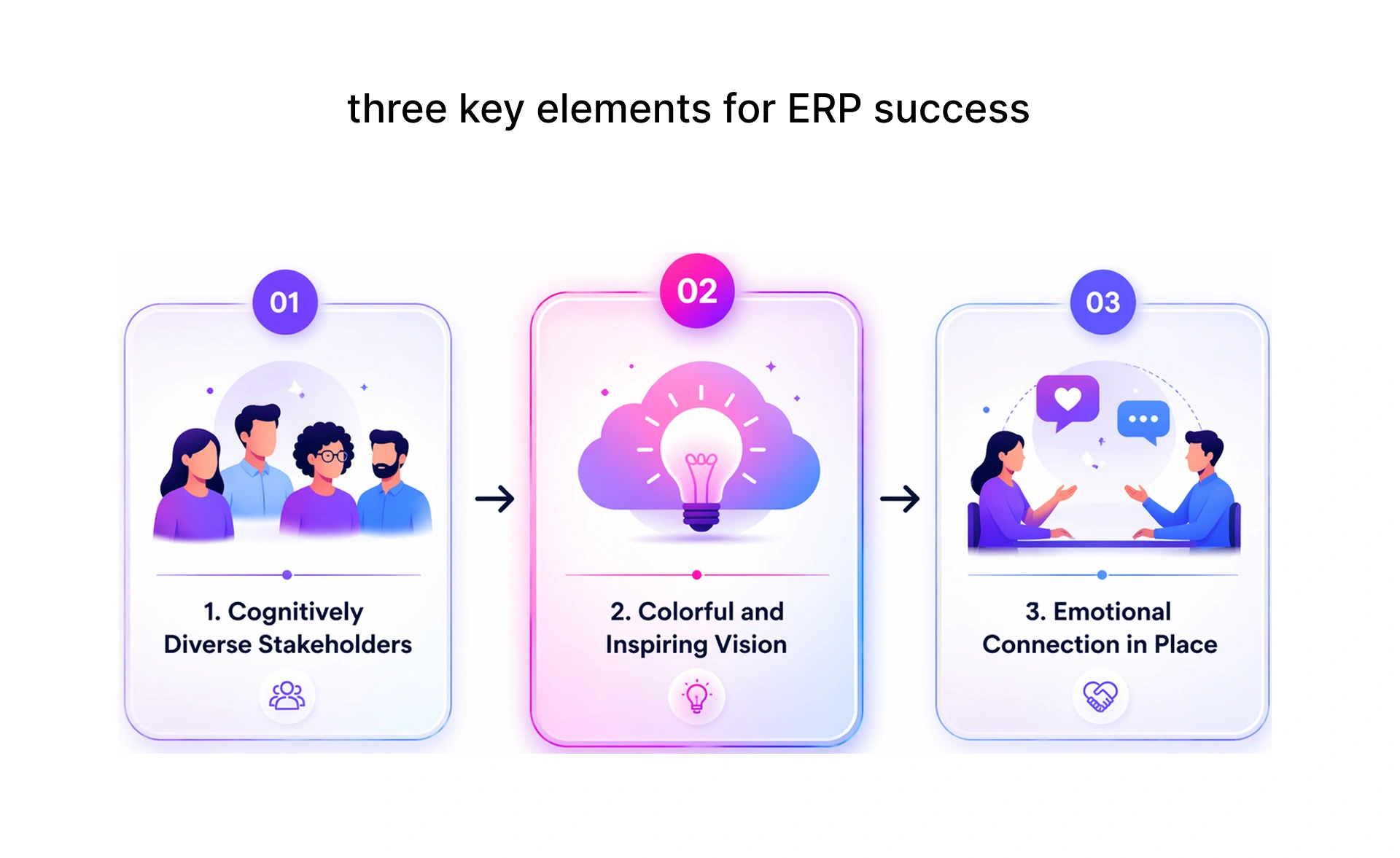
ERP systems are at the heart of any digital transformation plan. Whether an organisation is migrating to SAP S/4HANA, Oracle ERP Cloud, or another platform, testing is what keeps the transformation roadmap on track.
Testing supports digital transformation by:
- Validating cloud ERP configurations for composable design and scalability
- Supporting predictive analytics and real-time analytics features that power data-driven decisions
- Enabling integrations with artificial intelligence, machine learning, and robotic process automation tools
- Ensuring the ERP modernisation doesn't compromise the existing enterprise architecture.
As an illustration of what structured testing prevents, a mid-sized manufacturing ERP migration to SAP S/4HANA may uncover dozens of integration defects before go-live during performance testing. Resolving those issues in the test environment helps teams avoid production disruption, reduce remediation costs, and protect rollout timelines.
Best ERP Testing Tools and Automation Strategies
Testing efficiency and coverage rely heavily on selecting the right tools for the ERP environment. The ERP testing market includes tools designed for different platforms, workflows, and automation needs.
The table below lists widely used ERP testing tools and their primary use cases:
Automation vs. Manual Testing
Automated testing works best for regression testing, performance testing, and repetitive scenarios involving large datasets.
Manual testing remains essential for exploratory testing, UAT, and complex workflows where human judgment matters.
The strongest approach is hybrid: automate repeatable scenarios and manually validate high-risk business processes.
User Acceptance Testing and Final Validation Before Go-Live
The final quality gate before an ERP system goes live is User Acceptance Testing. It places the system in the hands of real end users, allowing them to confirm that the solution aligns with real business requirements.
A systematic UAT process consists of:
- UAT test planning with clearly defined acceptance criteria tied to business requirements.
- Execution using realistic business scenarios drawn from daily operations.
- Defect triage to prioritise fixes needed before go-live versus post-launch patches.
- Formal sign-off from stakeholders confirming readiness.
Common UAT challenges include:
- Missing requirements discovered late.
- Insufficient user training causes test errors.
- Compressed timelines reduce test coverage.
Early user involvement and realistic schedules significantly improve outcomes.
ERP Testing Best Practices Every Team Should Follow
Successful ERP teams tend to follow a set of repeatable best practices. These practices should be introduced early in the project lifecycle, reducing rework and increasing confidence at every testing stage.
Core best practices:
- Start test planning during the design phase, not after development is complete.
- Keep a living ERP testing checklist updated with all configuration changes.
- Use test data management practices that reflect realistic production data volumes.
- Establish clear change impact analysis guidelines for mid-project scope changes.
- Isolate the test, development, and production environments.
- Simulate peak-load conditions during performance testing.
- Automate business-critical workflows that support day-to-day operations.
Good governance, the right tools and disciplined implementation are the difference between a successful and a struggling ERP project.
Conclusion: How to Ensure Successful ERP Testing Outcomes
ERP testing is not a final checkpoint it is a control system that protects transformation budgets, timelines, and operational continuity.
The most successful programmes treat testing as a dedicated workstream from design through go-live. They combine automation, structured UAT, realistic environments, and clear governance.
Treat ERP testing as a core workstream, assign dedicated ownership, and scale capability with an experienced partner such as Frugal Testing when internal capacity is limited.
Key takeaways:
- ERP testing must span the full implementation lifecycle, not just the final weeks.
- UAT is the critical bridge between technical validation and real-world readiness.
- Automation and manual testing work best as a deliberate combination.
- Baseline current defect rates and testing timelines before the programme starts without baselines, improvements cannot be measured or reported clearly to stakeholders.
The strategic advice to enterprises and startups alike is straightforward: regard ERP testing as a fundamental workstream, give it its own set of QA engineers and ERP implementation teams, and outsource testing practice development to firms such as Frugal Testing to create a testing practice that grows with your transformation roadmap.
People Also Ask (FAQs)
Q1.What is ERP testing, and why is it important in digital transformation projects?
Ans: ERP testing is the process of validating that an Enterprise Resource Planning system works correctly before deployment. In digital transformation projects, it is critical because ERP systems connect core business functions, and failures in one area can disrupt the wider organisation.
Q2.What are the common challenges in ERP implementation that testing helps prevent?
Ans: Testing helps prevent common ERP implementation issues such as data migration errors, third-party integration failures, environment mismatches, configuration defects, and missed downstream impacts from change requests.
Q3.How does ERP testing improve the success rate of ERP implementation?
Ans: Testing improves ERP implementation success by identifying data migration issues, integration defects, environment mismatches, and configuration problems early in the project, when they are less costly and less disruptive to fix.
Q4.What is the role of UAT testing in ERP implementation projects?
Ans: User Acceptance Testing (UAT) is the final validation stage in which real end users confirm that the ERP system supports actual business processes. It acts as the last quality gate before go-live and helps verify usability, accuracy, and operational readiness.
Q5.What tools and strategies are used in enterprise ERP testing?
Ans: Enterprise ERP testing commonly uses tools such as SAP LeanIX, Vansah for Jira, Power Platform, Tosca, and Selenium, along with strategies such as continuous testing, codeless automation, and hybrid manual-automation approaches.

.webp)